
OPS & TRAINING
THE FIGHT FOR BLUE SKIES
07 Dec 2015
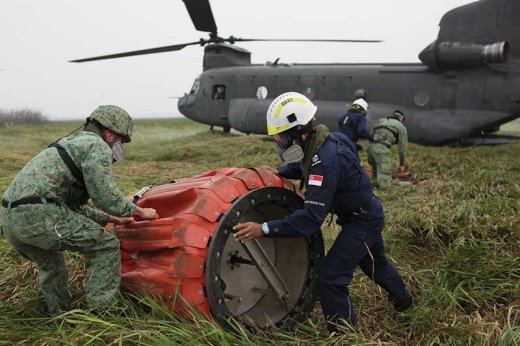
Defence Media Centre video journalist Remington Chia goes behind the scenes with Singapore's team during its two-week operation to help combat forest fires in Indonesia.
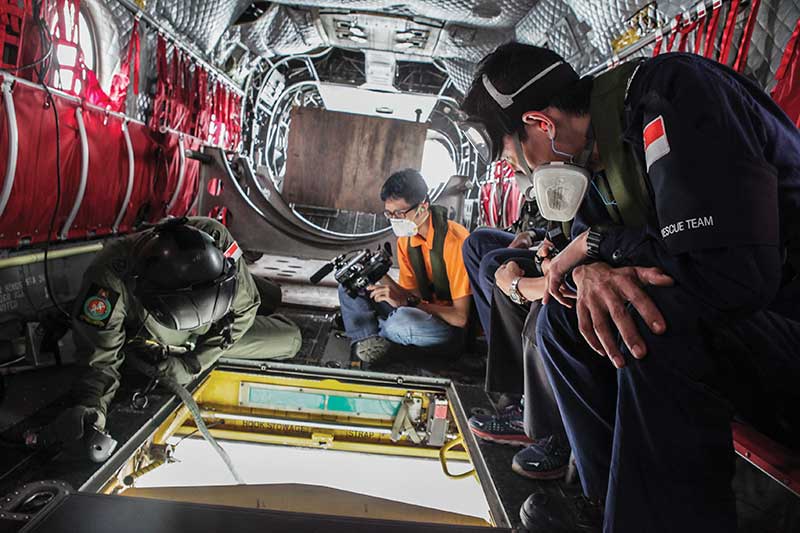
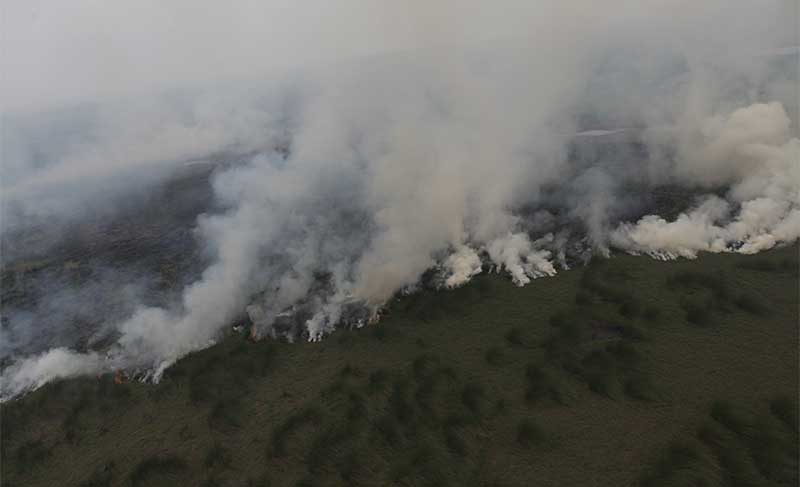
Beneath us, the seemingly endless grasslands stretched towards the horizon in all directions, greyed out by the pervasive haze. Much of the grass was yellowed or even withered, and black patches - scars left behind by smaller fires - dotted the landscape. One of our Chinook s aircrew pointed into the distance.
A wall of dense smoke rose high into the sky. As the Chinook banked to circle the hotspot, the entire stretch of scorched earth behind the smokescreen came into view, along with the line of hungry flames that defined its advancing borders.
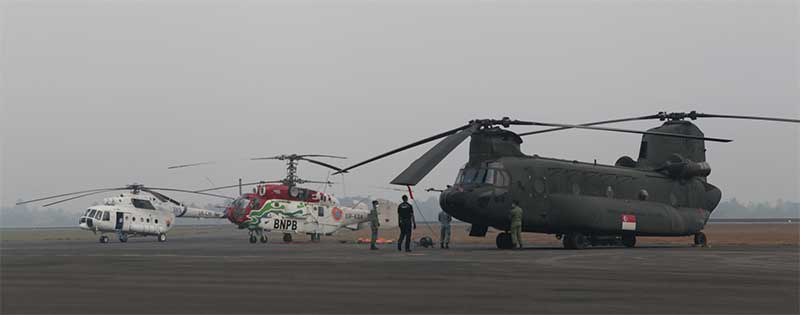
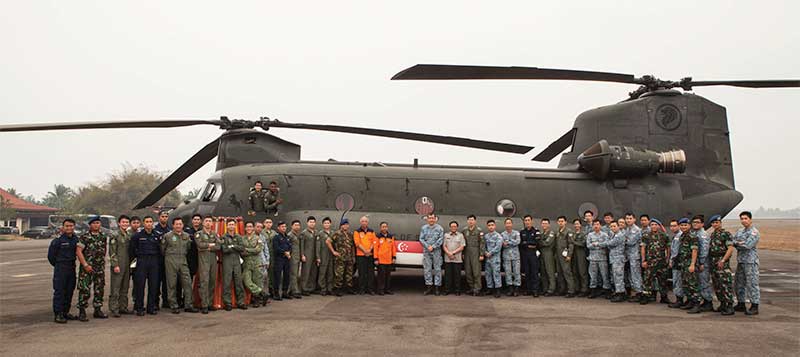
This was the reason Singapore sent a contingent comprising personnel from the Republic of Singapore Air Force (RSAF), Army and Singapore Civil Defence Force (SCDF) to assist in the multinational firefighting efforts in Sumatra, Indonesia.
Ready and prepared
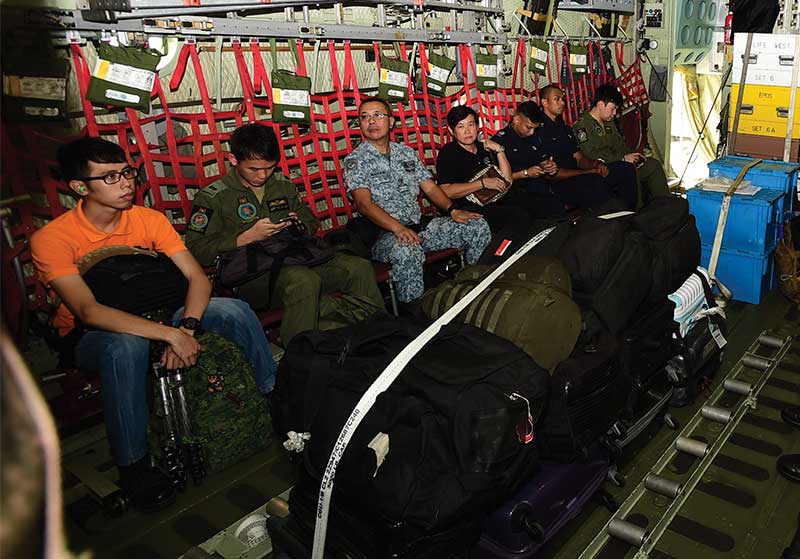
I was assigned to follow the contingent, just two days ago, to document its deployment in Palembang, Sumatra. I hadn't been on an actual operation before, so when I was offered the opportunity, I wasn t going to pass it up for anything.
Though the plane was ready to fly that afternoon, departure was delayed until the following morning on 10 Oct, once the Indonesian authorities had given flight and security clearances, and visibility conditions in Palembang had improved enough for a safe landing.
The haze affected every aspect of our lives there, and we learnt to adapt to it over the course of our two-week deployment. It was a severe health hazard. The Air Quality Index peaked at around 1,200 during our stay any value above 300 was considered "hazardous".
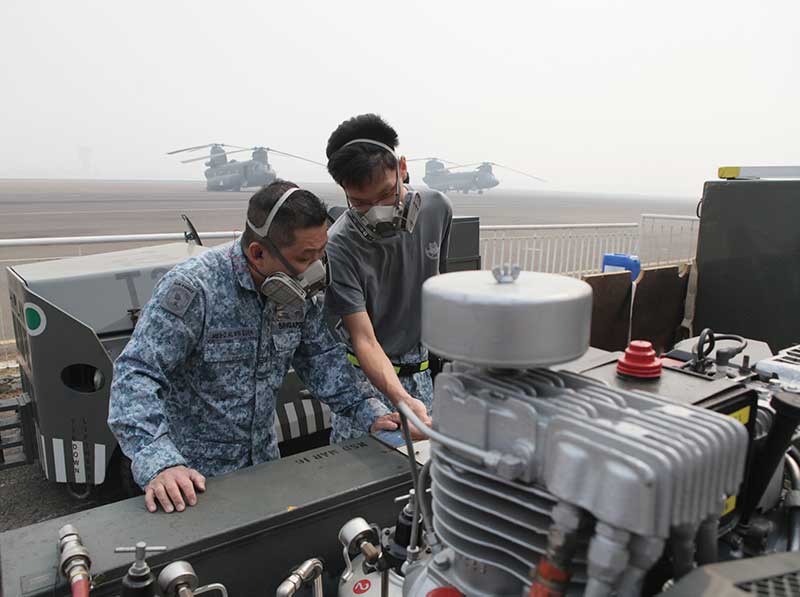
Our medical team was well-trained and equipped to handle any incident that might arise (thankfully, there were none), and advised us on the necessary precautions to take in light of the haze. We wore face masks whenever we were outdoors and used eye drops and lozenges liberally.
Soldiering on
Poor visibility posed a challenge to the contingent s water-bombing operations. The skies cleared up in the mornings, but the haze almost always returned with a vengeance in the late afternoons. This meant that the Singapore team only had a short window every day to carry out their mission.
The aircrew and firefighting crew worked quickly to make the most out of every sortie flown. Likewise, the ground crew were kept busy with maintenance works because the high concentration of soot particles in the air placed additional stress on the engines. To me, that was an unexpected complication, but the ground crew had already anticipated it, and regularly cleaned the engines to prevent any problems from occurring.
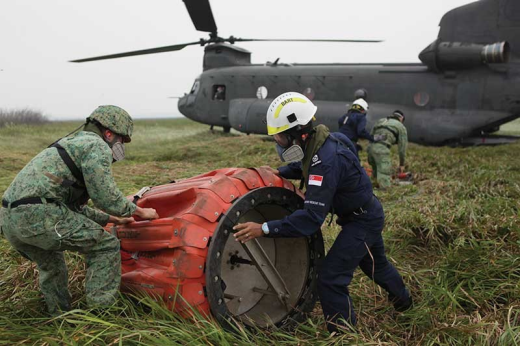
On paper, the water-bombing operation seemed straightforward enough, but outfield conditions meant much of the contingent s carefully laid plans had to be reworked. Due to the prolonged drought, the entire area was at risk of catching fire spontaneously. The dangers were real, especially whenever the Chinook landed to deploy or retrieve the heli-bucket. However, the team worked closely and quickly to minimise our time on the ground.
Collective effort
I distinctly recall the flight back to the air base after the last sortie of the operation. I was looking out the side window of the Chinook, when I spotted a flock of white birds, just barely visible, gliding above a lake.
It was only then that I realised that I had not seen any animals out here since I arrived. I reckoned they must have left the area due to the wildfires, but now the birds had returned and that seemed to imply that the situation was improving.
I suddenly thought of our first day here - how the Indonesians received us warmly and the support they provided during our stay. Also, on the day our medical team met the duty doctor at the air base s medical post, the Indonesian doctor revealed that he had been involved in several bilateral exercises in Singapore.
Despite the challenging conditions, the team worked well together with the help of the Indonesian agencies, and the good working relationship among the servicemen on the ground truly reflected the strong bilateral defence ties that our two armed forces have built up over the years.

ALSO READ IN OPS & TRAINING
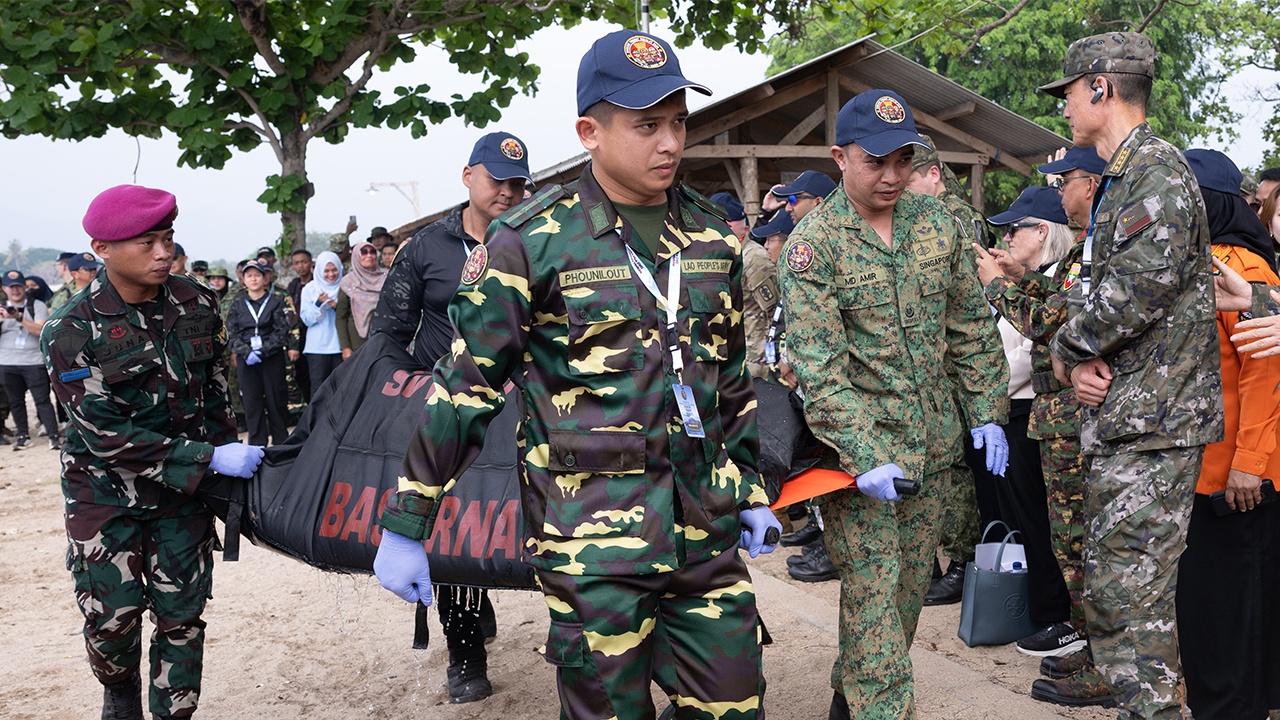
S’pore commandos, Indonesia special forces train & strengthen ties at Ex Chandrapura
08 Jul 2026
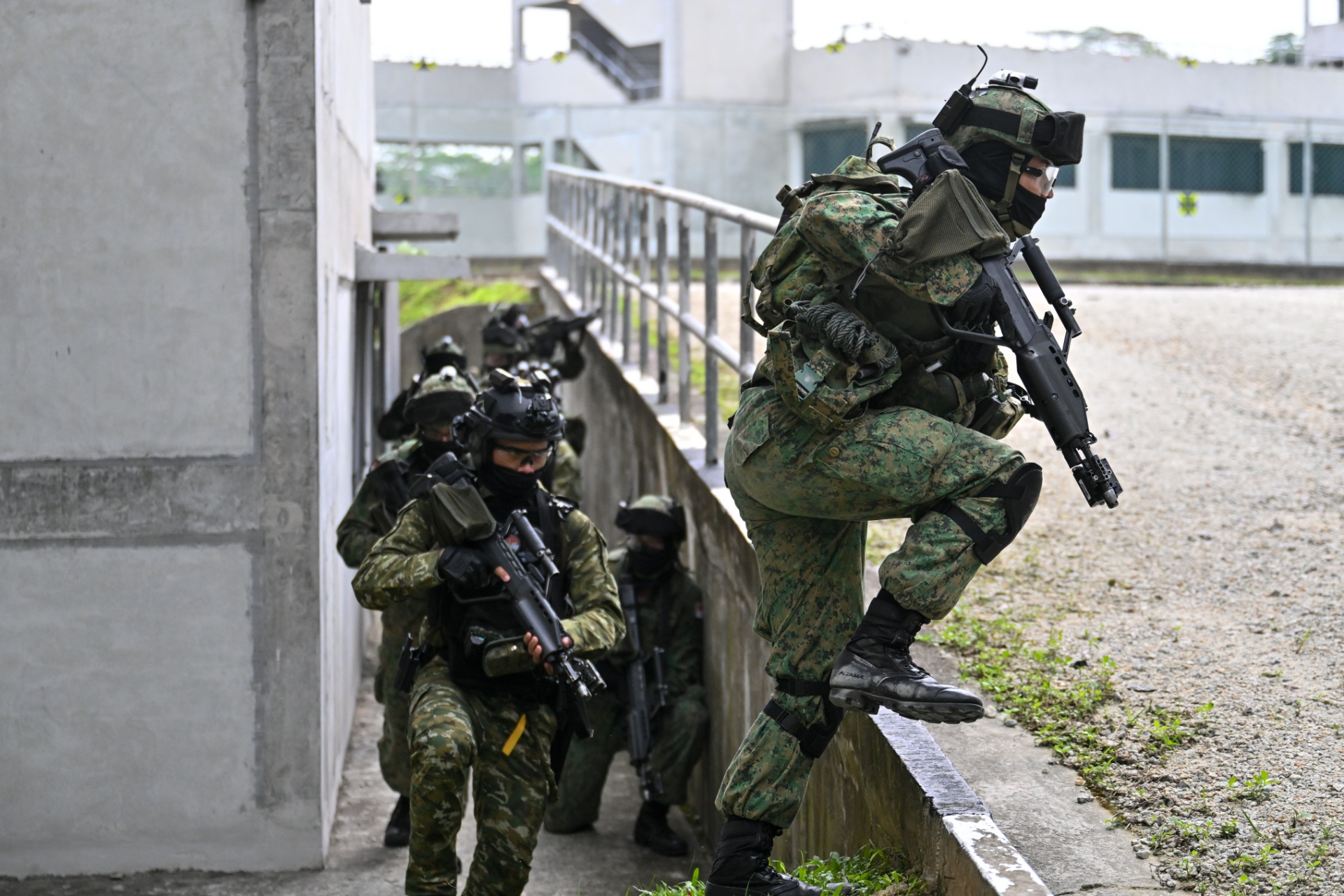
From conducting tactical airborne jumps to a coordinated urban raid, soldiers from Singapore and Indonesia deepened their decades-long partnership in this bilateral army exercise.
SAF & Home Team to refresh Medical Classification System
13 Apr 2026
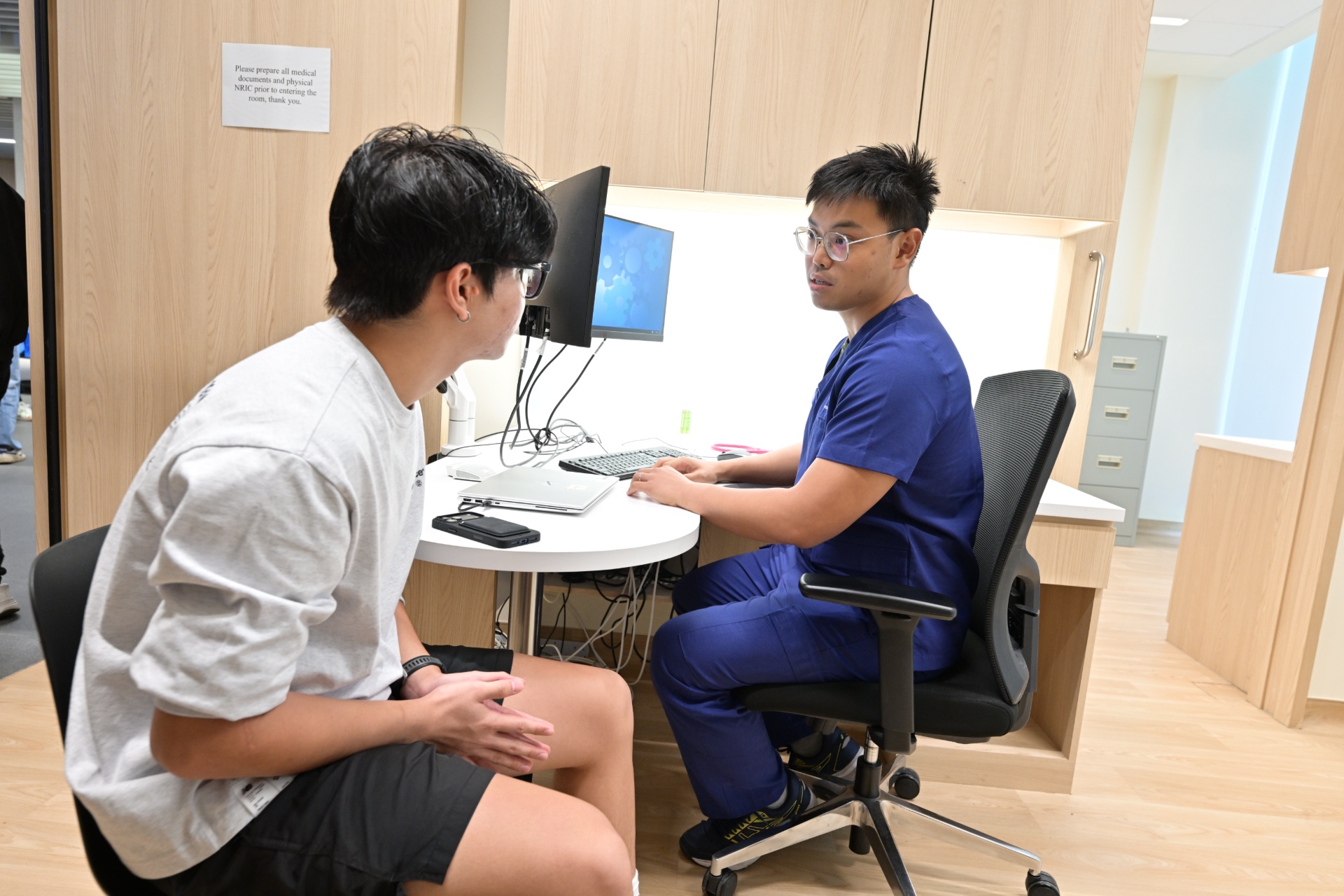
The refreshed system will allow about 1,200 servicemen annually to be deployed for vocations and roles they were ineligible for previously.
Prime Minister Lawrence Wong observes SAF’s sense-strike integrated capabilities
09 Apr 2026
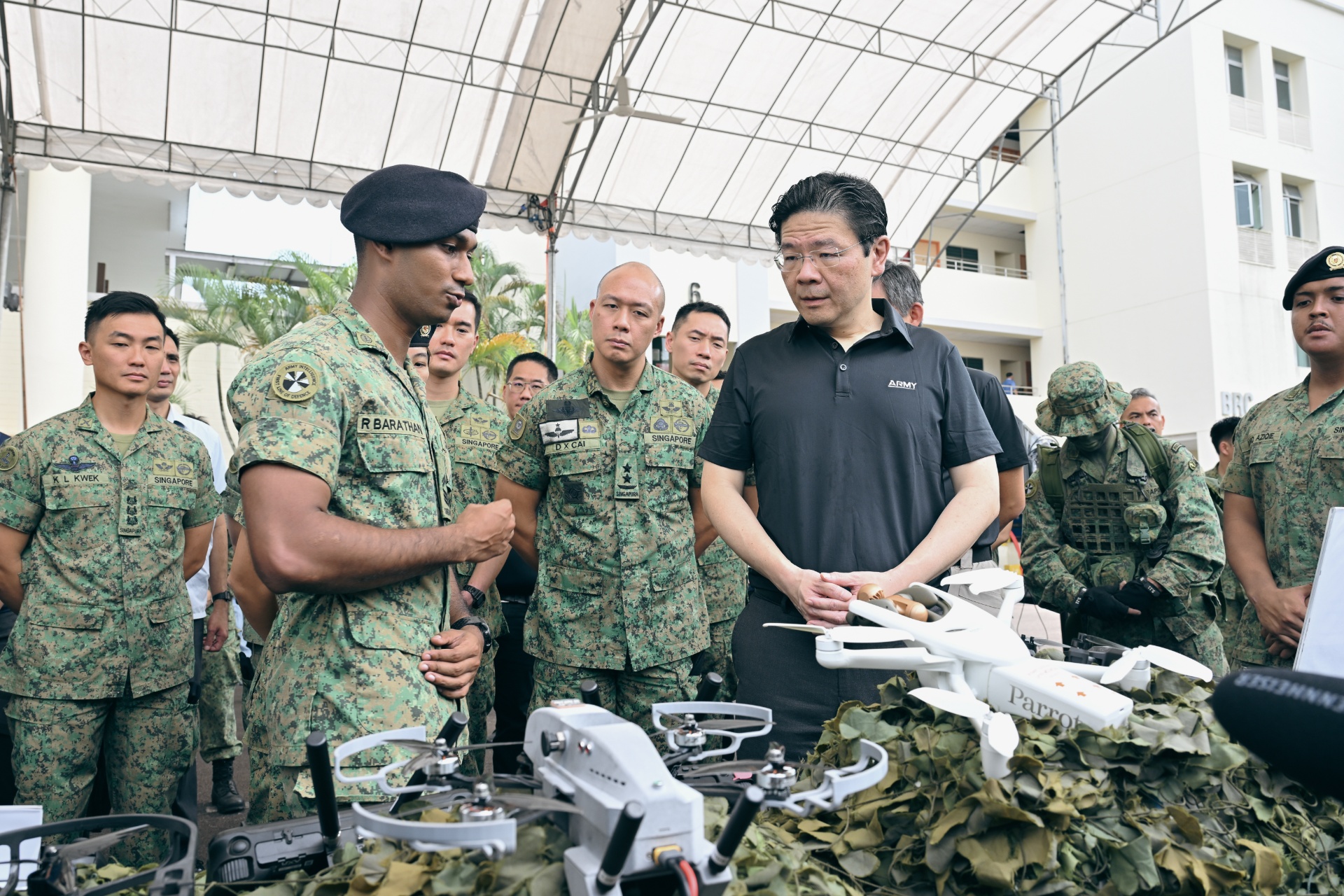
He witnessed the SAF’s ongoing efforts in leveraging advanced robotics and cross-Service integration to secure Singapore’s interests in an increasingly volatile world.