
OPS & TRAINING
Prime Minister Lawrence Wong observes SAF’s sense-strike integrated capabilities
09 Apr 2026
He witnessed the SAF’s ongoing efforts in leveraging advanced robotics and cross-Service integration to secure Singapore’s interests in an increasingly volatile world.
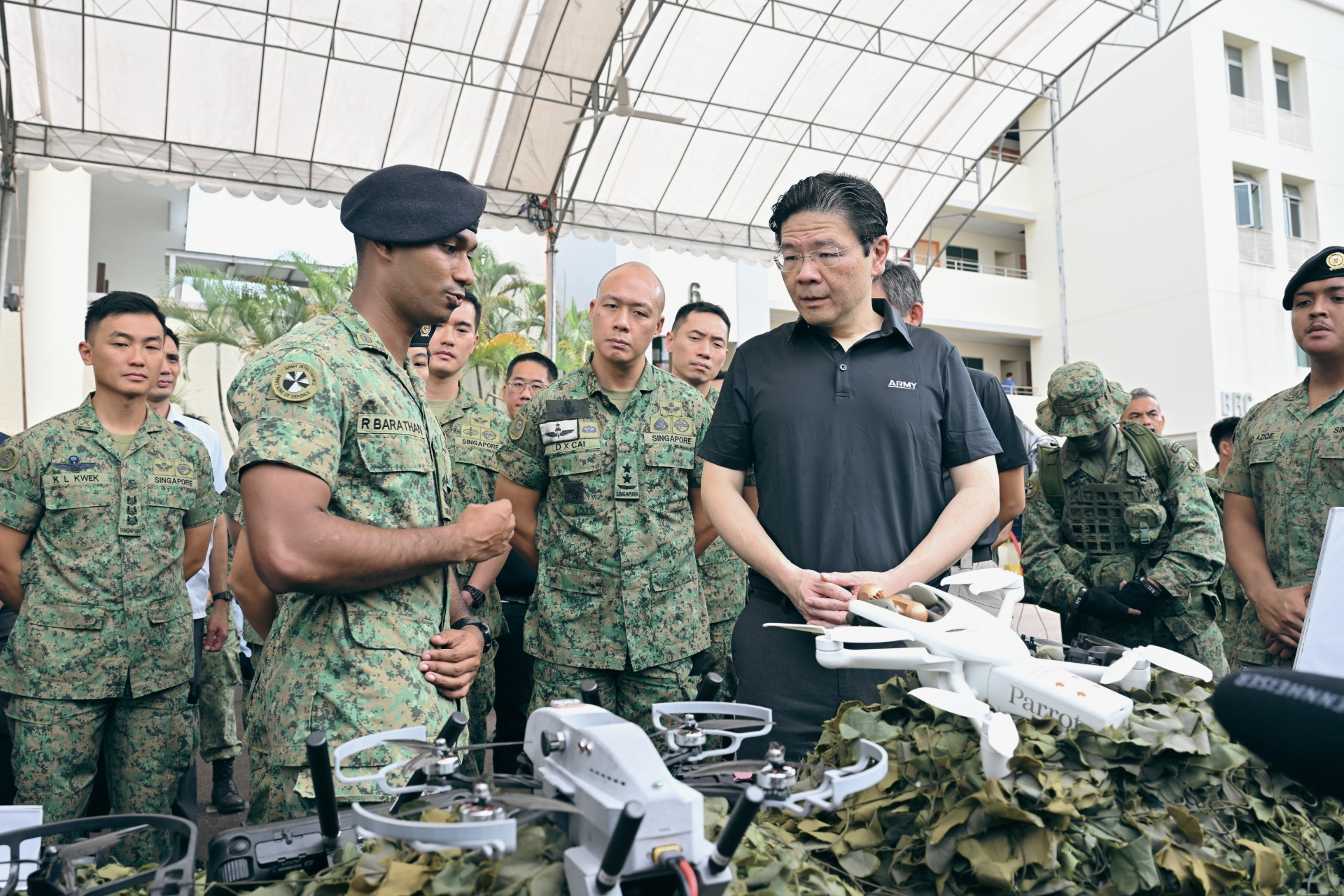
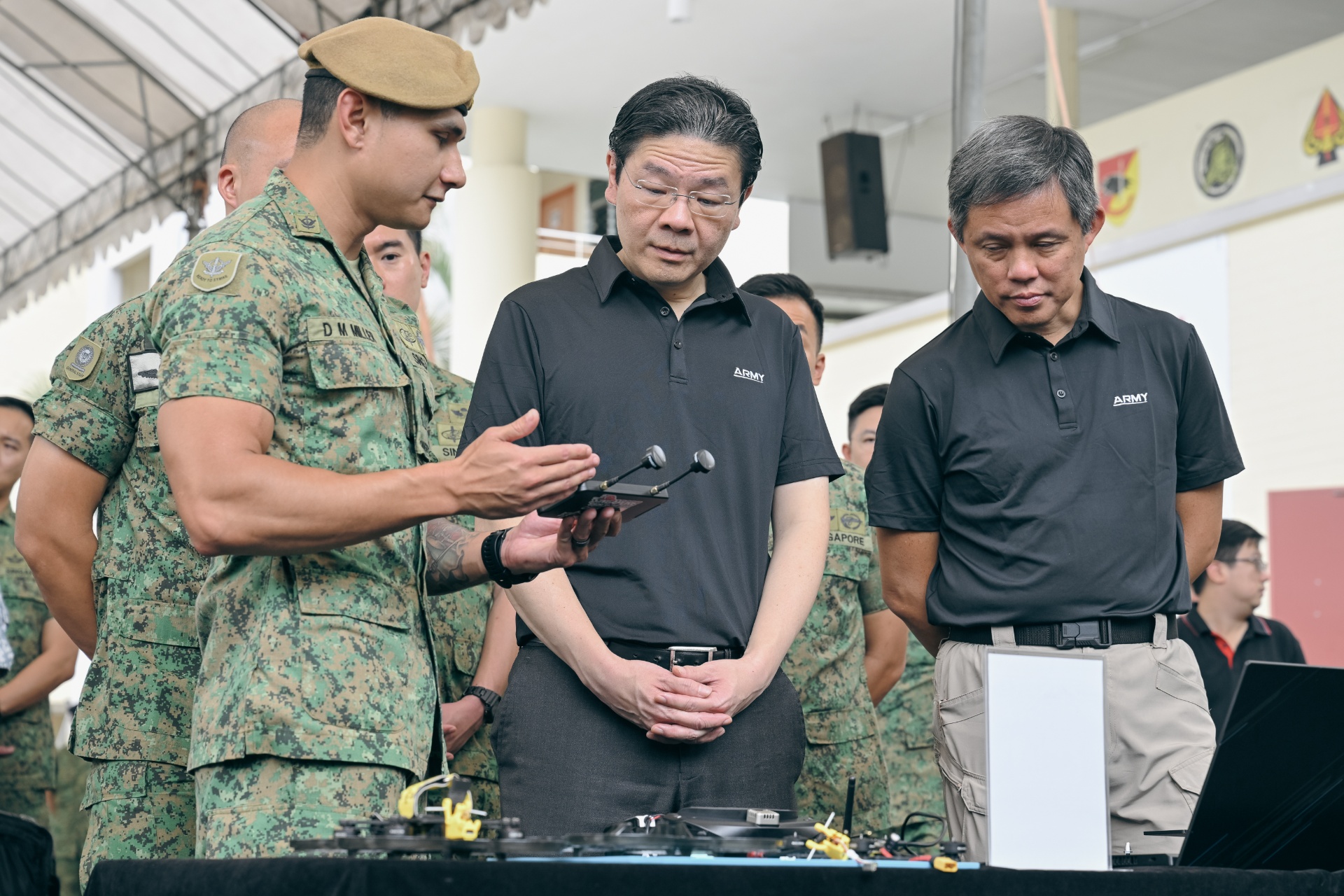
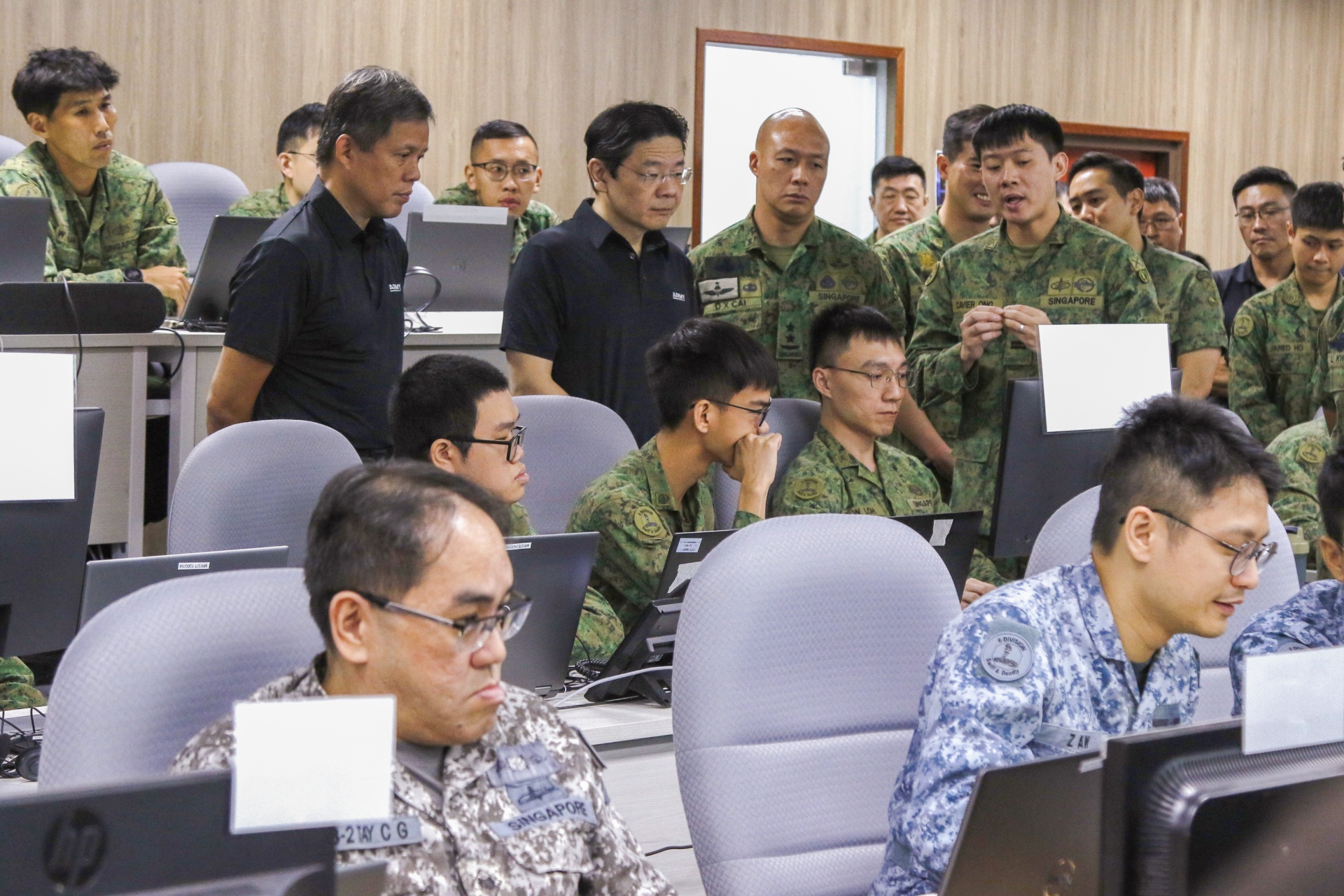
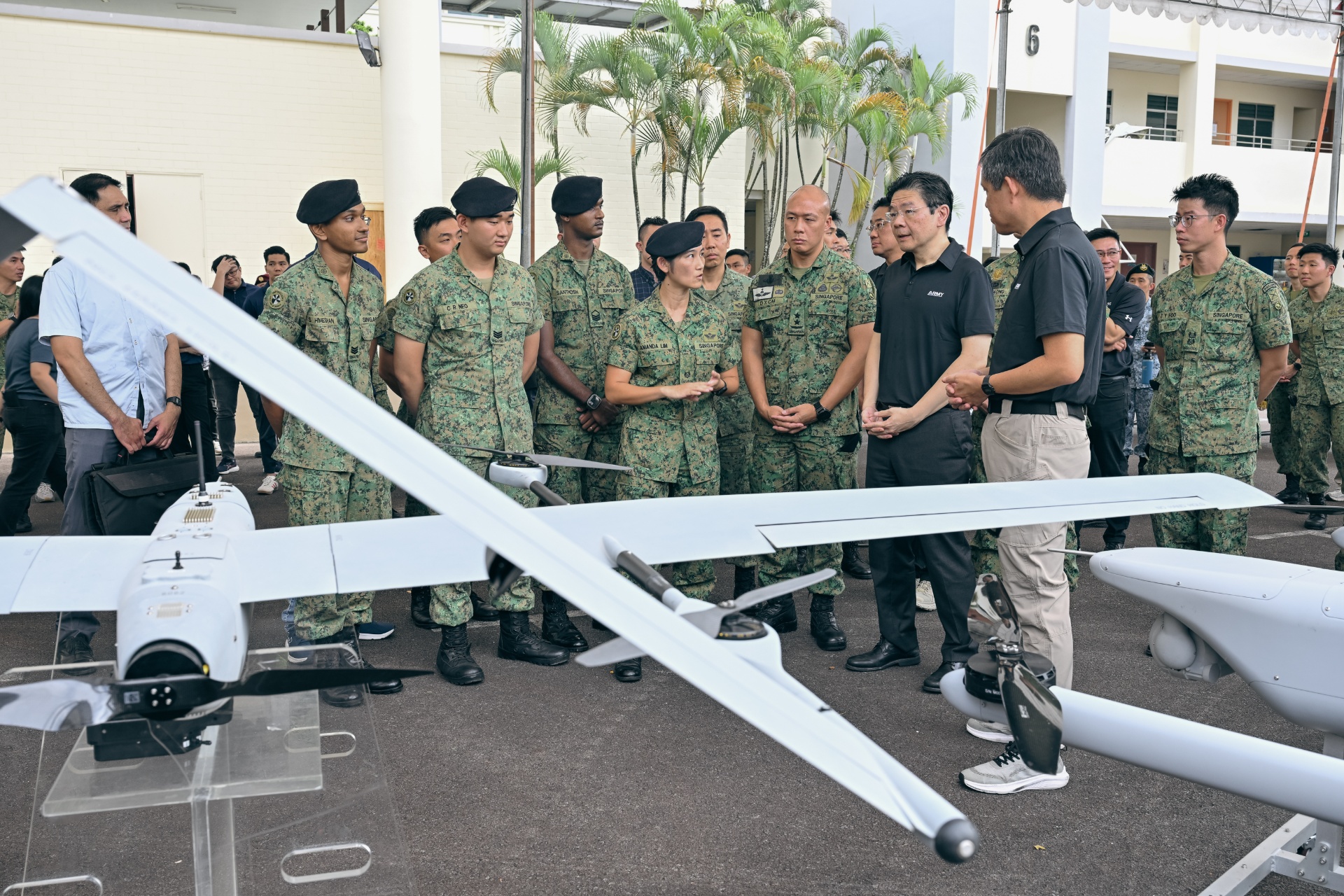
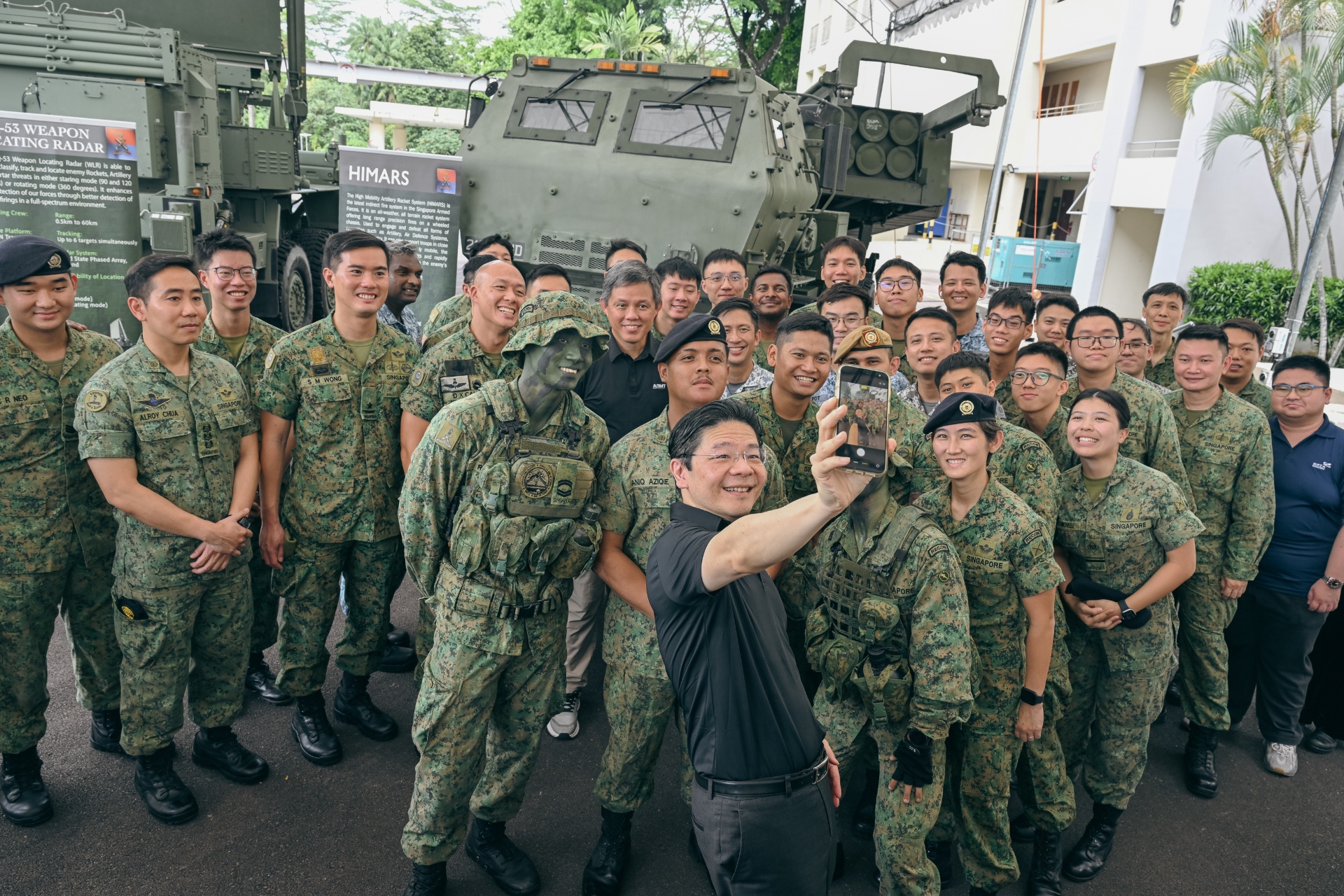
In a visit to 6th Singapore Division/Headquarters Sense & Strike (6 Div/HQ SS) on 9 Apr, Prime Minister and Minister for Finance Lawrence Wong witnessed a display of the SAF’s integrated sense and strike capabilities, as well as cross-Service integration efforts between the Army, Republic of Singapore Air Force (RSAF) and Digital and Intelligence Service.
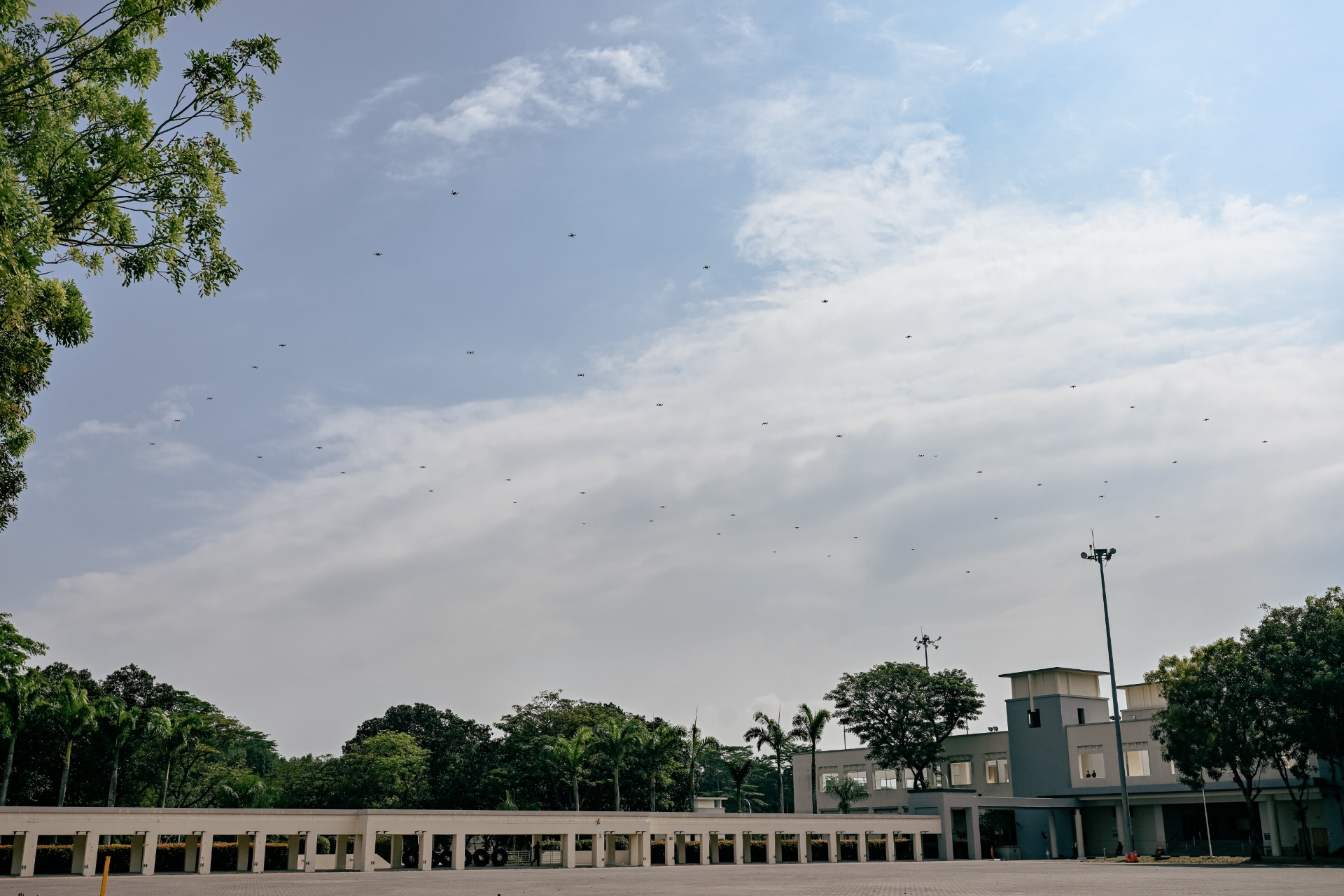
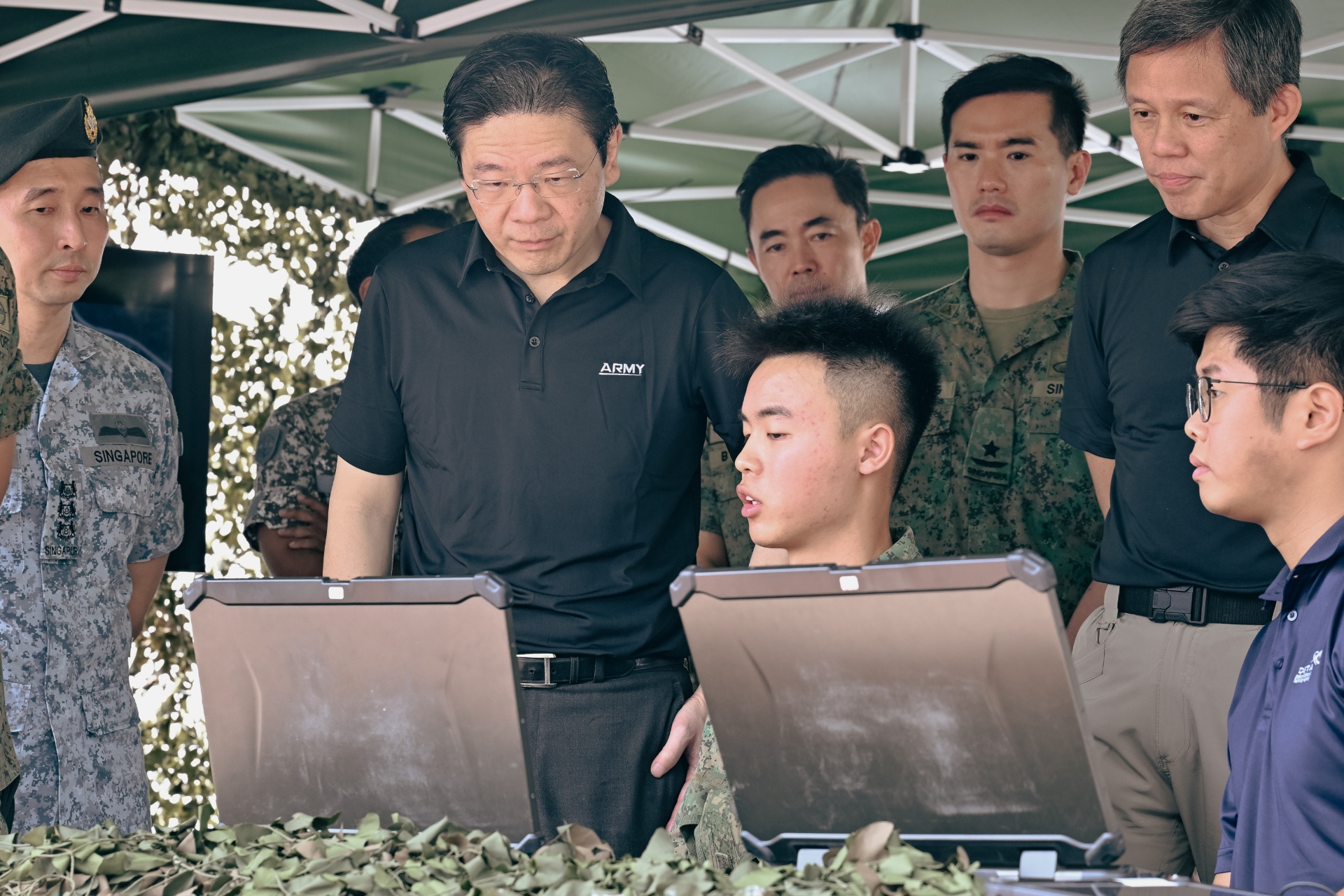
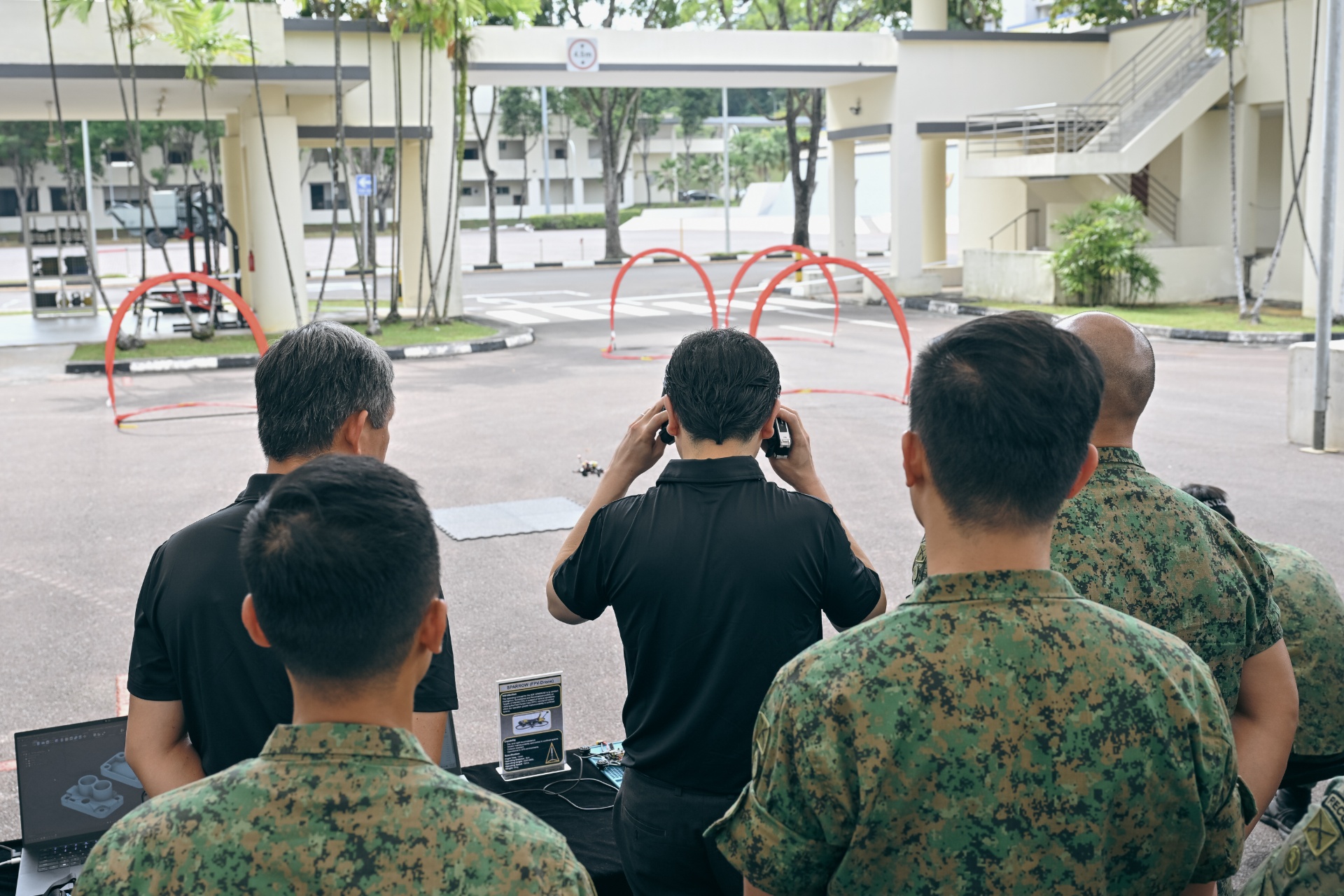
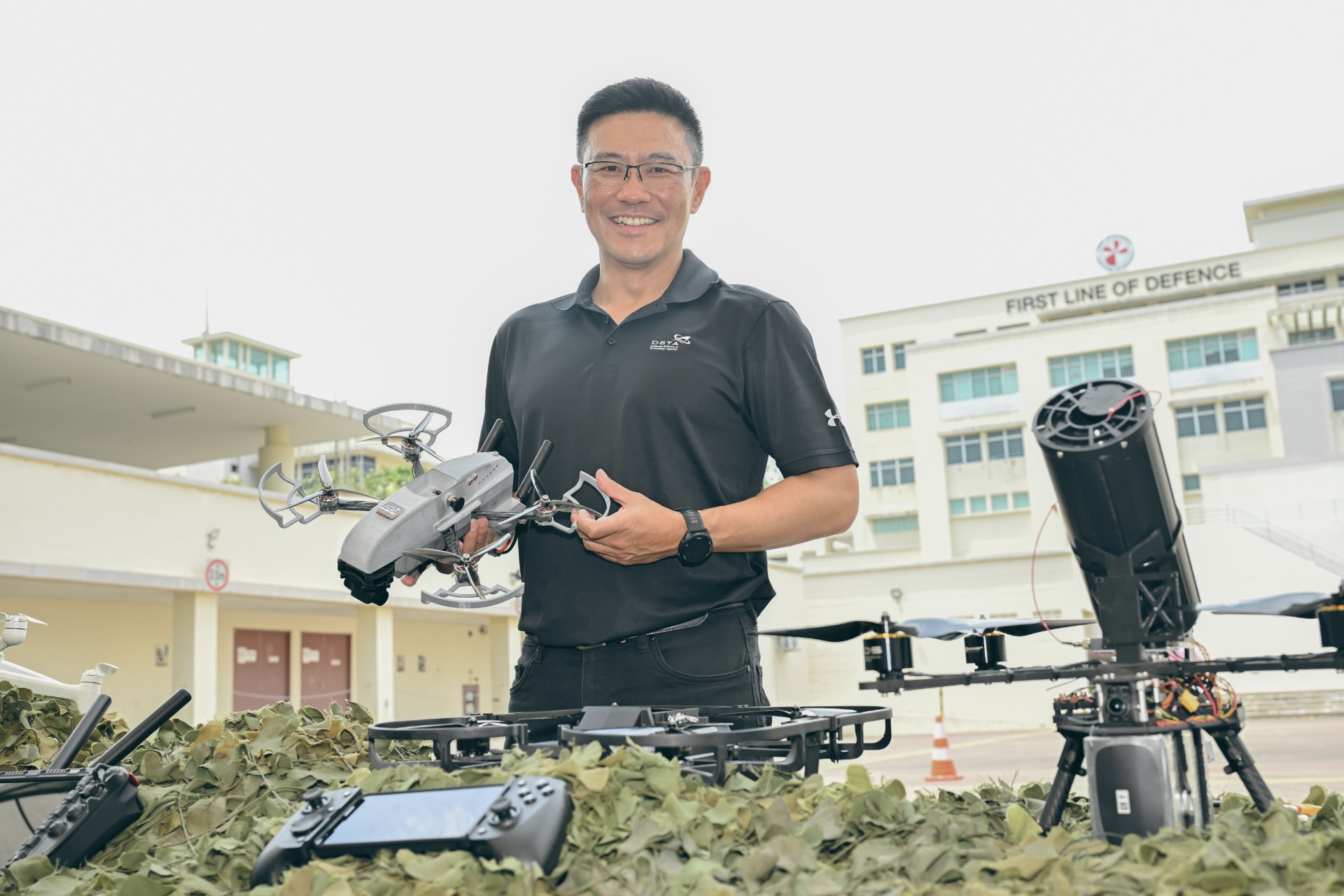
He also observed a demonstration of the Robotics Command, Control and Communications System, where a single operator orchestrated multiple Intelligence, Surveillance and Reconnaissance drone assets.
Sensor data from drone feeds is fused and translated into actionable targets using Artificial Intelligence and Computer Vision techniques, enabling swift and coordinated engagement by precision strike assets.
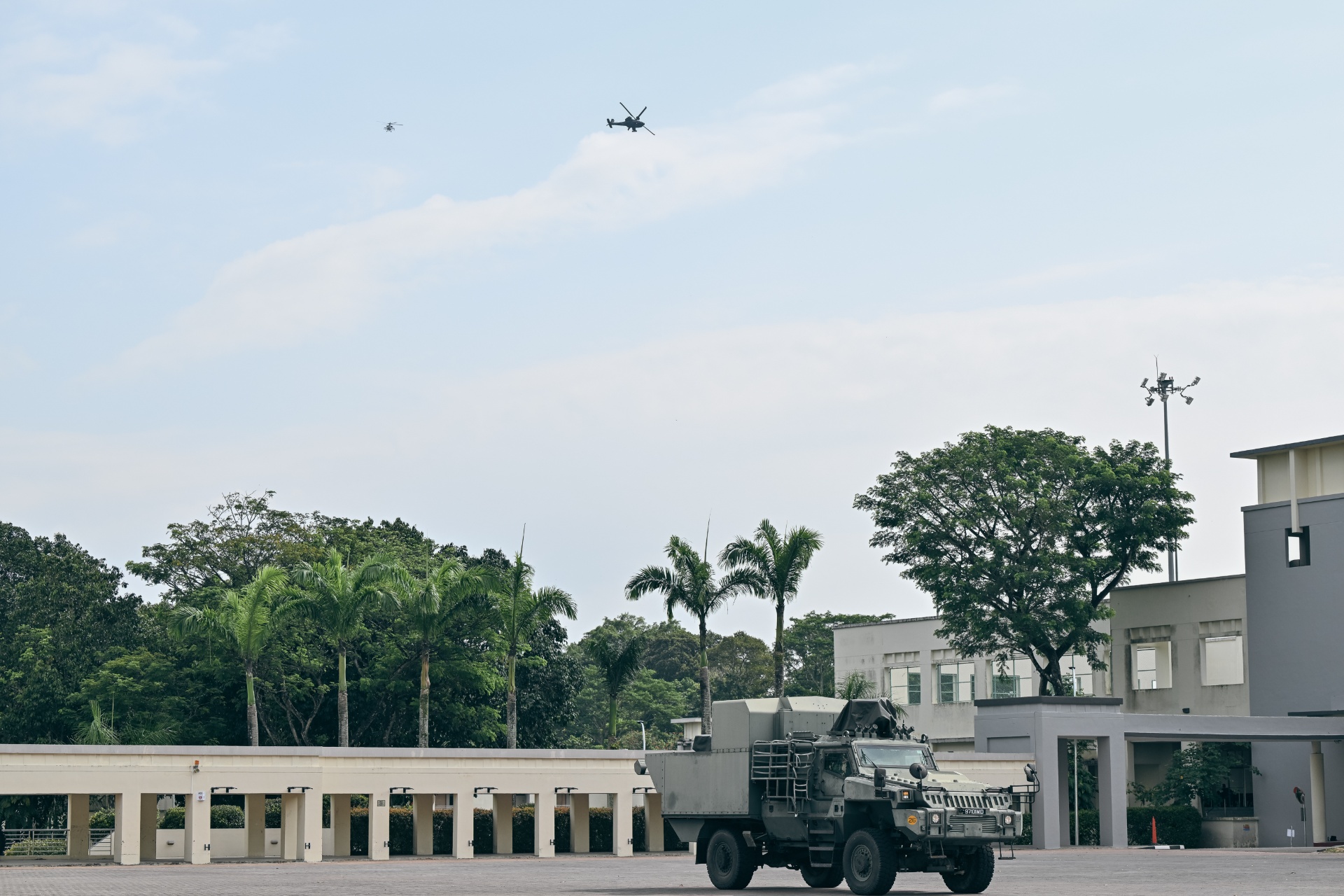
This includes the Army’s High Mobility Artillery Rocket Systems and the RSAF’s AH-64D Apache attack helicopters.
Addressing the media during his visit, Mr Wong said that if the global order starts to fall apart, there will be a “vacuum” which leads to disorder, and Singapore must be prepared for more conflicts around the world in the years ahead.
He also highlighted the growing prevalence of unmanned systems in modern warfighting: “Warfare itself is evolving (as seen in Ukraine and Iran, with) more unmanned systems, more new technologies being deployed and more new ways of fighting.
“We are learning from these experiences, harnessing new technologies and adapting and transforming the SAF (by integrating) these new capabilities well across different domains between the operations and the technology teams, and across different Services in the SAF.
“(This is so that) we can have a more effective SAF and…be a more effective deterrent against any potential aggressors.”
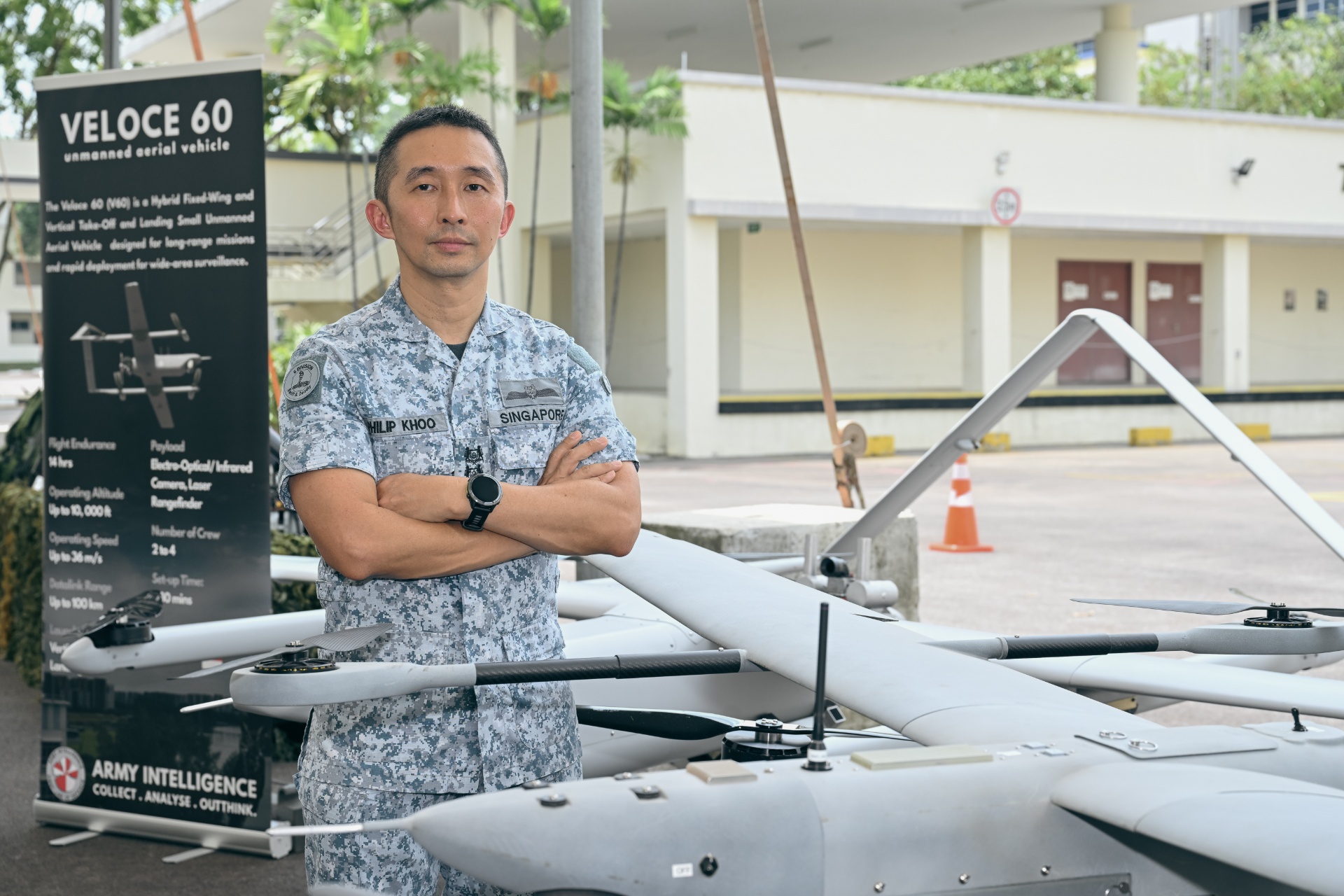
A transformational shift
With the modern operating environment becoming increasingly complex, especially in built-up areas, it was important for the Division to undergo a transformation, said 6 Div/HQ SS Chief of Staff Colonel (COL) Philip Khoo.
The 48-year-old Apache pilot explained: “The operating environment that the SAF has to contend with today is a lot different compared to yesteryears, (with) a lot more buildings (and) blind spots where we are unable to pick up certain things that we want to see.
“Drones bring in the capability, allowing us to be able to have persistent surveillance and also a constant eye in the sky, especially in the urban environment.”
He also emphasised the importance of the human element in this technological shift: “Our people have been adaptable in leveraging these technologies to do what we need to do.”
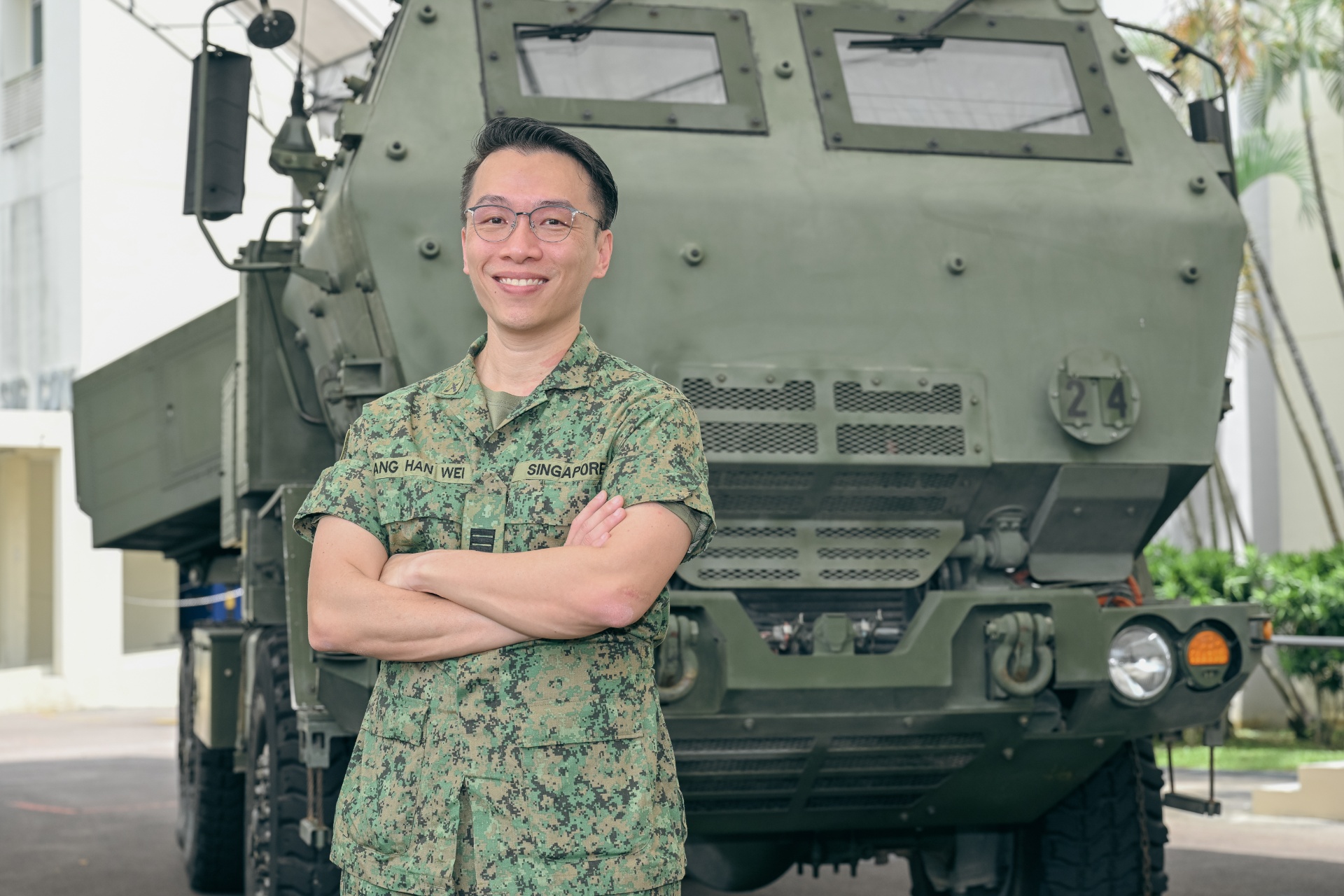
Leading the mission
Operationally Ready National Serviceman (NSman) Captain (CPT) (NS) Ang Han Wei, 42, has seen the Division’s transformation journey. Now a Team Lead in 6 Div/HQ SS, he witnessed how the reorganisation has significantly improved operational speed.
“In the past, during my role as a Division battlestaff, our assets were not centralised, so we'd have to take a fair bit of coordination to bring in the required assets before executing the mission,” CPT (NS) Ang explained.
“But now under HQ SS, all these are consolidated in terms of skilled manpower and (access to) the relevant sensor and shooter... this improves the efficiency of the process dramatically.”
A data engineer by profession and father of two, CPT (NS) Ang reflected on the importance of his role as an NSman in an increasingly fractured world.
“A strong and capable defence to protect our collective way of life is a non-negotiable in today's climate... a more meaningful interpretation of the word (sacrifice) would be what our children would stand to lose if we stop contributing to this defence force,” he said.
The eyes in the sky
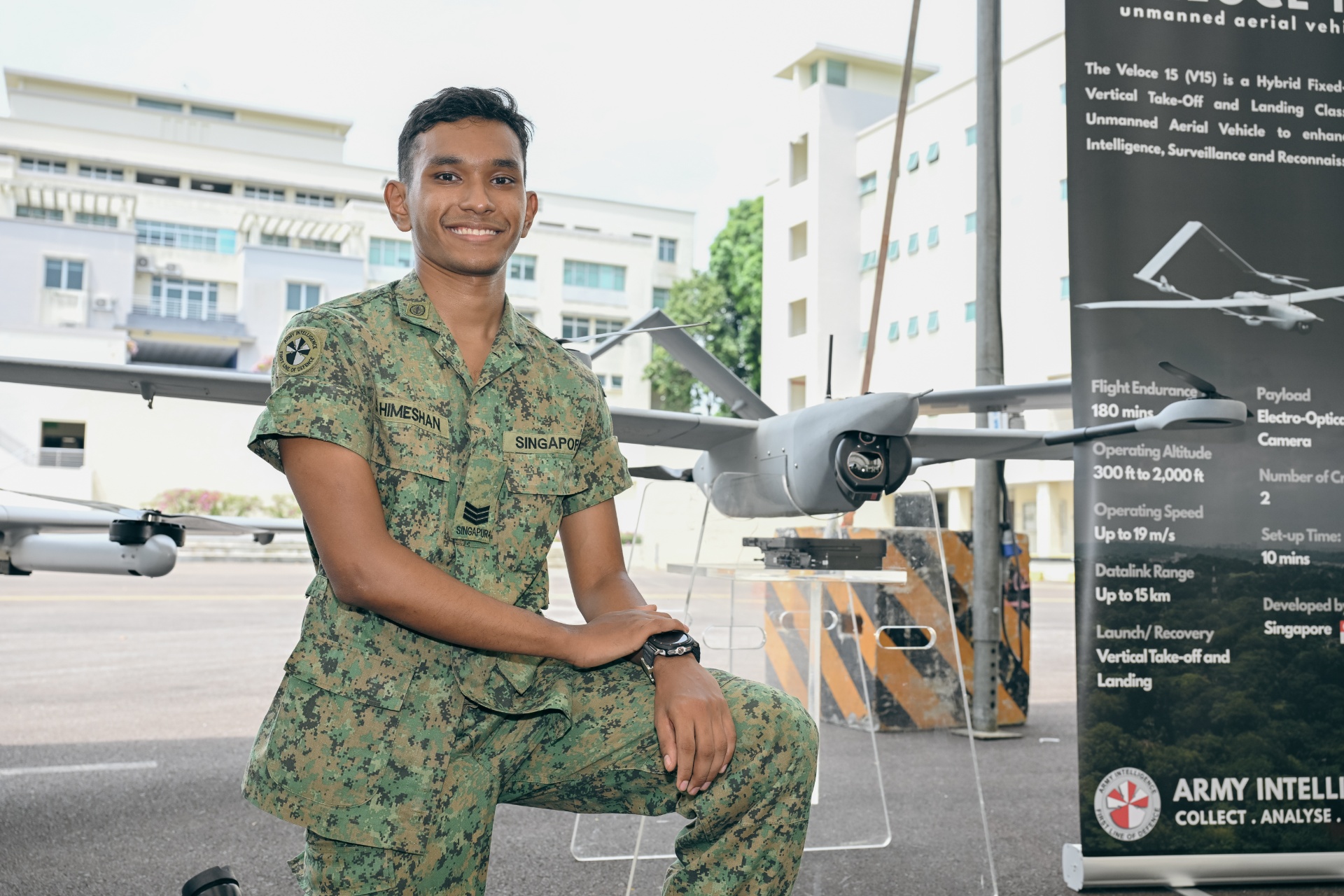
With the ease of picking up drone operating skills, Full-time National Servicemen like 3rd Sergeant (3SG) S Himeshan from 11th Command, Control, Communications, Computers, and Intelligence Battalion’s Tactical UAV Company can play a bigger role in 6 Div/HQ SS’s integrated operations.
However, to become a VELOCE 15 mini-UAV (V15 mUAV) flight specialist, the 22-year-old section commander had to undergo a rigorous training process to equip him with the skills and confidence to both operate the mUAV – which has a wingspan of 3.7 metres – and lead his men in missions.
“The pressure of flying the V15 is quite high, as you need the ability to think on the ground and adapt under pressure, because there are many scenarios that could happen during a flight.”
He expressed his pride in growing to become a better version of himself: “I thought NS would be (about the rigors of physicality and endurance), but after coming here (to 6 Div/HQ SS), I realised it’s about discipline, responsibility and your ability to adapt under pressure.”
He added: “I’m lucky to be in this position, because... my troopers are a great bunch (and) being here has really improved my character.

ALSO READ IN OPS & TRAINING
S’pore commandos, Indonesia special forces train & strengthen ties at Ex Chandrapura
08 Jul 2026
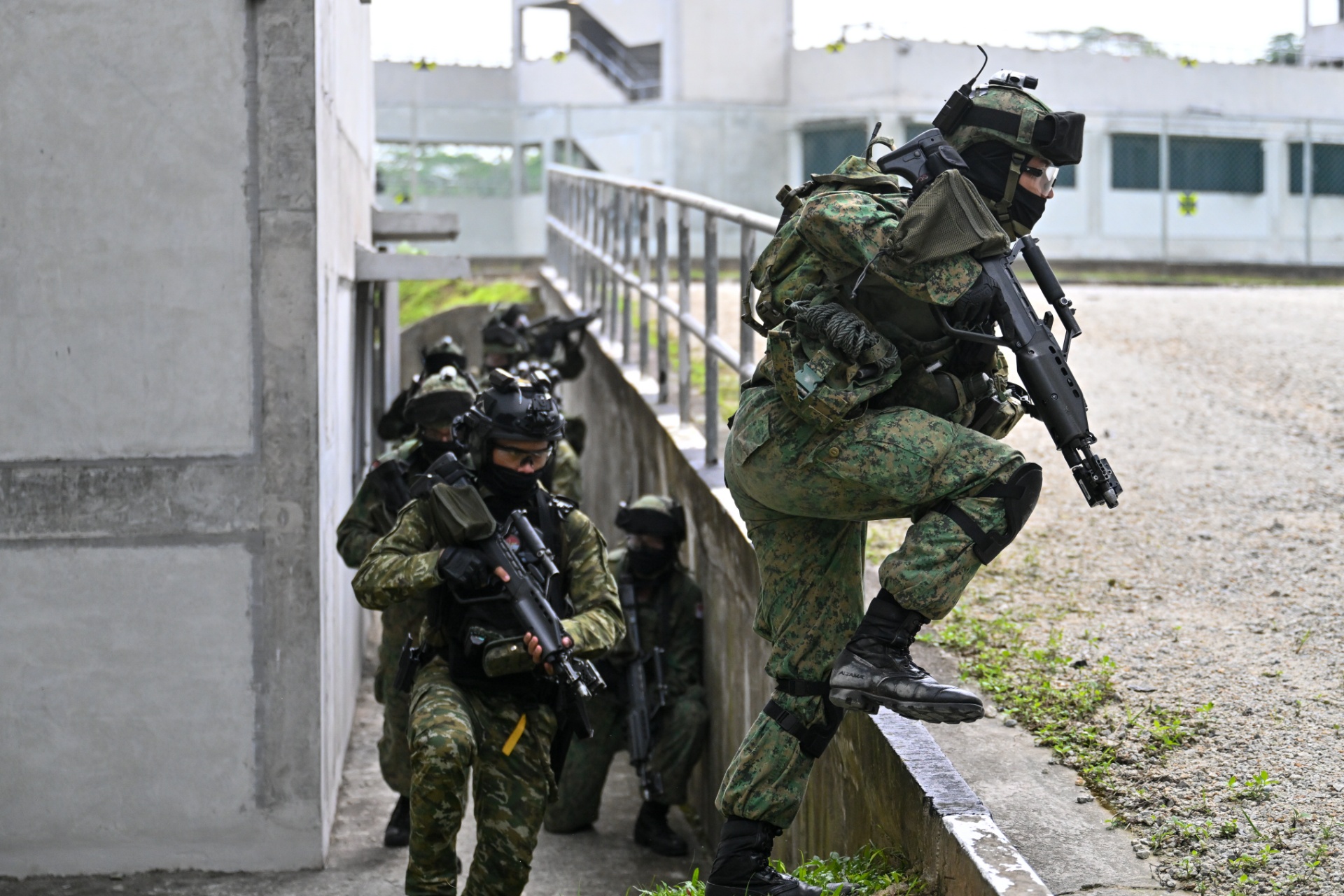
From conducting tactical airborne jumps to a coordinated urban raid, soldiers from Singapore and Indonesia deepened their decades-long partnership in this bilateral army exercise.
SAF & Home Team to refresh Medical Classification System
13 Apr 2026
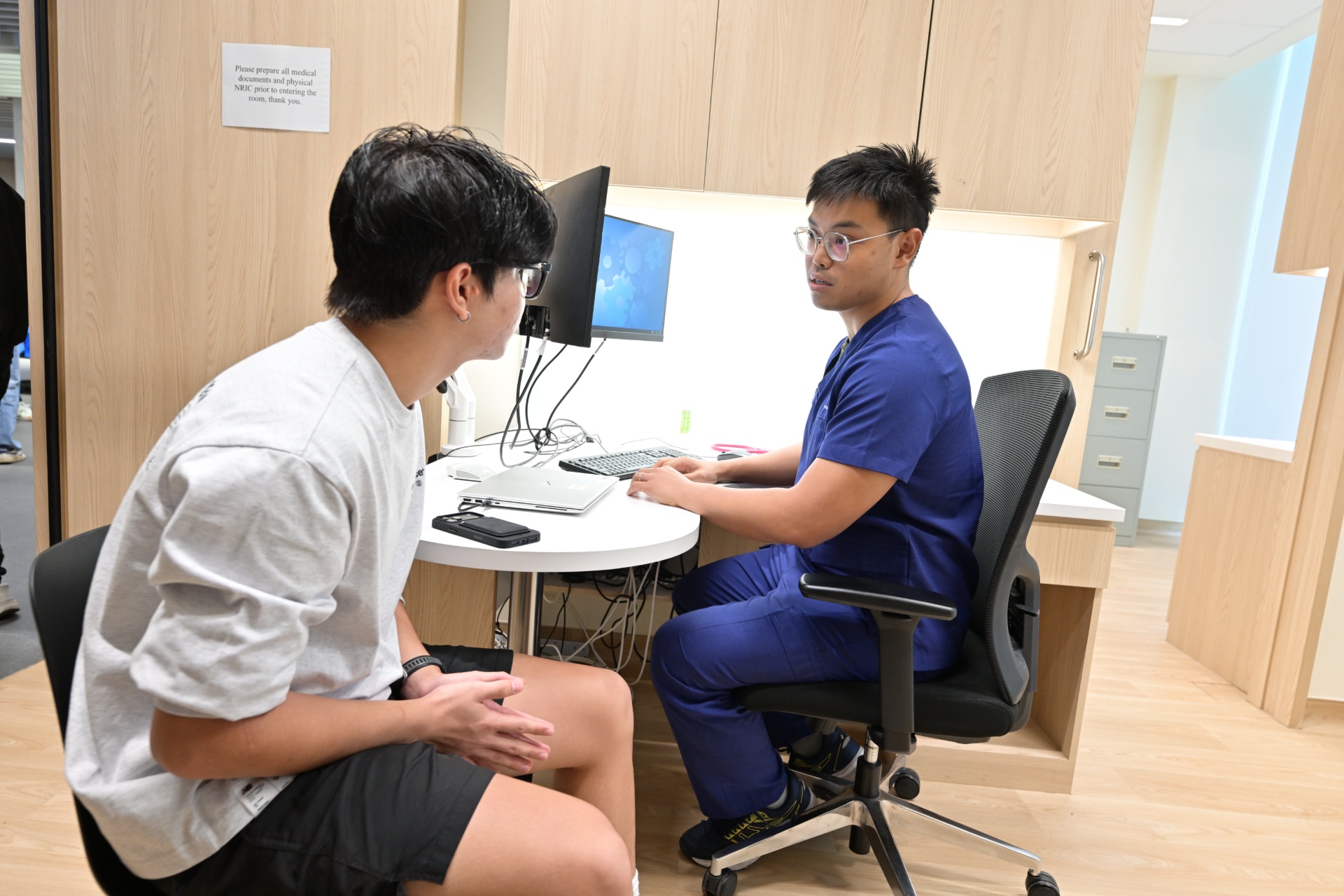
The refreshed system will allow about 1,200 servicemen annually to be deployed for vocations and roles they were ineligible for previously.
SAF detonates 250kg WWII bomb uncovered at Tanah Merah Coast Road
02 Apr 2026
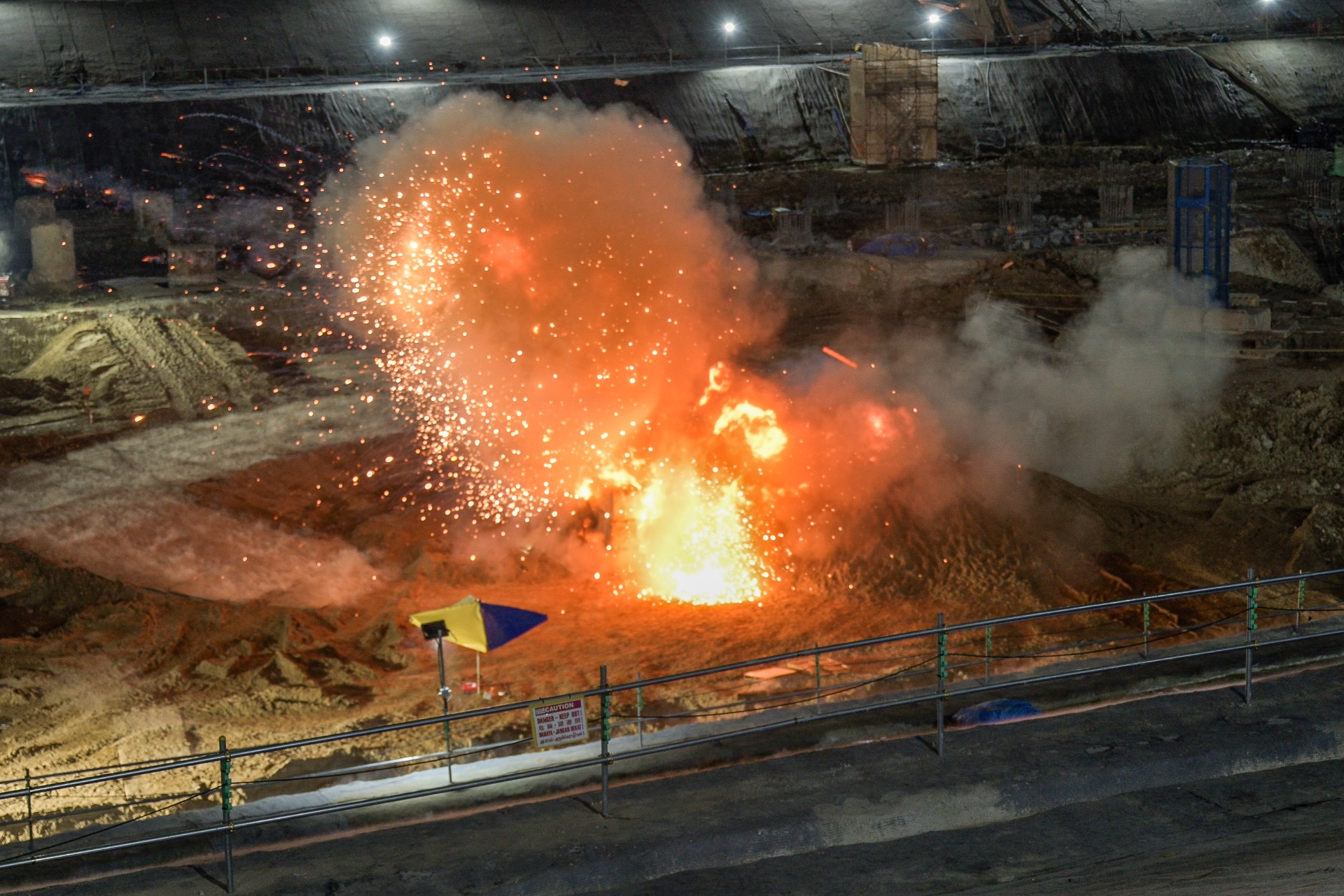
On 2 Apr, the SAF’s Explosive Ordnance Disposal (EOD) team successfully disposed of an unexploded war relic found at Tanah Merah Coast Road.