
OPS & TRAINING
FAST AID
23 Feb 2005
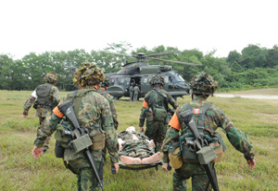
Without warning, towering tsunamis gushed upon South Asian shores on 26 Dec 04, ravaging lands and killing thousands. The region's greatest crisis in recent times left survivors grappling with the searing losses as they tried to rebuild their lives. In this darkest hour, the SAF brought hope by sending its largest operational deployment ever - the Humanitarian Assistance Support Group (HASG) to Indonesia comprised over 1,200 personnel.
With the unprecedented scale of the disaster, a swift response was crucial. The SAF answered the call within hours - working round the clock to get the aircraft, ships, equipment and men ready.
Besides assembling the teams, which included Full-time National Servicemen (NSFs) and volunteers, much thought went into planning and preparing an effective combination of forces, supplies and equipment to meet situational needs.
In less than 72 hours, the largest team of almost 500 personnel assembled onboard RSS Endurance, a Helicopter Landing Ship, and set sail on New Year's Eve to help deliver urgently-needed relief supplies and aid to Indonesians affected by the disaster.
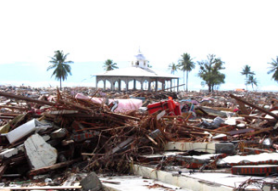
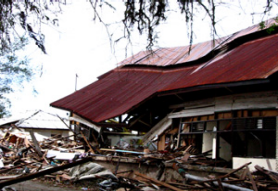
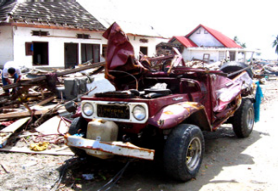
Their destination was Meulaboh, a coastal town in West Sumatra that lost more than a fifth of its population and which was completely cut off from surrounding areas by the terrible destruction, only being accessible to helicopters in the initial stage.
The team focused on medical and engineering aspects in this emergency relief phase - addressing primary healthcare needs and establishing access points via air and sea routes. Providing food, water and other essential supplies to the tens of thousands of locals was also a key priority.
Although smaller teams were deployed to Phuket, Medan and Banda Aceh, the airlift capability contributed by the SAF was significant. C-130s, F-50s, Super Pumas and Chinooks ferried humanitarian relief supplies to various locations, including Meulaboh.
"This group (HASG) carried out its urgent mission with initiative and tenacity, and with compassion and sensitivity," said Minister for Defence, Mr Teo Chee Hean.
"Whether it was a quiet word of comfort in Bahasa Indonesia, or flying the Secretary-General of the United Nations around the Indian Ocean rim, our people displayed commitment, compassion and competence."
RSS Endurance was later joined by two more Helicopter Landing Ships, RSS Persistence and RSS Endeavour, which brought even more assets and supplies. Also onboard RSS Endeavour were 60 volunteers from various Singapore Non-Government Organisations (NGOs) and relief agencies who helped deliver tents for 10,000 people, sleeping bags, blankets, food for 500 families for a week and 1,000 stationery kits for students to start school.
They also helped to set up centres for the internally displaced persons, and provided them with the basic necessities that helped to restore some semblance of normalcy to their lives until they could be permanently rehoused.
Over the three-week operation, SAF aircraft flew some 250 missions and carried more than 1,000,000 pounds of cargo and 4,000 people. They also brought water and food to isolated survivors and transported a mobile air traffic control tower to Banda Aceh. The medical teams treated a total of 4,000 people in Banda Aceh and Meulaboh.
With the Indonesian relief operations moving into the recovery and rehabilitation phase, the SAF HASG had completed what it set out to do. It helped to stabilise the situation and paved the way for other NGOs and relief agencies more suited to the next phase of humanitarian work to step in.
Civilian volunteer groups have taken on the bulk of Singapore's relief assistance in this new phase. Medical teams from the Singapore Red Cross and Mercy Relief, for example, have replaced SAF medical teams in Meulaboh and Banda Aceh.
According to Mr Teo, the SAF was able to respond swiftly and carry out the mission effectively because it had developed a flexible set of capabilities and trained its people to respond to unexpected circumstances.
In addition, the close cooperation built up over the years with the Indonesian armed forces (TNI) made it possible for the SAF to carry out the humanitarian mission smoothly, and in a way that was useful for the relief operations.
In future, the third-generation SAF will be able to respond to a wider spectrum of threats and challenges to respond even more swiftly and more efficiently to deal with the unexpected, he said.
"At the same time, MINDEF and the SAF will continue to strengthen our ties with our friends and neighbours so that we will be able to work closely and smoothly together in overcoming common challenges."
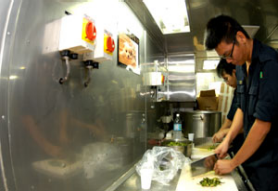
(Right) For the 11 cooks onboard RSS Endurance working on two shifts, it was no mean feat feeding close to 500 personnel four times a day.
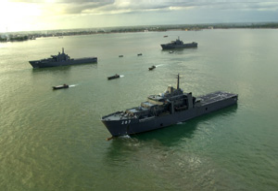
(Top left) In extending a helping hand to our neighbour, RSS Endurance was joined by RSS Persistence and RSS Endeavour in the largest SAF mission deployment ever.
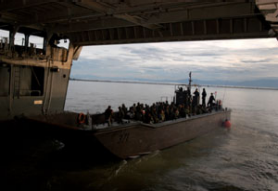
(Top right) As for the fast landing craft, the main form of transportation to shore, they sometimes ploughed the waters over 20 times a day - ferrying equipment and personnel to and fro.
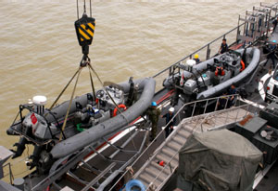
(Left) The Rigid Hull Inflatable Boats were manned by the naval divers and served as probes to test the beaching ground.
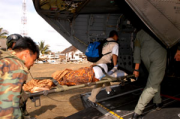
(Left) There were in all six Chinooks and two Super Pumas (SPs) that were deployed to Indonesia. They ferried personnel and supplies such as food and clothing to the people and also helped evacuate casualties.
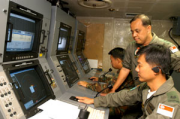
(Centre) With the crowded airspace, RSAF Air Traffic Control personnel onboard RSS Endurance helped to chart a safe course for our helicopters.
(Right) The Helicopter Landing Ships anchored off the waters of Meulaboh also functioned as heli-ops platforms where Chinooks and SPs could land and refuel.
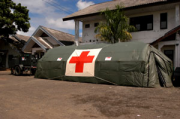
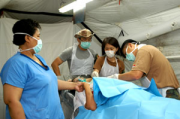
In the only hospital left in the town, a 12-member SAF surgical team would handle A&E cases and operate in our own outdoor field surgical theatre (above centre). Meetings with NGOs such as UNICEF and Red Cross were also all in a day's work, so as to better coordinate relief efforts (above right).
In Banda Aceh, the medical team stayed outfield and treated patients at a TNI camp located near the airport.
CPT (Dr) Vernon Lee (left) was one of the 12-member primary healthcare team sent to Meulaboh. They set up a tent near Bupati, a government building near the city centre, which was home to about 1,500 displaced people. They saw over a hundred patients everyday and work closely with the TNI medical team.
SAF troops worked hand-in-hand with TNI soldiers in Meulaboh to create two landing sites on the beach. The operation involved massive planning and coordination as the shoreline had changed drastically after the disaster. Sandbags, mobile mats and wooden planks formed the new docking points for the fast landing crafts to allow heavy equipment to be projected on shore. The equipment, that included excavators, shovels, bulldozers and forklifts, paved the way for new helo-landing pads and inland roads.
On RSS Endurance alone, there were 350 crates and pallets of relief supplies that comprised largely water and foodstuff. Milo packet drinks (far left) were a hot favourite with the Indonesians who specifically requested the energy drink.
In addition, warehouses in Medan and Banda Aceh were also crammed with donated supplies from all over the world (left), waiting to be distributed to those in need.
(Above) The water purification unit was a much needed asset in the town where drinking water was scarce. It pumped out about 500 litres of drinking water in an hour using the reverse osmosis process.
SAF engineers also brought construction kits to build modular buildings, to be used in the reconstruction of Meulaboh. This 18m by 10m building (right) took about five to seven days to build and was fully equipped with lights, power sockets and air-conditioning.
Like many of the SAF soldiers at Meulaboh, liaison officer SSG Muhamad Azam Aziz (left) was a hit with the local residents - both young and old. A large number of SAF soldiers spoke fluent Bahasa Indonesia and were sensitive to how the people had been affected by the situation. They also forged firm friendships with their TNI counterparts (top) through solidarity and the bonds of universal brotherhood.
The dignitaries that visited the affected coastal areas in Indonesia included (top row, left to right) Singapore's Prime Minister, Lee Hsien Long, Minister for Defence, Teo Chee Hean; Chief of Defence Force LT-GEN Ng Yat Chung, (bottom row, left to right) Minister of State for Defence, Mr Cedric Foo; Indonesian Minister for Social Affairs Bachtiar Chamsyah and United Nations Secretary-General Kofi Annan.
On the day they bade farewell to Meulaboh, about 70 Muslim SAF soldiers joined TNI soldiers and locals in a prayer session on Hari Raya Haji morning.
(Left) A memorial service at a burial site was also held where SAF HASG Commander COL Tan Chuan-Jin and the TNI Commander in Meulaboh, COL Geerhan Lantara, laid wreaths. As the RSS Endurance headed home later that evening, Commanding Officer of RSS Endurance, LTC Li Lit Siew, threw another wreath into the sea to remember those lost in the tragedy.
After three weeks of relief efforts, the restoration phase had begun and perhaps the greatest lesson learnt was that of the indomitable human spirit.
It goes beyond despair, beyond personal loss, beyond nationalities - and finds hope in every possible situation.

ALSO READ IN OPS & TRAINING
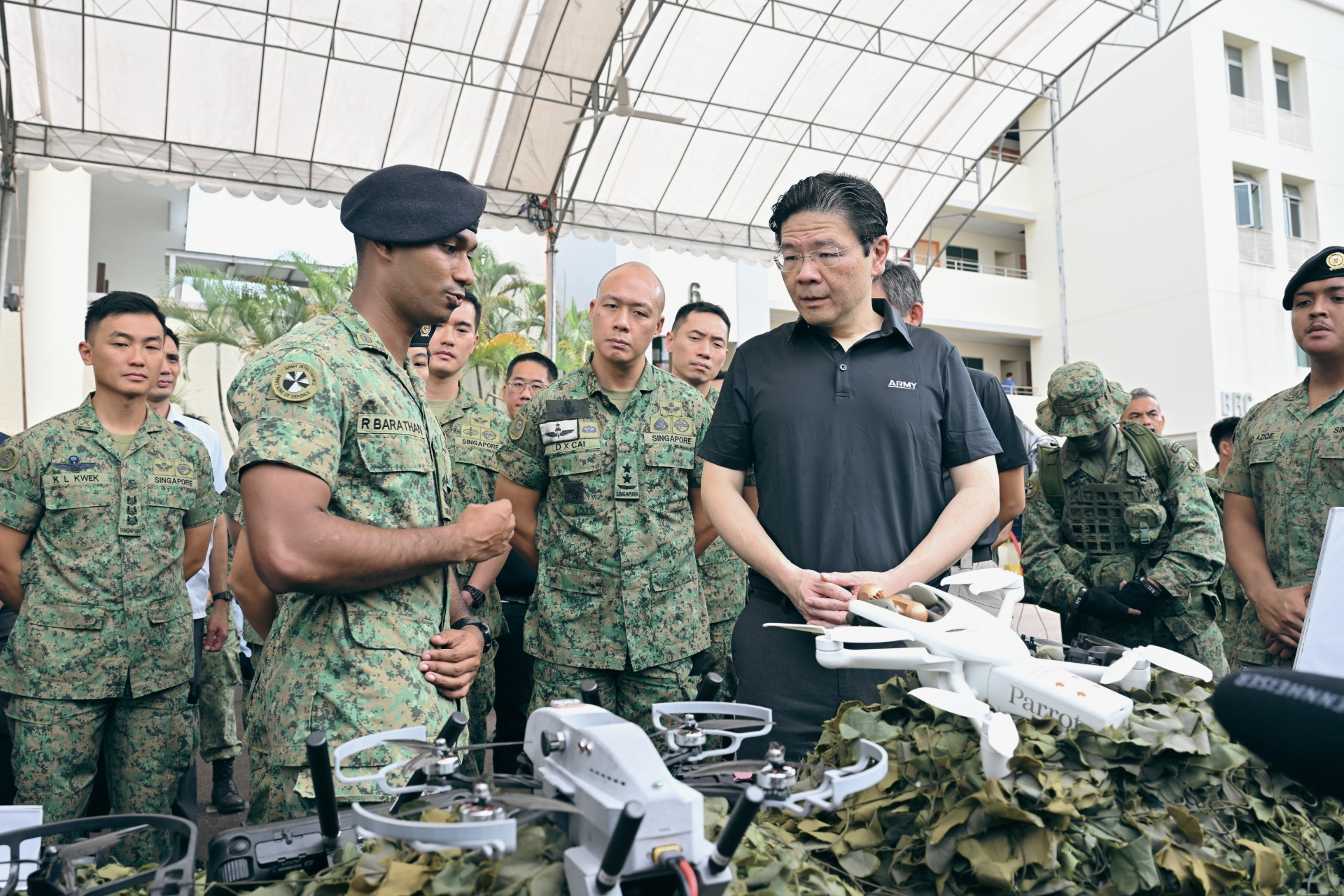
Prime Minister Lawrence Wong observes SAF’s sense-strike integrated capabilities
09 Apr 2026
He witnessed the SAF’s ongoing efforts in leveraging advanced robotics and cross-Service integration to secure Singapore’s interests in an increasingly volatile world.
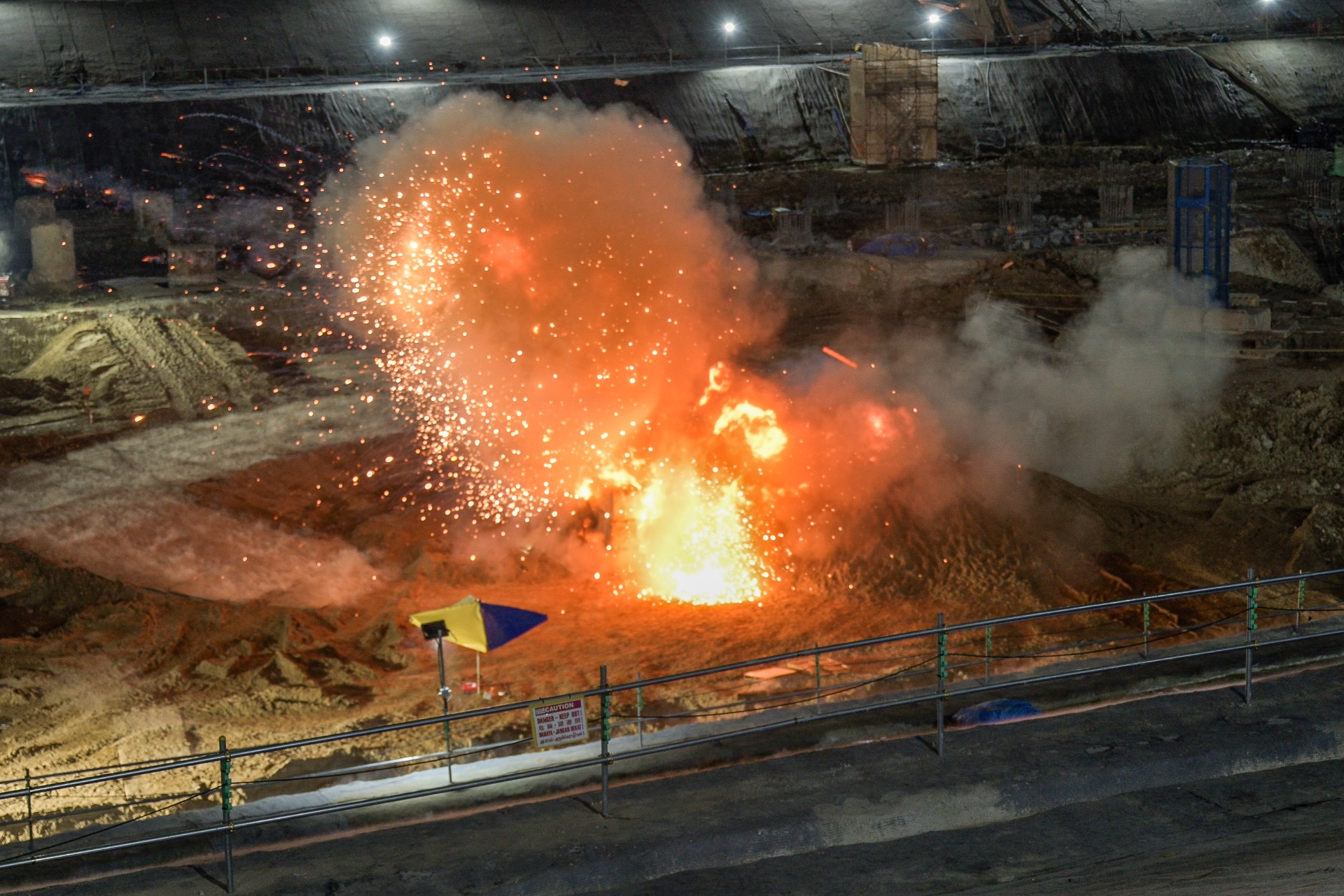
SAF detonates 250kg WWII bomb uncovered at Tanah Merah Coast Road
02 Apr 2026
On 2 Apr, the SAF’s Explosive Ordnance Disposal (EOD) team successfully disposed of an unexploded war relic found at Tanah Merah Coast Road.
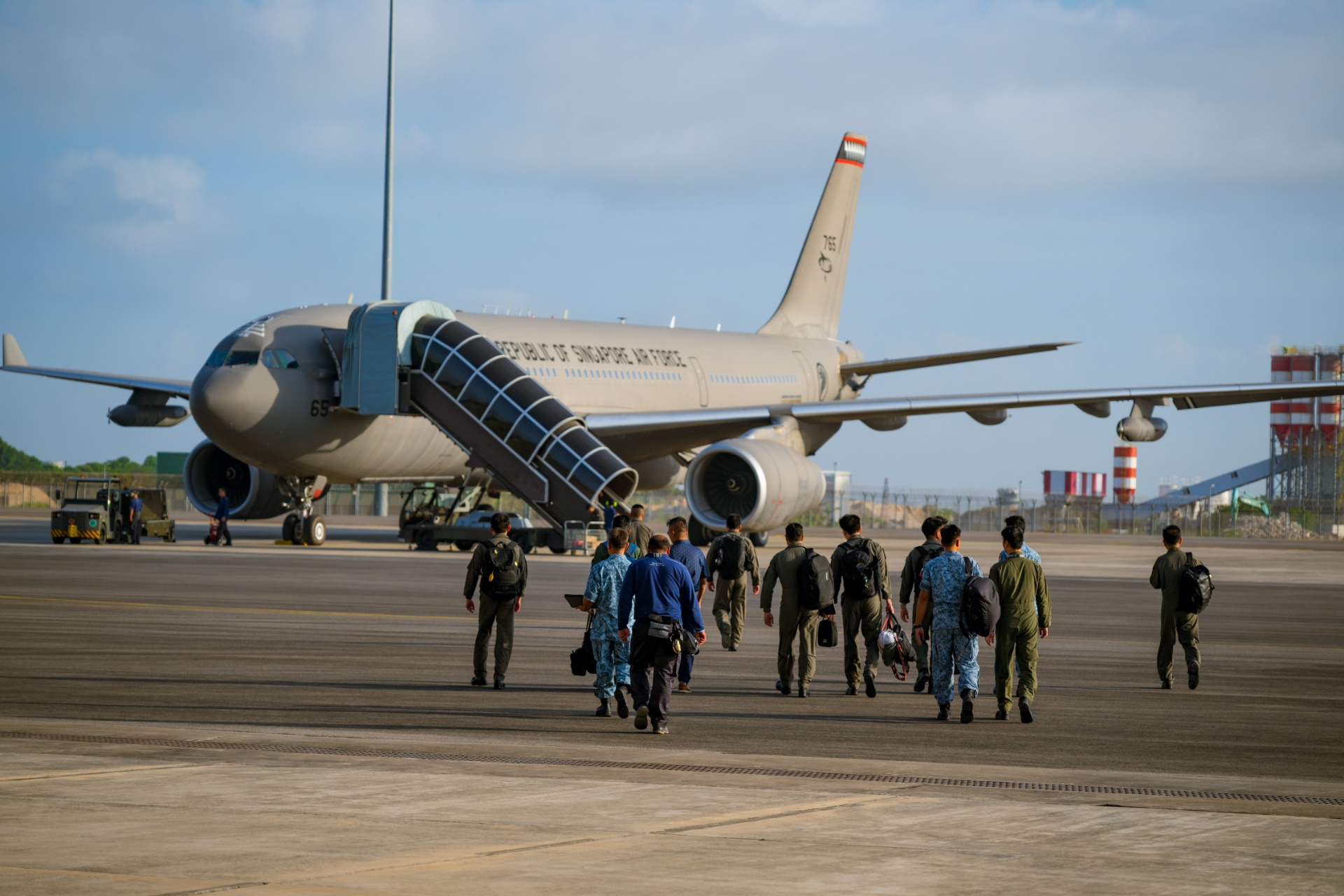
Flying into the unknown: Inside RSAF’s mission to bring S’poreans home from Middle East
28 Mar 2026
Despite the risks and complex challenges of flying in a conflict zone, the men and women of the RSAF pulled off a successful mission through careful planning and hard work.