
OPS & TRAINING
TOWARDS SAFER SUBMARINE OPERATIONS
18 Aug 2010
As more countries in the region acquire or enhance their submarine capabilities in the region, a strong network for multilateral submarine rescue collaboration must be built. Fleet Commander Rear-Admiral (RADM) Joseph Leong said this at the opening of Exercise Pacific Reach 2010.
Exercise Pacific Reach is a regional Submarine and Escape and Rescue (SMER) exercise which aims to develop SMER capabilities and enhance interoperability in submarine rescue operations among participating navies.
The Republic of Singapore Navy (RSN) and the navies of Australia, Japan, the Republic of Korea and the United States (US) are taking part in this year's exercise. Military observers from 13 countries - Canada, China, France, India, Indonesia, Italy, Malaysia, Pakistan, South Africa, Sweden, Thailand, the United Kingdom and Vietnam - are also present.
"The exercise serves as a platform to foster cooperation on SMER operations as well to enhance multilateral relations among the submarine operating countries," added RADM Leong.
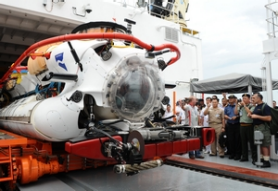
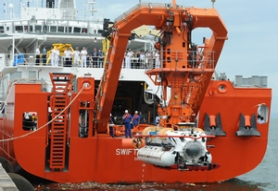
On 18 Aug, the military observers boarded the submarine support vessel MV Swift Rescue for a first-hand look at the RSN's submarine rescue capabilities. The launch of MV Swift Rescue in Nov 2008 - together with the Deep Search and Rescue Six (DSAR 6) - makes the RSN the first in the Southeast Asian region to acquire SMER capabilities.
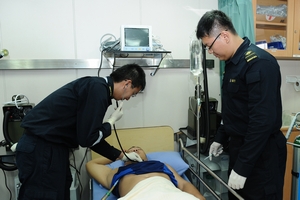
The MV Swift Rescue is a 85m long ship carrying a wide range of facilities for SMER operations. From a helipad for emergency evacuation of casualties to a high-dependence ward (similar to Intensive Care Units in hospitals), the rescue ship is well-equipped to rescue any distressed submariners.
It is integrated with the DSAR 6, a 9.6m long submersible craft which can reach depths of 500m to dock with distressed submarines lying on the seabed and rescue trapped submariners within.
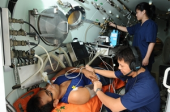
The ship also has a recompression chamber on board to provide immediate medical treatment for rescued submariners. The chamber - which is large enough to hold 40 personnel - utilises a Deck Transfer Lock to prevent changes in atmospheric pressure when rescued submariners are being transferred from the DSAR 6 to the chambers. This capability is termed as Transfer Under Pressure (TUP).
"The TUP capability of the MV Swift Rescue and DSAR 6 is one of the few such systems in the world, and its key advantage is in reducing the risk of injury to submariners," said Major (MAJ) (Dr) Shalini, Head of the Naval Underwater Medicine Centre. "For this reason, rescue via DSAR 6 is the preferred mode of rescue."
This year's exercise, which is being held from 17 to 25 Aug, is the fifth in the series and is hosted by the RSN for the second time. It comprises a shore phase conducted at the Changi Command and Control Centre and a sea phase held in the South China Sea. A medical symposium as well as a simulated evacuation and treatment of personnel from submarines in distress, are also being held as part of the exercise.
The RSN is participating in the exercise with the RSS Endeavour (a Landing Ship Tank), RSS Chieftain (a submarine), as well as the MV Swift Rescue and DSAR 6. Other participating naval assets include the USNS Safeguard - an auxiliary support ship from the US Navy and a Japanese submarine JDS Arashio.In 2000, the RSN hosted the first Exercise Pacific Reach, involving the navies from Japan, the Republic of Korea and the US.
18 Aug 10 -Singapore Hosts Regional Submarine Rescue Exercise


ALSO READ IN OPS & TRAINING
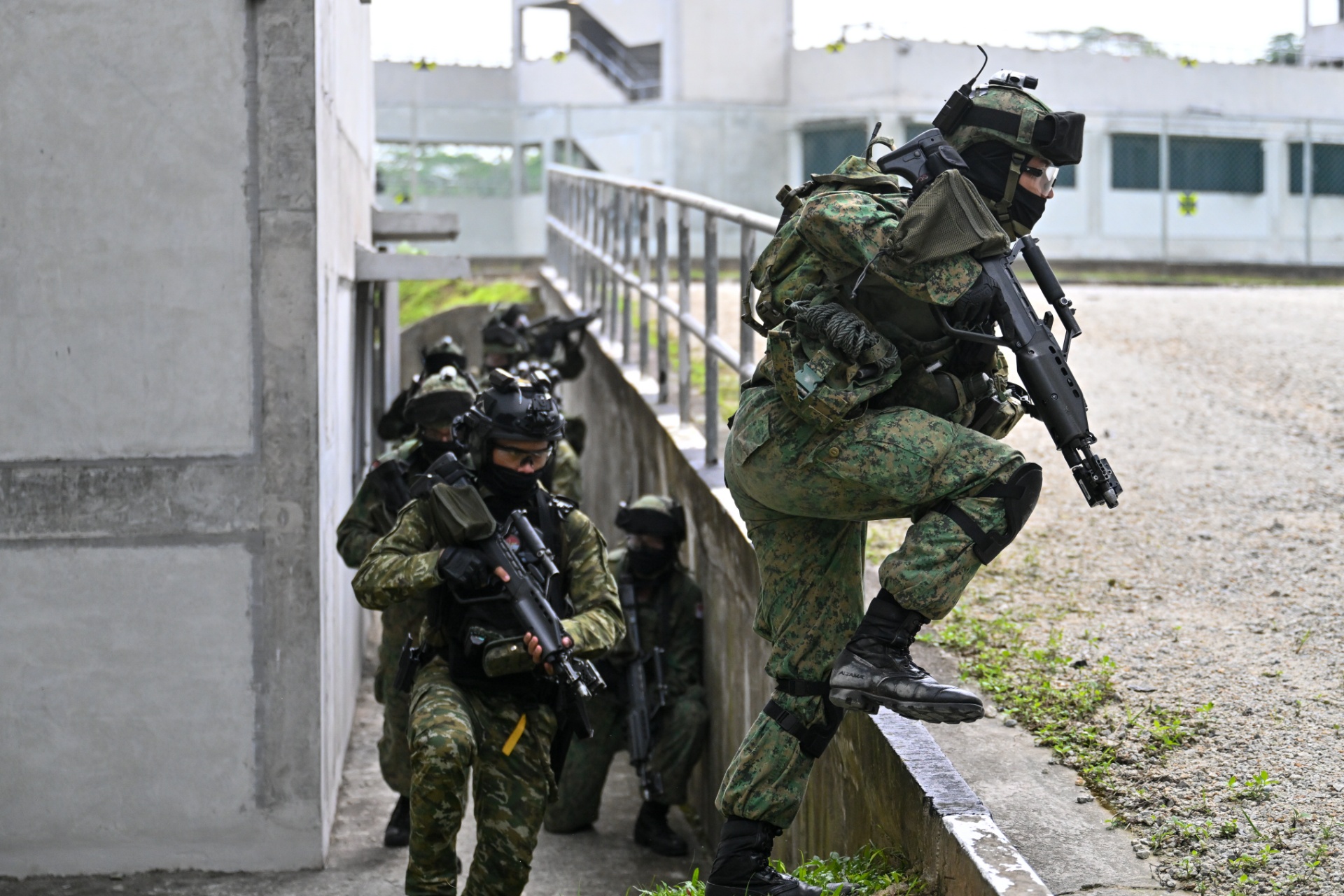
S’pore commandos, Indonesia special forces train & strengthen ties at Ex Chandrapura
08 Jul 2026
From conducting tactical airborne jumps to a coordinated urban raid, soldiers from Singapore and Indonesia deepened their decades-long partnership in this bilateral army exercise.
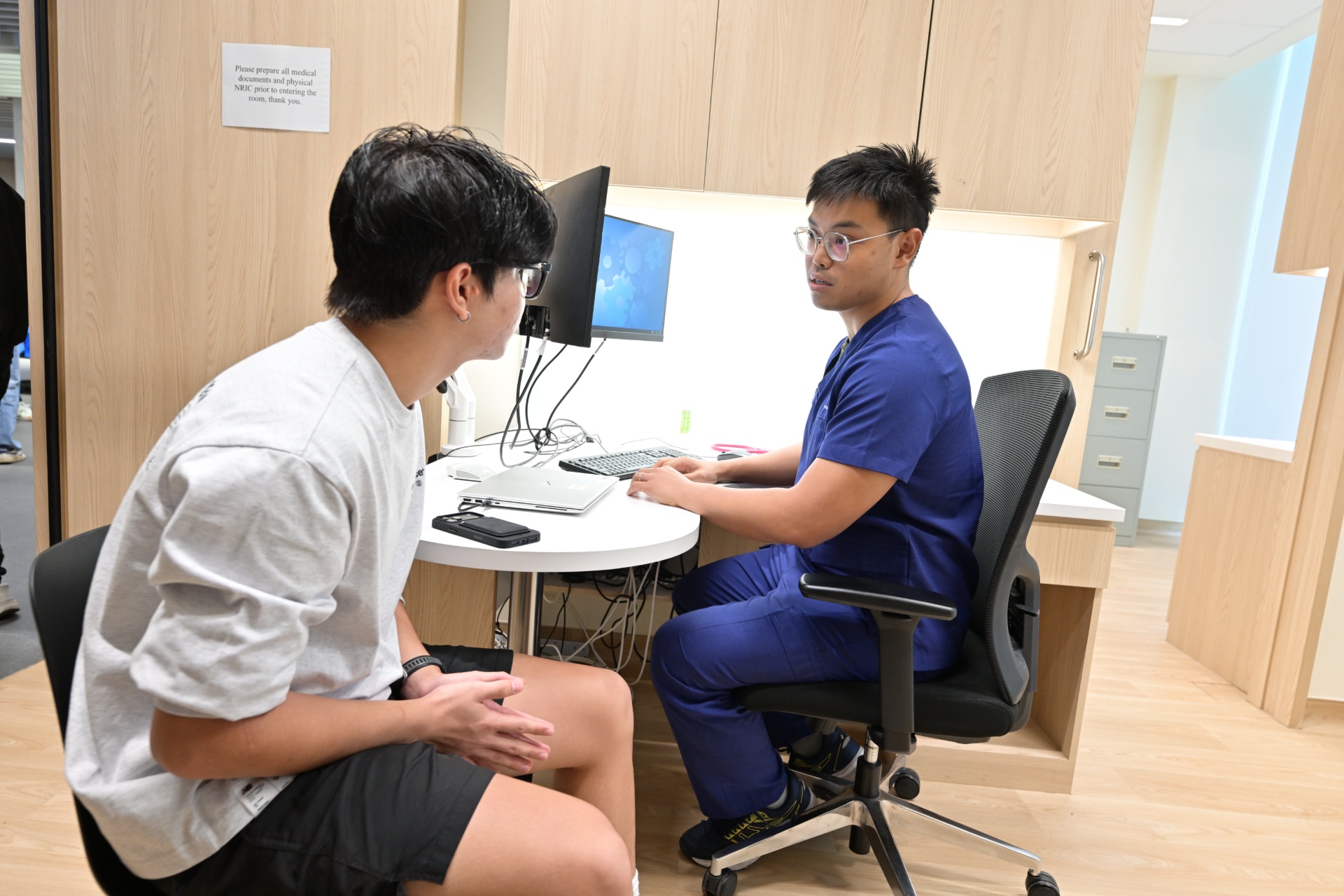
SAF & Home Team to refresh Medical Classification System
13 Apr 2026
The refreshed system will allow about 1,200 servicemen annually to be deployed for vocations and roles they were ineligible for previously.
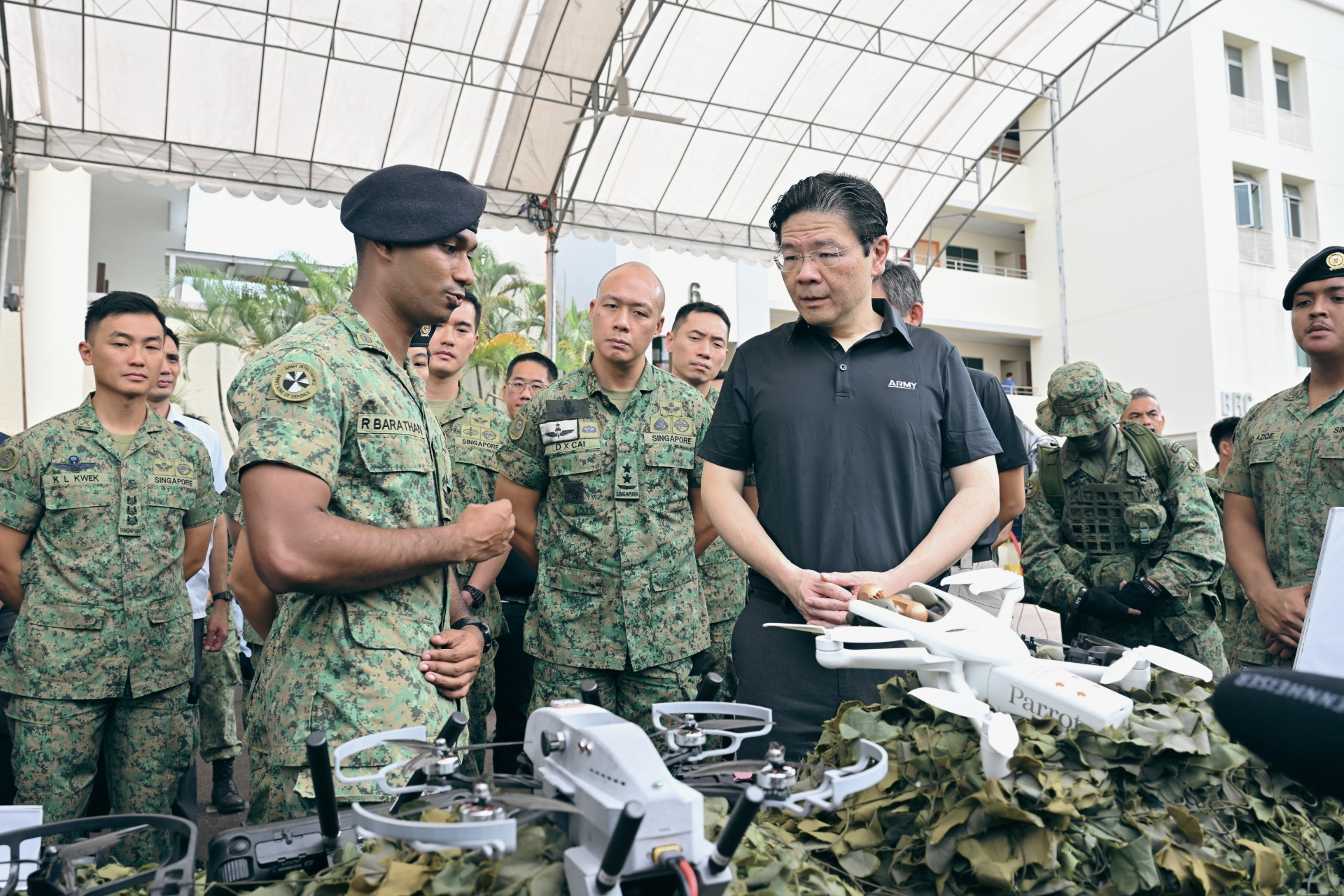
Prime Minister Lawrence Wong observes SAF’s sense-strike integrated capabilities
09 Apr 2026
He witnessed the SAF’s ongoing efforts in leveraging advanced robotics and cross-Service integration to secure Singapore’s interests in an increasingly volatile world.