
OPS & TRAINING
SAF MEDICS TO RECEIVE ENHANCED PARAMEDIC TRAINING
27 Apr 2010
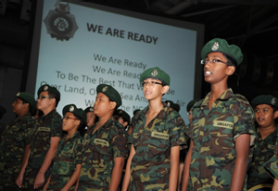
Just seven months back, if full-time National Servicemen (NSF) medics were to encounter an unconscious diabetic casualty in their course of duty, they would require a medical officer's supervision to treat the patient.
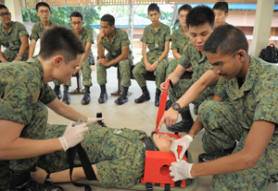
But with the Emergency Medical Technician (EMT) course, introduced in September last year for all NSF medics, they are now empowered to diagnose and independently provide further treatment for the same casualty. They can perform an intravenous injection of glucose solution into the casualty, helping him regain consciousness by increasing his blood sugar level.
The 12-week course enhances paramedic training in the Singapore Armed Forces (SAF) by strengthening medics' basic medical knowledge and equipping them with skills to provide treatment for complex medical conditions. It is conducted under a partnership between the SAF Medical Corps (SAFMC) and the Justice Institute of British Columbia (JIBC), Canada's leading public safety educator providing tertiary education in areas of justice and public safety.
Besides partnerships with institutes in Canada, NYP has been the SAFMC's local training partner in developing courses for Operationally Ready National Servicemen (NSmen) and regular medics.
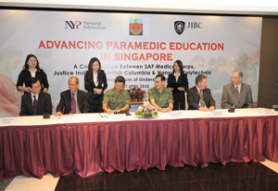
To formalise the partnership between the SAF and the two institutes in education, research and professional development - in the fields of paramedic and pre-hospital care - two separate Memoranda of Understanding (MOUs) were signed between the SAF and NYP, as well as between SAF and JIBC on 27 Apr at Nee Soon Camp.
Present at the MOU signing was Chief of SAFMC, Brigadier-General (BG) (Dr) Benjamin Seet, who said: "With the new education framework we are launching today, we will provide a solid academic foundation for all active National Service and regular medics."
"The changes include enhancing the curriculum of our courses; a greater focus on clinical proficiency rather than academic knowledge; and benchmarking the quality of our education to national and international standards."
NSFs, Operationally Ready National Servicemen (NSmen) and regular medics have much to gain from these partnerships. Besides the EMT courses conducted for all NSF medics, NSF medics and regular medics with a nursing diploma qualification will also be trained as Emergency Medical Specialists (EMS). The course, accredited by JIBC, will enable them to institute treatment for common medical emergencies such as chest pains, life-threatening allergic reactions and diabetes.
A recent graduand of the EMT course, Private (PTE) Mohammed Farid Bin Salim, shared with cyberpioneer how the course has helped him.
"Besides teaching me basic medical knowledge, the EMT course allowed me to do a lot of hands-on practice on the new 3rd Generation equipment. This will boost my confidence in dealing with casualties and patients that I'll be facing in the medical centre to which I've just been posted," said the NSF medic.
For NSmen and regular medics, the MOU with NYP will provide them with basic scrub medic and post-surgery critical care training conducted by NYP's School of Health Sciences. The training will enable them to attend to casualties in an operating theatre and an intensive care unit.
For Military Expert (ME) 1 Yang Qunchuan, who has gone through the basic scrub course at NYP, he spoke of how he found the skills gained from the course useful during last year's earthquake relief mission in Padang, Indonesia.
"As the scrubs course taught me how to scrub myself properly, and the use of different types of surgical instruments in the operating theatres, such as needles, sutures, clamps and blades, I was able to put all these knowledge and skills into good use when we had more than ten operations a day during the mission."
In addition, both MOUs will also allow regular medics to pursue diploma and advanced diploma level courses in paramedic care. Designed by JIBC and NYP respectively, the courses will provide medics with a structured framework for professional advancement and enable them to provide emergency medical treatment during peacetime training and in an operational environment, such as in the battlefield, or during humanitarian disaster relief missions.
The signing of the MOUs is a significant milestone, as it enhances paramedic training for SAF medics and equips them with the latest medical knowledge and technologies to support the 3rd Generation SAF's operations. By collaborating with these local and international institutions, it also reflects the SAF's commitment to provide its medics with the best training for servicemen to receive optimal health care.
27 Apr 10 - SAF Collaborates with Local and International Institutions to Enhance Paramedic Education
27 Apr 10 - News Video: SAF Collaborates with Local and International Institutions to Enhance Paramedic Education

ALSO READ IN OPS & TRAINING
SAF & Home Team to refresh Medical Classification System
13 Apr 2026
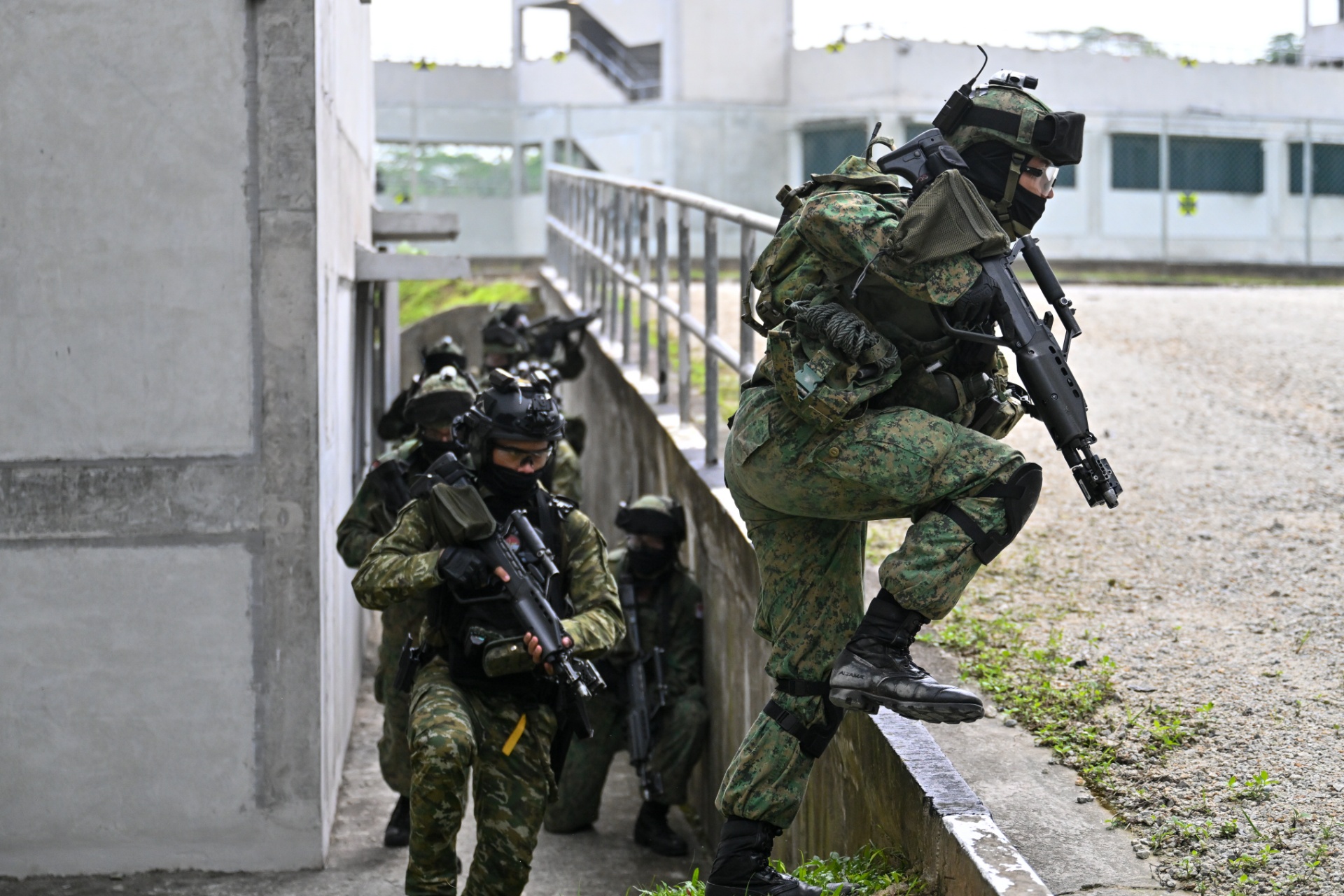
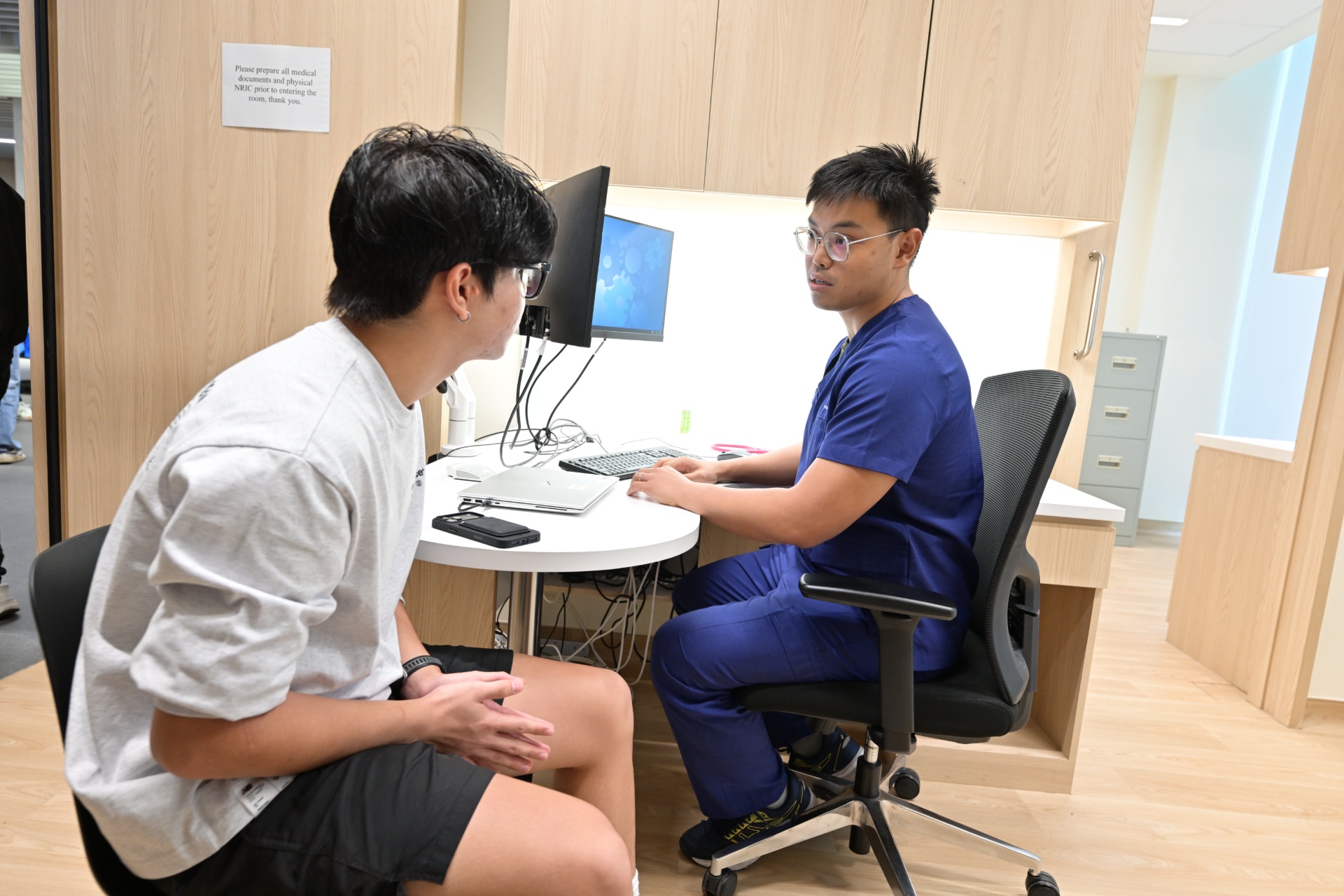
The refreshed system will allow about 1,200 servicemen annually to be deployed for vocations and roles they were ineligible for previously.
Prime Minister Lawrence Wong observes SAF’s sense-strike integrated capabilities
09 Apr 2026
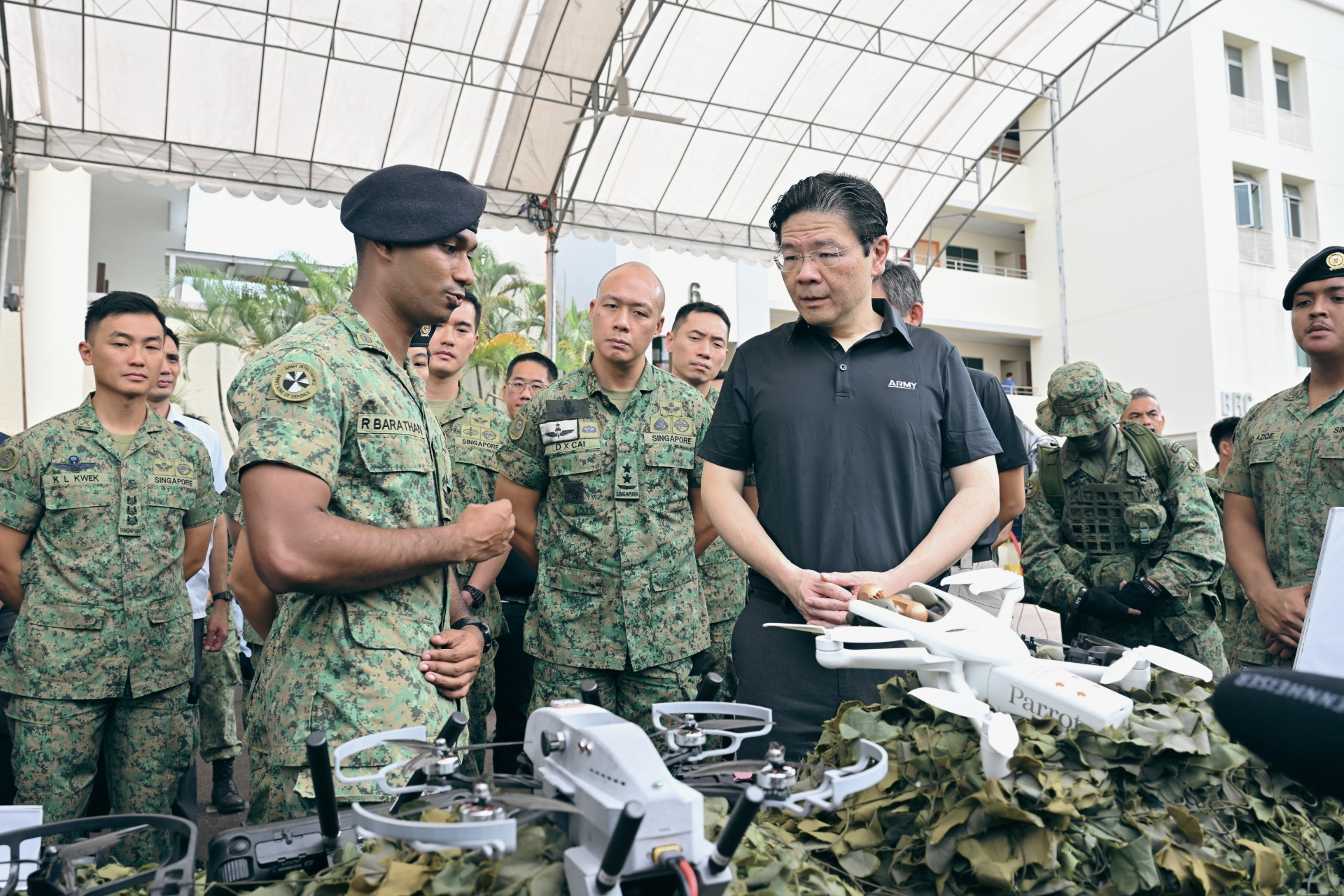
He witnessed the SAF’s ongoing efforts in leveraging advanced robotics and cross-Service integration to secure Singapore’s interests in an increasingly volatile world.
SAF detonates 250kg WWII bomb uncovered at Tanah Merah Coast Road
02 Apr 2026
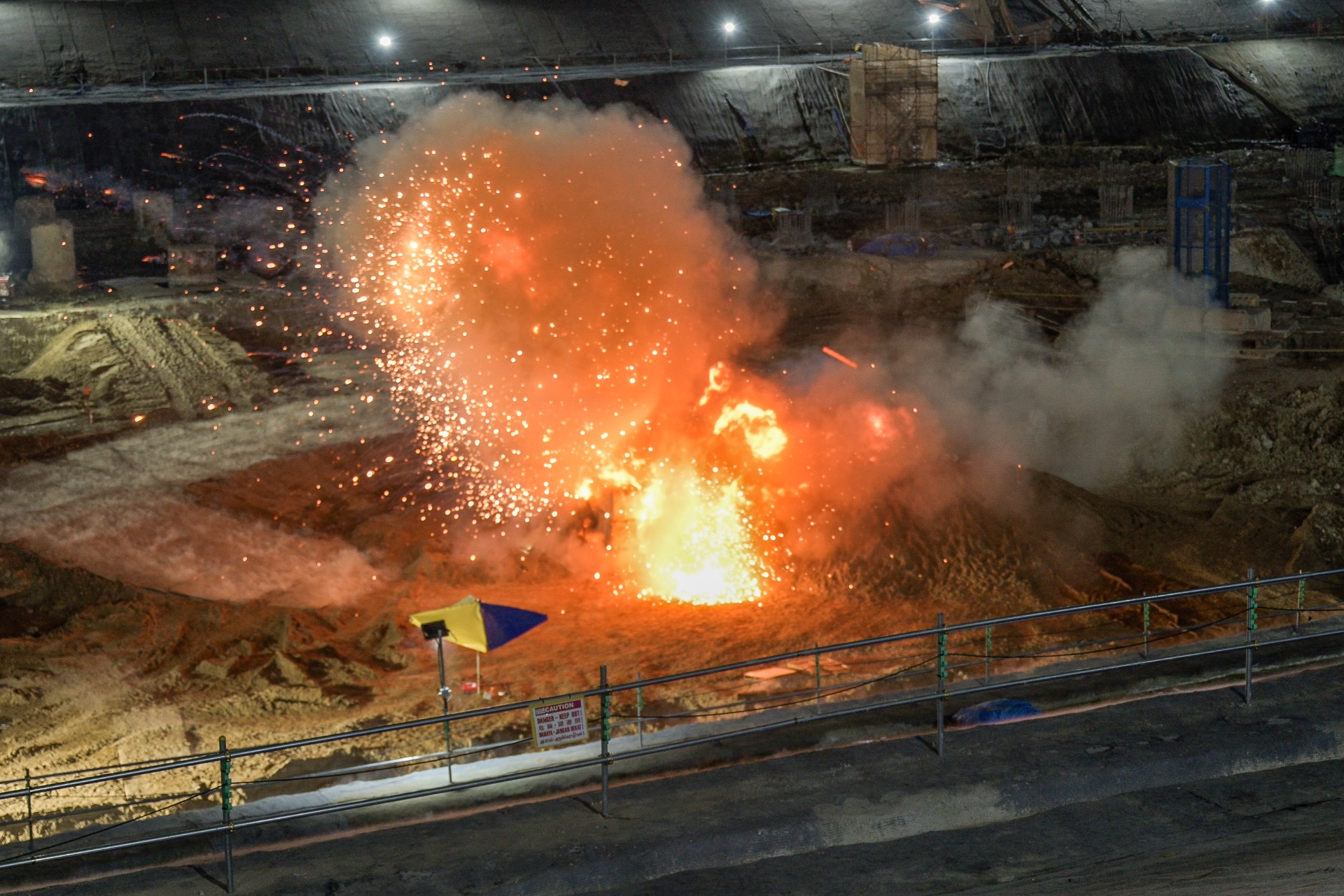
On 2 Apr, the SAF’s Explosive Ordnance Disposal (EOD) team successfully disposed of an unexploded war relic found at Tanah Merah Coast Road.