
OPS & TRAINING
SAF CONDUCTS AIR-LAND INTEGRATED EXERCISE
07 Dec 2017
What happens if the enemy launches a multipronged attack, firing at us from both land and air? Can our commanders get a clear and comprehensive view of the battlefield, and call upon the best assets, on land or in the air, to fight back and defend our land?
What happens if the enemy launches a multipronged attack, firing at us from both land and air? Can our commanders get a clear and comprehensive view of the battlefield, and call upon the best assets, on land or in the air, to fight back and defend our land?
This was the battle scenario at Exercise Forging Sabre 2017, held from 28 Nov to 13 Dec in Phoenix, Arizona, United States (US).
The sixth instalment of the biennial exercise is its largest yet, bringing together strike and sense assets from both the Republic of Singapore Air Force (RSAF) and Singapore Army, and about 800 personnel in total.
It boasted a higher level of integration between the sense and strike assets across the two Services. With two areas of operation instead of one, the complexity of the exercise was also upped.
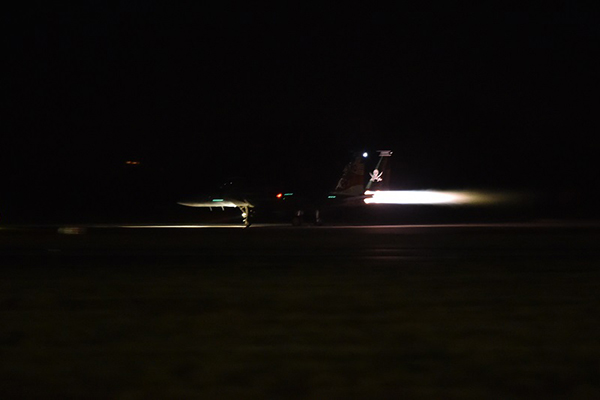
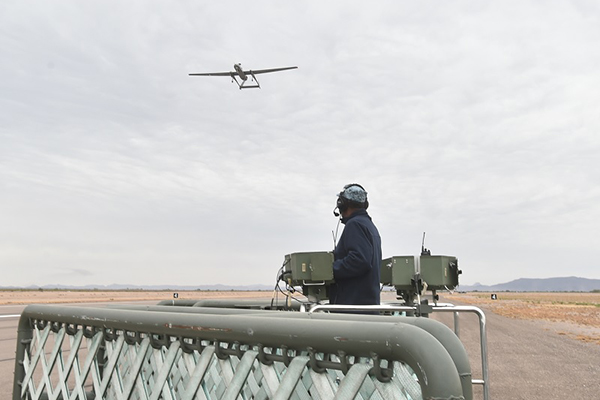
Sense elements like the RSAF's Heron 1 Unmanned Aerial Vehicles (UAVs) and Army's Commando detachments and STrike ObserveR Mission (STORM) teams collected information on enemy assets and locations, being the eyes in the skies and on the ground to guide strike assets like F-15SG and F-16C/D fighters, AH-64D Apache Longbow Helicopters and High Mobility Artillery Rocket Systems (HIMARS) accurately onto the enemy targets.
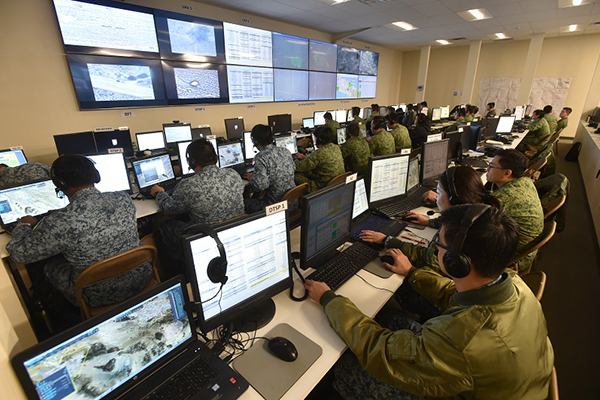
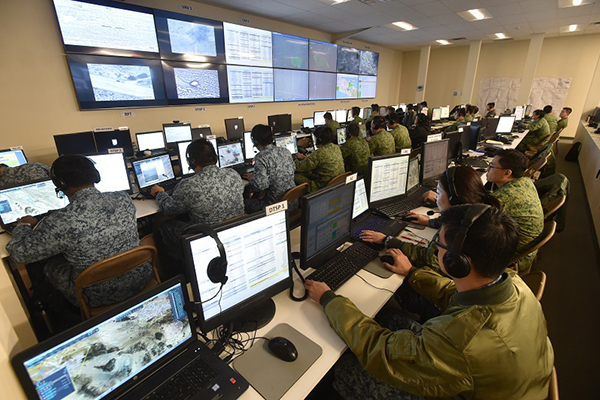
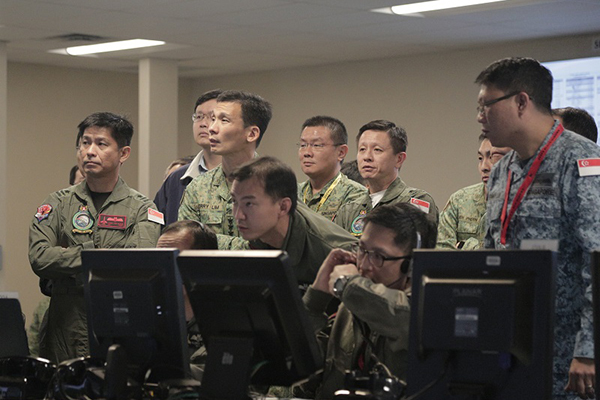
An integrated simultaneous attack was also coordinated and directed by commanders in an integrated Command Post located in Luke Air Force Base. With real-time oversight of the enemy targets and location and the availability of the strikers, commanders can call for dynamic attacks, employing the most suitable assets.
On the integrated mission, Co-Exercise Director (Air) Brigadier-General Tommy Tan saw it as a validation of the Singapore Armed Forces' (SAF's) ability to integrate its weapon systems: "Integration, even between fighters and helicopters, can be a challenging one. If we are able to do it between services, in this case between the Air Force and the Army, it shows a high level of professionalism and competency."
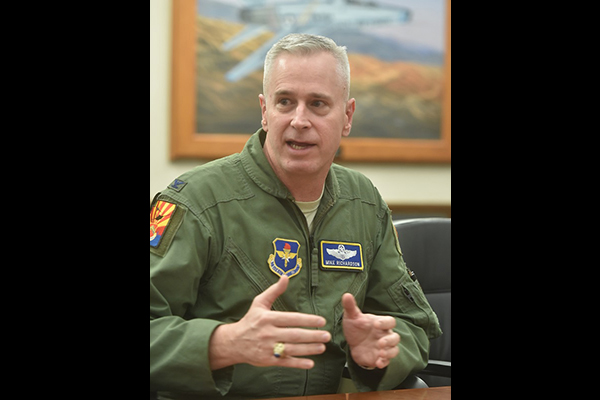
Colonel (COL) Michael Richardson, Vice-Commander of the 56th Fighter Wing at Luke Air Force Base, said: "Bringing both the land forces with their manoeuvre and weapons, along with the helicopters and the fighters, creates really a fantastic laboratory to explore both operational capabilities and integration of the multiple Services in the SAF. In that regard, it's an awesome demonstration, not only of commitment to training, but also commitment to execute."
He added: "The RSAF is a highly motivated, highly professional force that the US has been privileged to share in a long-term relationship with, here in Peace Carvin II. The integration and interoperability of aims of our two Services have been flourishing here at Luke Air Force Base through the Peace Carvin II programme, where we not only share lessons learnt, tactics, techniques and procedures, but we also learn how to appreciate each other's cultures, how to work side by side, how to integrate our national aims for Pacific stability and security."
Chief of Defence Force Lieutenant-General (LG) Perry Lim visited the exercise on 2 and 3 Dec and witnessed an integrated live-firing exercise at the Barry M. Goldwater Range. The range is 20 times the size of Singapore.
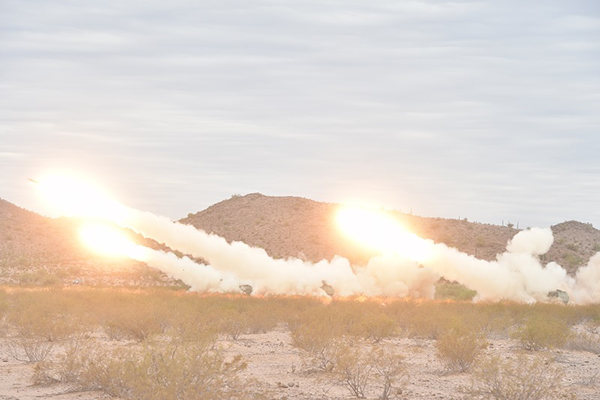
As part of his visit, LG Lim observed F-16C/Ds bombing and witnessed the HIMARS firing multiple shots at targets lased by sensors such as the Heron 1 UAV. This was the first time that the HIMARS and Heron 1 worked together in an integrated live-firing exercise.
Said LG Lim of the integrated strike: "The SAF is an integrated force. It means that we need to combine the capability of our 3 Services the Army, Navy and the Air Force to bring a greater capability to bear. It has to be a case whereby the sum of the parts has to be greater than the whole, and I think the participants proved that in a very tightly controlled air-land mission."
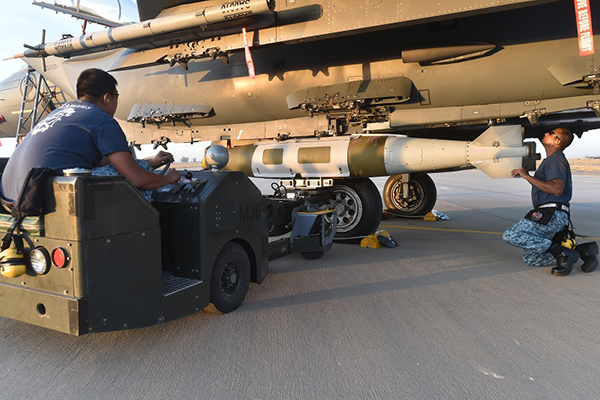
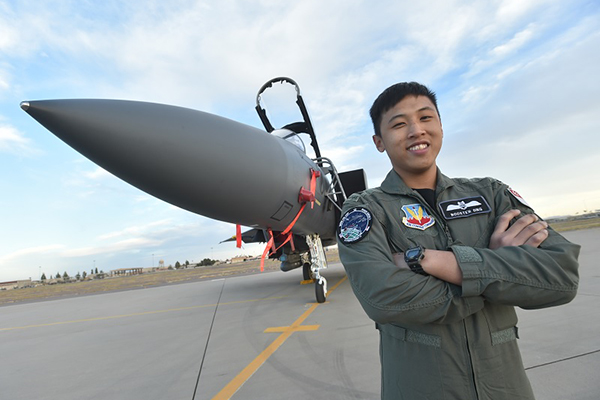
This year's edition of Exercise Forging Sabre saw many firsts. One of them was the dropping of a live GBU-31, a 2,000-pound Joint Direct Attack Munition. Carried by the F-15SG fighter jets, this was the first time the bomb was being used in an exercise.
F-15SG pilot Lieutenant (LTA) David Ong, 24, explained that the new bomb would allow the RSAF to overcome more kinds of threats: "The 500-pound and 2,000-pound bombs are suited for different kinds of targets. The GBU-31 is useful for attacking fixed targets that need penetration."
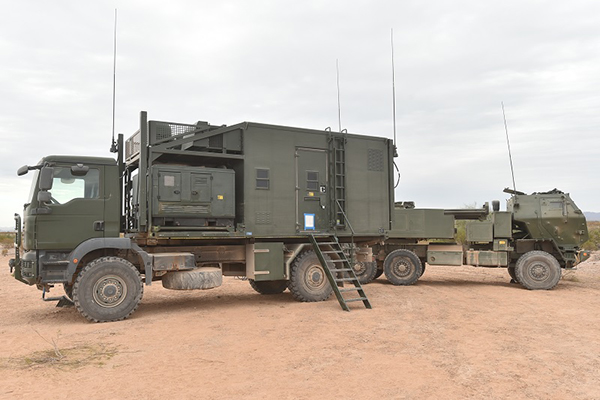
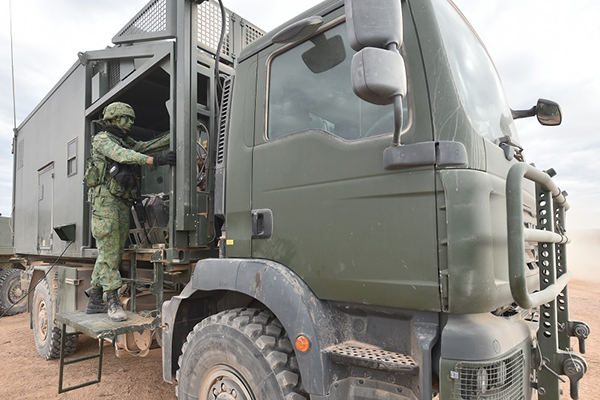
Another first at this year's exercise is the debut of the new HIMARS Battery Command Post (BCP) at a live-firing exercise. Unlike the old BCP that was deployed out of 1.5-tonners that ran on noisy generators and could only operate when it came to a stop, the new BCP saw three new features.
First, enhanced data connectivity with other strike elements provides live updates and improves the HIMARS operators' and commanders' situational awareness, allowing for Command-on-the-Move.
Second, it is also more easily and rapidly deployable, requiring only four minutes to set up. This is down from the seven minutes that the manual set-up of the old BCP took.
Third, with two on-board generators, it can support operations for longer periods of time, up to 48 hours continuously.
Full-time national serviceman and HIMARS operator Corporal (CPL) Arijit Dasgupta was impressed to see how the new BCP matched up to the old one.
Said the 20-year-old, who was a driver for the new BCP at the exercise: "It's impressive how we can put all the central comms into just one vehicle. It's also a lot more high-tech and automated. I can be driving while the commanders are giving orders. Often, while going from one deployment area to the other, there can be a change of instructions, and it can be difficult to communicate it when we didn't have such an automated system. Now, if the higher-ups tell us we are going to fire at a different location, we can quickly change our course."

ALSO READ IN OPS & TRAINING
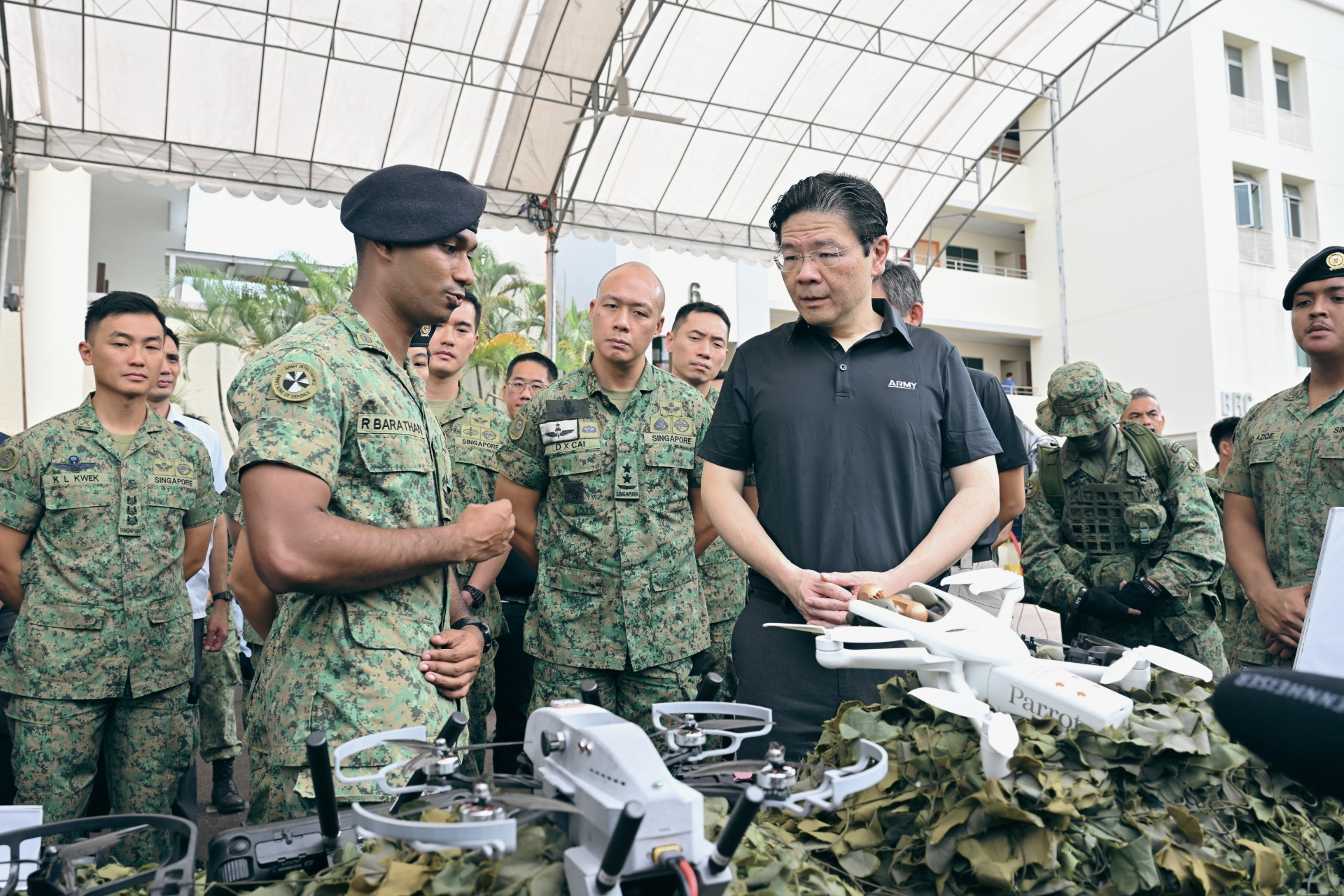
Prime Minister Lawrence Wong observes SAF’s sense-strike integrated capabilities
09 Apr 2026
He witnessed the SAF’s ongoing efforts in leveraging advanced robotics and cross-Service integration to secure Singapore’s interests in an increasingly volatile world.
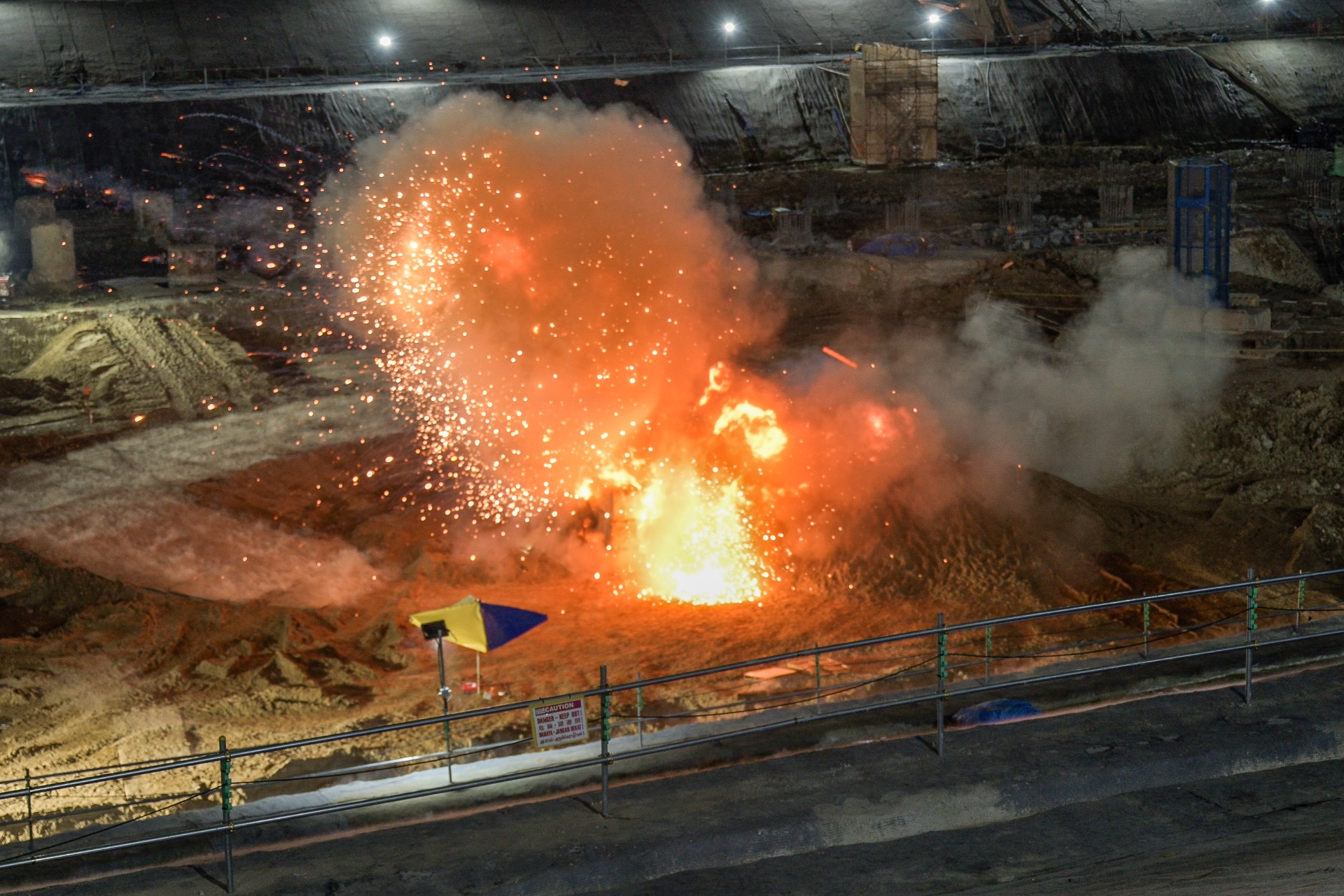
SAF detonates 250kg WWII bomb uncovered at Tanah Merah Coast Road
02 Apr 2026
On 2 Apr, the SAF’s Explosive Ordnance Disposal (EOD) team successfully disposed of an unexploded war relic found at Tanah Merah Coast Road.
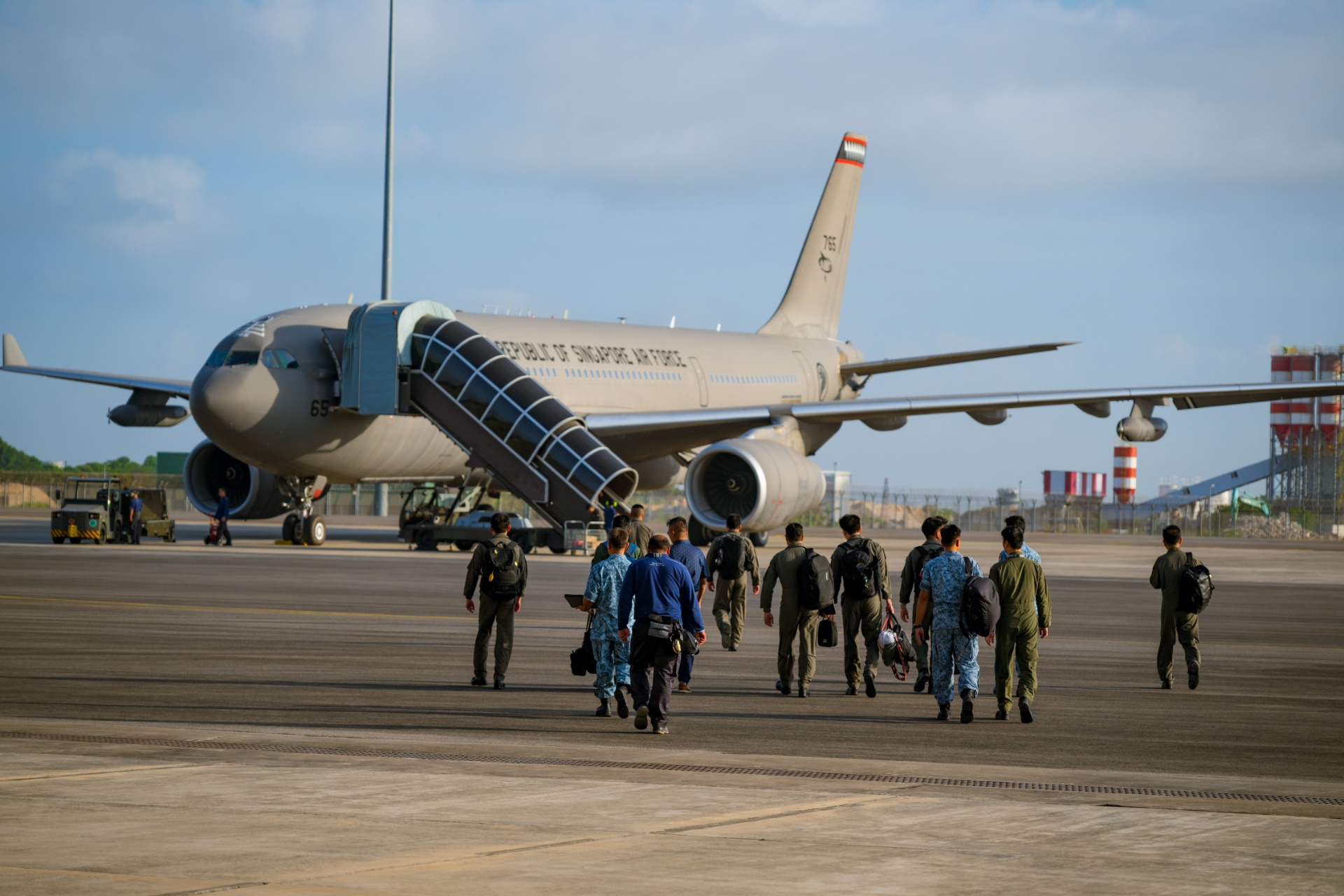
Flying into the unknown: Inside RSAF’s mission to bring S’poreans home from Middle East
28 Mar 2026
Despite the risks and complex challenges of flying in a conflict zone, the men and women of the RSAF pulled off a successful mission through careful planning and hard work.