
OPS & TRAINING
RSN COMPLETES NAVAL DRILLS WITH US NAVY IN GUAM
05 Sep 2017
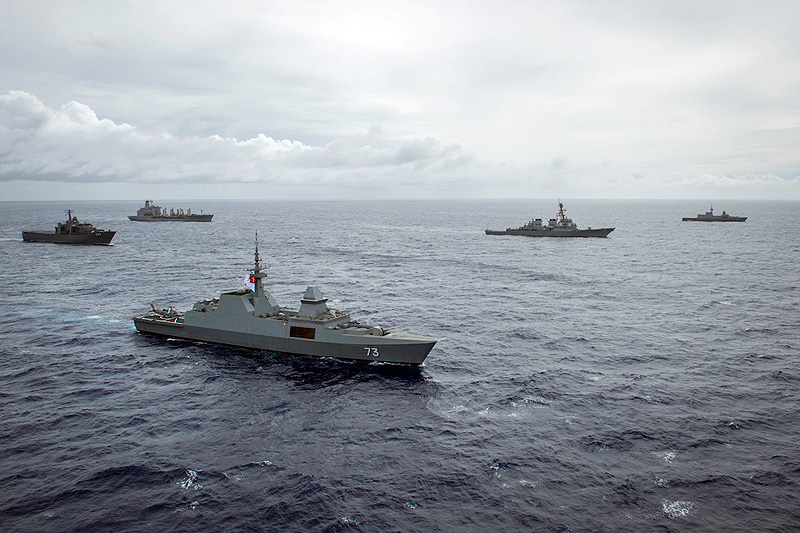
The Republic of Singapore Navy (RSN) has concluded the first Exercise Pacific Griffin, held in the waters off Guam from 19 Aug to 2 Sep. The 14-day bilateral exercise with the United States Navy saw the two sides conduct submarine-hunting, anti-air warfare and anti-surface drills together.
From the RSN were Landing Ship Tank RSS Endurance and two frigates - RSS Stalwart and RSS Supreme with an embarked Sikorsky S-70B Naval helicopter.
Assets from the US Navy included littoral combat ship USS Coronado, Arleigh Burke-class destroyer USS Benfold, replenishment oiler USNS Pecos and military aircraft such as Hawker Hunter fighter jets. More than 850 personnel from both sides were involved in the exercise.
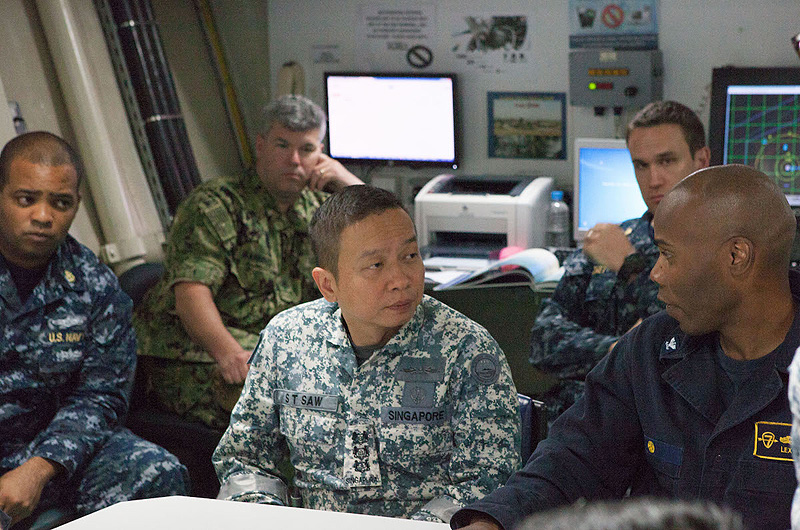
When asked how exercising in Guam benefits the RSN, Commander First Flotilla and Commanding Officer 185 Squadron Colonel (COL) Saw Shi Tat said: "The vast training space here (in Guam) allows the RSN to conduct many advanced, high-end naval warfare and maritime training of substantial scope and complexity."
Anti-submarine warfare was one of the complex drills both naval forces practised while in Guam. In such scenarios, ships and aircraft have to operate in tandem while coordinating flight operations.
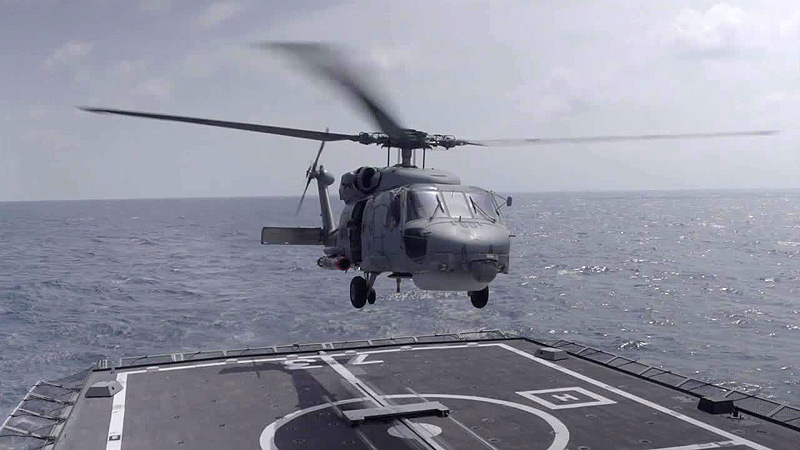
The faster and more mobile air assets function as forward eyes for the ships; combing the sea for potential threats lurking beneath the sea surface and investigating areas of interest. During the exercise, the S-70B dropped a torpedo in the hunt for a simulated submarine.
Said Tactical Aircraft Coordination Officer (TACCO) Captain Tan Hoong Teck: "The waters here are deep, which means that submarines can use this to their advantage to evade detection.
"The bigger training area also means both aircraft and submarines have a lot of room to manoeuvre; and we are able to push our operational limits to see how effective we are."
The 29-year-old sits in the S-70B, coordinating the operations between the ship and aircraft. As trained naval officers, TACCOs are able to translate the ships' intentions to action in the air.
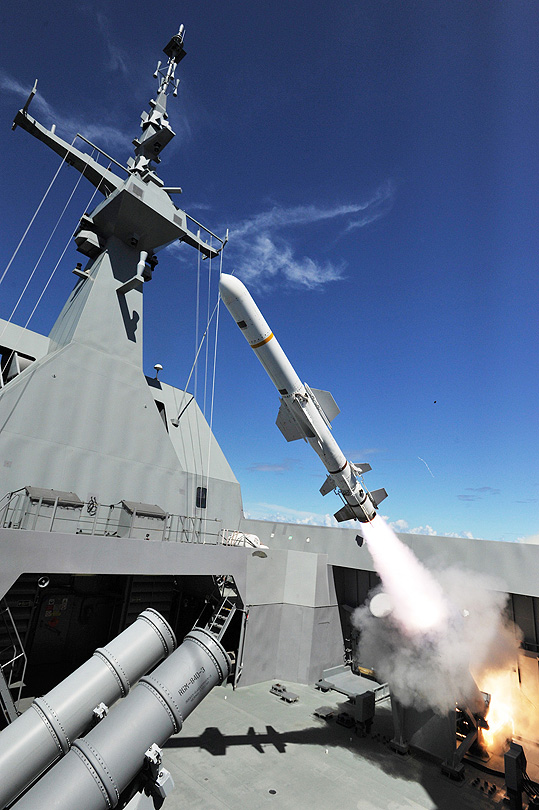
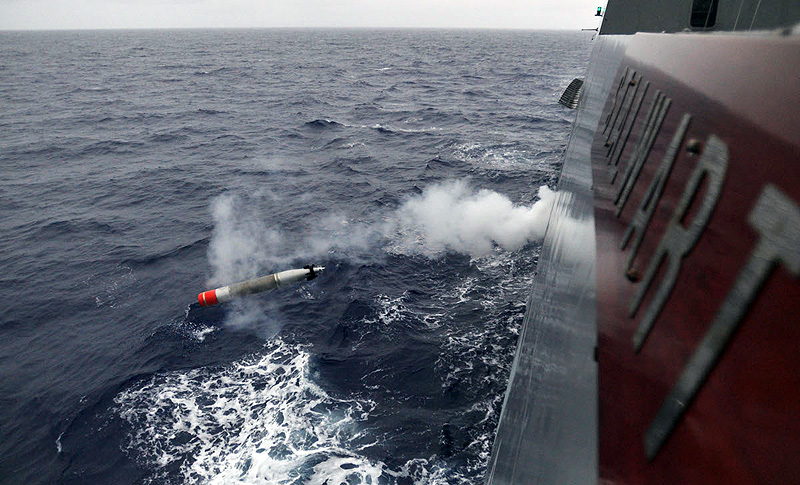
On the sidelines of the exercise, the RSN also successfully conducted live firings of its shipboard missiles and torpedoes. It was also the first time that the RSN conducted a Designated Time-on-Target (DTOT) Harpoon firing.
During the live firing, the two RSN frigates each fired a Harpoon missile to strike a target simultaneously. It is an exercise in military precision, as the firing platforms have to coordinate their missile-firing to ensure that the weapons land on target at the same time. Firing in this manner requires extra effort, but lethality is almost guaranteed if successful.
"The whole team has gone through a lot of training in preparation for the firing. Precision is important; we need to synchronise both ships' Harpoon firing timings," said Military Expert 4 Koh Tai Wei, Senior Combat Systems Engineer RSS Stalwart, who fired one of the two missiles.
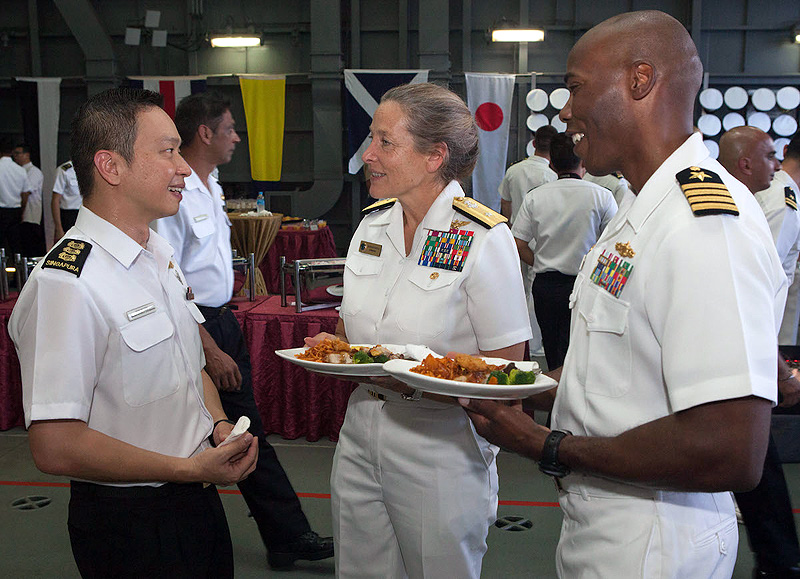
The two-week exercise also proved useful for the US Navy. Said Commodore of the US Navy's Destroyer Squadron 7 Captain (CAPT) Lex Walker: "The US Navy deeply values our close partnership with the RSN."
When asked why exercises such as this were important, he said: "(That is because) we know that there is no mission that we're going to do, in the South China Sea or anywhere else, that we (the US Navy) are going to be able to do alone.
"As partners in this area, we have to rely on one another to be successful and advance the maritime domain."

ALSO READ IN OPS & TRAINING
19 countries come together for Exercise Trident Resolve
23 Sep 2026
This exercise marks the largest ADMM-Plus exercise in a decade, involving 2,200 personnel from the militaries of all 19 ADMM-Plus countries and civilian agencies.
S’pore commandos, Indonesia special forces train & strengthen ties at Ex Chandrapura
08 Jul 2026
From conducting tactical airborne jumps to a coordinated urban raid, soldiers from Singapore and Indonesia deepened their decades-long partnership in this bilateral army exercise.
SAF & Home Team to refresh Medical Classification System
13 Apr 2026
The refreshed system will allow about 1,200 servicemen annually to be deployed for vocations and roles they were ineligible for previously.