
OPS & TRAINING
RSAF PROVIDES ASSISTANCE IN KATRINA'S WAKE
20 Oct 2005
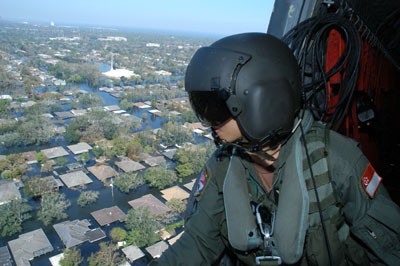
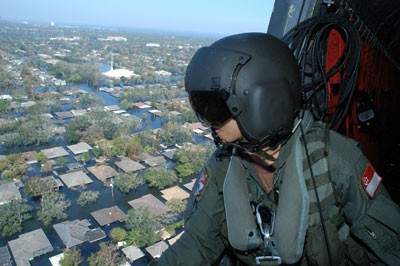
Deemed as one of the worst natural disasters in America's history, Hurricane Katrina tore through the southern states of Louisiana and Mississippi on 29 Aug, killing over a thousand people and wrecking countless homes.
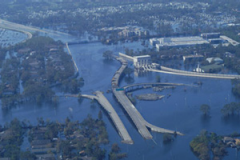
The low-lying bowl-shaped city of New Orleans was especially vulnerable. Everyone's worst fears materialised when the 5m-high bank of protective levees keeping the waters of Lake Pontchartrain out of the coastal city buckled under the onslaught of lashing winds and strong surf, resulting in a massive surge of water gushing into the city.
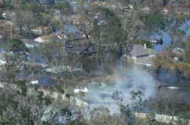
In the northern part of the city, houses were completely submerged with only rooftops peeking out from the water. Highways were broken into sections, leaving canoes and boats as the only feasible means of manoeuvring through the streets.
The US Federal Emergency Management Agency, through the National Guard, approached the Republic of Singapore Air Force's (RSAF) Peace Prairie Detachment in Texas, to help out in humanitarian assistance and relief efforts.
The Republic of Singapore Air Force (RSAF) responded promptly, with three CH-47 Chinook helicopters arriving at Fort Polk, Louisiana, on the afternoon of 1 Sep (local time). Another helicopter joined in four days later.
The RSAF servicemen went straight into action, setting up base camp within three hours and familiarising themselves with the area of operations. Everyone was clear that the task at hand required a swift and precise response.
"Republic of Singapore Air Force personnel are saving lives in Louisiana and the Gulf Coast states today. All Americans are deeply grateful for the generous efforts of the three Singaporean Chinook helicopter teams assisting in the disaster relief operations underway.
Last year with the Asian tsunami disaster, we all saw that rapid response was critical in saving lives. Americans will long remember this immediate help from the RSAF, which interrupted their training programme to assist American efforts."
Together with their American counterparts, the RSAF team maintained a hectic schedule throughout the relief operation, carrying out various missions ranging from relocating evacuees to transporting Zodiac boats to facilitate search and rescue efforts.
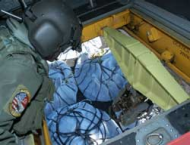
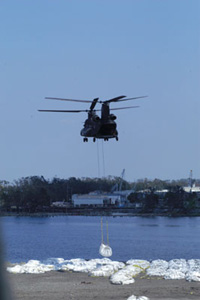
They also helped to prevent further flooding of the city by airlifting 5,000-pound (about 2, 270kg) sandbags and dropping them into gaping waters between crumbled portions of the levees.
While carrying out their daily missions, the men also had to contend with towering skyscrapers within the designated airspace and improvised landing pads like carpark roofs and sandy grass patches.
"On behalf of all Americans, thank you for your kindness and support. It has been noticed and appreciated."
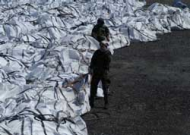
(Above left) American military personnel and volunteers helping to prepare the sandbags. Keeping a watchful eye on the unusual underslung cargo, RSAF personnel carry out their mission for the day: airlifting these 5000-pound sandbags to help mend the levees.
The Chinooks flew out daily in a group of three. It took them 80 minutes to get to New Orleans, where they would receive their mission orders for the day.
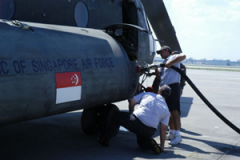
The team only took breathers for lunch and refuelling. They remained in the air for up to eight hours a day. To prevent fatigue from setting in, each serviceman was given a break after three to four days of flying.
Thanks to such dedicated efforts on all fronts the military, local authorities and volunteers from all over the US the city of New Orleans is slowly recovering from the natural disaster.
The RSAF Peace Prairie Detachment returned to Dallas, Texas, on 9 Sep after flying more than 80 sorties to transport over 800 evacuees and security personnel. They also airlifted more than 540 tonnes of equipment, humanitarian supplies and sand.
Singapore's assistance was singled out for praise in the US Congress. Addressing the House of Representatives on 21 Sep, Congressman Joe Wilson echoed the views of other legislators and all Americans in thanking Singapore for its invaluable help in the wake of Katrina.
"After playing a critical role in the tsunami relief efforts earlier this year, the Republic of Singapore was one of the first countries that understood the devastation in our nation and immediately reached out to help those left in Katrina's wake," he said.
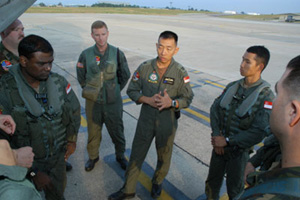
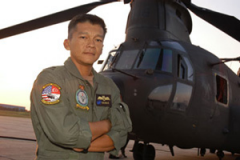
"An unfamiliar area of operations and the number of aircraft operating in there those were the main challenges for us," said Peace Prairie Detachment Commander, LTC Kevin Rodrigues (above).
"We had to adapt, keep our focus and have a high situational awareness at all times."
The men are proud to have been part of the relief operations and are glad to have made a difference.
Speaking to PIONEER on the eve of their departure from Fort Polk, Louisiana, LTC Rodrigues said: "We have been heavily involved in this operation and I think a lot of us have developed a personal attachment of wanting to help and contribute to the relief operations."
"But we are all professionals, and taking the guidance from the Texas Army National Guard that our job is completed, we are ready to go back."
"Looking back at the pace of things and how much we have flown and achieved in the last seven to eight days, I'm actually encouraged to know that we are standing on a very strong foundation," he added.
"This operation was the litmus test."
"To all the valiant SAF pilots and crews, thank you for helping my country."
The RSAF's Peace Prairie detachment in Grand Prairie, Texas, has worked with the Texas Army National Guard on other relief missions in the past, including the relief operations in the aftermath of Hurricane Floyd in North Carolina in 1999, and fire-fighting and flood relief operations in Texas
in 2000.
Microsite for Hurricane Katrina Relief Efforts


ALSO READ IN OPS & TRAINING
SAF & Home Team to refresh Medical Classification System
13 Apr 2026
The refreshed system will allow about 1,200 servicemen annually to be deployed for vocations and roles they were ineligible for previously.
Prime Minister Lawrence Wong observes SAF’s sense-strike integrated capabilities
09 Apr 2026
He witnessed the SAF’s ongoing efforts in leveraging advanced robotics and cross-Service integration to secure Singapore’s interests in an increasingly volatile world.
SAF detonates 250kg WWII bomb uncovered at Tanah Merah Coast Road
02 Apr 2026
On 2 Apr, the SAF’s Explosive Ordnance Disposal (EOD) team successfully disposed of an unexploded war relic found at Tanah Merah Coast Road.