
OPS & TRAINING
PROVIDING EXPERTISE FOR AFGHAN ARTILLERY TRAINING
03 Mar 2011
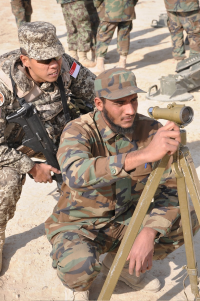
Perhaps the hardest part of any job is having to work in a new and unfamiliar environment. For 10 Military Institutional Trainers (MIT) deployed to Afghanistan last December, this challenge ranged from overcoming cultural and language differences to coping with harsh winter conditions.
Currently stationed at Camp Alamo, an International Security Assistance Force camp in Kabul, this team from the Singapore Armed Forces (SAF) is helping to train the Afghan National Army (ANA) and develop their artillery capabilities.
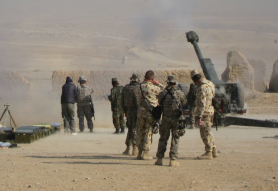
They advise on artillery training, curriculum and doctrine development as well as the design of various courses to train the ANA instructors, and have since trained a full complement of artillery soldiers, producing the first artillery battery based on these new doctrines for the ANA.
The SAF previously sent a four-man MIT team to Kabul from August to December last year. This second team of institutional trainers will continue to train the ANA in Kabul until this December.
To develop an effective working relationship with the Afghans, the SAF team took pains to learn simple phrases in Dari (one of the main languages spoken in Afghanistan) and conversing with their ANA counterparts.
"One of my first lessons on Afghanistan culture is that no work gets done until a relationship is first established between the various parties," said a member of the MIT team, who serves as a mentor in managing the logistical requirements of the ANA School of Artillery.
Recalling how the first meeting with his ANA counterpart started with a conversation on their families, upbringing and culture, he added: "They see the sincere effort and this goes a long way in building a rapport with them."
"Despite the cultural and language barriers, the ANA soldiers are very enthusiastic in learning. With the conduct of every course, the ANA instructors are slowly developing their instructional ability and becoming more independent in the conduct of lessons at the school."
His team-mate, a warrant officer training ANA specialists in the Artillery Platoon Sergeants Course, agreed, noting the importance of being adaptive in their teaching methods.
"At first, the trainees had difficulty understanding the lessons due to the technical nature of some aspects of artillery knowledge. After we converted many of the theory lessons to practical sessions, they were able to understand better and learn at a faster pace."
Sharing his feelings about being sent for this mission, he said: "I'm thankful to the SAF for sending me here as it widens my military experiences and allows me to share operational lessons with my fellow soldiers back home. I'm also honoured to be able to contribute and assist in the development of the next generation of ANA soldiers."


ALSO READ IN OPS & TRAINING
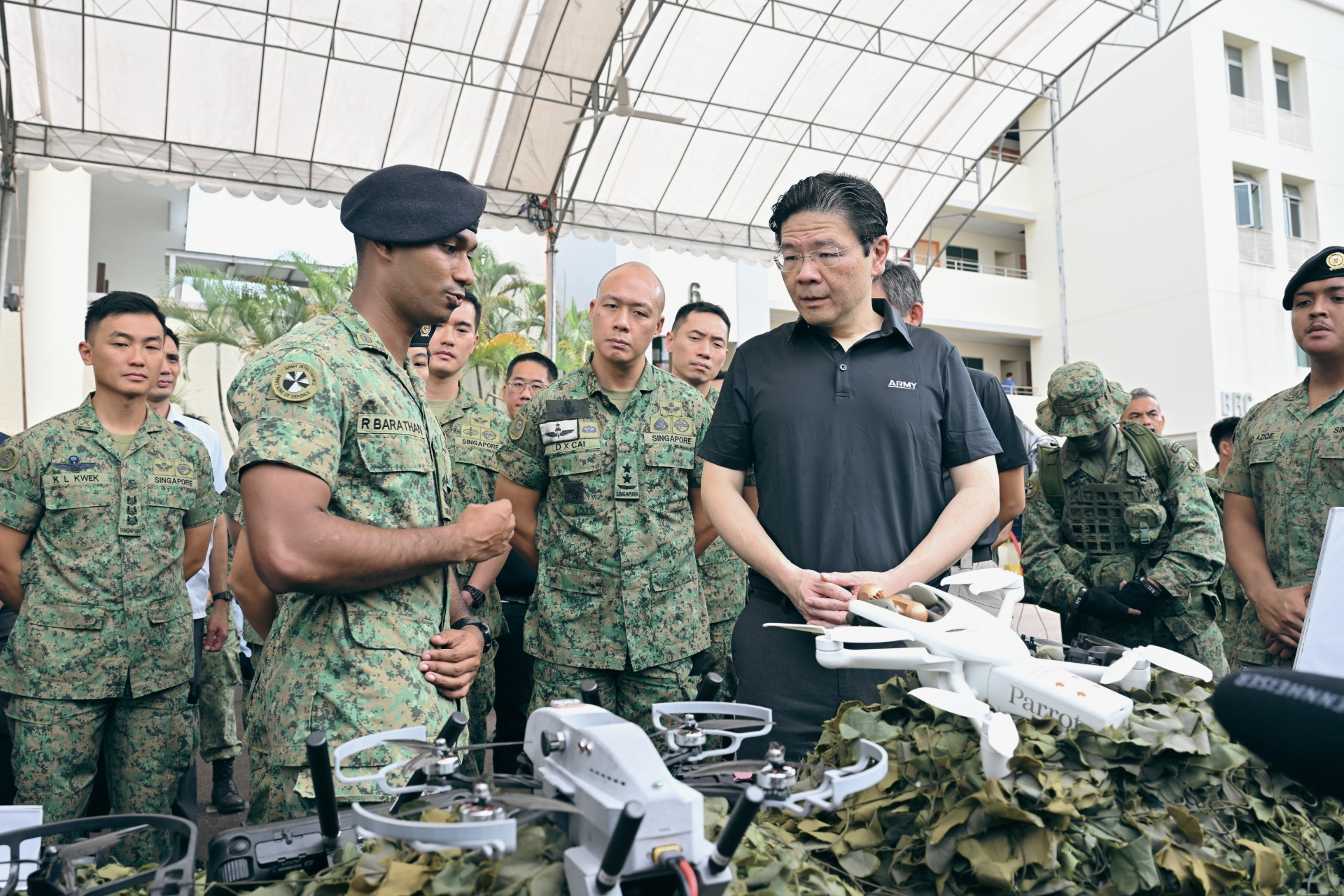
Prime Minister Lawrence Wong observes SAF’s sense-strike integrated capabilities
09 Apr 2026
He witnessed the SAF’s ongoing efforts in leveraging advanced robotics and cross-Service integration to secure Singapore’s interests in an increasingly volatile world.
SAF detonates 250kg WWII bomb uncovered at Tanah Merah Coast Road
02 Apr 2026
On 2 Apr, the SAF’s Explosive Ordnance Disposal (EOD) team successfully disposed of an unexploded war relic found at Tanah Merah Coast Road.
Flying into the unknown: Inside RSAF’s mission to bring S’poreans home from Middle East
28 Mar 2026
Despite the risks and complex challenges of flying in a conflict zone, the men and women of the RSAF pulled off a successful mission through careful planning and hard work.