
OPS & TRAINING
PROFESSIONAL TRAINERS, SCENARIO-BASED LEARNING TO ENHANCE NS TRAINING
21 Mar 2014
More experiential, scenario-based training is on the cards for National Servicemen so that they can be trained to react to changing situations.
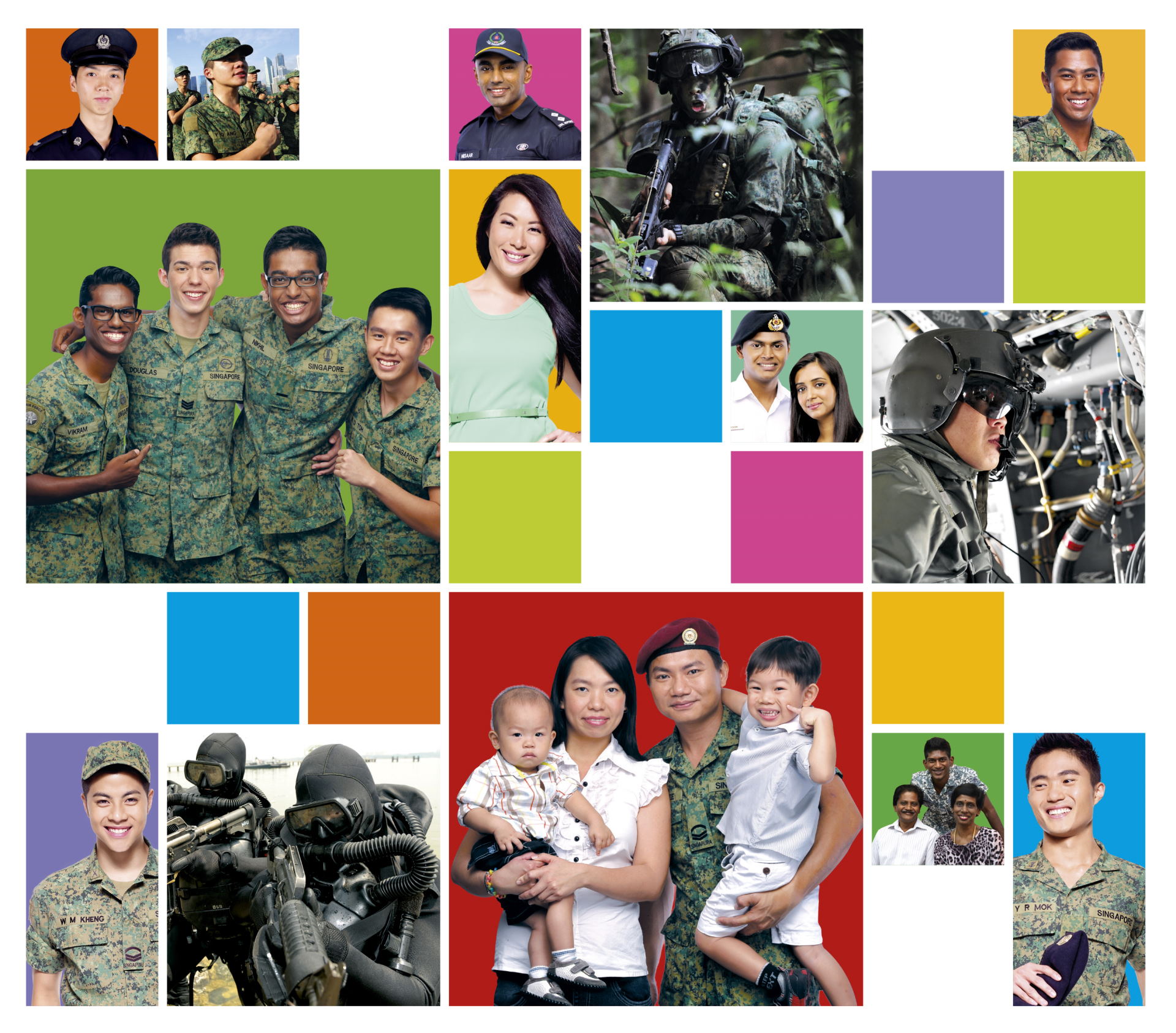
More experiential, scenario-based training is on the cards for National Servicemen so that they can be trained to react to changing situations.
This is because of the expanded operational challenges today, where even rank-and-file servicemen have to exercise their judgment. Another reason is that the younger generations of servicemen are more attuned to experiential style of learning.
The Singapore Armed Forces' (SAF's) latest Multi-mission Range Complex's Video Targetry System range is an example of such training. Soldiers using weapons with live rounds are put through video scenarios in Changi Airport to train their judgment in picking out enemy targets from civilians.
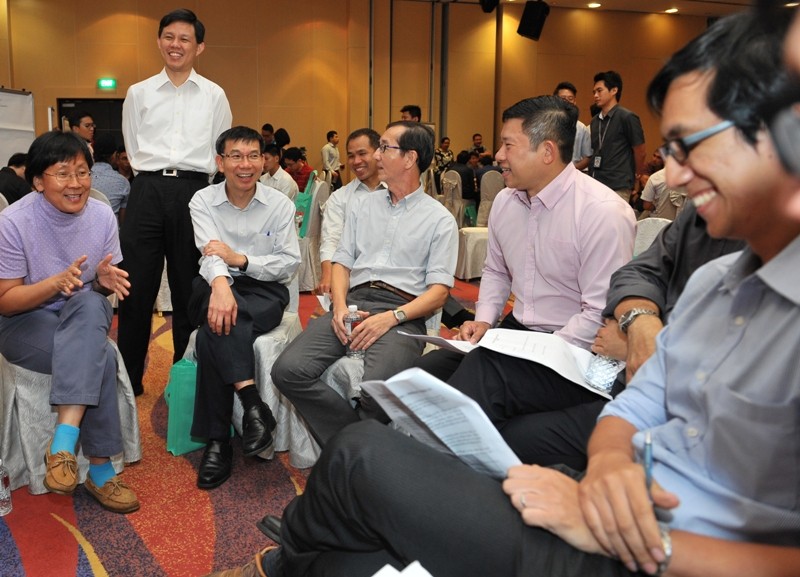
Second Minister for Defence Chan Chun Sing was sharing his thoughts on the various ideas that were brought up at the Committee to Strengthen National Service (CSNS) focus group discussion on 20 Mar, at SAFRA Mount Faber.
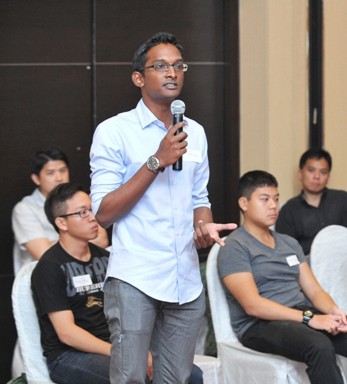
Over 60 participants discussed ways to enhance the NS training system. The participants included academics, as well as Regulars, Full-time National Servicemen (NSFs) and Operationally Ready National Servicemen (NSmen) from the SAF and Home Team.
Mr Chan stressed that, besides enhancing pedagogy and embracing technology, it was important to imbue in servicemen the right values, and to show them the purpose of their roles. "Before we even start training, we must get the attitude and motivation right," he said.
One suggestion brought up by the participants was to share with servicemen about Singapore's geo-political realities and security challenges so that they understood the broader perspective of their roles in NS, said Mr Chan.
Professional trainers
Another way, Mr Chan said, was to develop a professional cadre of Regular trainers. With their wealth of experience, these trainers would be better able to inculcate values and impart specialised knowledge. The SAF is looking at hiring about 1,100 more Regulars as full-time trainers.
In the SAF, a serviceman often has to take on the roles of commander, trainer and operator, but training is a specialised field in itself. Explained Mr Chan: "Just because you are a good commander and a good operator doesn't necessarily mean that you are able to bring out the best in a soldier."
Education expert Professor Tan Oon Seng, who took part in the focus group discussion, concurred that having a professional training cadre was a step in the right direction. The Director-Designate of National Institute of Education said: "If you have a group of people who have the military skills and background (and) spend enough time thinking about how best to help people learn, definitely there is a lot you can add to the quality of learning."
Mr Chan also said that NSF trainers would continue to complement and work as team with Regular trainers.
2nd Lieutenant (2LT) V Santhosh, an NSF in the Republic of Singapore Navy, said NSF trainers could connect better with the new soldiers as they were closer in age, while Regular trainers possessed a wealth of experience.
"I think there are values in both - it's about having a good balance," said the platoon commander in the Fast Craft and Training Unit.
Mr Chan said that additional Regular trainers could be hired by offering short-term contracts to NSFs who had completed their service; extending the contracts of retiring Regulars; and re-hiring ex-Regulars.
The SAF is also looking into developing a new trainer career track for senior Regulars. "That will help us to retain the experience they have gained over the years and pass (it) on to the next generation of servicemen," said Mr Chan.
A small number of new hires could be non-uniform personnel. They can take over the staff duties of existing Regulars, to free them up for instructional roles.
The focus group discussion was also attended by members of the Advisory Council on Community Relations in Defence (ACCORD), Government Parliamentary Committee for Defence and Foreign Affairs (GPC-DFA), and CSNS Steering Committee and Working Groups.

ALSO READ IN OPS & TRAINING
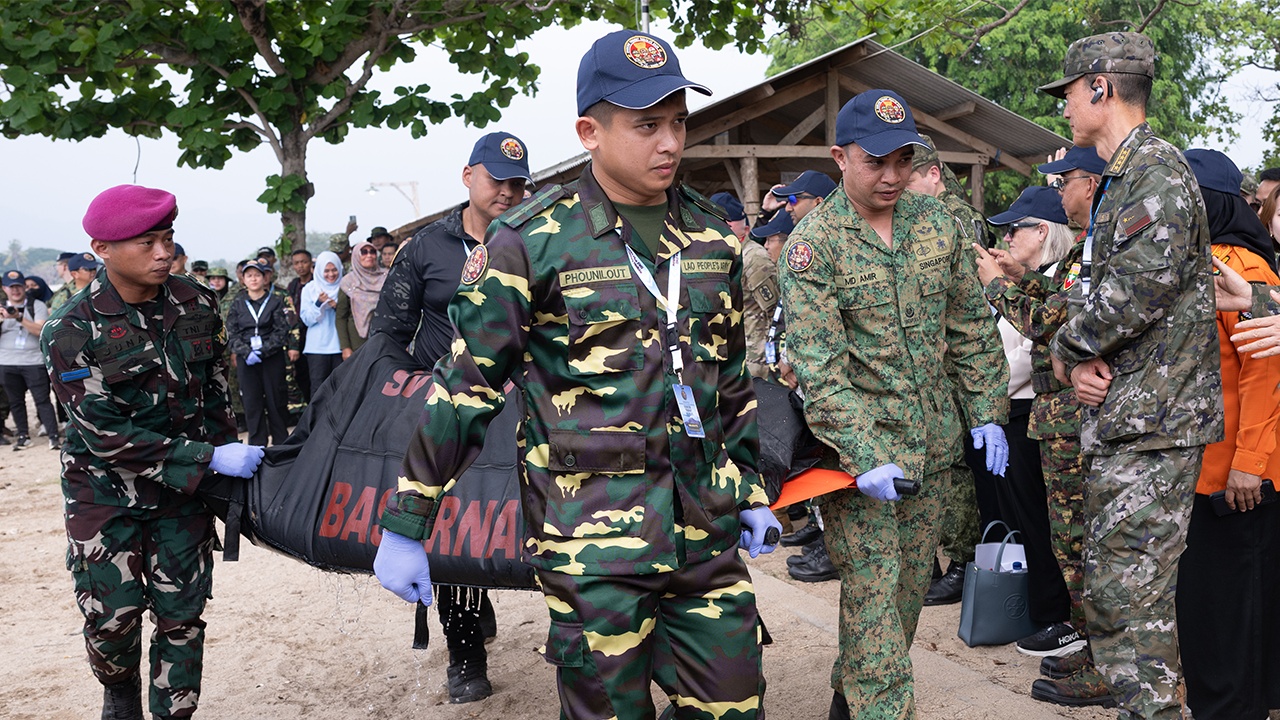
S’pore commandos, Indonesia special forces train & strengthen ties at Ex Chandrapura
08 Jul 2026
From conducting tactical airborne jumps to a coordinated urban raid, soldiers from Singapore and Indonesia deepened their decades-long partnership in this bilateral army exercise.
SAF & Home Team to refresh Medical Classification System
13 Apr 2026
The refreshed system will allow about 1,200 servicemen annually to be deployed for vocations and roles they were ineligible for previously.
Prime Minister Lawrence Wong observes SAF’s sense-strike integrated capabilities
09 Apr 2026
He witnessed the SAF’s ongoing efforts in leveraging advanced robotics and cross-Service integration to secure Singapore’s interests in an increasingly volatile world.