
OPS & TRAINING
PREPARING FOR MULTINATIONAL RESPONSES TO TERROR
09 May 2016
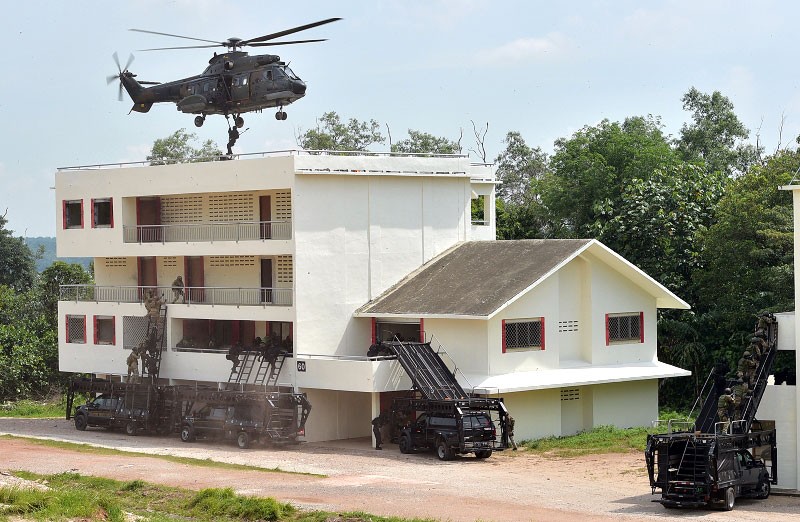
In a matter of minutes, the finale to the largest-ever ASEAN Defence Ministers' Meeting (ADMM)-Plus exercise was over, with a multinational team of Special Forces troopers clearing out the headquarters of the terrorists on 9 May swiftly and seamlessly.
Comprising troops from 15 countries, including the Singapore Armed Forces' (SAF's) Special Operations Task Force (SOTF), the multinational Counter-Terrorism (CT) force executed a simultaneous assault from land and air.
Minister for Defence Dr Ng Eng Hen, who witnessed the finale drill of the ADMM-Plus Maritime Security (MS) and CT exercise, said the amount of resources and manpower that the 18 countries was an affirmative show of commitment: "It's a very strong signal that, in this part of the world, we take maritime security and the threat of terrorism seriously, and there is a multinational effort to maintain peace and stability in this region."
He highlighted how China and the concerned ASEAN countries were able to put aside their territorial disputes and participate in the exercise because of larger common goals of regional peace, security and stability.
"You work together because you know that (these problems are) larger than the disputes. If your sea lines of communication are disrupted, or if terrorists embed themselves here in ASEAN, it will cause a loss of confidence, it will affect economic vitality, businesses (and the) safety of citizens of ASEAN countries."
Dr Ng noted that the large-scale exercise had great significance for Singapore as problems like terrorism and maritime security are trans-boundary in nature, and investors are looking at how the region fights against terror and piracy. He added that the exercise was part of the SAF's process of building up its capabilities in the fight against terrorism.
Maritime drills
The ADMM-Plus MS and CT exercise, jointly hosted by the SAF and the Royal Brunei Armed Forces (RBAF), took place in both Brunei and Singapore.
It began with the MS phase where naval elements of participating countries trained together in Brunei and en route to Singapore. This segment was co-organised by Brunei and New Zealand. The CT phase was co-conducted by Singapore and Australia in Singapore.
In the earlier MS portion, the Republic of Singapore Navy's frigate RSS Formidable was one of 15 vessels which took part in a search and locate exercise for a suspicious merchant vessel in the South China Sea.
Information on the suspicious vessel was picked up by the Information Fusion Centre at Changi Naval Base and fed to the Maritime Security Task Force at the Multinational Coordination Centre in Muara Naval Base, Brunei. The information was subsequently given to the vessels at sea for them to search and locate the vessel of interest (VOI).
The vessels formed two task units and one eventually located the VOI. As the VOI displayed hostile intentions, it was escorted to an area and stormed by Special Forces teams from from Brunei, the Republic of Korea, Singapore and Thailand.
Building capabilities and cooperation
Of RSS Formidable's participation in the MS segment of the exercise, Lieutenant Colonel (LTC) Ng Xun Xi said that this was a good opportunity for the frigate to showcase its capabilities in a different way as frigates are usually used for conventional warfare.
Noting that a frigate's core strength lied in her searching ability, the Commanding Officer of RSS Formidable said: "When it comes to VOI tracking, we are pretty good at it. We know the considerations, we know what is important, we are quite used to organising a number of ships to do this and therefore it plays to our strength."
For Captain (CPT) David Kan, taking part in MS was an experience as it gave him an opportunity to practise his searching abilities and at the same time, build a relationship with his counterparts from the other countries.
"This (exercise) gave us an opportunity to become more familiar and practise how to locate a VOI, hail and challenge it and decide if it poses a significant threat to MS in the region," explained the Operations Officer of RSS Formidable.
He added that through working with other countries, this experience also helped to increase understanding between navies and this translated into a stronger interoperability to deal with future transnational threats in the region.
Practical outcome
Co-director of the ADMM-Plus MS and CT exercise Brigadier General Desmond Tan, said the exercise showed that the ADMM-Plus grouping was more than just a platform for dialogue: "This exercise is also very timely and relevant, in that given the challenges that we face in this region, both in the maritime security domain as well as in terrorism, I think we all recognise that these are areas of challenges that no one country can tackle by itself.
"So the ADMM-Plus Maritime Security and Counter-Terrorism exercise does provide a very important platform for us to work together and also to demonstrate our commitment to manage and handle these challenges collectively."

ALSO READ IN OPS & TRAINING
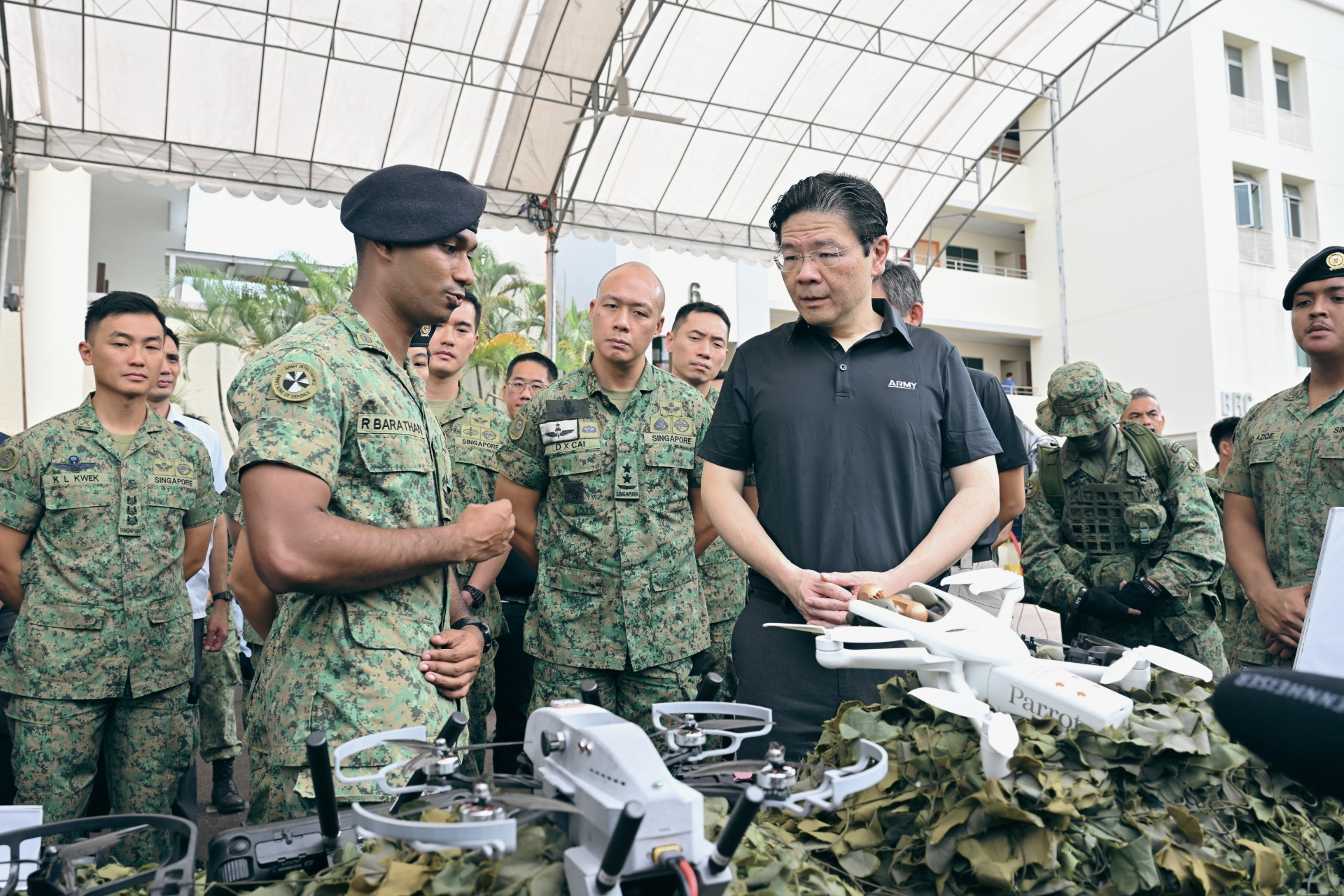
Prime Minister Lawrence Wong observes SAF’s sense-strike integrated capabilities
09 Apr 2026
He witnessed the SAF’s ongoing efforts in leveraging advanced robotics and cross-Service integration to secure Singapore’s interests in an increasingly volatile world.
SAF detonates 250kg WWII bomb uncovered at Tanah Merah Coast Road
02 Apr 2026
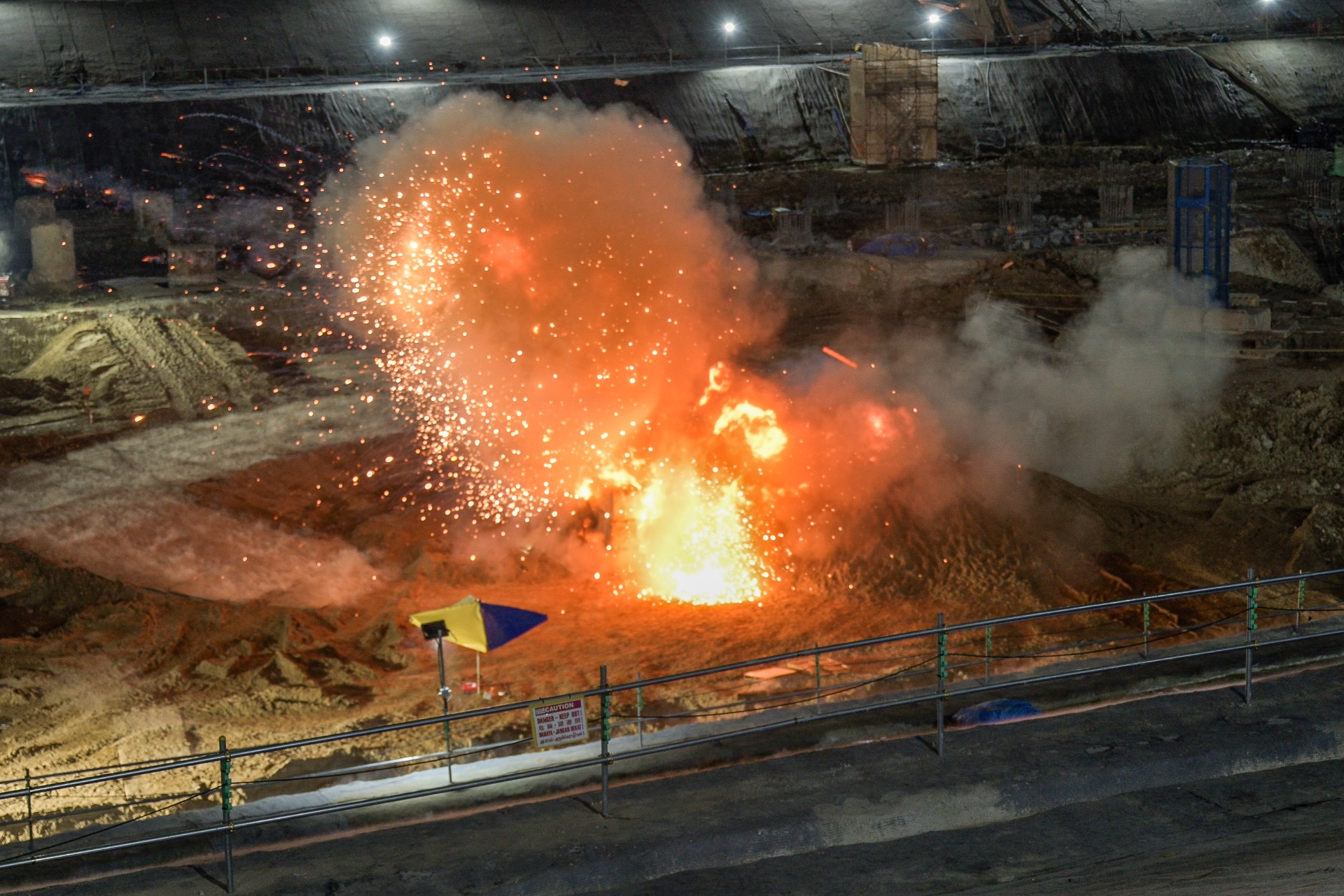
On 2 Apr, the SAF’s Explosive Ordnance Disposal (EOD) team successfully disposed of an unexploded war relic found at Tanah Merah Coast Road.
Flying into the unknown: Inside RSAF’s mission to bring S’poreans home from Middle East
28 Mar 2026
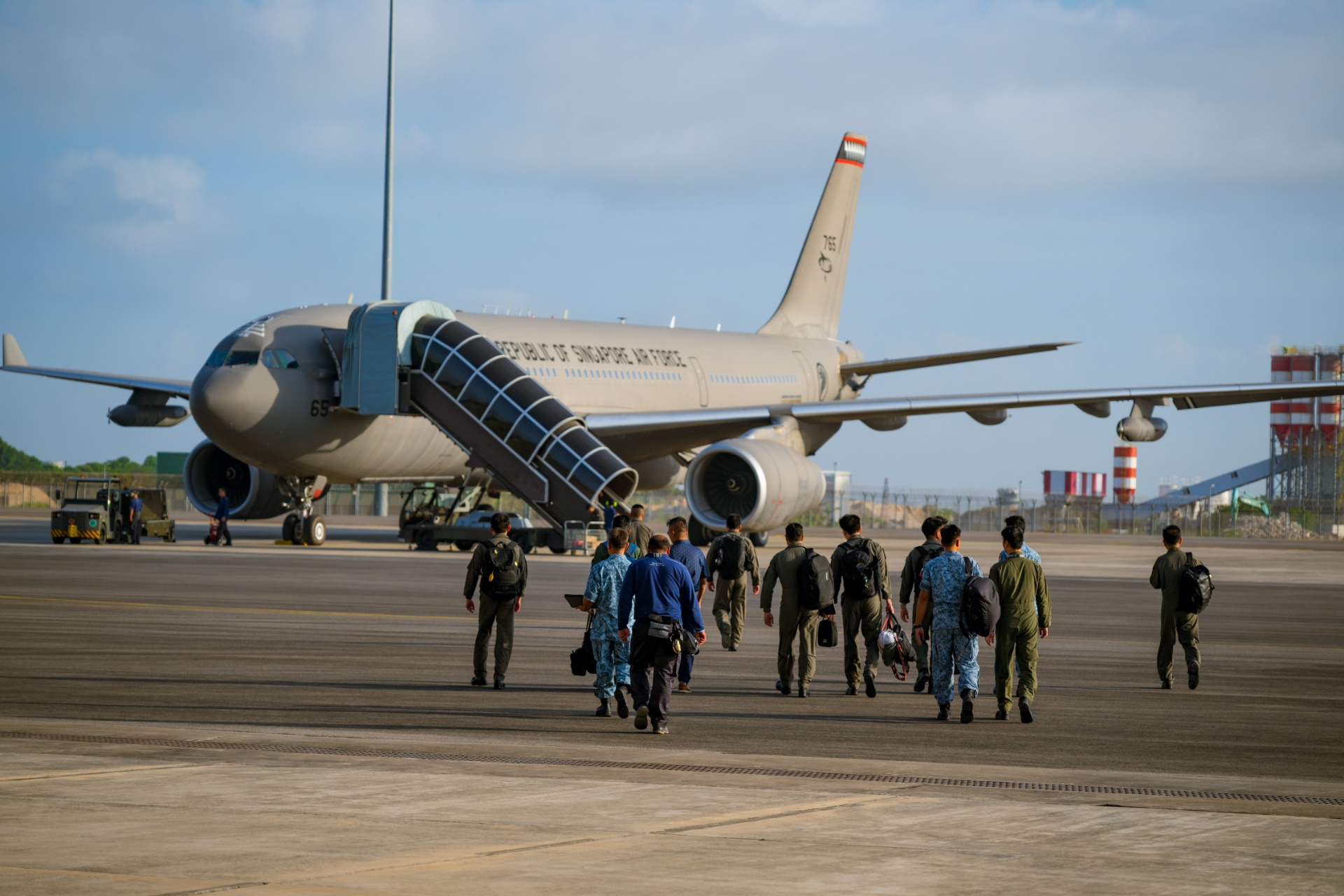
Despite the risks and complex challenges of flying in a conflict zone, the men and women of the RSAF pulled off a successful mission through careful planning and hard work.