
OPS & TRAINING
OVERSEAS PROTECTORS - CONTRIBUTING TO INTERNATIONAL SECURITY
29 Feb 2008
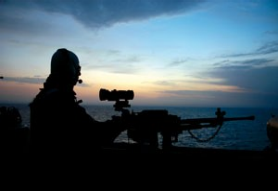
With about 90 per cent of Iraq's income generated through the export of oil, the protection of key oil terminals located in the Northern Arabian Gulf is vital to the reconstruction and rehabilitation of the country.
As a responsible member of the international community, Singapore is doing its part by maintaining the peace and stability in the Middle East.
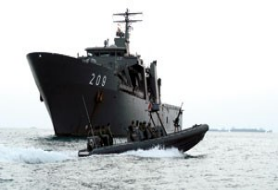
The Republic of Singapore Navy has been sending Landing Ships Tank (LSTs) to the gulf for the past four years, with RSS Persistence being the latest ship to be deployed from September to December last year.
Maritime security operations in the Gulf
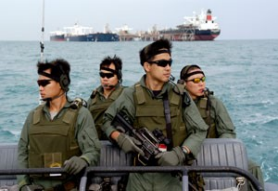
RSS Persistence, together with other multinational forces, carried out security operations near a key oil terminal where they hailed vessels, made queries and boarded tankers to ensure that there were no rogue elements on board these ships before allowing the vessels to approach the terminal.
Since the LST is a highly versatile ship, it also provided logistical support such as personnel transfers, delivery of stores, helicopter refuelling and even medical support.
Taking turns to take the lead
"I think we add a 'flavour' to the multinational force that is out here," said Commander Task Group COL Bernard Miranda.
"A small country from Asia, yet a capable Navy it speaks a lot about our capabilities, both the people and the technology."
As early as the second Gulf deployment, Singapore was offered the role of Scene of Action commander, where the ship not only took charge of prior assigned sectors, but also the entire area around the oil terminal.
With the multitude of ships passing through the vicinity and about 200 people working on the terminal every day, it was a heavy responsibility to shoulder.
"You have to coordinate the protection of the terminal with other ships working with you. The ships can be from the US, UK, Australia, Iraq as well as the security detachments on the terminal itself," explained COL Miranda.
Fortunately, the multinational navies in the gulf work well as a team and appreciate the versatility and expertise that each brings to the group.
"Singapore has made a tremendous contribution and as you well know, it is not the first time that a Singaporean ship has been up here," Commander Task Force Commodore Allan Du Toit from the Royal Australian Navy told PIONEER.
"It makes a really important statement and it is really a success story what we are doing up here, helping the Iraqis get back on their feet."
"We must always remember that while things may look calm on the surface, there are always people out there that might be plotting to conduct terrorist attacks against these platforms," he added.
Small boats, big threats
The oil terminals are located a few miles off the coast of Iraq and are constantly surrounded by fishing boats or dhows. These small but fast vessels pose the main security threat since they may not be picked up by the radar, giving the security forces less time to react.
On 24 April 2004, there was a terrorist attack on an Iraqi oil terminal that killed two US Navy sailors and one US Coast Guardsman. The suicide bombers were in an unidentified cargo dhow and activated their explosives when coastal patrol boat USS Firebolt was sent to intercept them.
"So we have to react fast and have a heightened sense of readiness and awareness of the situation around us, especially at night, when some of these boats may be darkened," said COL Miranda.
Gunnery Officer CPT T Nantha felt the operating environment is, in a sense, quite similar to Singapore, where there is a "very busy, crowded Straits with a lot of small contacts".
"The biggest challenge is actually making decisions as to whether a fishing trawler poses a threat," he said.
"Making the assessment takes a bit of experience and some getting used to. The fishermen just want to fish, but at the same time, we have to be strong and enforce the boundaries that this area of operations requires."
Ship Security Team member 1SG Justin Kwek, recalled instances where the dhows came close to the ship.
"We would then man our own machine gun post, lock on target to them, just in case we were required to fire," he said.
"There were also a few incidences of unknown floating objects that we had to assess and dispose of. Thankfully, they were all false alarms."
Mitigating the risk
According to former Commanding Officer of RSS Persistence LTC Chow Khim Chong, there is a comprehensive system of managing threats on board.
"We had a flowchart to aid in our decision making, in determining friend or foe," he said. "Once the decision is made, there were actually procedures and elaborated systems of management of such unknown threats."
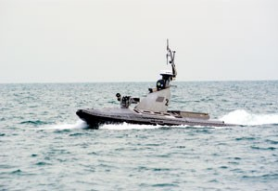
One of the measures employed to mitigate the risk faced in the NAG is the use of the Unmanned Surface Vehicle, the Protector.
The unmanned vessel can be controlled remotely and sent to intercept straying ships. It is equipped with broadcasting capabilities that can play pre-recorded messages in local languages to tell the unidentified ships to move out of the warning zone.
All other aspects of safety - from navigation to area of operations - are also thoroughly scrutinised through experience gained from past missions.
In terms of shipboard security, for example, there were multiple layers of safety, where various positions are manned by different vocations round the clock.
"A thorough process was put in place to ensure that the guys, when they went out to do their operations, were safe," said CPT Nantha.
"It was not just about going in and doing the mission, but going in and having a plan to get out safely."
Taking care of servicemen's welfare was also high on the priority list, so that they would have the peace of mind to concentrate on the task at hand.
The crew was always given sufficient rest, good food and the means to communicate with family back home. Group interviews and dialogues were also conducted regularly to understand the challenges and problems that they might have.
Mission-ready state
Preparing for the mission and training the men for their deployment to the gulf began way before they even set sail.
It focused primarily on the ship and crew's ability to protect the oil terminal - from detection to identification of contacts to ascertain their intentions; and when hostility was encountered, the gearing up of the ship crew to eliminate the threat.
"I think our training back in Singapore helped by giving us a sense of similar situations, in real time," said Assistant Operations Officer LTA Tay Kwong Jiunn, who was one of 16 Full time National Servicemen who volunteered for the mission.
"They tried to let us experience how to work such long hours out at sea it tested our endurance to see how we were able to keep our alertness high throughout the eight to 10 hours at sea."
"On top of that, we learnt how to communicate through different means, getting the different clearance we needed to proceed from one point to another and how to react when a situation developed," he added.
Playing a part
LTA Tay wanted to see the world and gain more shipboard experience during the 90-day deployment in the gulf. He certainly got all that and more. One of his key takeaways was learning to appreciate what he had.
"We should not take the simplest things for granted, like a well-developed armed forces, how important it is to be able to protect our key resources and how versatile our Navy is," he said.
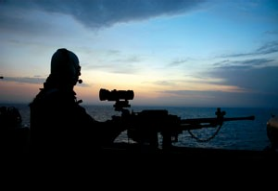
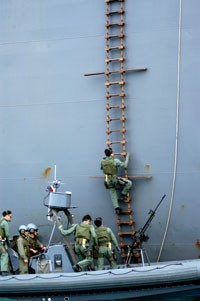
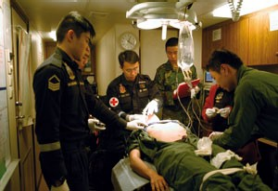
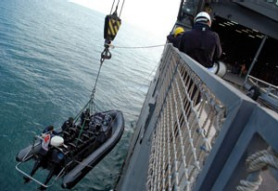
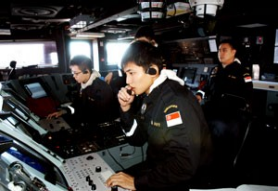
Operations in the gulf (from top): Personnel on daily bridge duty, the Unmanned Surface Vessel doing its patrolling rounds, recovering the Rigid Hull Inflatable Boat after deployment and conducting medical drills on board.
For Medical Officer MAJ (Dr) Chow Wei En, he was just heartened to know that Singapore is playing a part in the reconstruction of Iraq and that the RSN's presence is well-appreciated by the locals.
"It may not be very evident or obvious from the people we help on the ground, those we rescue or people we give assistance to, but I know that we are playing a part," he said.
"By contributing to the security of the oil terminals, we are giving economic stability to a country that has gone through quite a lot, indirectly helping them along."
COL Miranda, a veteran in gulf deployments, summed it up best when he looked at the progress that Iraq and its people have made over the years.
He said: "I think in all the three missions that I have been, what was encouraging to me was to see the Iraqis improving, developing on their own, playing a bigger part. We feel that we are really contributing to their development."

ALSO READ IN OPS & TRAINING
S’pore commandos, Indonesia special forces train & strengthen ties at Ex Chandrapura
08 Jul 2026
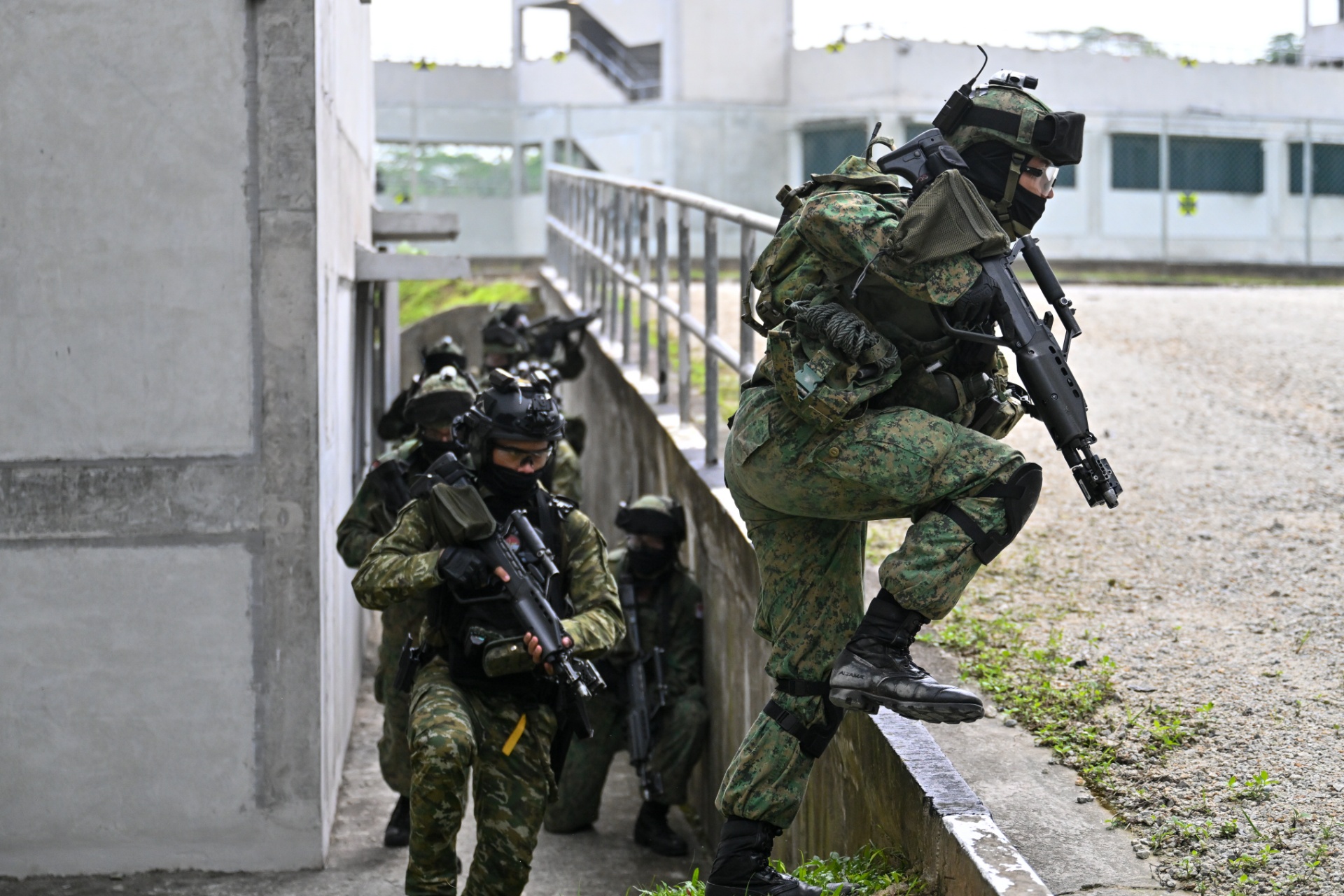
From conducting tactical airborne jumps to a coordinated urban raid, soldiers from Singapore and Indonesia deepened their decades-long partnership in this bilateral army exercise.
SAF & Home Team to refresh Medical Classification System
13 Apr 2026
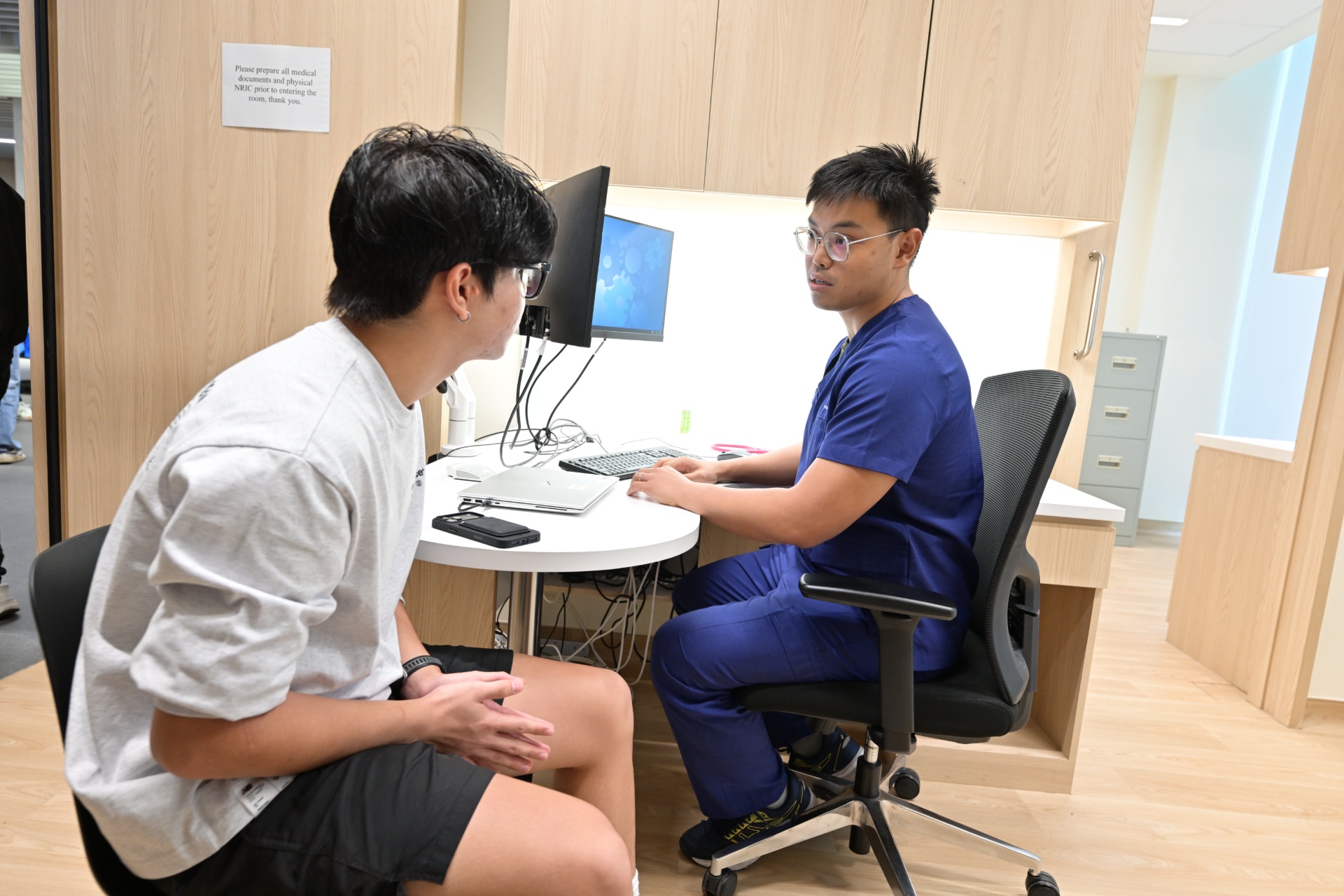
The refreshed system will allow about 1,200 servicemen annually to be deployed for vocations and roles they were ineligible for previously.
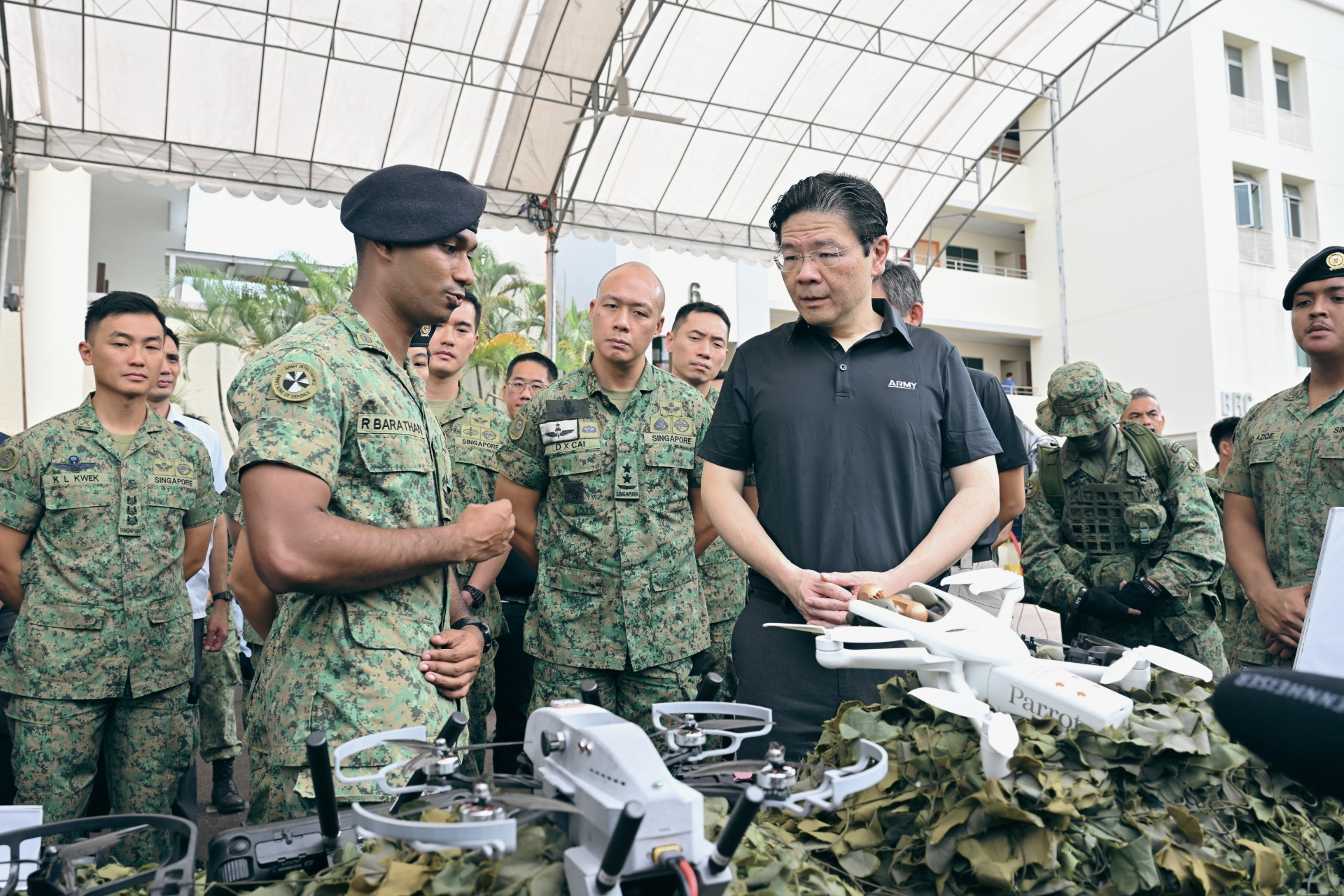
Prime Minister Lawrence Wong observes SAF’s sense-strike integrated capabilities
09 Apr 2026
He witnessed the SAF’s ongoing efforts in leveraging advanced robotics and cross-Service integration to secure Singapore’s interests in an increasingly volatile world.