
OPS & TRAINING
OFF THE PLANE, OFF TO WORK
03 Jun 2006
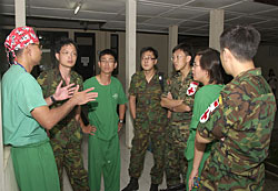
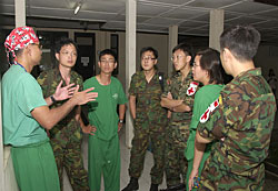
For the eight doctors who flew into Yogyakarta, Indonesia, on the evening of 31 May, they have had probably about 15 hours of sleep each over the last three days.
The eight medical officers, comprising three orthopaedic and general surgeons, four general practitioners and one anaesthetist, were part of the second wave of medical assistance to Indonesia for the victims of last Saturday's 6.3-magnitude earthquake off the island of Java.
Their presence augments another medical team that has been providing primary health care to the victims of the disaster since 29 May.
The doctors' expertise was immediately sought: literally the moment they got off the plane at the airport, they were rushed to the Bantul District General Hospital.
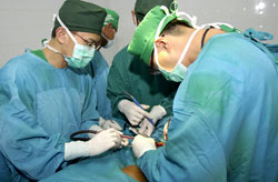
"We arrived at the hospital at about 8 pm and we operated till about 3 am. After that, we rested for a few hours before we continued our work at 9 am."
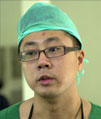
Despite the hectic schedule, the doctors' morale remained high as they wanted to be able to care for the patients, said MAJ (Dr) Lim. He estimated that since their arrival, they had performed about 10 operations.
Most cases had been of acute fractures, but apart from fixing broken bones, MAJ (Dr) Lim added that wound care was also of utmost importance, to ensure that no infection set in.
A reason for the successful operations is the close cooperation between the SAF medical team and the Indonesian authorities.
MAJ (Dr) Lim said his team discussed the cases with the local doctors each day, to decide how best to deploy resources and prioritise cases, before proceeding.
"We have a good working relationship with them," he said.
The good news is that the situation at the hospital is stabilising. While patients still line the corridors and walkways of the hospital, most have been moved onto proper beds and are no longer lying on the floor.
The local authorities and various non-governmental organisations are also working together to restore a sense of order in the hospital that was a scene of chaos in the hours following the earthquake.
"Most of the cases have been cleared in the hospital. But we are still receiving patients who have been evacuated from the more remote areas," said MAJ (Dr) Lim.
Medical Officer tending to orthopaedic injuries, Captain (CPT) (Dr) (NS) S Ramesh, agreed: "I think the patient load is easing slightly from when we first got here. There are still injuries and fractures that we have to attend to in the next few days, but hopefully, they will start to taper down soon."
CPT (Dr) (NS) Ramesh said he was most impressed with the strength of his patients.
"Most have been here for some time, and although their pain has been controlled quite effectively, they remain quite stoic and do not flinch in pain when we tend to them," he said.
As an Operationally-Ready National Serviceman (NSman), how does he feel about contributing his time and expertise to such a mission?
CPT (Dr) (NS) Ramesh answered: "I am happy to assist because this is my area of training. So if the need arises and I am called upon, I am more than glad to come and help."
Another NSman who is in Indonesia to provide assistance is anaesthetist, CPT (Dr) (NS) Nelson Chua. Although he had only a day to prepare for the mission, he said he was happy to volunteer, despite having already made vacation plans.
"I had actually planned for a Bangkok holiday with my family next week, but I have postponed it. Although my daughter was a little disappointed, I told her that we can still go when I get home."
"When I saw the damage and suffering of the earthquake victims in the newspapers, as a medical personnel, I felt that I just had to come and help," CPT (Dr) (NS) Chua said.

ALSO READ IN OPS & TRAINING
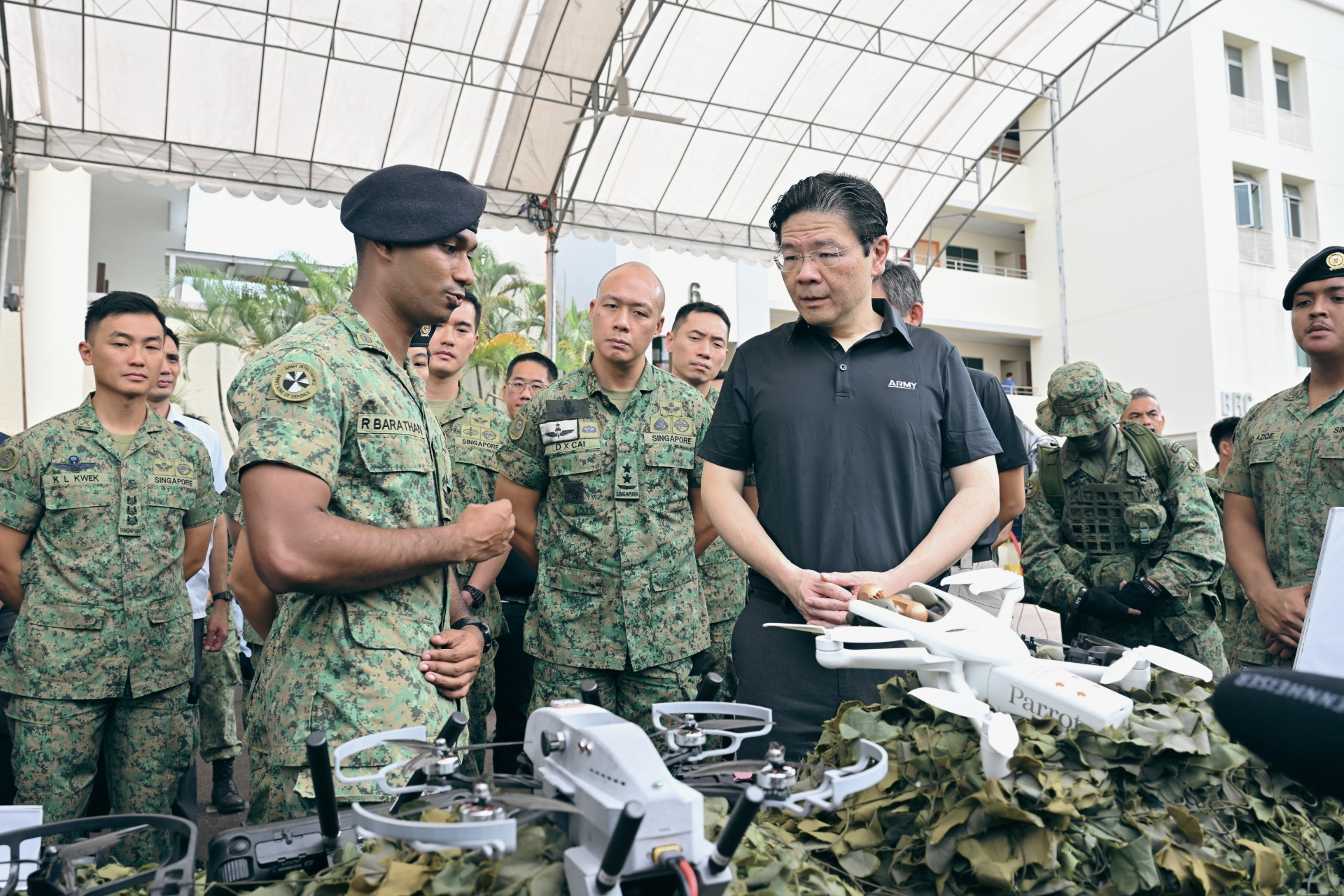
Prime Minister Lawrence Wong observes SAF’s sense-strike integrated capabilities
09 Apr 2026
He witnessed the SAF’s ongoing efforts in leveraging advanced robotics and cross-Service integration to secure Singapore’s interests in an increasingly volatile world.
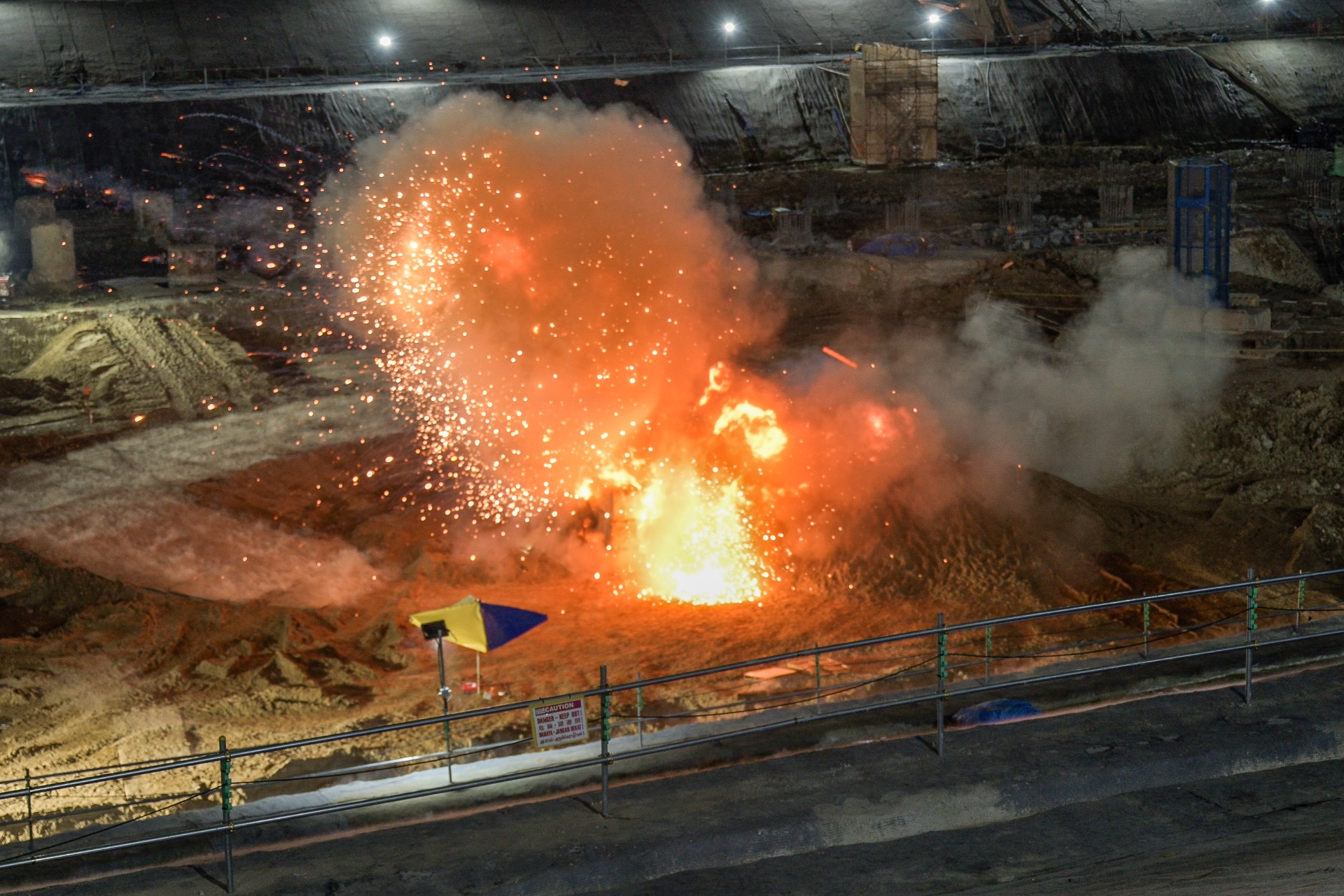
SAF detonates 250kg WWII bomb uncovered at Tanah Merah Coast Road
02 Apr 2026
On 2 Apr, the SAF’s Explosive Ordnance Disposal (EOD) team successfully disposed of an unexploded war relic found at Tanah Merah Coast Road.
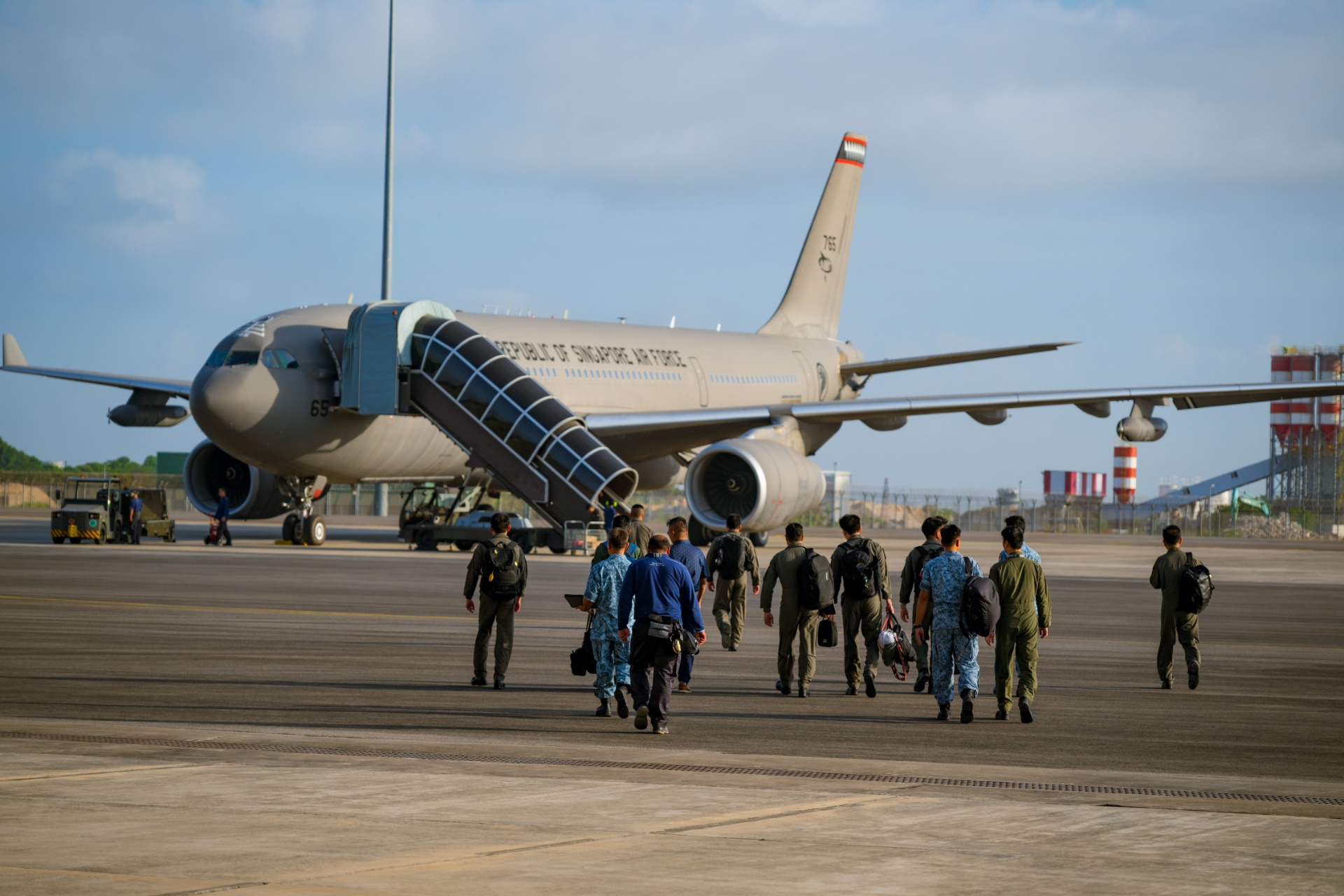
Flying into the unknown: Inside RSAF’s mission to bring S’poreans home from Middle East
28 Mar 2026
Despite the risks and complex challenges of flying in a conflict zone, the men and women of the RSAF pulled off a successful mission through careful planning and hard work.