
OPS & TRAINING
MARITIME INTERDICTION SERIAL KICKS OFF 'LIVE' EXERCISE PHASE
18 Sep 2006
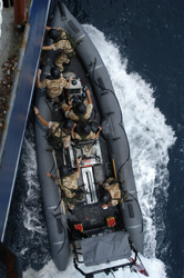
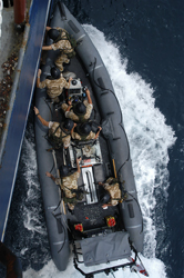
Armed forces of the Five Power Defence Arrangements (FPDA) member countries carried out a maritime interdiction operation (MIOPS) serial on 18 Sep during the sea security component of the joint exercise, Bersama Padu 2006.
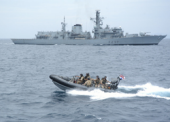
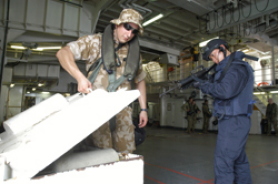
Observed by members of the FPDA Consultative Council, the participating ships intercepted and boarded two 'rogue' vessels.
The FPDA forces - from Australia, Malaysia, New Zealand, Singapore and the United Kingdom - worked with government agencies, such as the Police Coast Guard, Maritime & Port Authority of Singapore, Immigration & Checkpoints Authority and the Singapore Customs, to locate and interdict the two vessels.
The MIOPS serial marked the beginning of the 'live' exercise phase, where the command post exercise is integrated with the forces situated in the area of operations.
"The exercise is progressing very well," said Exercise Director, Rear-Admiral (RADM) Tan Kai Hoe, Fleet Commander of the Republic of Singapore Navy.
"The whole purpose of the exercise is to build on our core competencies and increase the operability among the forces so that we can handle different types of contingencies," he said.
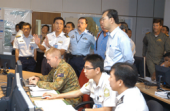
"We also hope to exercise the command and control aspect - between the command post and the tactical forces out at sea."
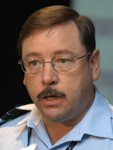
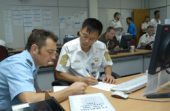
According to the Exercise Commander for Integrated Area Defence Systems, Air Vice Marshal (AVM) Greg Evans (left), who is from the Australian Defence Force, Bersama Padu is "probably the most significant air and maritime exercise in the region" that has served to integrate the FPDA forces.
"The corporation between the five nations has been superb, we work together extremely well," AVM Evans said.
"The level to which we are now able to interact and cooperate is very gratifying; all of us now know how the other operates. We operate with a common set of doctrine. For example, we now have a Five-Nation logistics doctrine so that when we work together, we know what each other will do - this is crucial," he said.
Exercise Bersama Padu, which means "United Together" in Malay, is the largest and most complex FPDA exercise involving air, maritime and land forces.
A total of 21 ships, 85 aircraft, a submarine and 3,500 personnel are involved in the exercise, which ends on 22 Sep.
Since its formation in 1971, the scope of FPDA activities has expanded considerably to remain relevant to the needs of its members. Besides developing capabilities to address non-conventional threats, non-military agencies have also been roped in to increase the complexity and professional value of the exercises.
Over the past 35 years, the FPDA has become an integral part of the regional security architecture and continues to contribute to regional stability.
Observed by members of the FPDA Consultative Council, the participating ships intercepted and boarded two 'rogue' vessels.
The FPDA forces - from Australia, Malaysia, New Zealand, Singapore and the United Kingdom - worked with government agencies, such as the Police Coast Guard, Maritime & Port Authority of Singapore, Immigration & Checkpoints Authority and the Singapore Customs, to locate and interdict the two vessels.
The MIOPS serial marked the beginning of the 'live' exercise phase, where the command post exercise is integrated with the forces situated in the area of operations.
"The exercise is progressing very well," said Exercise Director, Rear-Admiral (RADM) Tan Kai Hoe, Fleet Commander of the Republic of Singapore Navy.
"The whole purpose of the exercise is to build on our core competencies and increase the operability among the forces so that we can handle different types of contingencies," he said.
"We also hope to exercise the command and control aspect - between the command post and the tactical forces out at sea."
According to the Exercise Commander for Integrated Area Defence Systems, Air Vice Marshal (AVM) Greg Evans (left), who is from the Australian Defence Force, Bersama Padu is "probably the most significant air and maritime exercise in the region" that has served to integrate the FPDA forces.
"The corporation between the five nations has been superb, we work together extremely well," AVM Evans said.
"The level to which we are now able to interact and cooperate is very gratifying; all of us now know how the other operates. We operate with a common set of doctrine. For example, we now have a Five-Nation logistics doctrine so that when we work together, we know what each other will do - this is crucial," he said.
Exercise Bersama Padu, which means "United Together" in Malay, is the largest and most complex FPDA exercise involving air, maritime and land forces.
A total of 21 ships, 85 aircraft, a submarine and 3,500 personnel are involved in the exercise, which ends on 22 Sep.
Since its formation in 1971, the scope of FPDA activities has expanded considerably to remain relevant to the needs of its members. Besides developing capabilities to address non-conventional threats, non-military agencies have also been roped in to increase the complexity and professional value of the exercises.
Over the past 35 years, the FPDA has become an integral part of the regional security architecture and continues to contribute to regional stability.

ALSO READ IN OPS & TRAINING

SAF & Home Team to refresh Medical Classification System
13 Apr 2026
The refreshed system will allow about 1,200 servicemen annually to be deployed for vocations and roles they were ineligible for previously.
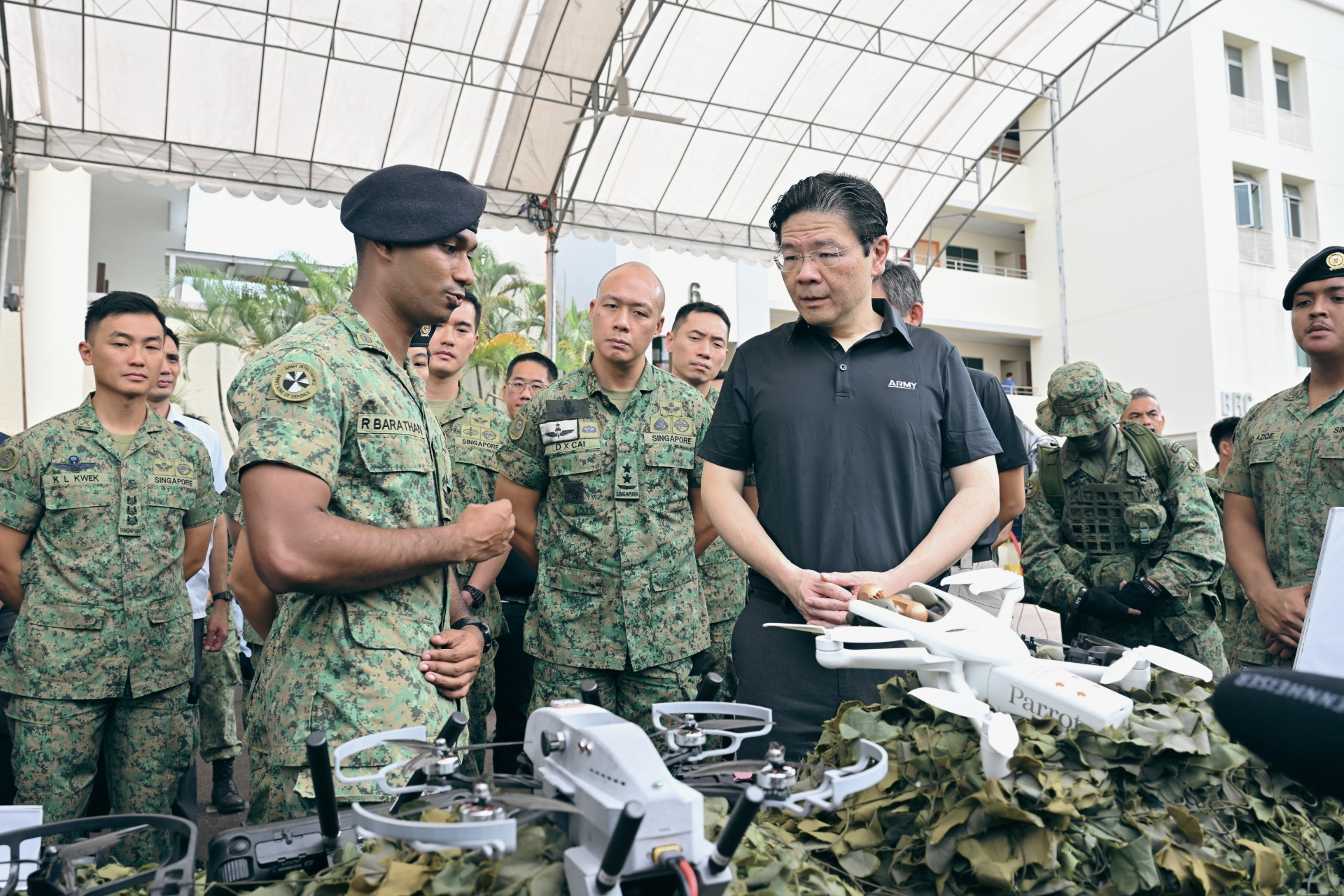
Prime Minister Lawrence Wong observes SAF’s sense-strike integrated capabilities
09 Apr 2026
He witnessed the SAF’s ongoing efforts in leveraging advanced robotics and cross-Service integration to secure Singapore’s interests in an increasingly volatile world.
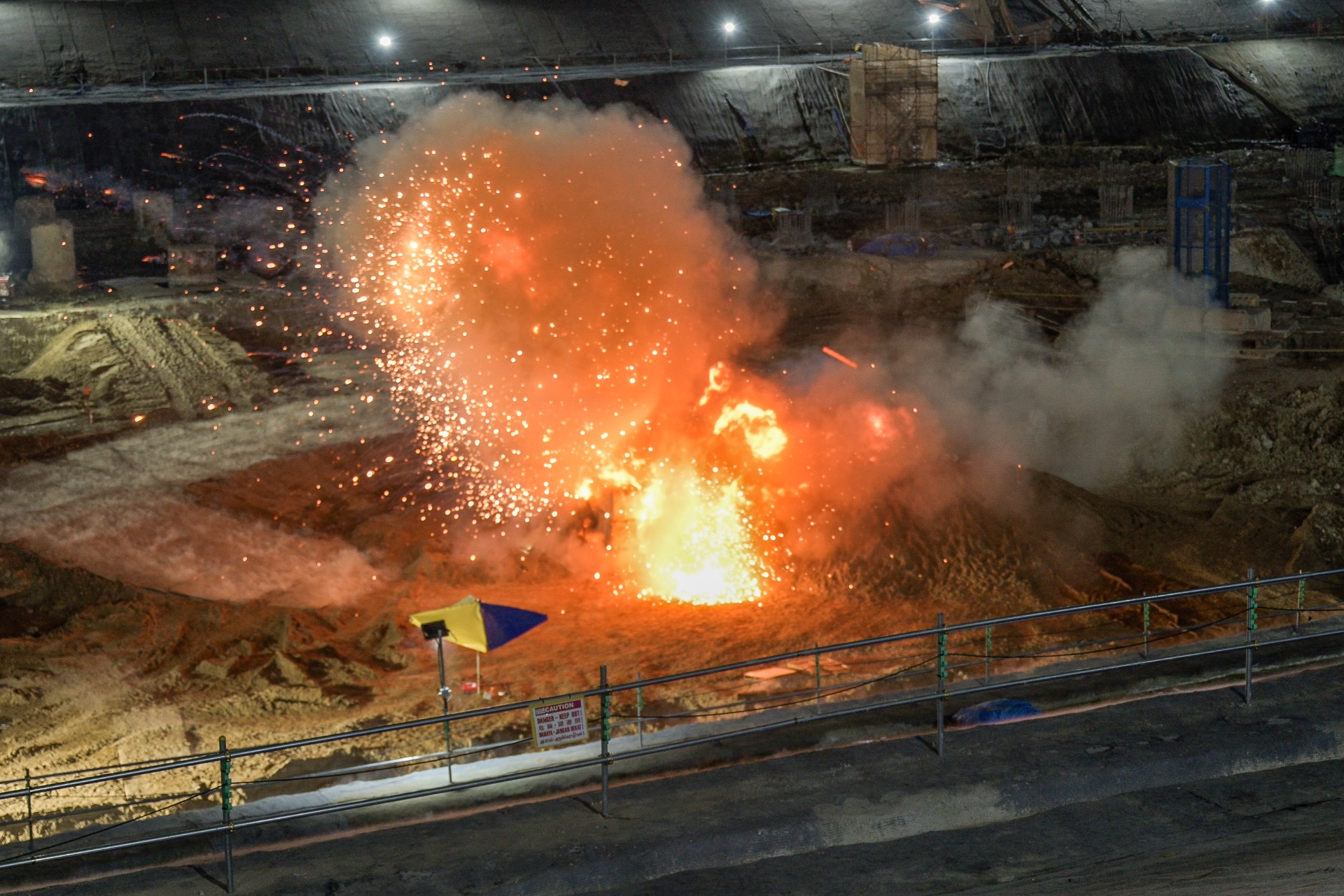
SAF detonates 250kg WWII bomb uncovered at Tanah Merah Coast Road
02 Apr 2026
On 2 Apr, the SAF’s Explosive Ordnance Disposal (EOD) team successfully disposed of an unexploded war relic found at Tanah Merah Coast Road.