
OPS & TRAINING
KEEPING THE COAST CLEAR
15 Apr 2005
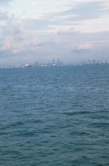
Established in 1988, the Republic of Singapore Navy's (RSN) Coastal Command keeps a vigilant watch over Singapore waters, ensuring that our sea lines of communication are free of maritime threats. To counter new challenges, four new initiatives were recently introduced.
The Singapore Straits is a vital communications and shipping line.
About 1,000 vessels pass through it daily, including merchant ships that call at Singapore's ports, merchant vessels that transit through the waters, as well as vessels like ferries and barter-traders that operate between Indonesia, Singapore and Malaysia.
Safeguarding the maritime security of Singapore waters for the past 17 years is the RSN's Coastal Command (COSCOM).
Working closely with agencies such as the Police Coast Guard (PCG), Maritime and Port Authority of Singapore (MPA) and Immigration and Checkpoints Authority (ICA), COSCOM performs key roles such as:
- Conducting round-the-clock security patrols of the Singapore Straits.
- Providing assistance to civil authorities during contingencies such as ferry mishaps, air disasters and anti-hijack operations.
- Conducting Mine Counter Measure operations where necessary, for example, clearing World War II bombs discovered in Singapore waters.
As part of the RSN's transformation efforts, COSCOM recently introduced four new initiatives to better address different forms of maritime security threats in the Singapore Straits.
(1) Transfer of 189 SQN
Comprising six Anti-submarine Patrol Vessels (APV), 189 SQN was transferred from the Fleet to COSCOM's command in late January.
This transfer was to optimise resources.
With 189 SQN and its sister squadron, 182 SQN (which comprises six Patrol Vessels or PV), under the command of a single formation, COSCOM will have greater flexibility and efficiency in deploying these vessels for security operations.
The re-organisation will also better support COSCOM and Fleet's other training and operational requirements.
(2) Implementation of the multi-crew concept
Since January, both 189 and 182 Squadrons have been functioning on a multi-crew concept. This means that for each operational APV and PV, there are two sets of deployable crew, thus generating more patrols of the Singapore Straits.
Commanding Officer (CO) (crew 1) of the PV, RSS Justice, MAJ Vince Tan, explained that more patrols are essential in the current landscape of increased sea threats of terrorism and piracy.
However, without the multi-crew concept and faced with this increase in operational requirements, the sailors will have to be out at sea for longer periods, which can overly fatigue them.
Said MAJ Tan: "With the multi-crew concept, we limit time spent away from home. Besides rest, the time on shore can also be spent on other important areas like training, managing administrative matters and even participating in sporting activities."
Another benefit of this concept is that "two heads are better than one", said MAJ Tan. "With two sets of crew, this means there are two heads at the various levels, like two COs or two Chief Engineering Specialists (CES). Very often, we come together to share knowledge."
Commanding Officer (CO) (crew 1) of the PV, RSS Justice, MAJ Vince Tan, explained that more patrols are essential in the current landscape of increased sea threats of terrorism and piracy.
However, without the multi-crew concept and faced with this increase in operational requirements, the sailors will have to be out at sea for longer periods, which can overly fatigue them.
Said MAJ Tan: "With the multi-crew concept, we limit time spent away from home. Besides rest, the time on shore can also be spent on other important areas like training, managing administrative matters and even participating in sporting activities."
Another benefit of this concept is that "two heads are better than one", said MAJ Tan. "With two sets of crew, this means there are two heads at the various levels, like two COs or two Chief Engineering Specialists (CES). Very often, we come together to share knowledge."
The squadron's CO, LTC Lee Khai Leong, revealed some of the training his men have undergone to operate well in this work environment: "We need a good knowledge of shipping practices and operations to better understand shipping trends."
"Thus, many have attended commercial maritime classes like tanker familiarisation courses and dangerous cargo handling courses."
"As shipping operations are complex and involve a myriad of agencies like MPA, PCG and ICA, the squadron also needs good rapport and workflow links with them. Over the years, COSCOM has established a good network with them, and we continue to build upon it."
LTC Lee continued: "The squadron is also now building ties with players in the maritime community like ship owners, shipping agents and people from shipyards and port facilities."
(4) Setting up of ASSeT
Since March, small teams of armed sea marshals have been deployed on certain merchant vessels as the ships call at, or depart from, Singapore waters.
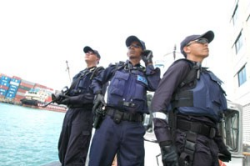
Known as the Accompanying Sea Security Teams (ASSeTs), the men come from 180 SQN as well as the PCG. The teams enhance the RSN's capability in conducting pre-emptive measures against possible terrorist attacks.
LTC Lee further explained: "ASSeTs will safeguard, and if necessary, take control of specific areas of the ship to prevent terrorists from using the vessel to cause catastrophic harm."
After consulting overseas experts and working with PCG and ICA, an extensive training programme was derived for ASSeT members. LTC Lee revealed that this included knowledge of gas/chemical tankers, weapons, boarding procedures, and first aid.
Even people skills are essential. "We interact with seafarers from different countries, and so need to deal with differences like culture and language gaps. Hence, interpersonal skills are often put to the test," said LTC Lee.
At the end of the day, the experience gained working closely with external agencies has been most valuable for the squadron.
LTC Lee said: "The agencies are able to relate to each other well and have integrated as a team without much difficulty. During training, there are many instances where we share our experiences with each other. And in the course of the ASSeTs deployment, we have established closer ties with each other."
"With this good level of interactions, we will continue to work hand-in-hand with these agencies to ensure the safety and security of the Singapore Straits."
COSCOM was previously organised as a formation headquarters with three squadrons:
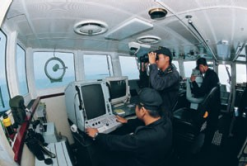
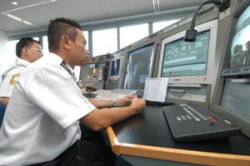
181 SQN - Gathers information from COSCOM's Patrol Vessels, Police Coast Guard, and Maritime and Port Authority's Vessel Traffic Information System (VTIS), to maintain round-the-clock maritime surveillance of the Singapore Straits.
182 SQN - Its six patrol vessels are deployed in the Singapore Straits for 24/7 coastal patrols.
194 SQN - Comprising four Mine Countermeasures Vessels and two Self-Propelled Acoustic and Magnetic Mine Sweepers, the squadron conducts mine countermeasure operations. It works closely with the Naval Diving Unit.
COSCOM was previously organised as a formation headquarters with three squadrons:
181 SQN - Gathers information from COSCOM's Patrol Vessels, Police Coast Guard, and Maritime and Port Authority's Vessel Traffic Information System (VTIS), to maintain round-the-clock maritime surveillance of the Singapore Straits.
182 SQN - Its six patrol vessels are deployed in the Singapore Straits for 24/7 coastal patrols.
194 SQN - Comprising four Mine Countermeasures Vessels and two Self-Propelled Acoustic and Magnetic Mine Sweepers, the squadron conducts mine countermeasure operations. It works closely with the Naval Diving Unit.

ALSO READ IN OPS & TRAINING
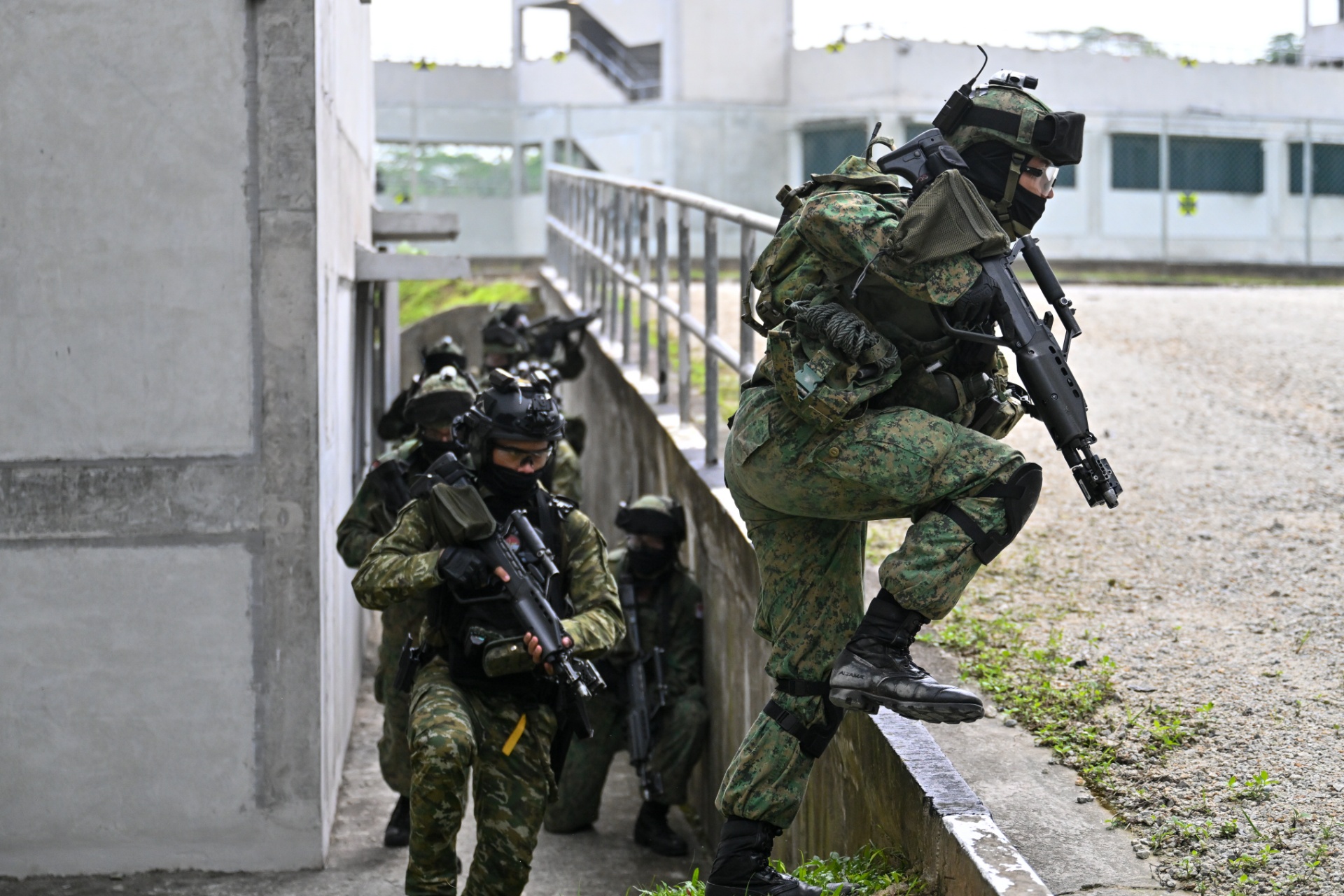
S’pore commandos, Indonesia special forces train & strengthen ties at Ex Chandrapura
08 Jul 2026
From conducting tactical airborne jumps to a coordinated urban raid, soldiers from Singapore and Indonesia deepened their decades-long partnership in this bilateral army exercise.

SAF & Home Team to refresh Medical Classification System
13 Apr 2026
The refreshed system will allow about 1,200 servicemen annually to be deployed for vocations and roles they were ineligible for previously.
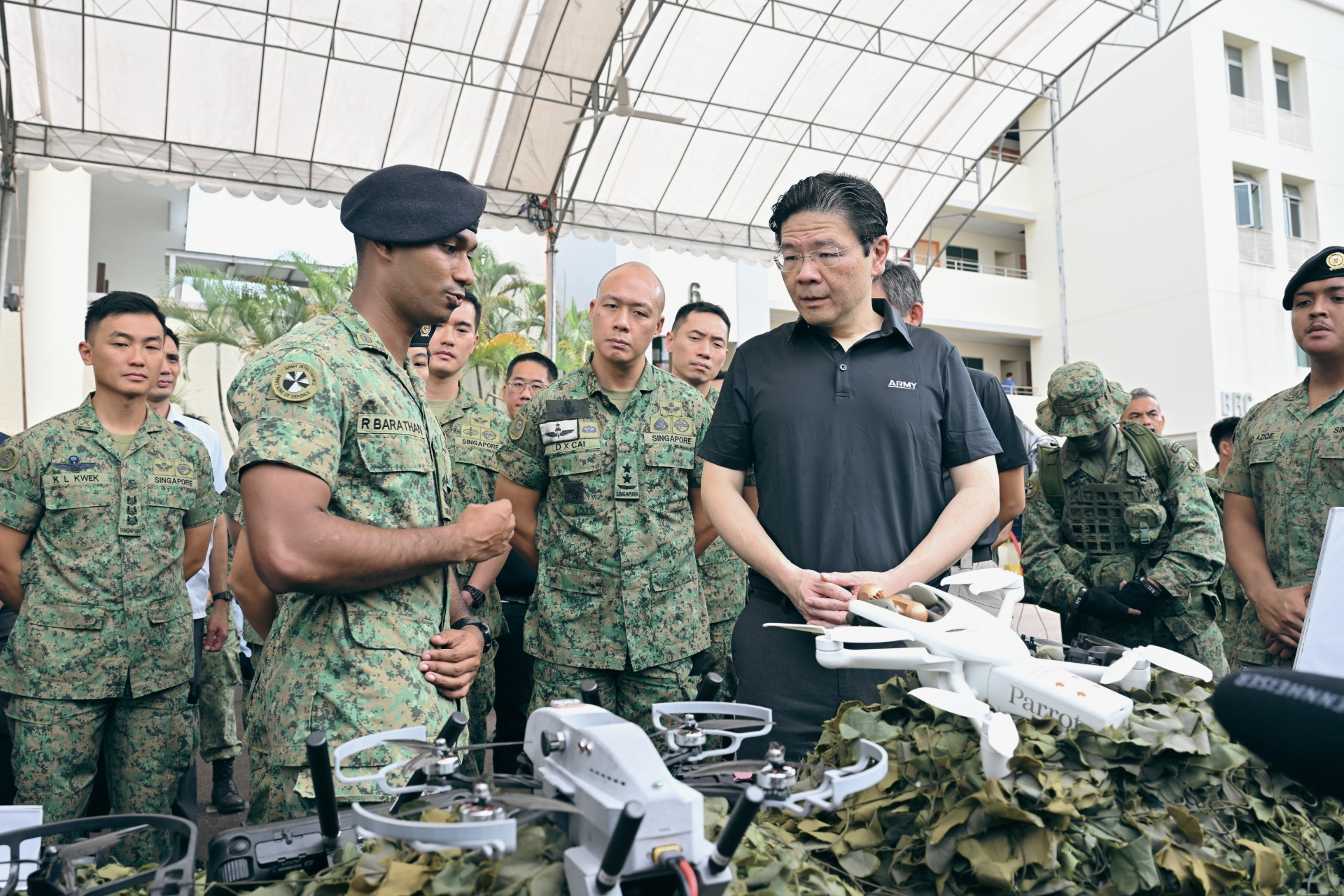
Prime Minister Lawrence Wong observes SAF’s sense-strike integrated capabilities
09 Apr 2026
He witnessed the SAF’s ongoing efforts in leveraging advanced robotics and cross-Service integration to secure Singapore’s interests in an increasingly volatile world.