
OPS & TRAINING
EXERCISE DEEP SABRE PROCEEDS LIKE CLOCKWORK
18 Aug 2005
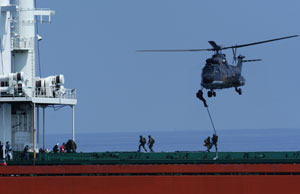
The sea phase of Exercise Deep Sabre began with the deployment of maritime and air assets from participating countries to detect, localise and track the merchant ship transporting an illegal shipment of dual-use chemicals.
This was the biggest multilateral sea exercise of its kind, involving ships and aircraft from Singapore, Australia, Japan, New Zealand, the United Kingdom, and the United States of America.
Brunei, Malaysia, Pakistan and Vietnam were present as observers at the invitation of Singapore.
But even with the sheer number of ships patrolling the sea, the waters of the South China Sea proved to be a challenge in itself.
But it was a challenge that Fleet Commander, Rear-Admiral (RADM) Chew Men Leong, welcomed.
"This exercise is to build capacity for the Proliferation Security Initiative countries, to let us come together and interdict suspicious vessels. It can be a challenge, considering the wide area and the multiple vessels to search," he said.
Efficient searches and communication between the participating countries resulted in the location of the suspected merchant vessel.
Once located, the vessel was interdicted by men from the Republic of Singapore Navy's (RSN) Naval Diving Unit (NDU), followed by personnel from the Singapore Armed Forces (SAF) Chemical, Biological, Radiological and Explosive (CBRE) Defence Group, the Australian Customs Service, and the Japan Coast Guard.
RADM Chew credited the closely co-ordinated operations to the integrated communication systems deployed for Exercise Deep Sabre.
"Timely intelligence is very important, and we have been able to share the intelligence from the Combined Co-ordination Centre (CCC) and distribute it to the participating ships with the ACCESS System. This enabled the ships to locate the suspected ship very easily," said RADM Chew.
The successfully interdicted merchant vessel will be escorted to Singapore's port for a detailed search by domestic enforcement agencies.
The success of Exercise Deep Sabre's search and interdiction phase underscores the determination and commitment put in by all the participating countries to combat the threat of weapons of mass destruction (WMD).
"Bringing so many ships out to the South China Sea is not an easy task, and to communicate with all of them is hard, but this exercise is a demonstration of the PSI countries' willingness to battle the issue of WMD," said RADM Chew.

ALSO READ IN OPS & TRAINING

SAF & Home Team to refresh Medical Classification System
13 Apr 2026
The refreshed system will allow about 1,200 servicemen annually to be deployed for vocations and roles they were ineligible for previously.
Prime Minister Lawrence Wong observes SAF’s sense-strike integrated capabilities
09 Apr 2026
He witnessed the SAF’s ongoing efforts in leveraging advanced robotics and cross-Service integration to secure Singapore’s interests in an increasingly volatile world.
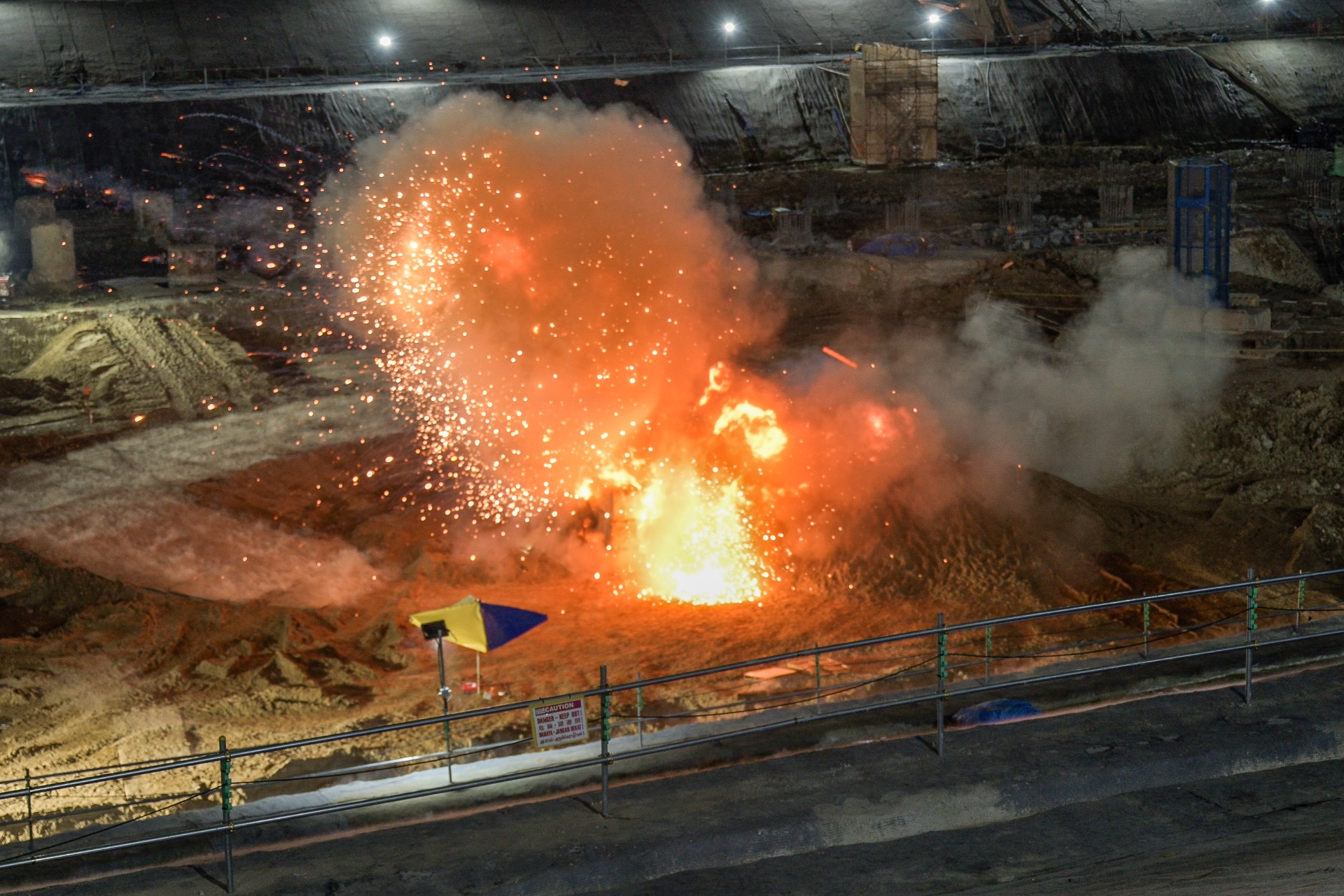
SAF detonates 250kg WWII bomb uncovered at Tanah Merah Coast Road
02 Apr 2026
On 2 Apr, the SAF’s Explosive Ordnance Disposal (EOD) team successfully disposed of an unexploded war relic found at Tanah Merah Coast Road.