
OPS & TRAINING
DR NG OUTLINES CHALLENGES FOR SAF, NS
01 Jul 2012
After 45 years of National Service (NS), the Singapore Armed Forces (SAF) has evolved to become a technologically advanced military force, with the ability and the will to defend Singapore. The continued support for NS from successive generations of Singaporeans and steady investments in defence have been integral to the SAF's achievements, but challenges still remain.
Minister for Defence Dr Ng Eng Hen made these points in an interview with local media on 25 Jun, ahead of SAF Day on 1 Jul. He noted that, over the years, the SAF has earned a reputation for being a "modernised, professional force", which is respected in the region.
Since the beginning of NS in 1967, the SAF has progressively transformed itself and made significant changes within the organisation. It has introduced new capabilities and technologies, revamped its command and control structures and explored ways to improve learning programmes for soldiers.
"45 years on, there is that deep confidence and a sense of quiet achievement that we have come a long way," said Dr Ng.
Looking ahead, he identified the challenges that the SAF will have to deal with as it continues to maintain its edge and operational readiness. Externally, the "complexities of transnational challenges" such as terrorism and piracy which, as Dr Ng said: "will require us to expand our capabilities and to maintain our capabilities."
Internally, a key challenge for the SAF is the projected decline in the number of NS enlistees from 2016 onwards. "By 2025, there will almost be a quarter reduction in the number of enlistees coming in each year for NS," said Dr Ng.
The ongoing 3rd Generation transformation is one of the SAF's answers to this issue of declining NS numbers, said Dr Ng. "That is why we have modernised our systems to be able to do the same, if not more, with the same number of people (while remaining equally effective)."
For example, the High Mobility Artillery Rocket System (HIMARS) operated by the Army's Artillery Formation requires a crew of three, as compared to the older howitzers which required 12 soldiers to operate each gun.
On the sea front, the Republic of Singapore Navy's frigate is manned by a crew of about 70, whereas similar warships operated by other nations typically require a crew of over 100.
In the Air Force, the recently launched Heron 1 Unmanned Aerial Vehicle (UAV) has advanced avionics, detection capabilities and communication systems, making it more effective in terms of range, endurance and aerial surveillance capabilities than the Searcher-class UAV it will replace. The older UAV has been in service since 1994.
Even as the SAF continues to enhance its capabilities, it is also looking at ways to enrich the contributions of individual soldiers the regulars and NSmen. "Technology does not make up for the commitment or the abilities of your soldiers... You are only as strong as your will and ability to defend," said Dr Ng.
To NSmen like Major (MAJ) (NS) Edzra Bin Iskandar, serving NS is the duty of all male Singaporeans. In the past year, he has done than 60 days of In-Camp Training, exceeding the usual 40 days.
When asked why he chose to do so, MAJ (NS) Edzra said: "If I don't go back, my unit suffers, and my men suffer. It's a collective effort which we all have to shoulder for the defence of Singapore." A Physical Education teacher, married with two children, MAJ (NS) Edzra is Second-in-Charge of the 806th Battalion, Singapore Infantry Regiment.
Speaking on the topic of commitment to NS and the will to defend Singapore, Dr Ng said: "We invest considerable efforts in making sure that we engage NSmen... in terms of teaching and learning (as well as) allowing more platforms for soldiers to contribute their ideas to shape the way we do things."
At the heart of this learning transformation is the LEARNet system, an on-line platform which allows trainees to access knowledge at their own pace and share their experiences. Following a successful pilot implementation in four SAF training institutes, the system will be rolled out progressively across the SAF's training community.
Officially launched on 28 Jun, the next phase of the LEARNet programme will focus on broadening the system's library of knowledge to include topics such as individual skills and proficiencies as well as team-based war-fighting competencies.
Changes to traditional command and control structures are also underfoot as the SAF works to enable individual soldiers to effectively operate and capitalise on the advanced systems at their disposal.
MAJ (NS) Edzra (second from right) at home with his family. Commitment to defence from NSmen like him is integral to the SAF's success in becoming a force that is able and ready to defend Singapore.
As an example, Dr Ng pointed out that even the smallest infantry units are networked to the larger array of assets within the SAF. With the Battlefield Management System and the Advanced Combat Man System, ground troops can call upon the collective firepower of the SAF to accomplish their missions.
These new systems allow soldiers at all levels to rapidly make decisions in the field, challenging the traditionally hierarchical way in which things are done in the military, said Dr Ng.
"It calls for a much more open way of engagement and for the ability of rank-and-file soldiers to be able to make important decisions."
Although these changes come with their own unique set of challenges, the SAF has the benefit of having a young force which is well-educated and tech-savvy. "If you notice our young SAF soldiers, they respond to it (modern war-fighting technologies) like ducks to water, and the transition to modern systems has been quite positive, quite quick."
Ending the interview on a personal note, Dr Ng shared that the highs of his appointment came from speaking to Singaporeans who have largely expressed a quiet confidence in the ability of the SAF to protect Singapore.
"After nearly half a century, we have succeeded in forming a nation and an SAF that has the capabilities and determination to fight for and defend our country."

ALSO READ IN OPS & TRAINING
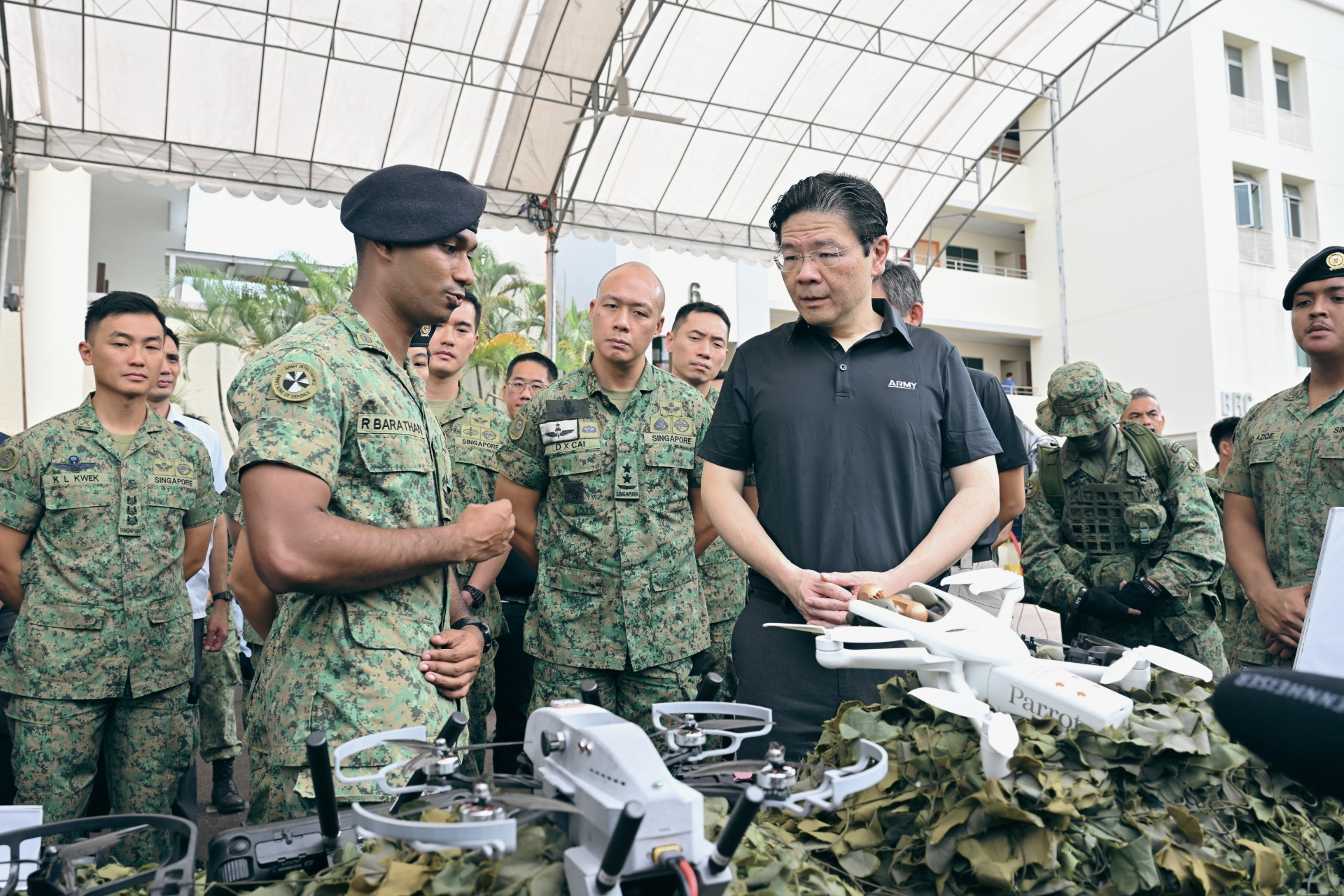
Prime Minister Lawrence Wong observes SAF’s sense-strike integrated capabilities
09 Apr 2026
He witnessed the SAF’s ongoing efforts in leveraging advanced robotics and cross-Service integration to secure Singapore’s interests in an increasingly volatile world.
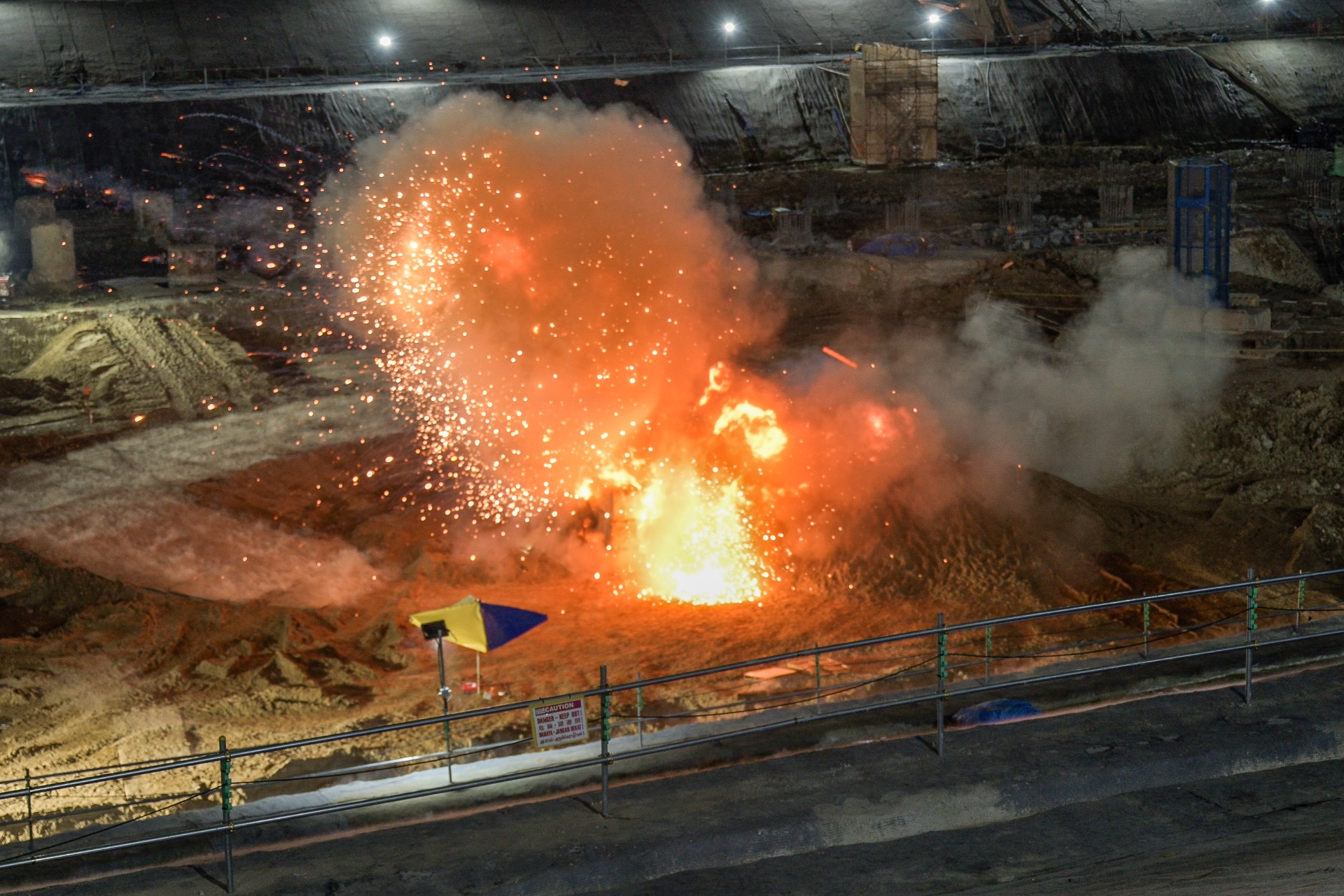
SAF detonates 250kg WWII bomb uncovered at Tanah Merah Coast Road
02 Apr 2026
On 2 Apr, the SAF’s Explosive Ordnance Disposal (EOD) team successfully disposed of an unexploded war relic found at Tanah Merah Coast Road.
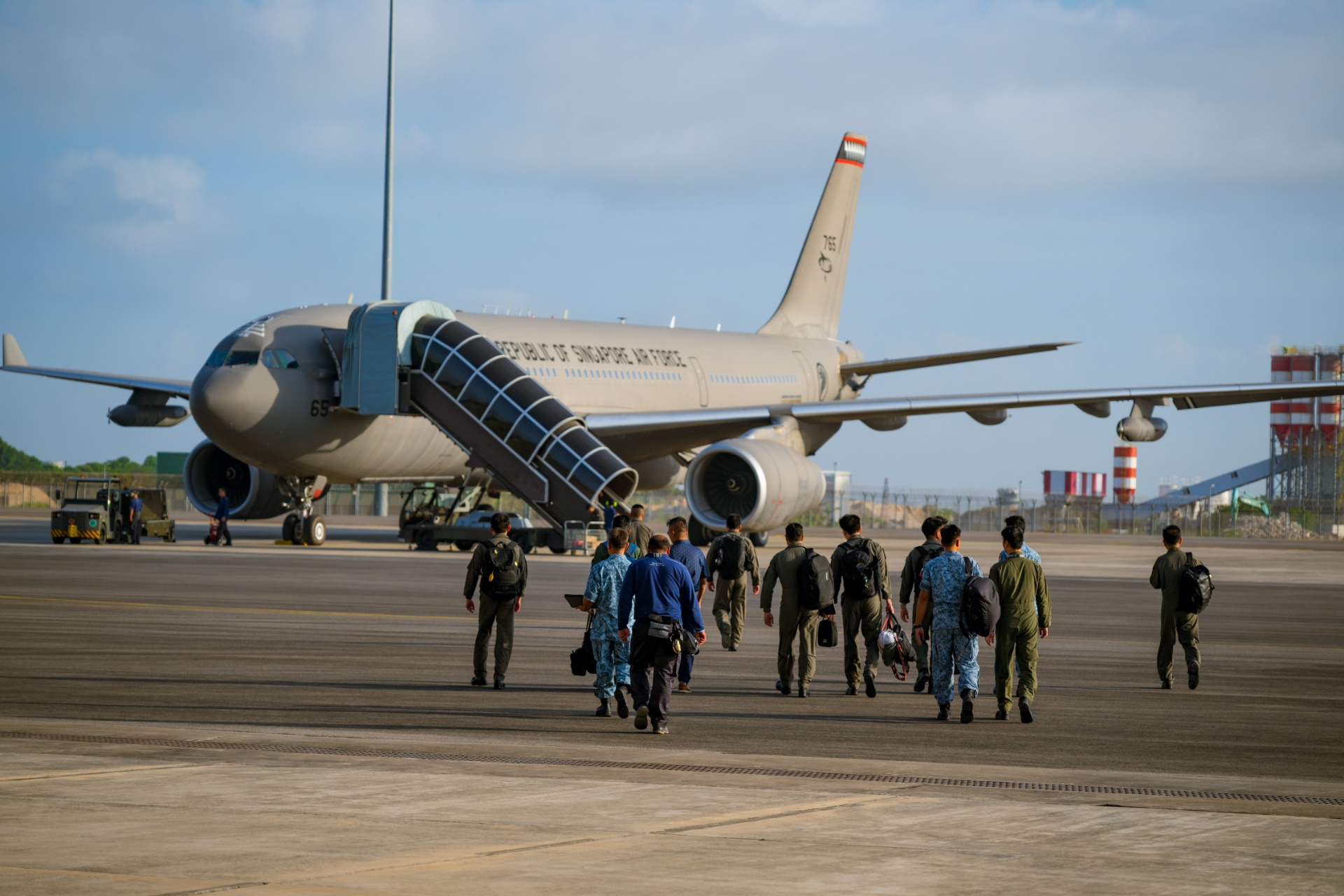
Flying into the unknown: Inside RSAF’s mission to bring S’poreans home from Middle East
28 Mar 2026
Despite the risks and complex challenges of flying in a conflict zone, the men and women of the RSAF pulled off a successful mission through careful planning and hard work.