Meet the teams who toil behind the scenes to enable the smooth conduct of the SAF’s biggest unilateral overseas exercise.
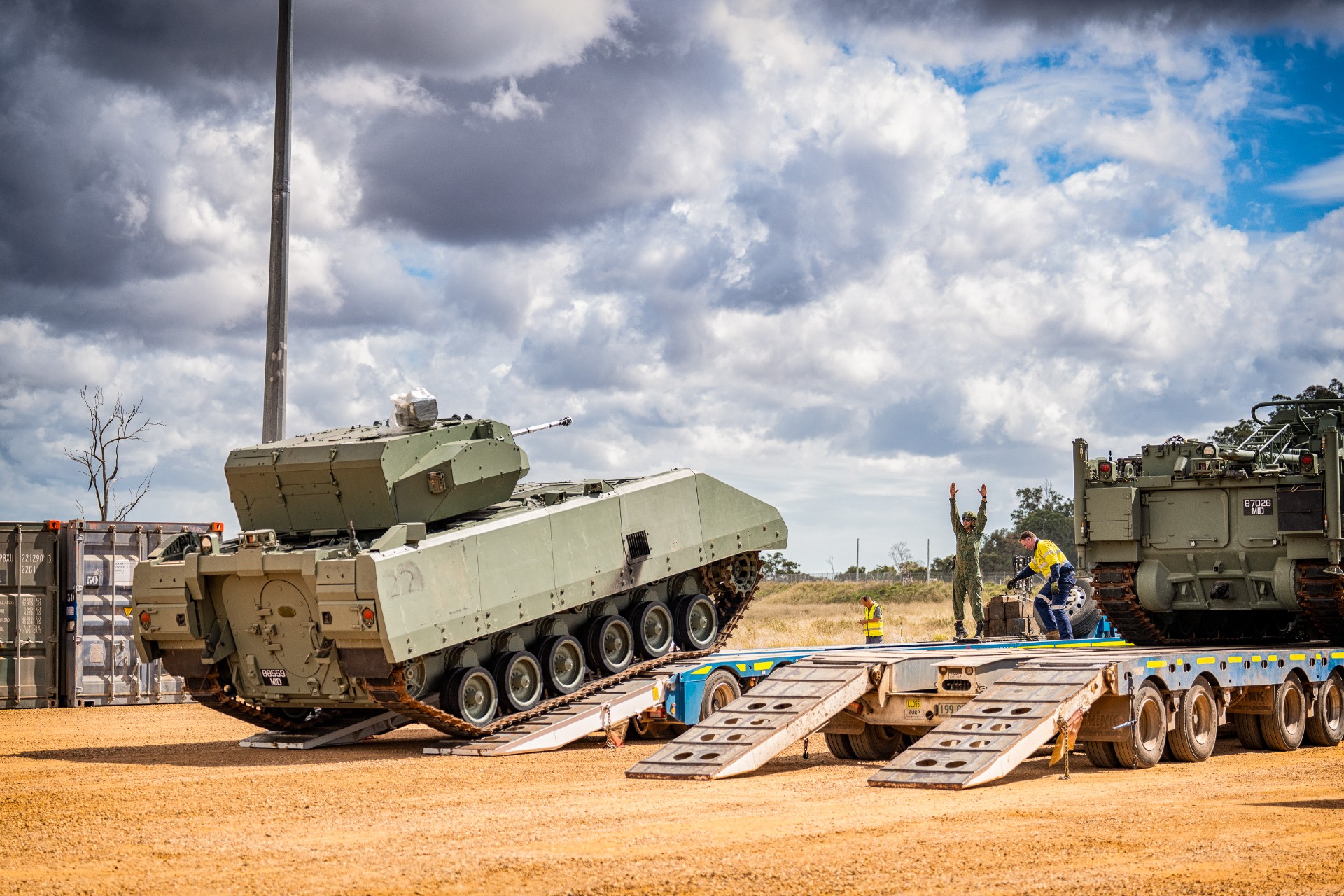
The Army's Hunter Armoured Fighting Vehicle (AFV) being unloaded from a low-loader during the preparation stages of this year's exercise. [Photo: PIQ]
Story by Tedd Jong
Photos by Kenneth Lin, Tedd Jong & courtesy of SATS/PIQ
Firepower and action are probably what first come to mind when we think of military exercises. But behind the scenes, another “army” works tirelessly to support those at the front line
These unsung heroes take care of nearly everything – from providing daily necessities such as food and medication to ammunition for training, to handling logistical, maintenance and transportation support – so that training can proceed safely and effectively at Exercise Wallaby 2025 (XWB25).
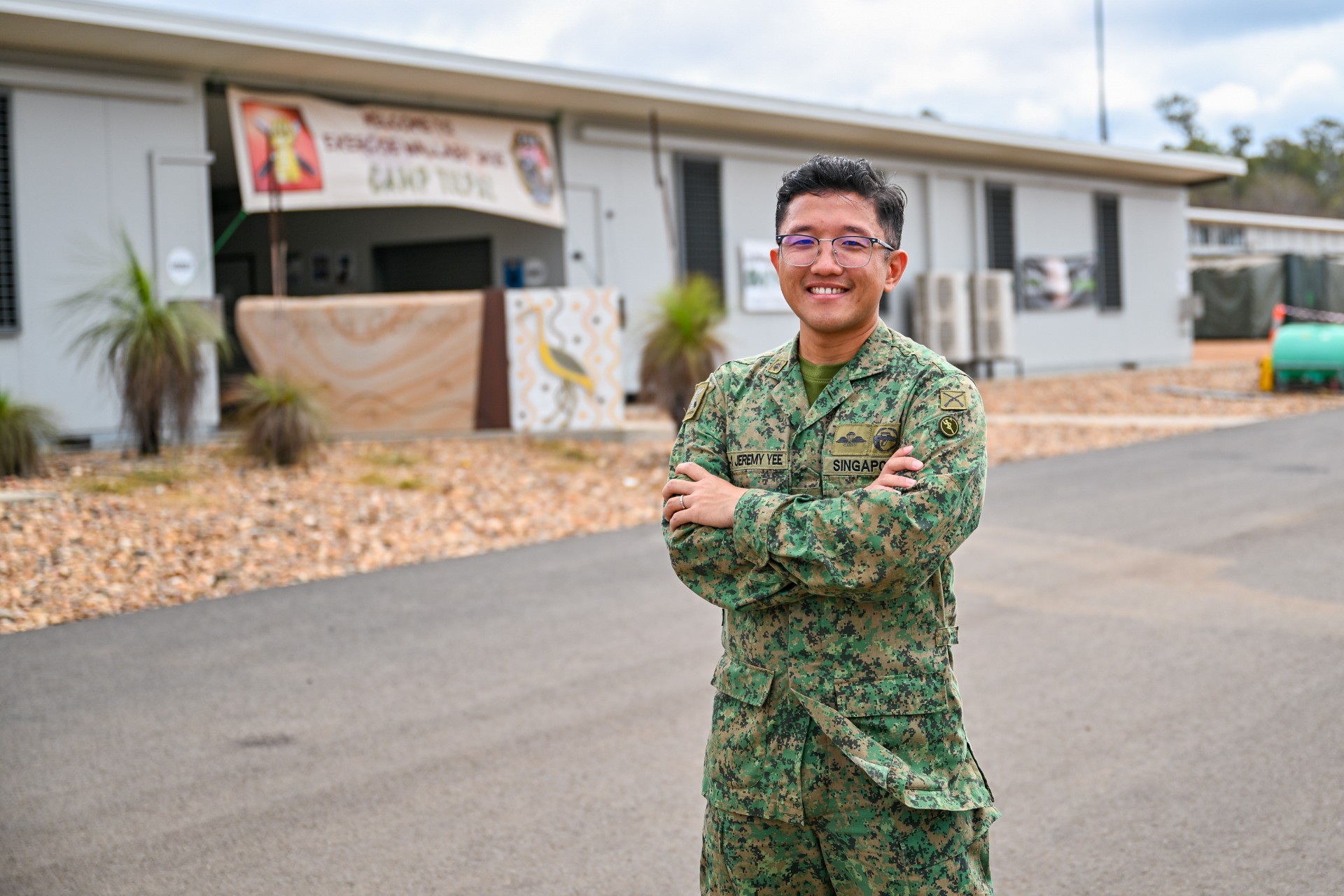
“For every big-scale firing and manoeuvre that we’re doing here, there is a team behind supporting and ensuring the smooth delivery of logistics, safety and control for every soldier, (making) sure they train meaningfully and safely,” says ME6 Yee, who is in charge of the 170-strong FSG.
First on site, last to leave
The Forward Support Group’s (FSG’s) preparation for XWB started as far as one year ahead, said Military Expert (ME) 6 Jeremy Yee.
The 39-year-old Commanding Officer of 9th Army Maintenance Base is the commander of the FSG in this year’s exercise.
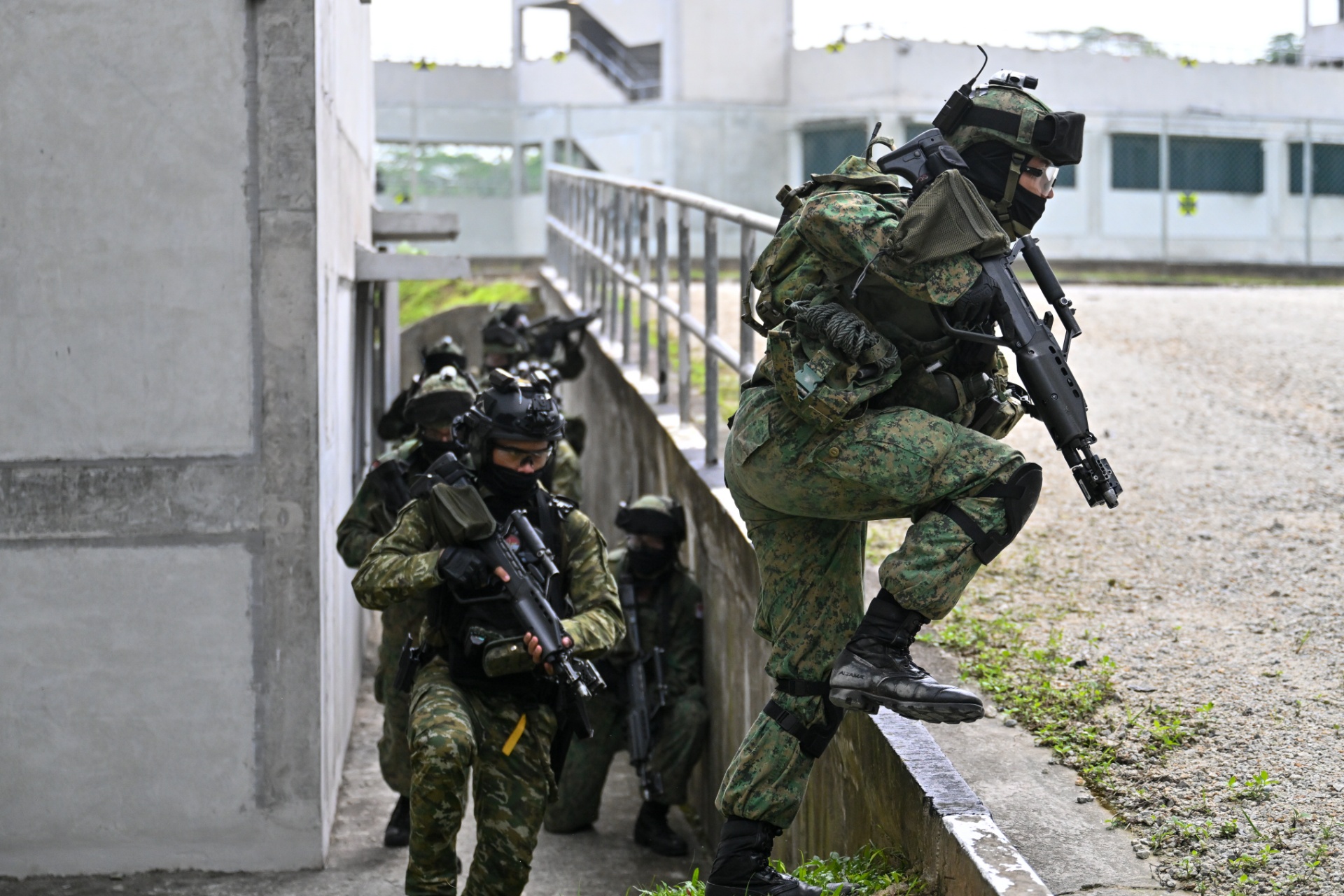
The daunting task they faced? Moving, supplying and maintaining up to 5,000 troops and 500 platforms throughout XWB25, which took place from 16 Oct to 2 Nov, at Shoalwater Bay Training Area (SWBTA) in Queensland, Australia.
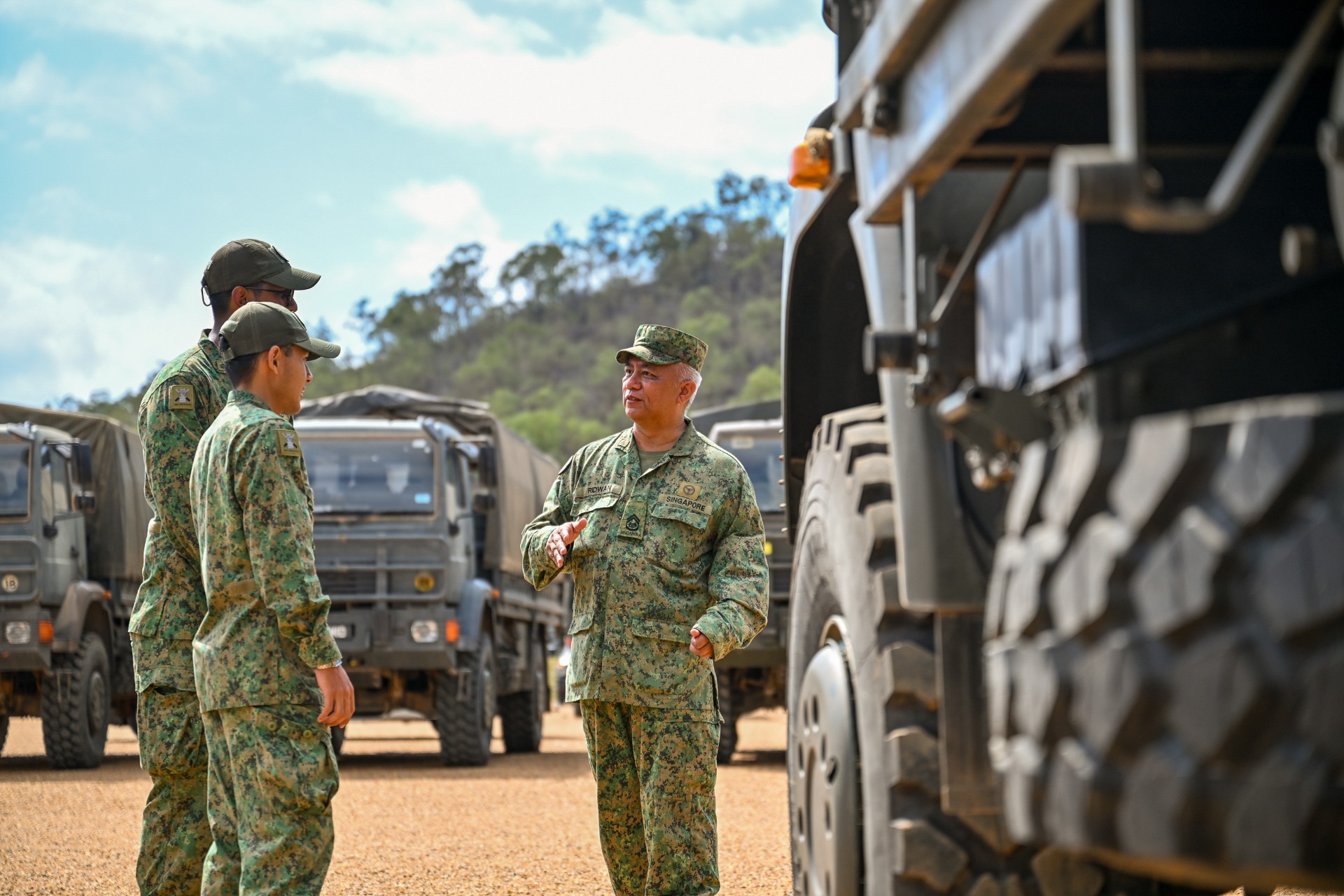
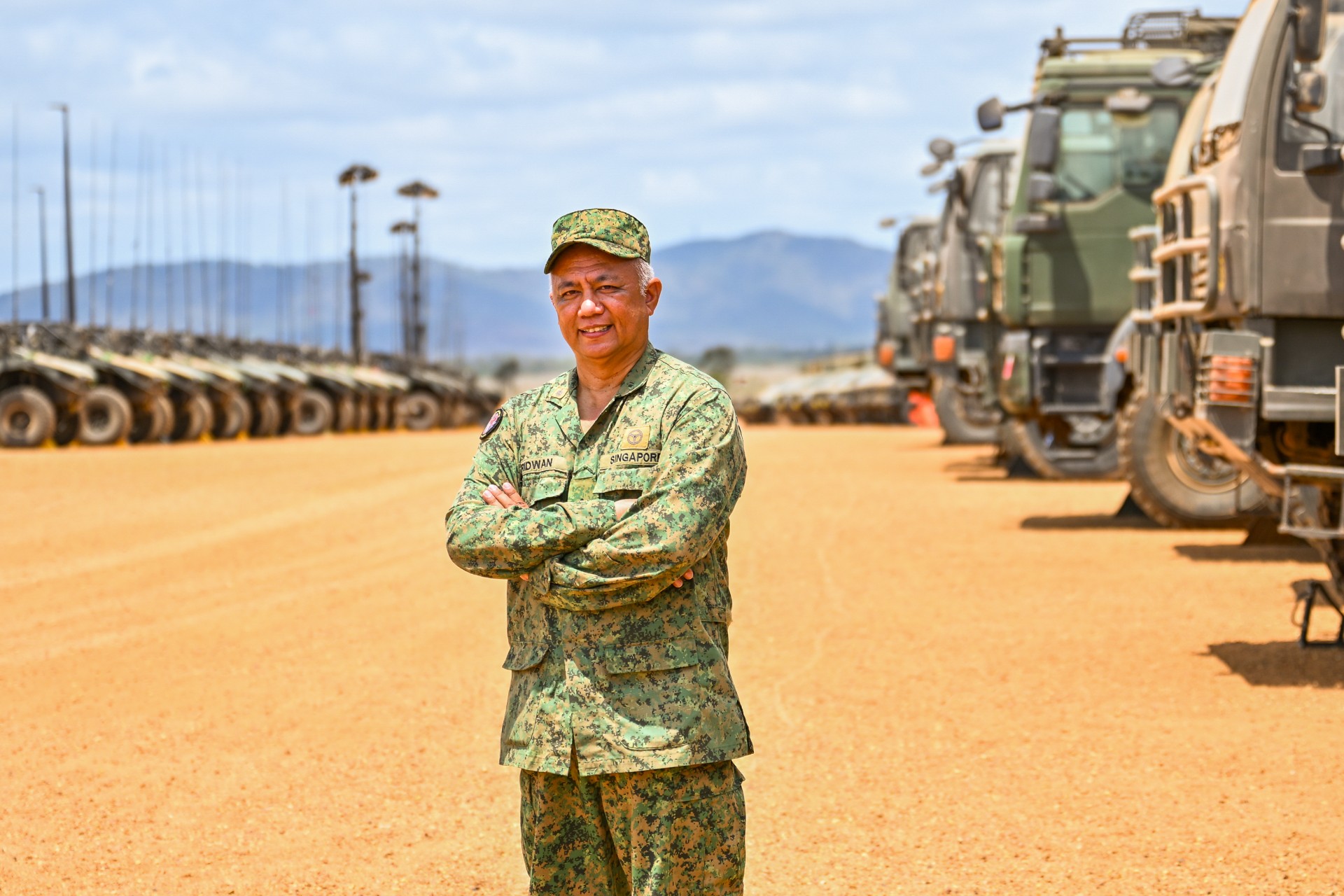
1st Warrant Officer (1WO) Ridwan bin Abdul Rahman (right), a Transport Warrant Officer in 6th Singapore Division, briefing transport operators at Camp Tilpal. Ensuring adequate rest for his operators is crucial, as driver and vehicle can cover up to 200 km in a single training day at SWBTA.
The use of technology, such as to track vehicle mileage or conduct mass briefings digitally, has made operations smoother, said the 53-year-old.
For example, the FSG had to ensure that Singapore Armed Forces (SAF) vehicles and equipment were clean of possible contaminants, and work closely with the Australian authorities – such as the Department of Agriculture, Fisheries and Forestry – to pass strict inspections before they could be shipped into Australia.
To protect the local biodiversity and wildlife in Australia, SAF vehicles such as the Hunter AFVs (pictured at Camp Tilpal) must pass strict cleanliness inspections before they can be brought into the country for the exercise.
Laying the groundwork
The FSG is also often a common touchpoint, bridging between the many training and support units.
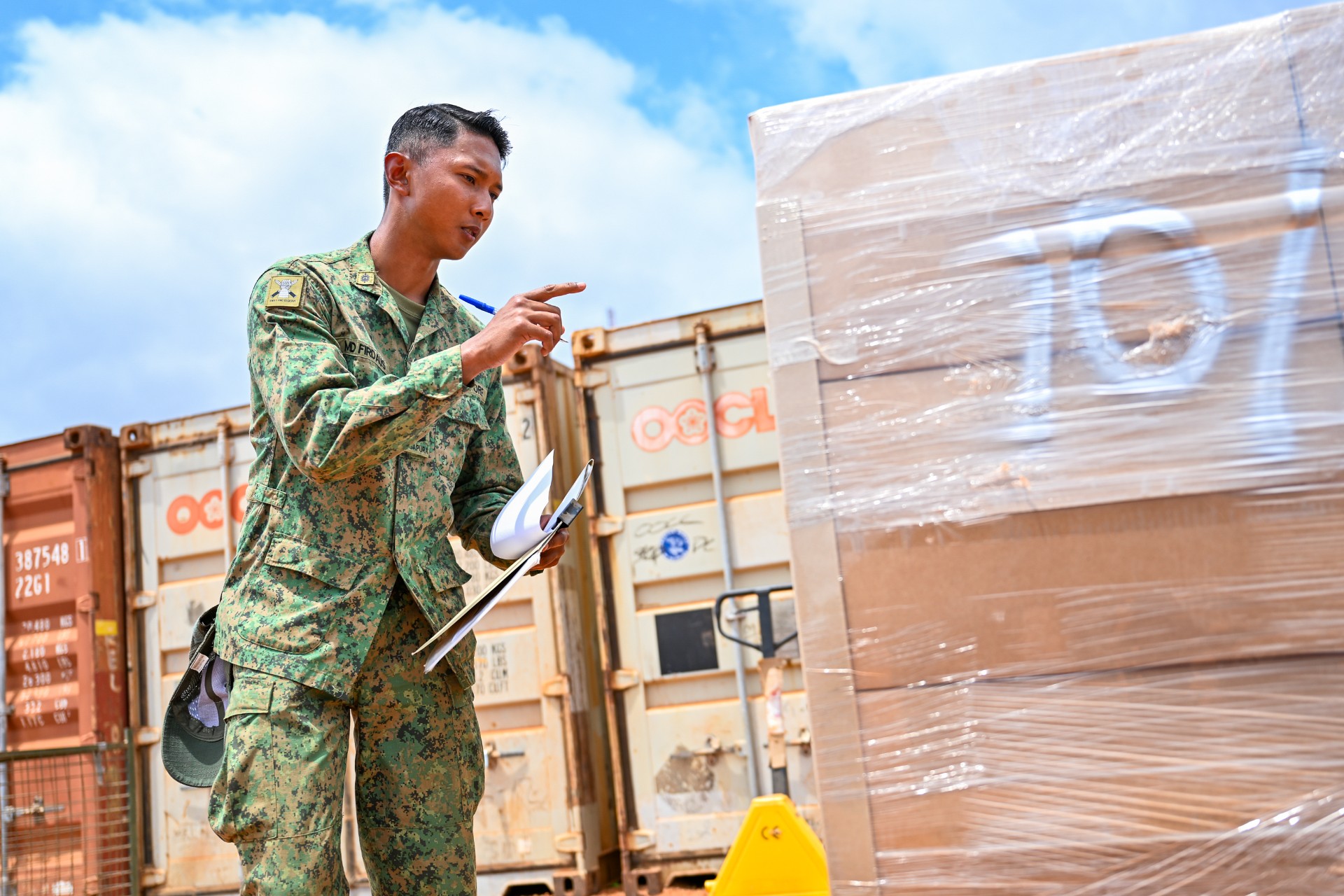
Supply Storeman Corporal First Class (CFC) Muhammad Firdaus Bin Mohamed Romzi provides logistical support to the training troops at XWB.
This includes seeing to their accommodation, equipping and meals, and ensuring that they are well-supplied to focus on their training.
“(The experience is) challenging and exciting (because) we need to communicate with multiple entities,” said the 22-year-old Full-time National Serviceman (NSF) from the Army’s Headquarters Operations Support.
After almost three months at SWBTA, he has now learnt “the art of communication and coordination (as well as) accountability and preparation, no matter if it’s a small move or a big delivery”.
CFC Muhammad Firdaus checking stores at Camp Tilpal. He has enjoyed working with multiple entities over the course of XWB, while seeing first-hand the SAF’s full capabilities being exercised in SWBTA.
ME6 Yee and the FSG know their mission is of great importance – laying the groundwork and handling the background support allow the SAF to focus on its training objectives during the exercise.
“Every minute saved for our troops in our processes will mean that valuable training hours are returned to the soldiers.”
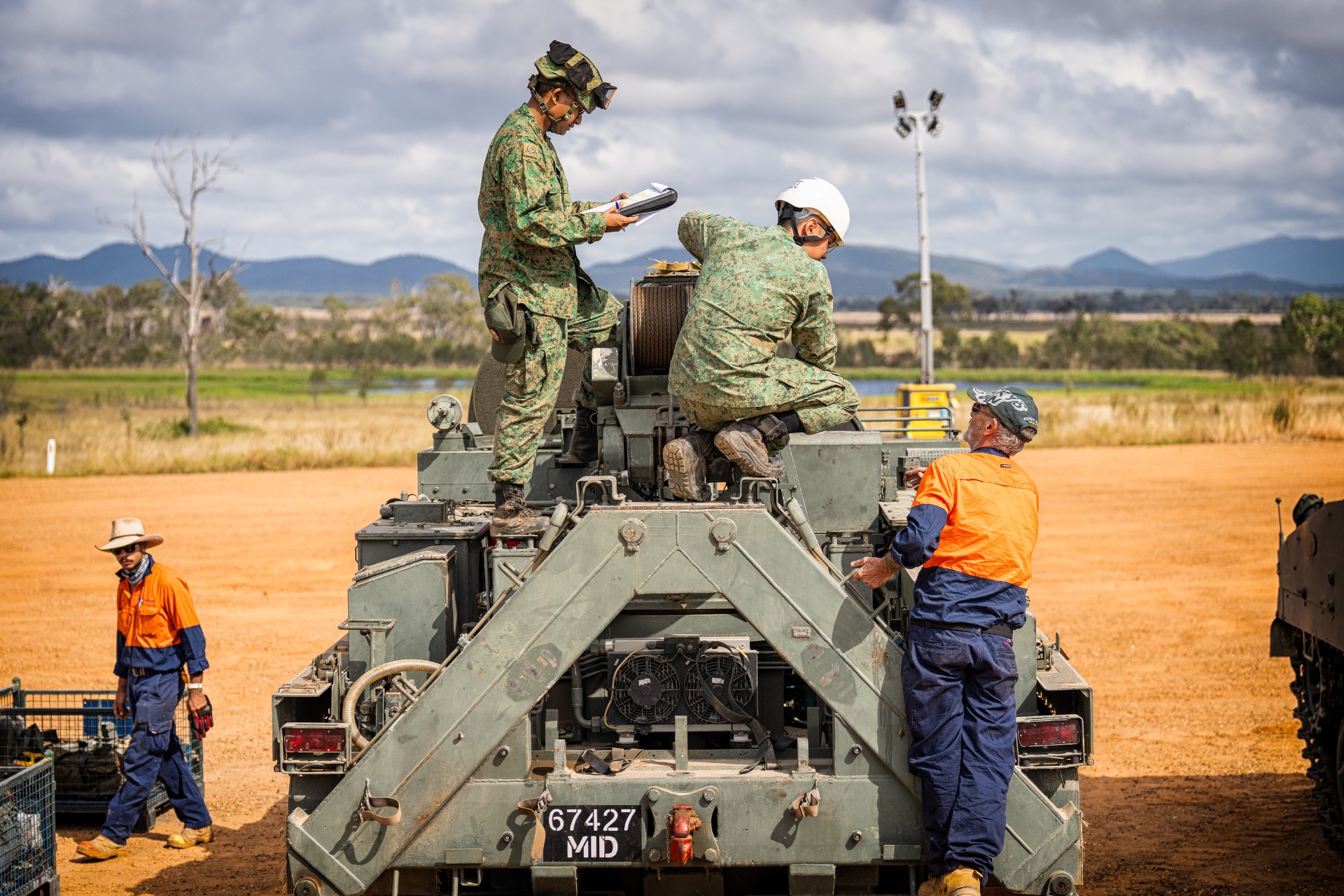
Army personnel working with their partners from Primary Industries Queensland (PIQ) to conduct inventory checks on the vehicles at Camp Tilpal, in preparation for XWB25. [Photo: PIQ]
Ammunition automated
For any large-scale exercise – especially one that runs over a few months – ensuring the availability of safe and reliable ammunition is a must.
This is where ME4 Clarence Ong, the Ammunition Lead for XWB25, and his team from the SAF Ammunition Centre (SAFAC) come in.
They have introduced two digitalised systems – the Mobile Rounds Accounting Xpress (mRAX), and Enterprise System Logs Mobile-Ammunition Management (ESLM-AM) – at the exercise this year.
Both aim to reduce labour and hours required to account for expended and unexpended ammunition, while increasing accuracy and efficiency.
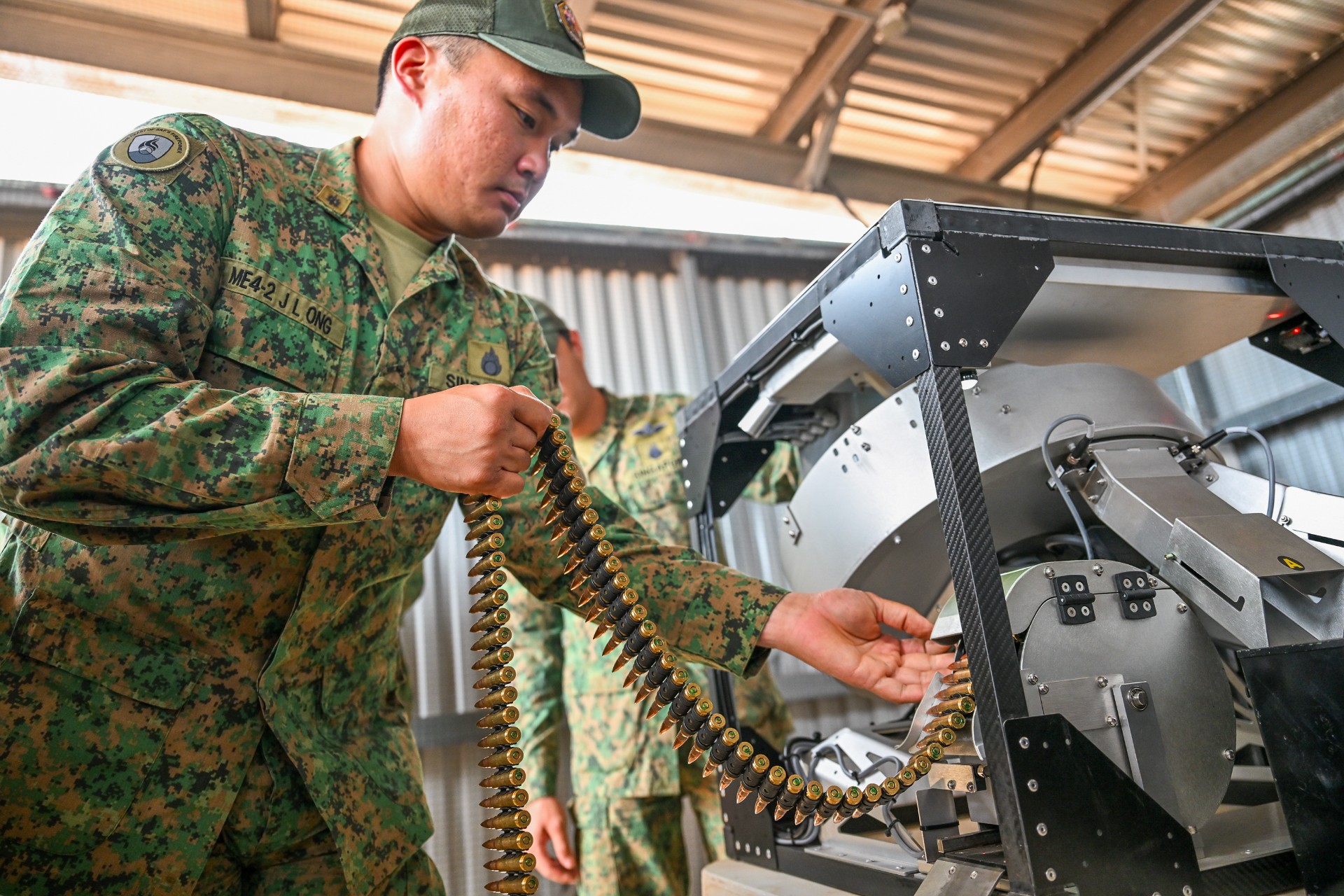
ME4 Ong demonstrating the mRAX’s ammunition-counting capability with a belt of 7.62mm rounds. This smart automated accounting machine can count small ammunition such as 5.56mm and 7.62mm rounds.
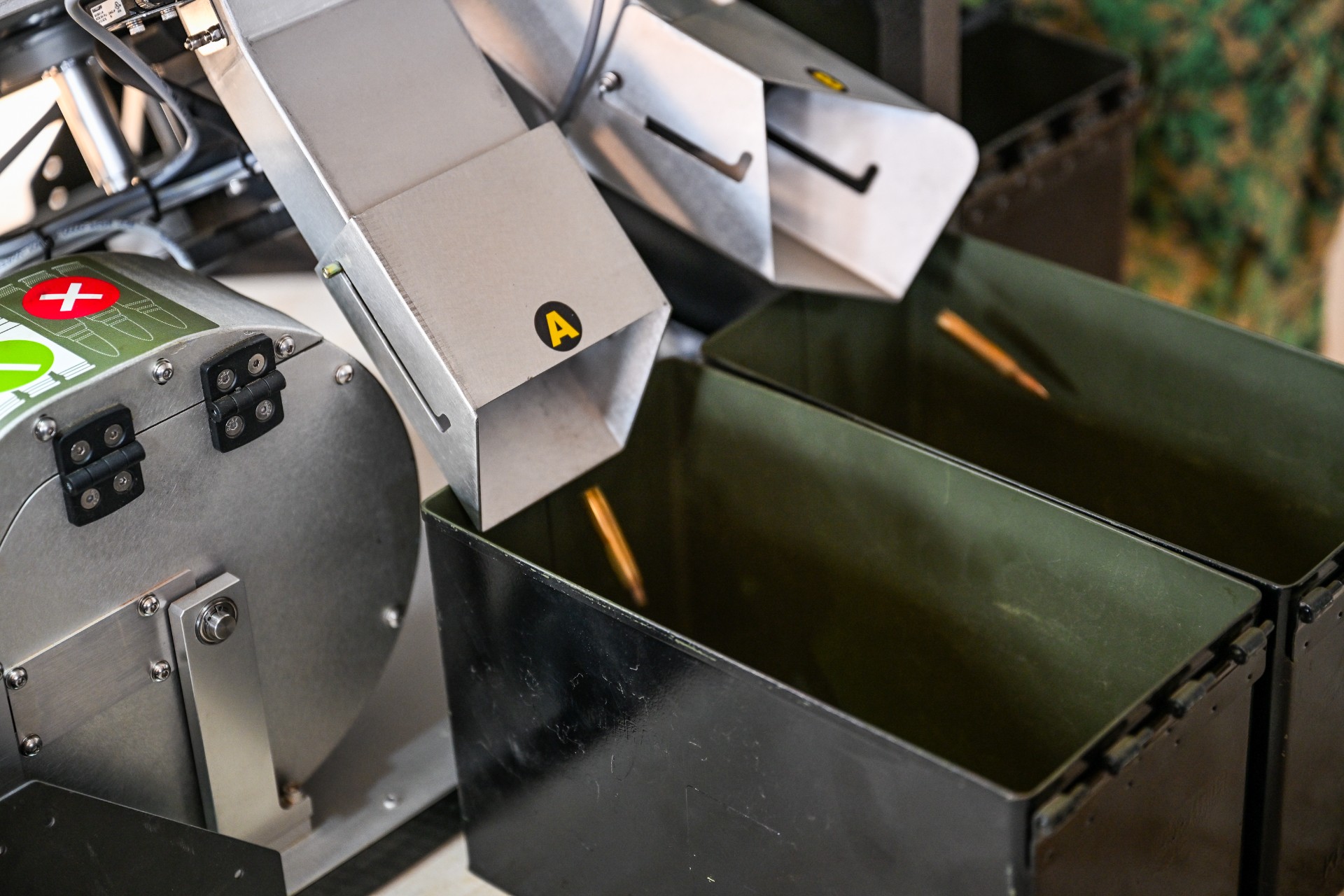
The mRAX automatically separates expanded from unexpanded rounds. The automated system resolves the last-mile effort to account for every round manually, all while requiring just one person to operate. It has resulted in at least 80 percent of time savings and 5 percent of the work required to place the rounds into spacer boxes.
Used for the first time at XWB, the ESLM-AM is a do-it-all device that facilitates rounds being drawn at all levels – from the depot to the unit ammunition IC, and down to the individual serviceman. Its digitalised system removes the need for manual data entry, saving time while enhancing accuracy.
Keeping soldiers fighting fit
SWBTA’s dry and hot climate can be a challenge to troopers who spend long hours training outfield.
That’s why Medical Officers (MOs) like Captain (CPT) (Dr) Grace Ho keep a keen eye out for soldiers suffering from heat injuries.
To treat heat exhaustion, portable bathtubs for cold water immersion were set up at Camp Tilpal’s medical centre. Advisories were also regularly issued to protect soldiers from haze.
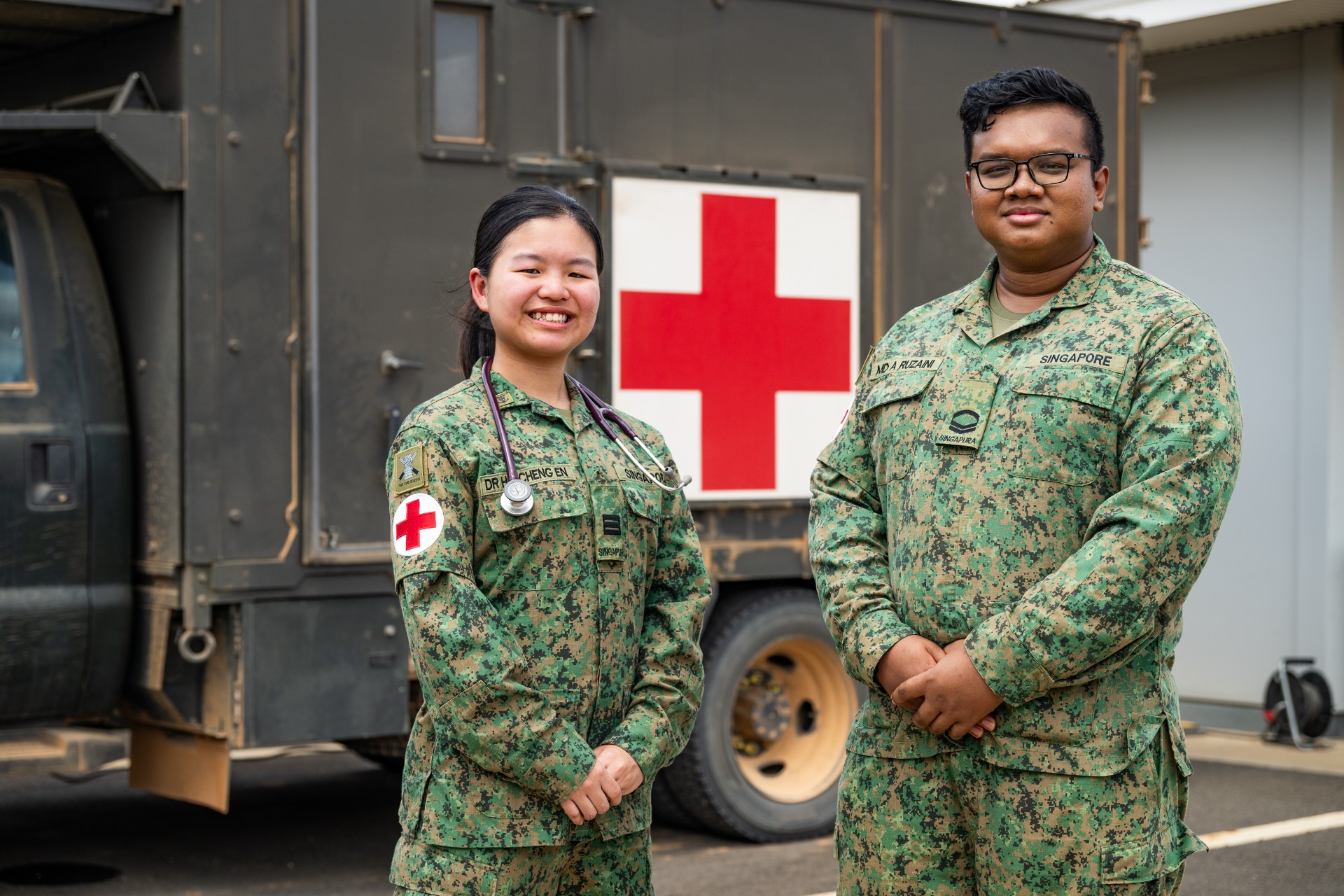
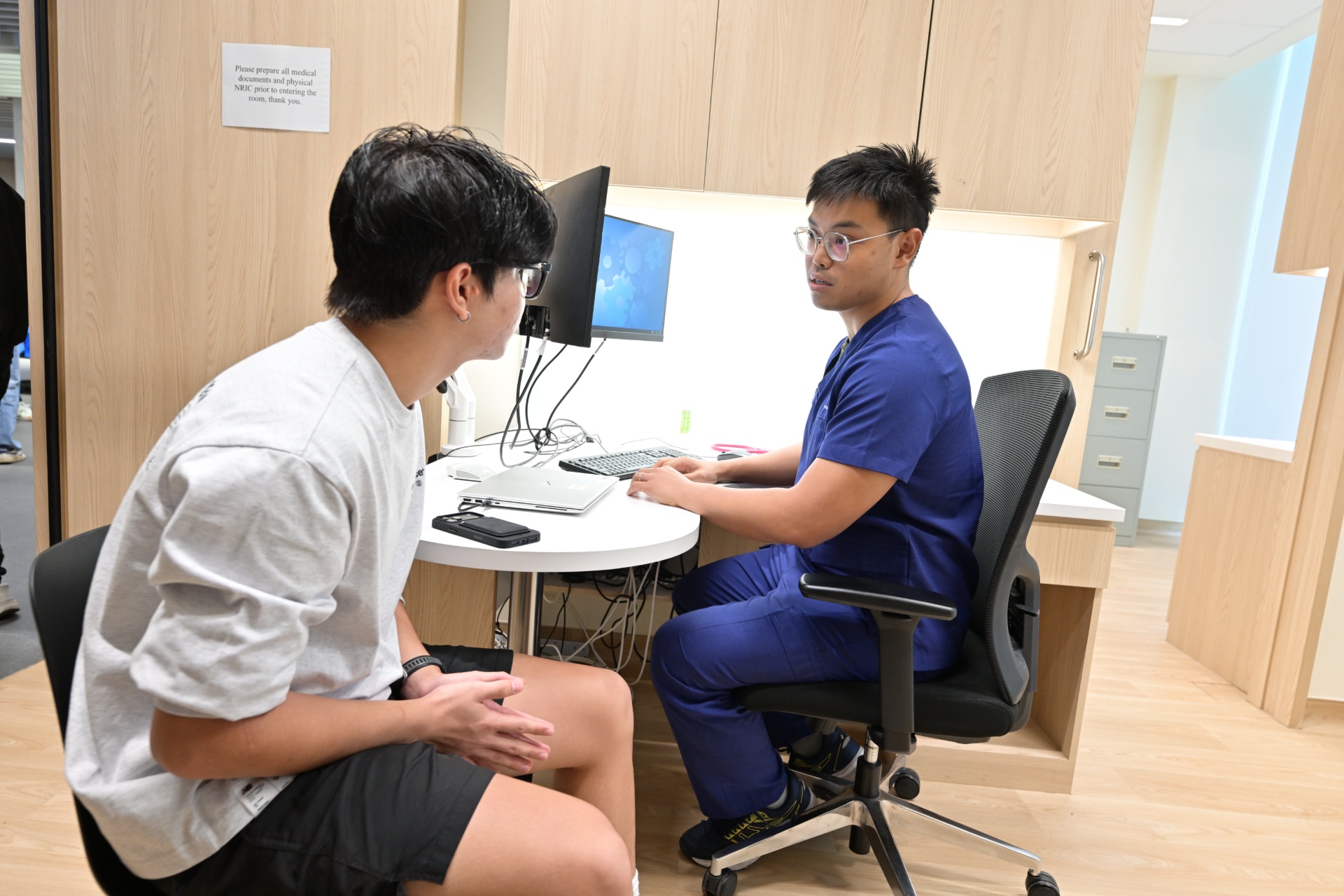
CPT (Dr) Ho (left), 26, and Corporal (CPL) Muhammad Ammar Rizaini Bin Arshad, 21, take care of soldiers at Camp Tilpal’s medical centre.
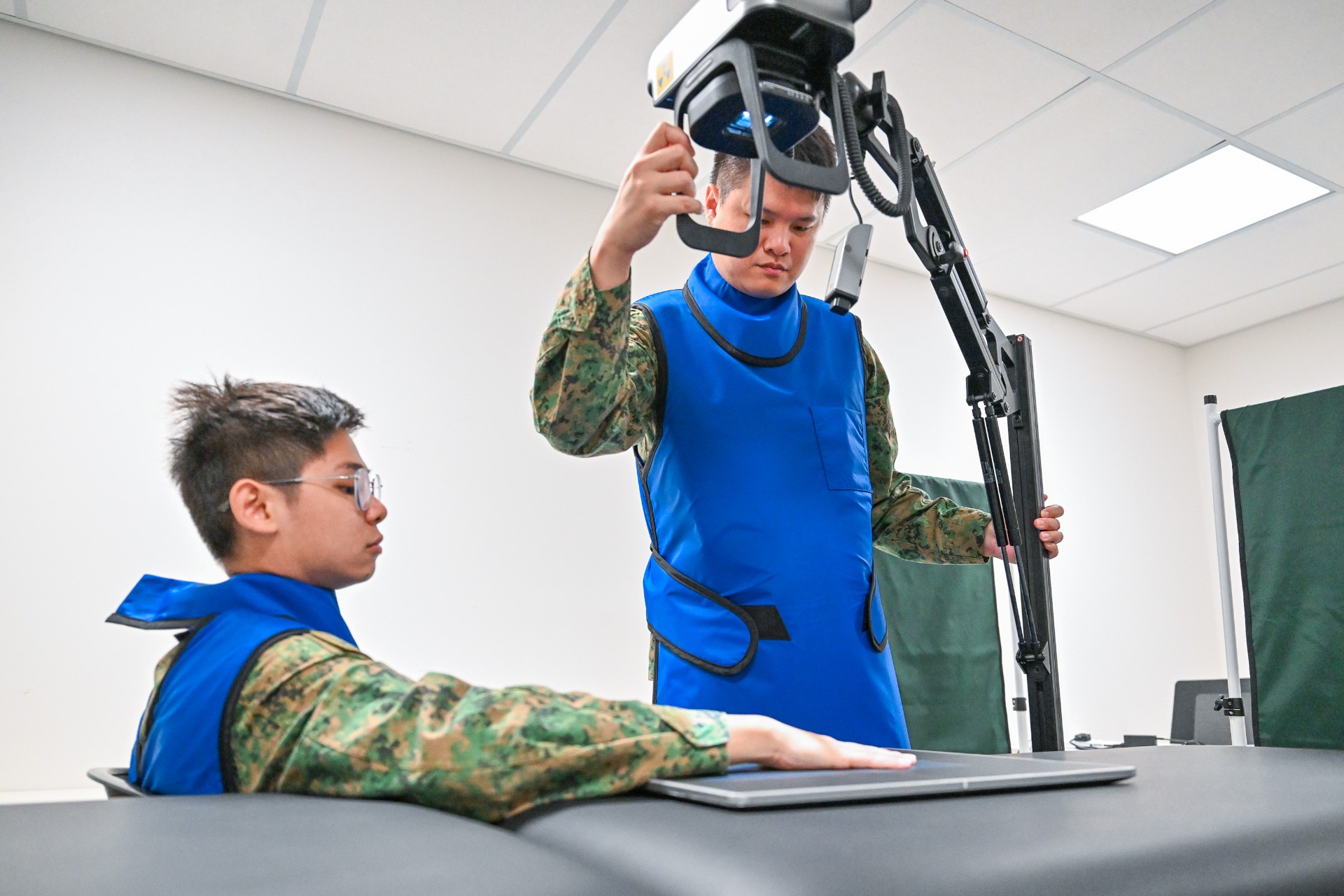
A first for XWB25, the portable X-ray (operated by NSman radiographers and radiologists in this photo) saves crucial logistics and manpower as medical personnel can assess possible fractures without having to send the patients to Rockhampton Hospital.
An upgrade at the medical centre this year is the portable X-ray machine, which allows MOs and medics to assess patients on site and administer the right treatment quickly
This effectively cuts down time and manpower, as injured servicemen no longer have to be transported 1.5 hours to Rockhampton hospital for assessment.
Said CPT (Dr) Ho: “(The X-ray machine) has reduced the number of send-outs required… (For example,) since we can now diagnose fractures here, we don’t need to send every single patient (suspected to have a fracture) to the nearest hospital.”
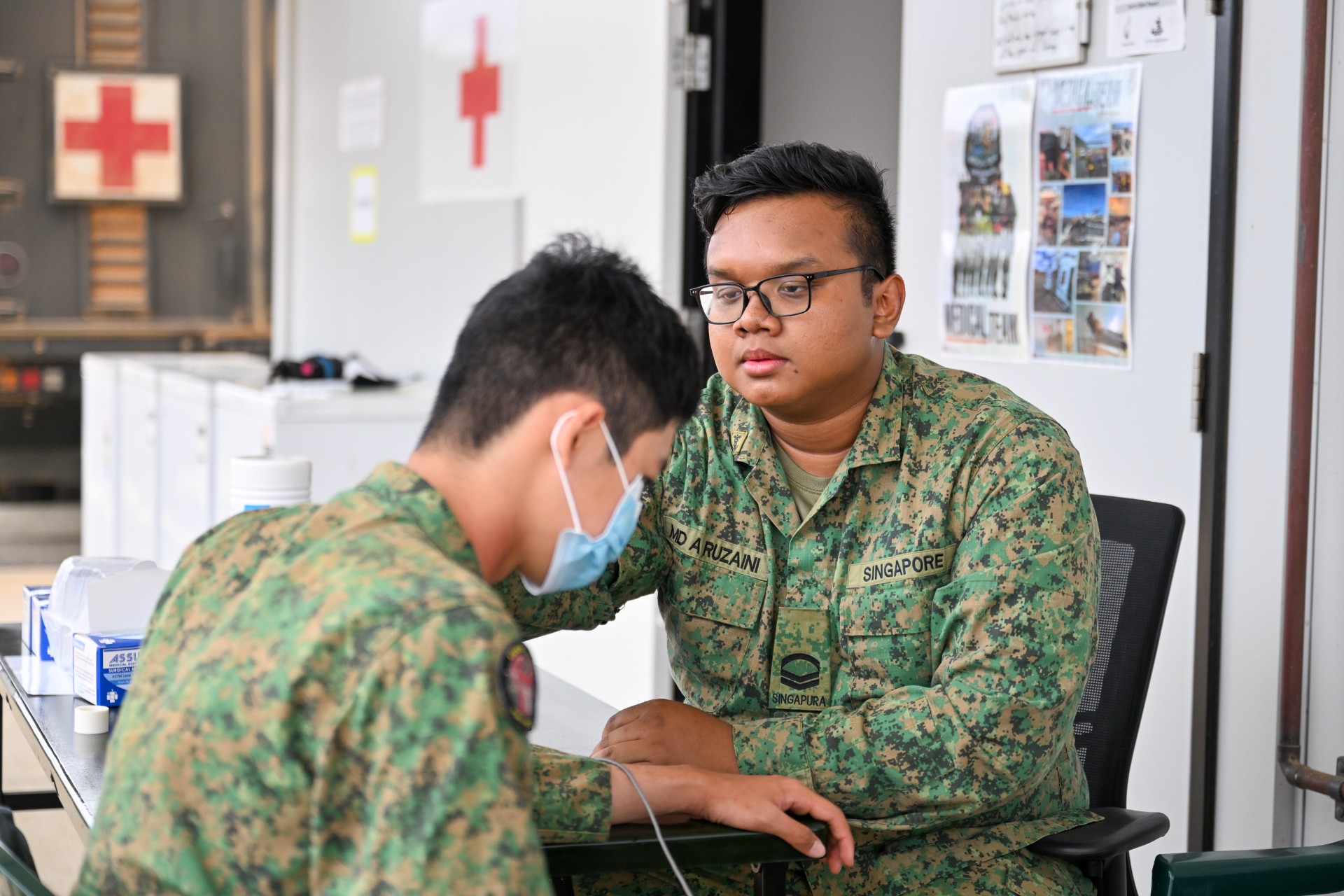
Combat medic CPL Ammar tending to a patient at Camp Tilpal. Back in Singapore, this NSF is a cover medic who stands by in camp to treat training injuries.
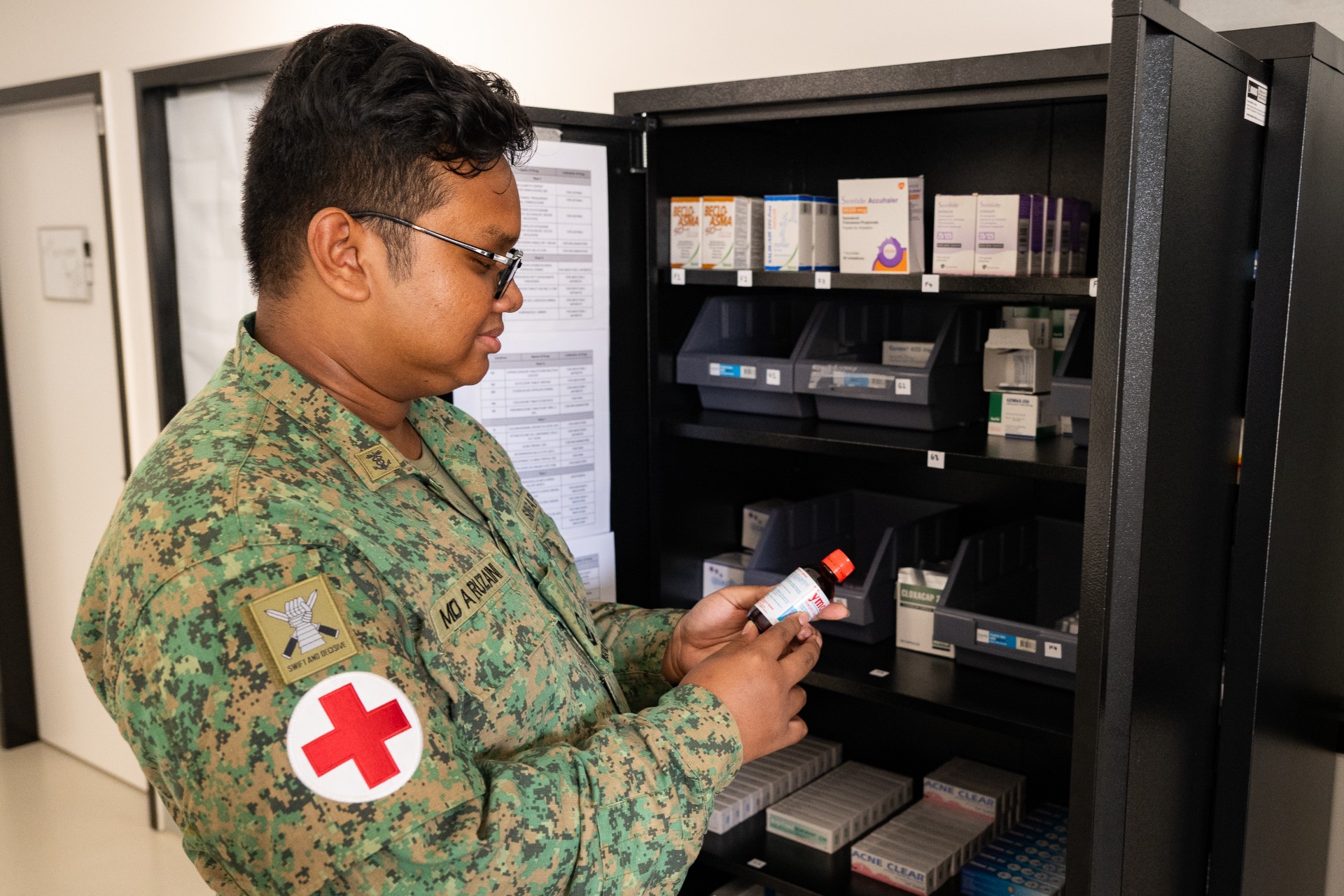
CPL Ammar found his participation in XWB a fulfilling experience, as he has been able to pick up new skills such as dispensing medication.
Keeping things under control
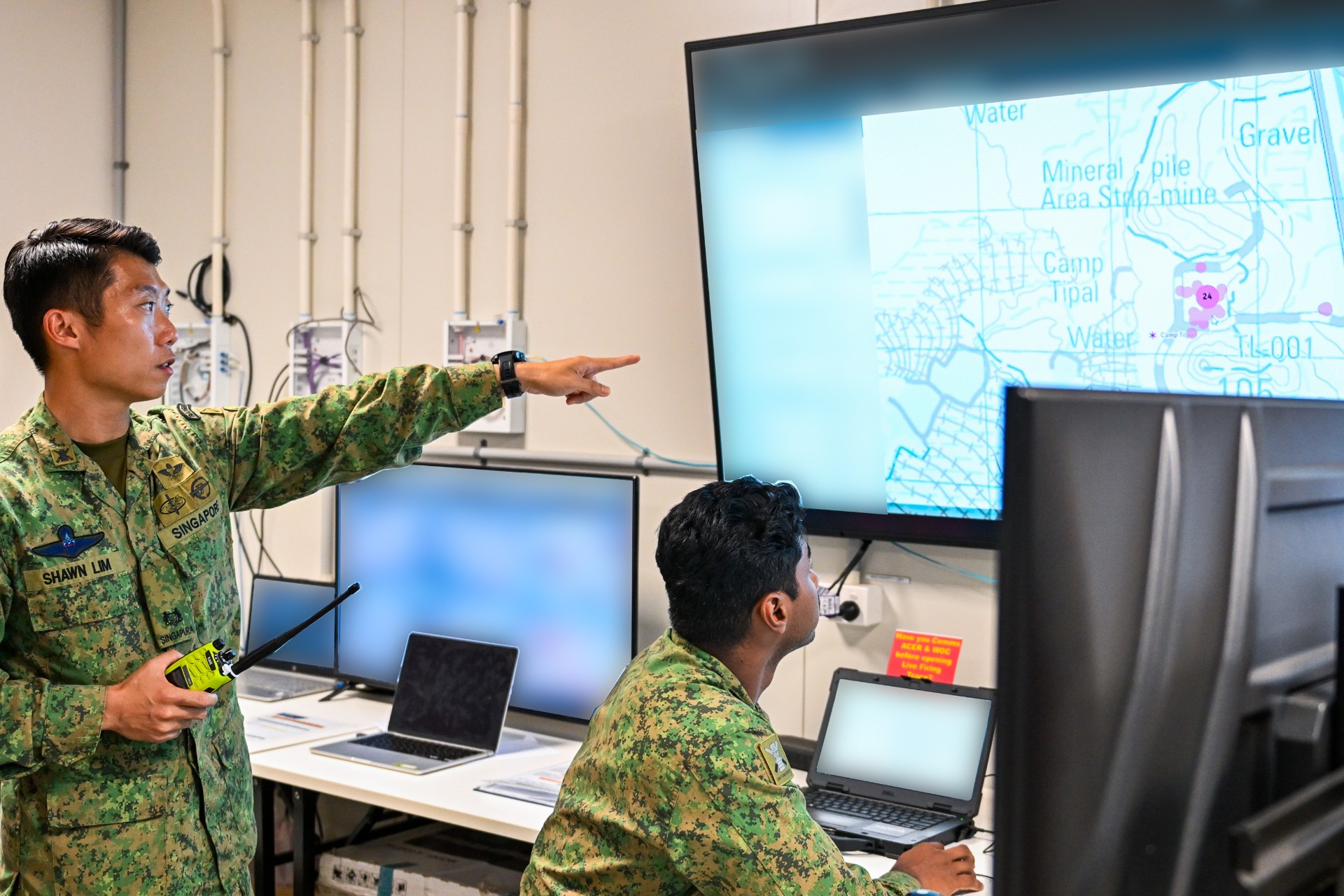
Major (MAJ) Shawn Lim and his team from the Control Hub are the ones keeping a watchful eye on all the training that takes place in SWBTA.
This ranges from tracking and having oversight of all unit activities within the area, to monitoring weather and fire risk patterns, so that exercise participants can complete their training safely.
“(Shoalwater Bay is) a vast, remote and rugged training area about five times the size of Singapore – the terrain, weather, and distance from urban support means that everything must be planned and synchronised,” said the 38-year-old Head of Control of Training at XWB.
MAJ Lim (left) showing how his team tracks units operating in SWBTA. As Head of Control of Training at XWB, he oversees the planning, coordination, and execution of all training activities in SWBTA.
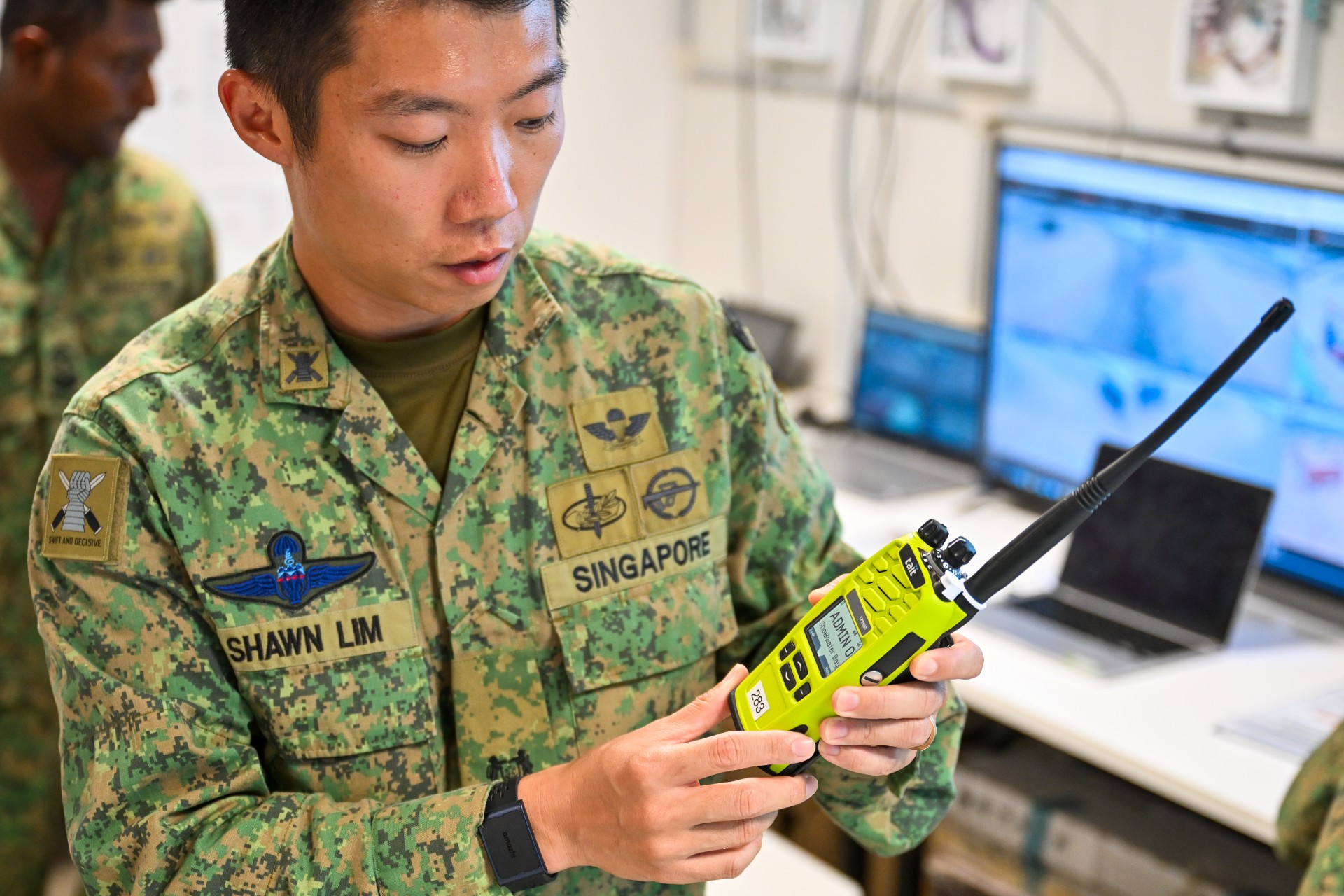
MAJ Lim holding the Training Area Safety Network (TASNET) that is issued to exercise participants. The TASNET pinpoints the location of personnel in SWBTA using satellite GPS and functions as an emergency transponder in the event of an air evacuation.
To ensure safety, personnel must adhere to strict timeframes for entering and exiting areas of operations, and last-minute changes to movement is prohibited.
While there are challenges to operating in SWBTA, MAJ Lim noted that “ultimately, these challenges are what makes XWB so valuable”.
“(They allow the SAF) to test our systems, our resilience and our teamwork in realistic conditions, and to strengthen our ability to operate confidently anywhere under any conditions.”