Exercise Wallaby 2025: To see better, shoot faster
31 Oct 2025
The SAF focuses on complex strike missions and multi-domain integration in Exercise Wallaby 2025, the 35th edition of its largest unilateral overseas exercise.
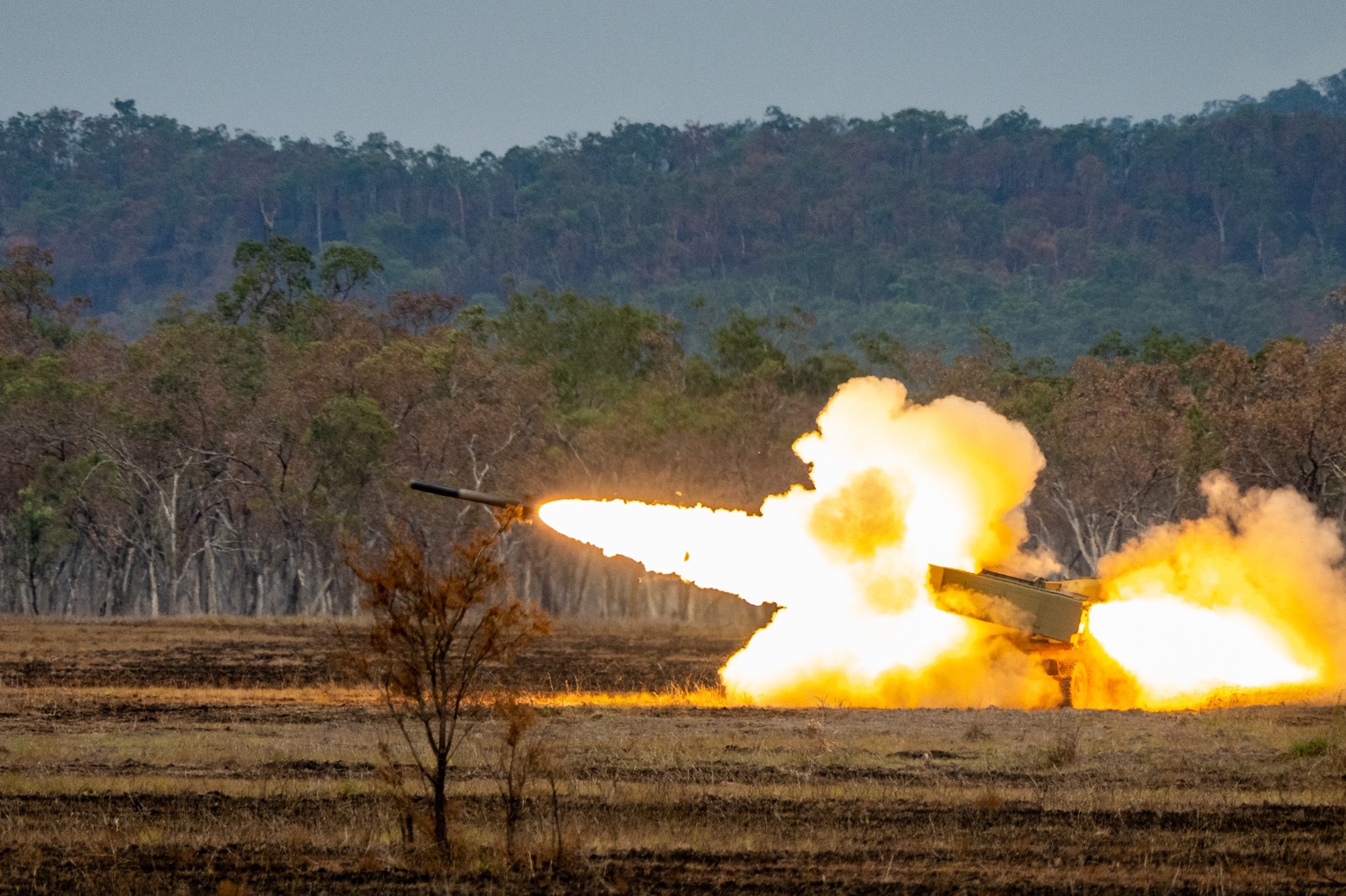
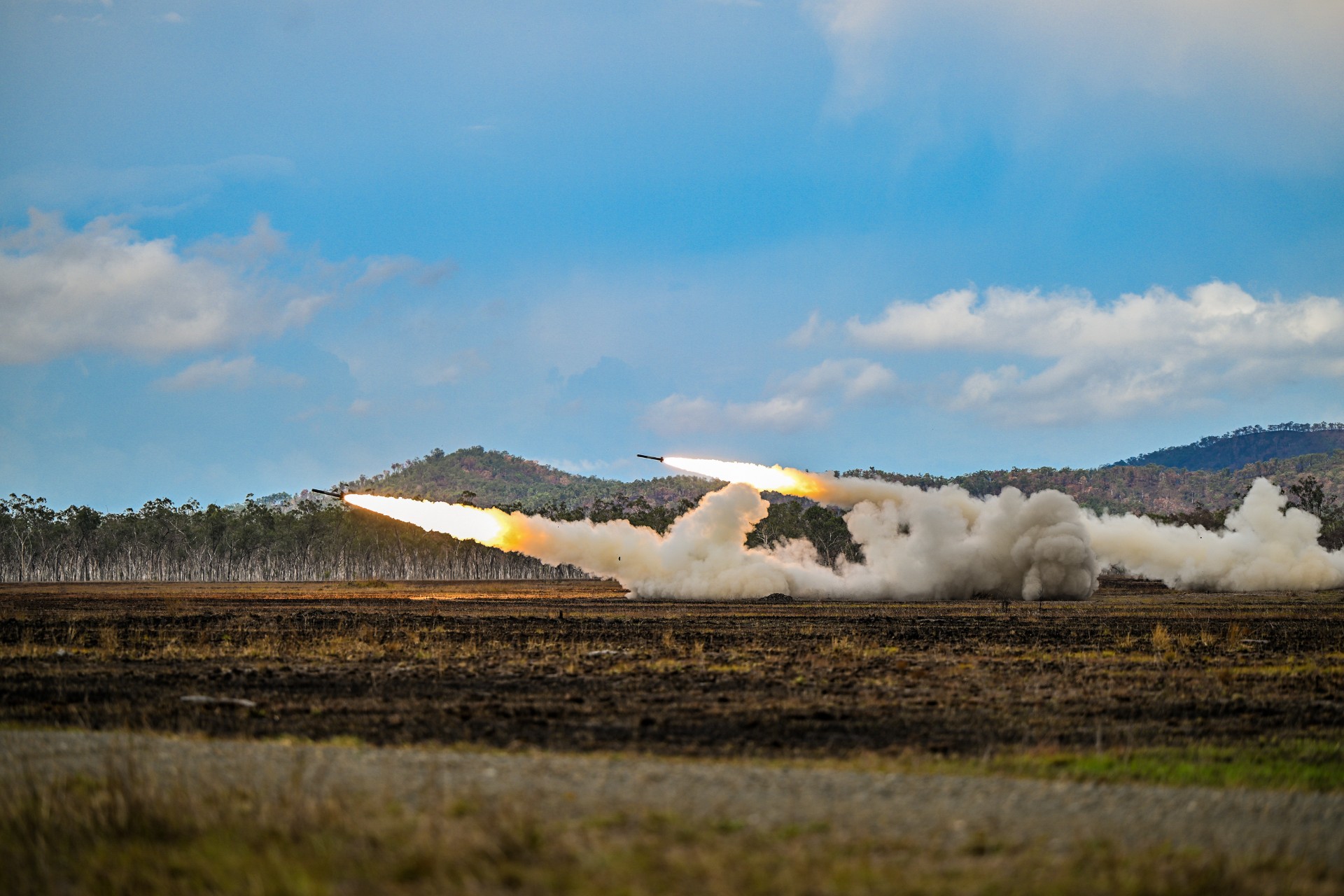
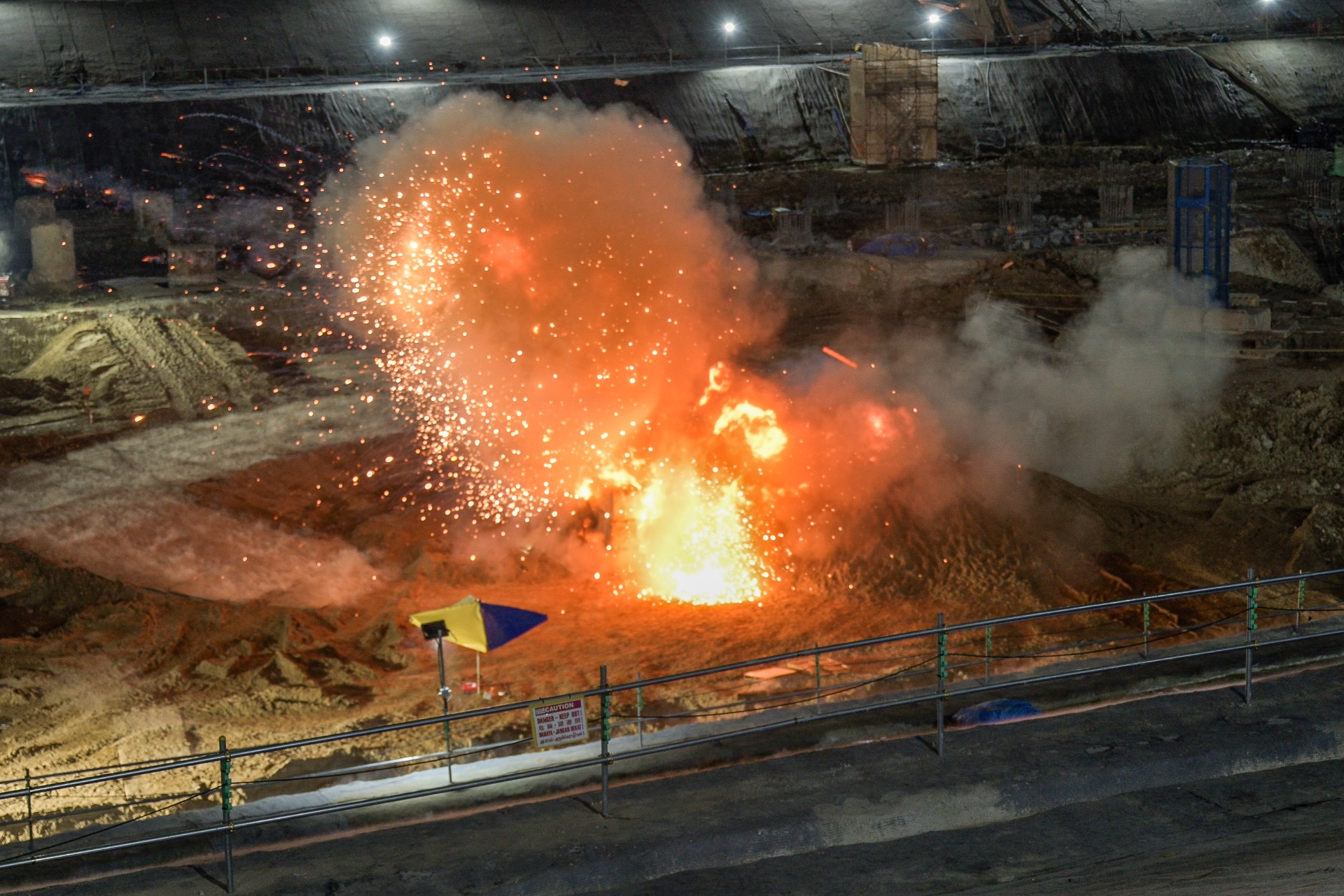
Blast off! This year marks the HIMARS’ debut at Exercise Wallaby, where it worked together with the V-15 mini-Unmanned Aerial Vehicles (UAVs), as well as the RSAF’s F-16 fighter jets, AH-64D Apache attack helicopters and Orbiter 4 UAVs to carry out integrated air-land live firing.
Story by Tedd Jong
Photos by Kenneth Lin, Tedd Jong & courtesy of the Singapore Army & RSAF
Firepower from land and air rains down on the SAF’s targets, coordinated through timely intelligence from drones and with the aid of digital tools.
This complex live-firing exercise demonstrated the seamless integration of the Singapore Armed Forces’ (SAF’s) three Services in the third and final frame of Exercise Wallaby 2025 (XWB25), which runs from 16 Oct to 2 Nov.
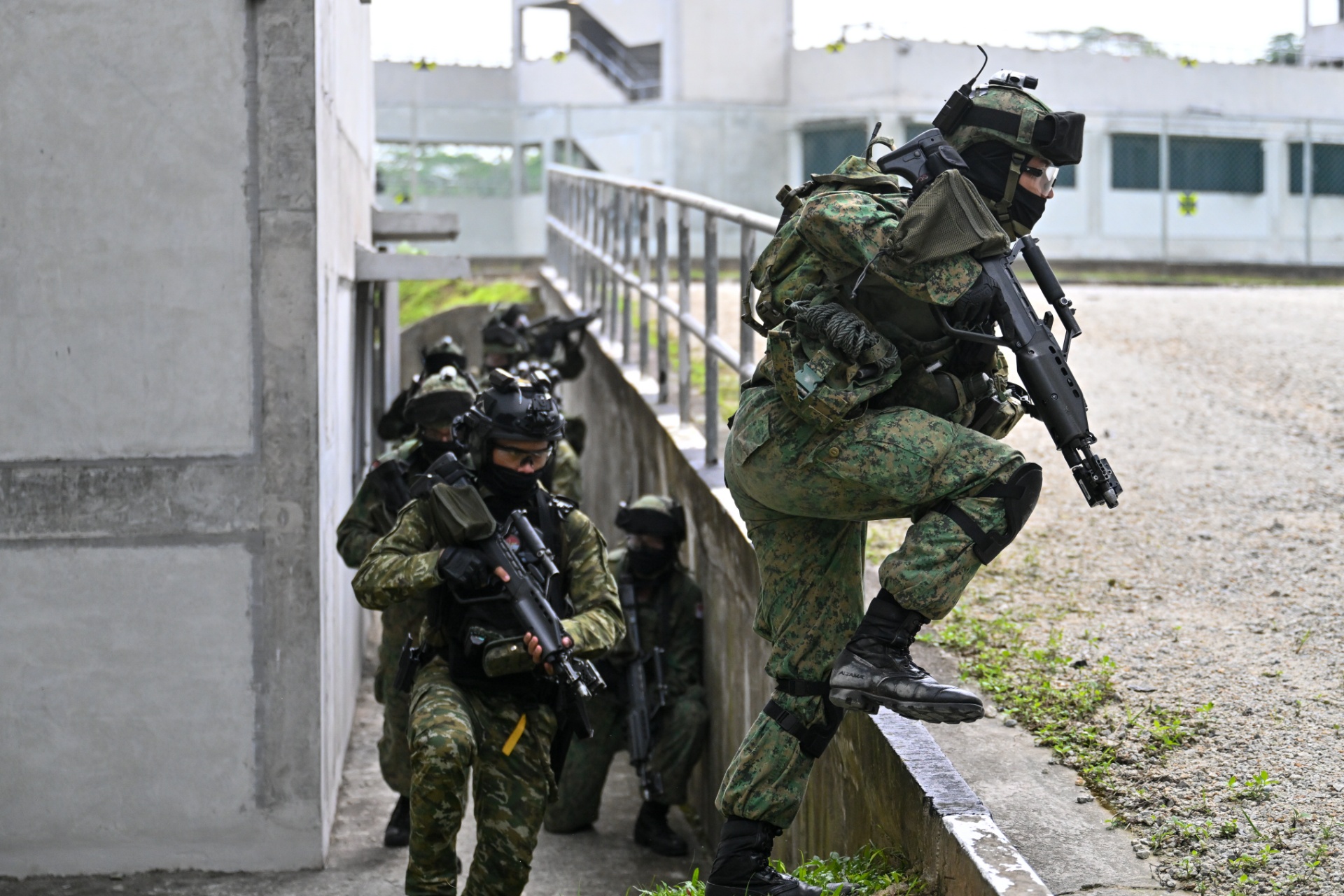
This year’s exercise began in early September, and saw more than 5,000 personnel and over 500 platforms from the Army, Republic of Singapore Air Force (RSAF) and Digital and Intelligence Service (DIS) being put through their paces in the vast and rugged terrain of Shoalwater Bay Training Area (SWBTA) in Queensland, Australia.
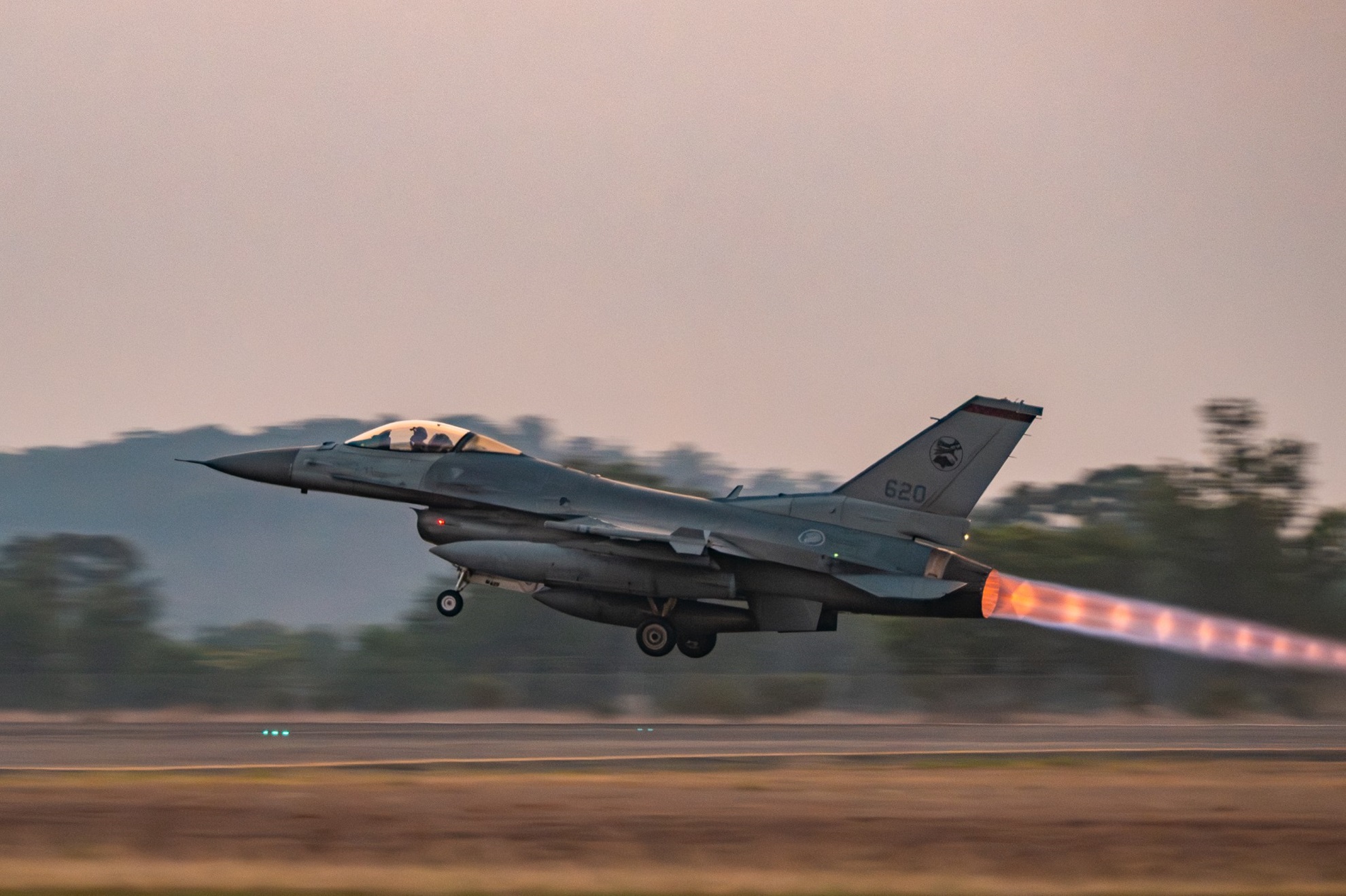
An F-16C fighter jet taking off for a night mission. This year, the RSAF’s F-16s and Apache helicopters conducted live firing alongside the HIMARS.
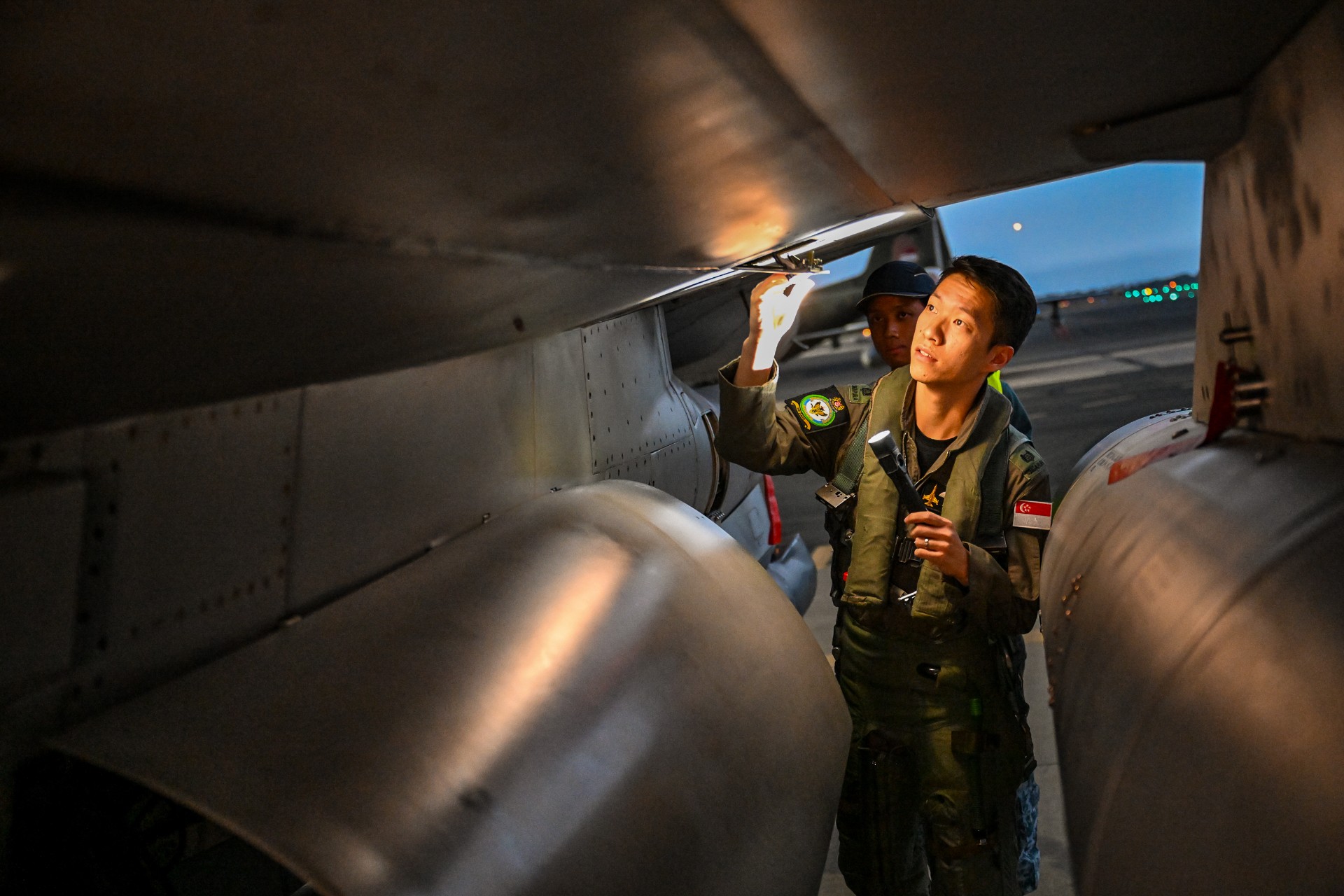
MAJ Marcus Lee, a first-time participant at XWB, conducting pre-flight checks on the F-16. He is excited to be able to drop a guided weapon onto a target – another first for the pilot – during the integrated live-firing exercise.
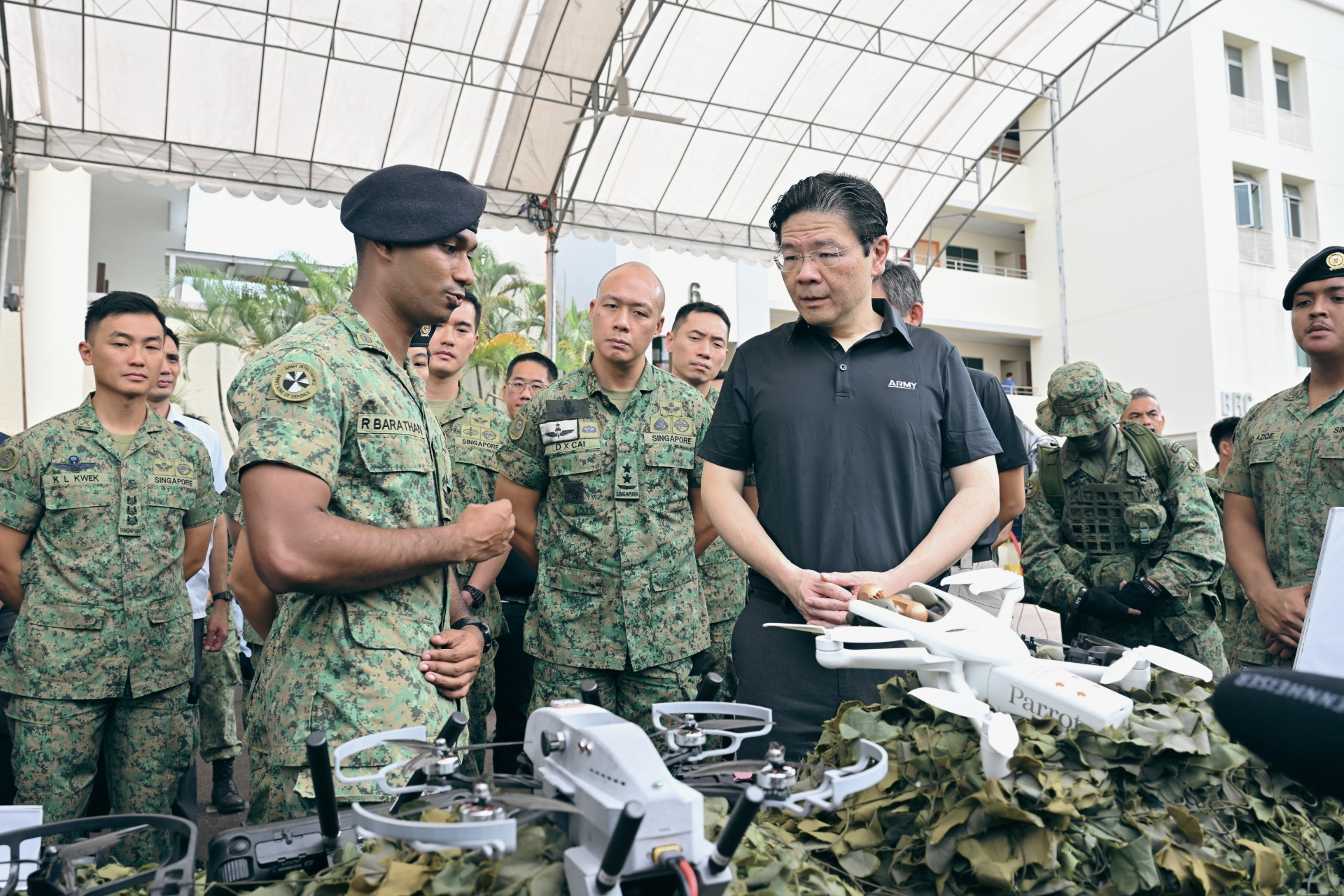
“This exercise is about people, technology and partnership. It represents how the SAF constantly evolves to fight more effectively,” said Colonel (COL) Kwek Kian Leong, Commander 6th Singapore Division (6 Div) / Headquarters Sense and Strike (HQ SS).
Beyond strike assets like the High Mobility Artillery Rocket System (HIMARS) and fighter jets, he noted that the SAF is using a “multi-tiered deployment of UAVs…to achieve a persistent and pervasive picture of the battlefield”.
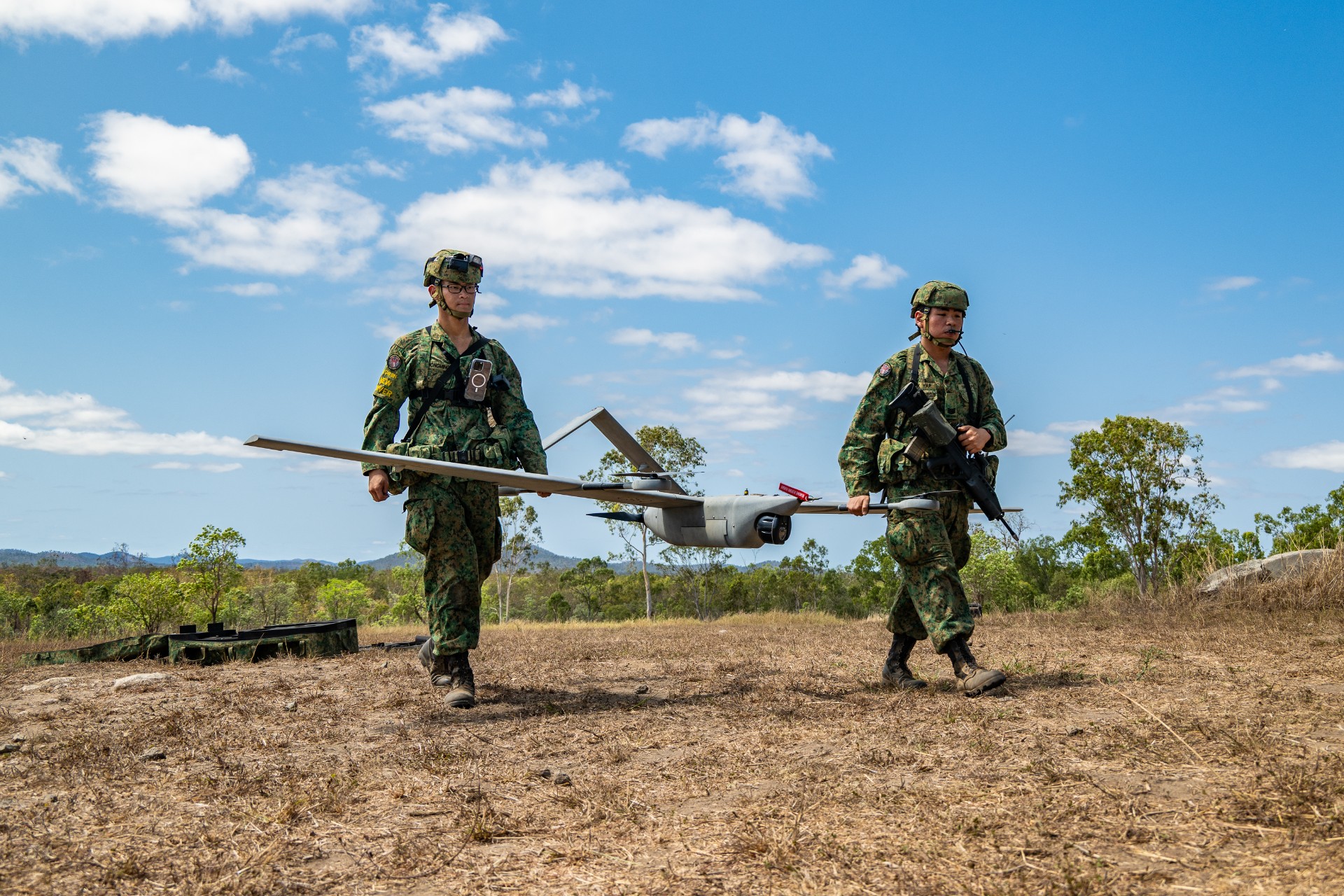
These include the Orbiter 4 UAVs, the V15 mini-UAV, and a suite of micro-class UAVs suited to the urban terrain.
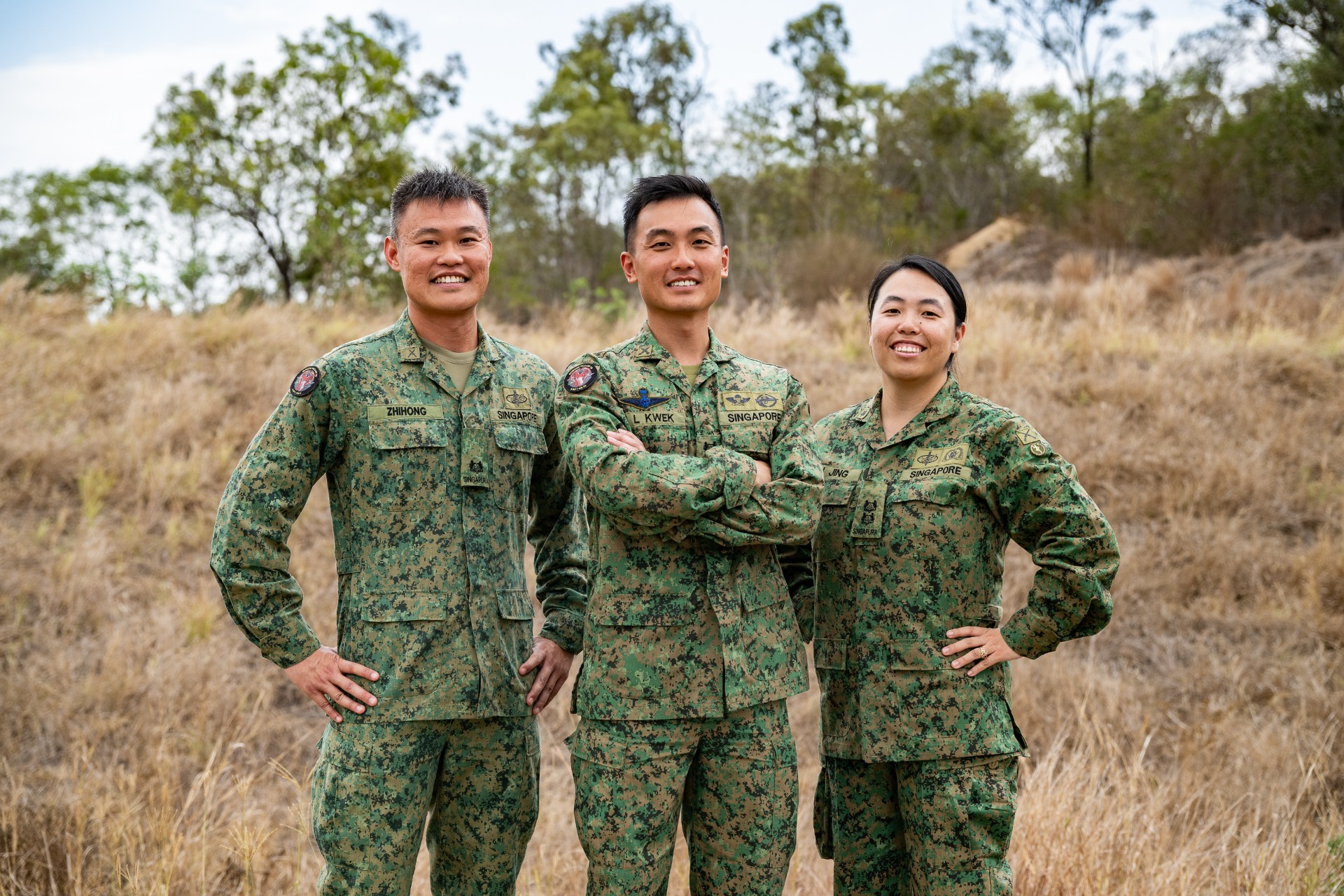
COL Kwek (centre) sums up their aim in this year’s XWB: To see better, shoot faster. This means being able to sense the enemy, understand the battlefield situation well, and act decisively. He is pictured with fellow 6 DIV/HQ SS personnel, Lieutenant Colonel (LTC) Dai Jing (right) and Major (MAJ) (NS) Lee Chee Hong.
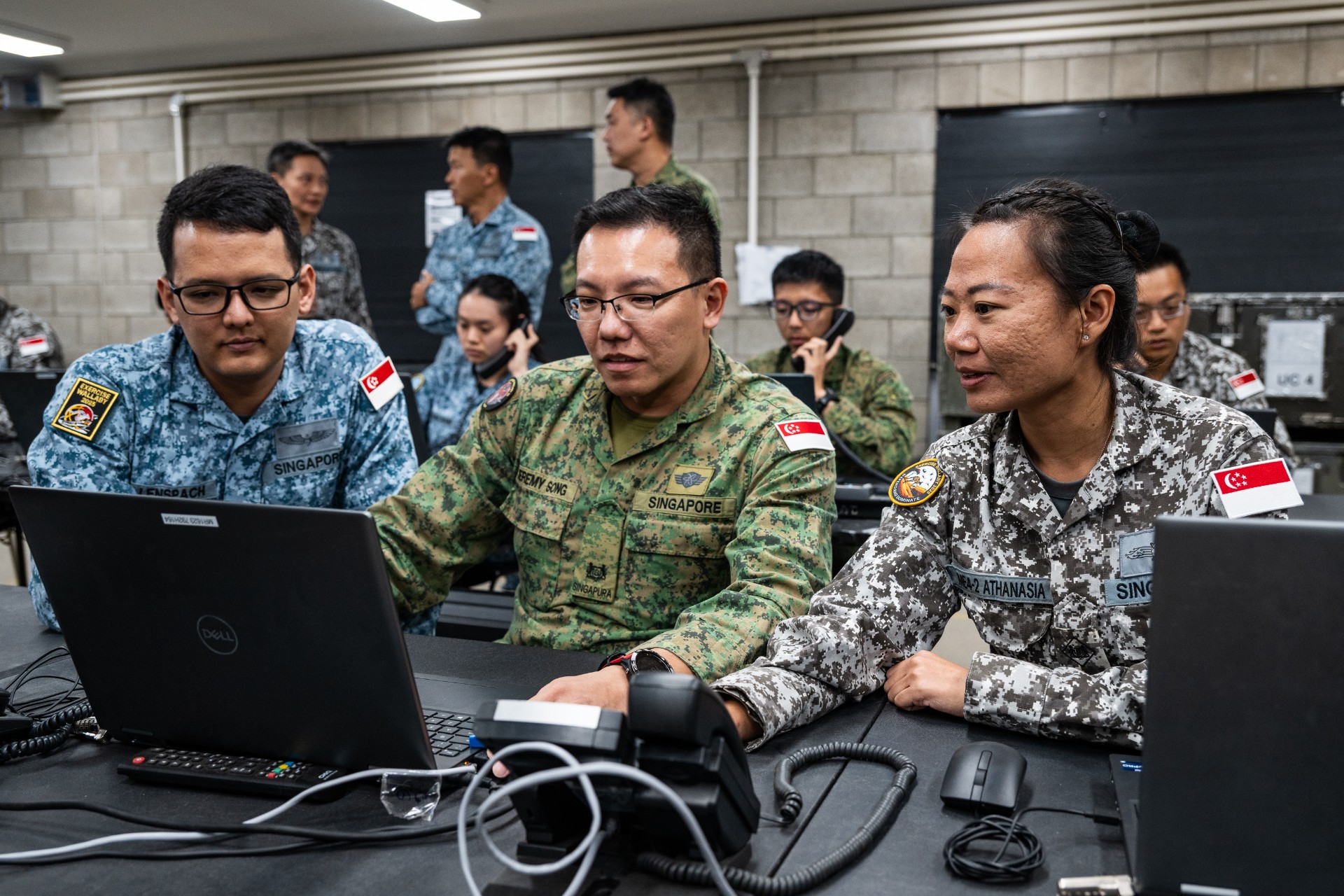
Personnel from the Army, RSAF, and DIS working together at Warriors Camp. The new technologies being tested at this year’s exercise include the application of computer visioning techniques onto UAV video feeds for more accurate target location and faster decision-making.
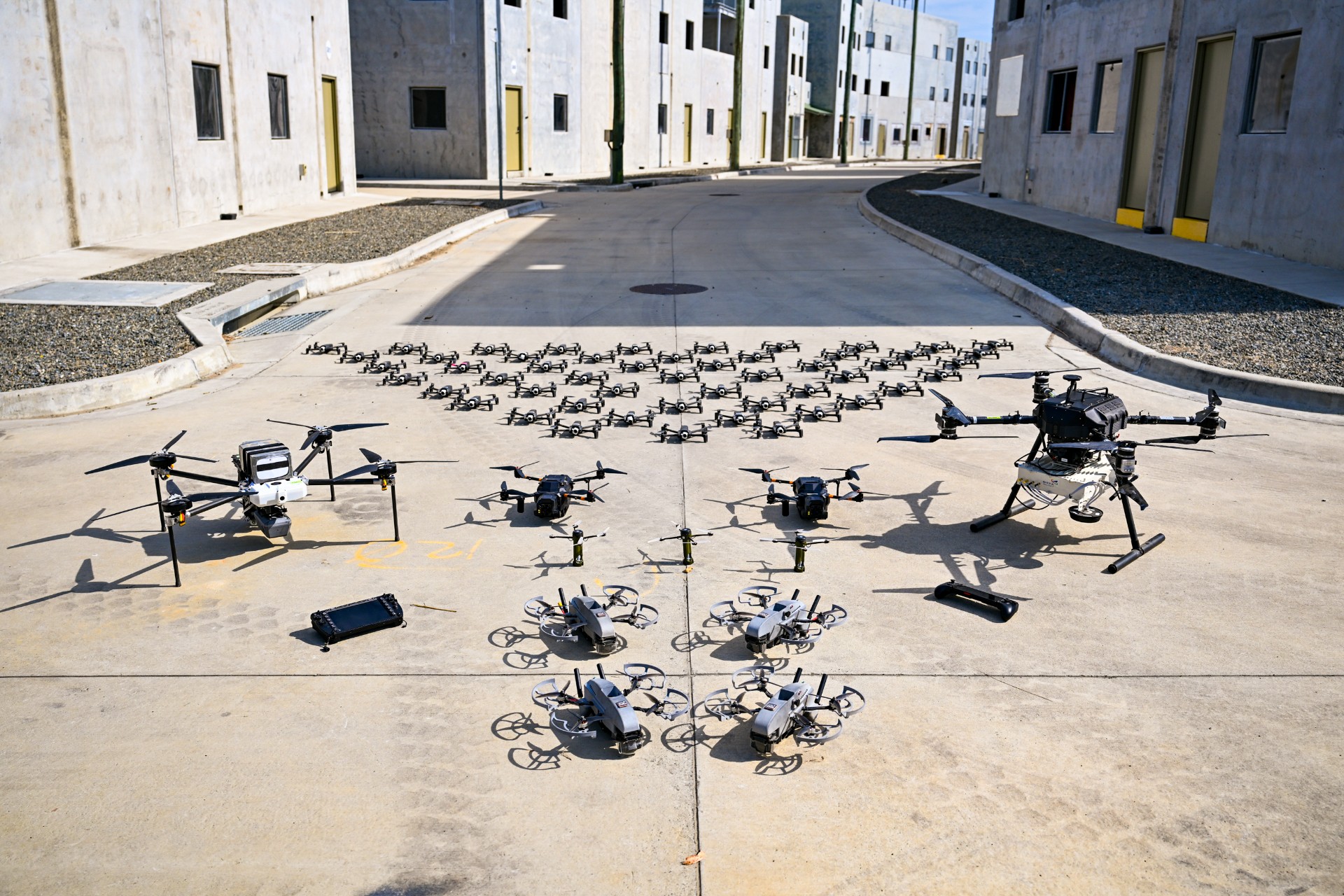
This year, the SAF and Defence Technology Community also field-tested more than 200 advanced systems – such as a coordinated swarm of over 50 drones for intelligence, surveillance and reconnaissance (ISR) – during the exercise.
A wide array of drones are being field-tested at XWB25, which features several first-of-its-kind field trials and expanded operational concepts compared to past editions.
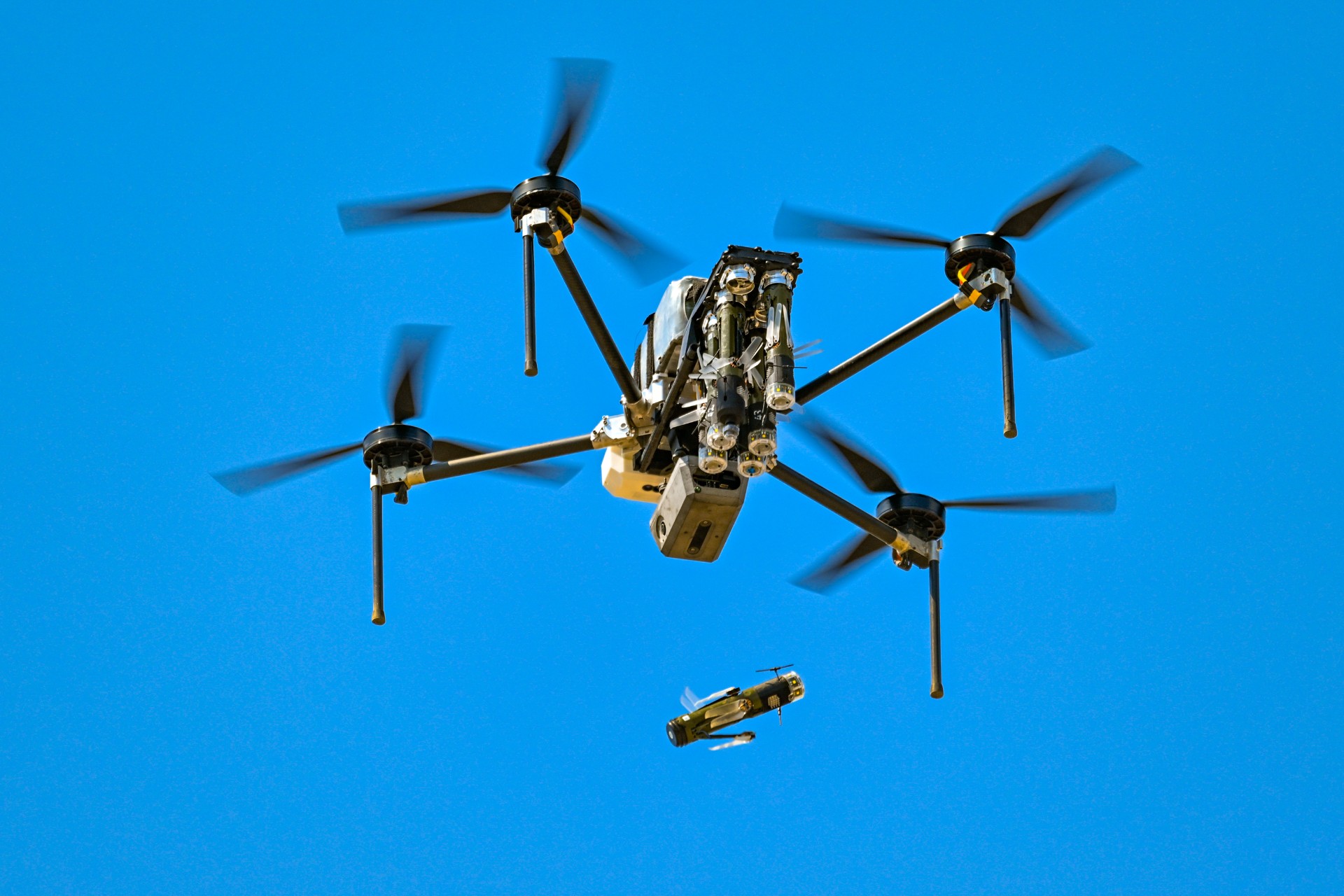
The DefendTex D155 “mothership” drone can be fitted with up to eight D40 “baby” drones, which can be released to conduct ISR operations.
This year also marks the first time that the Army is deploying six V15 mini-UAVs at a time, allowing operators stationed across SWBTA to cover a land area of about five times the size of Singapore.
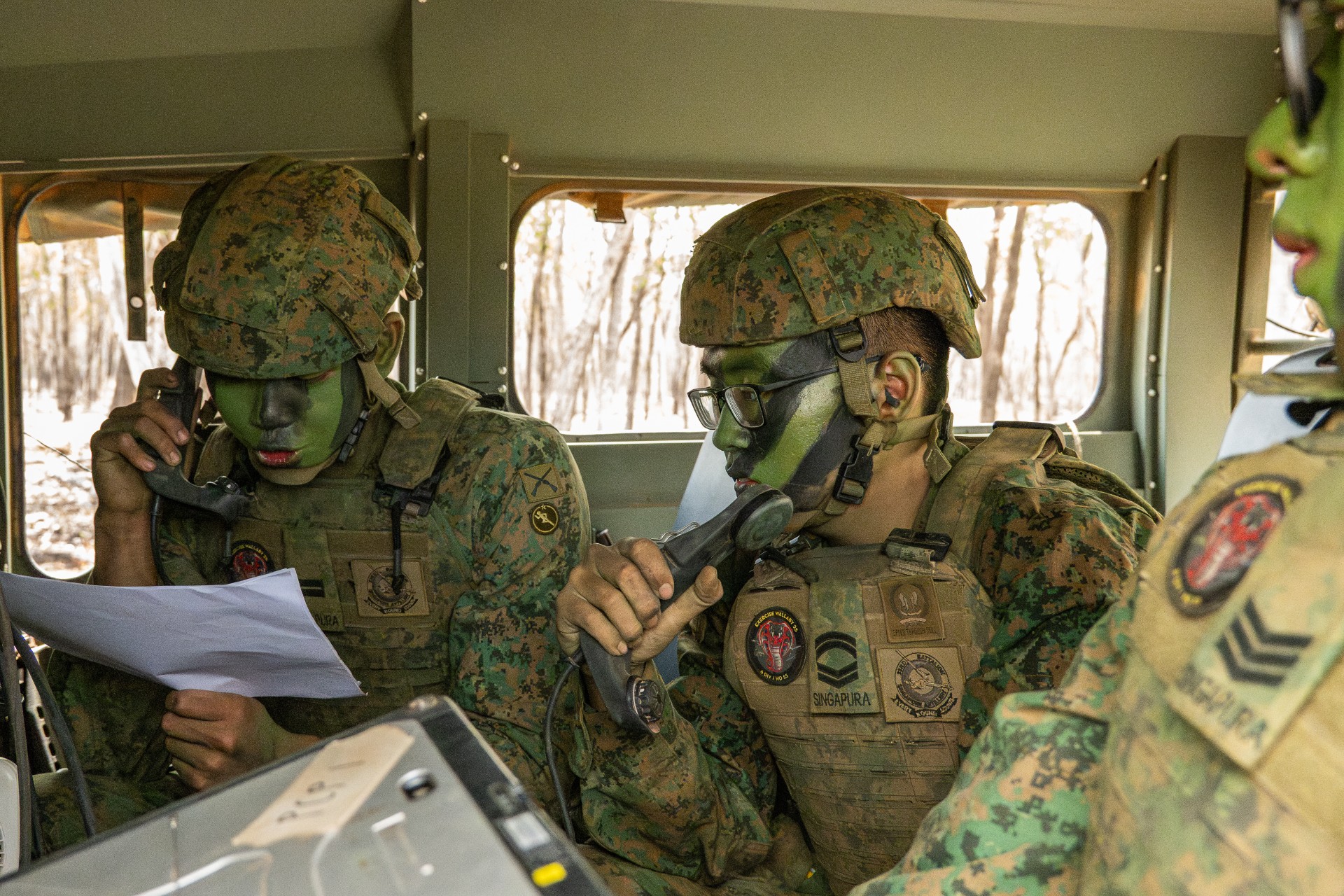
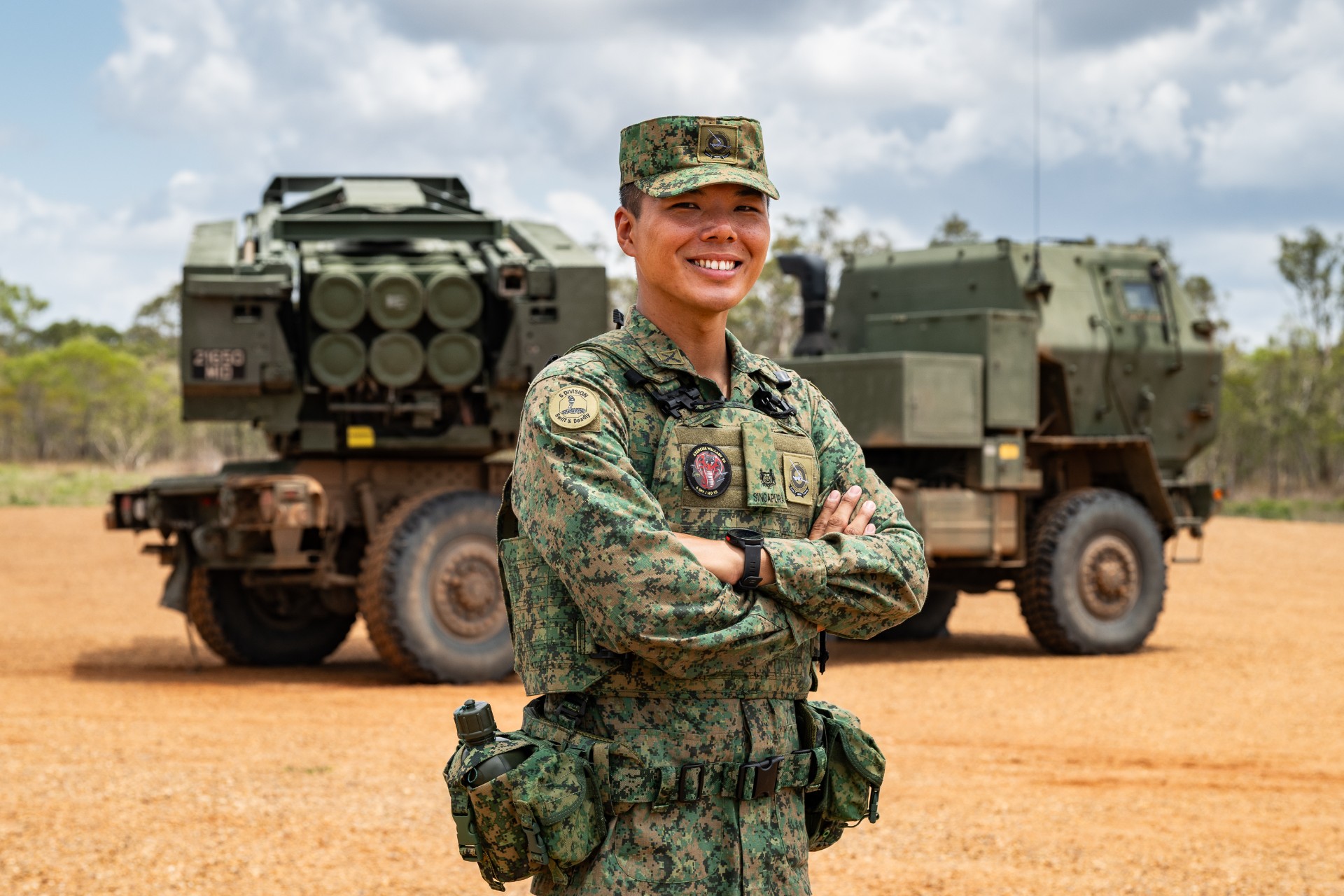
This is the first time a HIMARS battery comprising Full-time National Servicemen (NSFs) from 23rd Battalion, Singapore Artillery (23 SA) has conducted live firing of these rocket launchers (next photo) in SWBTA.
This is the first time a HIMARS battery comprising Full-time National Servicemen (NSFs) from 23rd Battalion, Singapore Artillery (23 SA) has conducted live firing of these rocket launchers (next photo) in Shoalwater Bay Training Area.
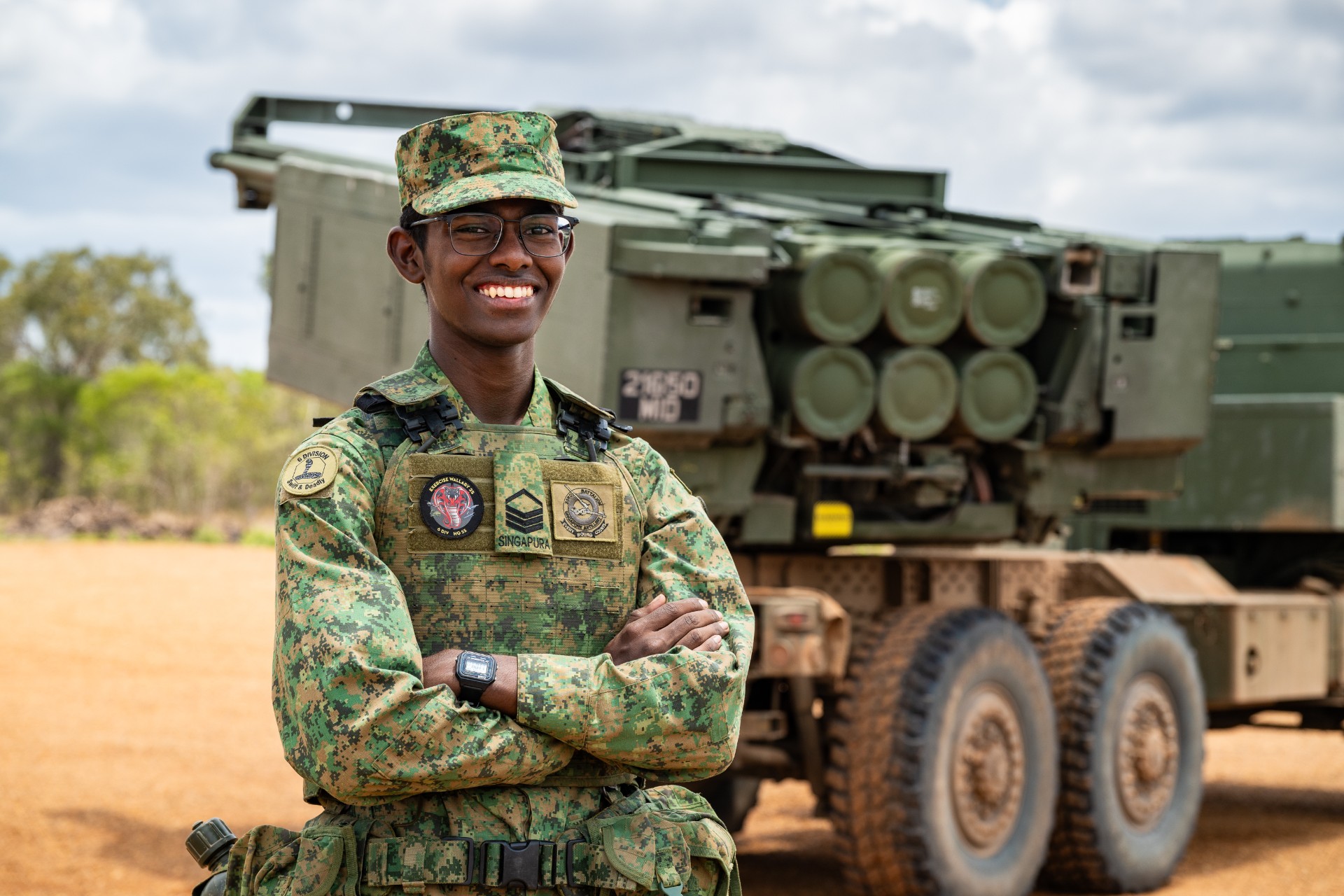
“There’s a lot of pressure being given this responsibility (to operate the HIMARS)…(but it’s also) a valuable experience for me to step into these large shoes and lead,” says NSF 2nd Sergeant (2SG) Surenthiraraj Sailaindraa, the HIMARS Battery Sergeant Major for 23 SA, Bravo Battery.
MAJ Chin Wei Jian, Commanding Officer of 23 SA, is proud that the battalion was able to overcome initial challenges such as dust clouds, harsh weather and unfamiliar terrain, to carry out a successful live firing.
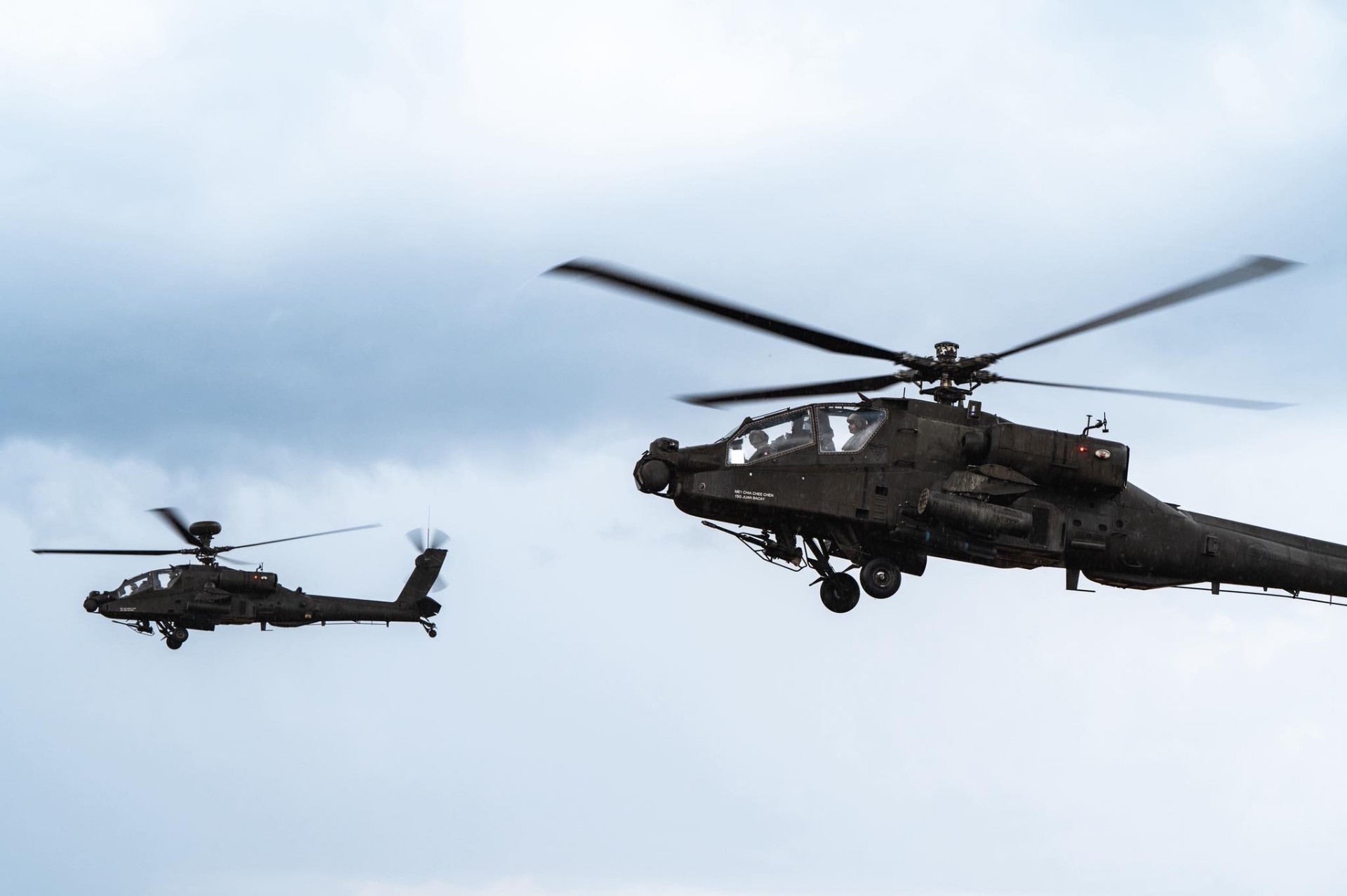
The RSAF’s AH-64D Apache attack helicopters taking off and armed to fire. [Photo: RSAF]
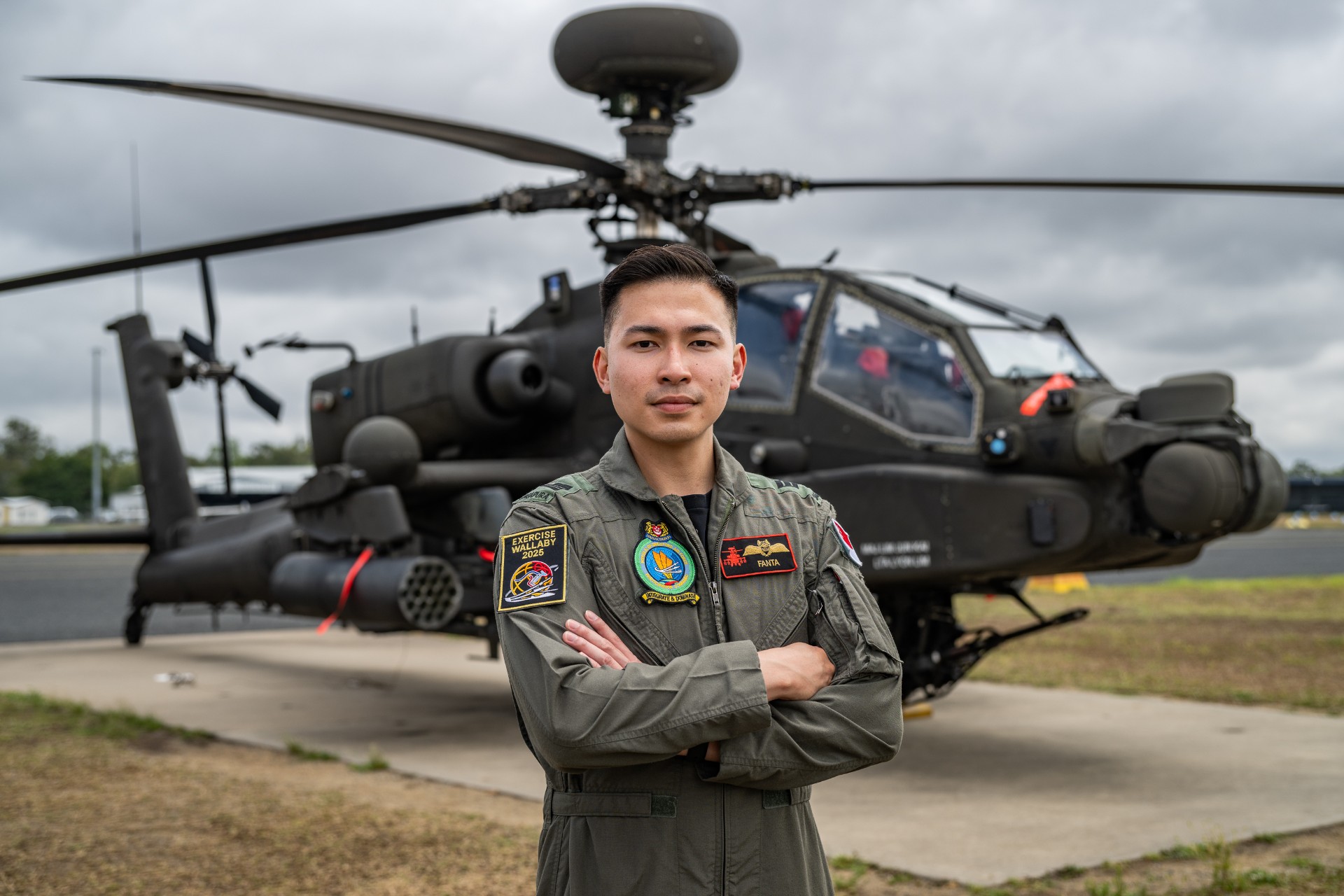
Careful coordination is critical to ensure safety and deconflict the use of airspace as well as the sequence of firing among multiple units in the RSAF and the Army during the integrated live-firing, says Apache helicopter pilot Captain (CPT) Isaac Fan.
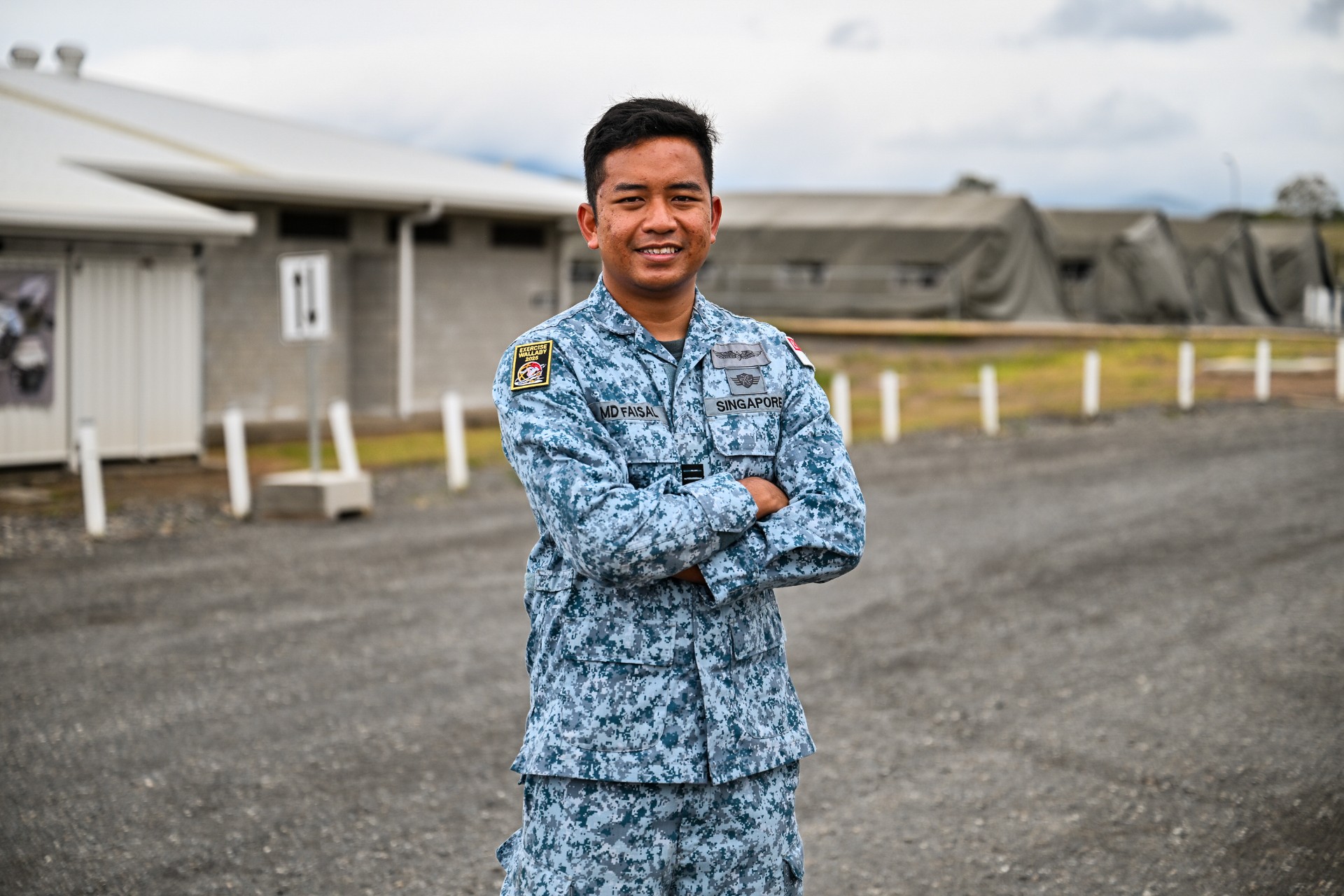
As Deputy Chief Planner at XWB, CPT Mohamad Faisal Bin Mohamad Aziz’s role includes “synchronising our operations and control of the air space to ensure safety, as well as trialing new concepts using manned and unmanned systems at SWBTA”.
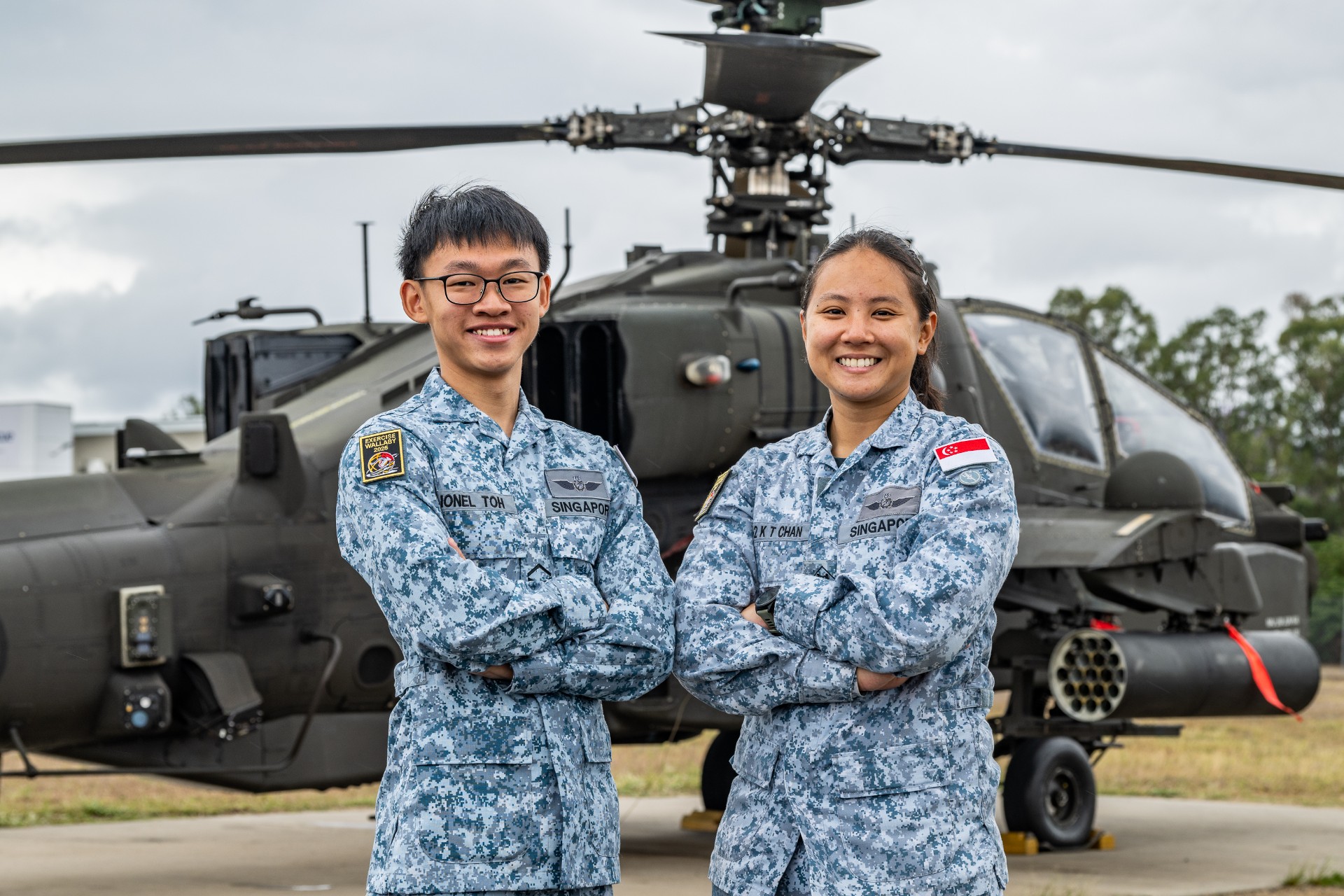
Military Expert (ME) 4 Katherine Chan (right) and 2SG Lionel Toh are Air Force Engineers from 806 SQN, seeing to the quick turnaround of the Apache helicopters between missions.
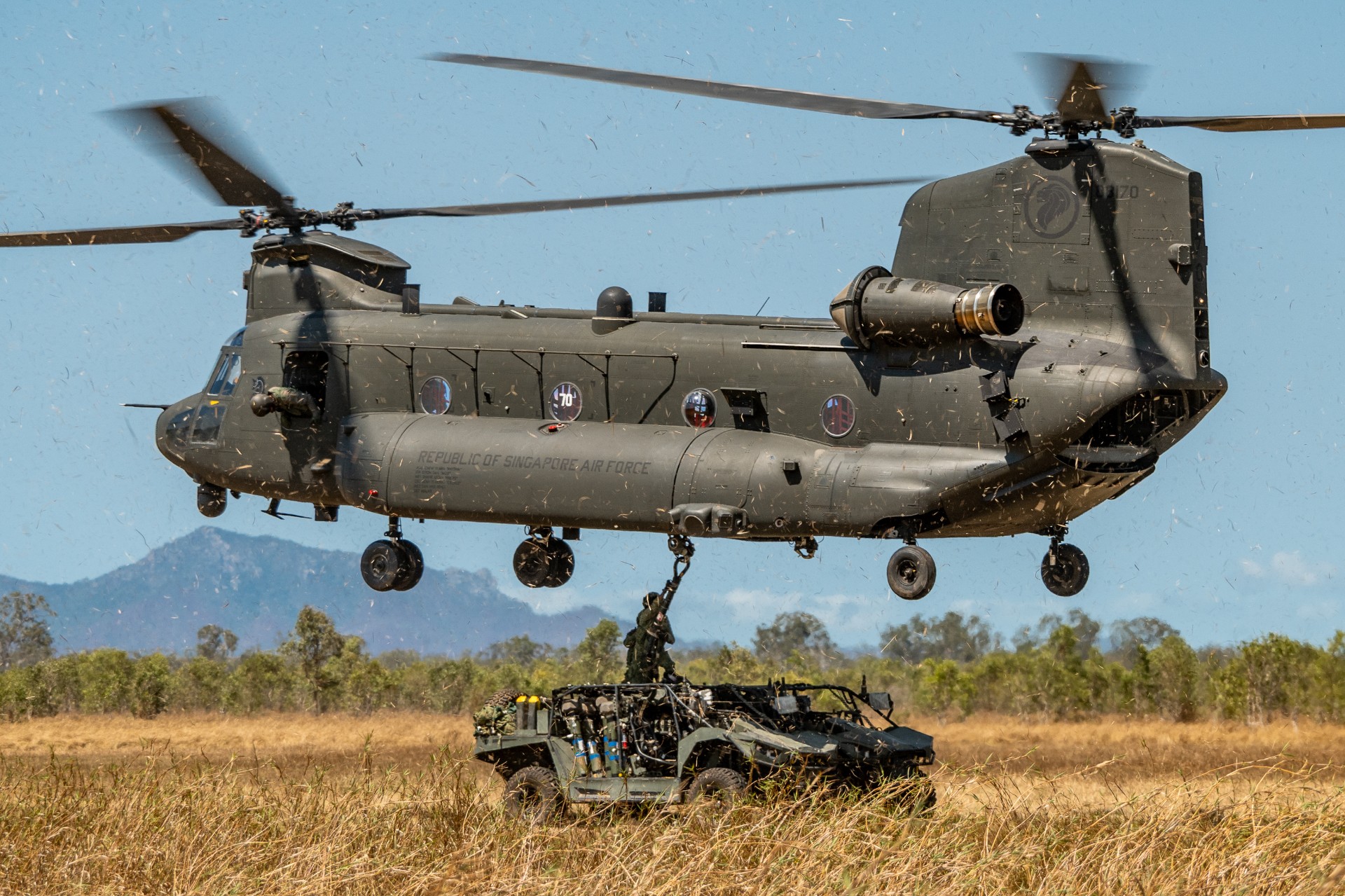
Coordination under pressure: Crew from the CH-47F heavy lift helicopter and personnel from 101 Air Terminal Squadron (101 SQN) working closely to hook the Light Strike Vehicles Mark II (LSVs Mk IIs)onto the CH-47F.
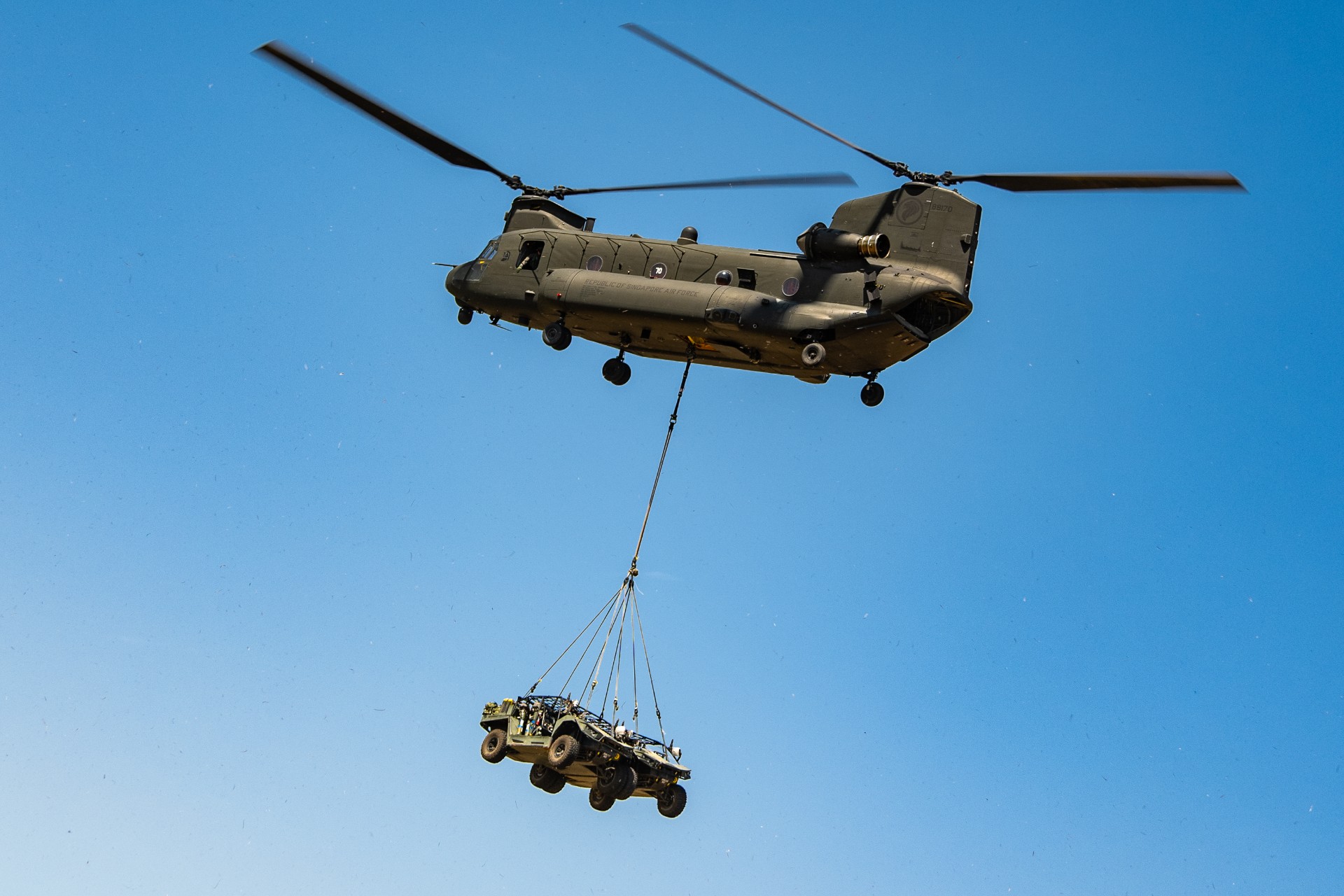
Up and away: The CH-47F heavy lift helicopter with two LSV Mk IIs (LSV Mk IIs) underslung. It acts as a force multiplier, taking the land vehicles further inland and bypassing inhospitable terrain.
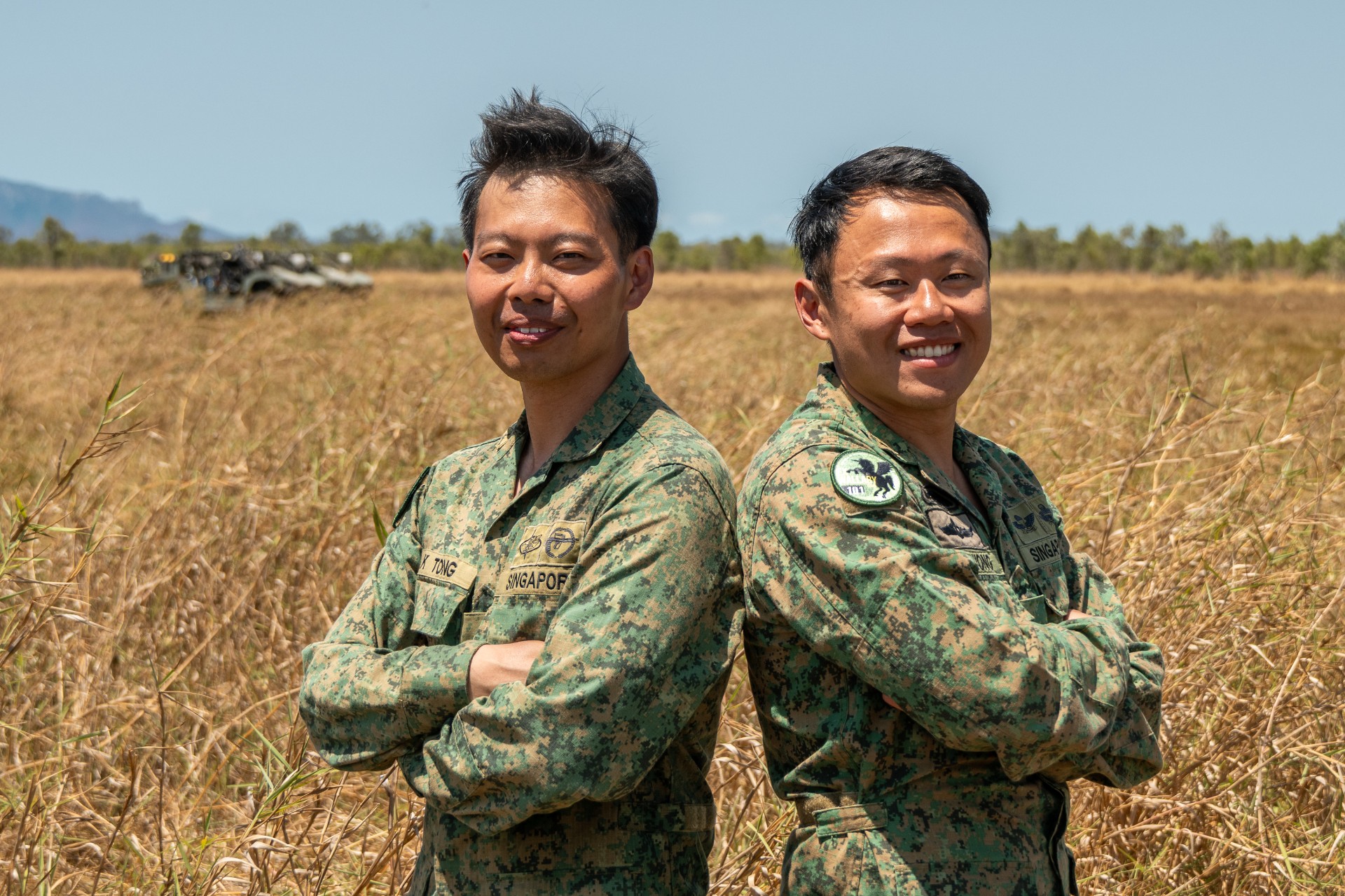
MAJ (NS) Benny Tong (left) and 3rd Warrant Officer Wong Chee Siang, Command Chief of 101 SQN, assist with setting up pick-up zones for the RSAF’s helicopters in SWBTA.
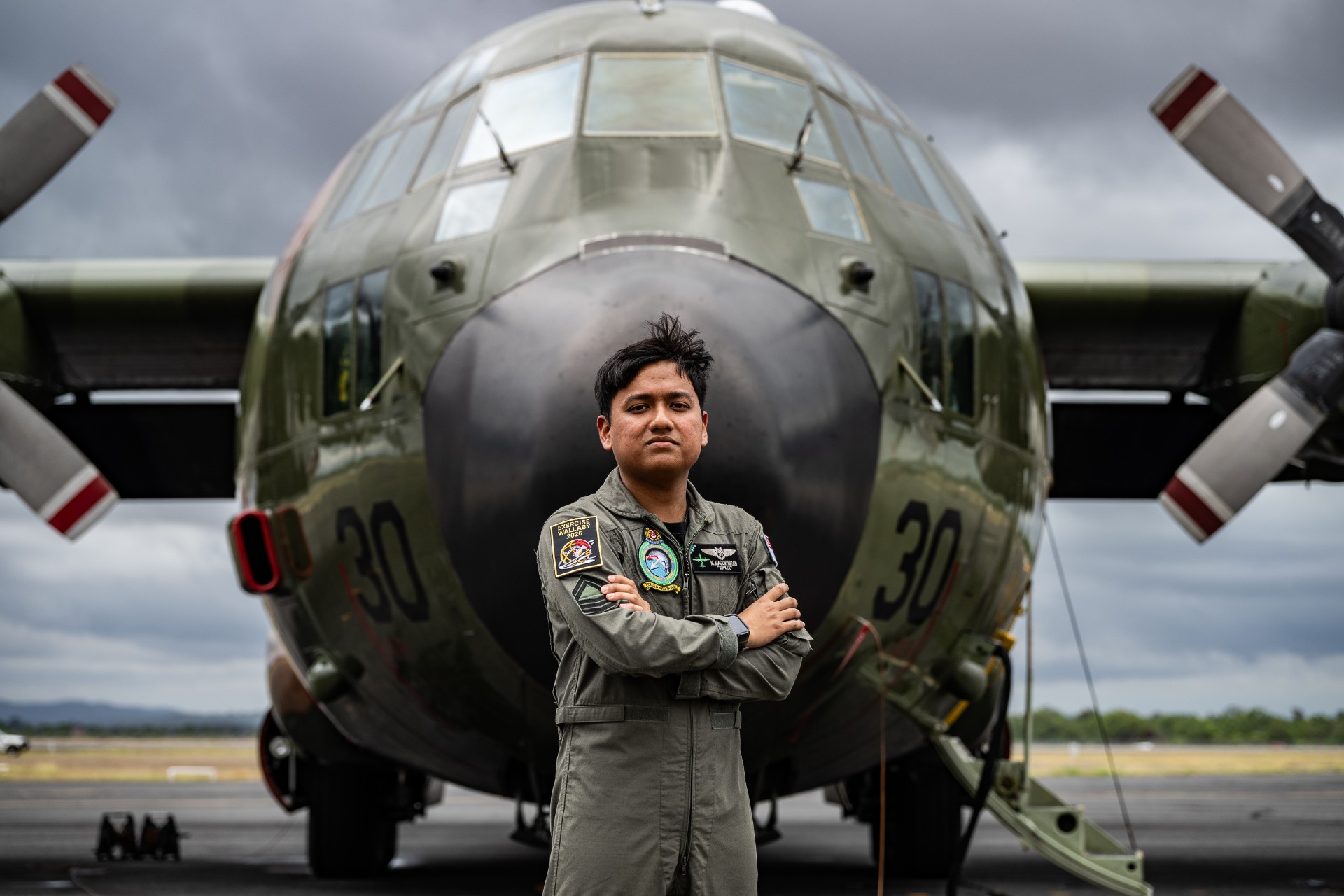
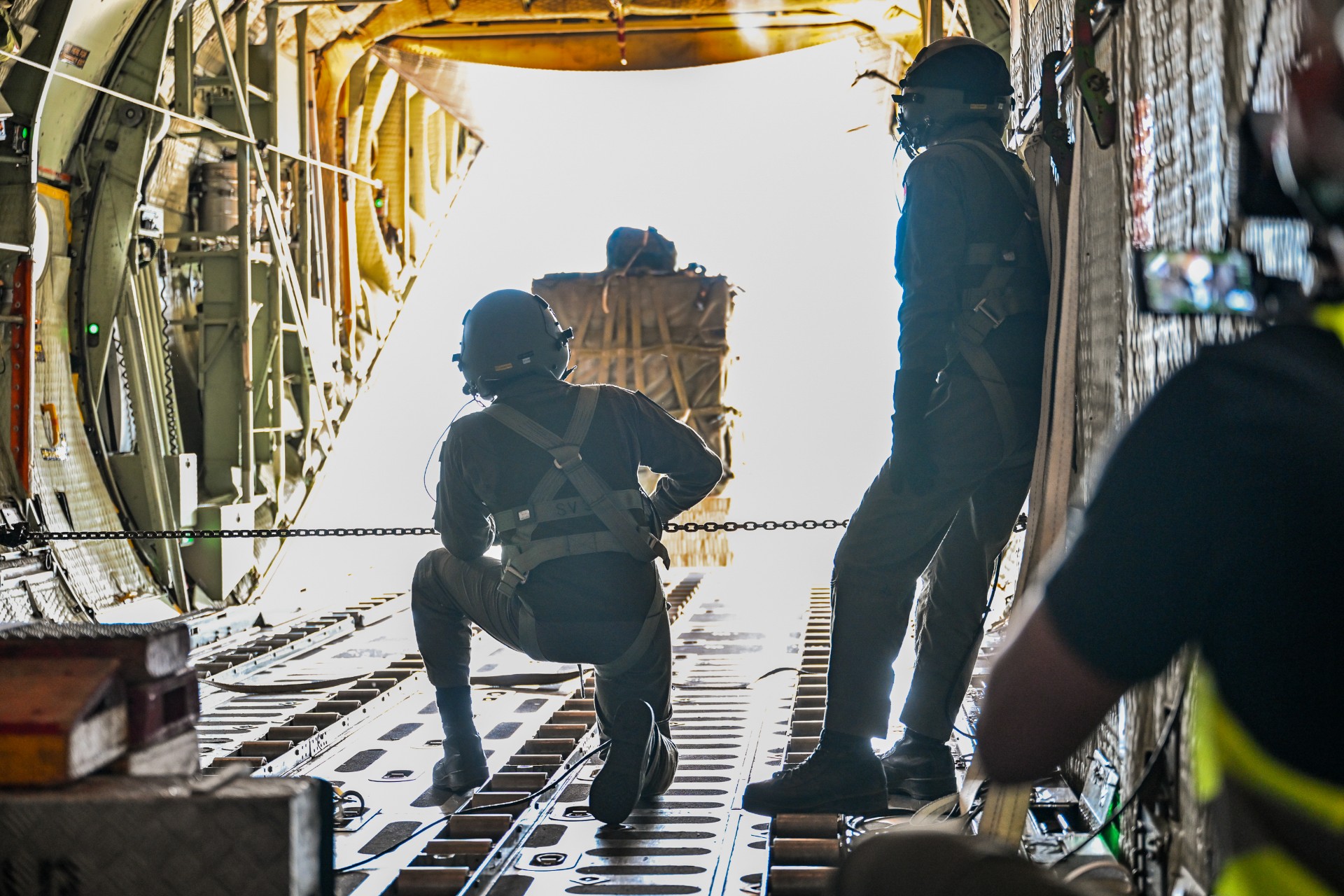
An experienced C-130 loadmaster who has taken part in humanitarian airdrop missions delivering aid to Gaza, 1st Sergeant M. Magenthiran from 122 SQN sees XWB as an essential training ground. “(Being able to fly multiple sorties here) helps us be on our A-game, especially since the loads here and (those we dropped) in Gaza are quite similar.”
Loads being air-dropped from the C-130.
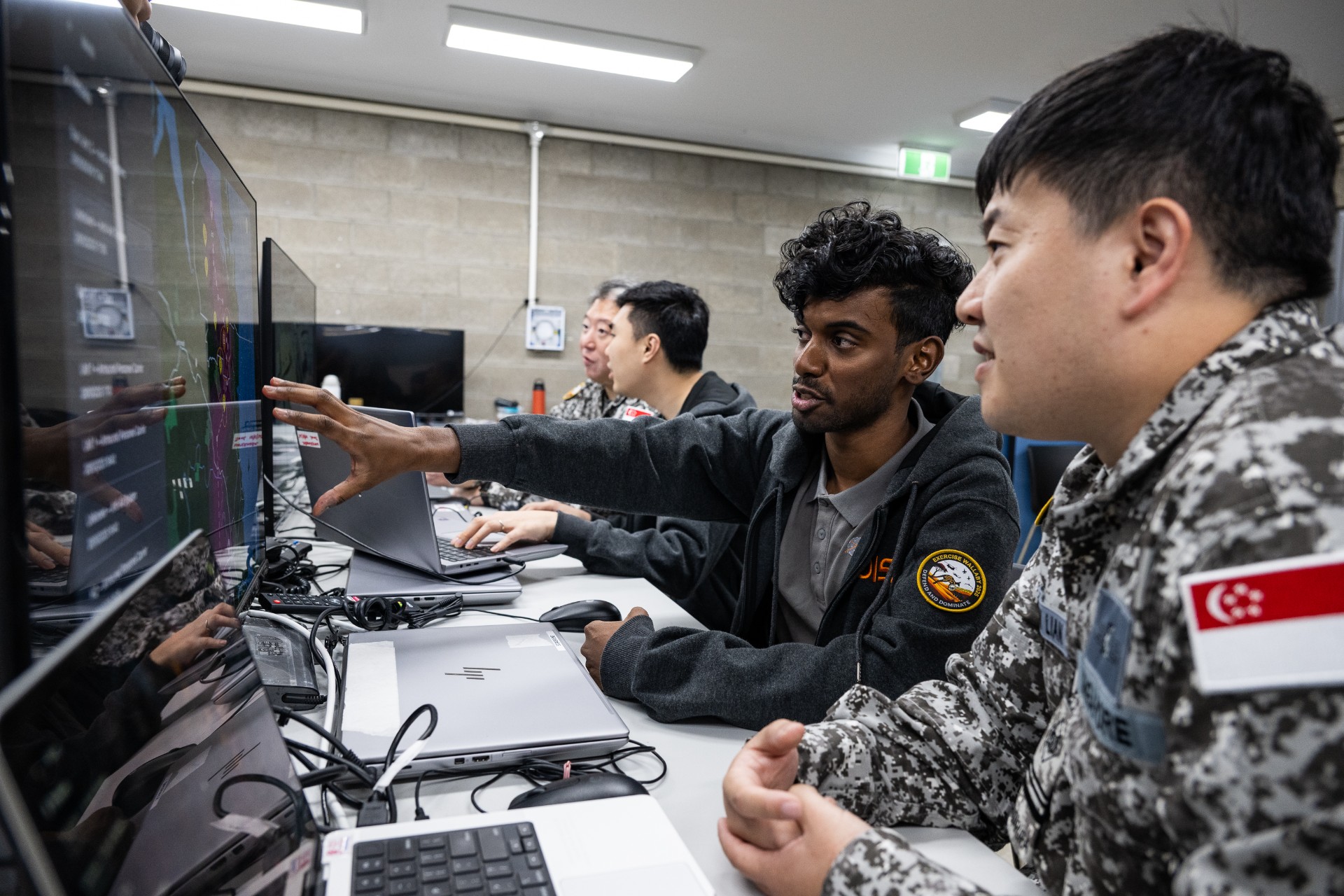
For the first time at XWB, the DIS’ Digital Ops-Tech Centre (DOTC) engineers have come together with DIS analysts, to create software in-house that enhances the efficiency of intelligence operations.
These software enable rapid prototyping to fine-tune digital solutions to operational requirements, enhancing the ability of air and land forces to sense-make and decision-make quickly.
Engineers from the DOTC working alongside DIS analysts.
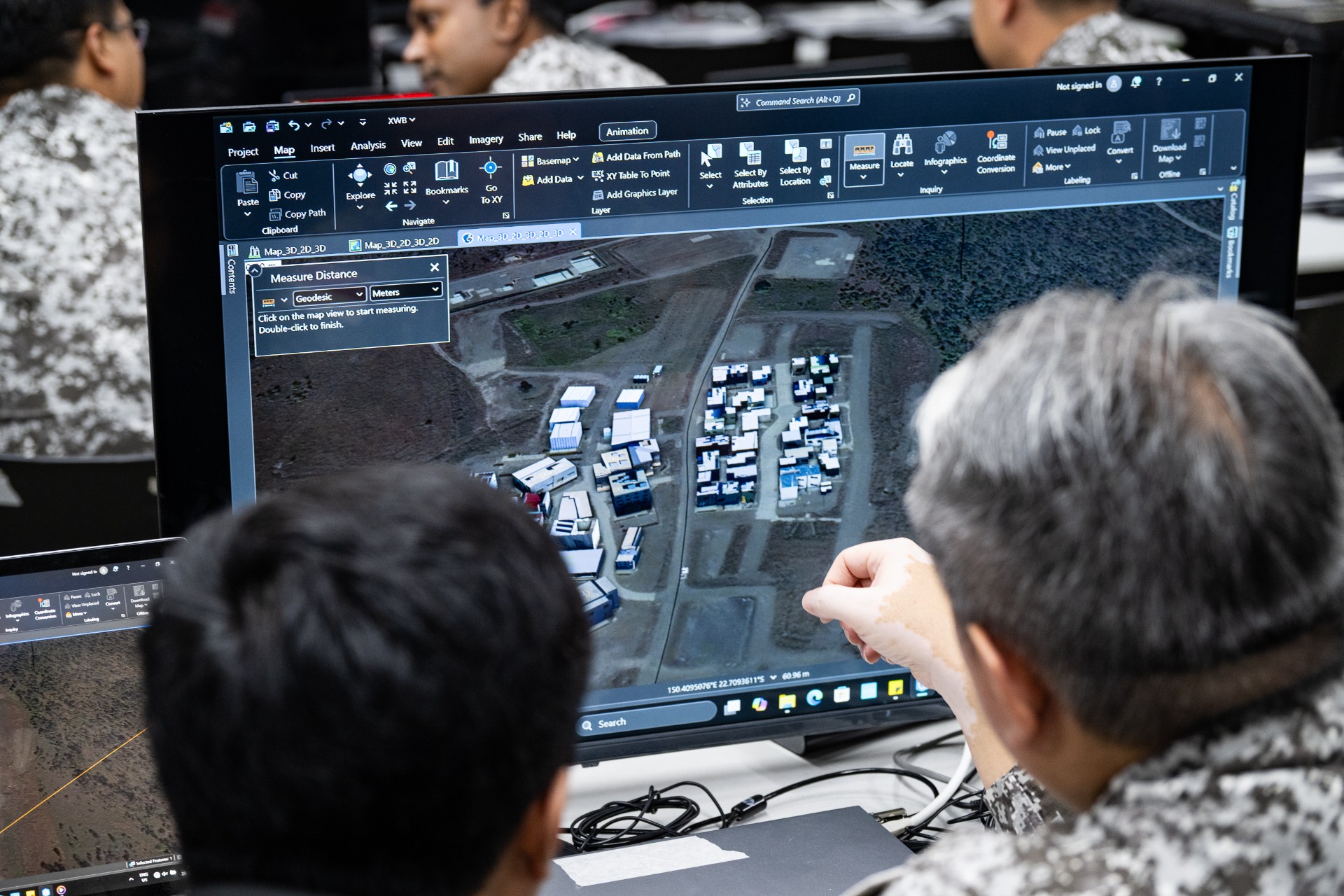
DOTC engineers and DIS analysts testing the 3D Geospatial tool (pictured) to support the Army’s and RSAF’s mission planning by improving battlefield situational awareness of the urban area they are operating in.
This year, the DIS brought along a bigger team to support the Army’s and RSAF’s intelligence requirements, and tailor digital solutions to help them execute their missions more effectively.
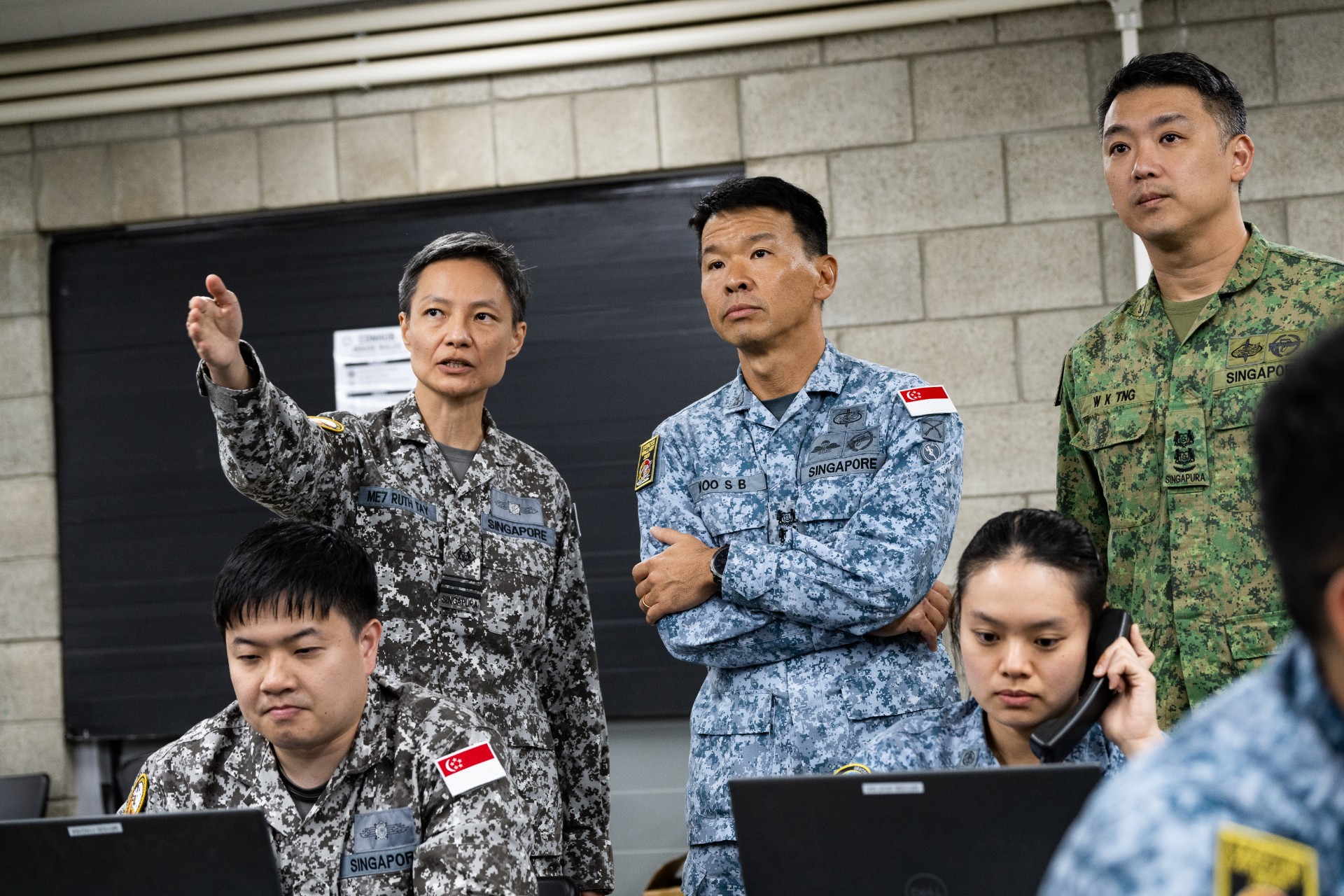
ME7 Tay (standing, far left) working with commanders from the RSAF and the Army at Warriors Camp during an integrated exercise.
ME7 Ruth Tay, the DIS Team Lead for XWB25, said: “(As the volume of reports and data received increases,) it is no longer possible for the men in the loop to be able to do the (intelligence) analysis required.
“Digital solutions are the way to go, and we have been successfully supporting the Services in achieving their outcomes.”