
OPS & TRAINING
WPNS EXERCISE SEEKS TO FURTHER COOPERATION IN HADR MISSIONS
08 Oct 2009
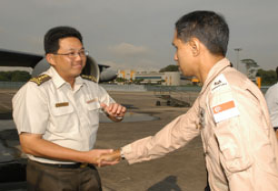
No individual country, no matter how big or capable, is able to muster all the resources to cope with large-scale natural disasters on its own.
This was the point brought home by Head Naval Operations Rear-Admiral (RADM) Tan Wee Beng, at the 2nd Western Pacific Naval Symposium Humanitarian Assistance and Disaster Relief Table Top Exercise (WPNS HADR TTX), which is held in Singapore from 5 to 9 Oct.
With the aim of boosting interoperability and understanding between maritime forces and other agencies towards HADR operations, this year's exercise is attended by representatives from 14 WPNS navies and three non-military organisations: the Singapore Civil Defence Force, United Nation's Office for the Coordination of Humanitarian Affairs and World Food Program.
During his keynote address on 5 Oct, RADM Tan noted that the global climate change has resulted in the exponential increase in the overall frequency of natural disasters: from about 100 per decade between 1900 to 1940, to over 2,800 per decade in the 1990s. With countries located on the Pacific Ring of Fire facing about 90 percent of the world's earthquakes, what is of concern is that close to 80 percent of the world's strongest quakes occur in the Asia Pacific region.
The question that all of us sitting in this room needs to be asking, is whether we are ready for the next big one, said RADM Tan.
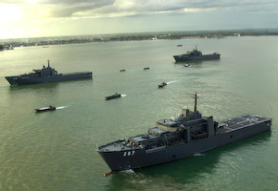
Given their versatility, capacity to carry loads and self-sustaining abilities, maritime forces are especially useful in HADR operations. During the 2004 Asian Tsunami, Landing Ships Tank (LSTs) from the Republic of Singapore Navy (RSN) were able to deliver much-needed relief supplies and personnel to affected areas such as Aceh, Indonesia, when critical infrastructure such as roads and airfields were destroyed. In addition, the United States Navy (USN) also mobilised a total of 48 Navy and Marine Corps helicopters to various parts of Indonesia, and evacuated many wounded onto its platforms like the USNS Mercy, a 1,000-bed hospital ship.
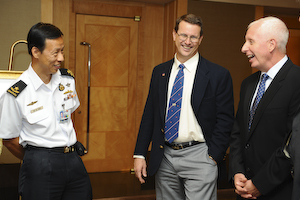
The WPNS navies have demonstrated their ability to handle humanitarian crises. What this exercise hopes to do is to further the level of cooperation not just between the navies, but also non-military agencies, said Captain (CAPT) Mark Manfredi, Head of International Plans and Policy from the USN Pacific Fleet.
This way, we can alleviate and lessen the amount of suffering that victims of natural disasters have to bear.
RADM Tan urged the WPNS navies to work towards improving information sharing and achieving interoperability in HADR operations. The longer term vision here is to move from dialogue, to table-top exercises, to shore practice in simulation centres, and potentially, to exercising at sea, he said.
Some of the topics presented during the exercise included "HADR Challenges in the Asia Pacific", "Role of National Disaster Management Organisation and The RSN's Maritime Response Capability".
The WPNS HADR TTX initiative was mooted by the USN and was first held in Bali, Indonesia, in 2007. This year, the RSN is co-hosting the exercise with the USN.
The RSN and USN share an excellent working relationship and we are fortunate to have such a professional partner co-hosting the exercise, added CAPT Manfredi.
The WPNS is made up of navies from countries with territories in or adjacent to the Western Pacific region. Comprising 18 members and six observers, the WPNS was inaugurated in 1988 after the Chiefs of Navy attending the International Seapower Symposium in 1987 agreed to establish a forum where navies could meet to discuss co-operative initiatives and identify those that warrant further consideration.
The WPNS is an important platform for the sharing of ideas and knowledge pertaining to maritime security and WPNS activities regularly bring the navies together to enhance mutual understanding, co-operation and interoperability.
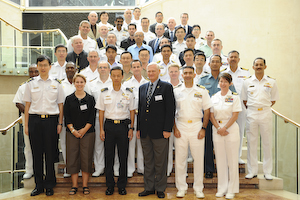
Participants of the 2nd WPNS HADR TTX posing for a group photo. In total, 14 navies and three non-military organisations are taking part in the exercise.

ALSO READ IN OPS & TRAINING
SAF & Home Team to refresh Medical Classification System
13 Apr 2026
The refreshed system will allow about 1,200 servicemen annually to be deployed for vocations and roles they were ineligible for previously.
Prime Minister Lawrence Wong observes SAF’s sense-strike integrated capabilities
09 Apr 2026
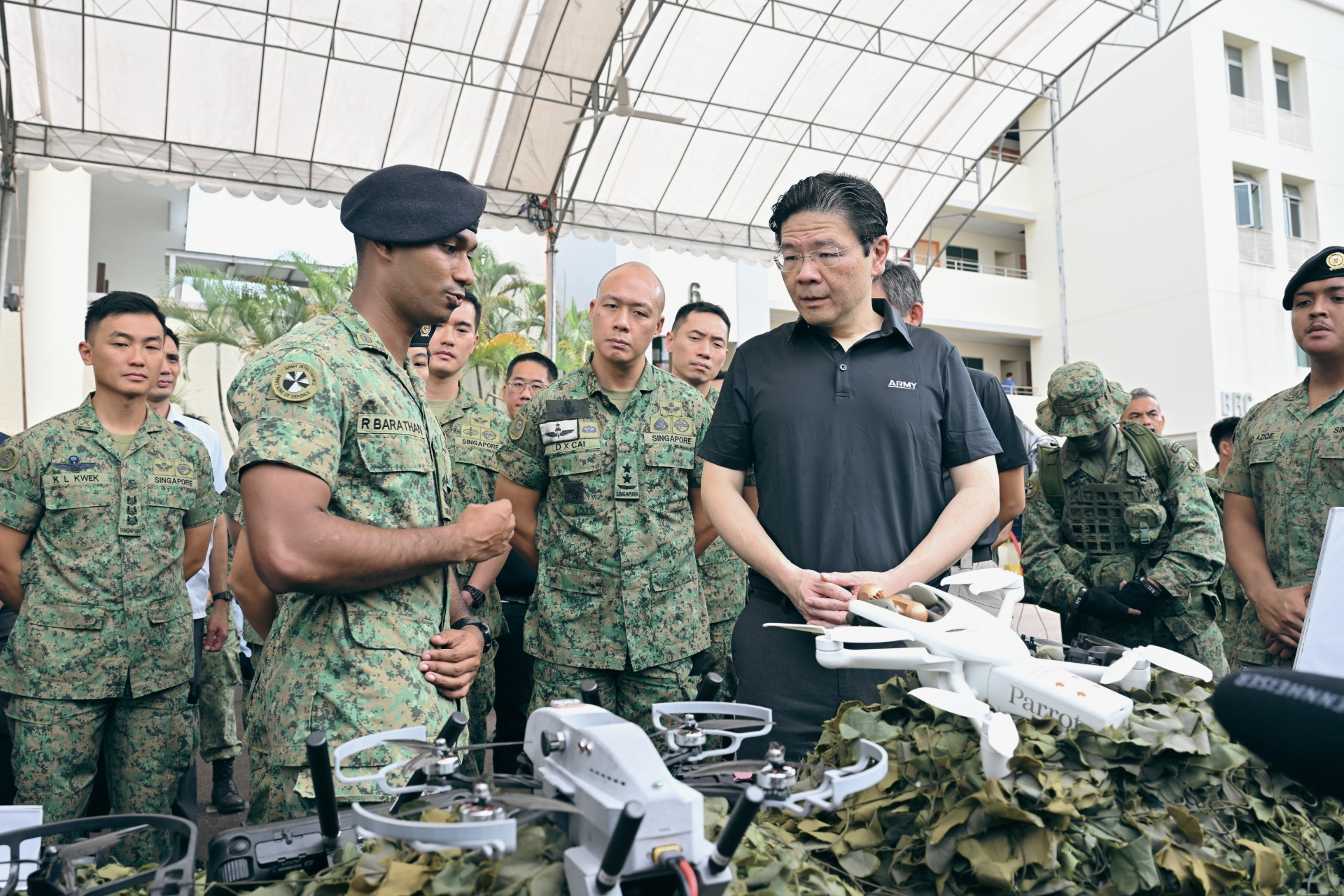
He witnessed the SAF’s ongoing efforts in leveraging advanced robotics and cross-Service integration to secure Singapore’s interests in an increasingly volatile world.
SAF detonates 250kg WWII bomb uncovered at Tanah Merah Coast Road
02 Apr 2026
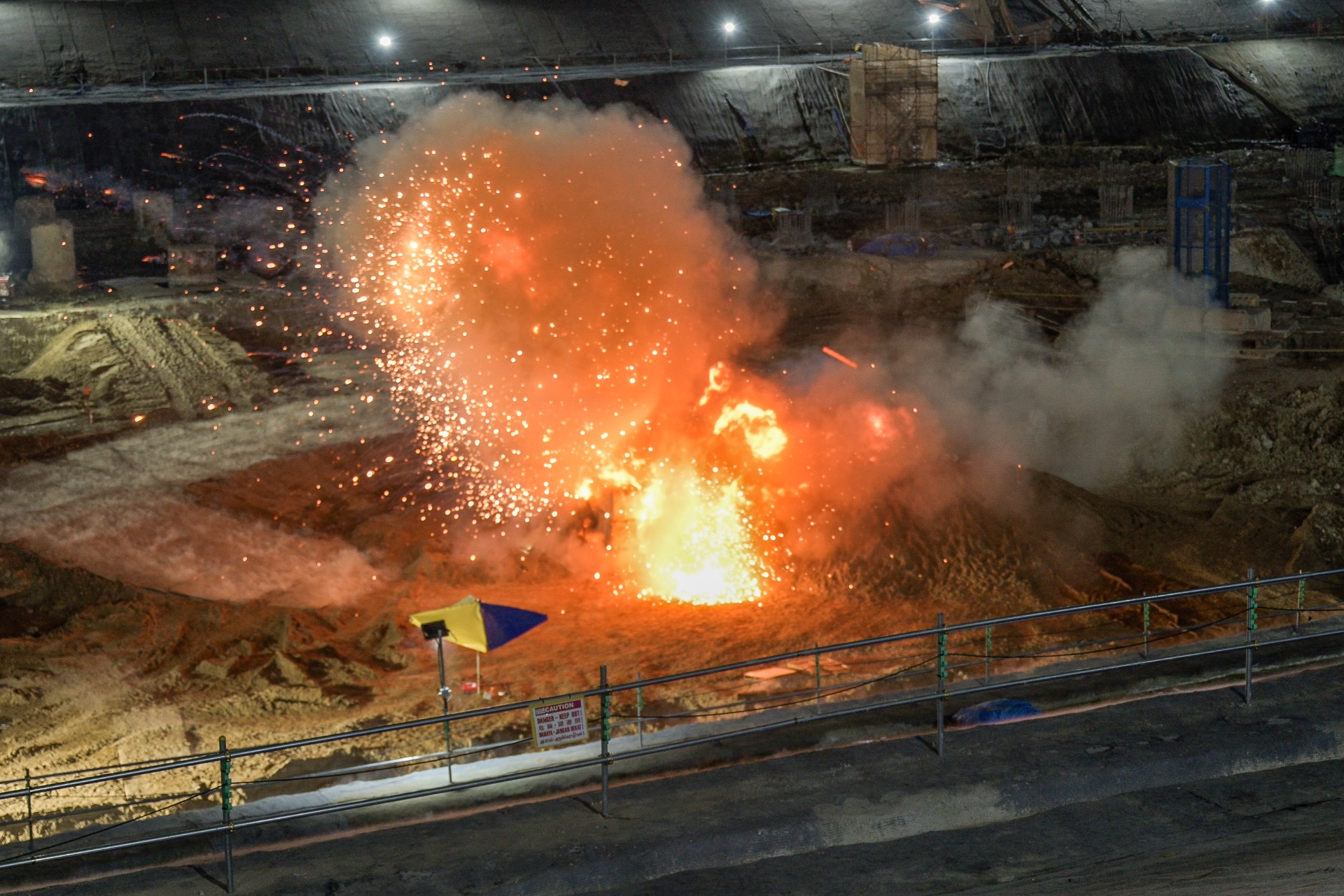
On 2 Apr, the SAF’s Explosive Ordnance Disposal (EOD) team successfully disposed of an unexploded war relic found at Tanah Merah Coast Road.