
DIPLOMACY
ROBUST SECURITY ARCHITECTURE IMPERATIVE FOR ASIA-PACIFIC REGION
30 May 2009
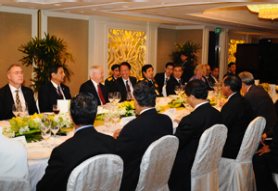
With the global economic crisis compounding non-traditional, transnational security challenges, the security architecture of the Asia-Pacific region should look to be more flexible, inclusive and to leverage on the strength of ASEAN, in order to address these concerns, said Deputy Prime Minister and Minister for Defence Teo Chee Hean.
This was part of the discussions that transpired during a private luncheon which Mr Teo hosted for 22 visiting ministers and ministerial representatives on 30 May, as part of the 8th Shangri-La Dialogue organised by the International Institute for Strategic Studies (IISS).
A regular feature at the Dialogue since it was initiated in 2002, the luncheon provides an opportunity for ministers to engage in informal and open discussions on defence security issues.
The Ministers agreed that to effectively deal with current threats of piracy, terrorism, proliferation of weapons of mass destruction and natural disasters, it is imperative to build a robust regional framework with three key attributes.
First, it has to be "open and inclusive" for countries big and small, as well as international and regional organisations such as the United Nations, to each have a role to play. Traditional notions of geography should not be a limiting factor for cooperation.
Second, the security architecture needs to be flexible, to have intersecting bilateral and multilateral frameworks, as well as formal and informal structures, to allow opportunities for cooperation and dialogues to deal with the spectrum of security threats.
"We also agreed that ASEAN (Association of Southeast Asian Nations) has a special and important role to play, because it can bring together all the countries in the different sub-regions in the Asia-Pacific region," said Mr Teo.
Located at the centre of the region and with its history as a neutral facilitator that forges cooperation out of conflict, ASEAN is well-placed to be a "good fulcrum" to draw the nations together.
At the luncheon, the Ministers were also of the view that military transparency and dialogue can help achieve the common objective of building trust and cooperation in the region.
Multilateral dialogues, such as the Shangri-La Dialogue, can help build confidence and mutual understanding, as well as allow countries to accommodate or resolve their differences in an amicable way.
Mr Teo will be hosting a second lunch for the visiting Ministers on 31 May.
The 8th Shangri-La Dialogue is being held from 29 to 31 May at the Shangri-La Hotel in Singapore. It is the only forum that brings together defence ministers from the Asia-Pacific region to discuss regional security and defence issues.

ALSO READ IN DIPLOMACY
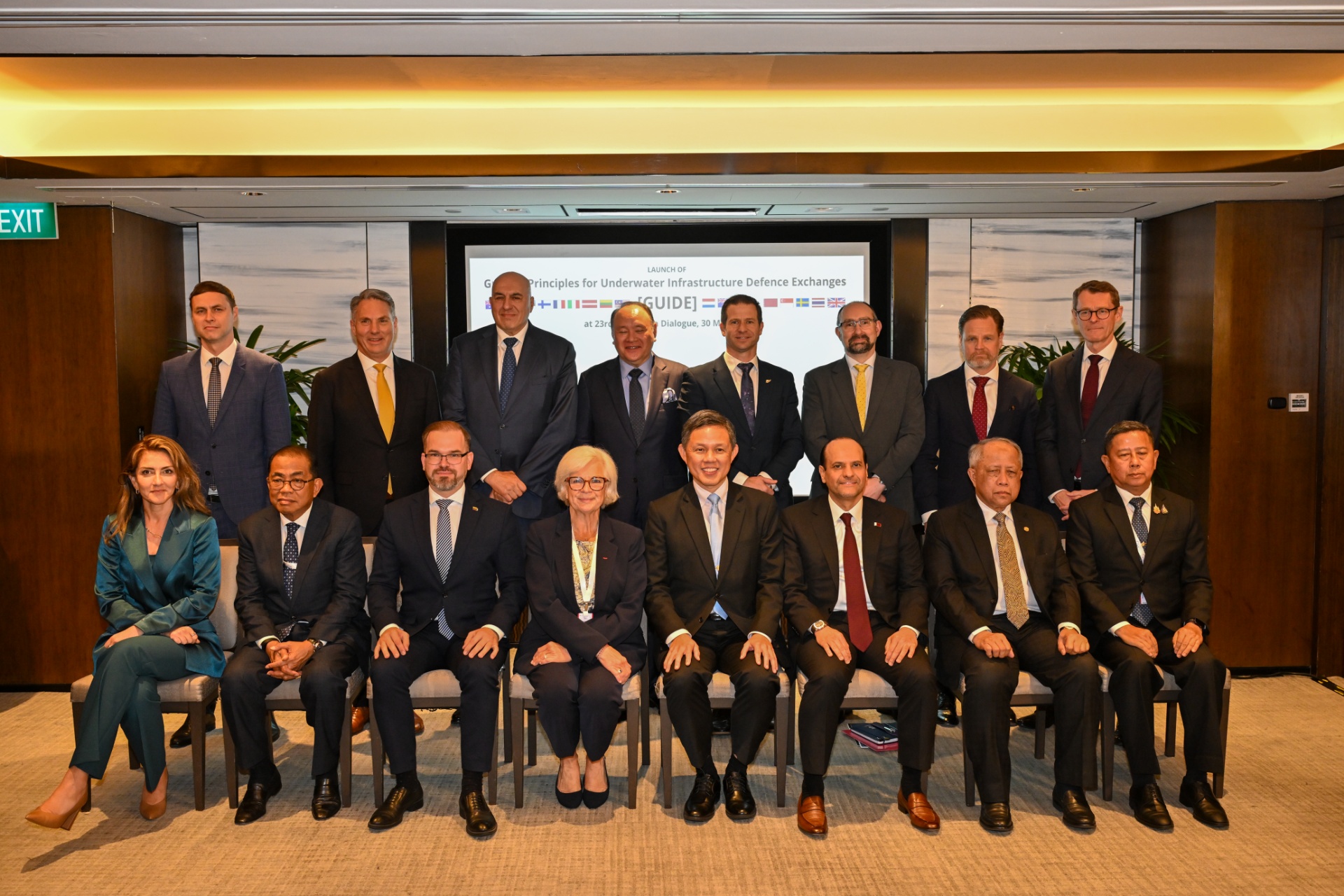
17 countries launch new framework for cooperation on critical underwater infrastructure
30 May 2026
Launched on the sidelines of the 23rd Shangri-La Dialogue, GUIDE is a new framework that brings together countries for defence cooperation in enhancing the security of Critical Underwater Infrastructure.
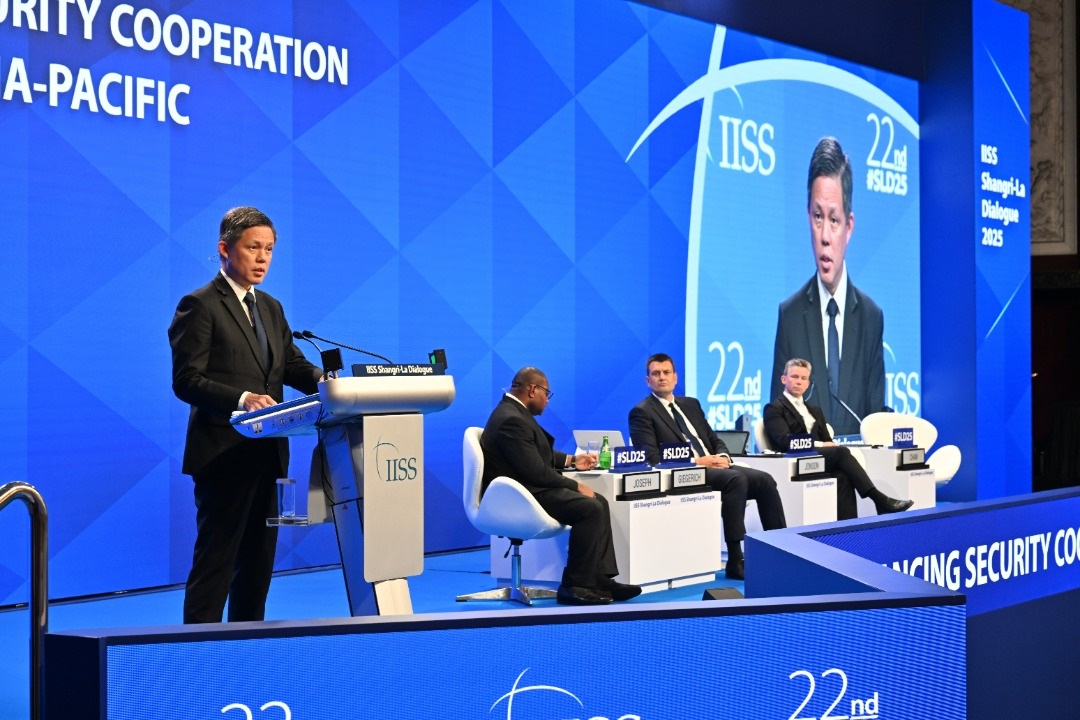
Going alone is not the answer to insecurity – Mr Chan
01 Jun 2025
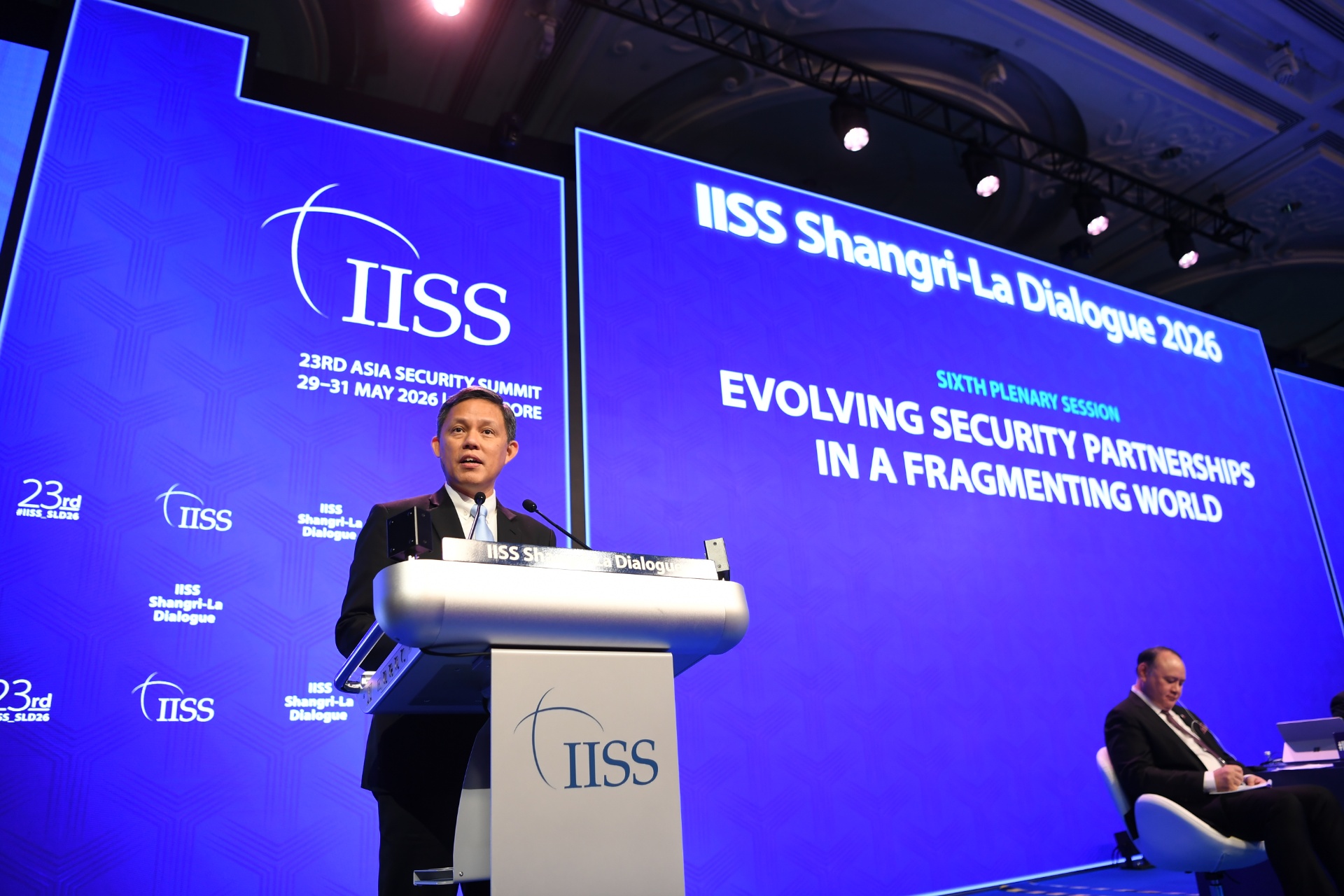
“Going alone is not the answer to insecurity”, emphasised Minister for Defence Mr Chan Chun Sing at the Shangri-La Dialogue (SLD), held from 30 May to 1 Jun. This was one of his main points at his speech at the sixth plenary session on 1 Jun.
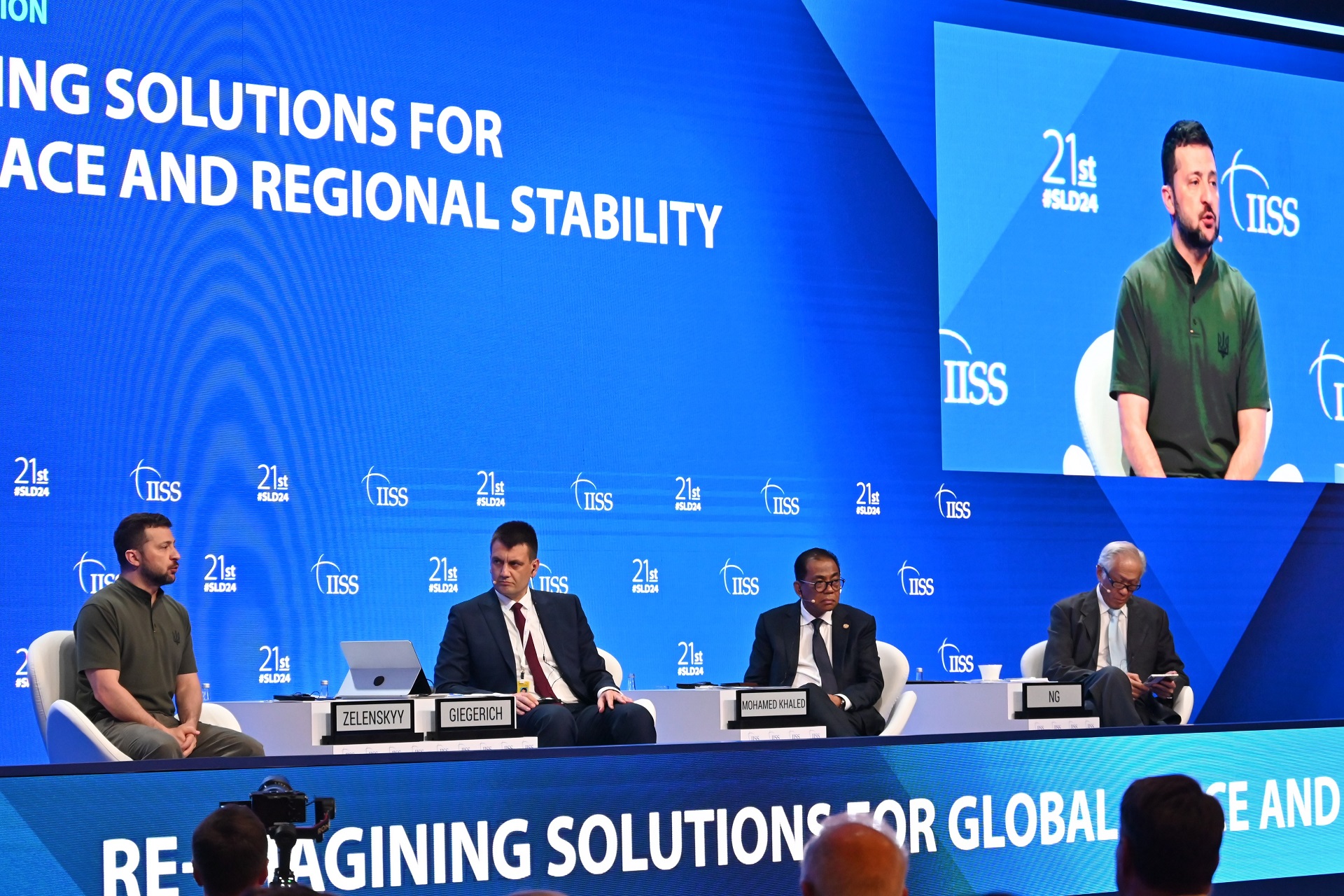
A call for peace at Shangri La Dialogue
02 Jun 2024
A repeated call for peace, especially in Asia. This was Minister for Defence Dr Ng Eng Hen's central message at the 21st Shangri La Dialogue (SLD), held from 31 May to 2 Jun.