
DIPLOMACY
Create new norms & sustain practical cooperation to face emerging challenges: Mr Chan
01 Jun 2026
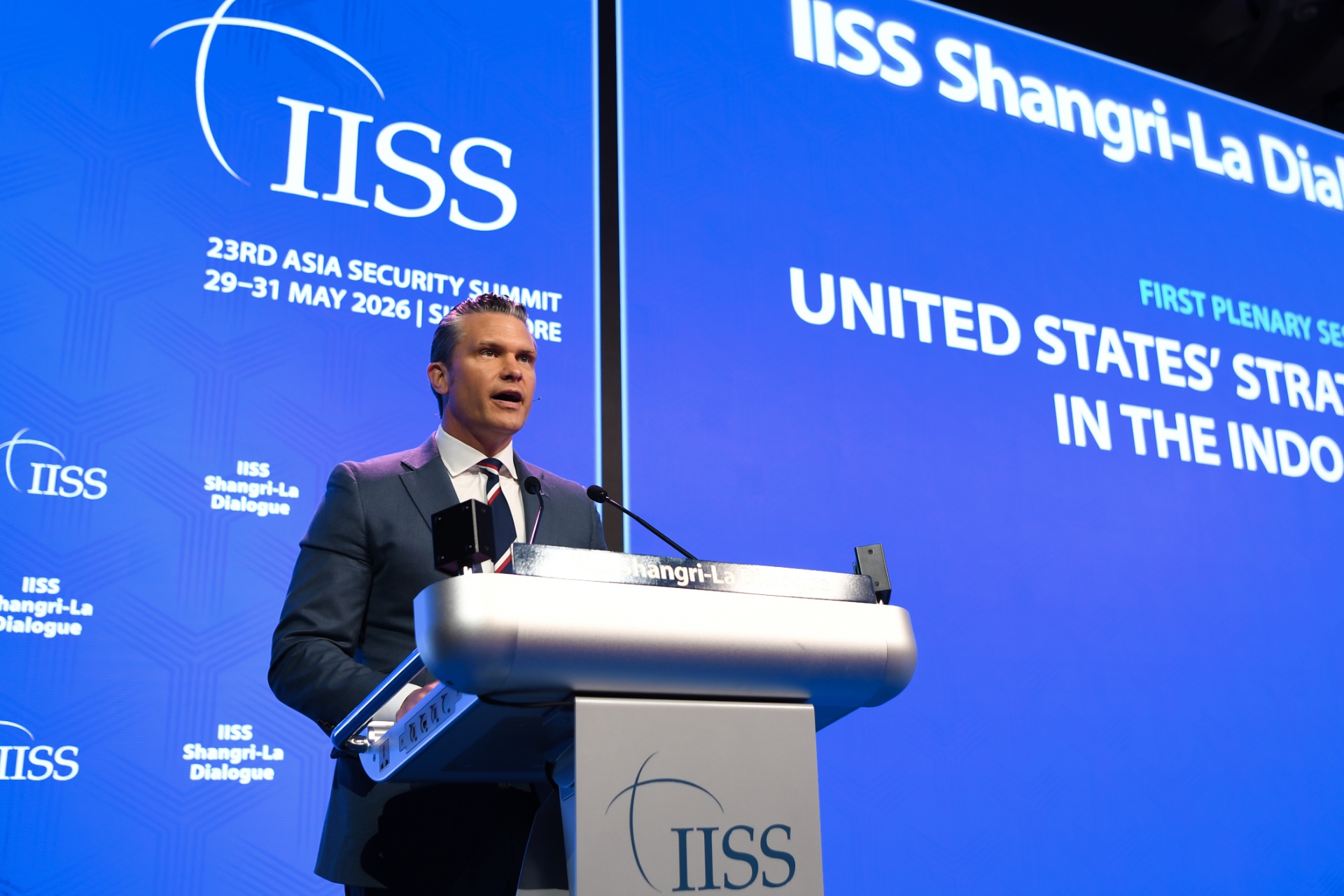
Nations must respond to evolving conflicts along the lines of principles, partnerships and politics, said Defence Minister Chan Chun Sing at the 23rd Shangri-La Dialogue.
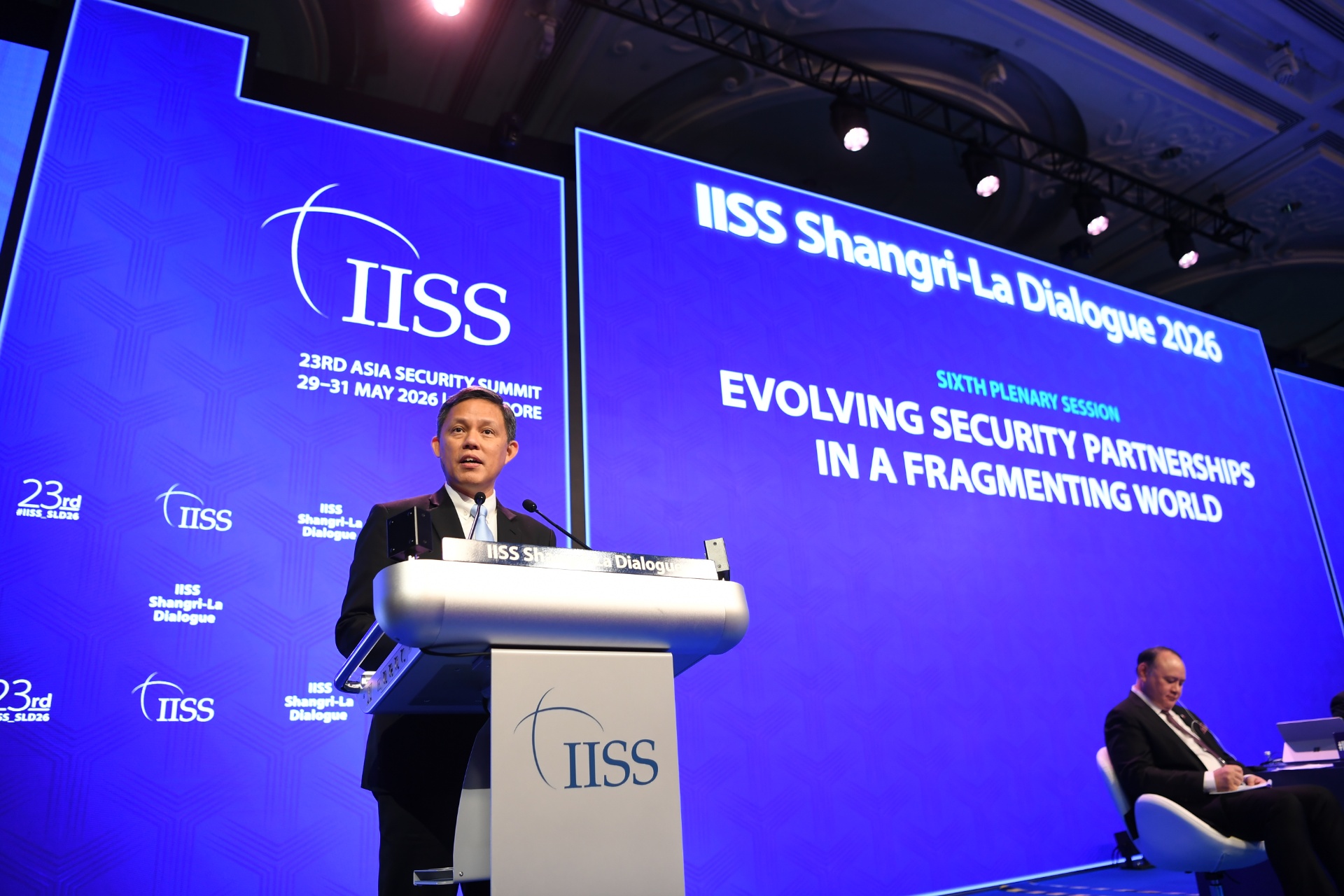
Against the backdrop of heightened global instability, platforms like the Shangri-La Dialogue (SLD) remain valuable opportunities for world leaders to “speak frankly, listen carefully and find practical ways to work together”.
This was Minister for Defence Chan Chun Sing’s message in his speech at the sixth plenary session of this year’s Shangri-La Dialogue.
The 23rd edition of the annual defence and security summit, organised by the International Institute for Strategic Studies, was held from 29 to 31 May.
Over the three days, 54 ministerial-level delegates and more than 42 Chief of Defence Forces-level delegates and senior defence officials from 44 countries gathered to exchange perspectives on defence and security issues and initiatives.
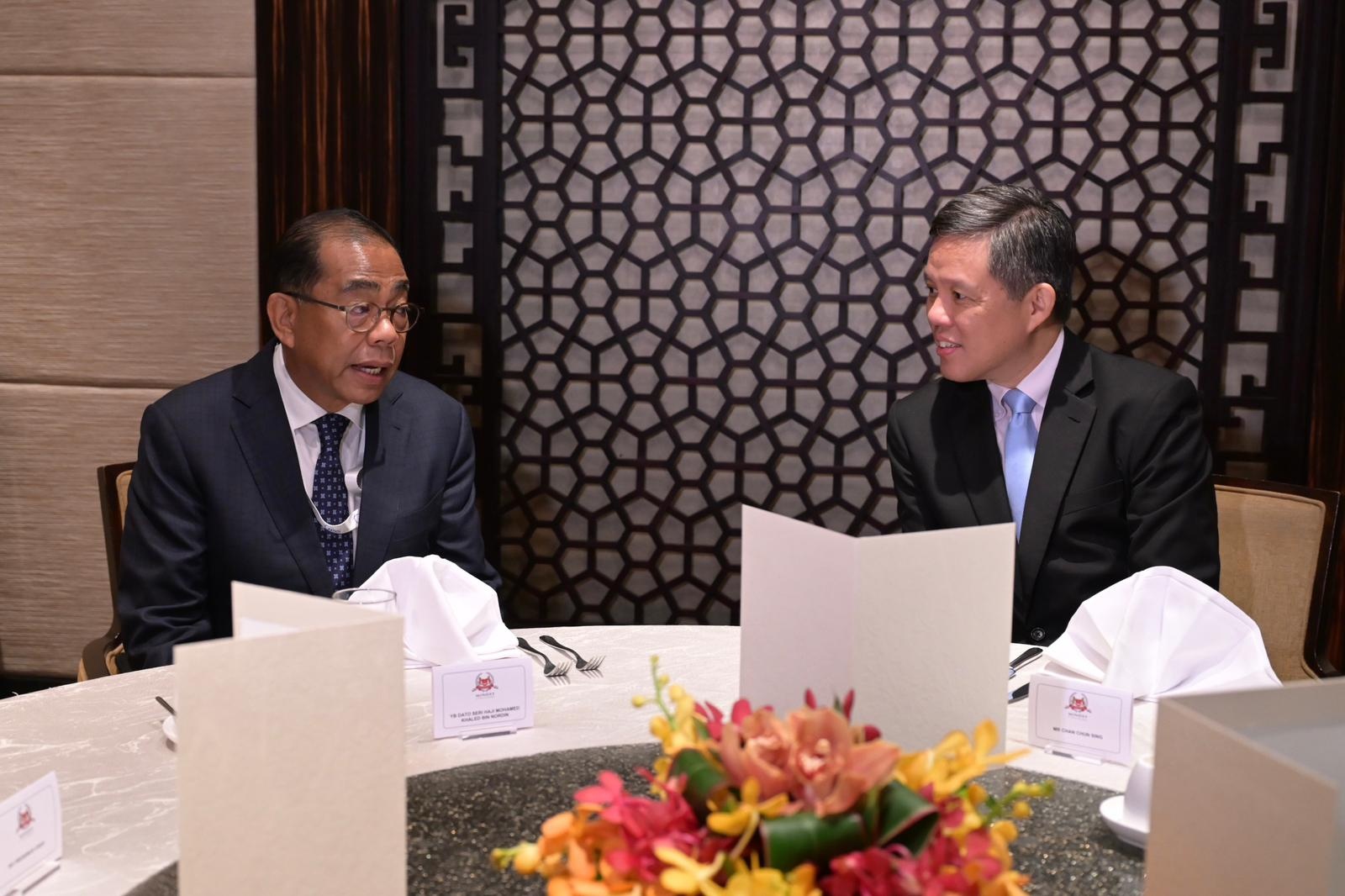
Speaking at the session on “Evolving Security Partnerships in a Fragmenting World”, Mr Chan noted that conflict today had evolved beyond geography, military firepower and the “here-and-now”.
“Today’s conflicts reflect the interplay of multiple dimensions of power – from weaponising economic leverage, to contesting narratives, to waging lawfare to shape global rules and norms.”
He highlighted the importance of adapting responses along the lines of principles, partnerships and politics.
“(We can) retreat into zero-sum competition, or we can choose a different path – by refreshing the rules that matter; creating new norms for emerging domains; and sustaining practical cooperation,” Mr Chan said.
In particular, he noted the need for “more and new networks of flexible, overlapping, issues-based partnerships to address the new challenges”.
Marking new agreements
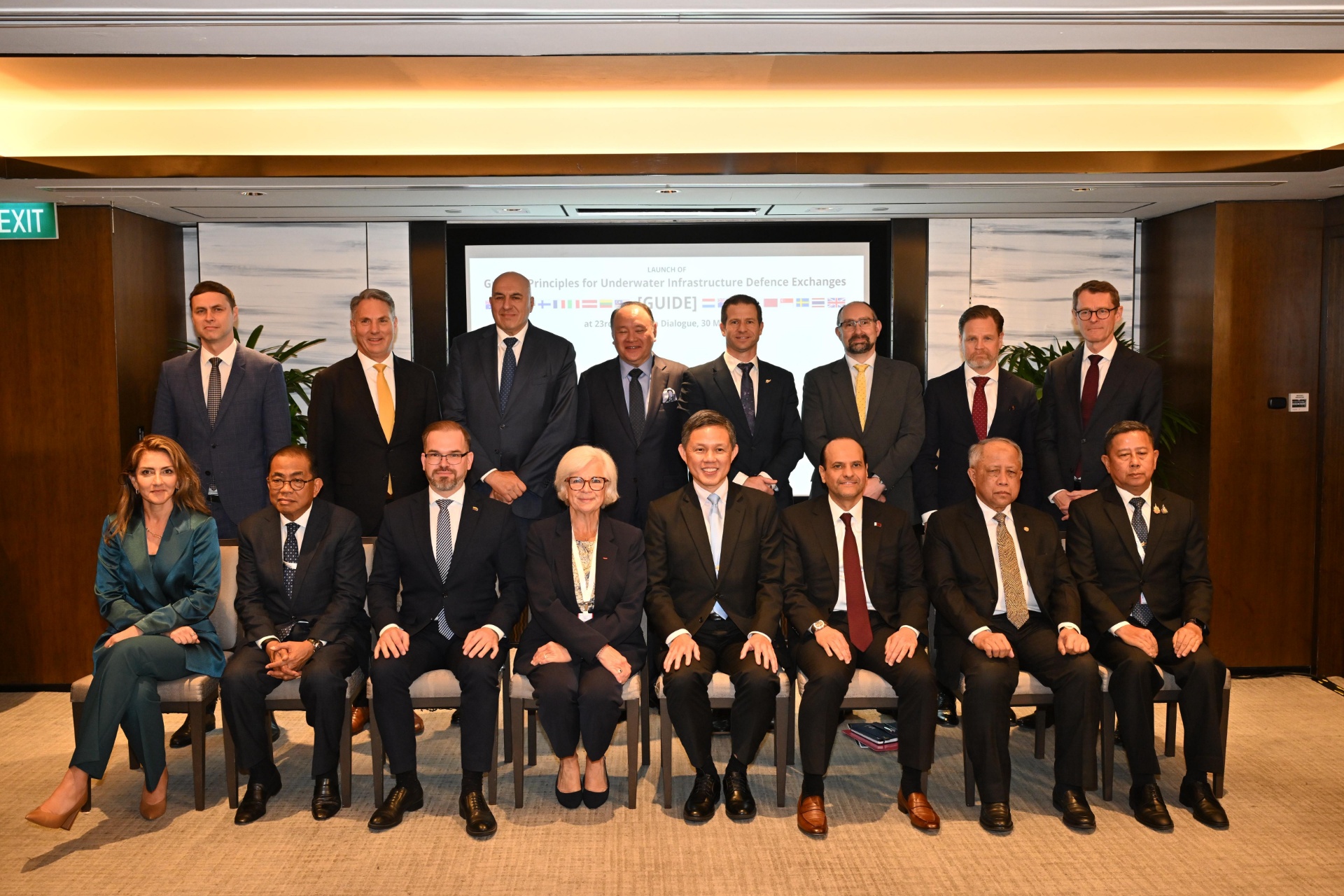
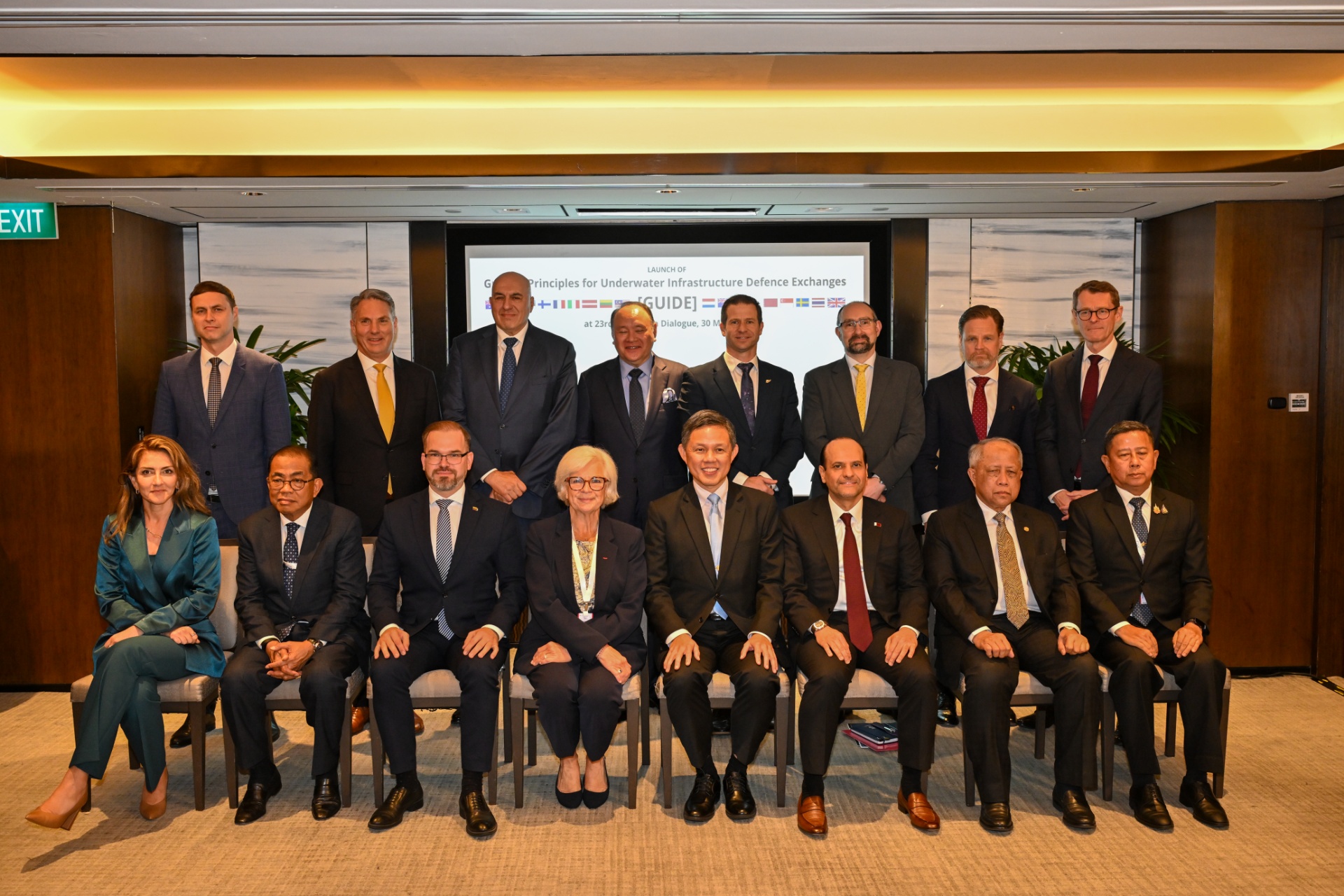
A new multilateral initiative launched on the sidelines of SLD on 30 May was the Guiding Principles for Underwater Infrastructure Defence Exchanges (GUIDE).
This framework, currently endorsed by 17 countries, is an agreement of shared principles and potential areas in which defence establishments from different countries can collaborate to enhance the security of Critical Underwater Infrastructure.
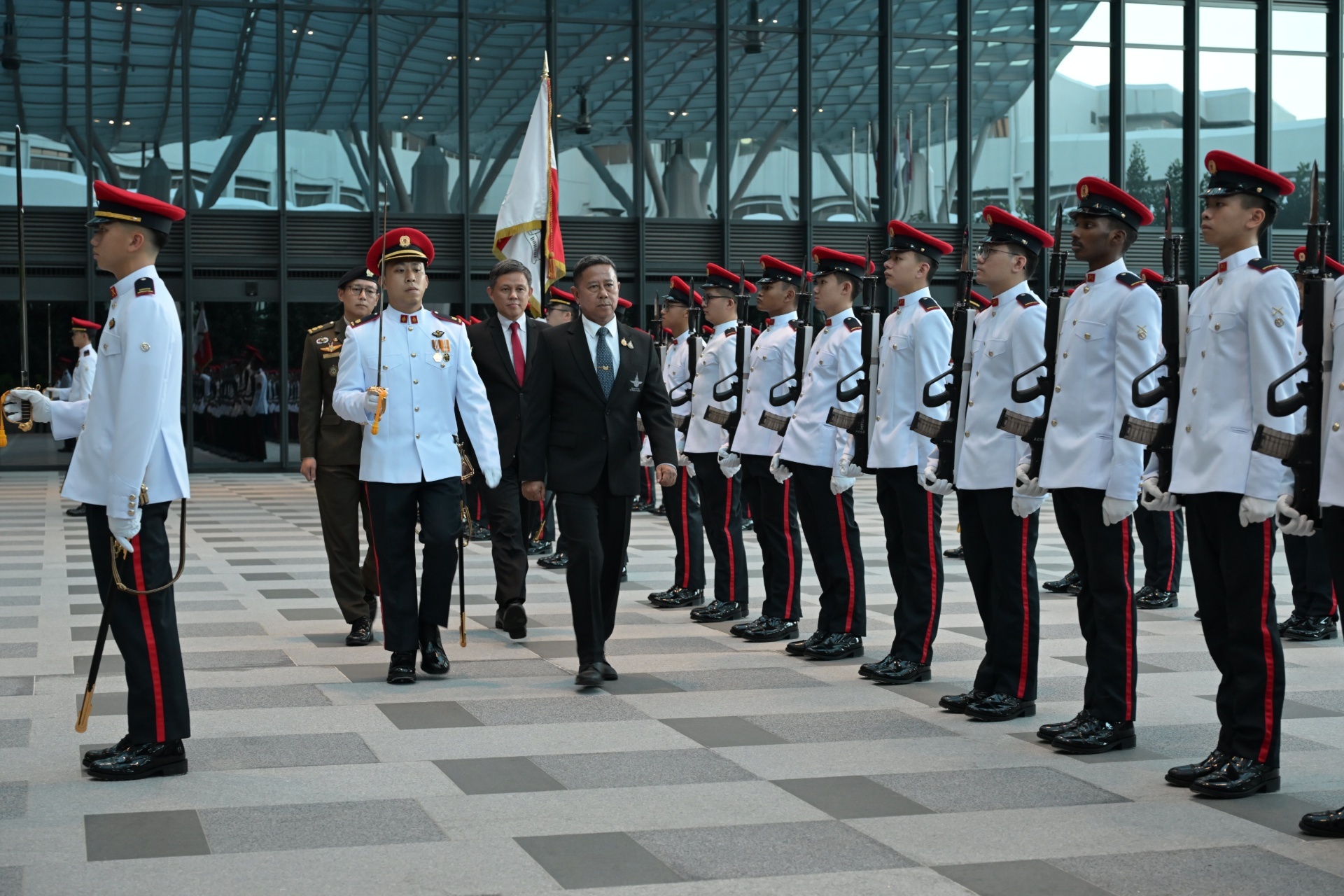
Singapore also signed Memorandums of Understanding (MOUs) with regional and global partners.
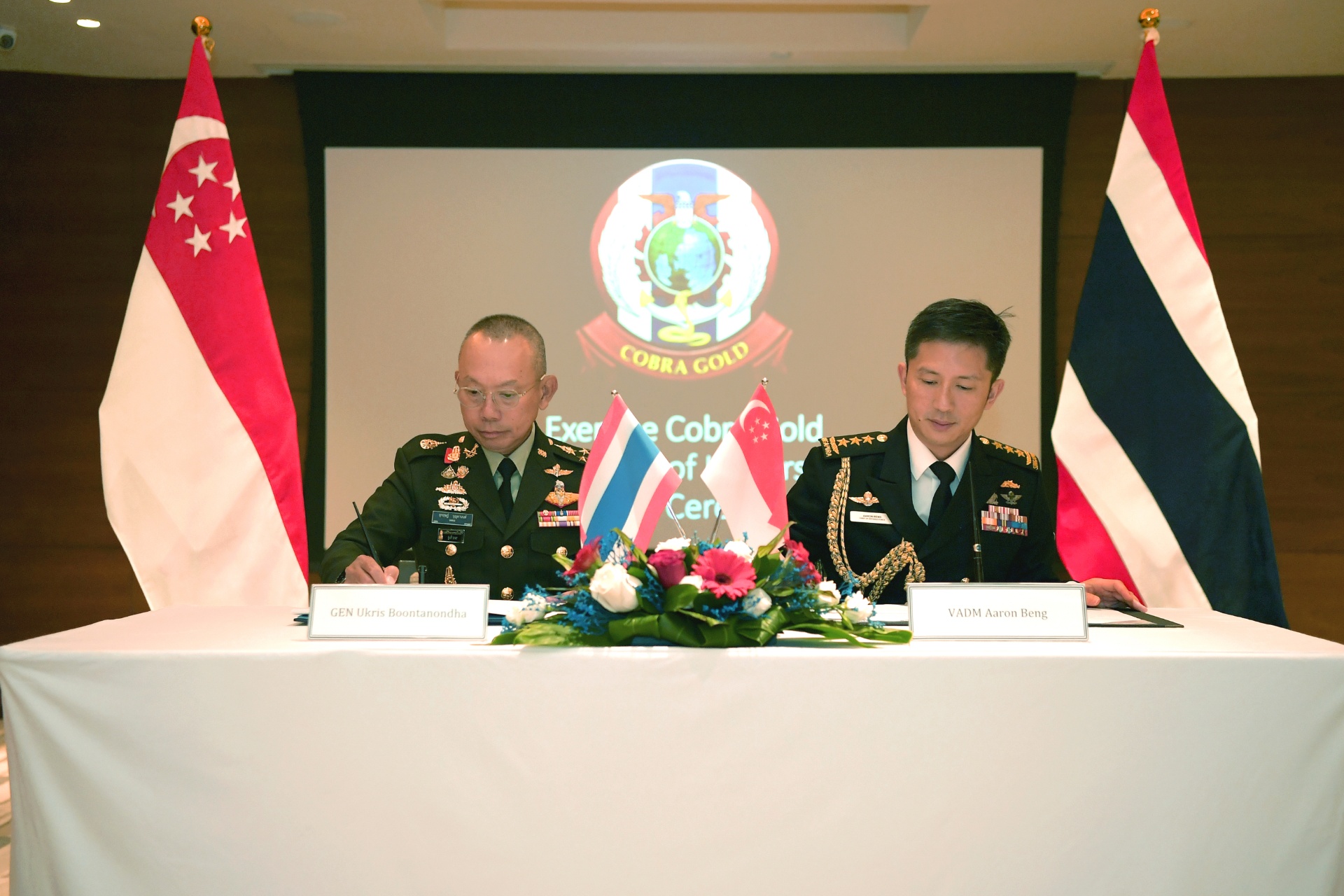
On 29 May, Chief of Defence Force Vice Admiral (VADM) Aaron Beng and Chief of Defence Forces of the Royal Thai Armed Forces General (GEN) Ukris Boontanondha renewed the MOU on the participation of the Singapore Armed Forces (SAF) in Exercise Cobra Gold in Thailand.
The renewed MOU confirms Singapore’s participation in the exercise for the next five years.
It also introduces new provisions that reflect both armed forces' shared commitment to the safety and security of civilians and the protection of the environment during training activities.
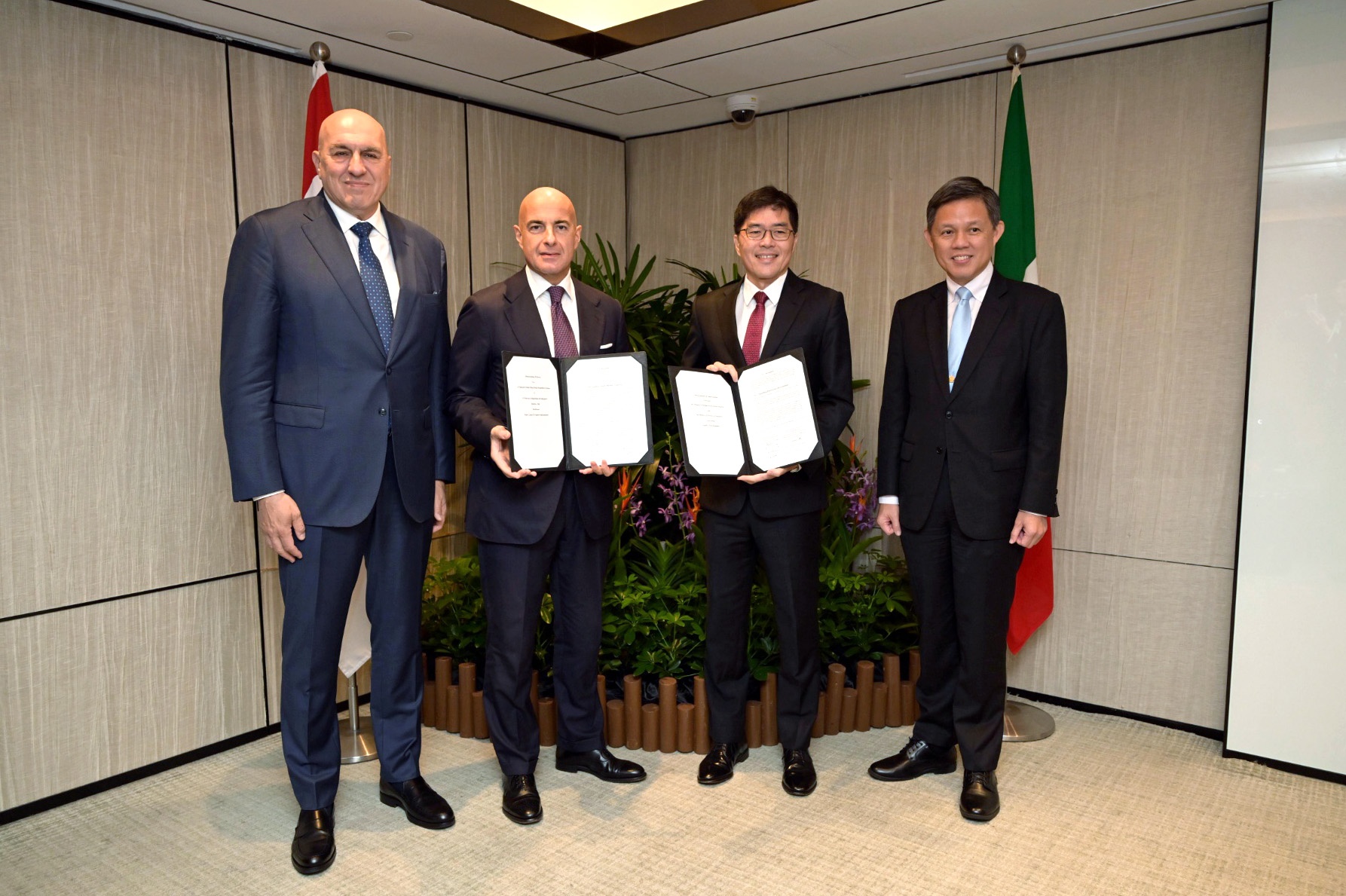
The next day, ahead of Mr Chan’s call with Italian Minister of Defence Guido Crosetto, Singapore and Italy concluded the MOU on Supply Chain Resiliency.
The arrangement strengthens both countries’ defence supply chains to deal with unforeseen disruptions.

Sharing the flavours & sights of S’pore
On a lighter note, delegates were shown Singaporean hospitality in the form of beloved local fare.
Mr Chan invited Australia Deputy Prime Minister and Minister for Defence Richard Marles to supper at Lau Pa Sat on 29 May.
Over satay and barbequed chicken wings – Singapore’s version of the Aussie “barbie” – both ministers enjoyed a fruitful discussion on defence cooperation, building on the progress under the Comprehensive Strategic Partnership 2.0.
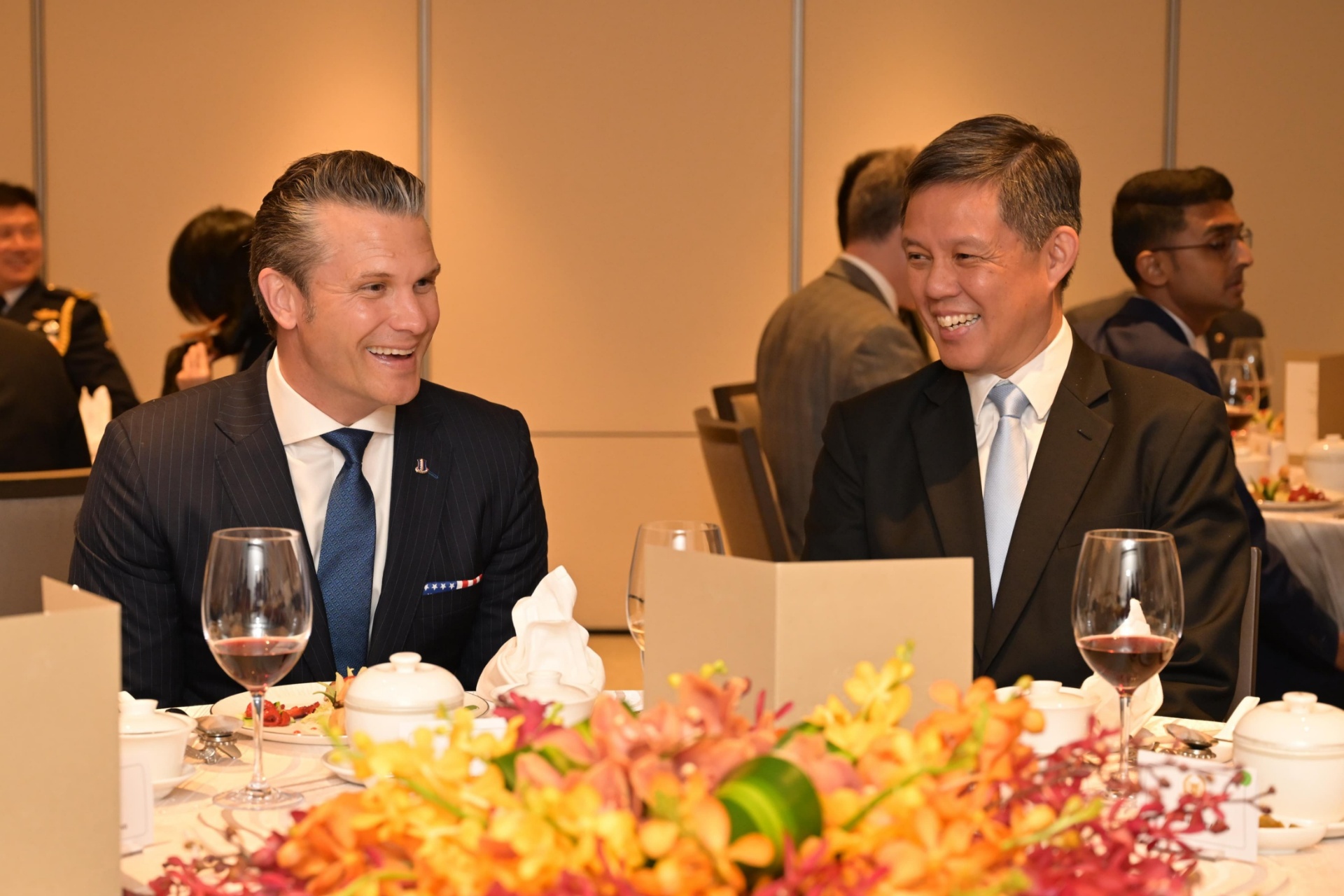
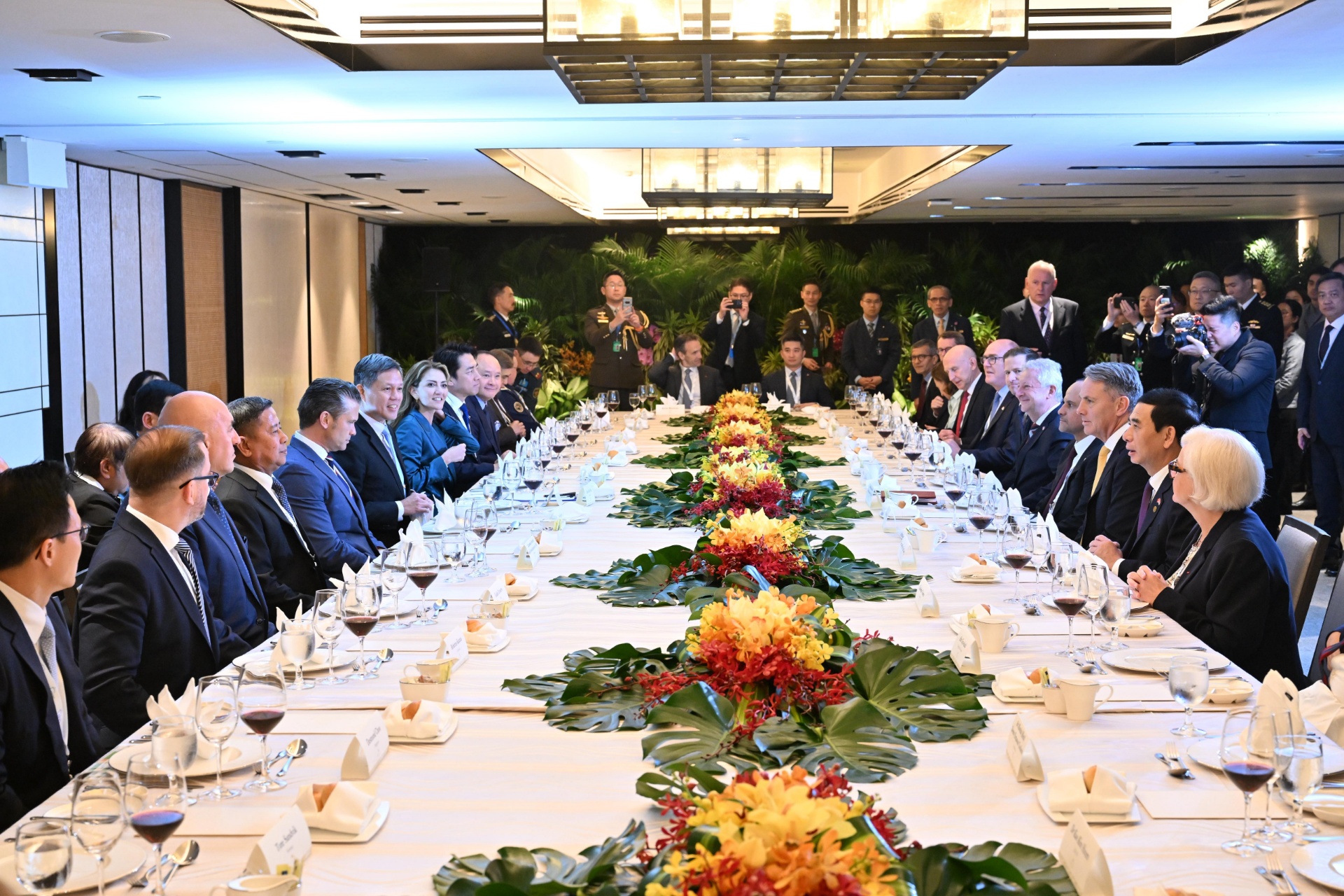
Earlier that morning on 29 May, Mr Chan hosted United States (US) Secretary of War Pete Hegseth to lunch at Shangri-La Hotel.
In a post on his Facebook page, Mr Chan thanked the US for its strong support for the SAF’s training in the US there, saying: “The US has long been an important partner for the SAF, with generations of our service personnel training together through professional courses, exchanges and overseas exercises.
“These experiences have not only strengthened our operational capabilities, but also forged lasting friendships between the two countries.”
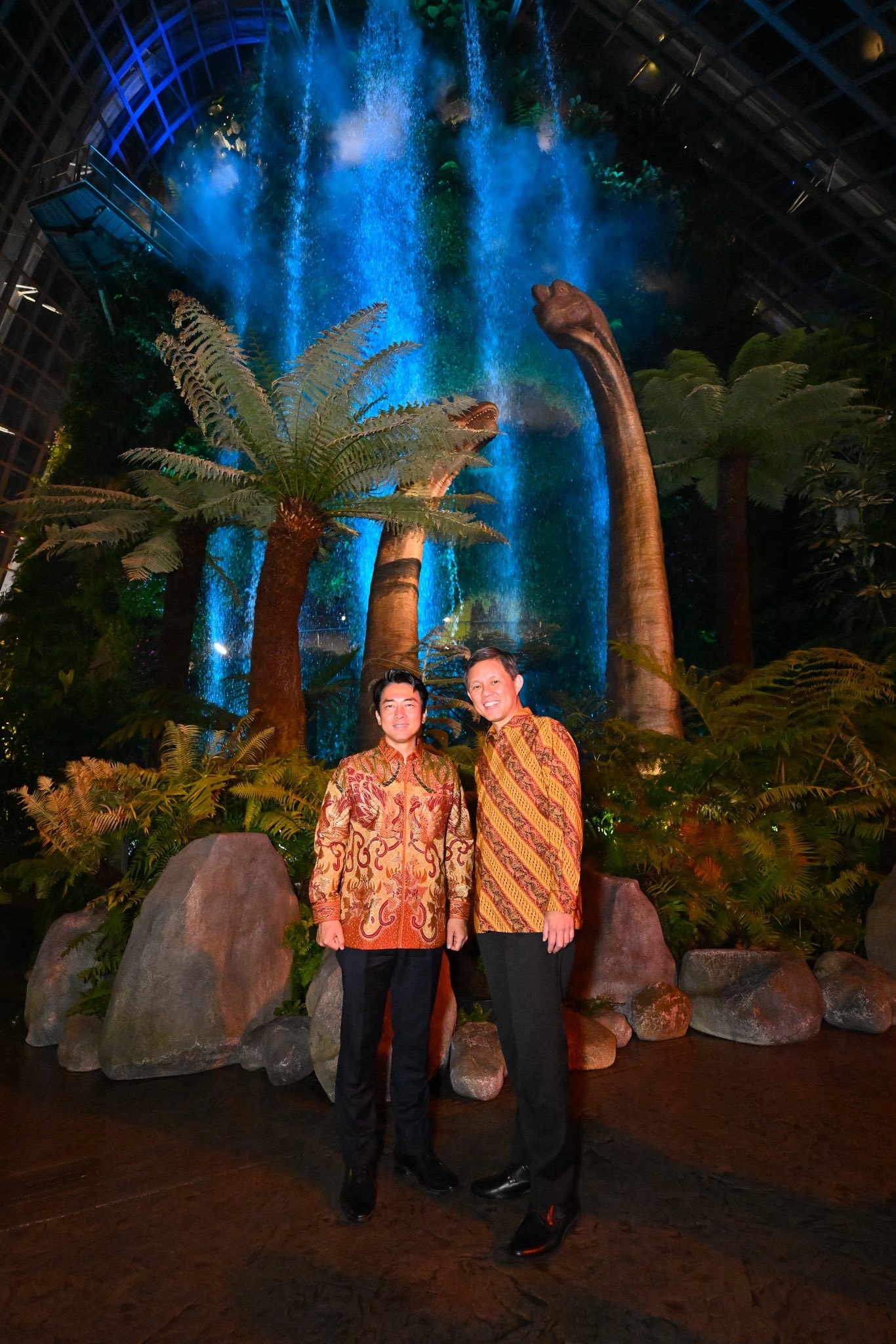
Mr Chan also hosted Japan Minister of Defense Koizumi Shinjiro on a tour of Gardens by the Bay and Marina Bay Sands on 30 May, to experience Singapore’s nighttime skyline. This is Mr Koizumi’s first visit to Singapore as defence minister.
Mr Chan and Mr Koizumi held discussions on taking defence cooperation forward, in light of the 60th anniversary of diplomatic relations between the two nations.
Strengthening partnerships & alliances
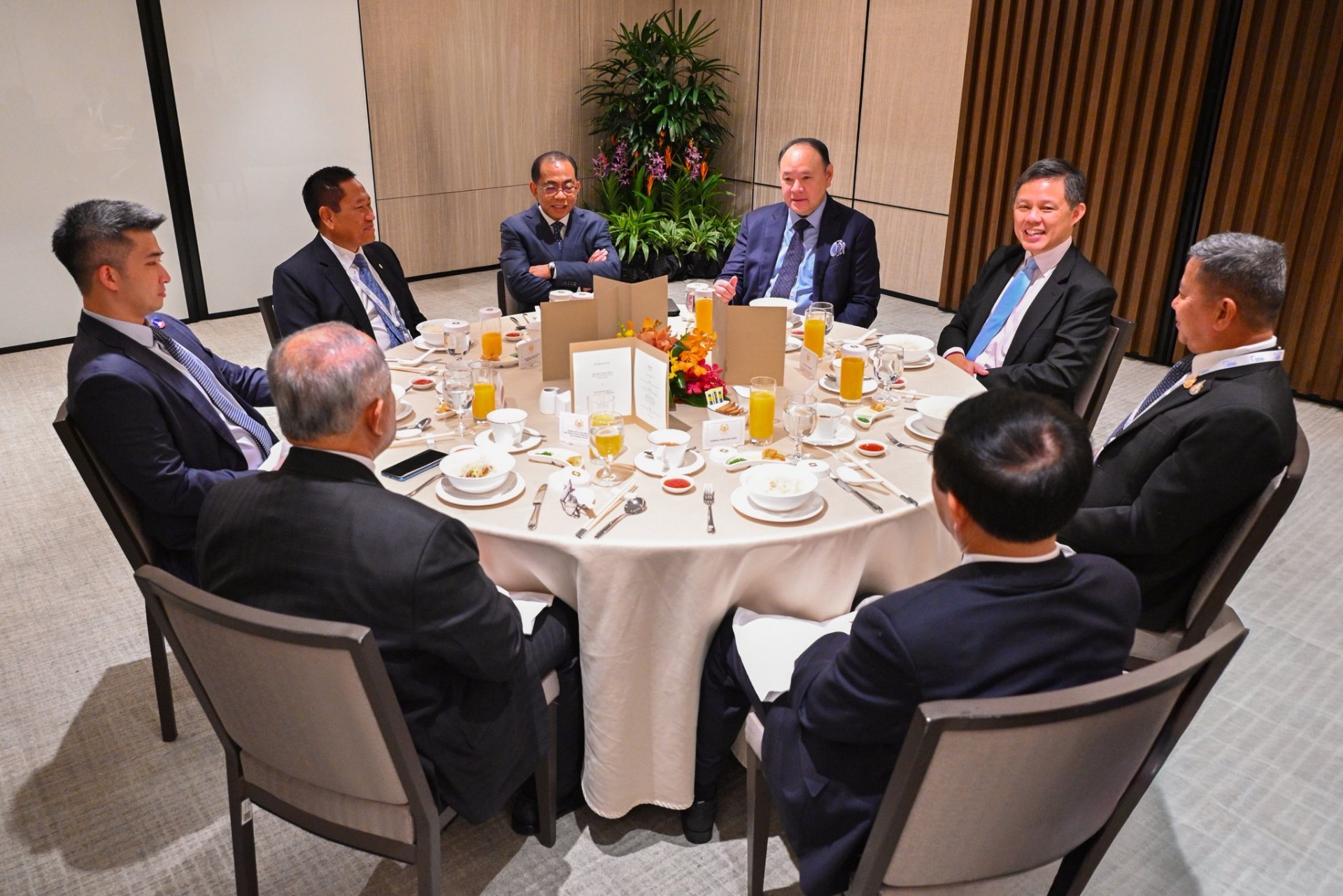
On 30 May, Mr Chan and Philippines’ Secretary of National Defense Gilberto Teodoro Jr. co-hosted breakfast for the ASEAN defence ministers attending SLD.
The ministers reaffirmed the importance of ASEAN centrality and how ASEAN can contribute to regional peace and prosperity.
They also exchanged views on how militaries from ASEAN and ASEAN Defence Ministers’ Meeting-Plus nations can train and exercise together, particularly on humanitarian assistance and disaster relief efforts.
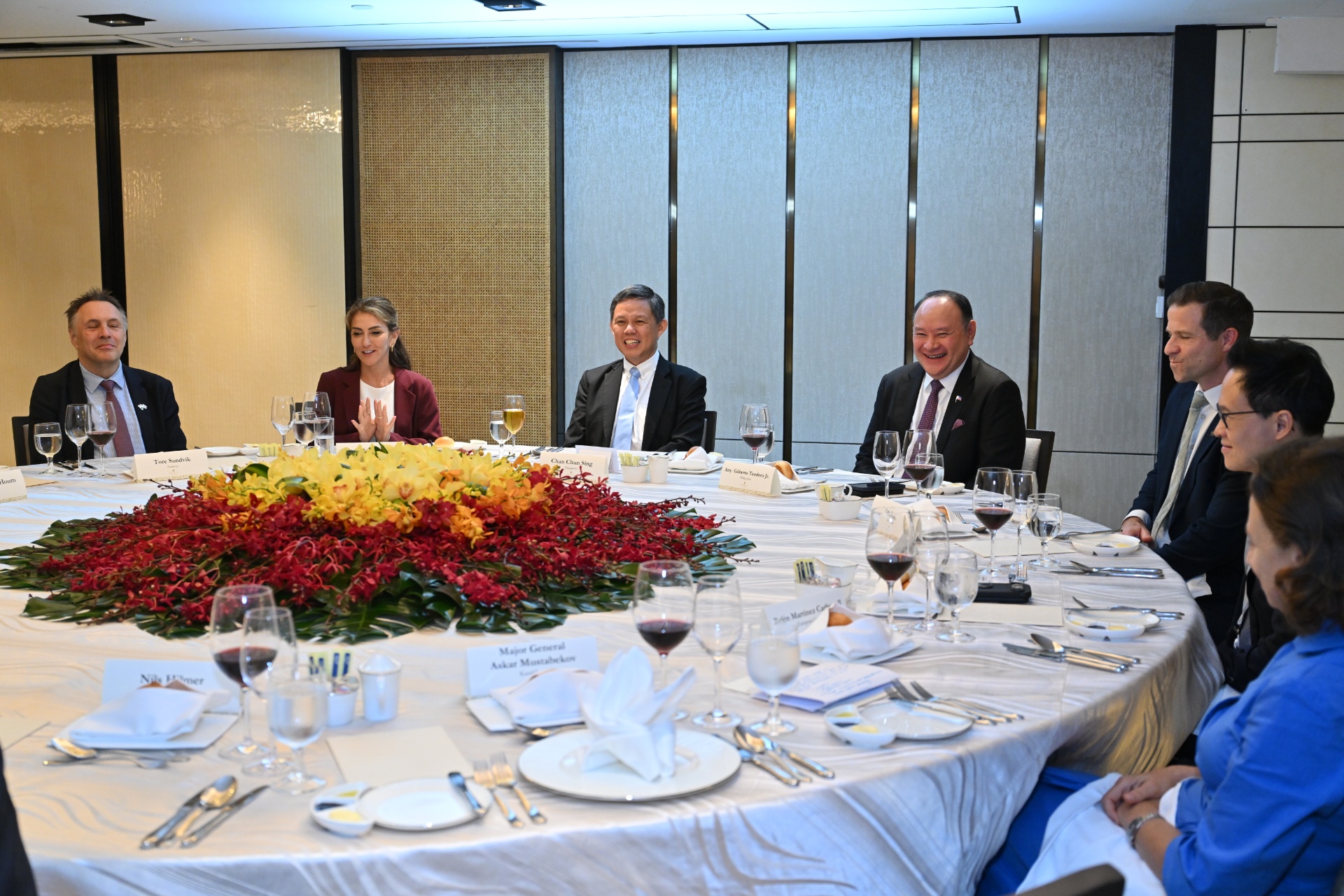
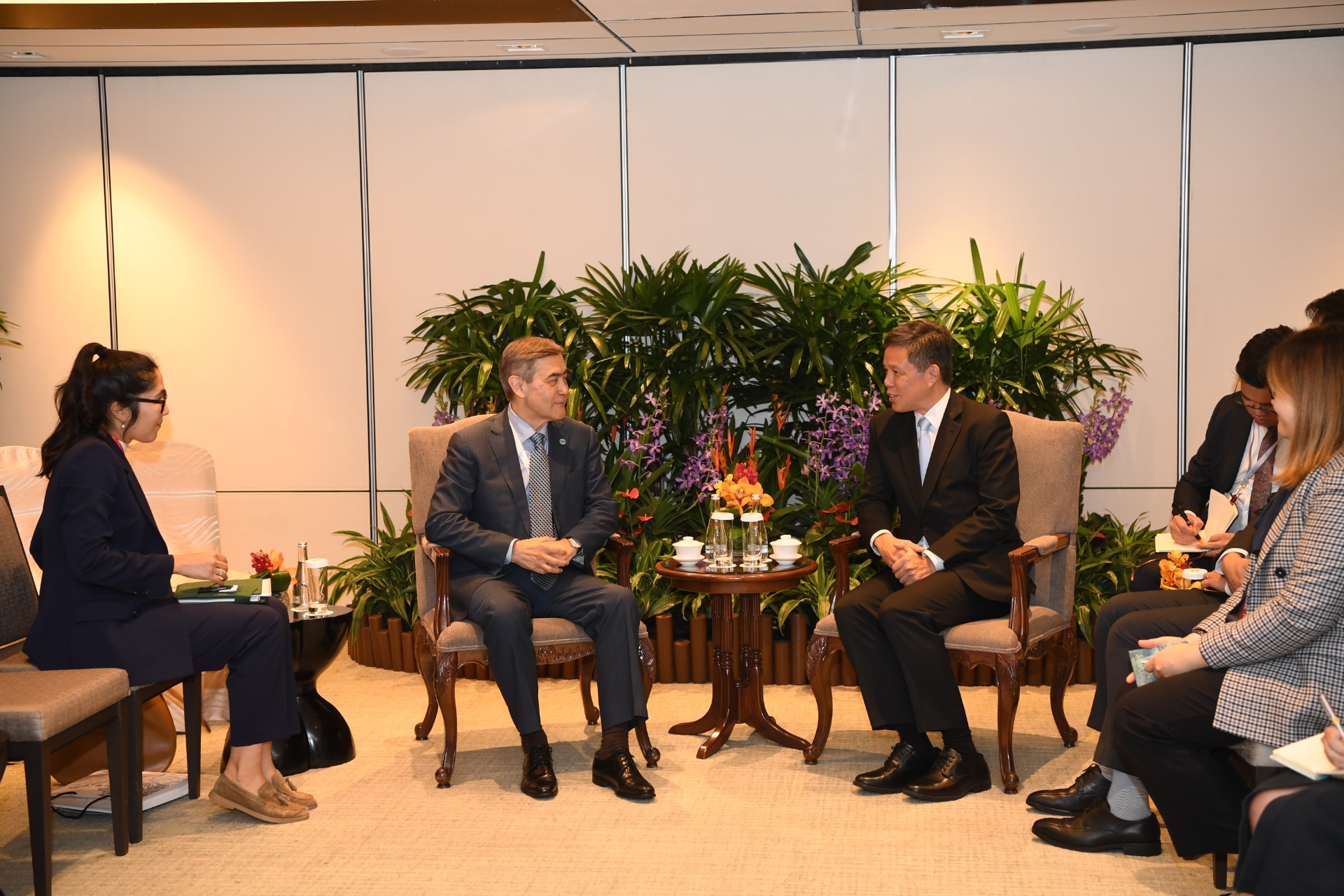
During SLD, Mr Chan hosted two roundtable discussions for visiting ministers and their representatives. The Ministerial Roundtable is a regular feature of the Dialogue.
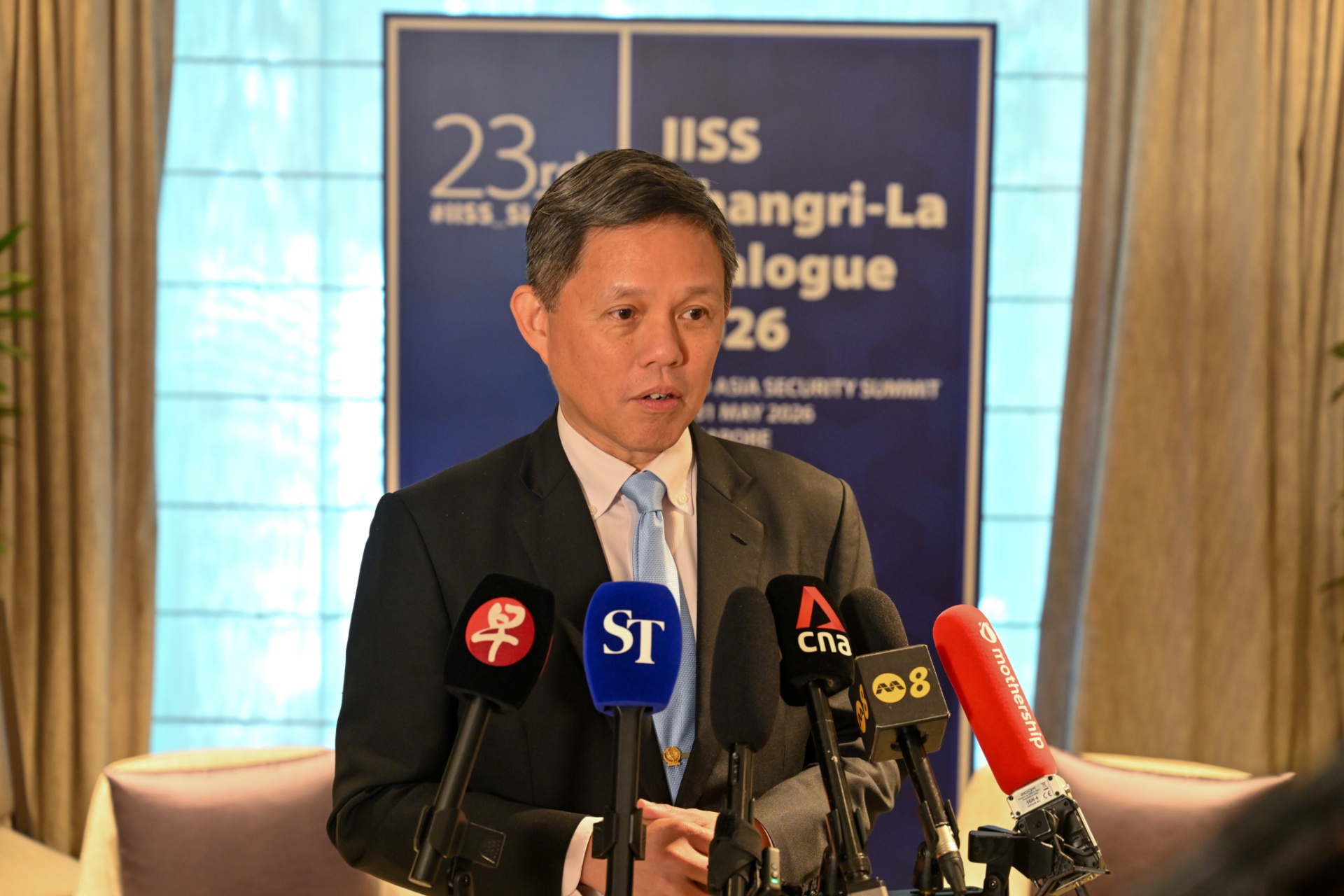
Speaking with the media after the first roundtable, Mr Chan described it as “an open and dynamic discussion”, where ministers shared on common challenges faced and dealing with new technological innovations.
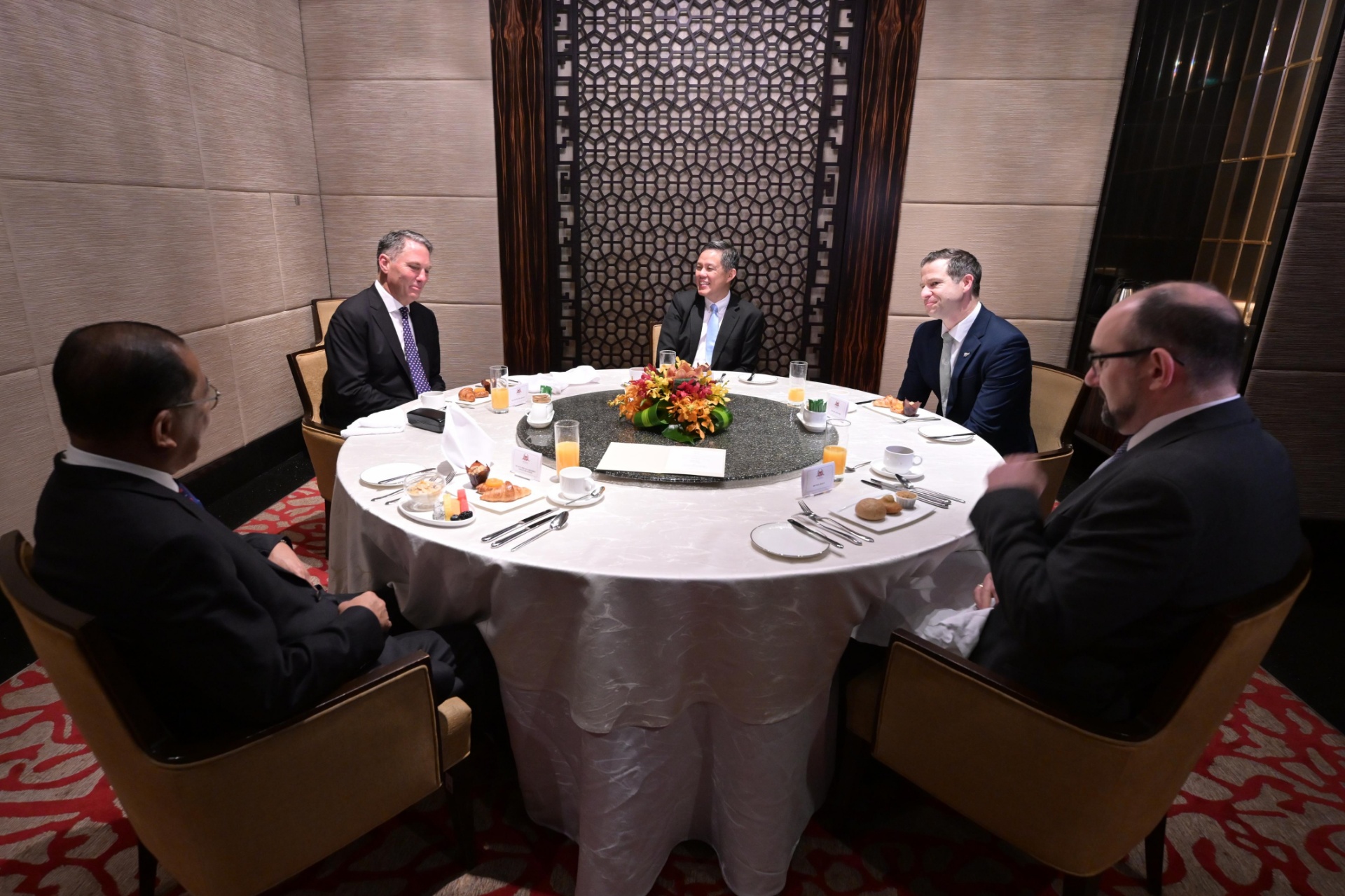
The final day of SLD saw Mr Chan hosting defence ministers of the Five Power Defence Arrangements (FPDA) nations to a breakfast.
The ministers reaffirmed their nations’ commitment and the continued strategic relevance of the FPDA as a constructive, transparent, and peaceful defence arrangement which plays an important role in the regional security architecture.
The FPDA, which was established in 1971 and comprises Australia, Malaysia, New Zealand, Singapore and the United Kingdom (UK), marks its 55th year this year.
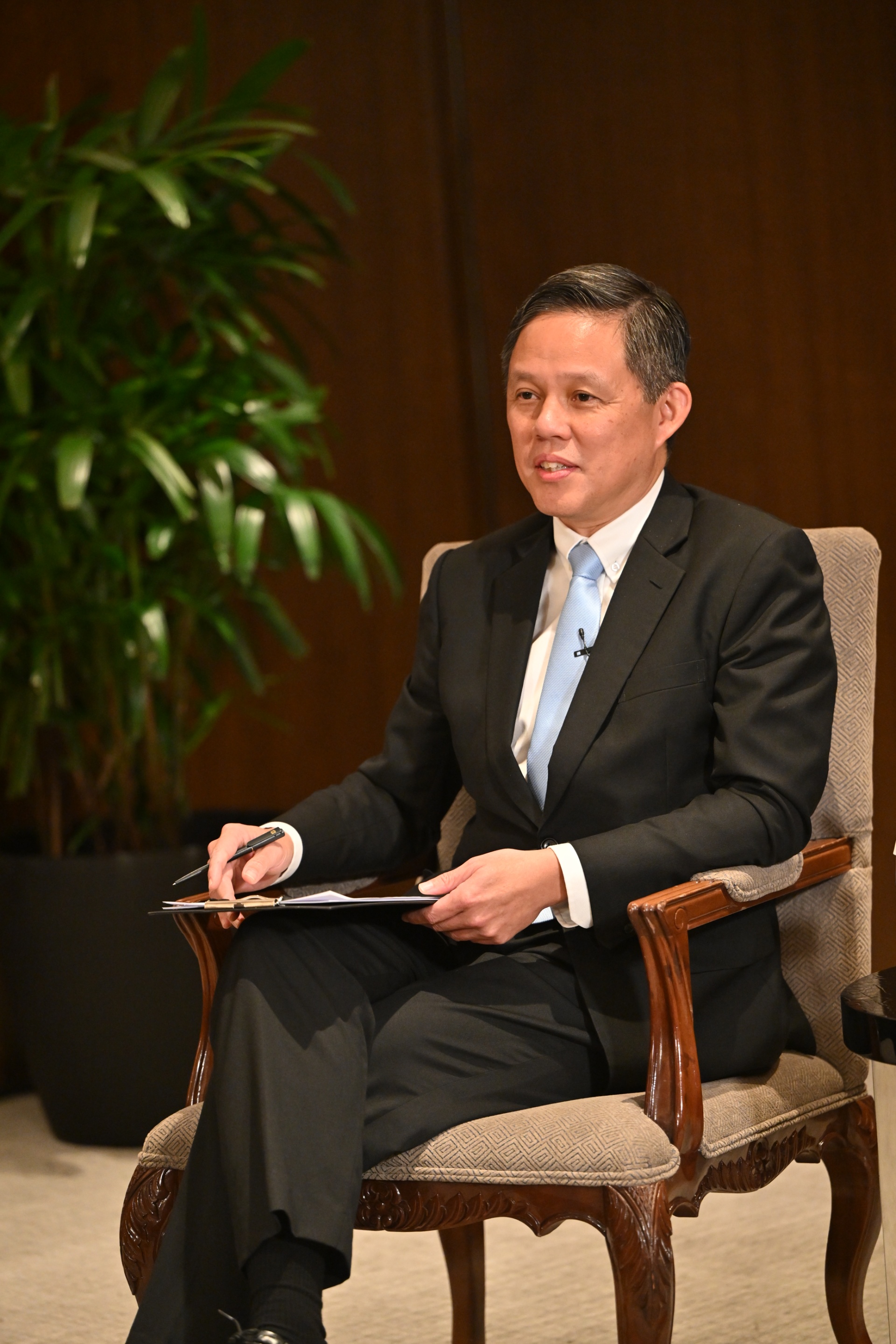
In his wrap-up interview with the media on 31 May, Mr Chan reiterated the importance of dialogue and collaboration.
Referencing a Chinese limerick, Mr Chan said: “If you have no action and no communication, everything is impossible; but if you combine action and communication, then nothing is impossible.”

ALSO READ IN DIPLOMACY
Going alone is not the answer to insecurity – Mr Chan
01 Jun 2025
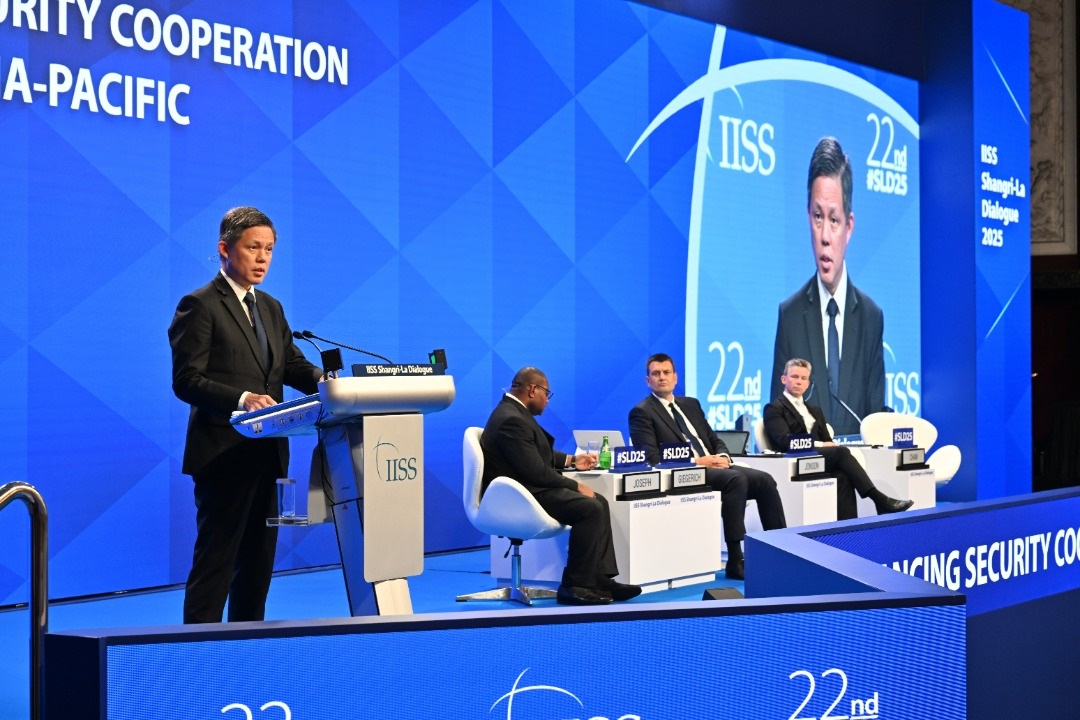
“Going alone is not the answer to insecurity”, emphasised Minister for Defence Mr Chan Chun Sing at the Shangri-La Dialogue (SLD), held from 30 May to 1 Jun. This was one of his main points at his speech at the sixth plenary session on 1 Jun.
A call for peace at Shangri La Dialogue
02 Jun 2024
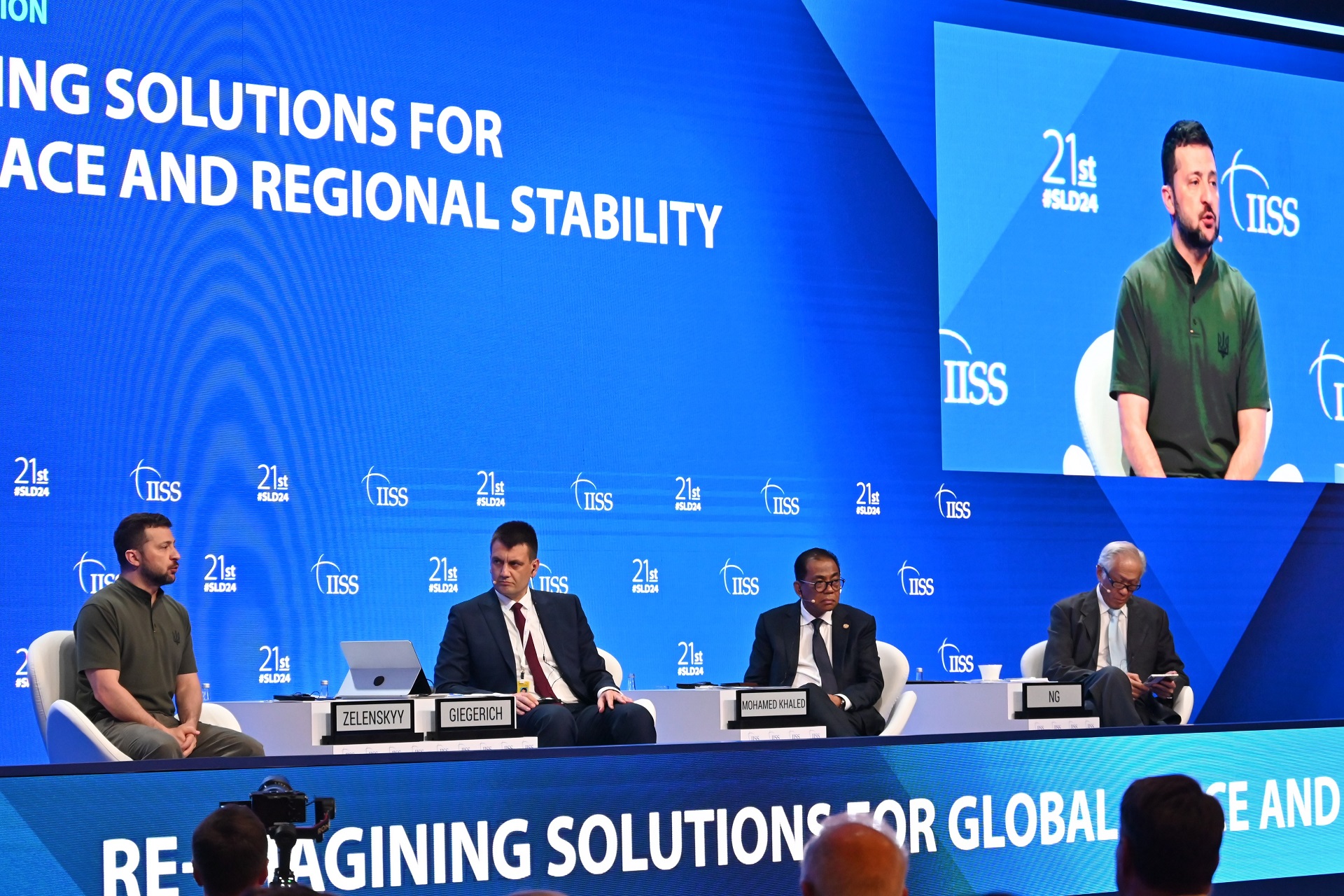
A repeated call for peace, especially in Asia. This was Minister for Defence Dr Ng Eng Hen's central message at the 21st Shangri La Dialogue (SLD), held from 31 May to 2 Jun.
Shangri-La Dialogue sees frank discussion of security issues
04 Jun 2023
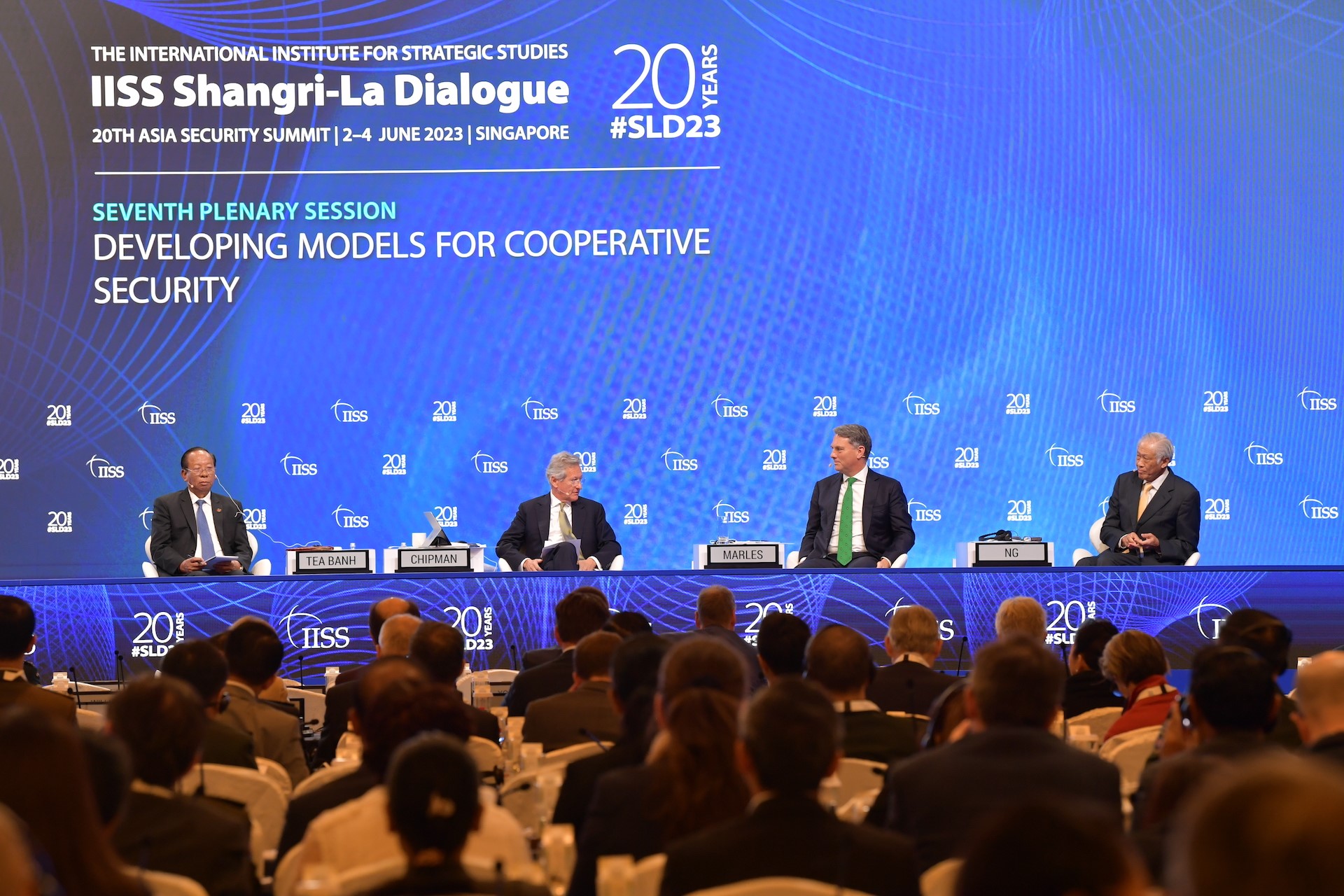
The 20th Shangri-La Dialogue, held from 2 to 4 Jun, saw ministers from around the world meet in Singapore to discuss key defence and security issues.