
OPS & TRAINING
ONE-STOP TRAINING FOR AIRBORNE TROOPERS
01 Dec 2014
Singapore Armed Forces (SAF) troopers can now undergo more realistic, effective and efficient airborne training with the new Airborne-Trooper Training Facility (ATF), which was launched by Minister for Defence Dr Ng Eng Hen on 1 Dec.
Located at Pasir Ris Camp, the ATF consists of two training facilities - the Parachute Training Facility and the Rappelling Training Facility. Effective and progressive training were key reasons for this integrated training amenity.
As an indoor all-in-one facility, the ATF allows soldiers to hone their skills in basic airborne, heli-rappelling insertion and heli-roping insertion anytime and regardless of the weather conditions. It also eliminates the need for trainees to travel between the old training facilities which are located a distance apart, thus saving time and increasing training opportunities for the soldiers.
At the launch, Dr Ng commented that the ATF was a worthwhile investment as it was important that the SAF's elite forces had the confidence to respond to real-life situations.
"At the old facility, a lot of it was broken up and it wasn't dynamic. But in this facility, everything is autonomous and you get as close to real-life situations as possible. At the same time, trainers are able to break down the performance and give you your critique. So I would consider it a very significant improvement," he said.
Under the Parachute Training Facility, trainees have to go through three trainer systems under the Basic Airborne Course - the Landing Trainer System, the Rotational Trainer System and Airborne Trainer System.
The first station, the Landing Trainer System, is where trainees learn various parachute landing fall positions. While the old version at Hendon Camp could only bring trainees up to 3m, the Landing Trainer System boasts two variable heights of 4m and 8m. The latter also allows trainees to experience different rates of descent at 2m/s, 3m/s and 4m/s.
Chief Commando Officer Colonel (COL) Simon Lim explained that these options also help instructors to design more progressive training modules, such that weaker trainees can better up build their confidence.
"They (instructors) now take more ownership cos they can now calibrate training - the height and the rate of descend. For trainees who take slightly longer to learn a particular drill, they can calibrate the facility to the needs of these soldiers."
The second phase of training takes place at the Rotational Trainer System, where trainees learn how to control their parachute and perform emergency drills. With the number of equipment doubled from 10 in the past to the current 20, more students can go through the different drills at the same time without having to wait for one another.
Comparing the Rotational Trainer System to the old version at Hendon Camp, 2nd Lieutenant (2LT) Muhammad Faris bin Asnin felt that the former was more realistic, given that it was fully automated.
"When we jump, there are certain parts where we have to face the wind. In this apparatus, they input that into the system such that when we pull the knot, the apparatus will turn our bodies (accordingly) to face the wind."
The 21-year-old trooper from 1st Commando Battalion added that in the past, they could only go through the motion of pulling, and this required a fellow trainee to manually turn his friend according to the direction which he was pulling. This reduction in the manpower required also meant trainees now have more time to undergo training, should they require more practice.
The last of the stations, the Airborne Trainer System, allows trainees to experience exiting from a height of 11.2m and practising various flight drills before landing. Advantages of using this 200m monorail-like track include the ability to simulate different emergency scenarios such as partial and total malfunction, and dragging a trainee upon his landing.
"We can (also) simulate strong winds and increase the travel speed for the parachute to land," added Master Warrant (MWO) Oh Beng Lee.
The Officer Commanding of Static Line Wing Special Operations Training Support Centre also commented that the time taken to complete the track was two minutes, similar to the time taken to land from 1,000ft (305m) in a live jump. This thus made the training all the more realistic.
For the Rappelling Training Facility, progressive training was also a key consideration when designing the course and this was marked by the three clusters. The Basic Training Cluster consisted of a 60-degree and an 80-degree slope to simulate cliff rappelling.
The Intermediate Training Cluster featured various heli-rappelling and roping training from mock-ups of a Chinook CH-47 ramp door and the side of a Super Puma helicopter. The Advance Training Cluster included free-climbing and rappelling from balconies.
With the exception of the Basic Training Cluster, the Rappelling Training Facility also boasts an indoor segment which allows for night training to be conducted during the day.
Basic Airborne Course training will be moved to the ATF by the end of the year.

ALSO READ IN OPS & TRAINING
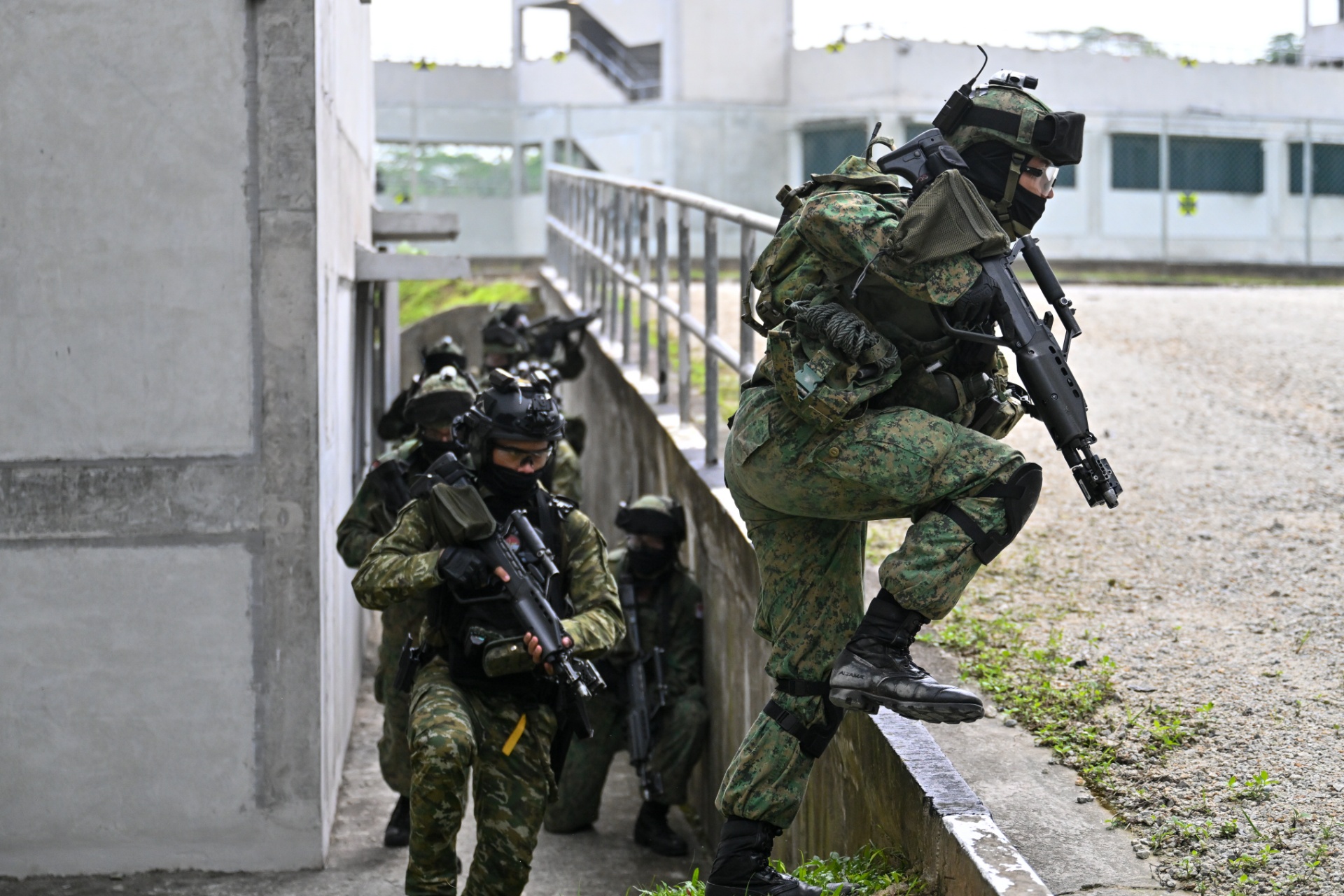
S’pore commandos, Indonesia special forces train & strengthen ties at Ex Chandrapura
08 Jul 2026
From conducting tactical airborne jumps to a coordinated urban raid, soldiers from Singapore and Indonesia deepened their decades-long partnership in this bilateral army exercise.
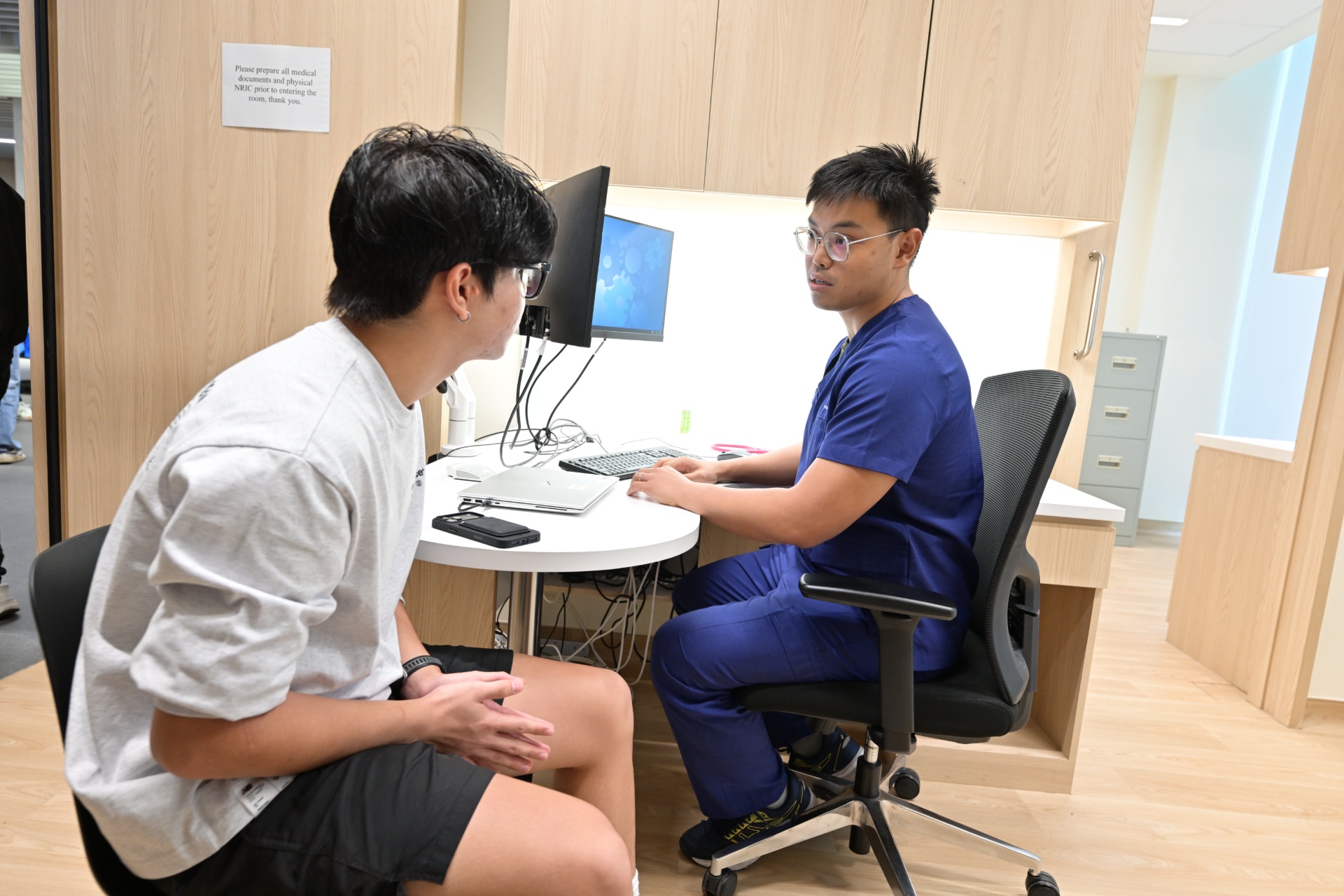
SAF & Home Team to refresh Medical Classification System
13 Apr 2026
The refreshed system will allow about 1,200 servicemen annually to be deployed for vocations and roles they were ineligible for previously.
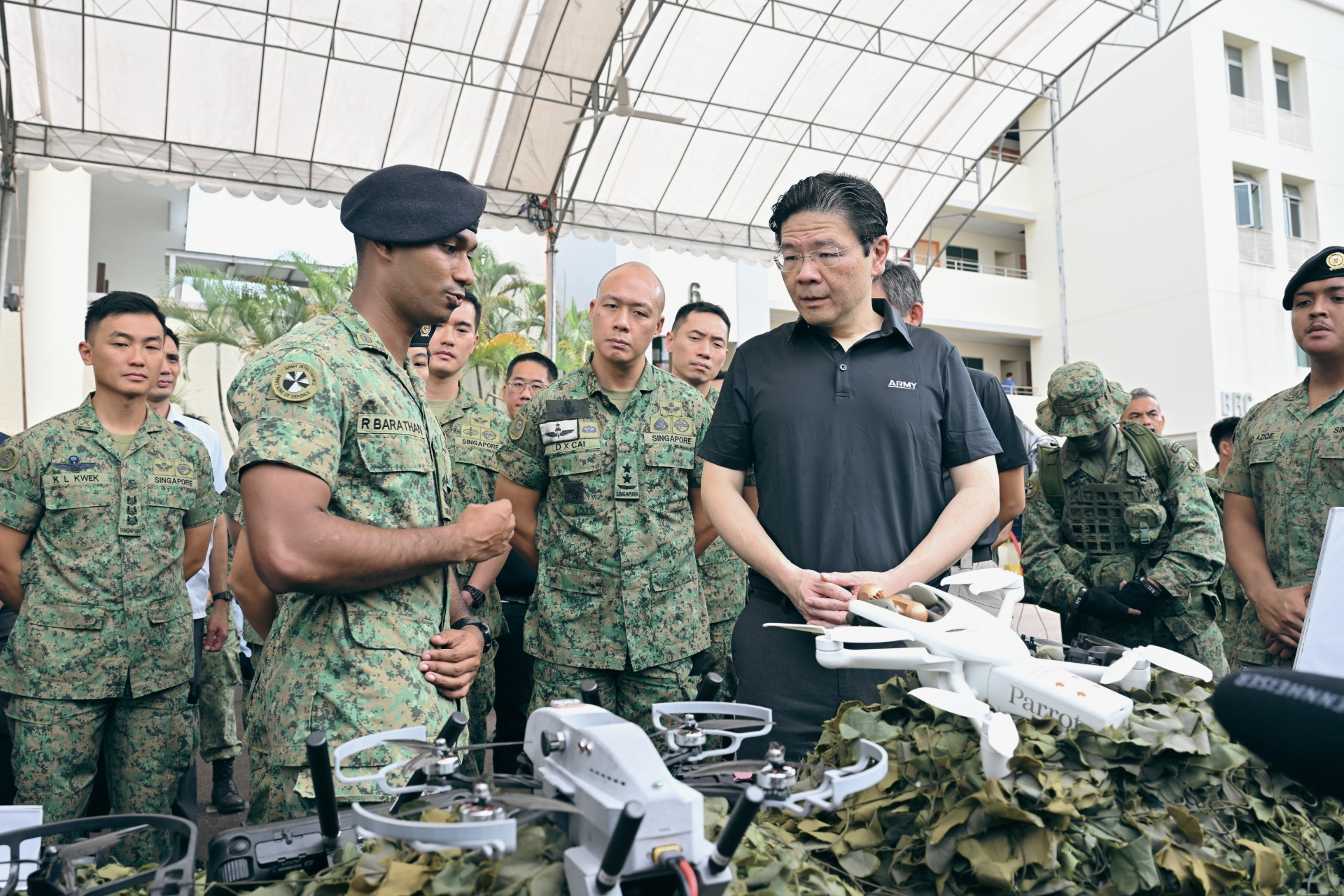
Prime Minister Lawrence Wong observes SAF’s sense-strike integrated capabilities
09 Apr 2026
He witnessed the SAF’s ongoing efforts in leveraging advanced robotics and cross-Service integration to secure Singapore’s interests in an increasingly volatile world.