
DIPLOMACY
OBSERVE INT'L LAW TO ENSURE PEACE, SAYS PM ABE
30 May 2014
To ensure Asia's peace and prosperity for the next generation, all countries must observe international law. This was Japanese Prime Minister Shinzo Abe's central message at the opening of the 13th Shangri-La Dialogue on 30 May.
Delivering his keynote address at the high-level security summit, Mr Abe outlined three principles of international law: States should make their territorial claims based on international law; not use force or coercion to drive their claims; and should instead settle disputes by peaceful means.
Speaking in Japanese, Mr Abe said: "I urge all of us who live in Asia and the Pacific to each individually uphold these three principles exhaustively."
He cited the example of how Indonesia and the Philippines had peacefully reached an agreement on the delimitation of their overlapping sea zones, known as Exclusive Economic Zones.
Mr Abe's keynote address marked the start of the three-day security forum, organised by the International Institute for Strategic Studies.
The Dialogue got its name from the Shangri-La Hotel in Singapore where it has been held since 2002. It is a platform for defence ministers and senior officials to engage in conversations to build confidence while fostering practical security cooperation.
In his address, Mr Abe said he hoped that an effective Code of Conduct can be established swiftly in the South China Sea.
He also made calls to strengthen the East Asia Summit, a platform which brings together heads of state of countries in East Asia, as well as of the United States and Russia to discuss regional politics and security.
Mr Abe suggested forming a committee comprising permanent representatives from ASEAN. This would allow the Summit, along with the ASEAN Regional Forum and ASEAN Defence Ministers' Meeting Plus, to function in a multi-layered fashion.
The first agenda would focus on making military budgets transparent, to prevent any arms races.
"Military expansion is not merely ill-matched, but also inherently unworthy," said Mr Abe. "The fruits of prosperity should be invested in even greater prosperity and improving people's lives.
"I believe that a framework under which we publicly disclose our military budgets (and) enables us to cross-check each other, is a system that we should seek to establish as we extend the scope of the East Asia Summit."
Mr Abe added that Japan will take a pro-active role in maintaining peace and order in the Asia-Pacific region.
Attended by 26 ministerial-level delegates, the Dialogue will see the leaders go through a series of plenary sessions to discuss topics ranging from managing strategic tension to humanitarian assistance and disaster relief operations in Asia-Pacific.
On the sidelines of the Dialogue on 30 May, Singapore Minister for Defence Dr Ng Eng Hen met ministers and senior officials from Australia, Cambodia, Malaysia, Mongolia, New Zealand, Tonga, the US and Vietnam.
Chairman of the Joint Chiefs of Staff, United States Army, General (GEN) Martin Dempsey, who was part of the US delegation, was conferred Singapore's highest military award earlier on 30 May. The Darjah Utama Bakti Cemerlang (Tentera) [Distinguished Service Order (Military)] was conferred by President Tony Tan Keng Yam at the Istana. At that ceremony, GEN Dempsey met Republic of Singapore Navy officer Captain (CPT) Sam Tan, who was the first-ever foreigner to emerge top of his class in the prestigious United States Naval Academy (USNA).

ALSO READ IN DIPLOMACY
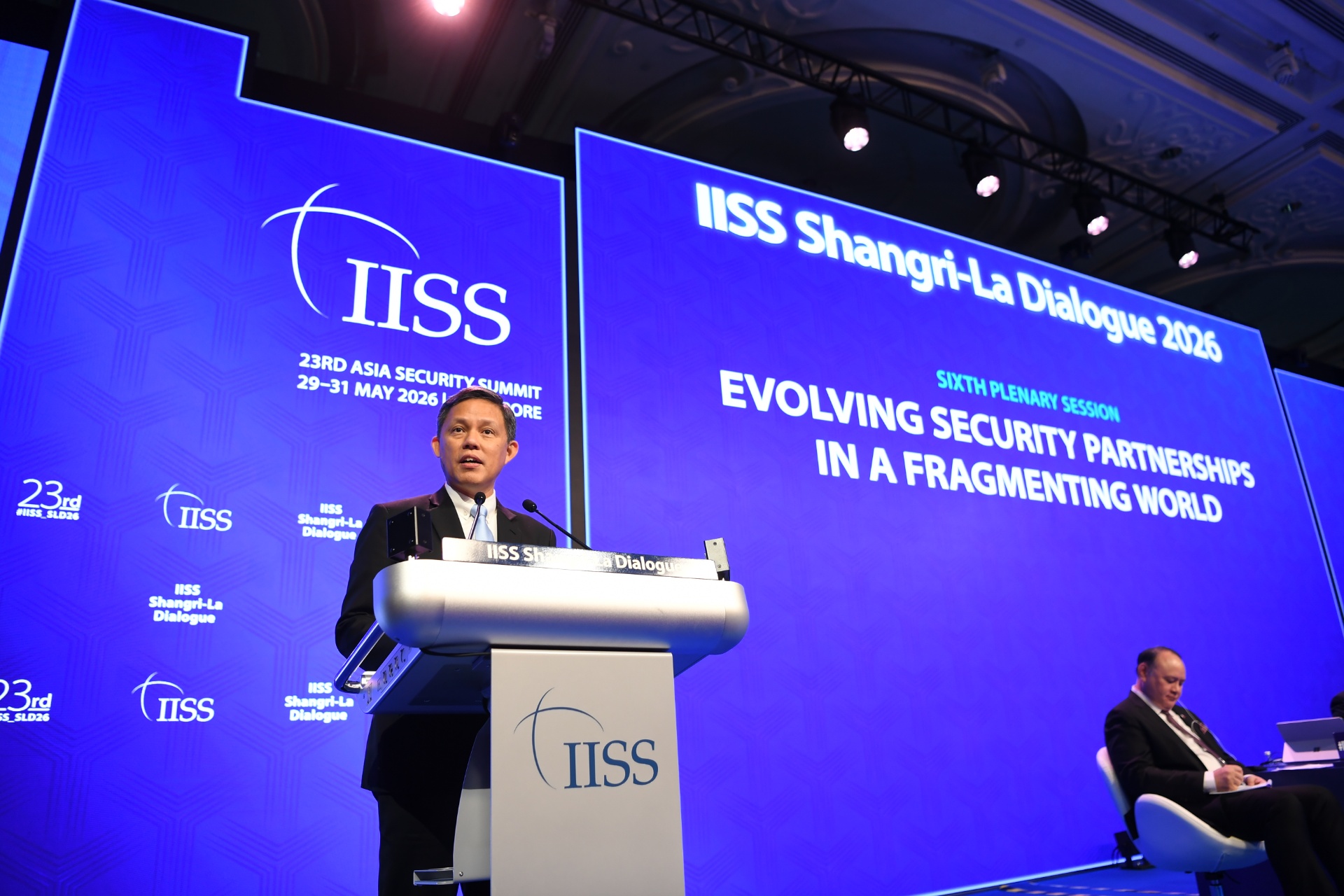
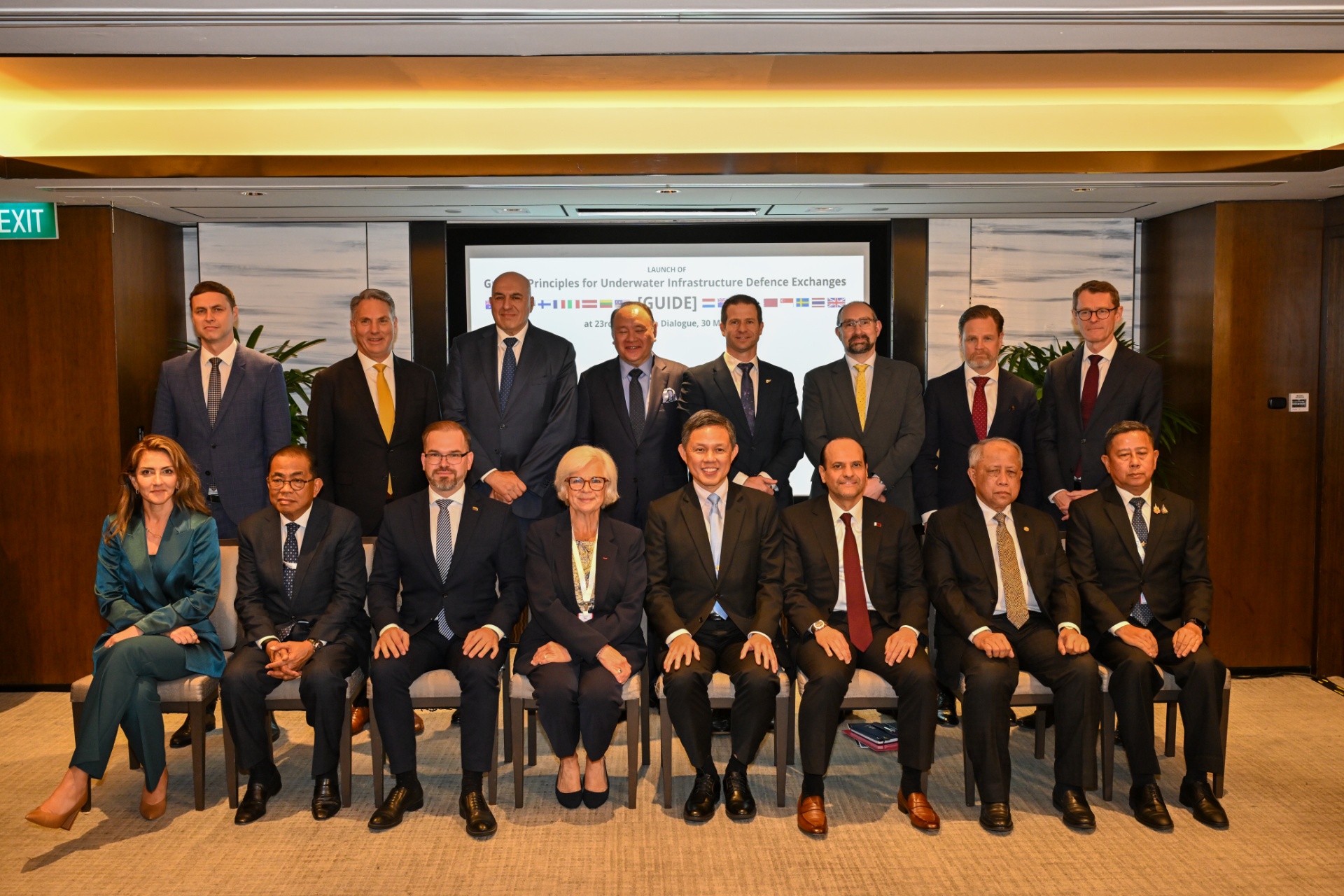
17 countries launch new framework for cooperation on critical underwater infrastructure
30 May 2026
Launched on the sidelines of the 23rd Shangri-La Dialogue, GUIDE is a new framework that brings together countries for defence cooperation in enhancing the security of Critical Underwater Infrastructure.
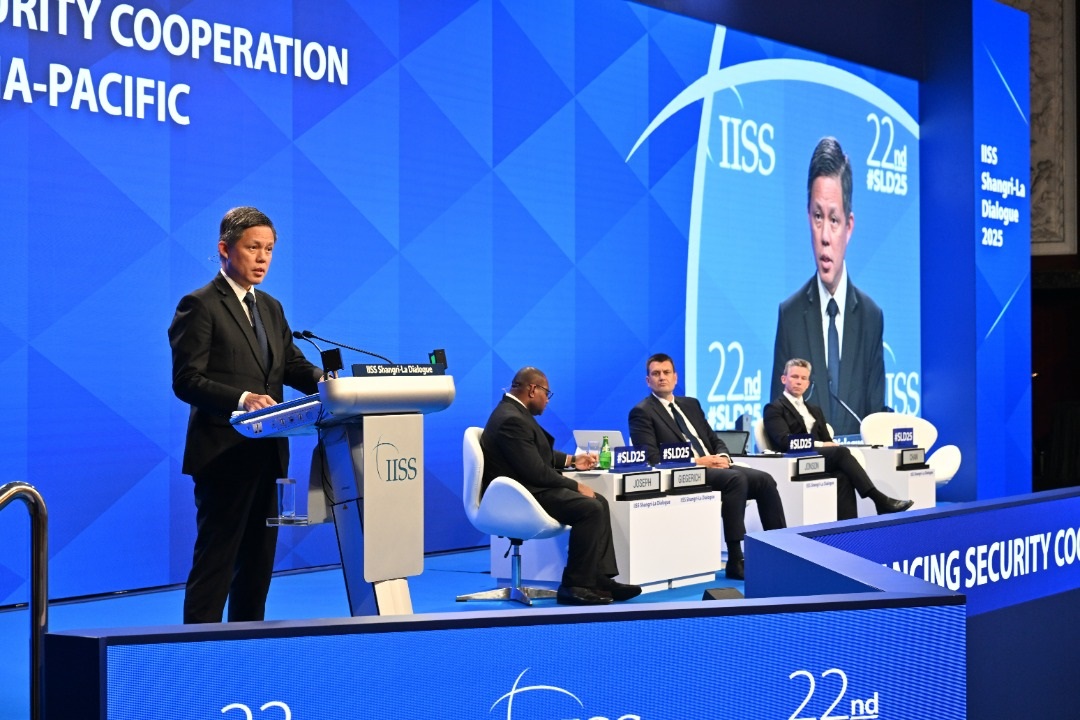
Going alone is not the answer to insecurity – Mr Chan
01 Jun 2025
“Going alone is not the answer to insecurity”, emphasised Minister for Defence Mr Chan Chun Sing at the Shangri-La Dialogue (SLD), held from 30 May to 1 Jun. This was one of his main points at his speech at the sixth plenary session on 1 Jun.
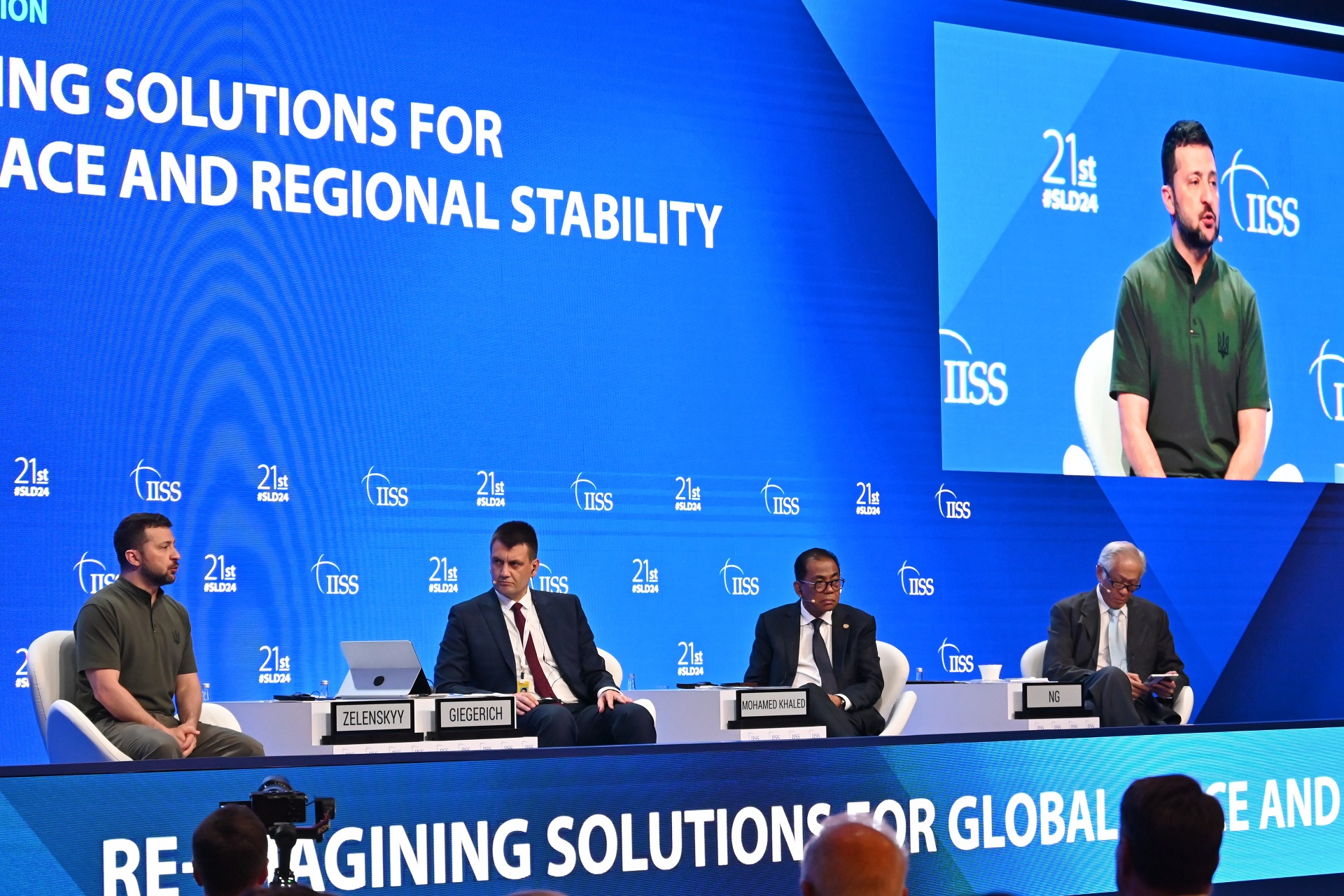
A call for peace at Shangri La Dialogue
02 Jun 2024
A repeated call for peace, especially in Asia. This was Minister for Defence Dr Ng Eng Hen's central message at the 21st Shangri La Dialogue (SLD), held from 31 May to 2 Jun.