
DIPLOMACY
MINISTERS RECOGNISE NEED FOR COMMON PRINCIPLES
31 May 2014
Ministers from the Asia-Pacific and beyond agreed that key security challenges facing the region require the commitment of all parties concerned to resolve their differences in a peaceful manner. And that this required the actions and behavior of countries to be underpinned by a set of established principles, norms and international law. This was the consensus reached by 21 ministers and their representatives at a private luncheon hosted by Singapore Minister for Defence Dr Ng Eng Hen on 31 May.
At the lunch held on the sidelines of the on-going Shangri-La Dialogue, the ministers discussed regional security challenges such as the disputes in the South and East China seas, and the situation on the Korean Peninsula, as well as developments beyond the region.
Speaking to the media after the lunch, Dr Ng shared: "Peace and stability or peace between countries comes only when there is strategic trust. There was a recognition that there was a deficit of strategic trust."
He elaborated: "There were not enough confidence-building measures and a shared resolve that fighting over territories would ultimately lead to a lot of pain (and) a lot of loss, and that conflict avoidance was a (more) productive outcome."
Dr Ng added: "There was a conviction that as defence leaders of our individual nations, that we had a lot of work cut out for us, that we have to seriously think of mechanisms and practices that can allow us to de-escalate tensions."
The ministers recognised the need for the parties involved to take concrete steps to de-escalate current tensions, he said. For instance, the Code of Conduct for the South China Sea which ASEAN and China are currently working on was a good basis to move forward.
At the opening plenary session of the Dialogue held earlier, United States Secretary of Defence Chuck Hagel also urged countries to peacefully resolve territorial and maritime disputes in accordance with international law.
For this to work, he said countries need to foster trust through strong and cooperative regional security architecture such as the ASEAN Defence Ministers' Meeting Plus (ADMM-Plus).
He noted that the ADMM-Plus had paved the way for countries to work together. For instance, they provided rapid humanitarian assistance and disaster relief (HADR) in the aftermath of Typhoon Haiyan and in the search for the missing Malaysian Airlines Flight 370.
To further enhance cooperation, Mr Hagel encouraged ASEAN countries to consider Singapore's proposal for the establishment of a Regional HADR Coordination Centre at its Changi Command and Control Centre Base to strengthen HADR efforts in the region.
"Some 80 percent of the world's large-scale natural disasters strike in the Pacific, and with climate change threatening even more severe weather, closer cooperation cannot wait," he said.
The US is ramping up its military presence in Asia, and will help countries to strengthen their defence capabilities, he added. And it plans to increase foreign military financing by 35 percent and military education and training by 40 percent by 2016.
On the sidelines of the Dialogue, Dr Ng hosted breakfast for ministers of the Five Power Defence Arrangements. He also held meetings with ministers and officials from China, Indonesia, Japan, Republic of Korea and the United Kingdom.

ALSO READ IN DIPLOMACY
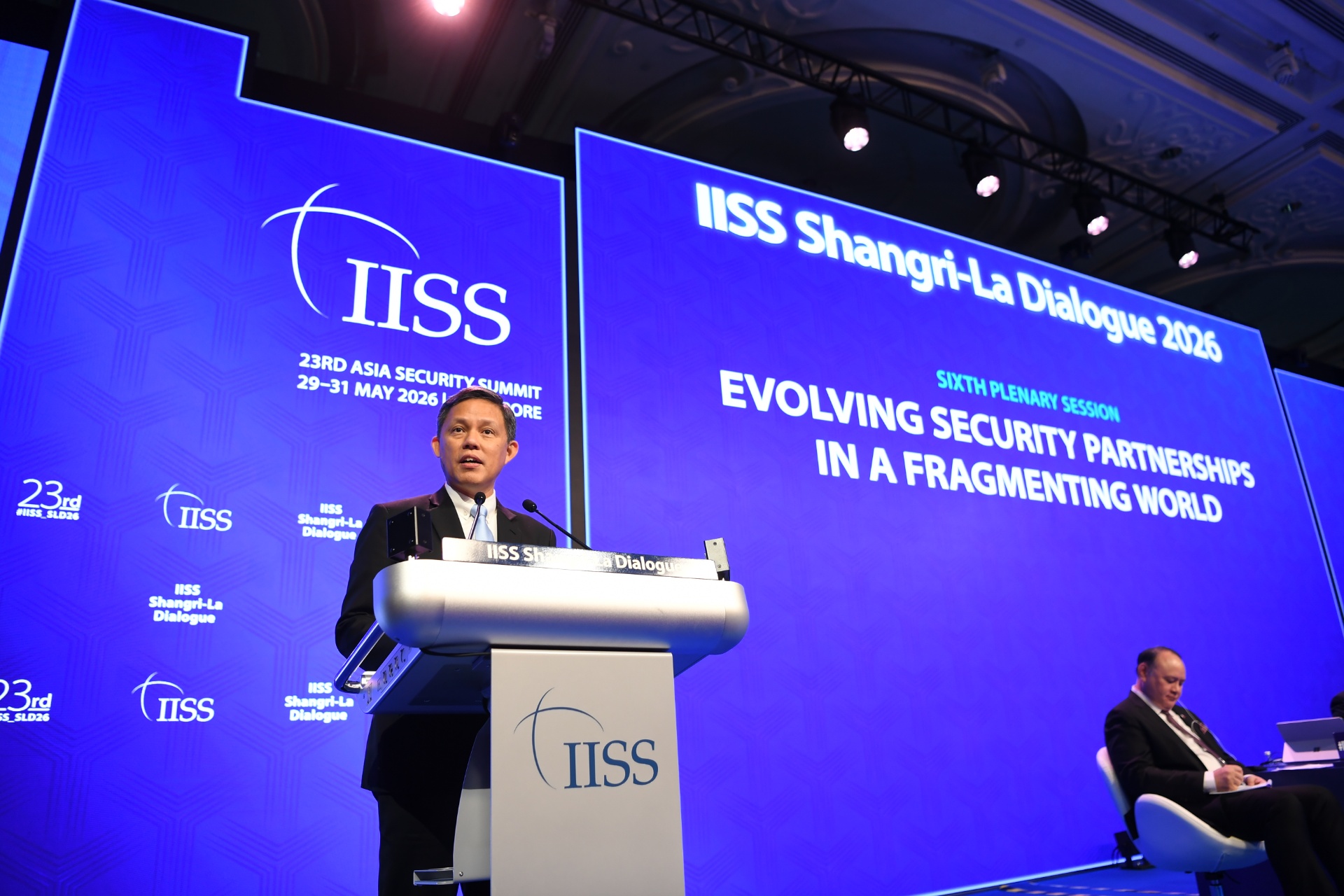
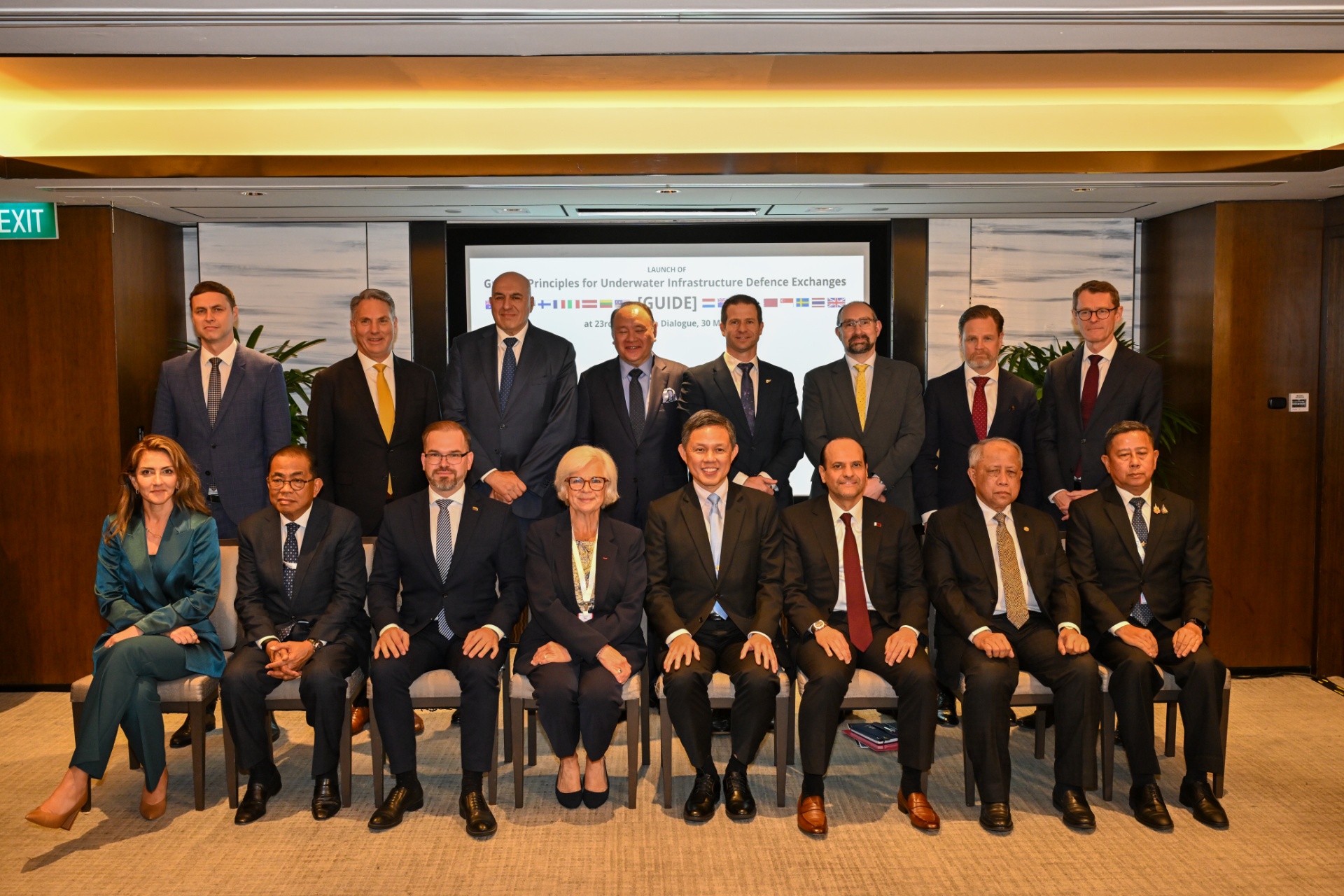
17 countries launch new framework for cooperation on critical underwater infrastructure
30 May 2026
Launched on the sidelines of the 23rd Shangri-La Dialogue, GUIDE is a new framework that brings together countries for defence cooperation in enhancing the security of Critical Underwater Infrastructure.
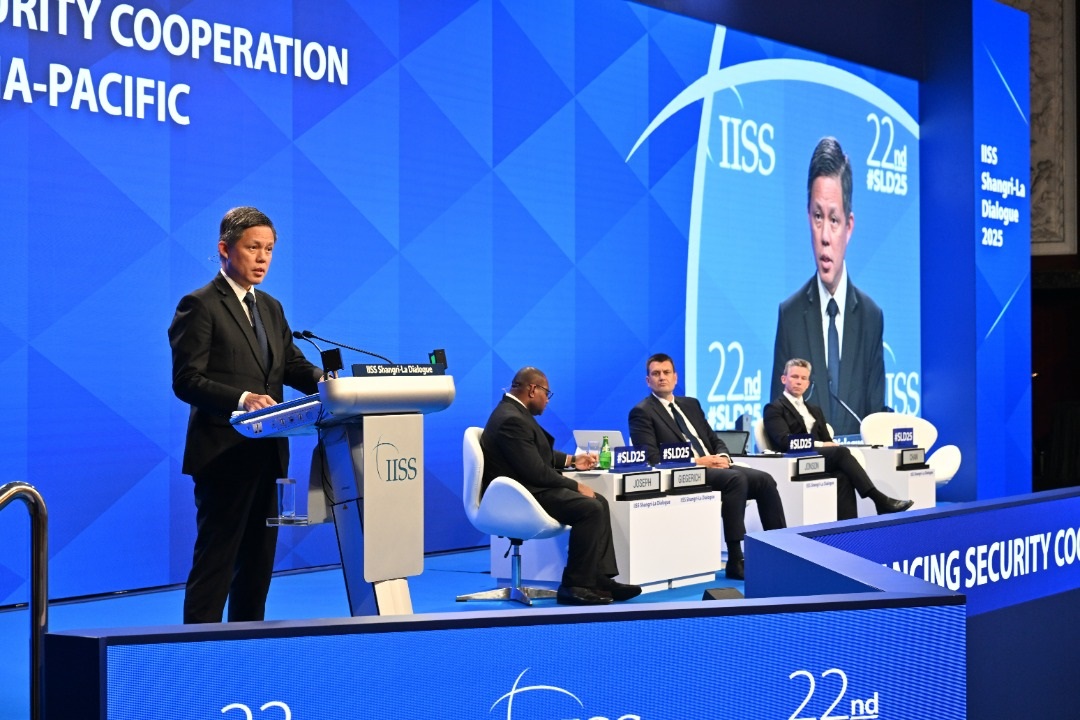
Going alone is not the answer to insecurity – Mr Chan
01 Jun 2025
“Going alone is not the answer to insecurity”, emphasised Minister for Defence Mr Chan Chun Sing at the Shangri-La Dialogue (SLD), held from 30 May to 1 Jun. This was one of his main points at his speech at the sixth plenary session on 1 Jun.
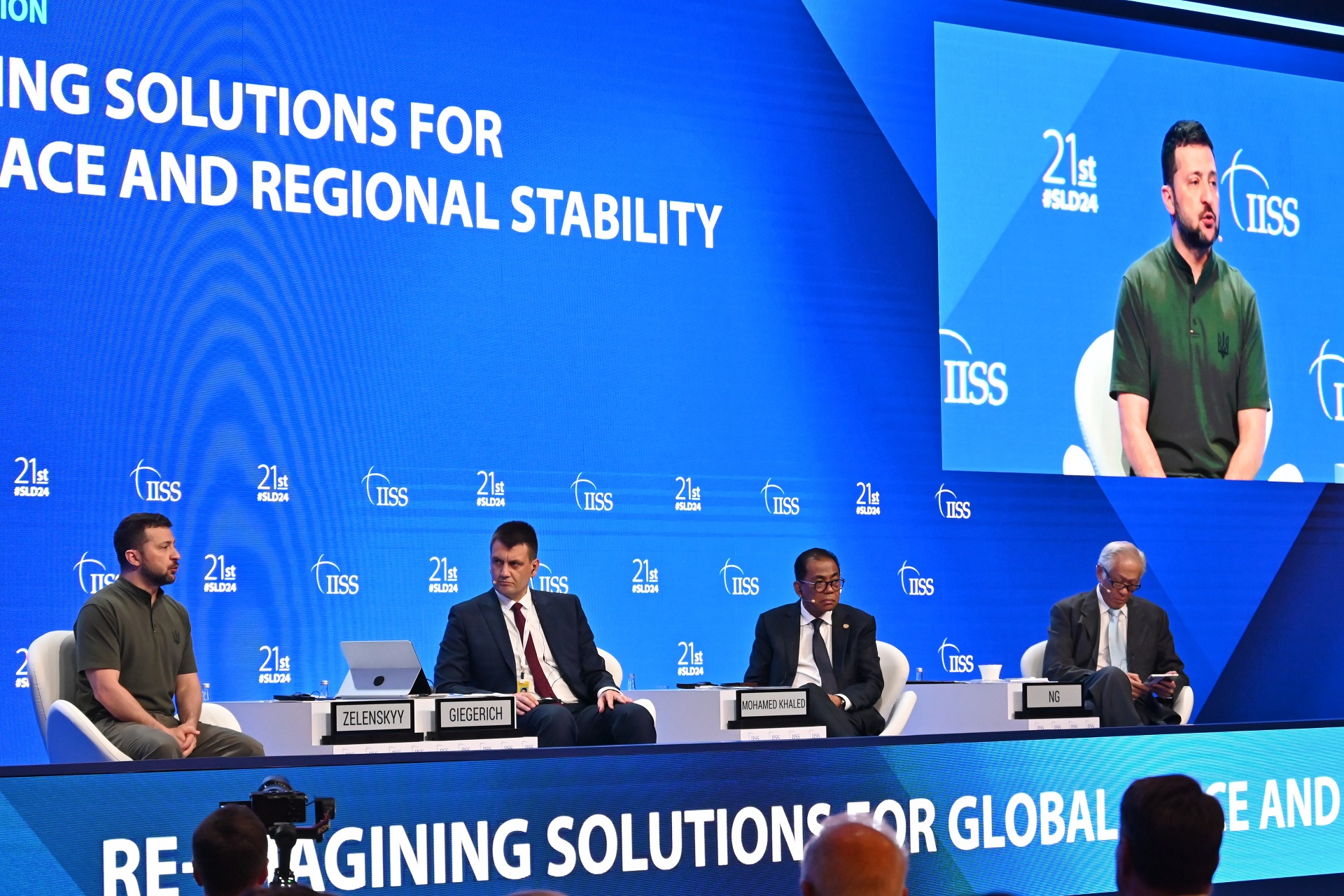
A call for peace at Shangri La Dialogue
02 Jun 2024
A repeated call for peace, especially in Asia. This was Minister for Defence Dr Ng Eng Hen's central message at the 21st Shangri La Dialogue (SLD), held from 31 May to 2 Jun.