
DIPLOMACY
GROWING CONSENSUS AND CO-OPERATION OVER MARITIME SECURITY
04 Jun 2005
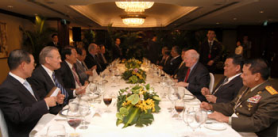
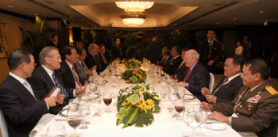
Regional maritime security is a matter of common interest to Asian nations and a consensus is forming around three broad principles on how to address the issue, particularly in the Malacca Strait, said Minister for Defence, Mr Teo Chee Hean.
He was speaking to the media at the end of a luncheon he hosted for the visiting ministers and their representatives on 4 Jun, as part of the 4th Shangri-La Dialogue organised by the International Institute for Strategic Studies (IISS).
The first principle is that the primary responsibility for security in the strait lies with the littoral states - Indonesia, Malaysia and Singapore.
The second principle states that the international community and the user states have a role to play as well.
Lastly, all measures employed have to be fully consistent with international law as well as respectful of the sovereignty of the states.
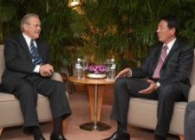
"Within the parameters of these three guidelines, it gives us quite a lot of room in order to devise useful, practical and creative solutions to see how we can improve security in the strait," said Mr Teo (left).
Currently, co-ordinated patrols are in place where each of the countries patrols in their own waters.
Mr Teo said the possibility of joint patrols cannot be ruled out, but this will be a matter to be discussed by the littoral states.
The annual Shangri-La Dialogue has played a major role in moving this discussion forward - it was the last dialogue that prompted Commander-in-Chief of the Indonesian National Defence Force, General Endriartono Sutarto, to propose the tri-lateral co-ordinated patrols that are in place today.
"It is a step forward, it doesn't completely solve this problem, but it is an important step forward and I see that we need to find more creative ways to have effective security in the Straits," said Mr Teo, who added that a good opportunity to seek further improvements would be during the International Maritime Organisation (IMO) meeting in Jakarta later this year.
"The user states may have some way of helping with capacity-building, there may be possibilities on how we can co-operate better in patrolling, there may be ways of information-sharing."
The most recent example of co-operation was between Indonesia and Singapore. Two weeks ago, both countries inked an agreement to share their surface pictures in Project Surpic. The Republic of Singapore Navy now shares their pictures of the Singapore Strait with their Indonesian counterparts in Pulau Batam.
Other issues discussed during the luncheon included the situation in the Korean Peninsula, extremism and terrorism.
"The intention was not to come to any conclusions but to have a better mutual understanding of the different perspectives," explained Mr Teo.
The ministerial luncheon has been a regular feature of the Shangri-La Dialogue since it was initiated in 2002.
A total of 17 ministers or their representatives attended the luncheon, which provided the opportunity for the ministers to engage in informal discussions on a wide range of defence and security issues.
The 4th Shangri-La Dialogue was held from 3 to 5 Jun. It is Asia's only inter-governmental forum focusing on defence and security-related issues.
Over 250 delegates, including defence ministers and armed forces chiefs from the Asia-Pacific, Europe and the United States attended.

ALSO READ IN DIPLOMACY
17 countries launch new framework for cooperation on critical underwater infrastructure
30 May 2026
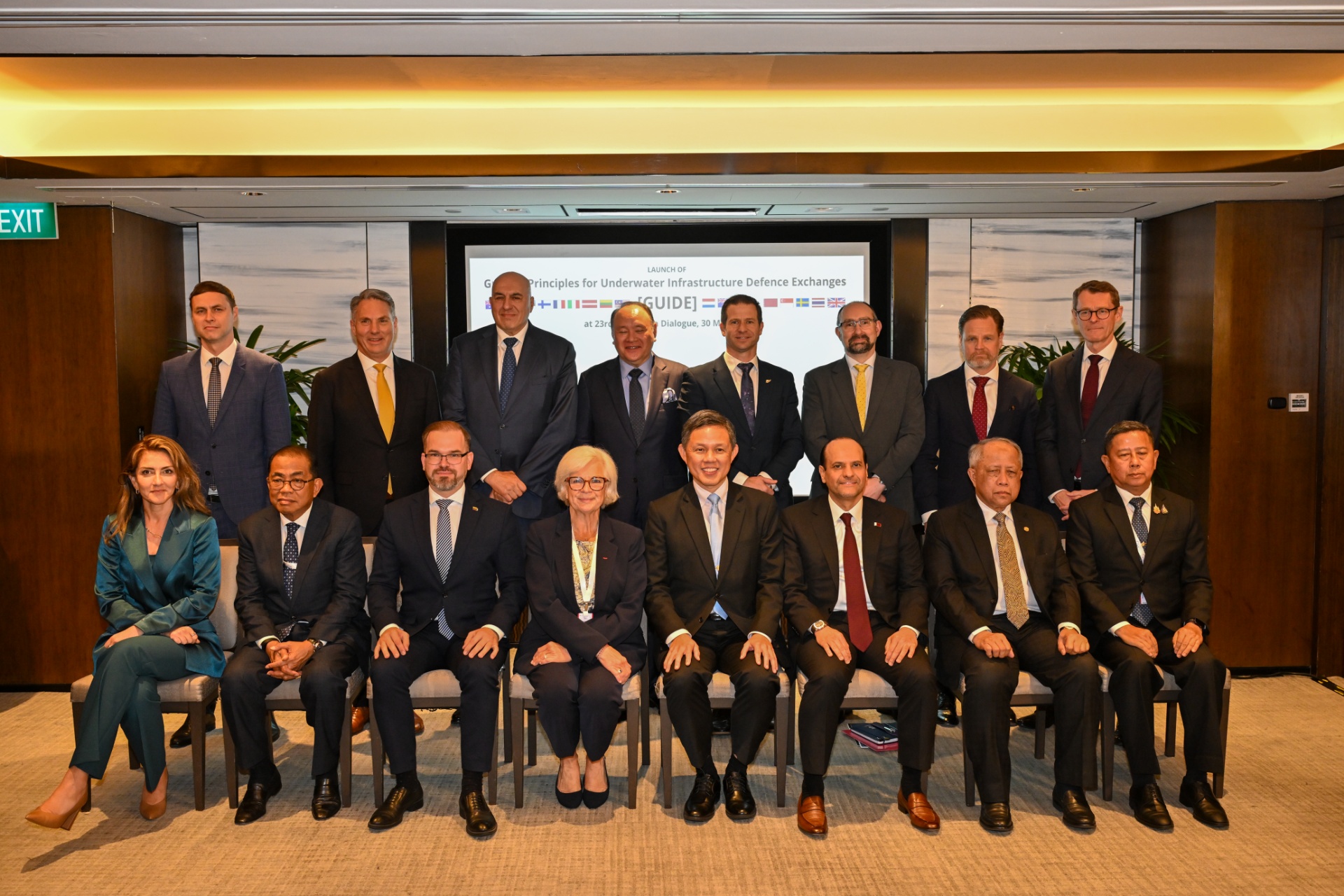
Launched on the sidelines of the 23rd Shangri-La Dialogue, GUIDE is a new framework that brings together countries for defence cooperation in enhancing the security of Critical Underwater Infrastructure.
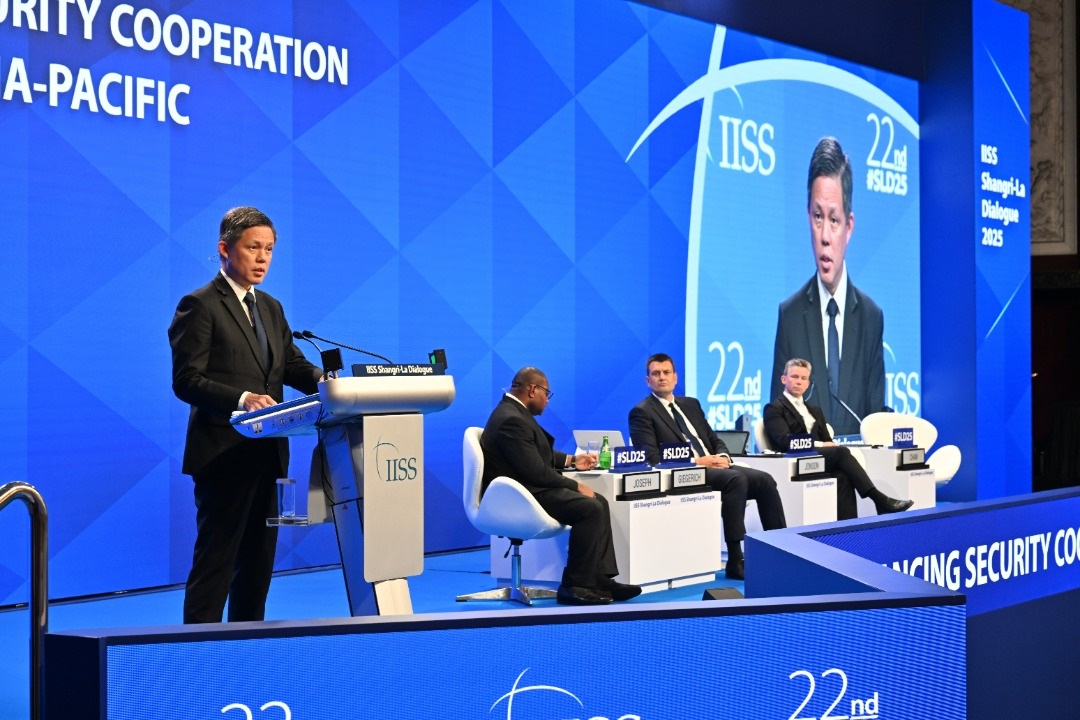
Going alone is not the answer to insecurity – Mr Chan
01 Jun 2025
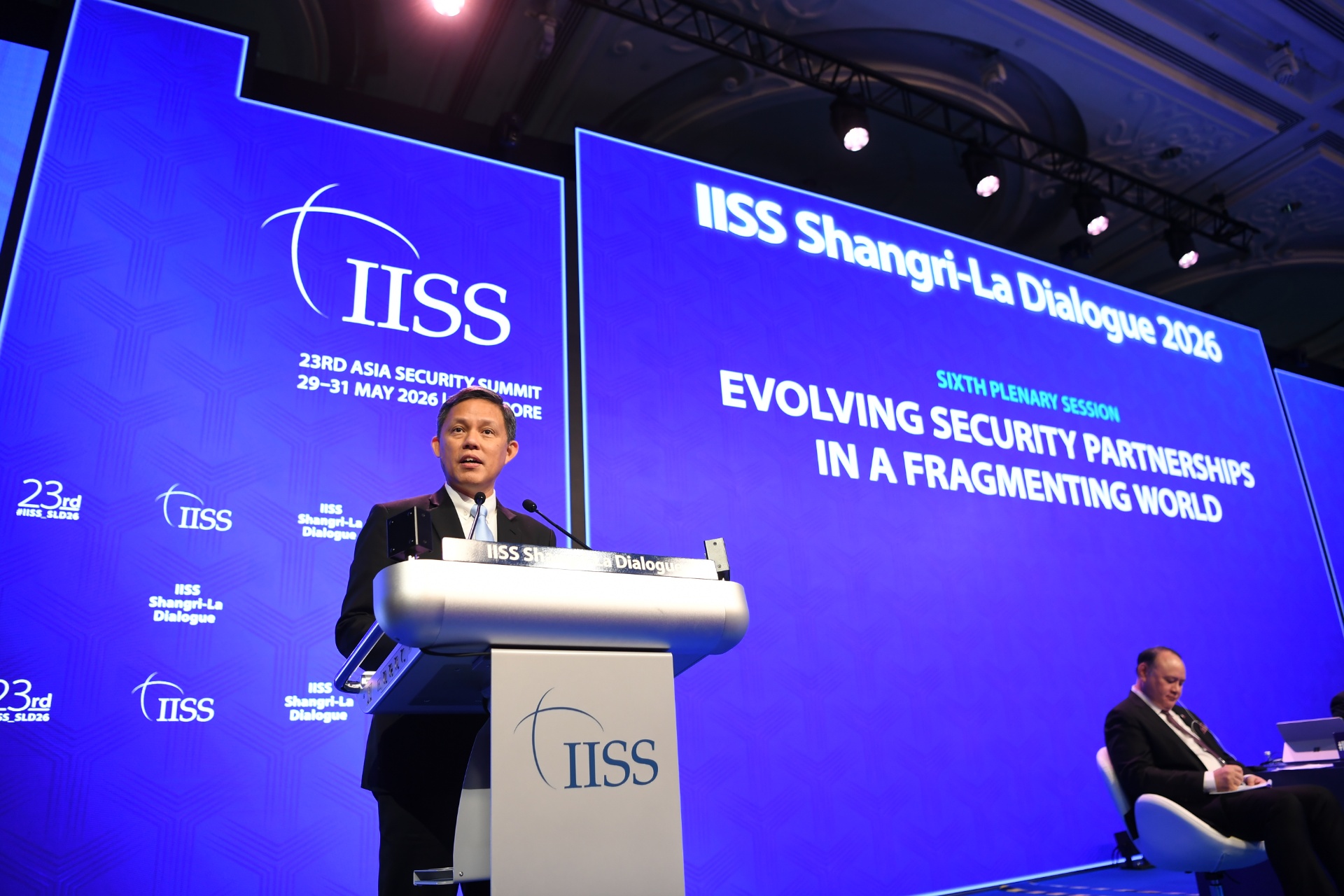
“Going alone is not the answer to insecurity”, emphasised Minister for Defence Mr Chan Chun Sing at the Shangri-La Dialogue (SLD), held from 30 May to 1 Jun. This was one of his main points at his speech at the sixth plenary session on 1 Jun.
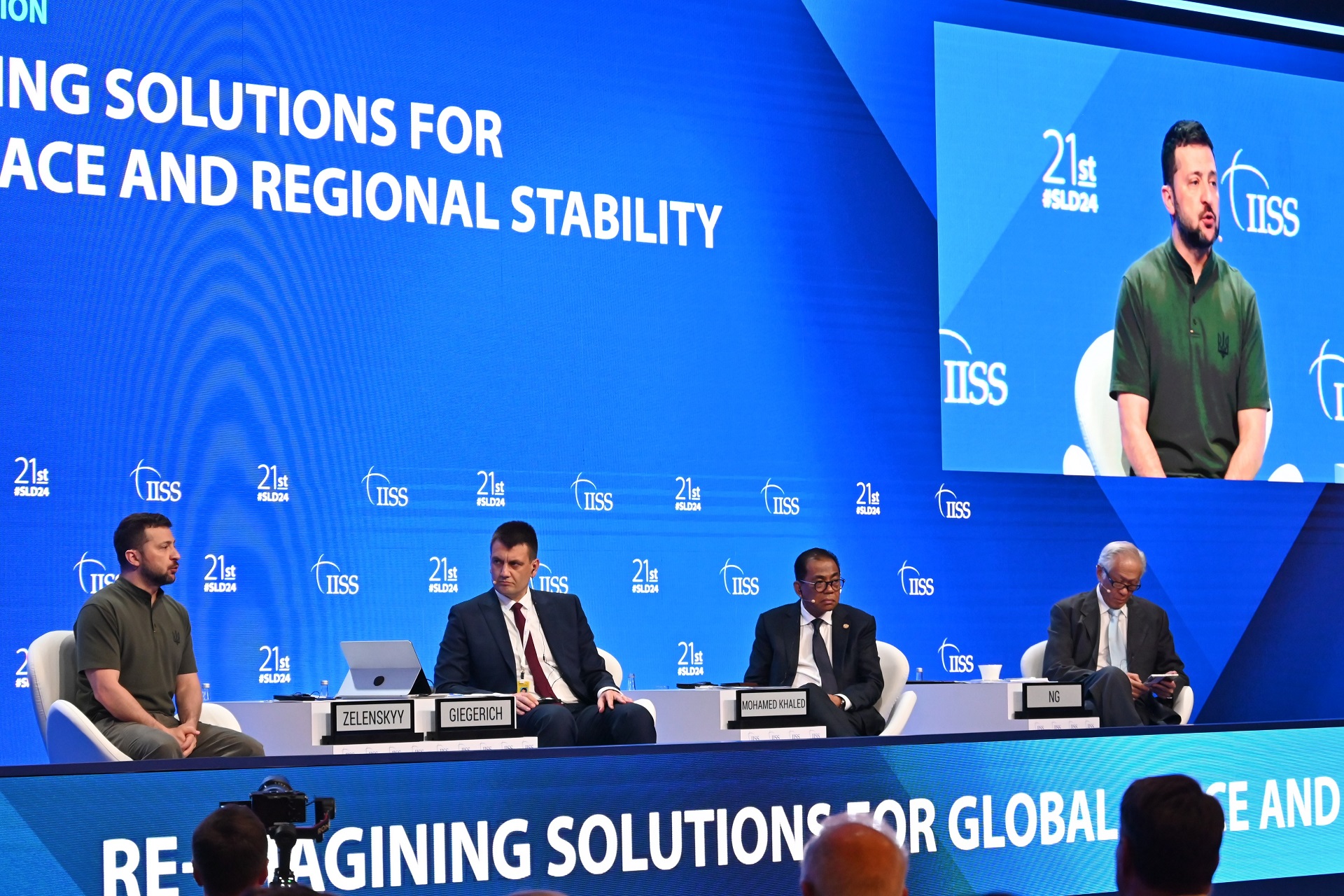
A call for peace at Shangri La Dialogue
02 Jun 2024
A repeated call for peace, especially in Asia. This was Minister for Defence Dr Ng Eng Hen's central message at the 21st Shangri La Dialogue (SLD), held from 31 May to 2 Jun.