
MILESTONES
Defence engineers, scientists receive pinnacle award for strengthening Singapore's security
20 Oct 2017
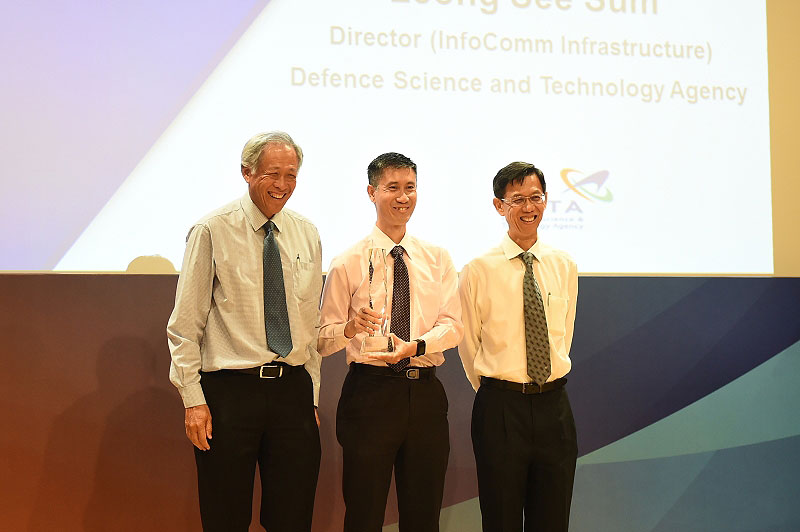
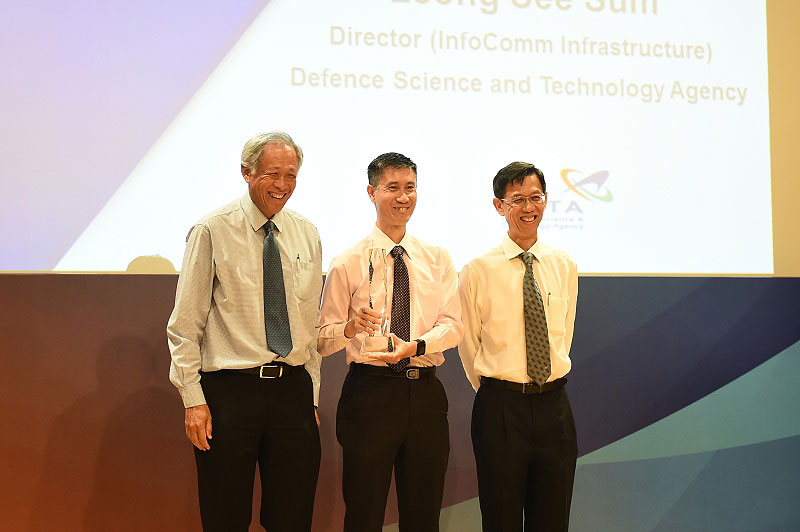
More than 20 years as a defence engineer, and Mr Leong See Sum is still as passionate about his work as ever.
"Singapore has no natural resources, so I believe that we have to embrace innovation in order for our nation to thrive. This is especially so in the case of info-communications, as having a capable network will allow us to do more with less," said the Defence Science & Technology Agency (DSTA)'s Director of InfoComm Infrastructure, who received a Defence Technology Prize at this year's award ceremony held at the DSO National Laboratories (DSO).
The recipient of the Individual (Engineering) Award played a key role in building up network capabilities for the Ministry of Defence and Singapore Armed Forces (SAF), by developing secure, robust and resilient operational and administrative network systems in use today.
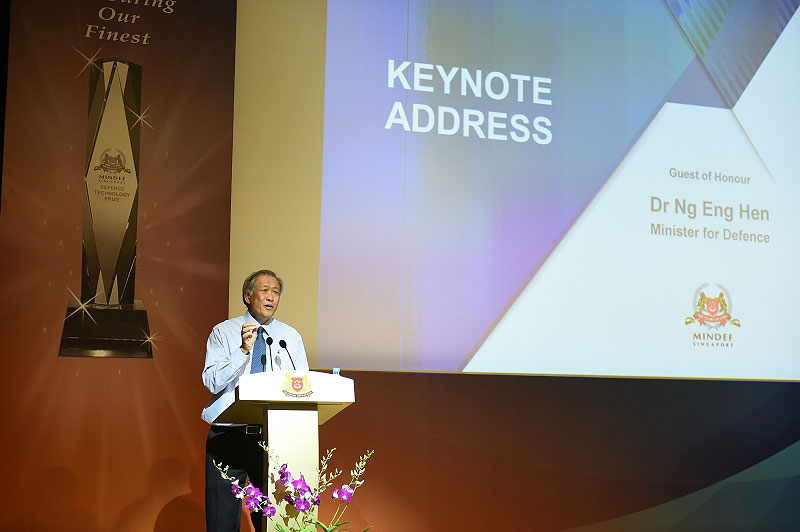
Mr Leong was among the two individuals and five teams who received awards from Minister for Defence Dr Ng Eng Hen on 20 Oct.
Speaking at the ceremony, Dr Ng praised the contributions made by the defence scientists and engineers as they toiled behind the scenes to tackle pertinent defence-related issues.
Dr Ng also acknowledged the defence community's effort in developing platforms, such as the Army Battlefield Internet system, that have enhanced the SAF's interoperability as a joint force, executing operations more effectively.
"But just as and perhaps more important than acknowledging individual or team effort, I think what these awards do is to encourage the right spirit and culture -- a culture of innovation -- within the Defence Technology Community," added Dr Ng.
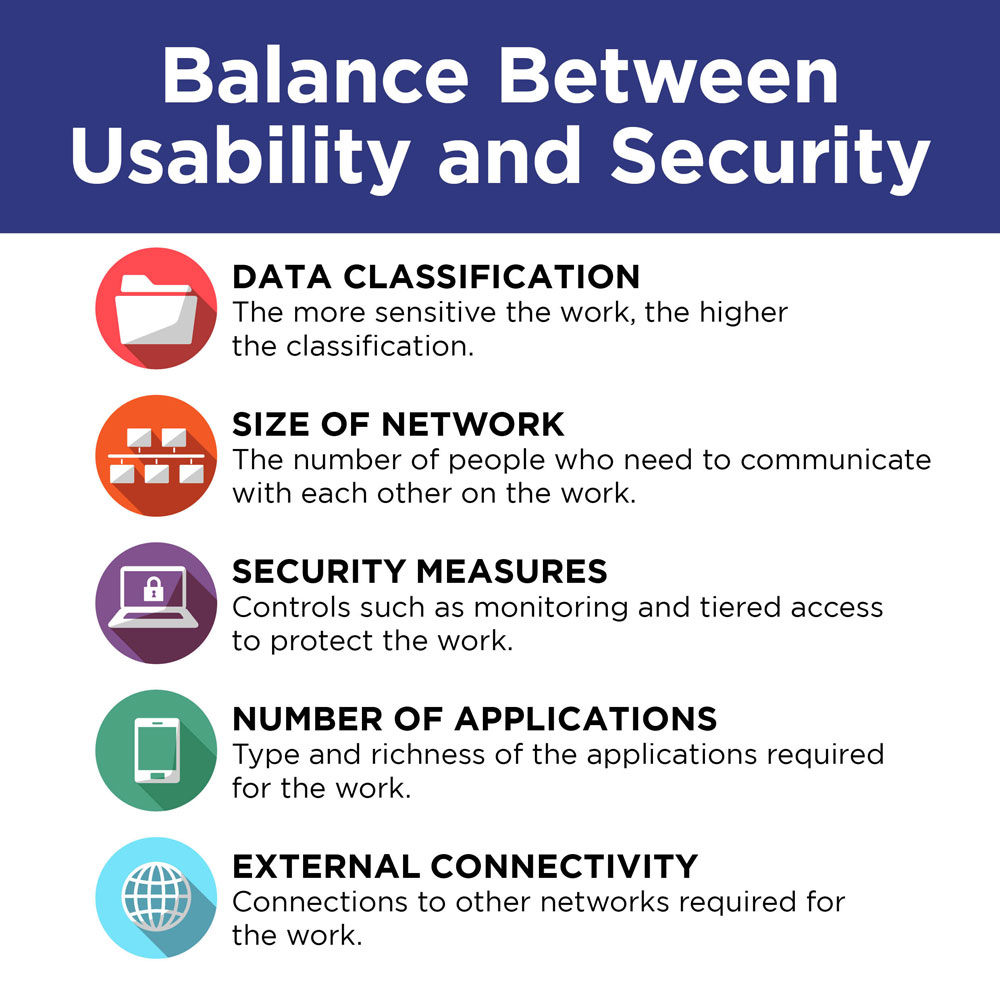
These words were not lost on Mr Leong. As Director of InfoComm Infrastructure, he is in charge of designing and operating a resilient and intelligent next-generation defence info-communication infrastructure. This has led him to spearhead innovative projects such as the Next Generation Data Centre.
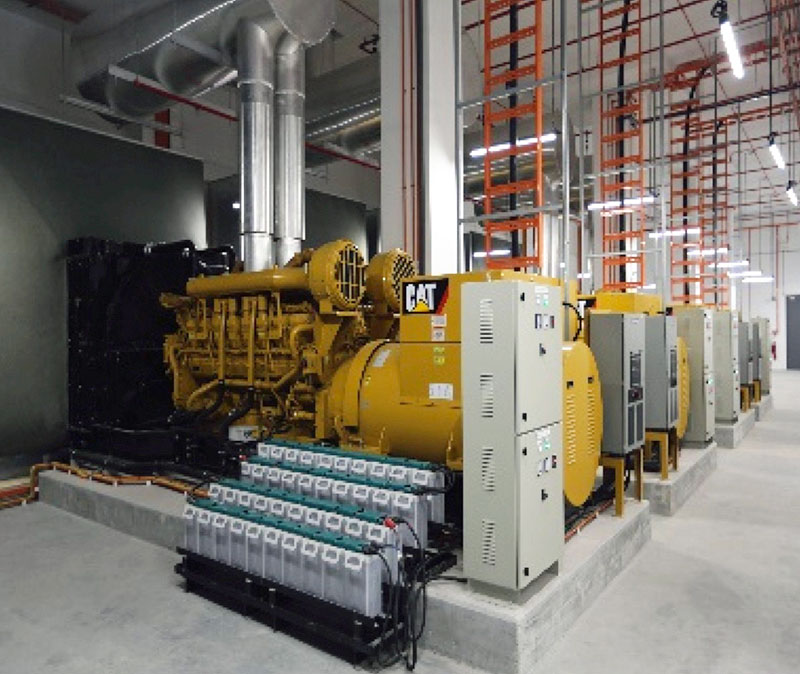
He said: "The Next Generation Data Centre incorporates innovative features that enhance its security and operational efficiency, such as having a modular design with scalable mechanical and electrical systems. This offers flexibility for deployment of new technologies, and support future growth without disrupting operations."
Radio Frequency Identification tracking technologies are added to strengthen the security of the data centre, while optimising manpower resources. A "double-bus bar" design was also adopted for the centre's generator systems, to provide continuous power supply during maintenance or testing.
Despite the benefits of such innovations, these systems often require special attention to maintain and sustain them.
Mr Leong said: "To tackle this, my team and I came up with design guides and reference architectures. We also set up architecture forums where users can discuss best practices and issues, and accumulate knowledge."
The team also strive to achieve operational excellence by appointing a system manager to address problems and systemic issues by reviewing past incidents and processes. This helps to ensure that mistakes are not repeated.
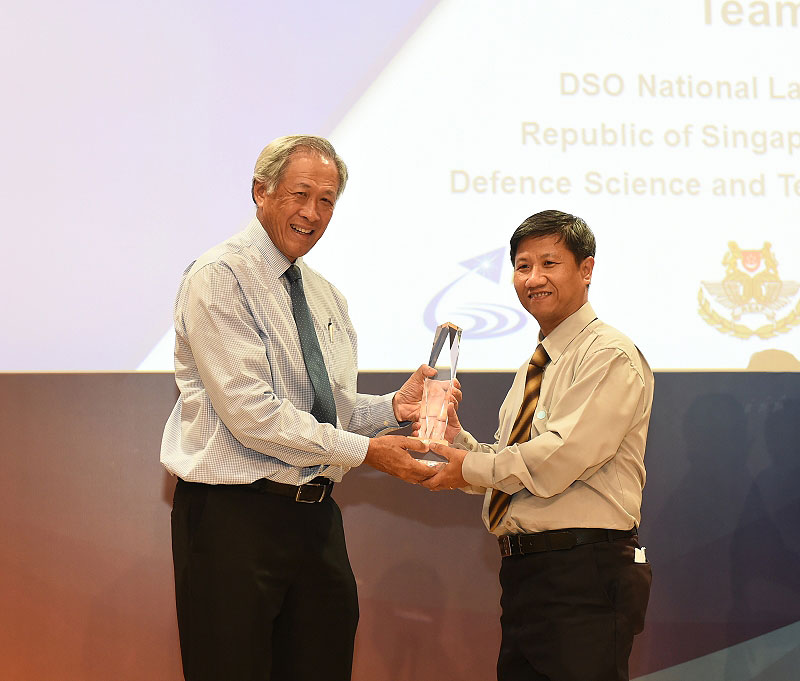
For Mr Tay Poh Kok, the Team Lead of the Air Surveillance System Team which received the Team (Engineering) Award, he is glad to see that his team's innovative efforts have paid off.
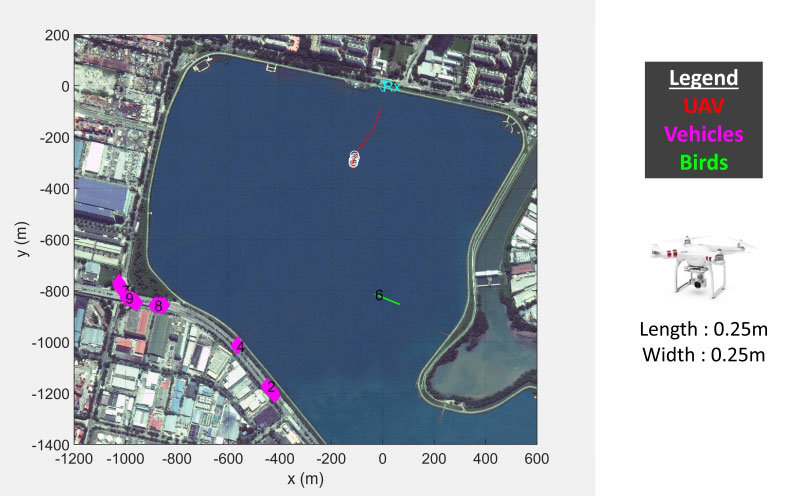
The diverse team, whose members come from DSO, DSTA and the Republic of Singapore Air Force, worked together to develop a portable and scalable surveillance system, capable of detecting small and slow flying objects over an area of interest.
Explaining the need for such a system, the Programme Manager from DSO said: "Our project started two years ago when there was a rise in the use of drones. Drones, when modified to carry explosives or even chemical weapons, pose a tremendous risk to our security."
To add to his worries, Mr Tay found out that the surveillance systems currently in use could only detect larger and faster aircraft, and not drones. Systems available in the market are also inadequate as they cannot detect modified drones, and some may even interfere with the radio waves used for commercial transmission, such as television broadcast signals.
He said: "We decided to take on the task of developing a surveillance system that is suited to an urban environment. Our system can also link up with the air command and control system to provide surveillance around the clock by prompting users if any irregularities or intrusions are detected. The user can then plan the next course of action in dealing with the unauthorised drones."
But Mr Tay and his team do not plan to stop here. They intend to operationalise the system to provide surveillance coverage in critical areas such as the nation's key installations.
He said: "We also plan to enhance the system design for even better ease of deployment, and eventually provide surveillance for the whole island."

ALSO READ IN MILESTONES

Lifelong learners in the SAF
21 Jul 2026
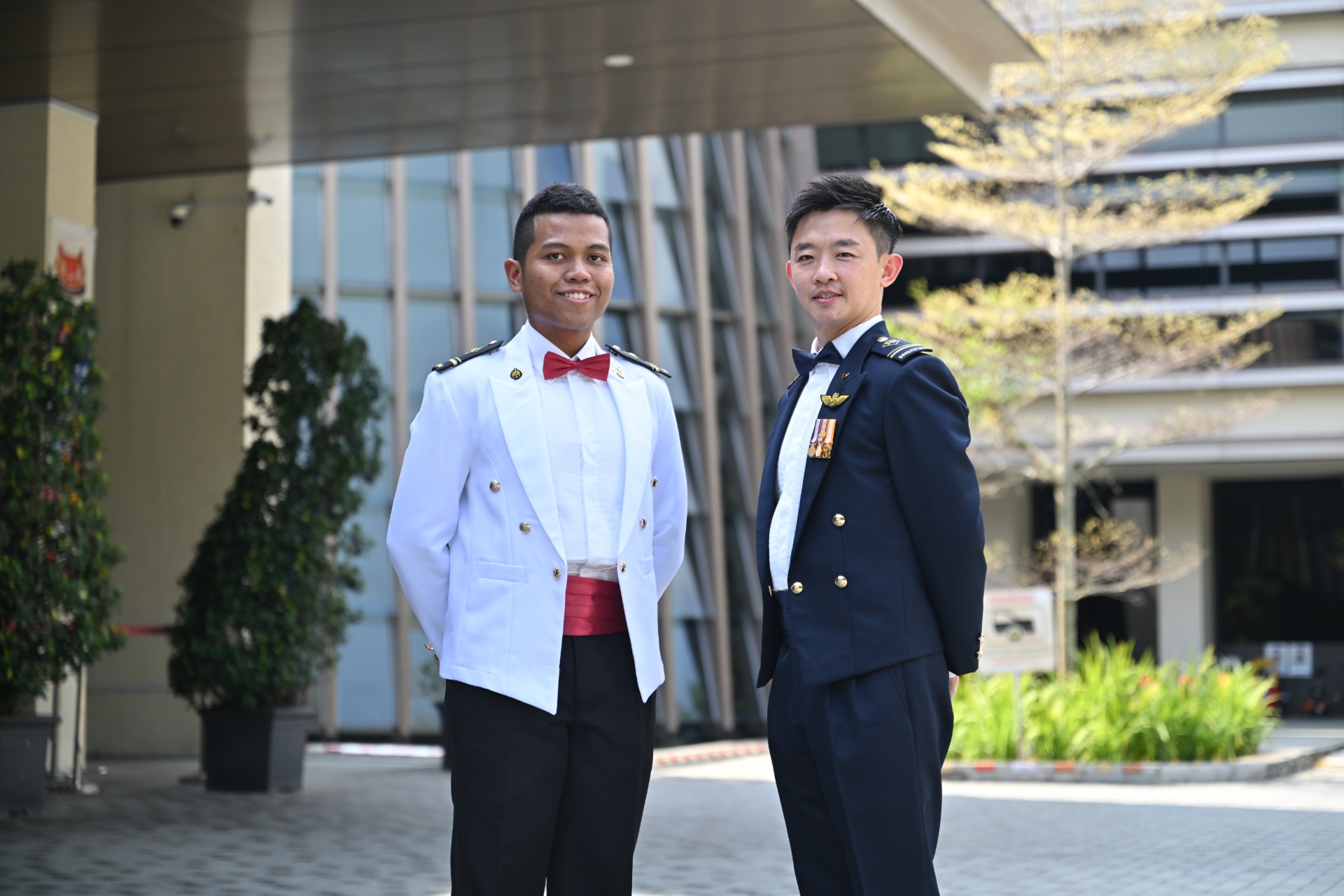
Meet Senior Military Experts ME4A Muhammad Fikri Bin Suhaimi and ME4 Bai Ruiliang who are proving that you’re never too old to learn something new and chase your dreams.
Booming in the Basin: Bringing the Presidential Gun Salute to Kallang for NDP 2026
19 Jul 2026
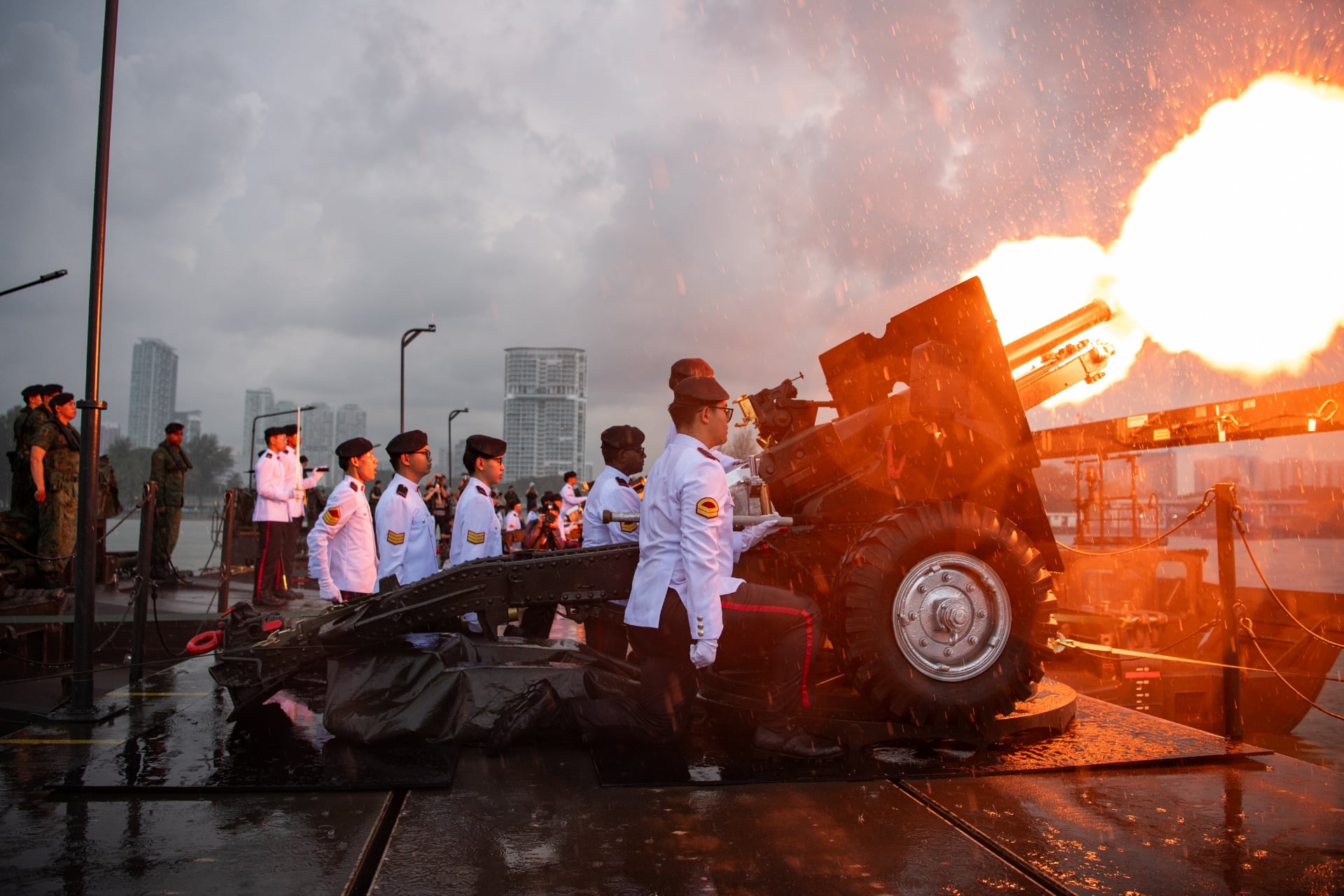
This year’s National Day Parade (NDP) brings the power and precision of the Presidential Gun Salute closer to spectators at the Kallang Basin.
Reaffirming their dedication to S’pore’s defence
01 Jul 2026
The SAF commemorates its 61st anniversary on 1 Jul at the SAF Day Parade as well as rededication ceremonies held across Singapore.