
MILESTONES
MINDEF/SAF launches first solar farm in air base, projected to deliver $1.9mil cost savings a year
30 Jan 2026
The solar farm is located in Sembawang Air Base, which also features other green initiatives such as an automated helicopter wash shed and the use of eco-asphalt for runway repair training.

A solar farm… in an air base? On 30 Jan, the Ministry of Defence (MINDEF) and Singapore Armed Forces’ (SAF’s) first-ever solar farm was officially opened by Minister for Defence Chan Chun Sing at Sembawang Air Base (SBAB).
This marks an important milestone in MINDEF/SAF’s sustainability journey – which focuses on improving energy efficiency and reducing carbon emissions, waste generation and water consumption – to meet national targets set under the Singapore Green Plan 2030.
Here are six facts you may not know about some of MINDEF/SAF’s latest eco-friendly initiatives:
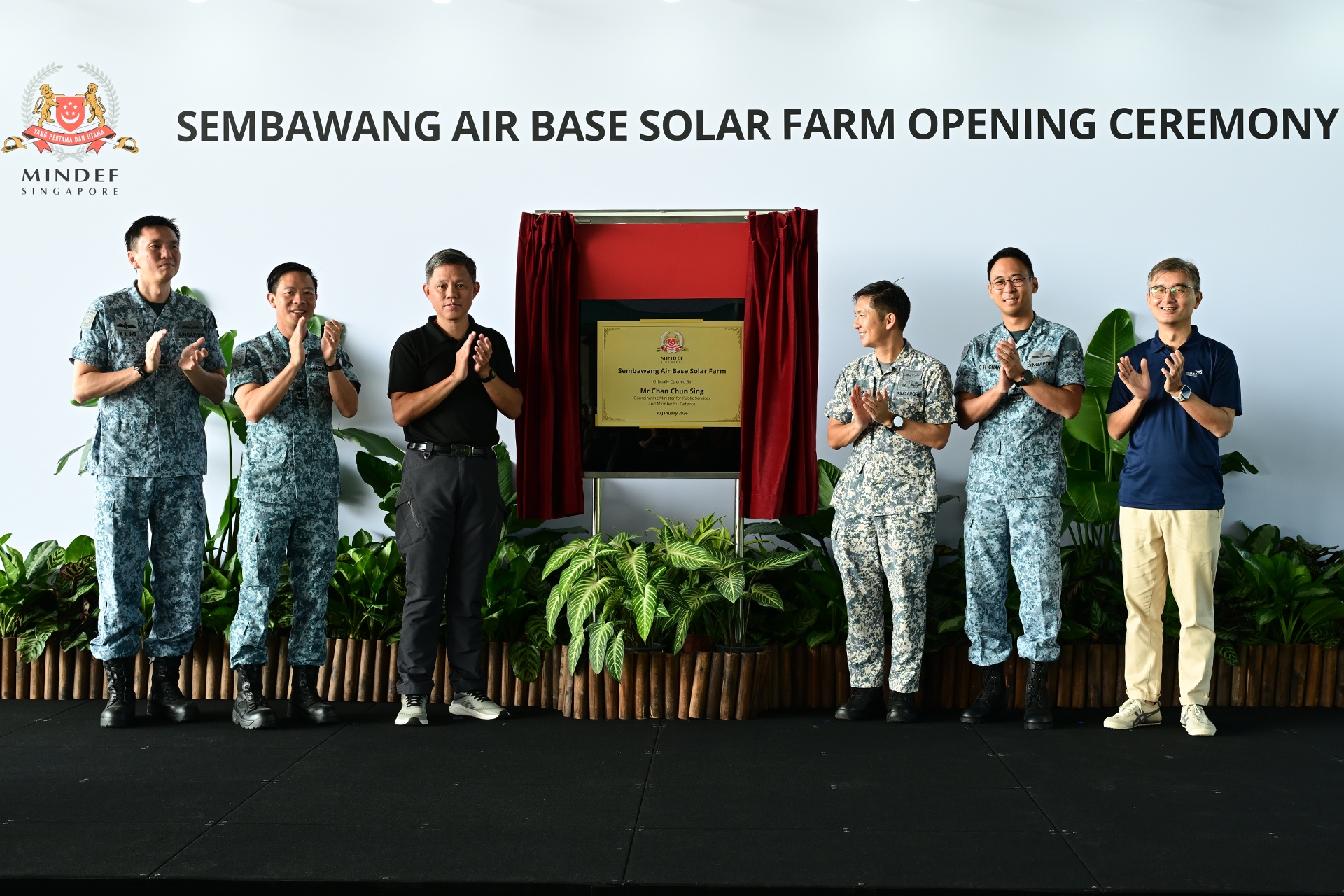
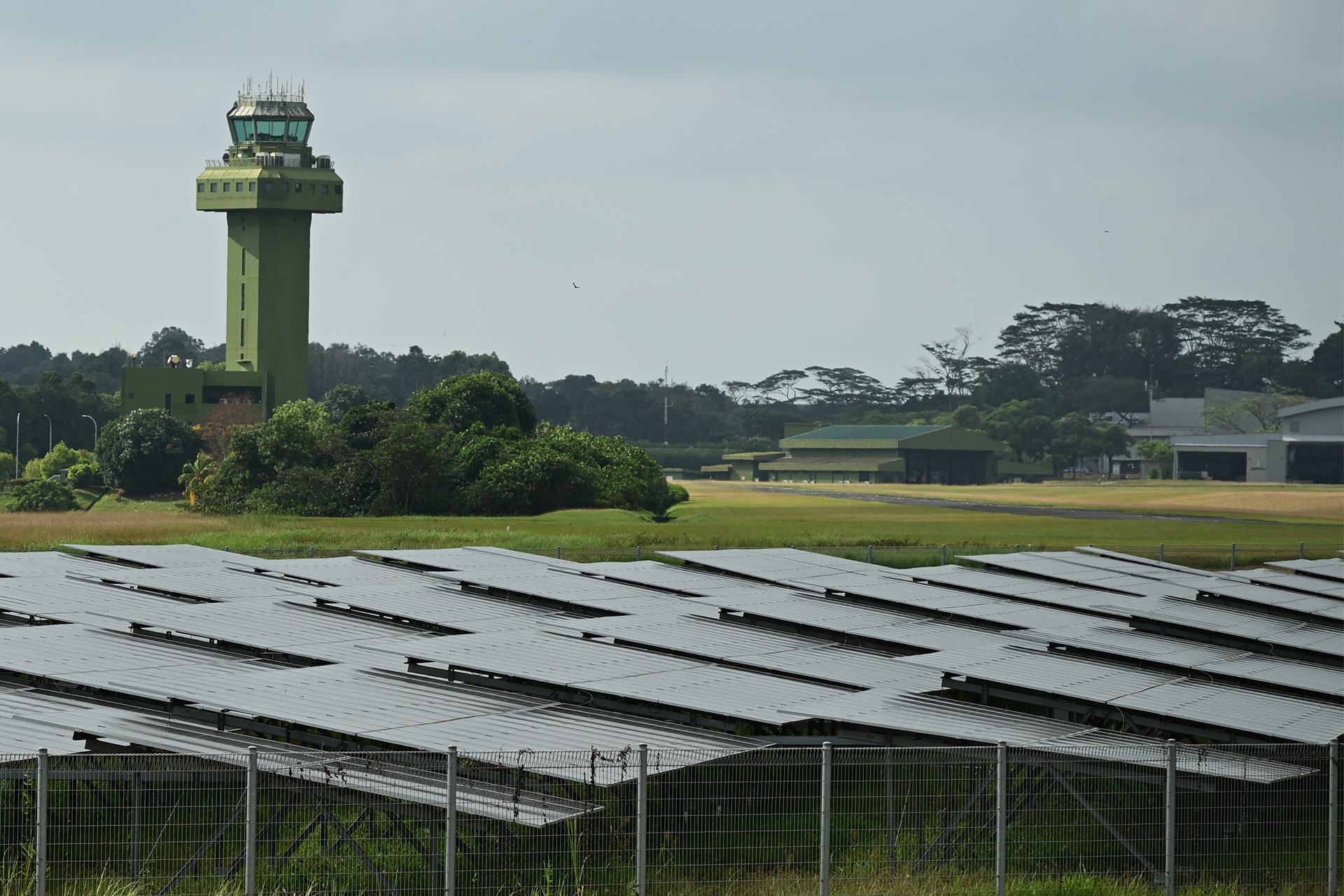
1. When completed, the solar farm will generate energy equivalent to powering 4,700 four-room HDB flats annually
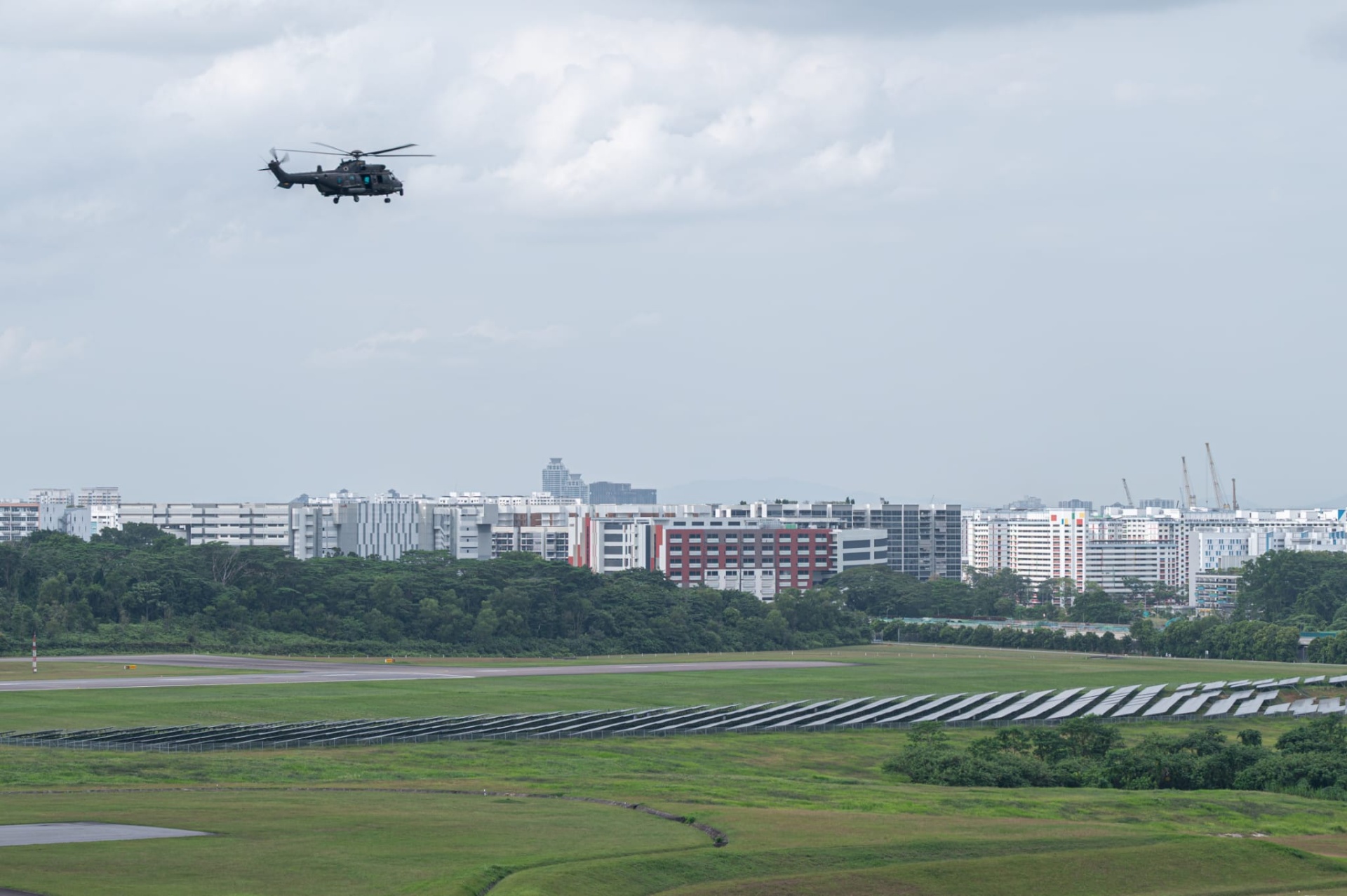
Currently, it features 13.5-megawatt peak solar photovoltaic (PV) systems deployed at two sites within the air base.
With the addition of more solar panels installed on building rooftops within SBAB by the end of the year, the solar farm will generate 18-megawatt peak of solar energy – this is equivalent to the energy used to power about 4,700 four-room HDB flats annually!
The energy generated will support SBAB’s energy demands, and could potentially save about $1.9 million a year.


Speaking to media on 30 Jan, Senior Lieutenant Colonel (SLTC) Timothy Koh Tong Choon said: “We have worked with Defence Science and Technology Agency (DSTA) and industry partners to conduct an analysis to determine the right place for the solar panels at SBAB.”
“This includes (considerations of) the height, direction and angle of the solar panels. They are also placed further away from operational areas to avoid glare, and are designed to withstand the helicopters’ wind speeds,” the 42-year-old Head Plans and Strategy of the SAF Sustainability Office (SAFSO) added.
When completed in end-2026, there will be a total of 28,346 solar panels installed across the two solar sites and on the roof tops of the air base buildings.
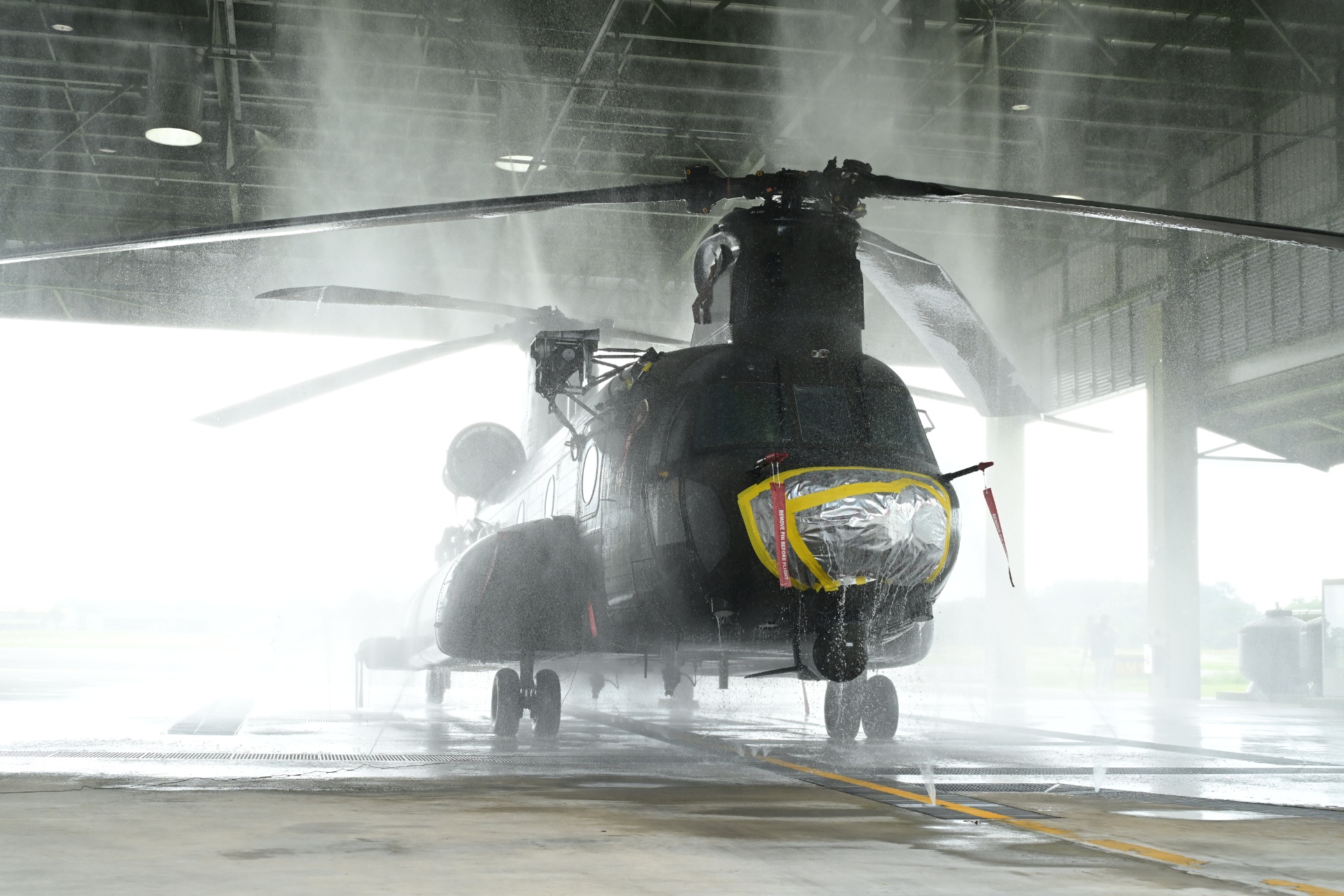
2. The automated Chinook Wash Shed cuts water usage by 60 percent annually
Also located in SBAB, this helicopter wash shed taps on automation to enhance operational efficiency.
For example, a single person can now efficiently manage the entire aircraft washing process – which previously required a five-person team – reducing manpower requirements by 80 percent.
The system incorporates water treatment and recycling technology that allows used water to be treated and stored for the next wash.
This results in 60 percent water savings as compared to manual washing methods.
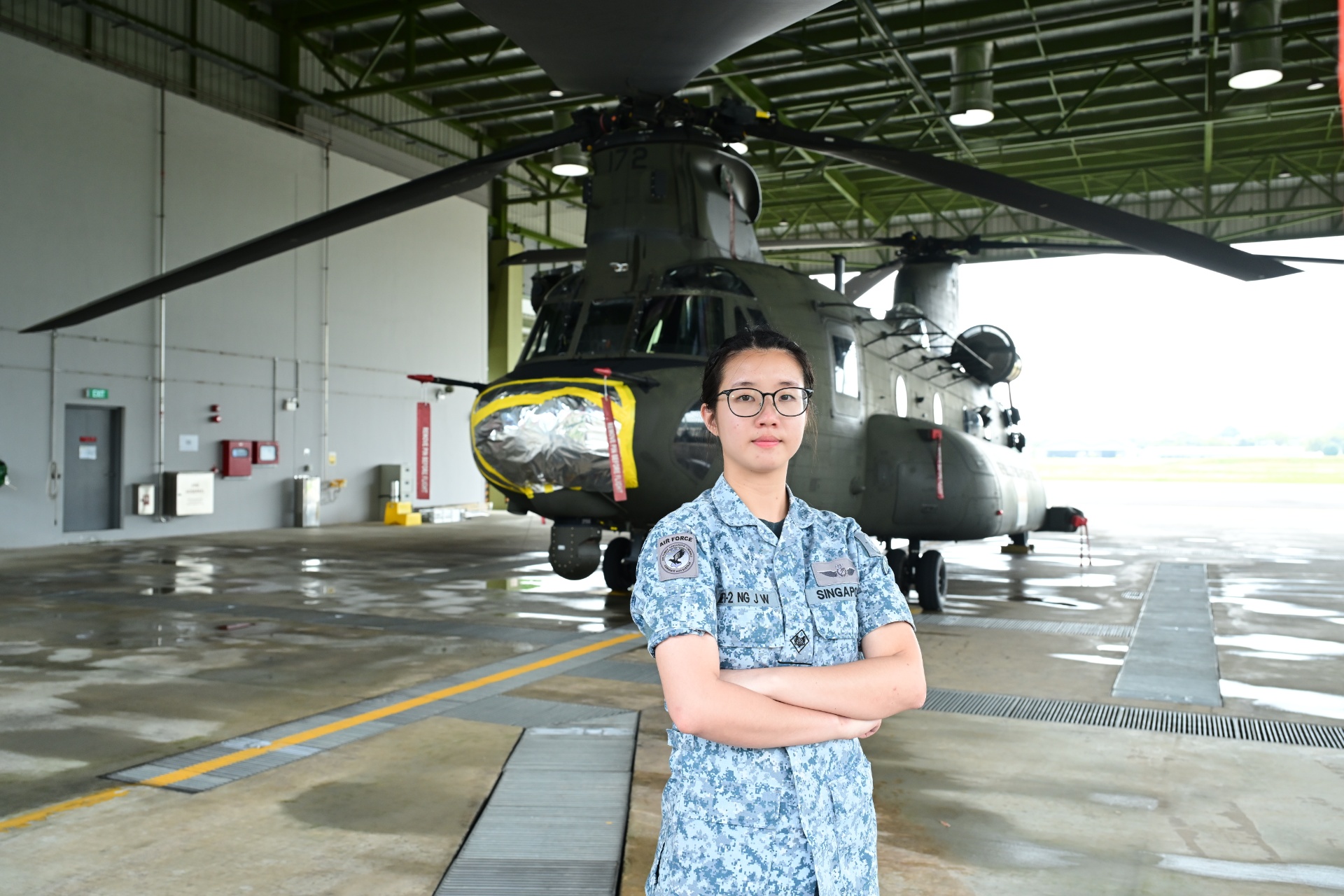
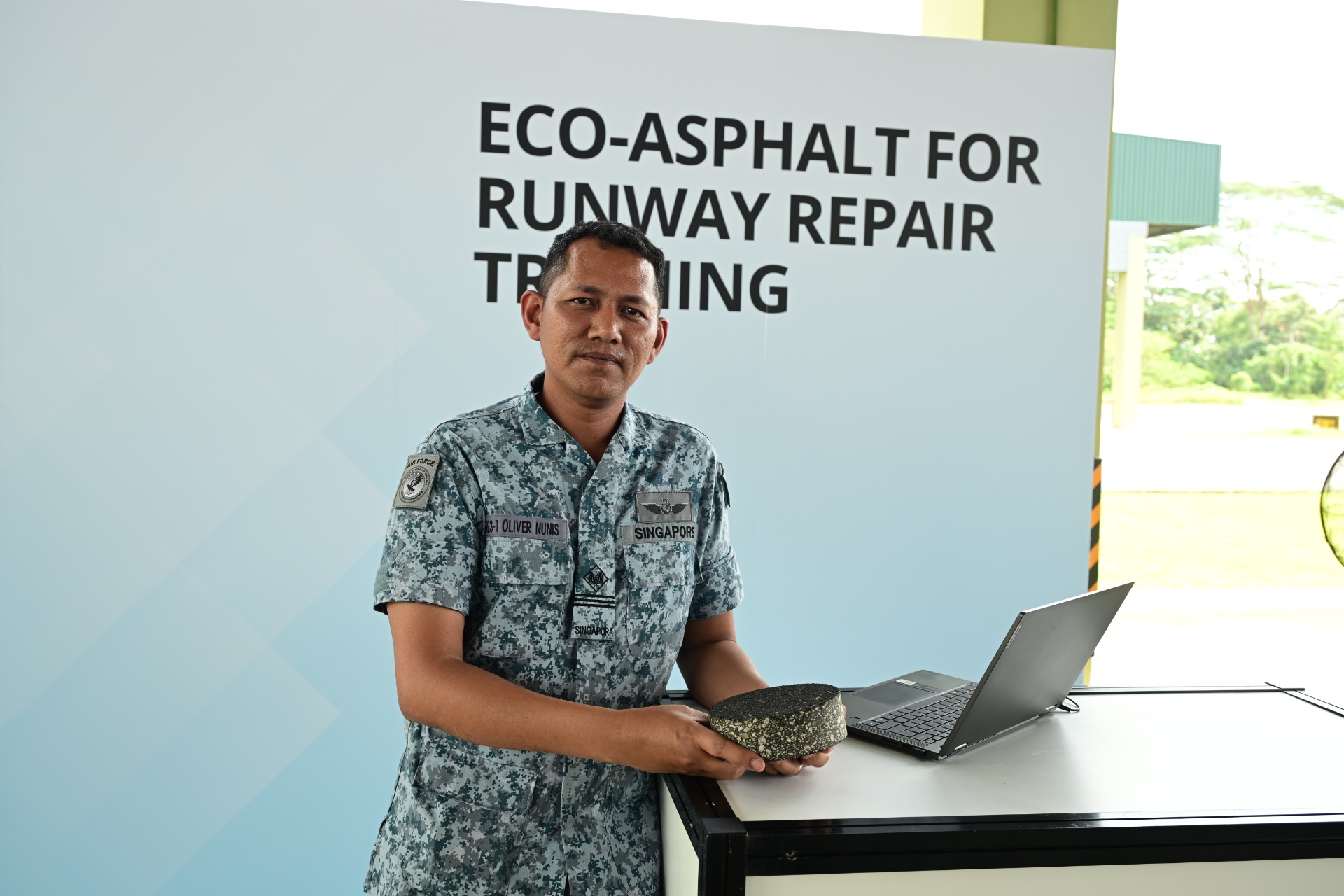
3. RSAF plans to use eco-asphalt for all runway repair training
In the past, the Republic of Singapore Air Force (RSAF) has traditionally relied on asphalt – which contains a crude oil derivative in the form of conventional bitumen – for runway repair training.
Eco-asphalt, however, has less conventional bitumen and includes materials derived from plastic waste instead.
The best part? A successful trial conducted by the RSAF showed that eco-asphalt doesn’t compromise training quality, and they can make use of recycled plastic to avoid sending about 3,750kg of waste for incineration annually.
The RSAF plans to not only expand the use of eco-asphalt for training, but also explore the collection of plastic waste in air bases to convert it into training materials.
4. MINDEF/SAF conducted a review of packaging waste, cutting down the use of about 21,000kg of plastic waste
This comprehensive review led to the elimination of unnecessary plastic packaging, without comprising on quality or hygiene standards, for personnel equipment such as socks and field packs.
The packaging for combat boots was also redesigned to completely remove the use of plastic carriers.
5. A Smart Utilities Metering System has been implemented across camps and bases to optimise water use
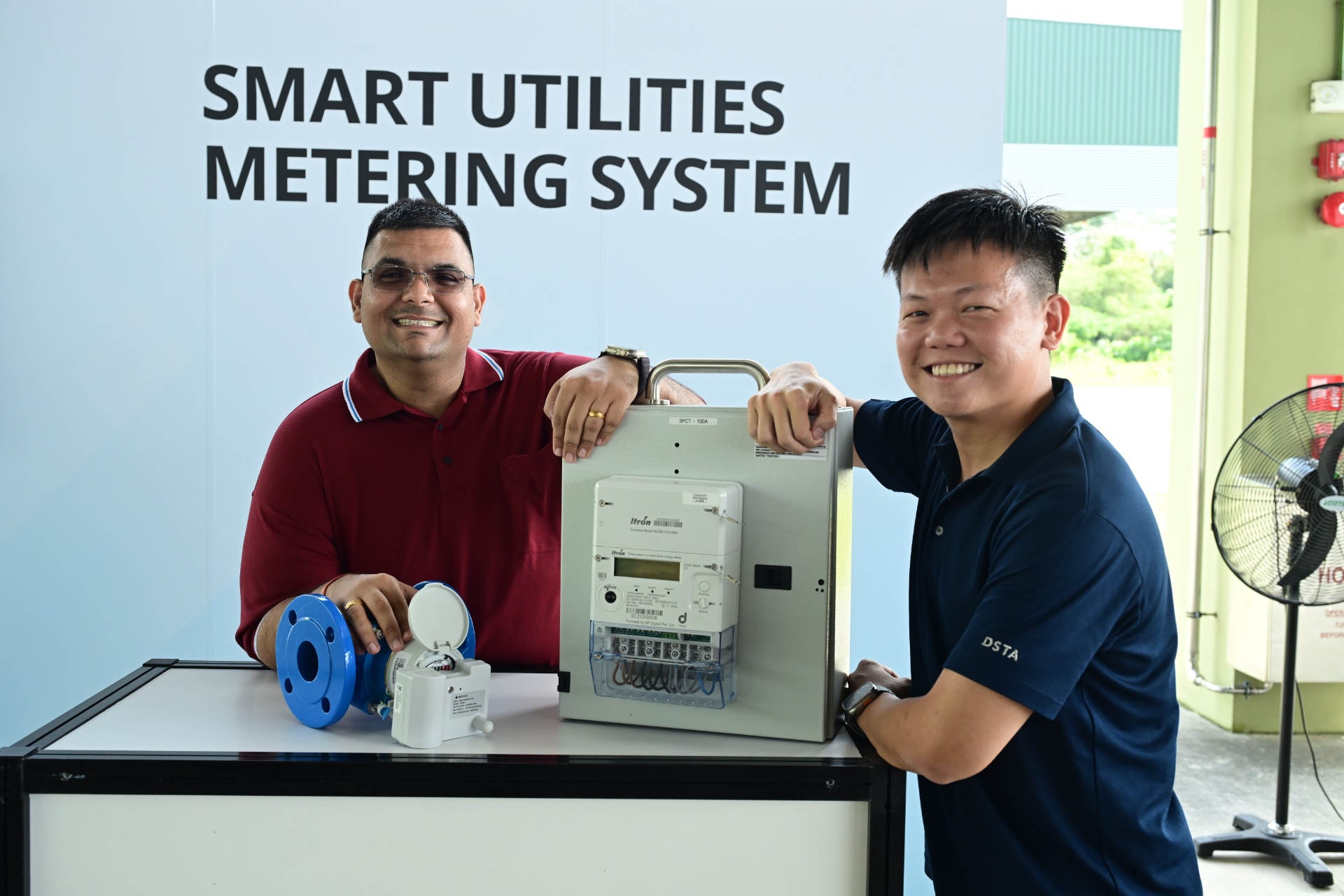
MINDEF/SAF has been implementing the Smart Utilities Metering System across several camps and bases, providing users near real-time data to track energy and water usage. It is currently being used at Tuas Naval Base; Changi Naval Base; Jurong Camp; SBAB and Tengah Air Base.
Being able to easily track energy and water consumption allows users to identify problems such as water leakages more quickly, thus preventing waste and maintaining system efficiency.
Fun fact: Early results indicate that the installation of these smart meters can achieve up to 10 percent of utilities savings in camps and bases!
6. Beyond SBAB, MINDEF/SAF will install additional solar systems across other SAF camps and bases by end-2027
The completion of its first solar farm marks MINDEF/SAF’s successful achievement of 50-megawatt peak of solar deployment – a target that was announced at the 2021 Committee of Supply debate to contribute to national sustainability targets under the Singapore Green Plan 2030.
Moving forward, MINDEF/SAF will install approximately 13.5-megawatt peak solar PV systems across other SAF camps and bases by end-2027, bringing the total solar deployment across 11 facilities to about 68-megawatt peak.

ALSO READ IN MILESTONES
Being the very best in the SAF
28 Jun 2026
These units prove they have what it takes to be crowned champions in this year’s Best Unit Competition.
Answering the call to defend Singapore
21 Jan 2026
The Weapon Presentation Ceremony represents a powerful moment when recruits are entrusted with their rifle and begin carrying the weight of the nation’s defence.
Navy launches 1st Multi-Role Combat Vessel
21 Oct 2025
The Multi-Role Combat Vessel will function as a mothership for the command and conduct of unmanned naval operations.