
MILESTONES
STUDENTS PUSH LIMITS IN INNOVATIVE DEFENCE SCIENCE & TECHNOLOGY PROJECTS
30 Mar 2016
What if you could remotely control a robot to navigate under water fast and accurately, or operate a vehicle just by moving your arm?
Students taking part in the Young Defence Scientists Programme (YDSP) Science and Technology Camp - comprising workshops, project visits and competitions held in June and November last year - show that these could be a reality one day.
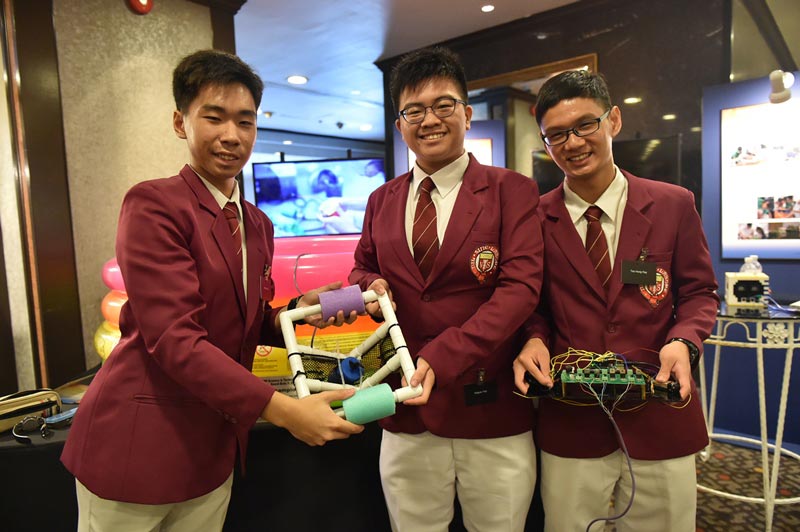
The winning team built a remotely-operated robot which can navigate through a race course and hit a target while submerged in water.
After several trials, the team opted for a quizzical design which has the base on top while the motor is below. Wayne Yeo Wei Zhong, 16, from Victoria School, explained that this gives the robot greater mobility by allowing it to submerge and accelerate more quickly.
When asked about his thoughts on the camp, he said: "This camp has allowed me to learn programming languages and electronics, and introduced me to the wide field of defence science, which I believe is a good way that I can give back to society."
Another team, which took part in Research@YDSP - a four-month project attachment where students do laboratory work under the mentorship of professional defence scientists and engineers - came up with a project titled, "Gesture Control Technology".
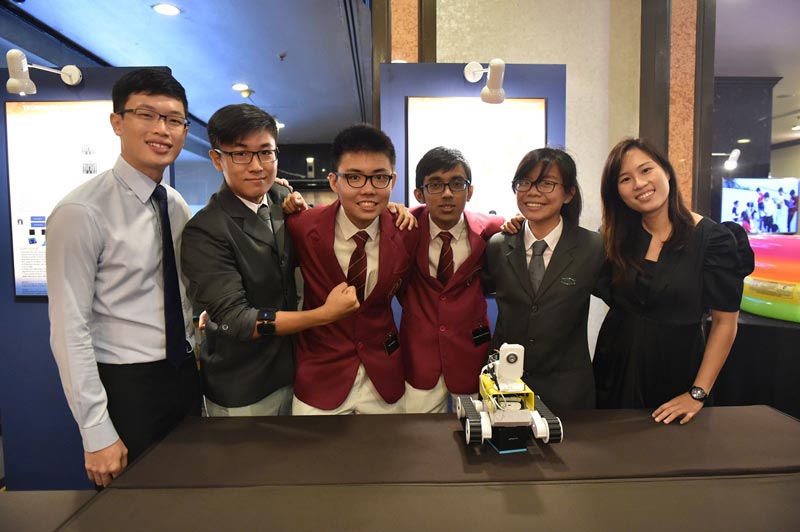
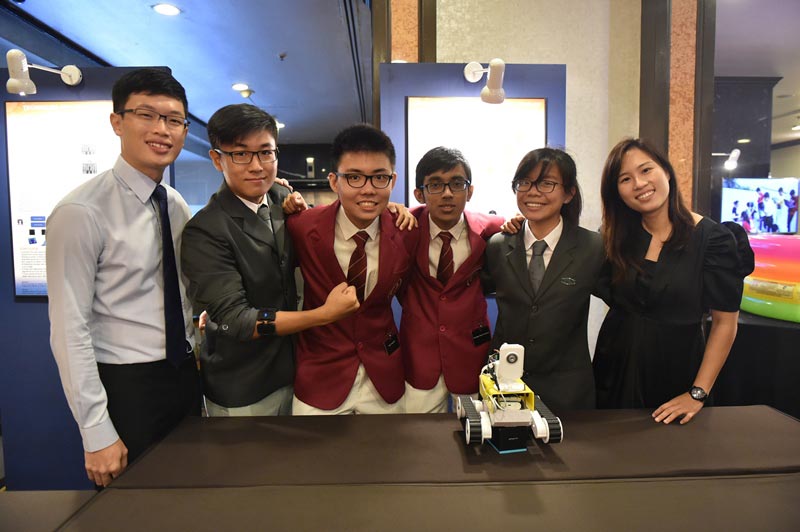
This is a remotely-operated Unmanned Ground Vehicle (UGV) which can be controlled using arm movements, achieved by a gesture and motion control band worn on the forearm of the user. With a camera mounted on the top of the UGV, the vehicle can negotiate and scout dangerous terrains without risking the lives of soldiers.
Mr Bryan Ng Kin Loong, an engineer at the Defence Science and Technology Agency (DSTA)'s Land Systems Programme Centre, and one of the mentors in the programme, was heartened to see the students working diligently to complete their projects. He said: "It was enjoyable, mentoring students on robotics, which is an exciting technology with great potential." He encouraged aspiring defence engineers to follow in his footsteps.
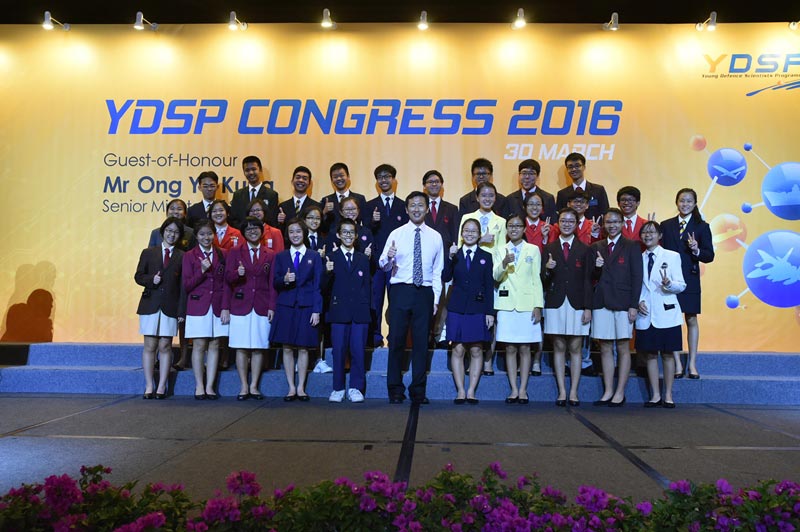
This year marks the 10th anniversary of the YDSP Congress. Speaking at the congress held at Orchard Hotel on 30 Mar, Senior Minister of State for Defence Ong Ye Kung said: "Technology advances at a rapid pace. Ideas which were unimaginable many years ago, are gradually becoming reality.
"Our engineers have come up with many solutions to help overcome Singapore's unique challenges by harnessing technology to do so."
He referred to Singapore's persistently low birth rate and highlighted how defence engineers were important in helping the nation tackle the manpower challenges arising from it.
Mr Ong cited examples such as the Autonomous Underwater Vehicle, which uses advanced sensors to detect landmines, and requires only four people to operate, compared to the 30-man crew required to operate a Mine Counter-Measure Vessel which performs the same functions. He said: "I am confident that our DTC (Defence Technology Community) will continue to innovate to push the limits of what technology has to offer to the SAF."
In his closing, Mr Ong offered these words of encouragement to aspiring defence scientists: "I hope the YDSP has piqued your interest in defence science. Maybe some of you will join the ranks of the various DTC scientists and engineers in future.
"There is no responsibility more sacred, more meaningful than defending your own country."
At this year's YDSP Congress, 32 students were awarded for their academic and co-curricular accomplishments with YDSP Scholarships. Eighty-three other students received the Academic Award for their outstanding performance in Physics and Mathematics.

ALSO READ IN MILESTONES
RSN launches 2nd Multi-Role Combat Vessel
23 Jul 2026
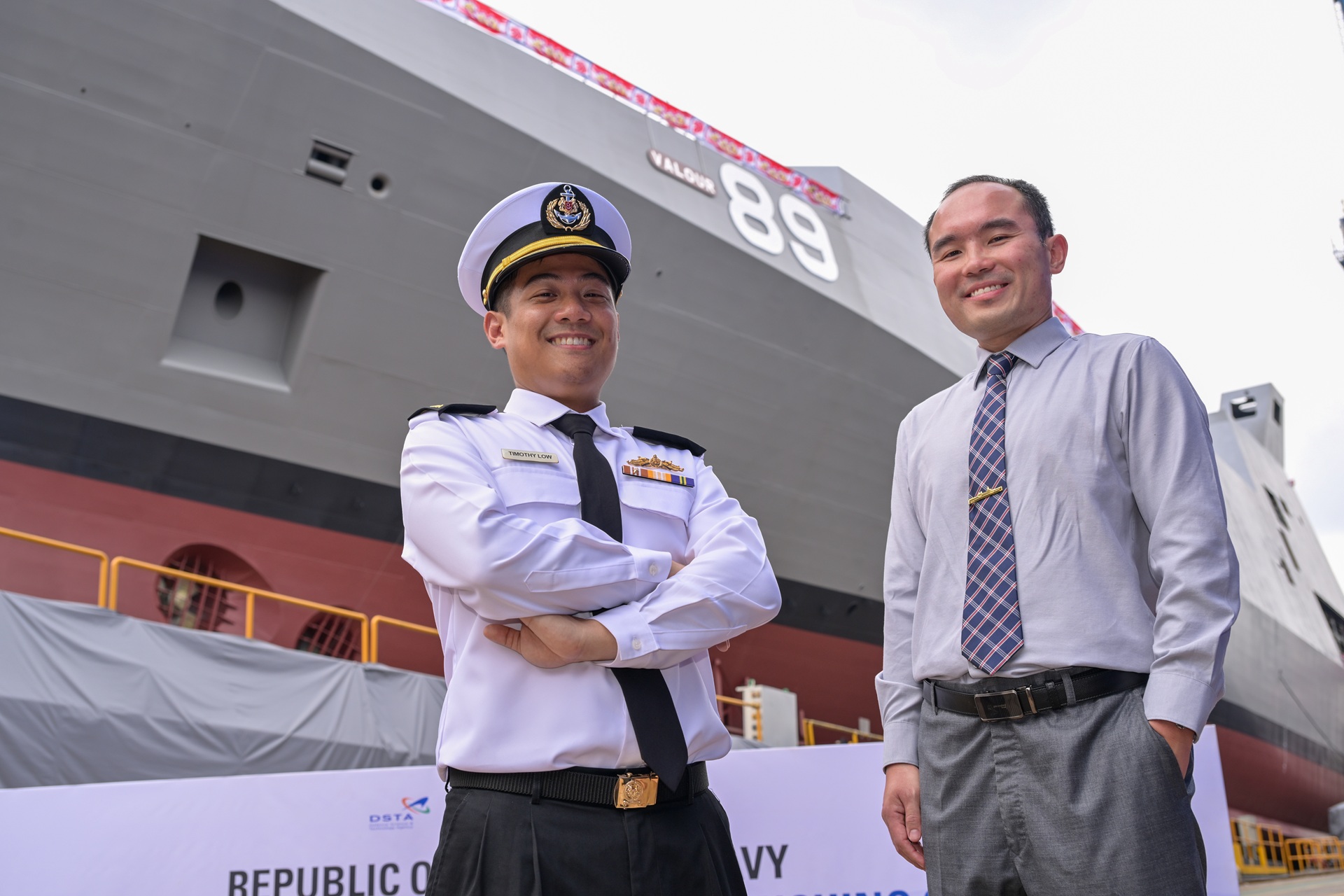
Just like the vessel and her namesake, Commanding Officer LTC Low is following in a strong family tradition of naval service.
Lifelong learners in the SAF
21 Jul 2026
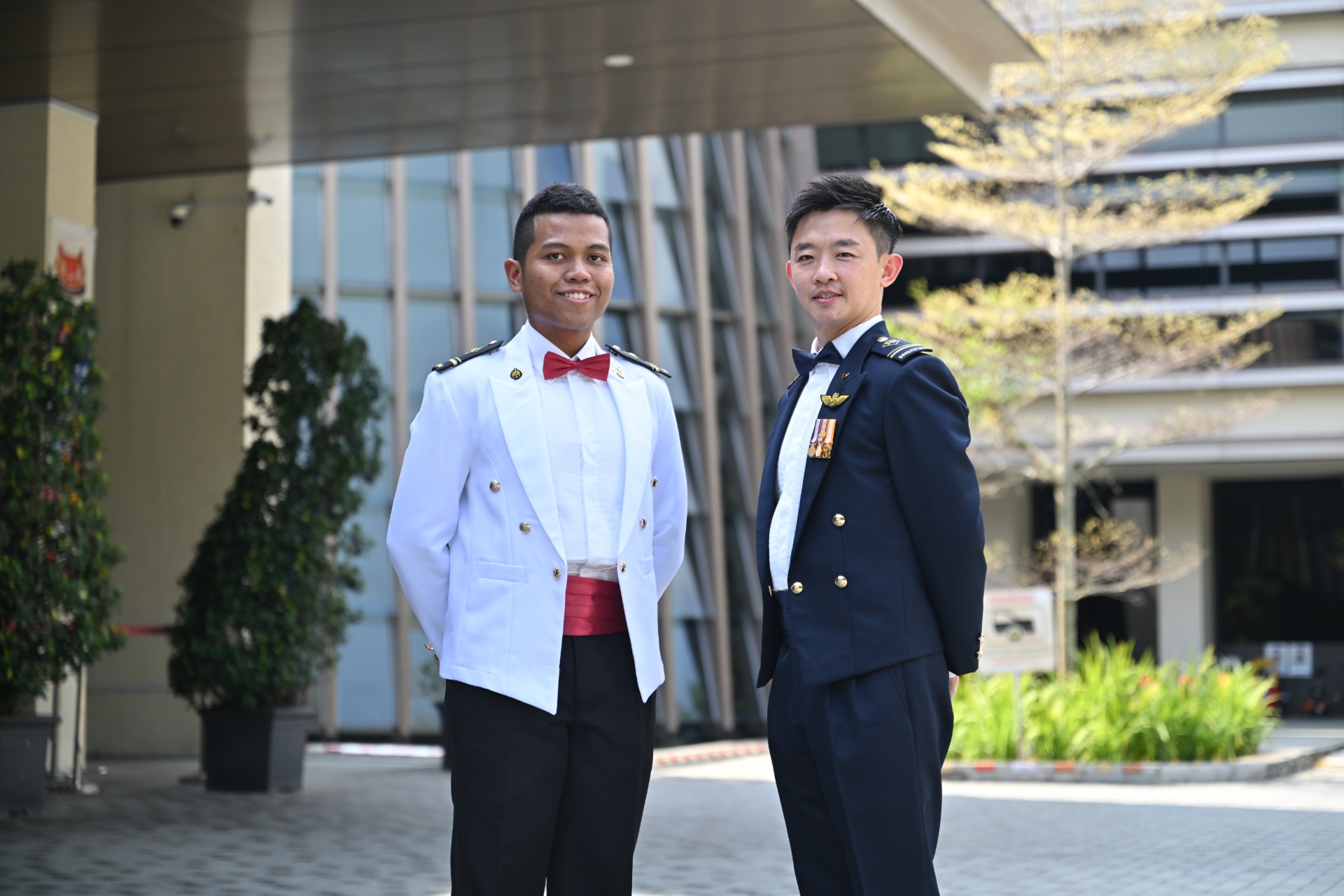
Meet Senior Military Experts ME4 Muhammad Fikri Bin Suhaimi and ME4 Bai Ruiliang who are proving that you’re never too old to learn something new and chase your dreams.

Booming in the Basin: Bringing the Presidential Gun Salute to Kallang for NDP 2026
19 Jul 2026
This year’s National Day Parade (NDP) brings the power and precision of the Presidential Gun Salute closer to spectators at the Kallang Basin.