
DIPLOMACY
STRENGTHENING COOPERATION IN MARITIME SECURITY & SUBMARINE OPERATIONAL SAFETY
20 May 2015
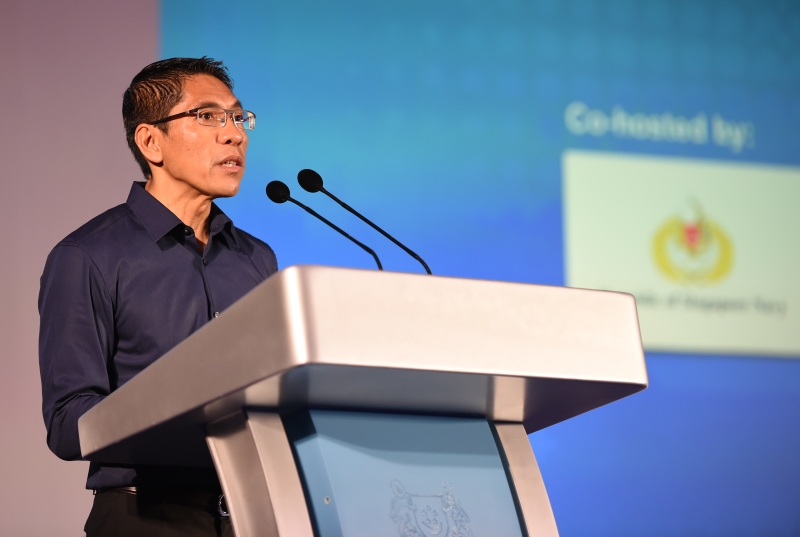
In the next few years, more navies in the region will operate more submarines, including in the increasingly congested South China Sea. While this raises safety concerns, there are also opportunities for cooperation in submarine operational safety.
Minister of State for Defence Dr Mohamad Maliki Bin Osman made this point in his opening address at the 4th International Maritime Security Conference (IMSC) on 20 May.
He cited how the Republic of Singapore Navy (RSN) and the United States Navy are currently co-hosting the Asia-Pacific Submarine Conference (APSC) over the next few days for submariners to discuss submarine rescue and operational safety.
The IMSC and the APSC are key events of the International Maritime Defence Exhibition and Conference (IMDEX Asia) - the largest maritime defence show in the Asia-Pacific - currently being held at Changi Exhibition Centre.
Speaking to about 350 participants which included Navy and Air Force Chiefs, coast guard senior officials and leading maritime academics from the region and beyond, Dr Maliki highlighted "the opportunity to tap on the diverse and extensive expertise of the international maritime community present today."
"We can leverage on this shared wisdom and ask ourselves how we can build stronger linkages in cooperation through multilateral cooperation."
He added that conducting maritime exercises is another way to strengthen cooperation among various countries. The RSN, for example, will be hosting a series of exercises on the side lines of IMDEX.
The war games, codenamed Maritime Information Sharing Exercise (MARISX) and the Western Pacific Naval Symposium Multilateral Sea Exercise (WMSX), are being held both on shore and at sea.
Dr Maliki said that on shore, navies would strengthen information-sharing linkages, while at sea, eight navies would exercise maritime security scenarios to strengthen interoperability.
For the first time, the Code for Unplanned Encounters at Sea (CUES) is being used in this series of exercises. The region's first code of conduct for unplanned encounters between navy ships and aircraft, CUES could help prevent maritime tensions from escalating into conflict.
It was endorsed by Asian-Pacific naval chiefs at the 14th Western Pacific Naval Symposium in Qingdao, China last year, following a two-year period of rising territorial tensions and air and sea confrontations in the South and East China Seas.
Enhancing regional framework for submarine operational safety
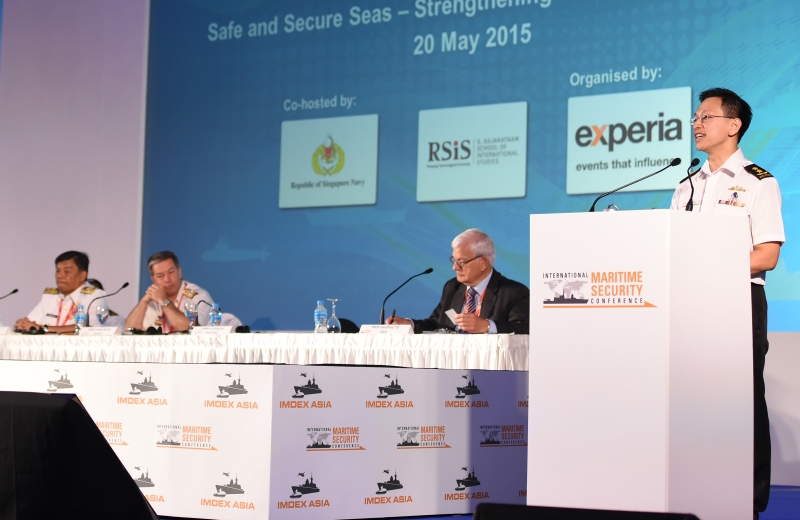
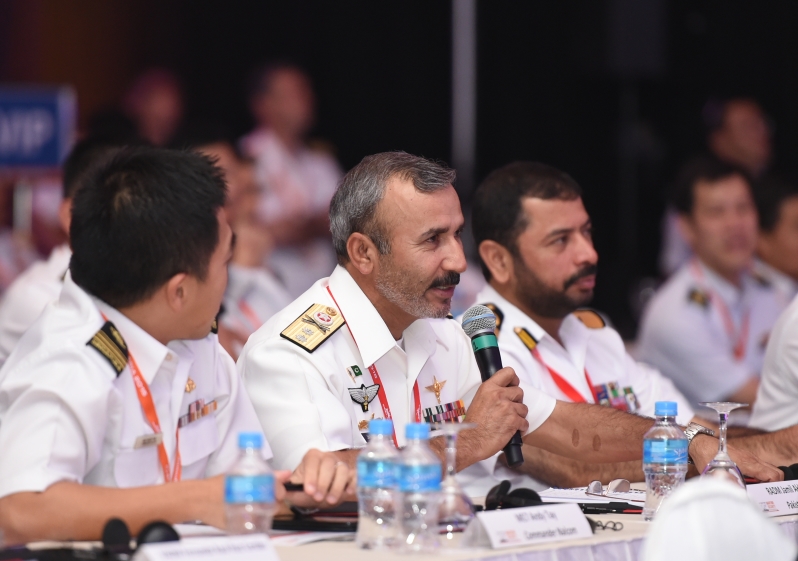
Singapore's Chief of Navy Rear Admiral (RADM) Lai Chung Han was one of eight speakers at the IMSC, which was themed Safe and Secure Seas - Strengthening Maritime Cooperation. They spoke on how different navies can co-operate to address various maritime threats.
In his speech, RADM Lai called for countries to come up with a regional framework for submarine operational safety in order to reduce the risk of underwater accidents in the South China Sea.
"With the increasing numbers of submarines operating in that congested and confined water space, it is perhaps no exaggeration to say that it is an accident waiting to happen," he said, citing estimates that the navies of Asia-Pacific could operate over 130 diesel-electric submarines by 2020.
There is an urgent need to establish a broader framework beyond existing bilateral agreements on submarine rescue, RADM Lai added.
One such agreement was the Joint Standard Operating Procedures for a Memorandum of Agreement for mutual submarine rescue support which the Republic of Singapore Navy (RSN) signed with the United States Navy yesterday.
Singapore also has similar arrangements with Australia, Indonesia and Vietnam.
To kick-start the creation of the regional framework, RADM Lai suggested that navies could share non-sensitive information - such as the movement of large crude carriers as well as dredging and other underwater activities - to facilitate the planning of submarine operations.
He also suggested the sharing of best practices in submarine rescue, training, as well as coming up with common standards for submarine safety regimes.
Finally, navies can work towards creating a code of conduct to guide submariners on manoeuvring to prevent accidents during an unlikely encounter, he added.
RADM Lai also called for regional navies to extend joint piracy patrols to new hotspots in the South China Seas. Such efforts have been successful in bringing down the number of piracy attacks in the Straits of Malacca in recent years.
Engineering exchange
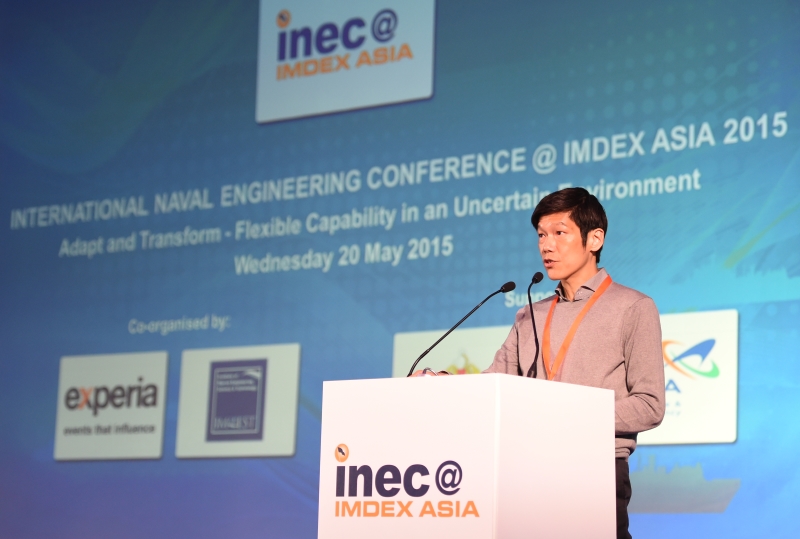
About 200 naval engineering professionals from 20 countries also gathered at another conference at IMDEX Asia to discuss new developments on naval technology related to defence and maritime security.
The opening ceremony of the 2nd International Naval Engineering Conference @IMDEX 2015 (INEC@IMDEX Asia 2015) was officiated in the afternoon on 20 May by Permanent Secretary (Defence Development) Major-General (MG) (NS) Ng Chee Khern.
Themed Adapt and Transform - Flexible Capability in an Uncertain Environment, the discussions centred on the areas of multiplying effect, flexible platforms, underwater technology and effective support solutions.
In his opening address, MG (NS) Ng highlighted how the Singapore Armed Forces (SAF) had tapped on technology to overcome various challenges such as limited manpower.
He cited the RSN's latest Littoral Mission Vessels (LMVs), which come with features such as equipment automation to optimise manpower use.
To prepare for uncertainty, the SAF also injected flexibility in the design of its hardware so that they could be rapidly reconfigured for different missions, he added.
"We do not always know the sort of operational scenarios under which the SAF would be called upon to operate or fight," MG (NS) Ng explained.
For example, the RSN's Endurance-class Landing Ships Tank provide various ways to transport equipment and personnel, such as via cranes, fast craft or helicopter.
Such versatility has proven useful in missions such as the Humanitarian and Disaster Relief Operation for the Boxing Day tsunami in 2006, he noted.
Building bilateral ties
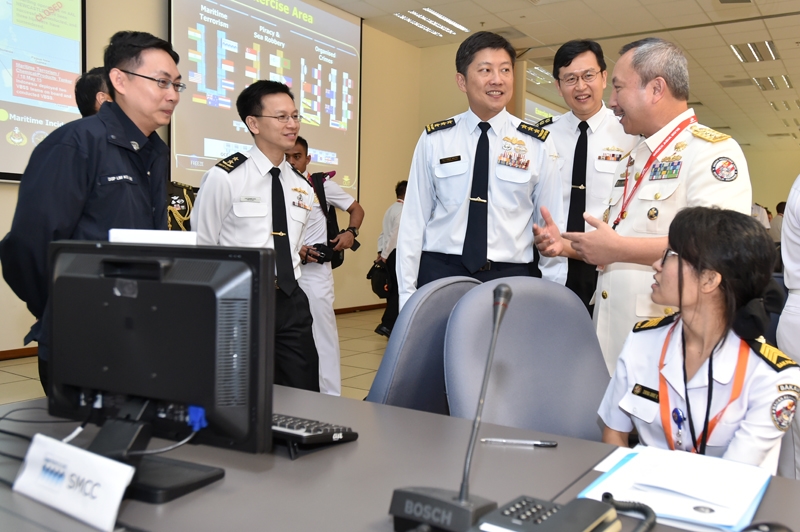
On the sidelines of IMDEX Asia, opening ceremonies were also conducted for two bilateral exercises that the RSN is participating in separately with the People's Liberation Army (Navy) and the Indian Navy.
The exercises aim to strengthen bilateral ties and enhance mutual understanding and friendship among personnel of these navies.

ALSO READ IN DIPLOMACY
17 countries launch new framework for cooperation on critical underwater infrastructure
30 May 2026
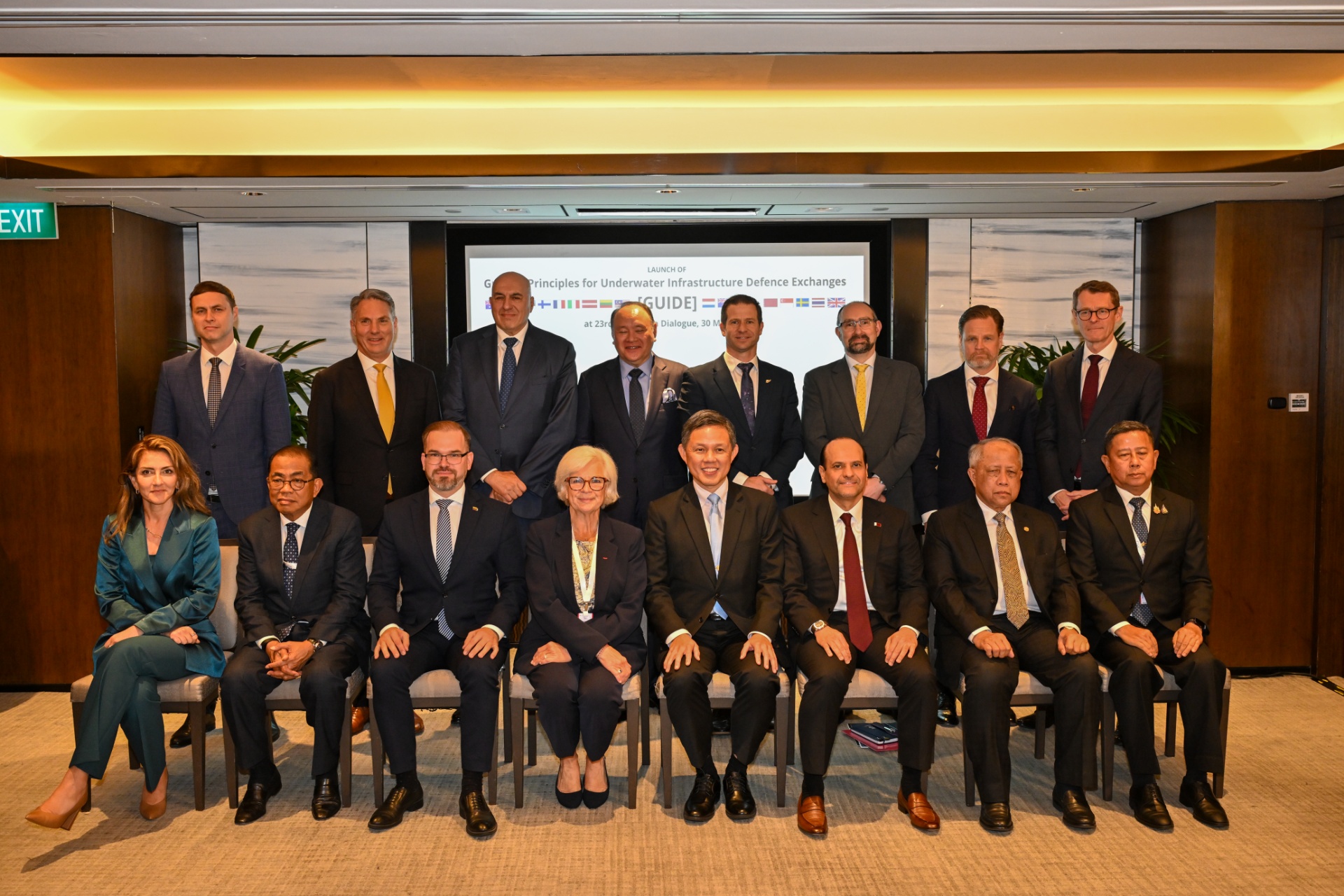
Launched on the sidelines of the 23rd Shangri-La Dialogue, GUIDE is a new framework that brings together countries for defence cooperation in enhancing the security of Critical Underwater Infrastructure.
Going alone is not the answer to insecurity – Mr Chan
01 Jun 2025
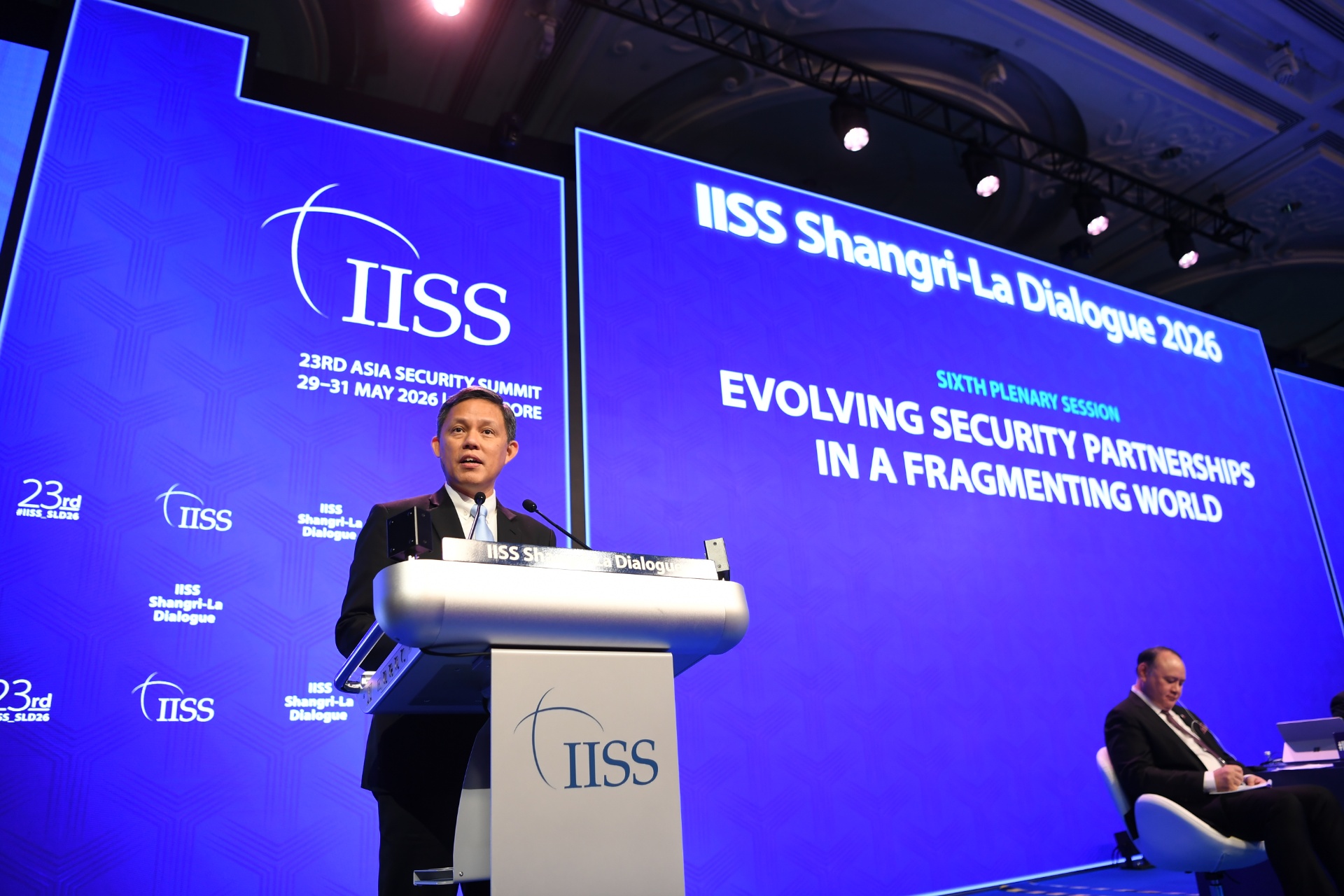
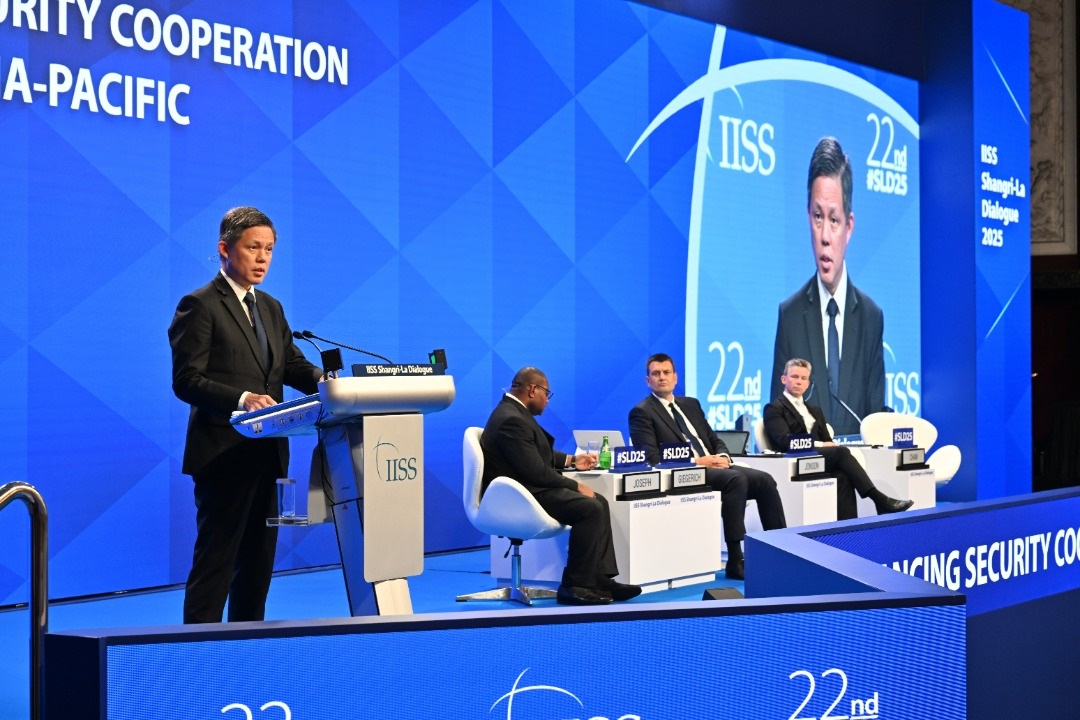
“Going alone is not the answer to insecurity”, emphasised Minister for Defence Mr Chan Chun Sing at the Shangri-La Dialogue (SLD), held from 30 May to 1 Jun. This was one of his main points at his speech at the sixth plenary session on 1 Jun.
A call for peace at Shangri La Dialogue
02 Jun 2024
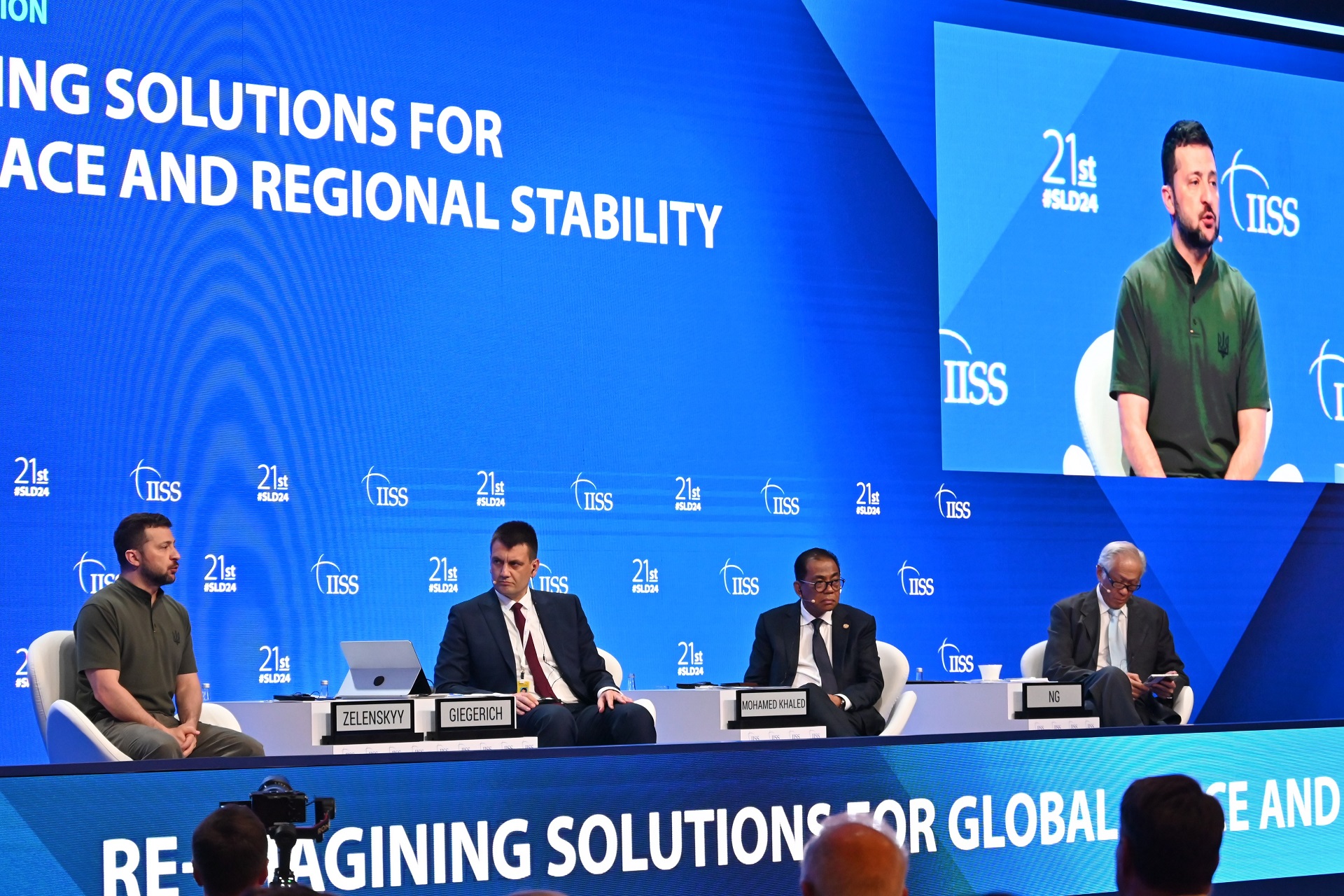
A repeated call for peace, especially in Asia. This was Minister for Defence Dr Ng Eng Hen's central message at the 21st Shangri La Dialogue (SLD), held from 31 May to 2 Jun.