
DIPLOMACY
STATES MUST BUILD TRUST FOR CONTINUED PEACE AND PROSPERITY
31 May 2013
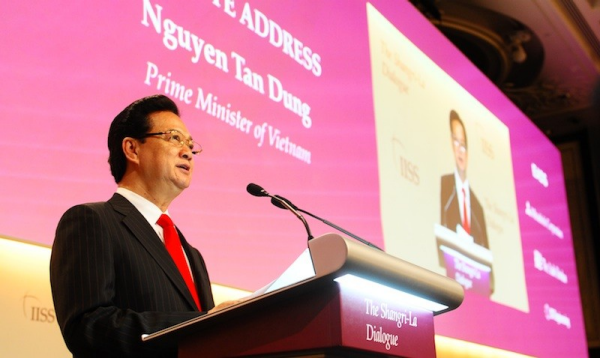
"If trust is lost, all is lost". These were the simple but profound words spoken by Vietnamese Prime Minister Nguyen Tan Dung during his keynote address at the 12th Shangri-La Dialogue on 31 May.
Speaking in his native Vietnamese tongue, Mr Dung said: "Trust is the beginning of all friendships and cooperation, the remedy that works to prevent calculations that could risk conflicts."
While expressing confidence in the continued success of the region, he noted that the Asia-Pacific region was now home to the three largest economies in the world. On the back of economic development, countries are also rapidly developing links on many other levels. However, growing engagement and competition carried 'negative risks' which countries should take proactive steps to guard against, said Mr Dung.
While increased competition is natural in the course of development, things could quickly go awry if not handled properly. For example, the recent incidents in the Korean Peninsula and the ongoing territorial disputes in the East and South China Seas could have tipped the region towards conflict.
If countries take decisions without respect from international norms and laws, there could be 'a chance for division, suspicion and the risk of mutual containment' which would affect peace and prosperity for all.
He also pointed out that with almost 75 percent of world trade transiting the South China Sea, a single irresponsible action or provocation could lead to "unforeseeable consequences not only to regional economies but the entire world."
He emphasised that states must abide by international law and work towards improving mutual trust to avoid that lose-lose situation. To that end, he highlighted the importance of organisations such as the Association of Southeast Asian Nations (ASEAN) and other fora towards the deepening of trust in the region.
Calling ASEAN an 'honest broker' in furthering regional ties, Mr Dung said that its principles of consensus and mutual trust made the grouping a trusted one even among extra-regional countries.
The keynote address marks the start of the three-day dialogue which will end on 2 Jun. Named for the hotel it is held in, the first International Institute for Strategic Studies Asia Security Summit: The Shangri-La Dialogue was held in 2002.
It is a platform where defence ministers can engage in conversations to build confidence while fostering practical security cooperation.
This year, the Dialogue is attended by some 27 ministerial-level delegates. On the sidelines of the Dialogue on 31 May, Minister for Defence Dr Ng Eng Hen met with ministers and senior officials from Cambodia, Canada, Indonesia, Mongolia, New Zealand, the Philippines, Republic of Korea and Timor-Leste.
From 1 to 2 Jun, the leaders will engage in a series of plenary sessions to discuss topics ranging from military modernisation to emerging trends in Asia-Pacific security.

ALSO READ IN DIPLOMACY
17 countries launch new framework for cooperation on critical underwater infrastructure
30 May 2026
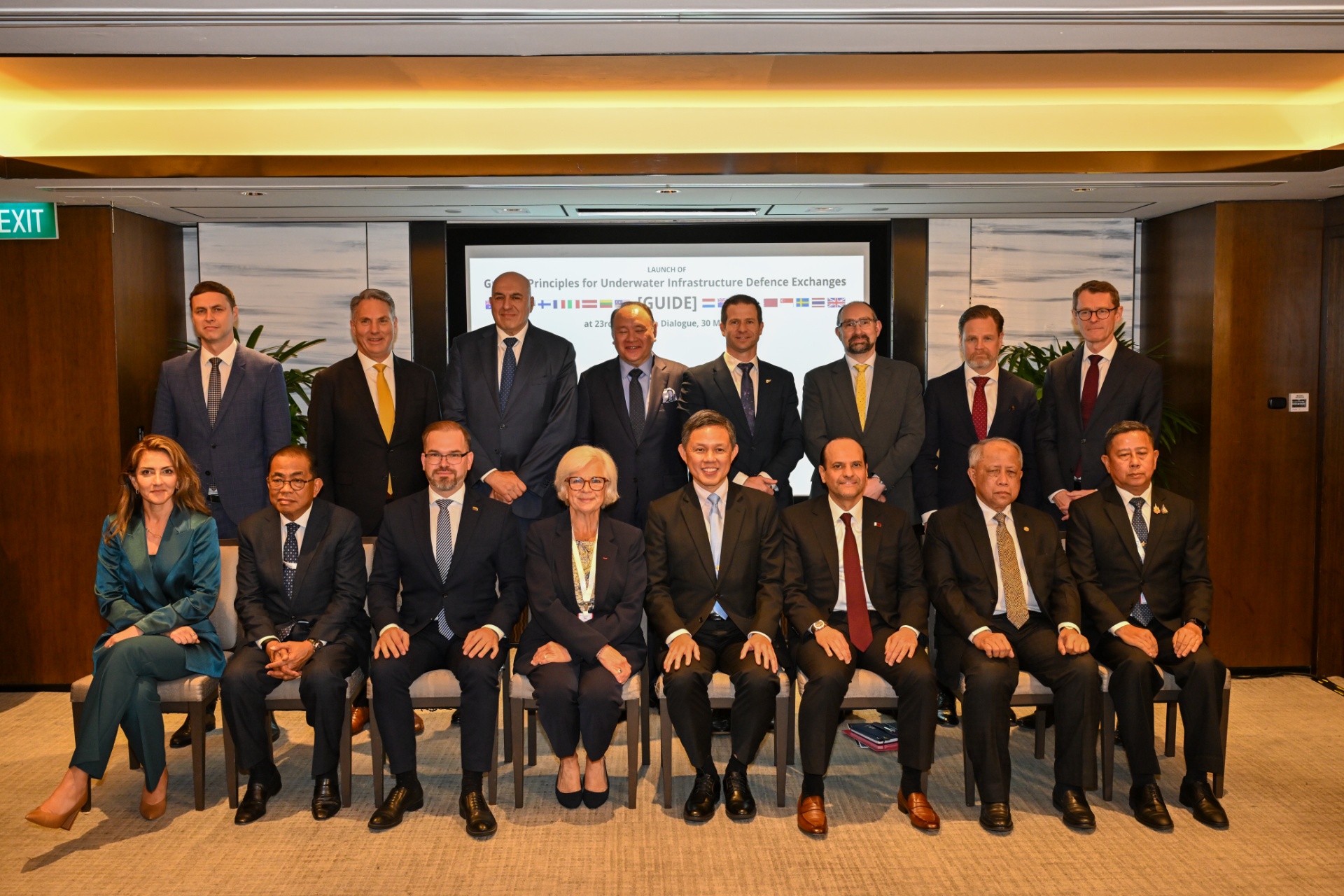
Launched on the sidelines of the 23rd Shangri-La Dialogue, GUIDE is a new framework that brings together countries for defence cooperation in enhancing the security of Critical Underwater Infrastructure.
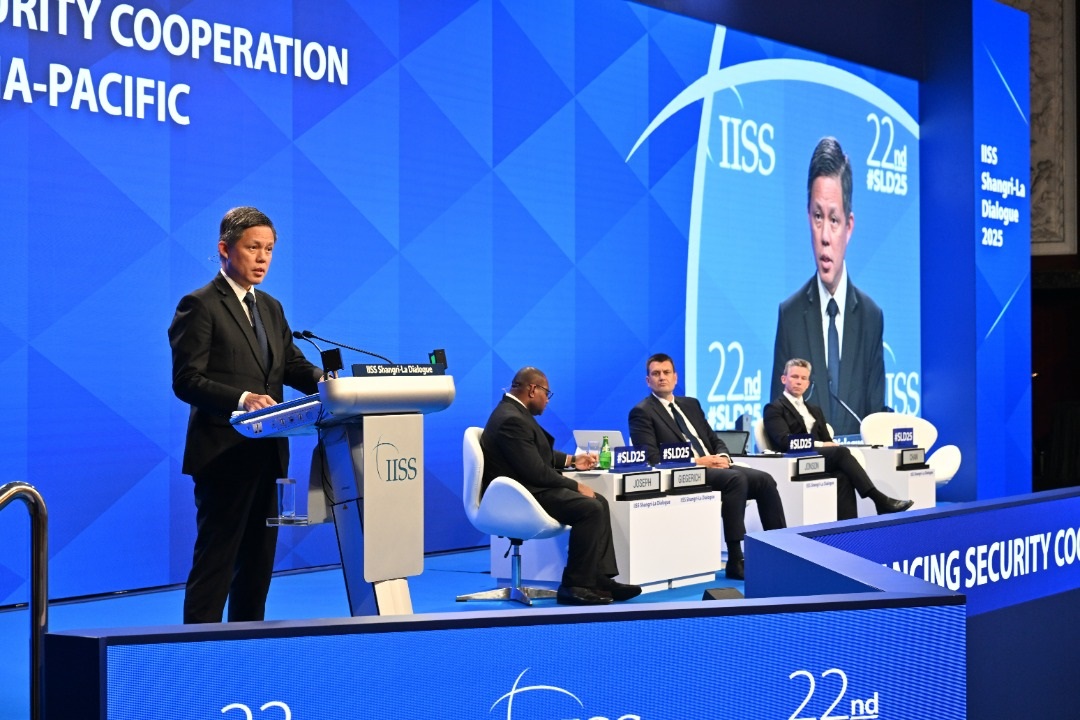
Going alone is not the answer to insecurity – Mr Chan
01 Jun 2025
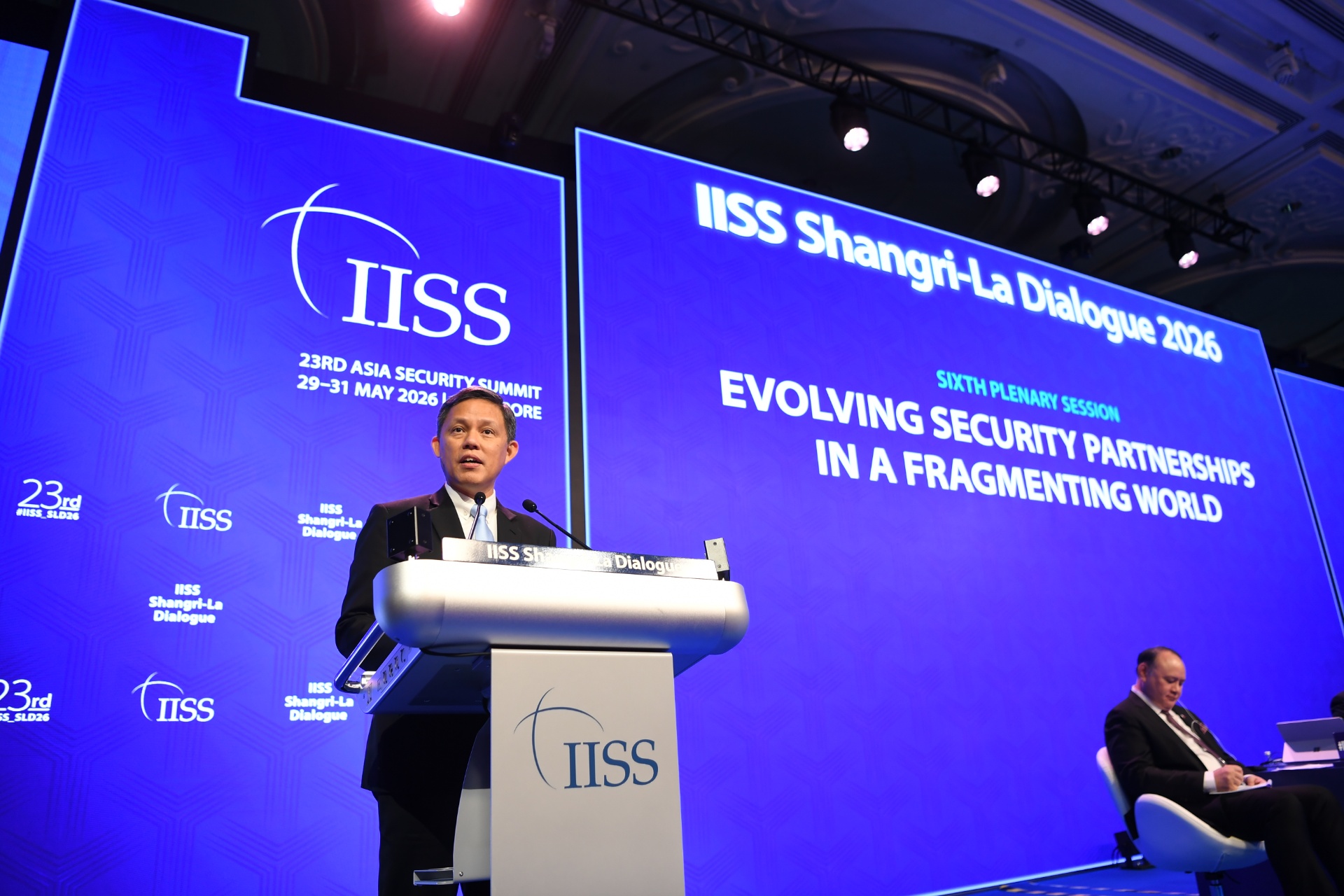
“Going alone is not the answer to insecurity”, emphasised Minister for Defence Mr Chan Chun Sing at the Shangri-La Dialogue (SLD), held from 30 May to 1 Jun. This was one of his main points at his speech at the sixth plenary session on 1 Jun.
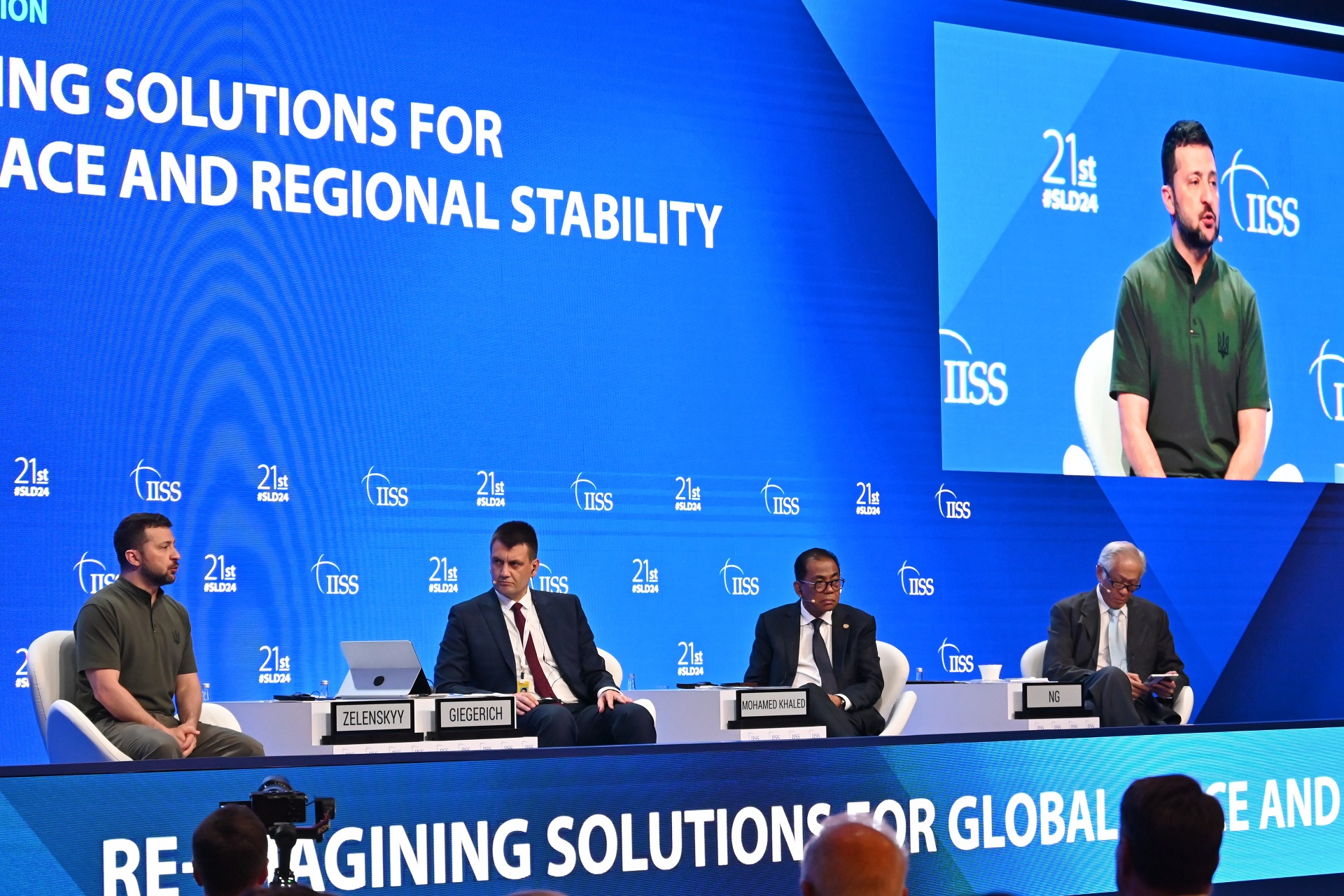
A call for peace at Shangri La Dialogue
02 Jun 2024
A repeated call for peace, especially in Asia. This was Minister for Defence Dr Ng Eng Hen's central message at the 21st Shangri La Dialogue (SLD), held from 31 May to 2 Jun.