
OPS & TRAINING
S'PORE SETS UP REGIONAL DISASTER RELIEF COORDINATION CENTRE
12 Sep 2014
Should a major disaster happen in the region, the affected country will be able to tap on a regional centre based in Singapore to coordinate better the humanitarian assistance and disaster relief (HADR) efforts of foreign militaries.
Should a major disaster happen in the region, the affected country will be able to tap on a regional centre based in Singapore to coordinate better the humanitarian assistance and disaster relief (HADR) efforts of foreign militaries.
Located at the Changi Command and Control (C2) Centre, the Changi Regional HADR Coordination Centre (RHCC) will be fully operational in 2015 and staffed by up to 50 personnel.
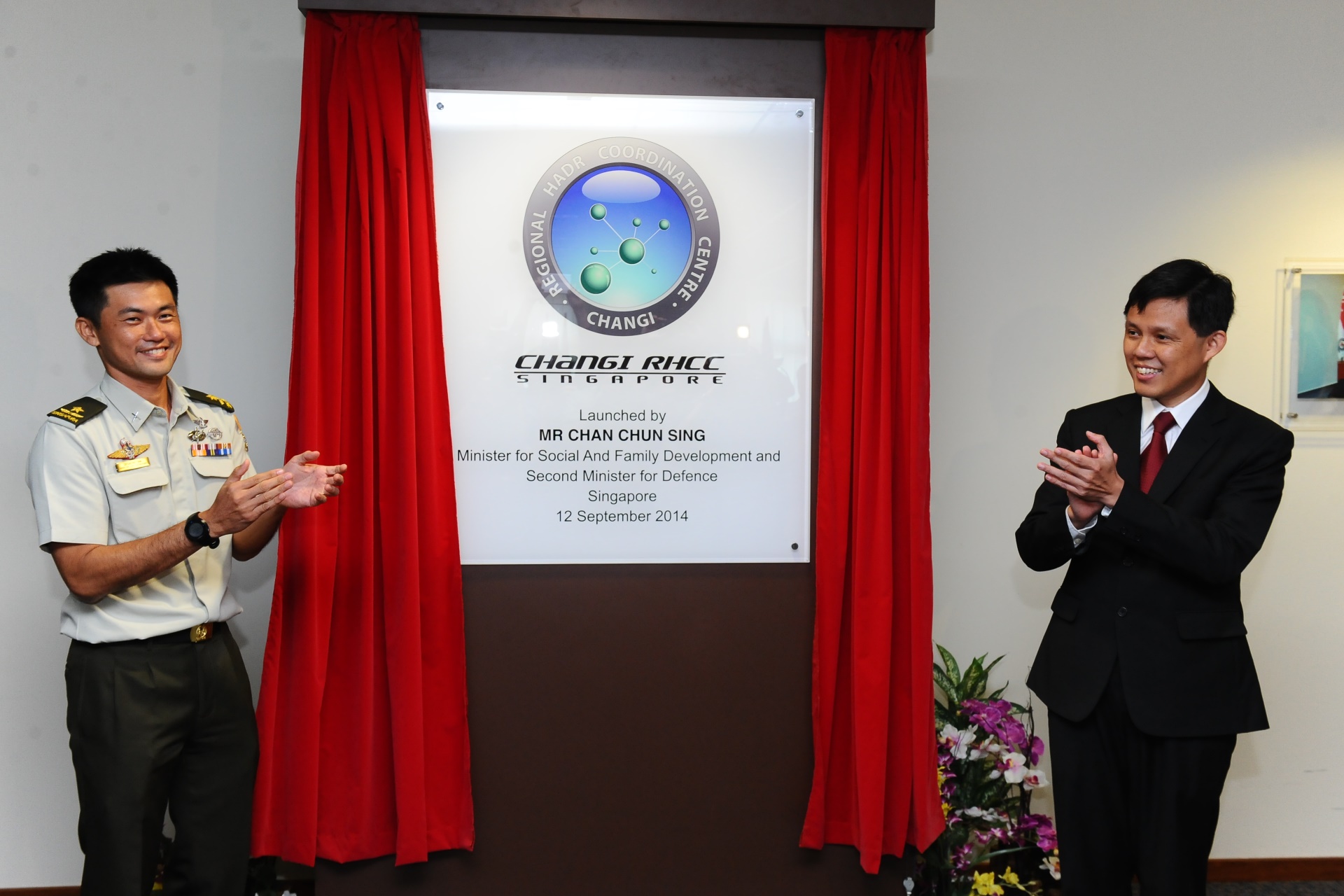
Second Minister for Defence Chan Chun Sing marked the set-up of the RHCC by unveiling the RHCC logo on 12 Sep.
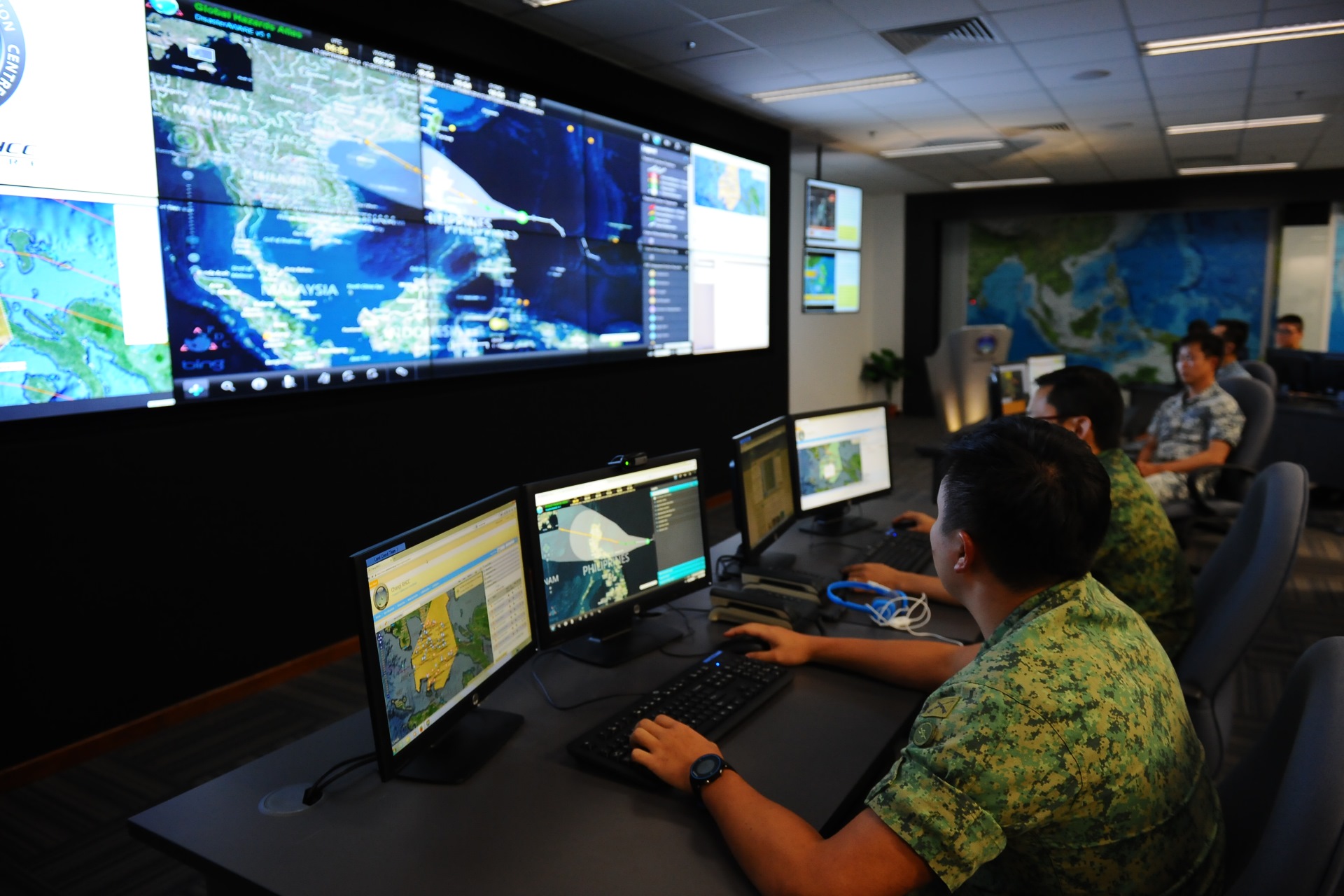
In an impending disaster, the RHCC will piece together a comprehensive situational picture of a potential disaster zone by fusing information from regional disaster early-warning centres, partner agencies, and open sources.
It will include, among other details, the likely path of destruction, possible staging areas, roads leading to the disaster zone, and existing emergency services.
The situational picture will be broadcasted to partner militaries through its OPERA Command and Control Information System (CCIS) web portal. It will be updated constantly when the disaster occurs, in particular, with data on the available aid.
By understanding the needs on the ground, militaries can better prepare their response, and minimise duplication and gaps in the provision of assistance.
If the affected country agrees, planning for a possible multinational HADR will commence at the RHCC. It will tap on a network of international liaison officers, and links with operations centres of partner militaries for tighter coordination.
If necessary, the RHCC can also deploy a mobile coordination unit to support the affected country's military in coordination efforts on the ground.
Mr Chan, who was officiating at the closing of the Regional Conference for Building Civil-Military Capacity for Disaster Relief Operations at Changi C2 Centre, explained the reasons for setting up the RHCC in his closing address.
He noted that militaries were often the first responders in a disaster because of their 24/7 readiness, but there was a need for better coordination, hence Singapore offered to host a coordination centre.
He said: "The RHCC seeks to facilitate military-to-military coordination in disaster response, by supporting an Affected State's military in coordinating the foreign military assistance provided, and liaising with disaster response stakeholders."
Speaking to the media, the Singapore Armed Forces' Director of Joint Operations, Brigadier-General (BG) Desmond Tan, added that the RHCC would help to enhance military coordination that was currently done on an ad hoc basis whenever a disaster happened.
He said: "What we are trying to do is to set up a permanent structure that will allow the militaries to have a single point of contact, a focal point, so that we can have more preparations before the disaster When disaster happens, we hope that this will be the centre that can allow militaries to coordinate their efforts so that they can reach the disaster area faster and more effectively."
BG Tan said Singapore was an ideal country to host the RHCC because it was disaster free, and had the necessary infrastructure. For instance, the RHCC is tapping on the Republic of Singapore Navy's Information Fusion Centre (IFC) that is used for regional maritime security information sharing.
Mr Chan noted in his address that the RHCC, which focused on the militaries, would seamlessly complement existing coordination centres working with civilian agencies, such as the United Nations Office for the Coordination of Humanitarian Affairs, and the Jakarta-based ASEAN Coordinating Centre for Humanitarian Assistance on Disaster Management (AHA).
Agreeing with this point was Major-General Jet B. Velarmino, who directed the Typhoon Haiyan HADR operations in the Philippines last year.
Sharing his personal views, the Commander of 8th Division, Philippine Army, said: "Instead of AHA talking to the different nations' militaries, it can be just talking to one coordinating centre, which is the RHCC, where the military capabilities are integrated."
He added: "For coordination and networking, it will be easier."

ALSO READ IN OPS & TRAINING
Flying into the unknown: Inside RSAF’s mission to bring S’poreans home from Middle East
28 Mar 2026
Despite the risks and complex challenges of flying in a conflict zone, the men and women of the RSAF pulled off a successful mission through careful planning and hard work.
ba35f089-91a3-4ebe-849c-b587552a027d.jpg?sfvrsn=a96efe14_5 "11mar26_news1_photo1 (2)")
RSAF MRTT brings S’poreans home from Middle East
11 Mar 2026
The RSAF deployed two A330 Multi-Role Tanker Transport aircraft to repatriate Singaporeans and their dependents from Saudi Arabia.
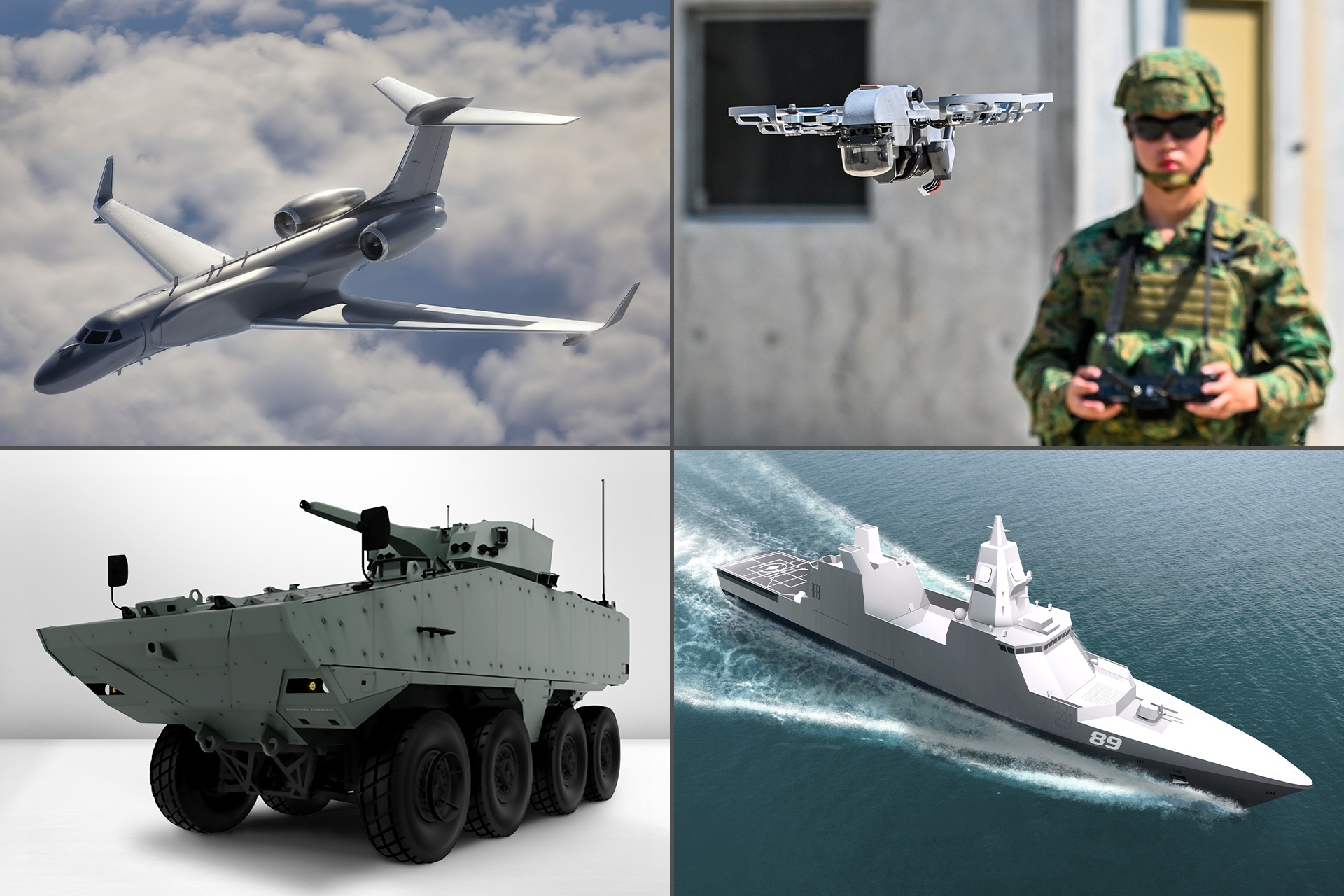
SAF to develop “high-low” mix of capabilities, from high-end new assets to low-cost drones
27 Feb 2026
The Singapore Armed Forces (SAF) must continue to modernise and upgrade to keep pace with an expanded range of threats.