
OPS & TRAINING
S'PORE LAUNCHES ASIA-PACIFIC'S FIRST SUBMARINE SAFETY PORTAL
18 May 2017
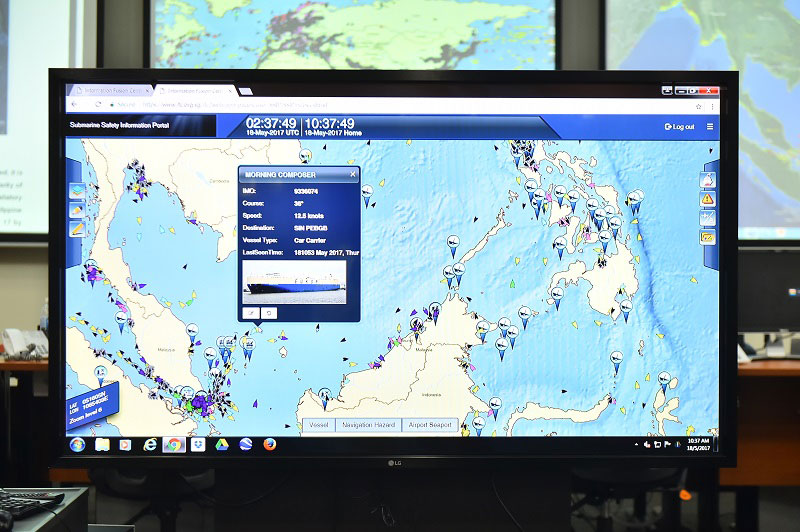
With the growing complexities of maritime issues with interlinked economies and transnational seaborne threats, information-sharing remains the key to keeping the seas safe. Singapore contributed to this with the launch of the Submarine Safety Information Portal (SSIP) on 18 May.
The new portal is dedicated to underwater safety and will provide submarine operating centres and submarines at sea with real-time tracking of deep draft commercial vessels and hazards to prevent underwater accidents. Singapore is the first in Asia-Pacific to launch such a portal.
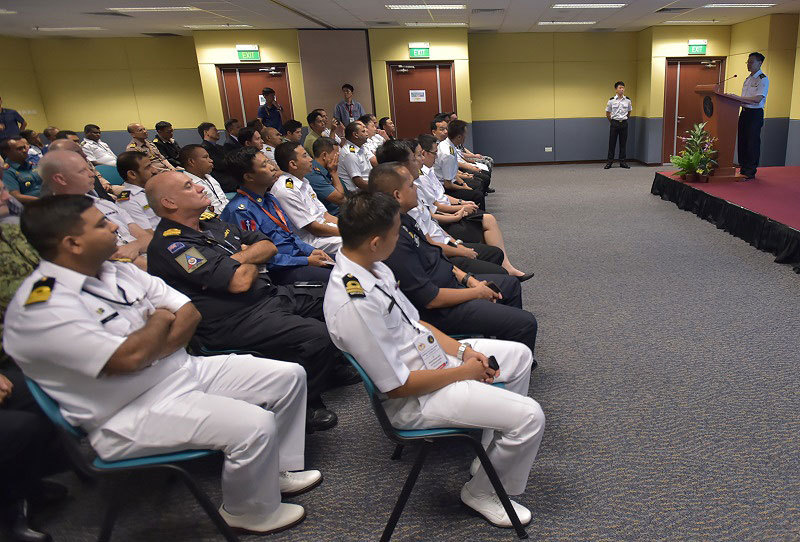
"It is through information-sharing, connecting the dots, and making sense of the complex seascape that we are able to collectively counter the threats we face today," said Chief of Navy Rear-Admiral (RADM) Lai Chung Han.
He was speaking at the closing ceremony of the Maritime Information-Sharing Exercise (MARISX) at the Changi Command and Control Centre on 18 May.
The SSIP will tap on open-source information tracked by the Information Fusion Centre (IFC), such as the movements of fishing vessels, oil rigs and deep draft vessels. In addition, it will contain data like seismic activity and underwater hazard areas, such as places where anti-submarine warfare exercises or Internet cable-laying may be taking place.
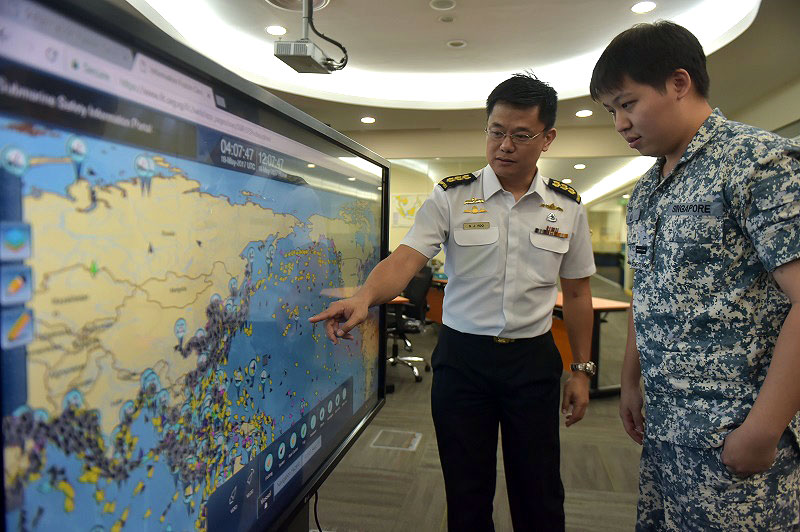
"The IFC uses open-source information to help with maritime security purposes. We are trying to repurpose this open-source information to provide information which is customised for the submarine community," said Colonel (COL) David Foo, Commanding Officer of 171 Squadron, which operates the Republic of Singapore Navy's (RSN's) submarines.
The SSIP can also help in submarine-rescue operations. While Singapore has its own underwater rescue vessel, the MV Swift Rescue, most other countries make use of commercial shippers that despatch Vessels of Opportunity to carry out rescue work. In the event of an underwater accident, the SSIP will be able to show the real-time location of these ships, so that the closest and most suitable vessel can be despatched.
"To be clear, it is not a portal to track submarines, or requires submarine-operating nations to provide information (on submarine locations), because would be counter-intuitive to why we buy submarines in the first place," COL Foo reiterated. "But as long as we can provide this information to help submarine operators to operate more safely, that is the value and contribution of the SSIP."
MARISX, organised by the IFC, is a scenario-driven shore-based exercise to validate linkages among participating operation centres and to practise the information-sharing processes among regional navies.
This year, more than 35 navies and maritime law enforcement agencies from 33 countries took part in the exercise, which ran from 15 to 18 May.
The IFC also hosted the second ASEAN Maritime Security Information-Sharing Exercise during the same period. Naval officers from ASEAN navies worked together through a set of realistic and challenging exercise scenarios to promote information-sharing and enhance cooperation in handling regional maritime security incidents.

ALSO READ IN OPS & TRAINING
SAF & Home Team to refresh Medical Classification System
13 Apr 2026
The refreshed system will allow about 1,200 servicemen annually to be deployed for vocations and roles they were ineligible for previously.
Prime Minister Lawrence Wong observes SAF’s sense-strike integrated capabilities
09 Apr 2026
He witnessed the SAF’s ongoing efforts in leveraging advanced robotics and cross-Service integration to secure Singapore’s interests in an increasingly volatile world.
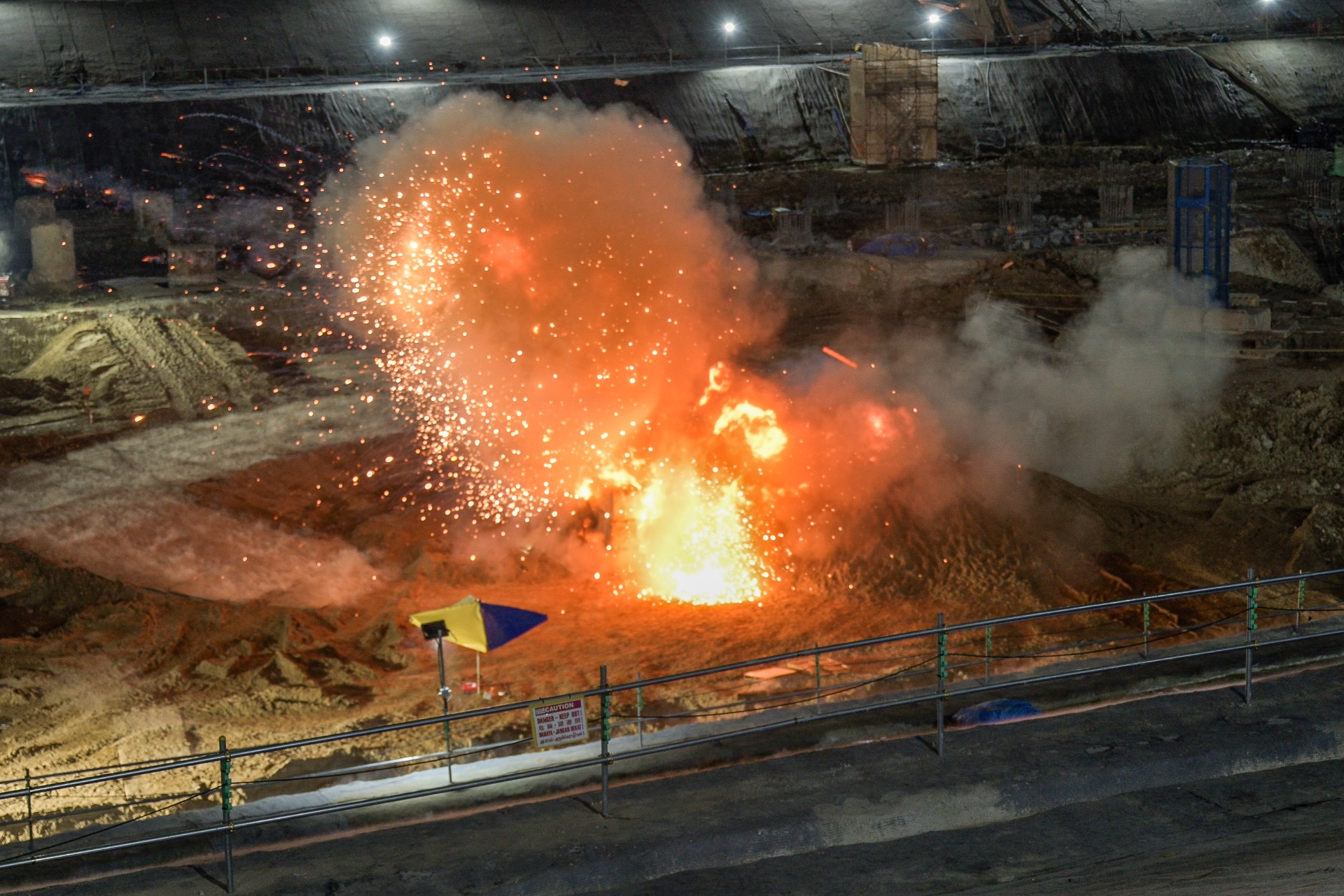
SAF detonates 250kg WWII bomb uncovered at Tanah Merah Coast Road
02 Apr 2026
On 2 Apr, the SAF’s Explosive Ordnance Disposal (EOD) team successfully disposed of an unexploded war relic found at Tanah Merah Coast Road.