
OPS & TRAINING
RSAF PILOTS CRUCIAL TO OPERATION IN NIAS
05 Apr 2005
Several times a day, the inhabitants of Nias Island gather at the local soccer field for a spectacle, but in this case, there is no ball involved.
Since the devastating earthquake shook the town of Gunung Sitoli on 29 Mar, the Singapore Armed Forces (SAF) has been working round the clock to provide a comprehensive rescue-and-evacuate system to bring casualties of the earthquake to suitable healthcare facilities.
While the search-and-rescue operations on the ground have helped save the lives of many people affected by the disaster, a crucial part of the operation lies in the hands of the pilots of the 127 Chinook Squadron of the Republic of Singapore Air Force (RSAF).
Three Chinook helicopters are deployed to the remote regions of Gunung Sitoli, providing for the dispatch of several contingents of rescue workers from the SAF and Singapore Civil Defence Force (SCDF).
To support the SAF medical team on the ground, the Chinooks perform several flights daily into Pulau Nias to evacuate seriously injured casualties to hospitals in the city of Medan.
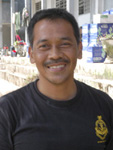
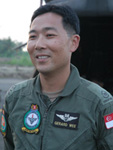
"This is one of the most tiring and extensive operations I've ever been in, mostly because of the many casualties filling up the medical facility. The RSAF is a critical element in this operation, because without the helicopters, a lot of people here would not have received quick medical attention, said First Warrant Officer Mohd Fauzi (left), a member of the SAF medical team stationed at Pulau Nias.
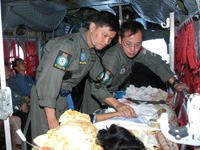
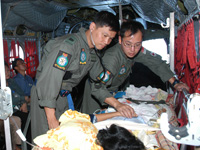
The intense working hours and pressure do not stop in the air there is a medical escort aboard each Chinook flight to take care of the casualties while they are being transported to Medan.
"One of the most challenging things to do is to ensure that the patients are stabilised when they are in the air, because of the thinner oxygen and low pressure, explained Captain (NS) (Dr) Alvin Koh, one of the medical escorts with the 127 Squadron.
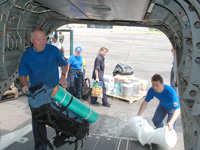
Apart from carrying local cargo and casualties to and from the island of Nias, the Chinooks also provide transportation for foreign bodies going into Nias to aid in the humanitarian effort.
Aid workers and their equipment from America, Hungary and Russia are among those who receive help from the RSAF, often up to a few times a day.
"I'm very appreciative of the Singaporeans, and I am sure that I can be in the air today because the Singapore team is very good, said Vladimir Boreiko, the Chief Coordinator for the Russian Emergency Assistance Team (EMERCOM of Russia).
The RSAF Chinooks also recently rescued several people stranded on the island of Asu.
They had been left stranded during the earthquake when all the other people on the island had escaped on a boat and did not come back for them.
Surviving on whatever food they could find on the island, a family of three Alain Dubois, Jenny Siallagan and their eight-year-old daughter, Naomi could hardly believe their luck when the Chinook crew swooped down and carried them to safety at the SAF base in Medan.
But even as the sun sets, and the last of the casualties and cargo have been sent, there remains work to be done for the members of the Chinook crew, to ensure that everything goes like clockwork in the following day's operations.
It is tiring. We work about 16 to 18 hours a day, but we all want to get the mission done; to get the people out, and the supplies in. Most of us start work at about 4.30 in the morning and it is always a long day for us, said Second Warrant Officer Gerard Wee (left), an Air Control Specialist leader.

ALSO READ IN OPS & TRAINING
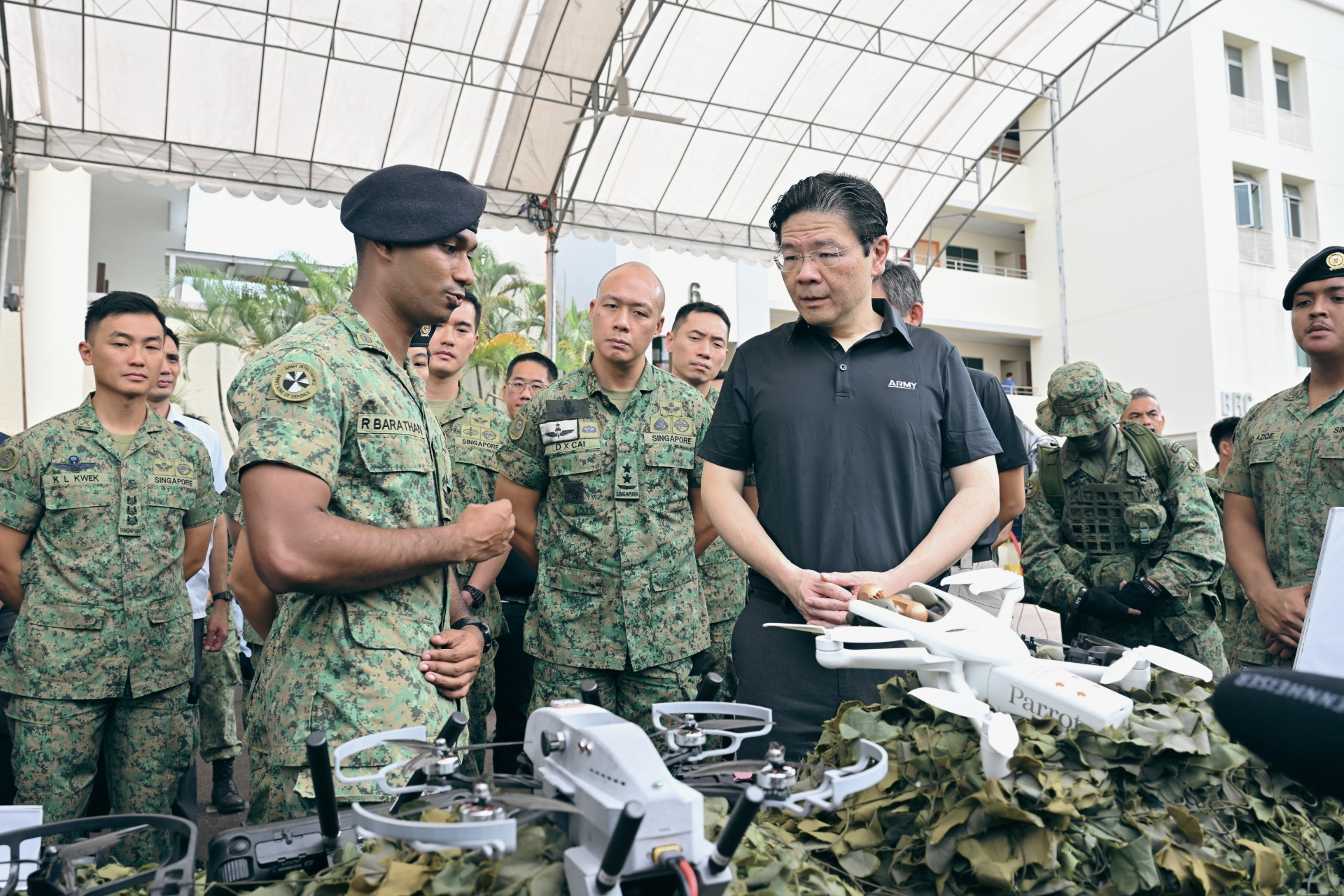
Prime Minister Lawrence Wong observes SAF’s sense-strike integrated capabilities
09 Apr 2026
He witnessed the SAF’s ongoing efforts in leveraging advanced robotics and cross-Service integration to secure Singapore’s interests in an increasingly volatile world.
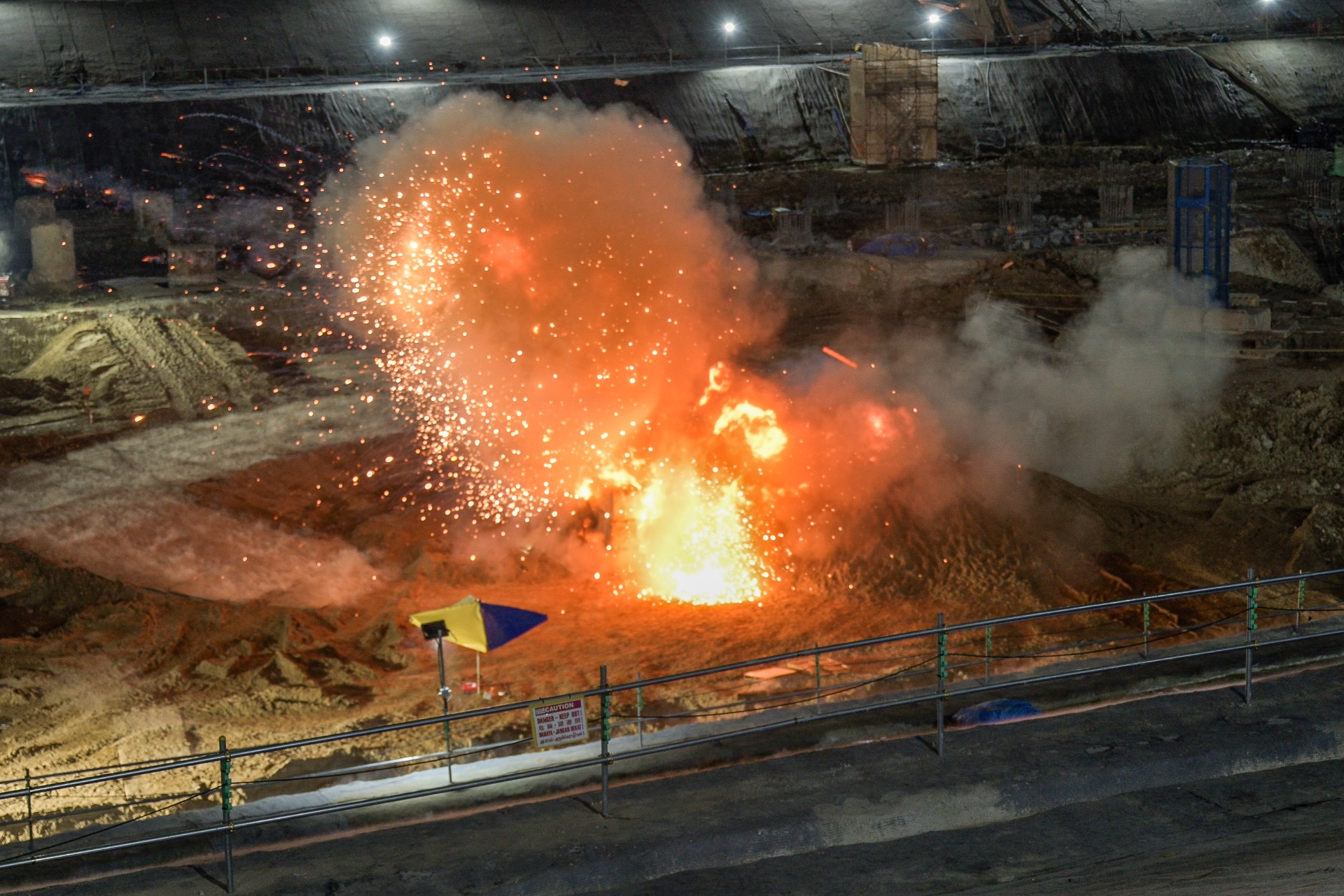
SAF detonates 250kg WWII bomb uncovered at Tanah Merah Coast Road
02 Apr 2026
On 2 Apr, the SAF’s Explosive Ordnance Disposal (EOD) team successfully disposed of an unexploded war relic found at Tanah Merah Coast Road.
Flying into the unknown: Inside RSAF’s mission to bring S’poreans home from Middle East
28 Mar 2026
Despite the risks and complex challenges of flying in a conflict zone, the men and women of the RSAF pulled off a successful mission through careful planning and hard work.