
OPS & TRAINING
LAUNCHING LIGHTNING STRIKES
30 Jun 2008
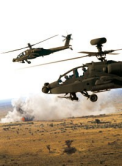
Last month, more than 500 personnel from the Army and Air Force took part in Exercise Lightning Warrior, an integrated air-land live-firing exercise held in the Northern Cape province of South Africa. PIONEER checks out how the 3rd-Generation SAF has been honing its capabilities in division strike operations.
A fundamental part of the 3rd-Generation SAF is precision fires: directing and delivering fire on an intended target swiftly and accurately.
Vital to the success of such missions is the ability to detect, track and destroy these targets as quickly as possible. To this end, the SAF employs the latest technology to network a range of sensors and shooters in order to hunt and take out static, as well as mobile, targets.
Exercise Lightning Warrior, conducted at the Lohatla Combat Training Centre from 10 to 27 May, gave form to this battlefield concept, which involves air and land assets.
This tight web of sensors and shooters, said exercise director COL Lim Teck Yin, "brings fires in the shortest possible time", in addition to raising efficiency and reducing collateral damage.
Not only does it integrate the division headquarters with units on the ground, it also strengthens working ties between the Army and the Air Force, he added.
All-round awareness
Ex Lightning Warrior is among the various exercises that the SAF has conducted overseas in the past few years to validate its new war-fighting ideas and hardware.
With advances in technology come chances to refine existing capabilities. One such capability, as displayed in this exercise, is a synthesised air-land picture that affords all-round situational awareness.
"In the past, without a fused air-land picture, missions were still fairly sequential - you had to call in the land strikes before calling in the air strikes - so the sensor-shooter cycle was not as compressed as it is today," said exercise air director COL Yeo Yee Peng.
"For mobile targets, there is very little time to find and engage them, so the window for error is very small. Today we can do it in seconds and minutes because we have complete situational awareness from both the air and land perspectives."
Mobile targets include tactical command posts, armoured vehicle columns and also artillery platforms that can set up, fire and flee within minutes.
As a result of such air-land integration, he added, the Army and Air Force can optimise land and air assets to destroy targets.
Cool head, fast hand
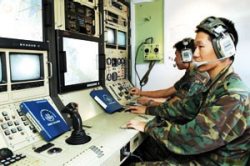
Woven into the combined situation picture are constant real-time data feeds from weapon-locating radars and unmanned aerial vehicles, which commanders can view and analyse at the Division Strike Centre (DSC).
The DSC, which stands at the heart of the network of sensors and shooters, makes use of these assets in planning, coordinating and executing precision fires.
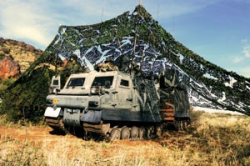
It also gets surveillance information from Strike Observers Mission (STORM) teams, six-man mobile squads mounted on BRONCO All-Terrain Tracked Carriers that observe the activities of opposing forces at the front-line and call for fire support when needed.
"The STORM team is an air-land integrating agent. It fuses the intelligence picture that it gets from its on-board sensors as well as external sensors," said MAJ Dinesh Vasu Dash, Commanding Officer of the 21st Battalion, Singapore Artillery (21 SA).
"With that, it cues the necessary shooters to engage a particular target that we're planning to engage. The STORM team is an orchestrator in battle, with a close support role."
Being linked to the larger sensor-shooter web, said deputy STORM commander LTA Jerome Lim, allows STORM teams to serve as the "hands and legs" of the DSC.
The DSC can thus help the division to monitor several targets at once and choose the weapon systems that can best eliminate them, thus killing them in the shortest time possible.
Tightening the loop
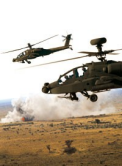
The exercise climaxed with a live-firing campaign on 17 May, which saw AH-64D Apache Longbow helicopters and Singapore Self-Propelled Howitzers demolish five armoured 'enemy' vehicles.
Viewing this display on site was Minister for Defence Teo Chee Hean, who noted that the exercise "confirms the SAF's capability to have comprehensive awareness and precision strike on multiple targets".
"What this means is that the SAF division now has the capability to see first and to strike first, well into the division's depths, and that means that the division is able to influence the battle well into the depth," said Mr Teo.
"This exercise confirms our ability to do that by having a very tight loop between the sensors when you detect the target, and being able to bring precise weapons onto the target."
Part of this depth includes platforms such as the Apache helicopters, which made their operational debut at the exercise.
The Apache has "a robust information system" that lets it share data with other systems and thus act as a sensor on top of its attack capabilities, said 120 Squadron's Commanding Officer LTC Ng Wei-Jin.
Such flexibility in surveillance operations can contribute to a division's mission success in an increasingly complex battlefield landscape.
Artillery Hunting Radar
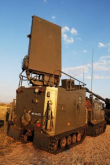
The Artillery Hunting Radar (ARTHUR) was one of the weapon-locating radars used in Ex Lightning Warrior, and is highly effective against guns and rockets.
Mounted on a BV-206 tracked platform, it has a range of 40km and can track up to eight different types of hostile rounds at the same time.
It also helps friendly artillery forces perform fire control missions. With a crew of four, it can be deployed within five minutes.
"The ARTHUR can track 'enemy' rounds within seconds and transmit their location to the higher headquarters," said ARTHUR commander 2LT Amos Lee from 24 SA.
"This will coordinate our guns to aim at the targets, and this counter-fire mission will take just a few minutes."

ALSO READ IN OPS & TRAINING
SAF & Home Team to refresh Medical Classification System
13 Apr 2026
The refreshed system will allow about 1,200 servicemen annually to be deployed for vocations and roles they were ineligible for previously.
Prime Minister Lawrence Wong observes SAF’s sense-strike integrated capabilities
09 Apr 2026
He witnessed the SAF’s ongoing efforts in leveraging advanced robotics and cross-Service integration to secure Singapore’s interests in an increasingly volatile world.
SAF detonates 250kg WWII bomb uncovered at Tanah Merah Coast Road
02 Apr 2026
On 2 Apr, the SAF’s Explosive Ordnance Disposal (EOD) team successfully disposed of an unexploded war relic found at Tanah Merah Coast Road.