
OPS & TRAINING
HERALDING THE NEW-AGE NAVY
31 May 2007
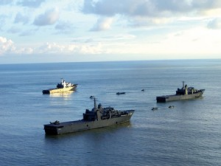
The Singapore Navy ensign was first raised on 5 May 1967 and from the initially-formed Singapore Naval Volunteer Force to the Republic of Singapore Navy (RSN) in 1975, it has developed into a balanced, versatile and capable force of some 35 ships today, with strong capabilities in the various dimensions of warfare, maritime security and Operations Other Than War.
As the RSN celebrates its 40th anniversary this year, it is poised at the cusp of transformation into the third-generation Navy. PIONEER looks at the exciting slew of new developments in store for the Navy and the integration opportunities ahead.
The RSN spent its early years building up a credible maritime defence capability with significant amount of resources and energy devoted to acquiring naval ships and weaponry. The next phase saw a consolidation within the Navy, where it focused on developing its capabilities and integrating its systems and ships to form a strong fighting force.
Over the years, the RSN has acquired a balanced fleet of Missile Gunboats, Missile Corvettes, Patrol Vessels, Anti-Submarine Patrol Vessels, Mine Counter Measure Vessels, Landing Ships Tank and Submarines. These vessels operate seamlessly together, supporting operations and exercises.
Today, the RSN is faced with a complex security environment that places greater demands on operations dealing with terrorism, peacekeeping and humanitarian crisis. The RSN has to constantly ensure that its capabilities can meet the demands of today and challenges of tomorrow.
Here's a look at some of the new platforms that will be operationalised in the coming years:
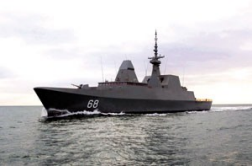
Formidable-class Frigates
The frigates possess a potent suite of capabilities. They are equipped with a multi-function radar which provides three-dimensional surveillance and operates with the Aster active radar-homing surface-to-air missile (SAM).
The ships can maintain air surveillance of more than 200km and provide effective area air defence for friendly maritime forces. This represents a quantum leap in the RSN's anti-air warfare capability and can afford protection-in-depth for Singapore against air threats. In the underwater arena, the frigate s active low frequency towed sonar enables detection of submarines at extended ranges.
In the surface arena, the frigate has the OTO Melara 76mm gun and Harpoon surface-to-surface missiles (SSMs). The frigate has also incorporated stealth technology to increase its survivability.
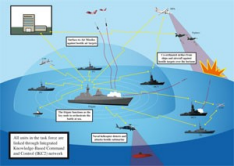
The frigates form key nodes in the Integrated Knowledge-based Command and Control (IKC2) network of the third-generation SAF. Their indigenously-developed Combat Management System, which has state-of-the-art data fusion, sense-making and decision-support engines, increases battlespace awareness and orchestrates sensors and weapons employment at the force level. Sensor-shooter loops will be short, giving the enemy little time to react. The frigates offer many battlefield options and increase the range of operational effects the SAF can bring to bear on any potential adversary (see infographics at the of the story).
The first of its class, RSS Formidable, was commissioned on 5 May and is ready for operational service. The other five frigates are in various stages of outfitting and trials. Look out for them to be fully operational by 2009.
Vastergotland Submarines
The RSN's submarine sojourn began in the late 1980s when eight RSN officers were sent to Germany for a submarine operating course. A relatively unfamiliar field for the RSN then, it was only in 1996 that the RSN embarked on a submarine training programme conducted by the Royal Swedish Navy (RSwN). Shortly after, four Sjoormen-class submarines (re-named as Challenger-class submarines under the RSN) were acquired from the RSwN. Armed with modern wire-guided torpedoes, these submarines can deal a lethal blow to the enemy's surface fleet. Their stealthy nature also makes them hard to locate and track.
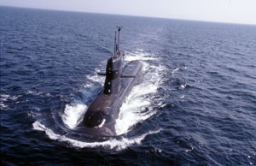
The Challenger-class submarine (above) that is currently being operated by the RSN.
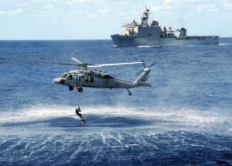
The SAF is acquiring the Sikorsky S-70B helicopter, which is similar to the US Navy's Sikorsky SH-60 Seahawk (above).
The Protector USV protecting critical installations in the North Arabian Gulf.
In 2005, Singapore signed the contract to acquire two Vastergotland-class submarines from Sweden. As these submarines are also of Swedish origin, the RSN will stand to benefit from synergies in both crew training and logistics support.
Last month, the first batch of 30 submariners who will be manning the Vastergotland-class submarines headed for a two-year training stint in Sweden. The two submarines will be upgraded and converted for operations in tropical waters before they are delivered to the RSN. Expected to enter service by the end of this decade, they will extend the RSN's reach in the underwater domain.
Sikorsky S-70B naval helicopters
In January 2005, MINDEF signed a contract with Sikorsky Aircraft Corporation to acquire six new S-70B naval helicopters that will be organic to the frigates. They are projected for delivery between 2008 and 2010.
These naval helicopters will be equipped with modern anti-surface and anti-submarine combat systems. They will also provide stand-off detection and attack capability, and can locate and neutralise a potential adversary's enemy submarine before it comes within range to threaten friendly maritime units and vital shipping lanes. The helicopters can also undertake search-and-rescue as well as casualty evacuation operations in Operations Other Than War.
"We are now looking at the area of training to prepare to operate our naval helicopters," revealed Chief of Navy RADM Ronnie Tay.
"We are planning to do this in cooperation with our foreign partners from other navies who are well-established in naval helicopter capabilities."
"We will be sending our people for courses, looking at training attachment for the ships in the squadron and doing exercises with them and their helicopters," he added.
The naval helicopters will be raised as a squadron in the Republic of Singapore Air Force (RSAF) and be piloted by RSAF pilots, but the system operators will be from the Navy.
Unmanned systems
Unmanned systems are starting to play an increasingly important role in the conduct of military operations. They give commanders greater battlefield awareness by collecting intelligence and can also be deployed without putting servicemen in danger.
The RSN is amongst the first few navies in the world to deploy Unmanned Surface Vehicles (USVs) for operations. During Landing Ship Tank RSS Resolution's three-month deployment to the North Arabian Gulf in 2004, the Protector USV was used to assist in protecting critical installations from terrorist attacks. The fishing dhows or traditional boats transiting the waters of the North Arabian Gulf were surprised to be intercepted by a craft with no one on board. They duly complied with the instructions issued by the USV.
Currently, the Navy is experimenting with different types of unmanned systems for a variety of tasks. Unmanned Aerial Vehicles (UAVs) and USVs will be used for maritime surveillance, interception and force protection, while Autonomous Underwater Vehicle (AUV) systems will further expand the Navy's capabilities in the underwater dimension.
Paradigm shift in naval training
New hardware brings about new capabilities, new technologies and operating concepts. These new systems are complex and can quickly process large amounts of information and recommend what they deem to be the best solutions. The RSN will still have to rely on the good judgment of highly-skilled operators, who will have to decide whether to accept those solutions and press the right buttons.
Having such competent and capable operators does not occur by chance. The RSN places strong emphasis on the rigorous training of its people in both the warfare competencies and the fundamentals of naval disciplines.
There is a paradigm shift for naval training from 'Training for Performance' to include 'Learning for Capability'. Instead of vocational knowledge and training, The Naval Training Command (TRACOM) has put in place systems and methodologies like problem-based learning, reflection and journaling, coaching and competency-based learning to help servicemen develop the habit of self-directed learning. This will reinforce their individual capabilities and make them more competent in performing their jobs.
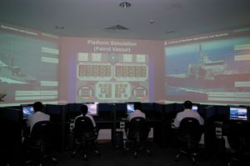
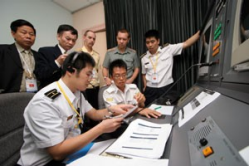
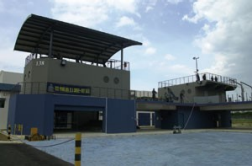
The Platform System Emulation Centre (above) and the Basic Naval Trainer (below) are just two of the many facilities available at the Changi Naval Training Base. These simulators and emulators allow trainees to train even when they are not on board an actual ship.
2SG Kunal, who recently completed the Petty Officers Course at the Institute of Maritime Operations and Systems (IMOS) located at RSS Panglima (Changi Naval Training Base), felt that the practice of journaling had allowed him to "capture personal views, observations and perceptions" and instilled in him the good habit of "inquiry and self-reflection".
SSG Tan June Chye, a recent graduate of Chief Petty Officers Course, benefited from the coaching he received during the course. The skills he acquired listening and questioning skills - as well as the GROW and Creative Tension models, have equipped him to be a mentor to his friends and even his wife.
Third-generation sailors not only have to be good at their job; they also need to be active learners and eager innovators, able to create new knowledge by assimilating new information or re-interpreting existing information, thereby become more capable communicators, problem-solvers and leaders.
Inter-linked interoperability
Besides looking to improve inwardly, the RSN also seeks to build bridges with its partners from the Army and Air Force, national maritime agencies and foreign navies.
"For inter-Service, we need to work with the other Services as one SAF, fighting as an integrated system in an orchestrated manner for maximum effectiveness," said RADM Tay.
"The Air Force supports us in maritime air operations and participates very regularly in our sea exercises. We support the Army in terms of transportation. The maritime patrol aircraft is a good example of integration, and naval helicopters will go one step further since they will be operating off the frigate, with both air force pilots and technicians located on the ship."
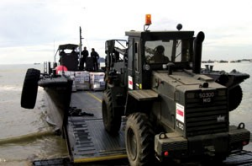
RSN's fast craft helping to transport Army engineering vehicles during Ops Flying Eagle in January 2005.
The three Services have worked together seamlessly on many occasions, which was clearly shown in the Operation Flying Eagle (OFE) tsunami disaster relief operation where they worked together off the LSTs.
Going forward, RADM Tay foresees even closer networking among the Services, with the frigates being the centerpiece in the IKC2 realm, sharing information and contributing in the various domains.
Besides working within the SAF, the RSN also works very closely with the other agencies such as Maritime and Port Authority (MPA), Police Coast Guard (PCG) and Immigration and Checkpoint Authority (ICA).
The agencies have different capabilities, so they need to coordinate and cooperate with one another. The RSN s Coastal Command, MPA and PCG have developed operational processes such as routing of ships through the port waters and coordinating routine patrols. New capabilities like the joint RSN/PCG Accompanying Sea Security Team (AsseT) are also developed to deter terrorist acts and enhance the security of the ships. Exercise APEX, a large-scale exercise that brings the agencies closer together, is held annually.
Friends from near and far
Finally, establishing firm ties with partners in the region and beyond is essential since the threats faced today are transnational and sea lanes traverse through many different maritime boundaries.
The number of foreign exercises that the RSN conducts has increased seven-fold since the early-1980s, from a mere six to 45 last year. The scope and complexity of the exercises have also expanded.
For example, the SIMBEX series of exercises with the Indian Navy (IN) has grown from anti-submarine warfare exercises to advanced exercises involving air, surface and sub-surface warfare dimensions.
The recent annual Singapore-US Cooperation Afloat Readiness and Training (CARAT) exercise in 2006 included a combined boarding exercise by both boarding teams during the sea phase, and the first joint symposium on maritime security.
Bilateral relations with the navies of Singapore's immediate neighbours form some of the most important partnerships of the RSN. In 1992, the Indo-Sin Co-ordinated Patrols (ISCP) were established to combat sea robberies and piracy in the Singapore Strait. More recently, in May 2005, the RSN and TNI-AL launched Project SURPIC to strengthen the capability of ISCP by enabling the sharing of a common sea situation picture.
The RSN actively participates in a number of key multi-lateral forums such as the Five Power Defence Arrangements (FPDA), Western Pacific Naval Symposium (WPNS) and the ASEAN Regional Forum (ARF). The annual FPDA exercise is an important means for FPDA forces from Australia, Malaysia, New Zealand, Singapore and the United Kingdom to come together for capacity building and to enhance their level of inter-operability, especially in dealing with new emerging security threats. It has evolved and expanded its focus to deal with non-conventional threats, including threats to maritime security.
"There are clearly benefits of working together. We bring different capabilities and competencies to the table to solve a problem, whether doing a search and rescue operation or enforcing maritime security," said Chief of
Staff (Naval Staff) RADM Chew Men Leong.
Participants from various member nations taking part in the first ARF maritime shore exercise held at Changi Naval Base in January.
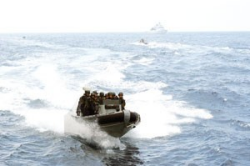
Multilateral and bilateral exercises are carried out at sea on a regular basis.
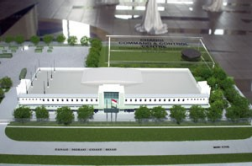
Scale model of Changi C2 Centre
IKC2 network of the third-generation SAF (Click to view larger image)
"For example, most navies only have a handful of minehunters, and we know how painstakingly slow MCM operations are. Therefore, if there should be mine threats to our waters, we would need all the MCM capability we could muster to open the sea lanes to shipping quickly, for there would be a huge economic cost with each day's delay."
National and international collaboration in maritime security will receive a huge boost come 2009. The Changi Command and Control Centre (Changi C2 Centre), a one-stop information and response coordination hub for Singapore's maritime security needs as well as a key node in the region s information-sharing network will be ready by then.
With the Changi C2 Centre, officers from the local maritime agencies will come together under one roof, and in the event of maritime incidents or crises, they will plan maritime security operations together.
The centre will also collate and share maritime information with international security partners to enhance awareness of the maritime security situation. It is also designed to support the planning and conduct of bilateral and multilateral exercises or operations.
With the many new developments coming up, RADM Tay summed up his vision for the future as such: "Even as we realise the third-generation Navy, we always want to make certain that our Navy remains committed, strong and ready."
The RSN is focused on realising the planned changes and working towards integration with the other Services for a network-centric SAF. At the same time, the Navy remains ready for challenges that may come its way, with a people united by a common cause - ensuring the seaward defence of Singapore and the security of its sea lanes.

ALSO READ IN OPS & TRAINING
SAF & Home Team to refresh Medical Classification System
13 Apr 2026
The refreshed system will allow about 1,200 servicemen annually to be deployed for vocations and roles they were ineligible for previously.
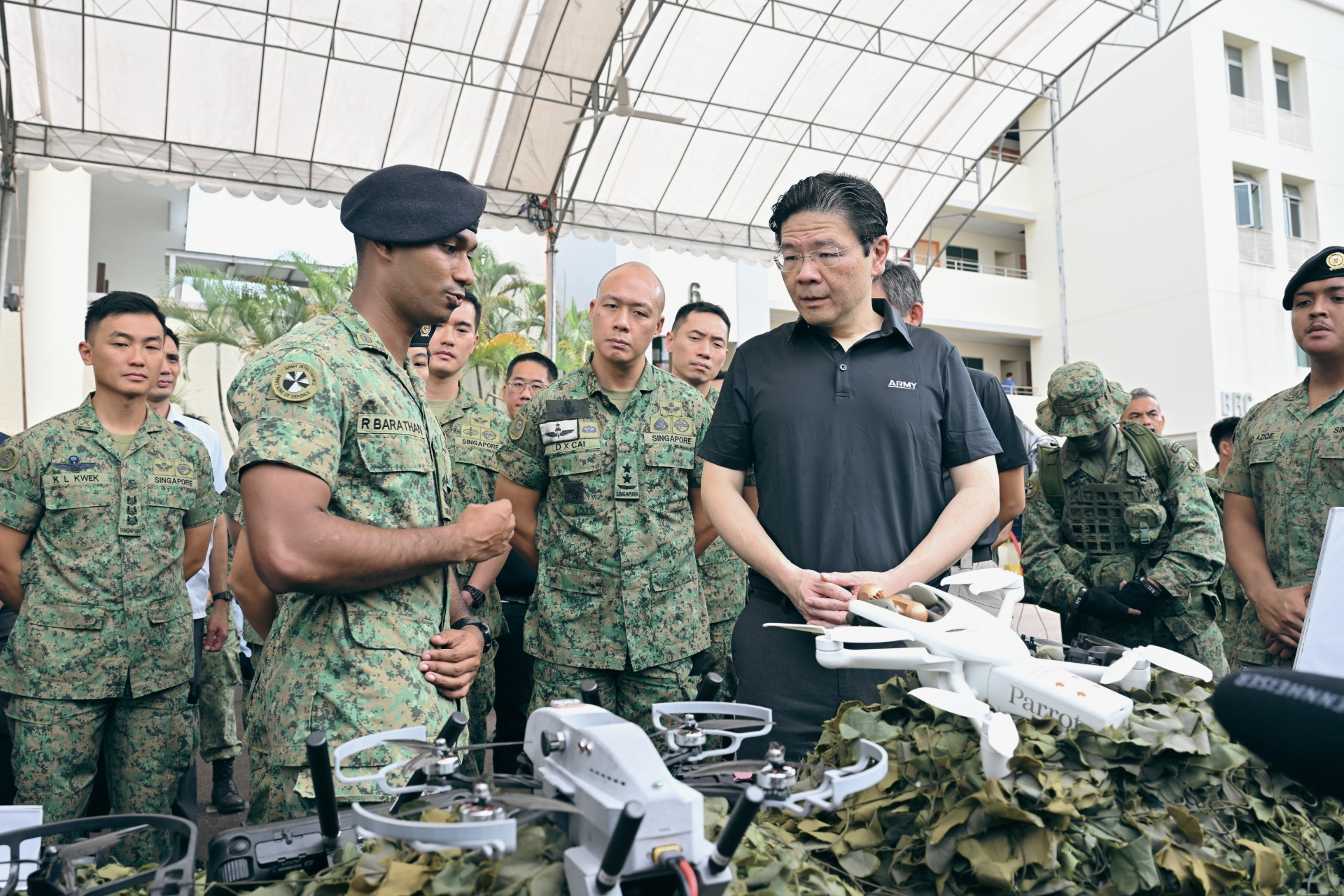
Prime Minister Lawrence Wong observes SAF’s sense-strike integrated capabilities
09 Apr 2026
He witnessed the SAF’s ongoing efforts in leveraging advanced robotics and cross-Service integration to secure Singapore’s interests in an increasingly volatile world.
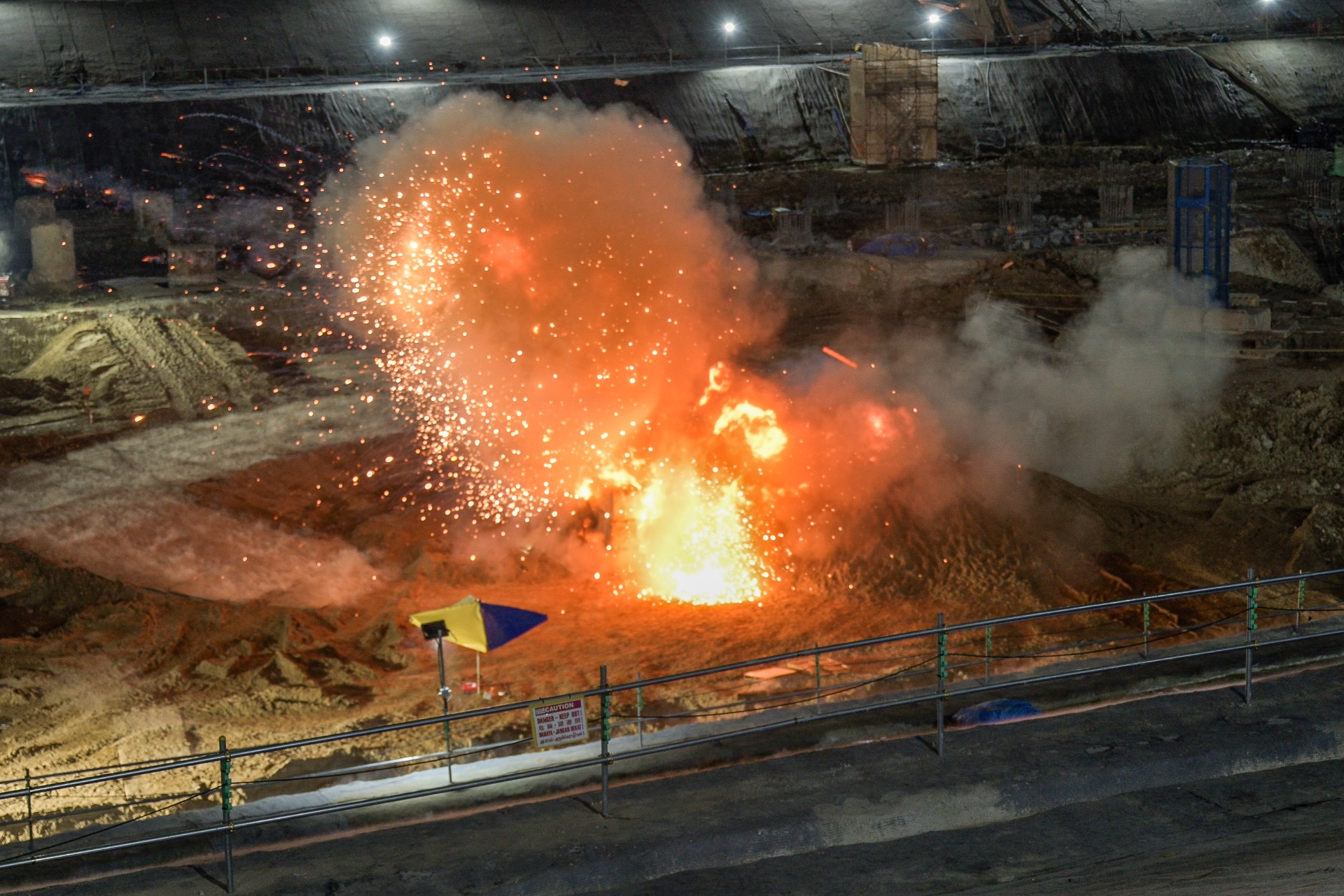
SAF detonates 250kg WWII bomb uncovered at Tanah Merah Coast Road
02 Apr 2026
On 2 Apr, the SAF’s Explosive Ordnance Disposal (EOD) team successfully disposed of an unexploded war relic found at Tanah Merah Coast Road.