OPS & TRAINING

HELP FROM ABOVE

24 Oct 2019

A successful aerial resupply run can play a crucial role in making sure that soldiers live to fight another day. See how the Singapore Armed Forces (SAF) exercised this capability at this year’s Exercise Wallaby.
24oct19pnr-photo1

Story by

Photos by


What happens when troops are in the middle of a battle and ammunition runs low? How will they get fresh supplies if they are in an inaccessible location? This is where aerial resupply is critical in getting important items to troops when land transportation is not an option.

Items that can be air dropped include ammunition, medical supplies, rations and water, and even vehicles and equipment. At Exercise Wallaby (XWB) 2019, the aerial cargo riggers of 3rd SAF Transport Battalion (3 TPT) and the Republic of Singapore Air Force's (RSAF's) C-130 Hercules transport aircraft crew work together to put their skills to the test.

Here's how it all (literally) went down:
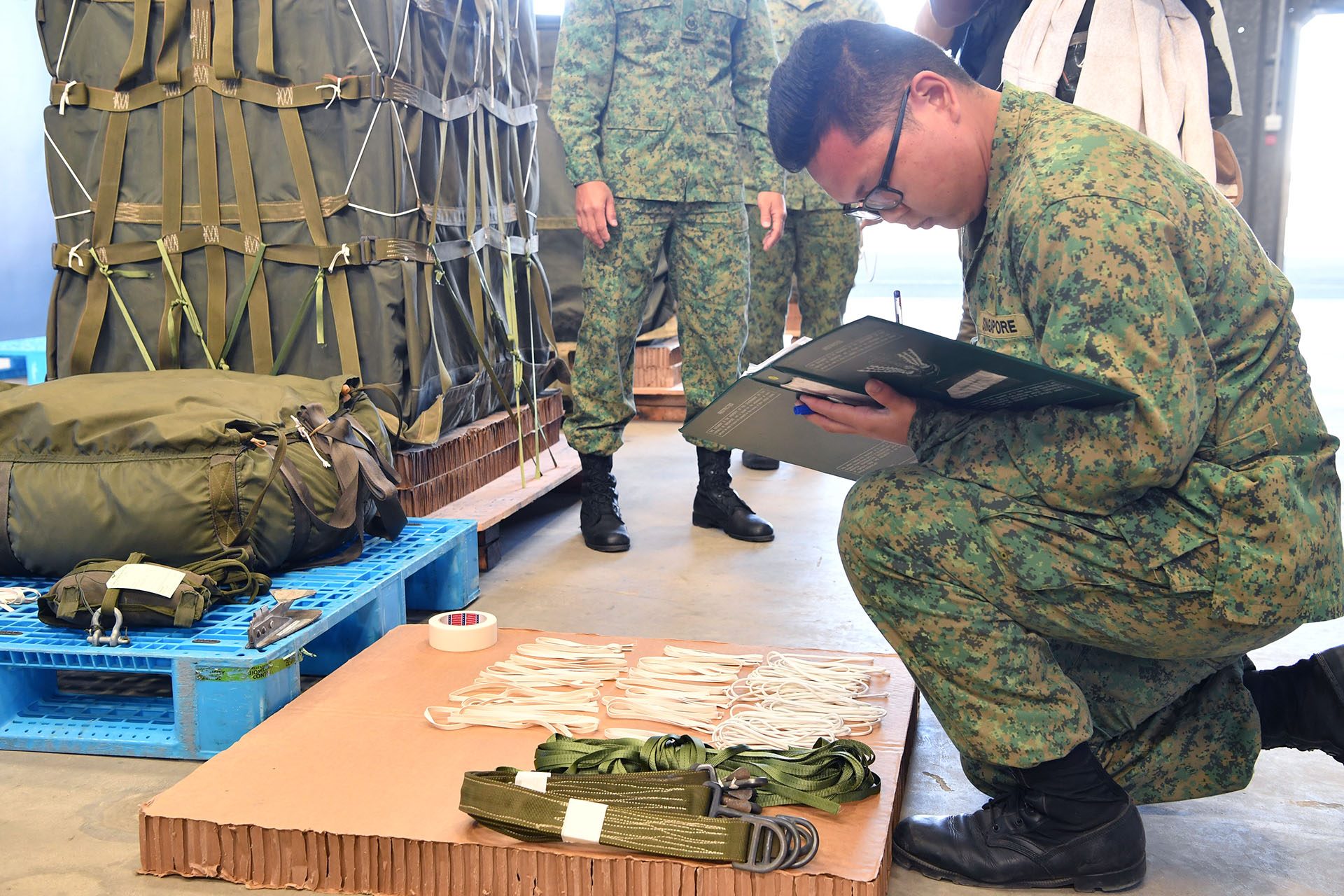
 

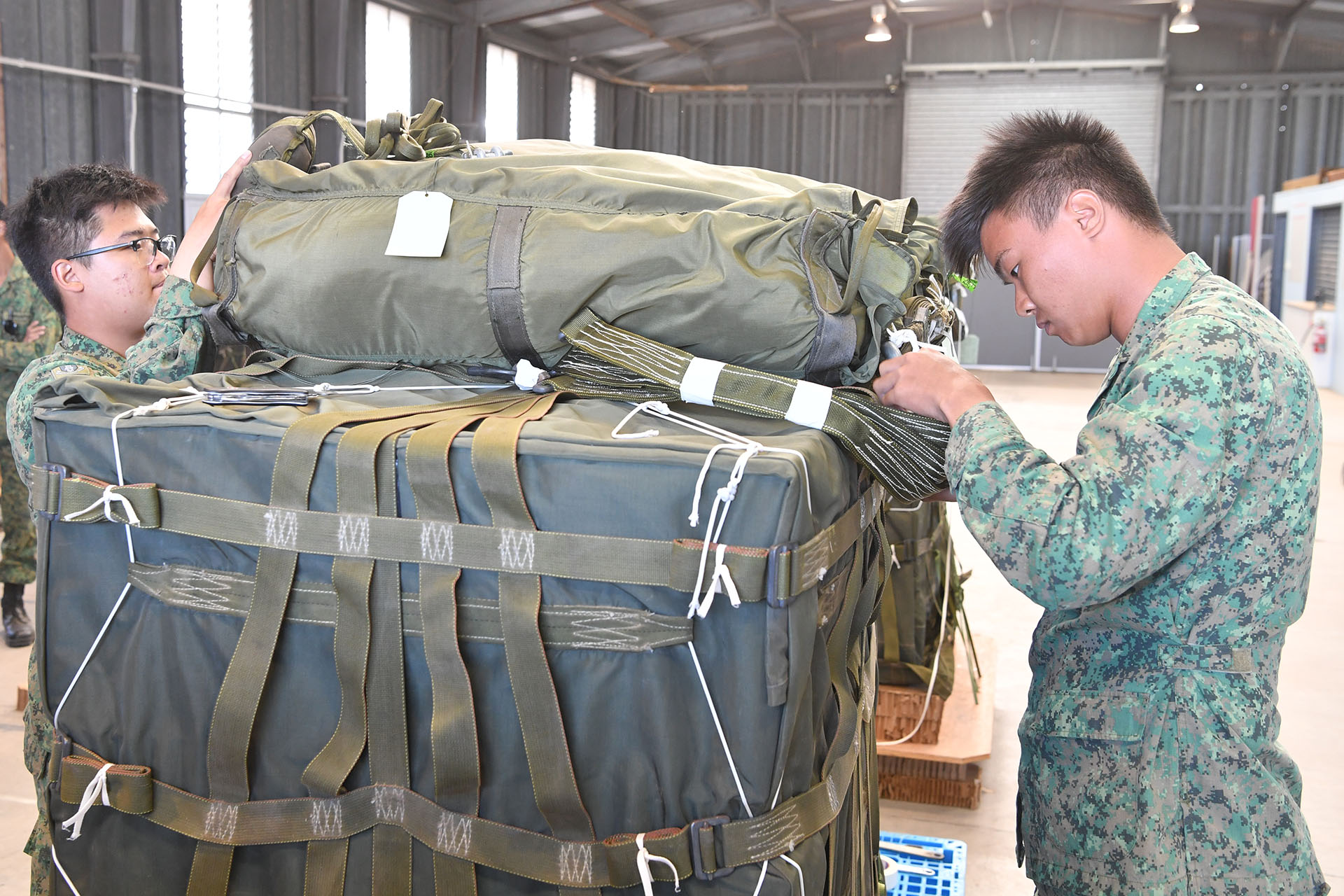
A rigger carrying out final checks on the air drop equipment. Here, he is inspecting the cords necessary for different rigging strengths. The delicate operation requires precise calculations, and the crew scrutinises every detail.
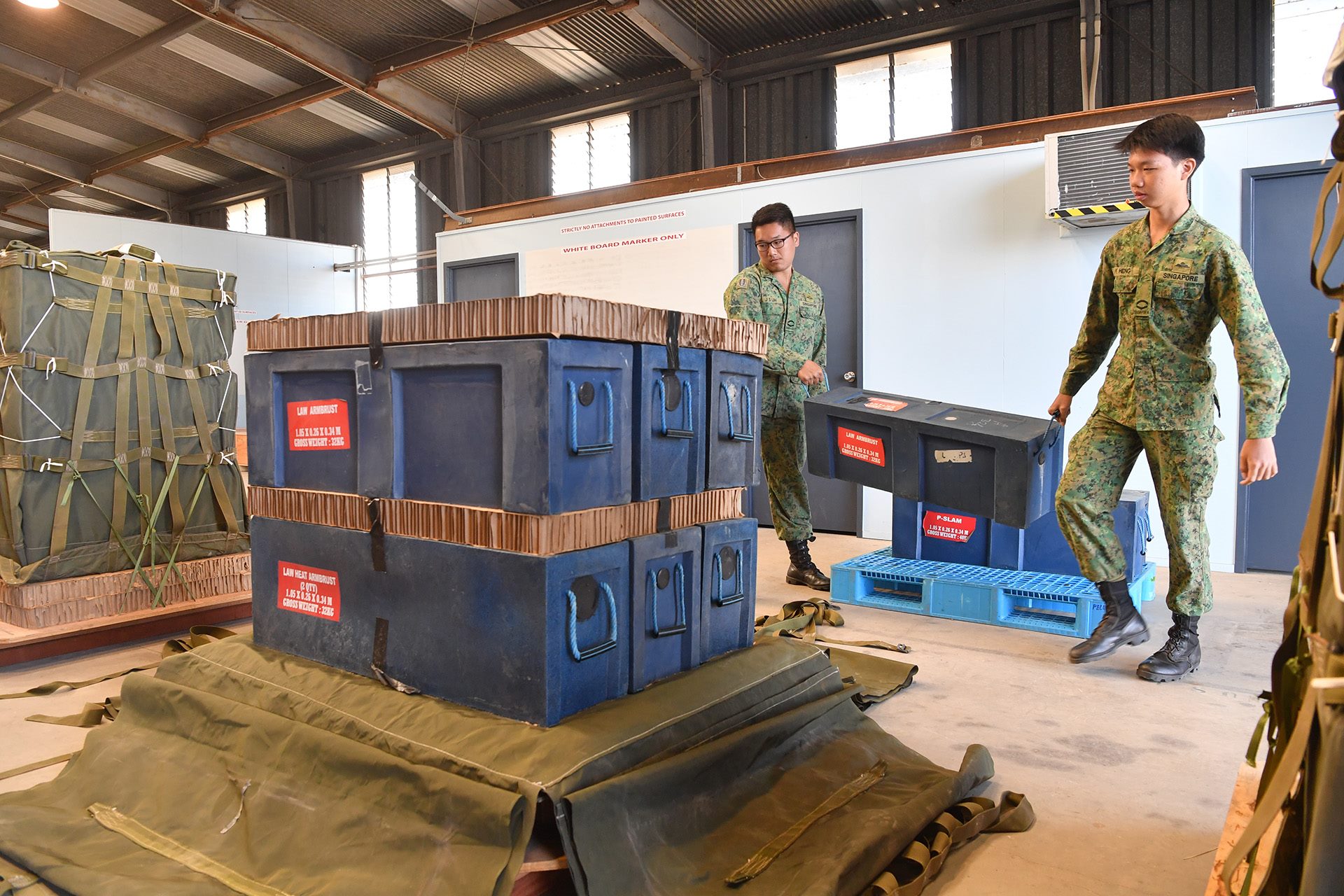
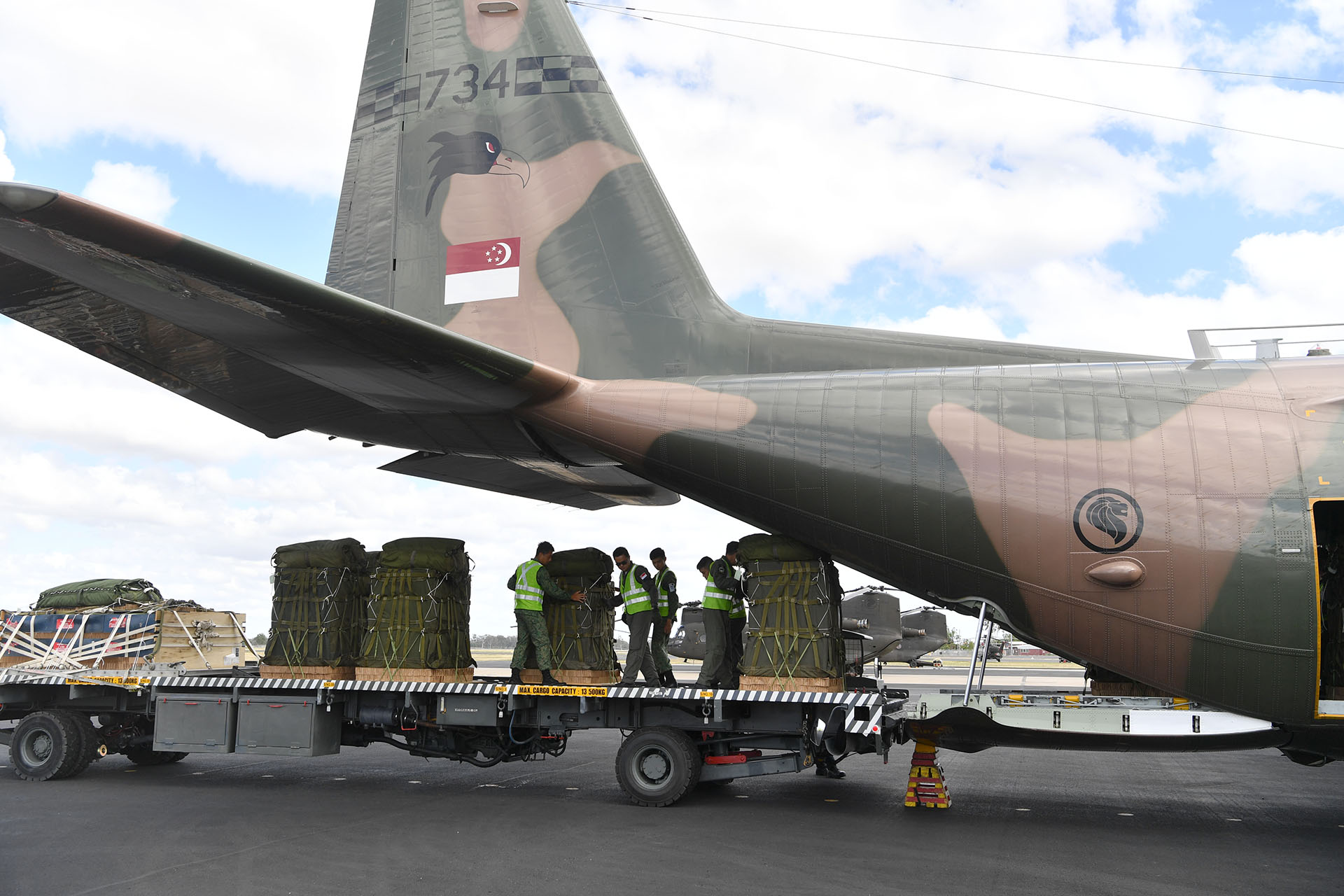
SAF Riggers stacking up pallets of simulated ammunition on to the Container Delivery System (CDS). Each parachute can take one CDS weighing up to 2,200 pounds.
After the CDS is secured, the riggers rig the parachutes to the packages. Each load has two parachutes. A smaller parachute, called a pilot chute, is connected to the static line. As soon as the cargo is released from the aircraft, the pilot chute inflates to assist in the deployment of the main cargo chute. This allows the cargo to land safely on the ground.
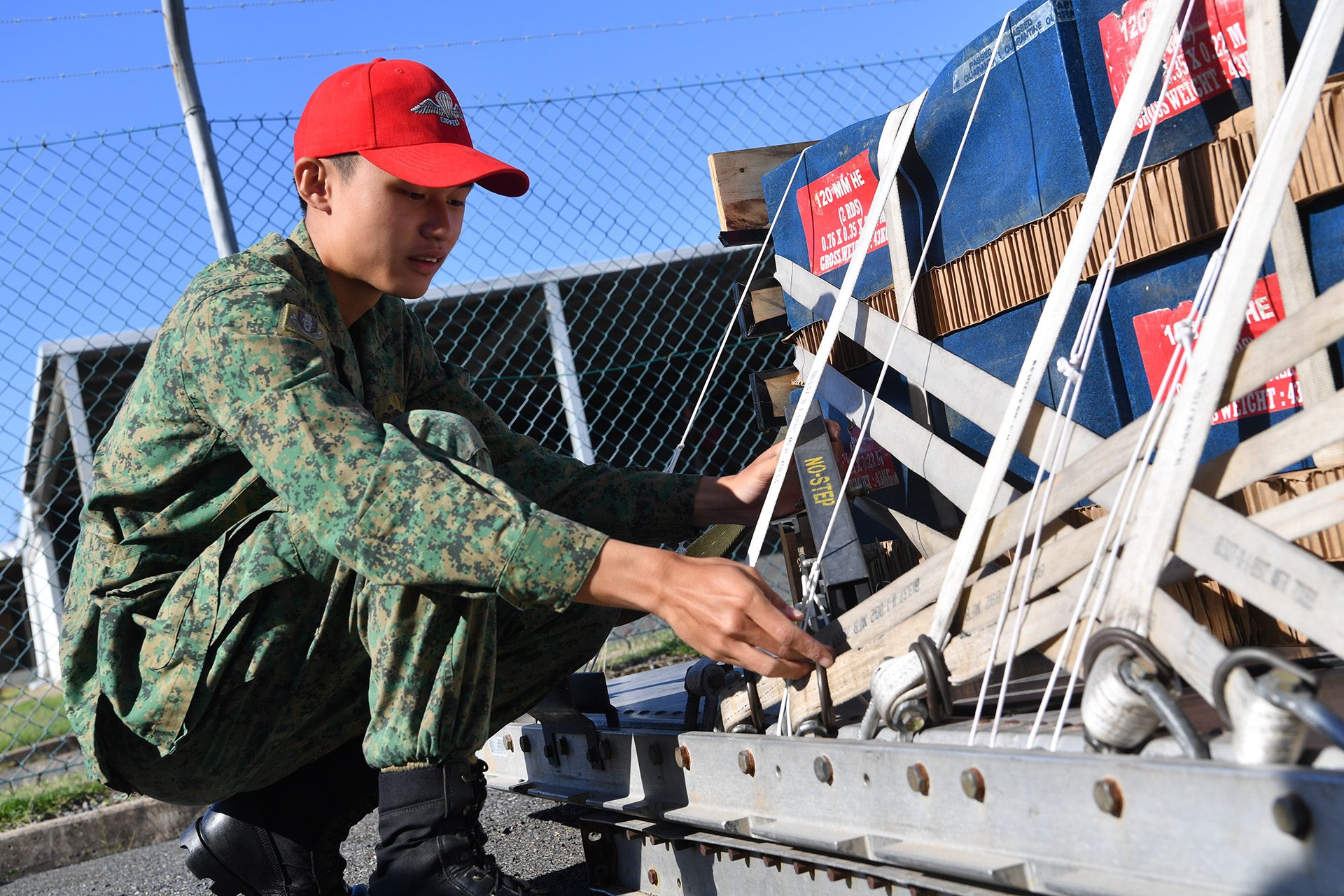
''Red Hat'' Corporal Markus Yuen demonstrating the inspection of a heavy equipment platform load used for delivering heavier loads such as vehicles. The distinctive headgear is part of a military rigger’s identity. The Full-time National Serviceman was one of the top graduands of his cohort. He is also qualified to perform higher levels of inspection. The 19-year-old opted to extend his National Service so that he can participate in his second XWB. ''For the riggers that come up here, we get a sense of fulfilment in seeing the operational capabilities of our company, as well as the validation of our efforts in packing the parachutes and rigging the loads. Seeing everything deploy beautifully is a nice warm feeling.''
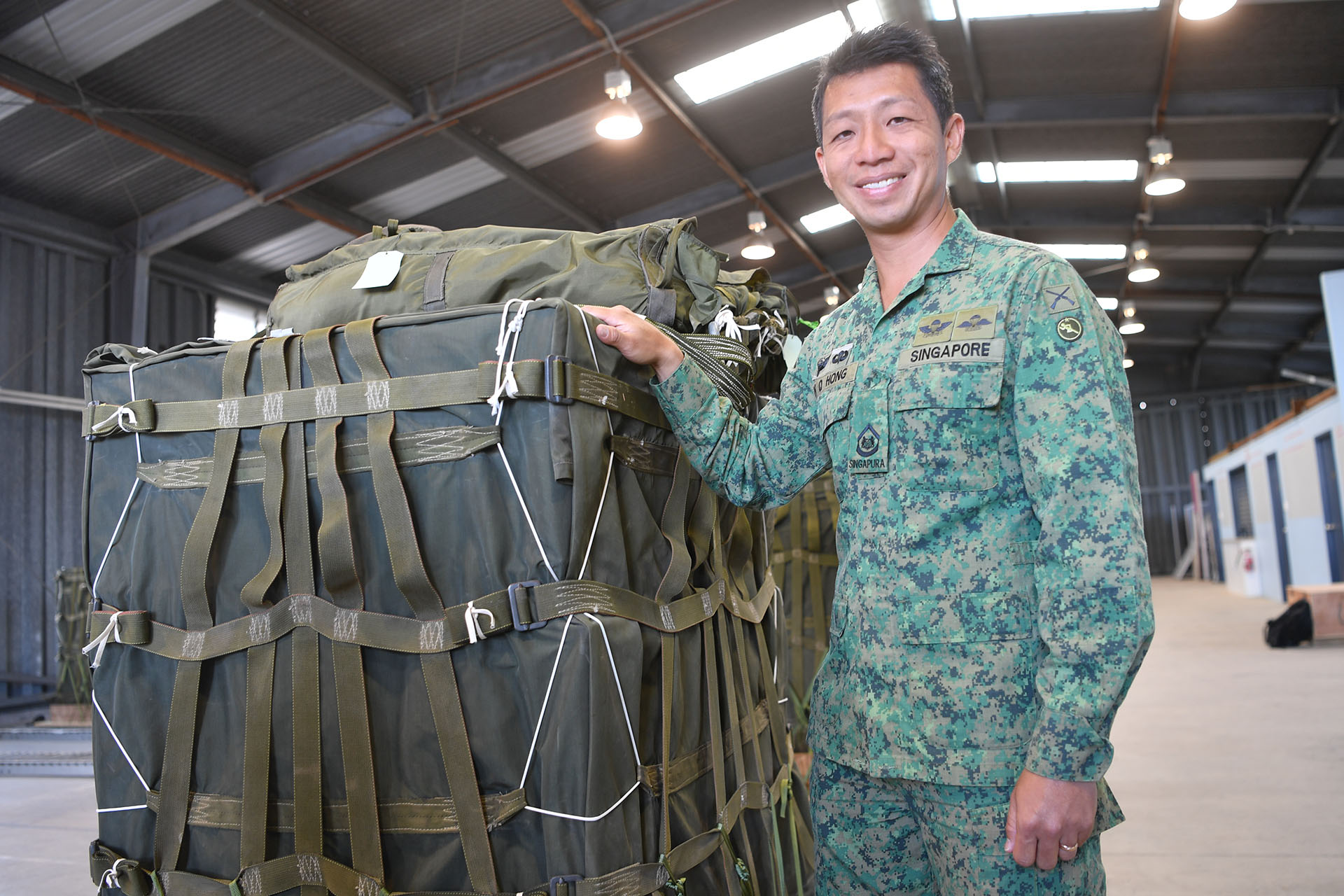
The significance of 3 TPT's training in XWB is threefold, said Air Terminal Company Operations Warrant 2nd Warrant Officer Hong Weiquan, 36: ''We utilise the space here to exercise the full spectrum of our operational loads, which we can’t do in Singapore because of land constraints. We also conduct land-air integrated training with our warfighting partners. Our company works closely with 122 Squadron (SQN) (which flies the C-130 Hercules aircraft) to conduct joint inspections and enhance operational synergy between the Air Force and Army. Thirdly, we also leverage XWB to conduct our company proficiency test to assess our unit’s readiness.''
The aerial cargo riggers from 3 TPT and air crew specialists from 122 SQN working together to load and inspect the CDSes for the air drop mission. They will be dropping eight CDSes for this mission.
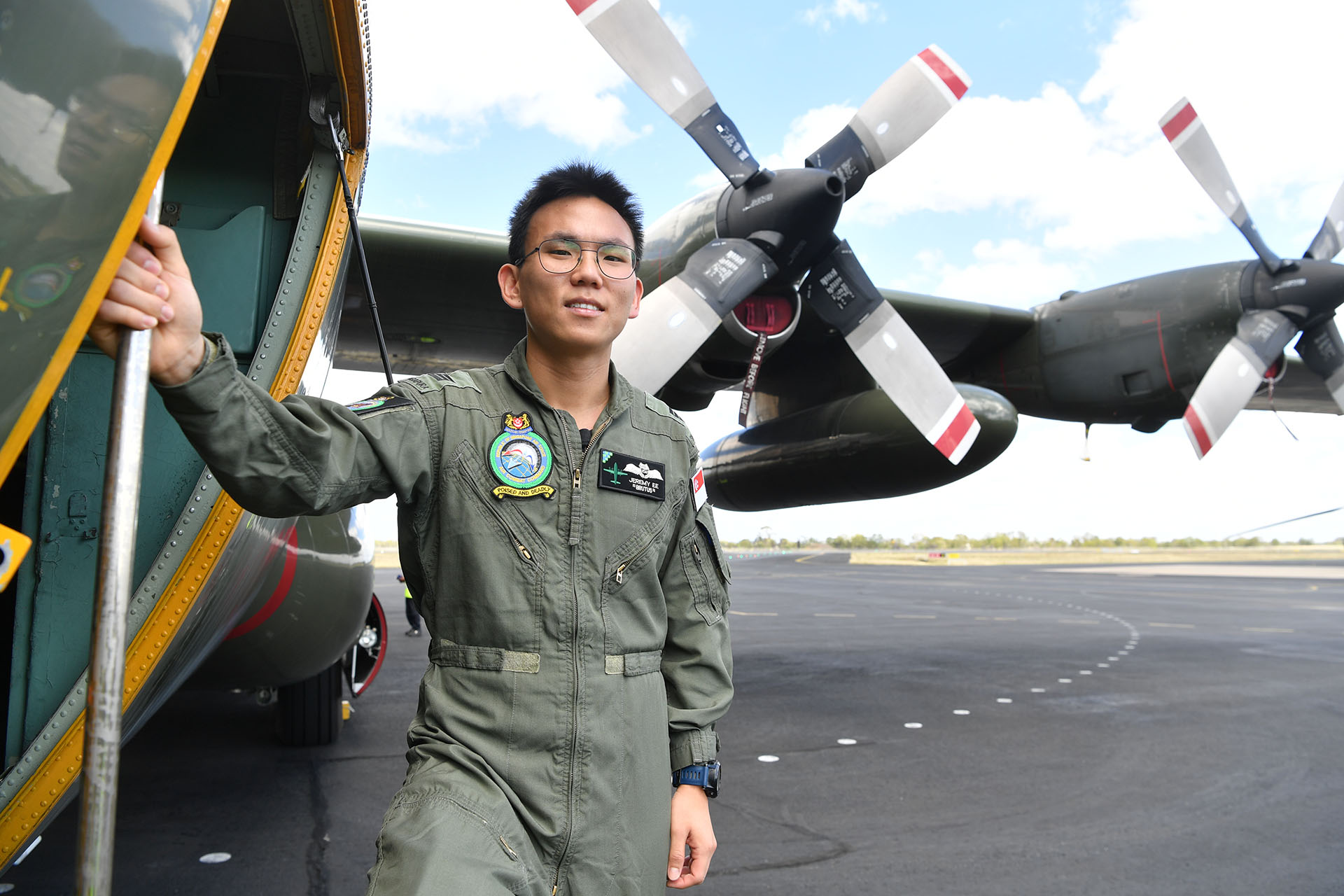
This is Captain Jeremy Ee's first time at XWB. The training has been an eye-opening experience, said the C-130 pilot. ''The terrain here allows us to hone our navigational and 'hunting' skills: the mountainous terrain trains us to navigate using ground terrain and gives us more confidence to fly in mountainous regions, which is also useful for humanitarian assistance and disaster relief missions,'' said the 30-year-old.
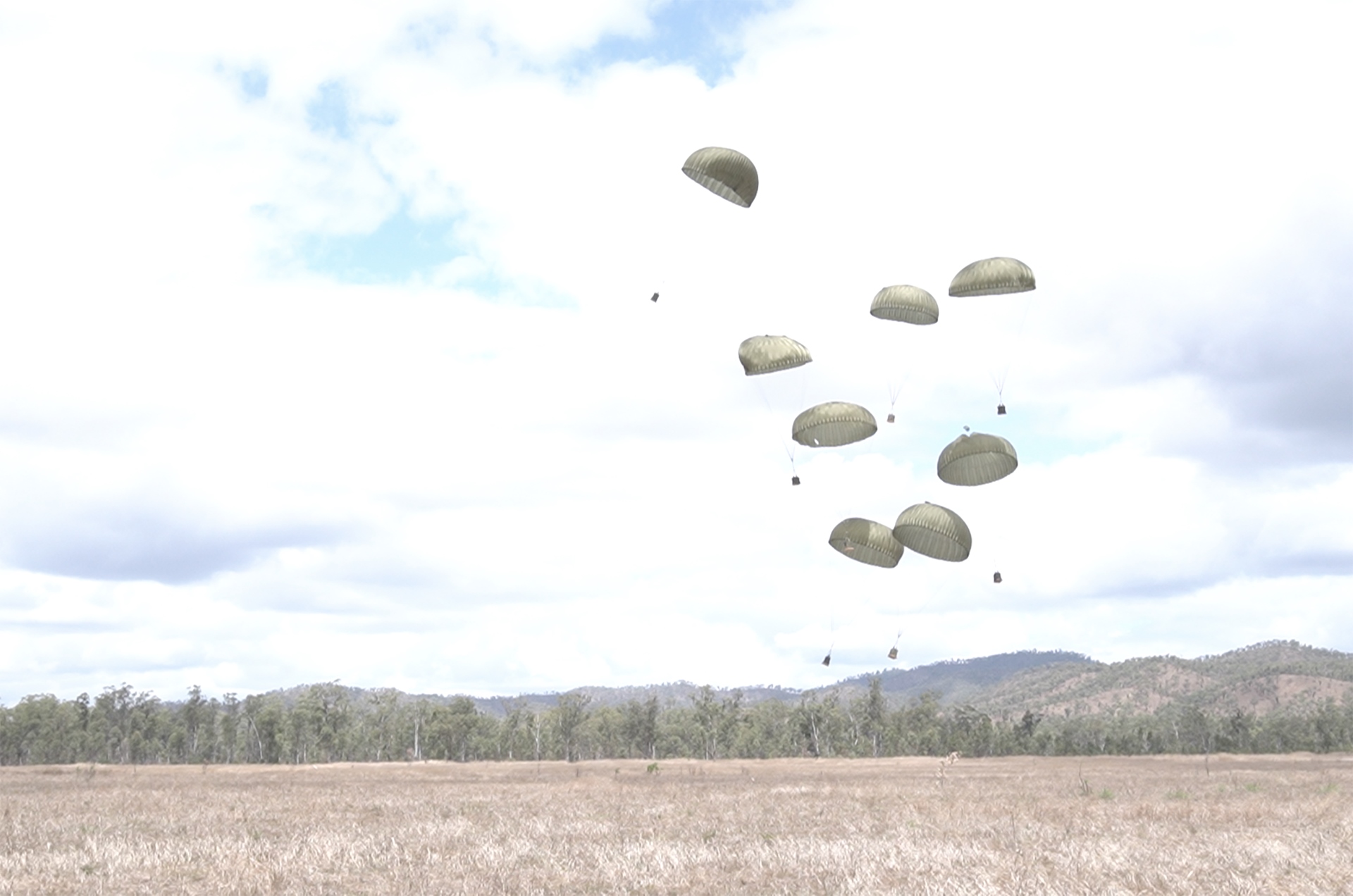
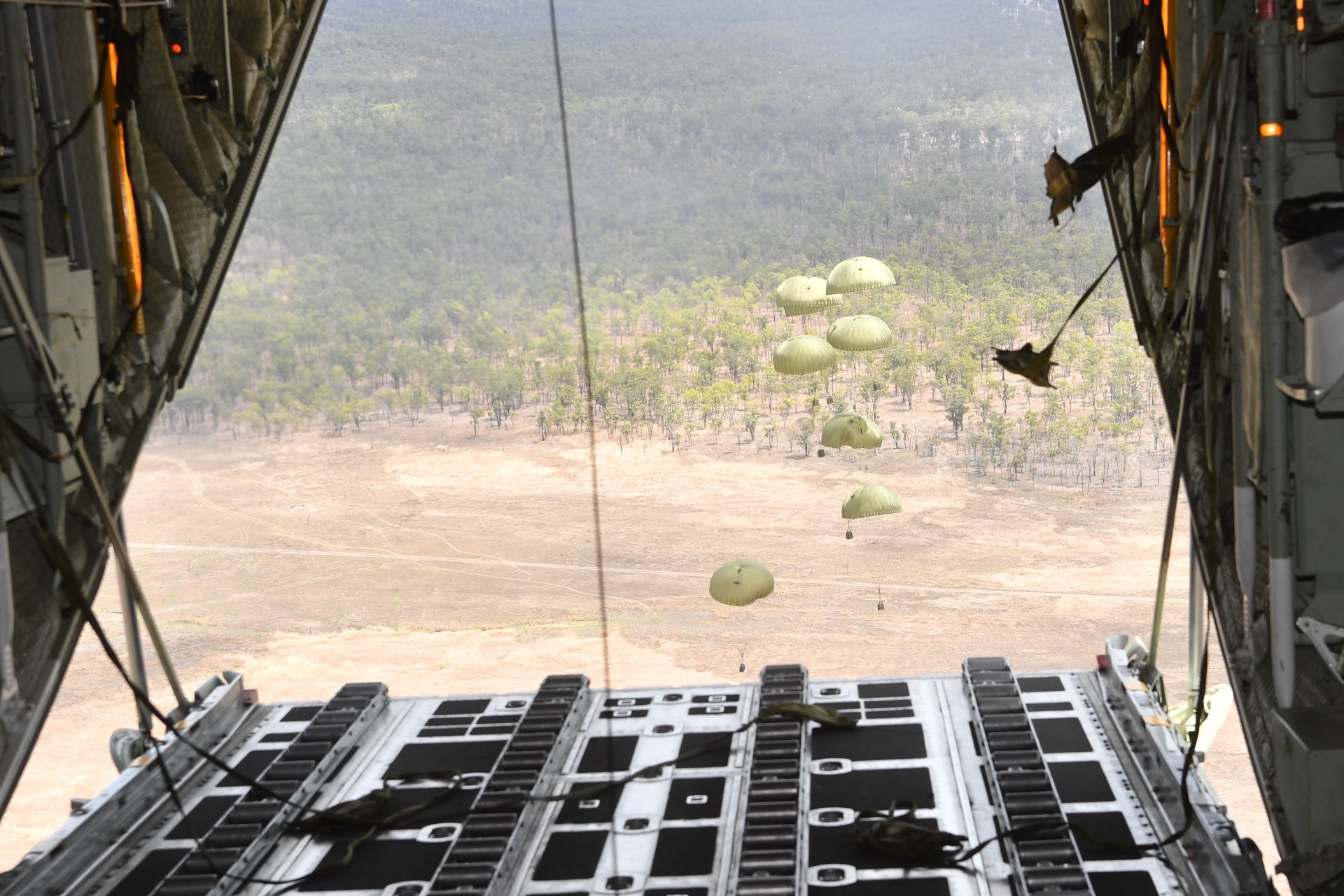
Off they go: The CDSes are successfully deployed off the back of the C-130.
Right on target: All eight CDSes arrive safely at their target area. Having successfully delivered the supplies, the C-130 aircraft makes a quick exit.


Share this story:

Got a great story to share?
Send it our way — we might feature it!

Share Your Story