
MILESTONES
COMBATING MARITIME TERRORISM THROUGH BETTER INFO SHARING
30 Apr 2012
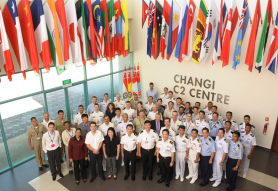
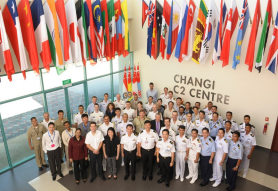
Naval officers, security experts and International Liaison Officers (ILOs) from countries like Australia, Indonesia, Thailand and the United States joined their Singapore counterparts at the Information Fusion Centre (IFC) in Changi Naval Base for a maritime security workshop on 27 Apr, to commemorate the IFC's third anniversary.
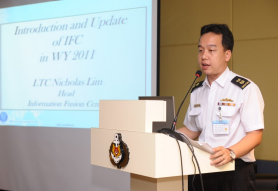
In his opening address, Head IFC Lieutenant Colonel (LTC) Nicholas Lim said: "In the span of three years, we have made significant strides towards our growth, having expanded our linkages from 14 countries in 2009, to 46 agencies in 29 countries."
He added: "The ILO initiative is indeed a useful and unique framework as the ILOs play important roles as the points of contact for their respective countries, providing a real-time reach-back in terms of information sharing and analysis."
The IFC has had numerous successes in resolving incidents occurring on the territorial waters of the participating countries. In January this year, the IFC received news about a tugboat, named Sin Hin 5, that was reported missing by its owners but was found sailing towards the eastern part of Malaysia. In response, the IFC swiftly passed the information to the Indonesian ILOs and the perpetrators were apprehended by the Indonesian Navy within two days.
In light of new emerging threats to maritime security such as maritime terrorism, the IFC has undertaken efforts to update itself. For instance, the IFC is collaborating to form the ASEAN Information-Sharing Portal (AIP), which utilises the core capabilities of its technologies to send information directly to the mobile devices of regional commanders, allowing them to deliver swift and effective responses.
The IFC has also worked with the Regional Cooperation Agreement on Combating Piracy and Armed Robbery against Ships in Asia (ReCAAP) to come up with guidelines for tugboats in order to reach out to their owners and prevent them from being "natural targets of sea robbery and hijack". This has led to a sharp drop in the number of such incidents, from around 30 in the second half of 2011, to only two in the first quarter of this year.
The theme for this year's workshop revolved around combating maritime terrorism via enhanced information sharing, and comprised talks by security experts as well as two plenary discussions.
Security experts from the Office of Naval Intelligence and Naval Criminal Investigative Service, which are agencies serving under the United States Navy, gave presentations on the maritime involvement of terrorist groups, such as the Jemaah Islamiyah and Abu Sayyaf Group within South-East Asia, and the characteristics of maritime terrorism.
The first plenary discussion covered anti-maritime terrorist efforts undertaken by Indonesia, Malaysia and Philippines, while the second focused on how floating bombs could be deployed as a tactic by maritime terrorists.
Set up in 2009 by the Republic of Singapore Navy, the IFC aims to achieve early warning of maritime security threats through information sharing with maritime stakeholders, in order to provide actionable information to cue regional responses against such threats.

ALSO READ IN MILESTONES

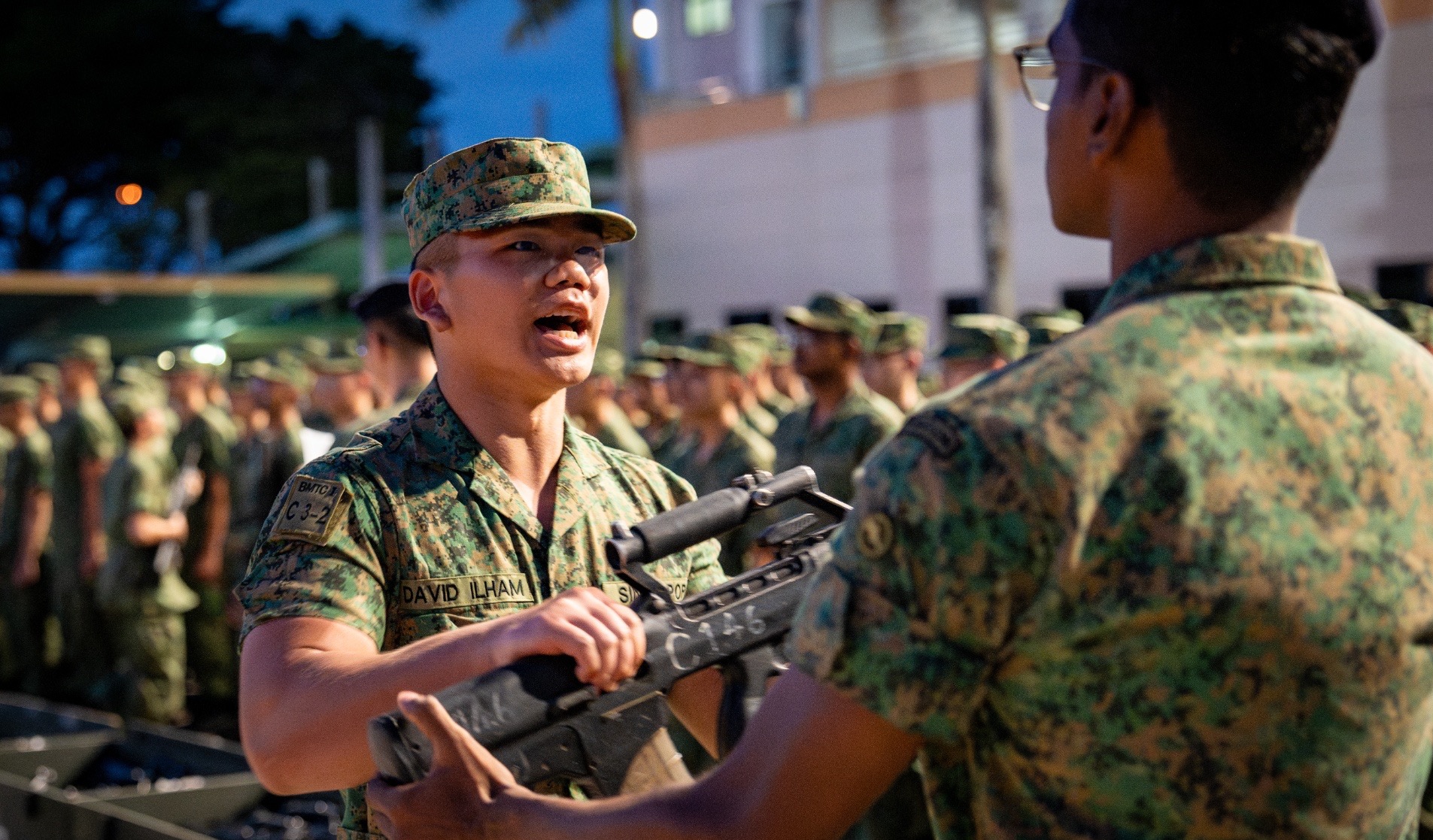
Answering the call to defend Singapore
21 Jan 2026
The Weapon Presentation Ceremony represents a powerful moment when recruits are entrusted with their rifle and begin carrying the weight of the nation’s defence.
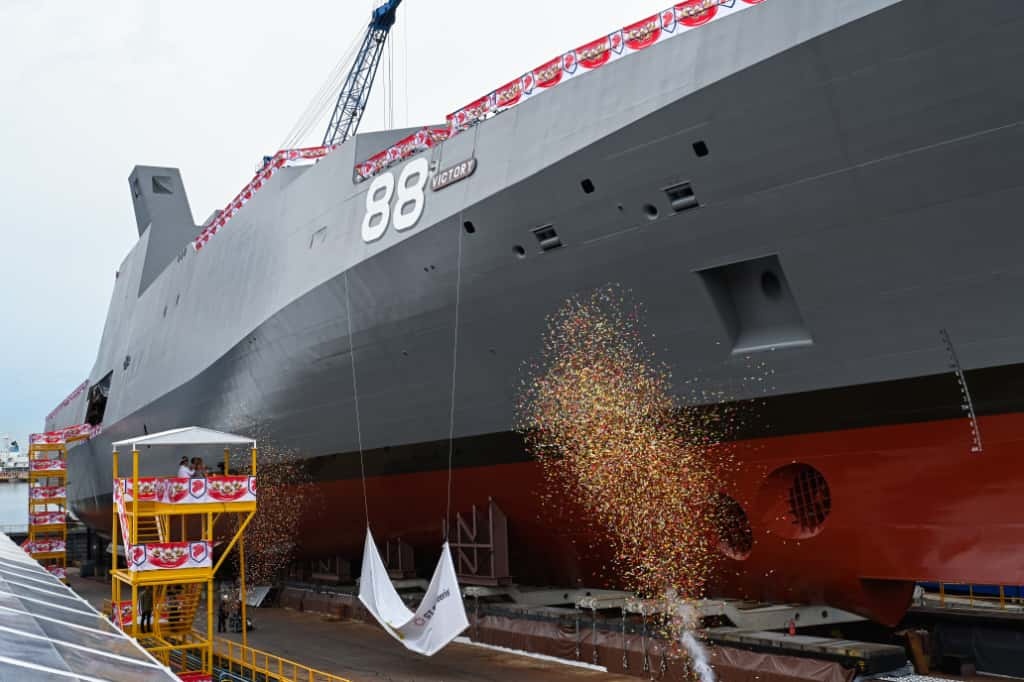
Navy launches 1st Multi-Role Combat Vessel
21 Oct 2025
The Multi-Role Combat Vessel will function as a mothership for the command and conduct of unmanned naval operations.
-dsc_2181.jpg?sfvrsn=cf9c6464_2 "1) DSC_2181")
What you need to know about the new CMPB
14 Oct 2025
The new Central Manpower Base (CMPB) at Bukit Gombak officially opened its doors on 14 Oct, welcoming pre-enlistees, servicemen and the public alike to a state-of-the-art, one-stop hub for all things National Service (NS).