We apologise for the inconvenience. Our website is currently undergoing scheduled maintenance. We are working hard to improve the site as soon as possible.

MILESTONES

What it takes to become a medical officer

07 Oct 2025

This October, we celebrate the 100th batch of graduates from the Medical Officer Cadet Course. What does it take to become a military doctor? We uncover the highlights!
Story by Nicole Yong

Photos by Chua Soon Lye, Kenneth Lin & Loh Yu Ze


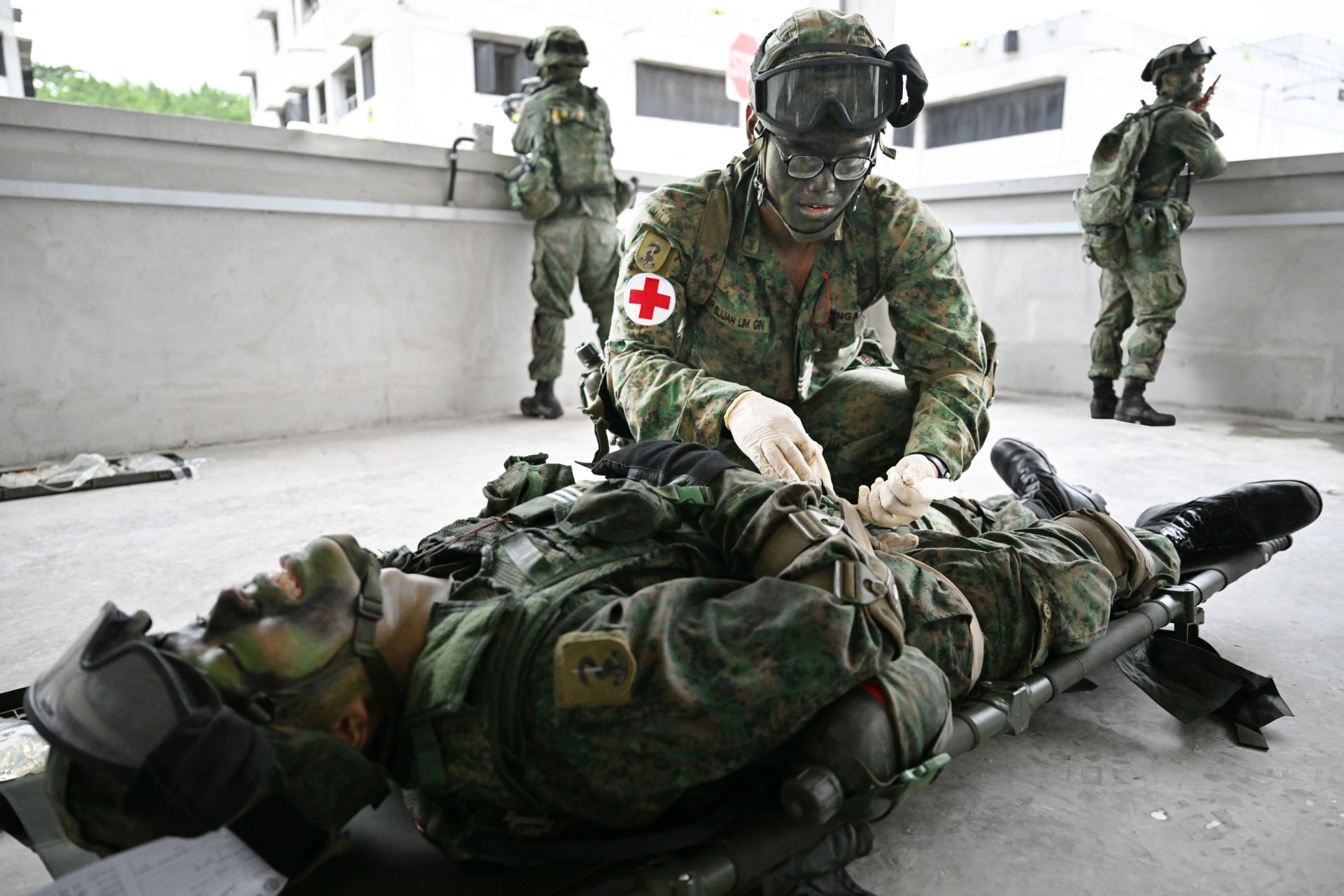
Medical Officers must be adaptable and embrace new challenges. The latest batch of cadets, for example, train in state-of-the-art urban training facilities such as SAFTI City.

Out in the field or in the clinic – when you’re a military doctor, you’ve got to excel in both.

This was what the latest batch of cadets trained to become as they underwent the Medical Officer Cadet Course (MOCC) from 8 Jul to 7 Oct.

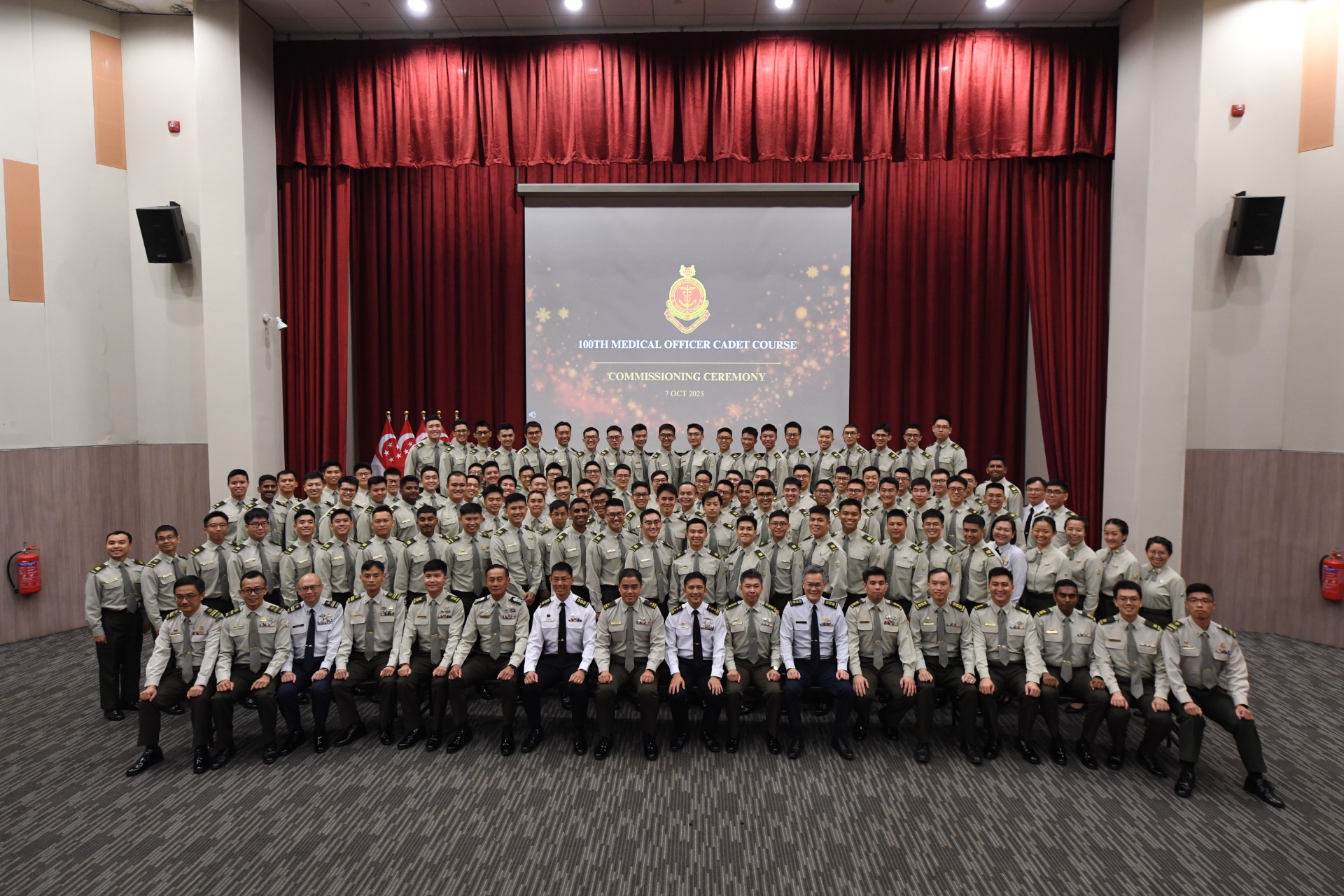
Tonight, 86 Medical Officers and 6 Military Medical Experts will graduate from the 100th MOCC!

Follow us as we capture the cadets in action through key highlights of the MOCC, from the 16km route march to urban operations training at SAFTI City, to helicopter casualty evacuation live training:

Cadets gathering at East Coast Park on 4 Sep for a safety brief before beginning their 16km route march.
Time to warm up! Cadets going through a series of stretches and exercises to get their bodies ready for the overnight march.
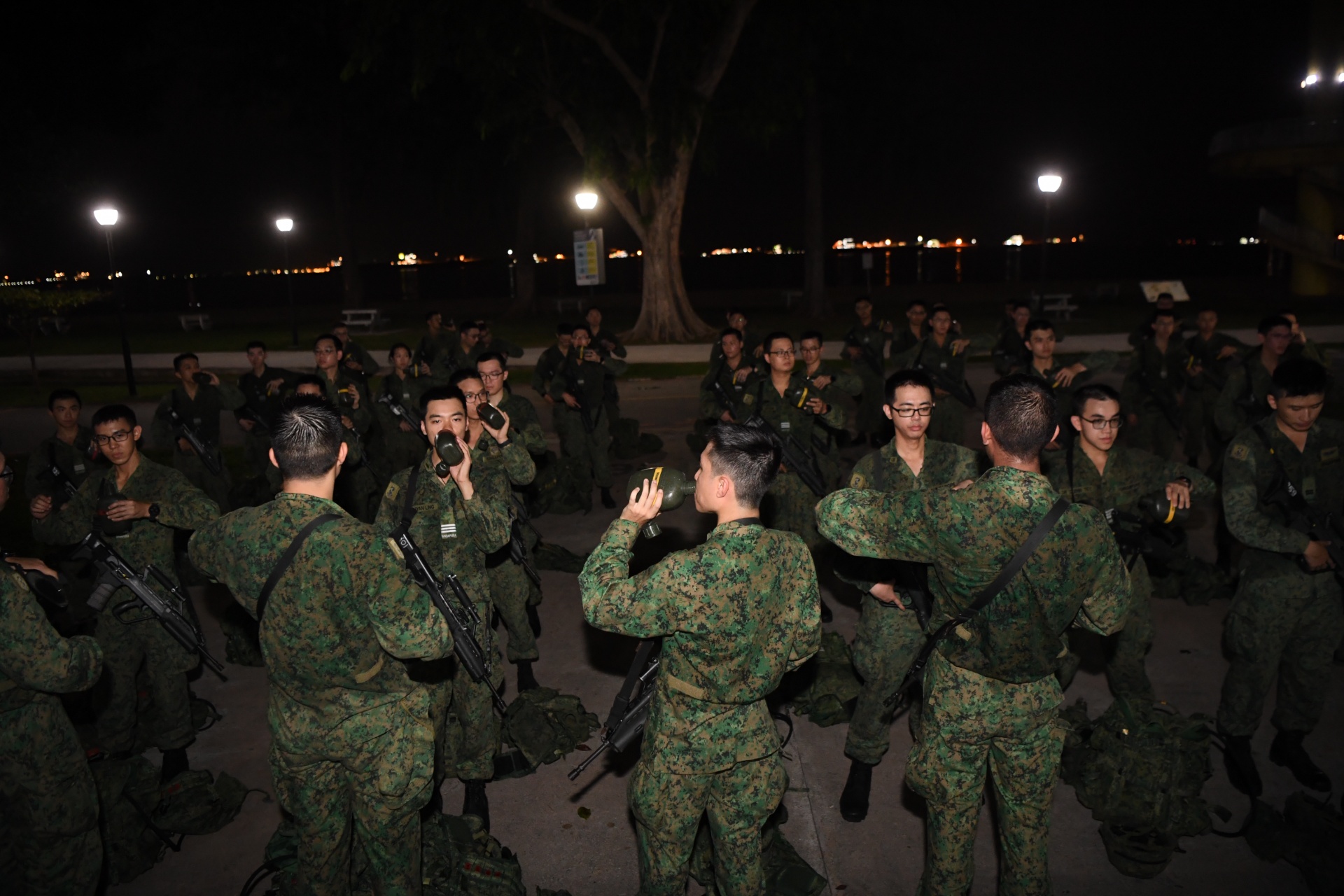
Cadets keep well-hydrated throughout the night with water parades and at rest stops.
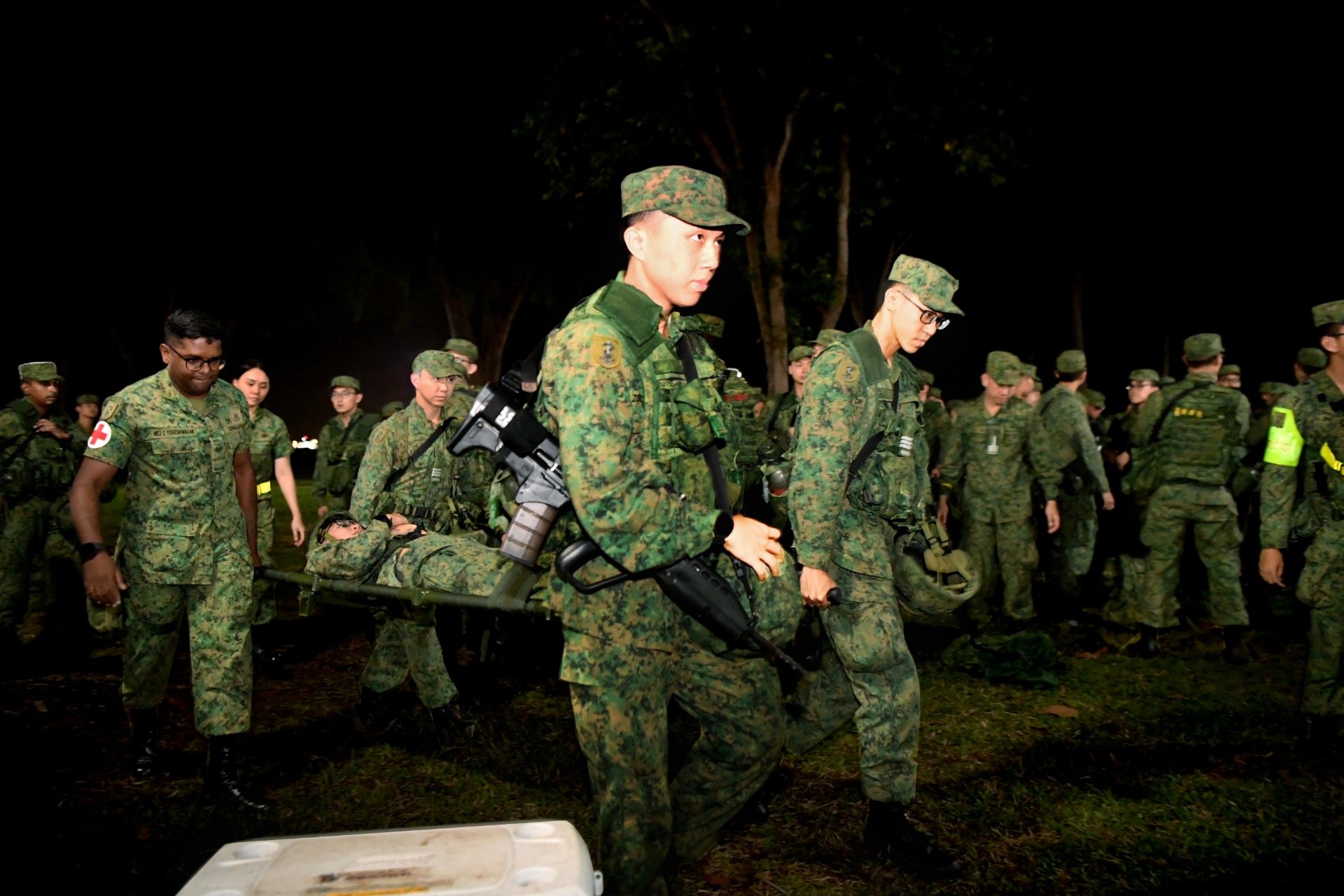
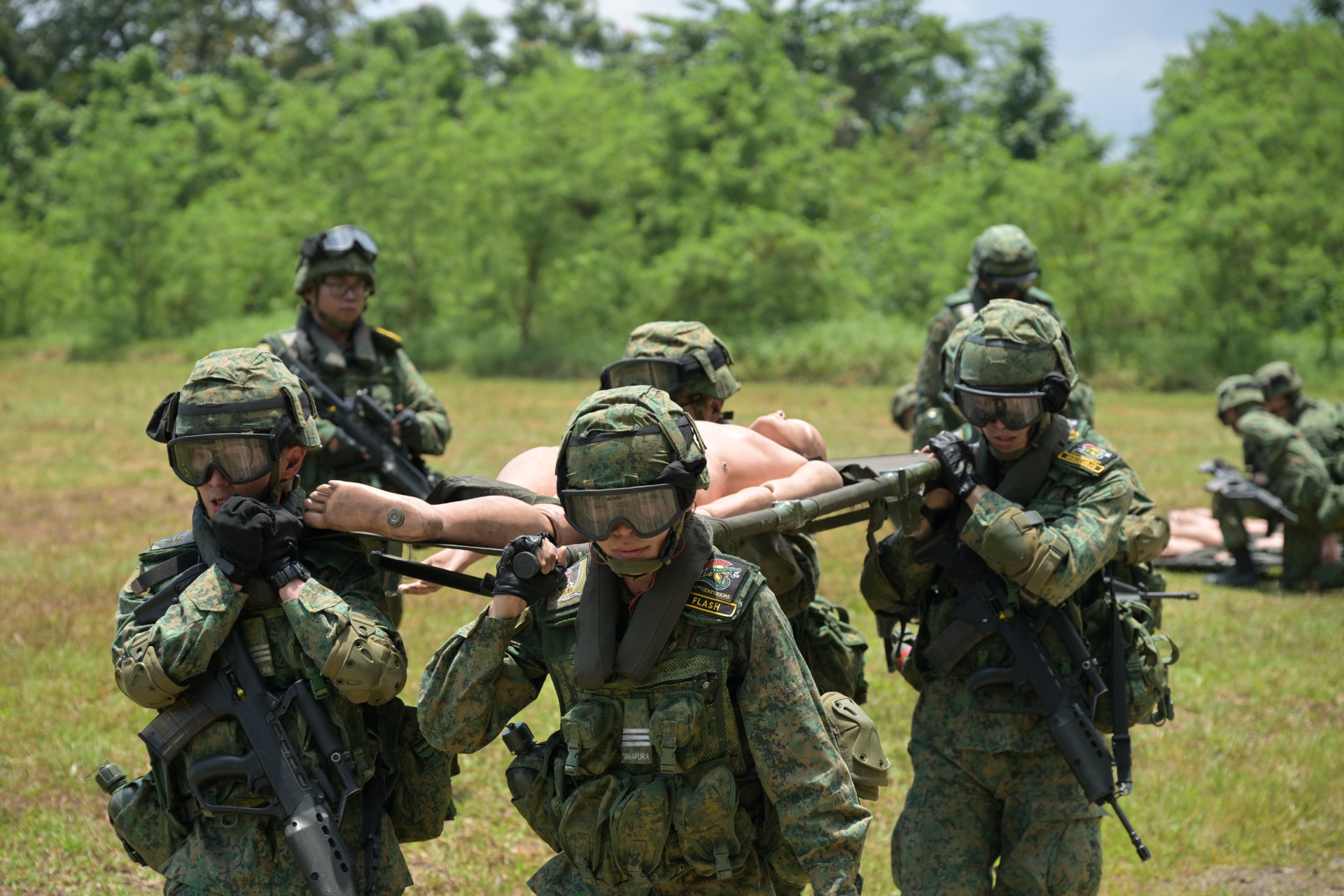
The night begins with a man down drill. This is a safety drill in which cadets practise evacuating a casualty, to ensure their readiness in times of emergency.
Cadets practising the man down drill.
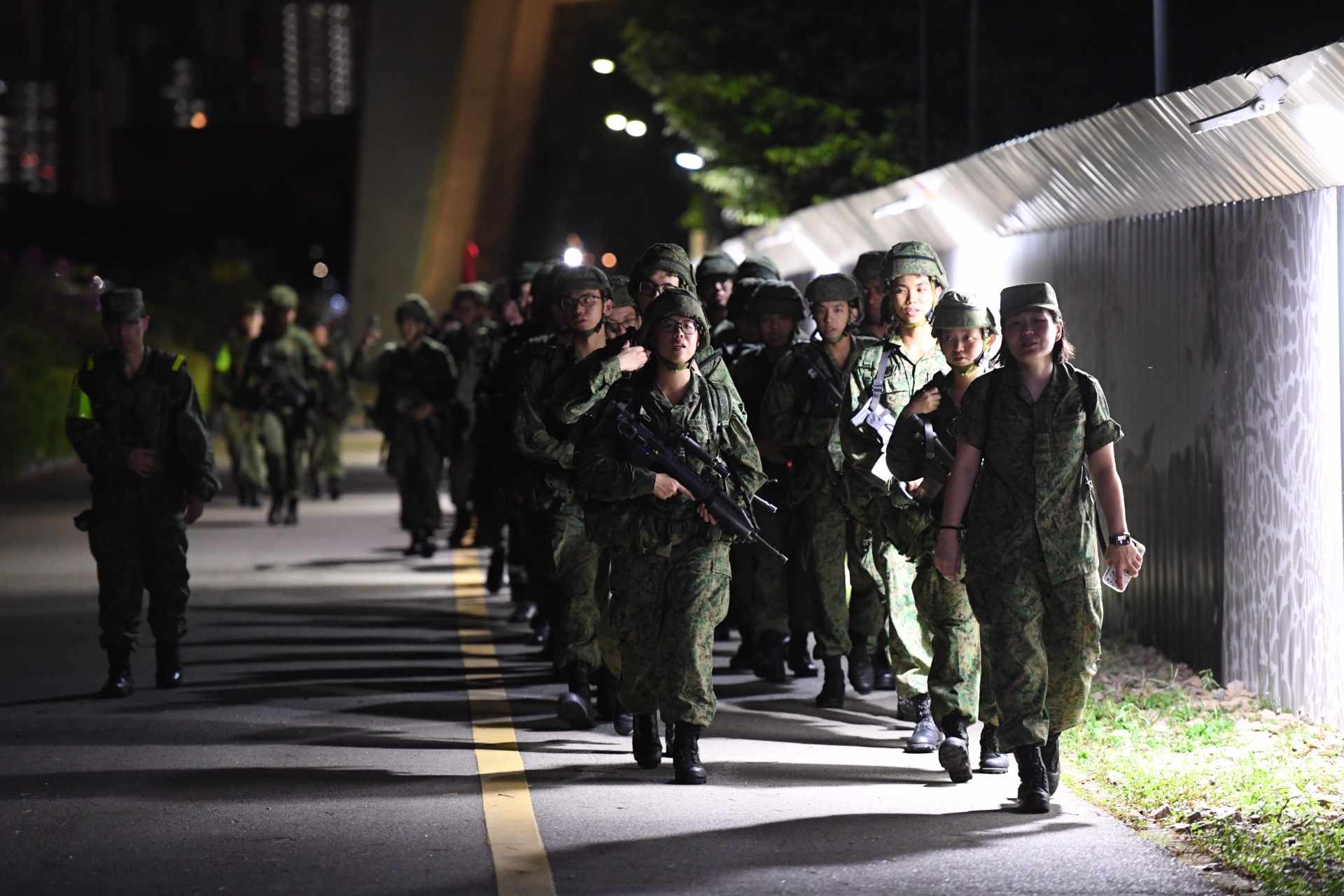
Final stretch! Medical officers on the march along Gardens By The Bay as they head towards Marina Barrage.
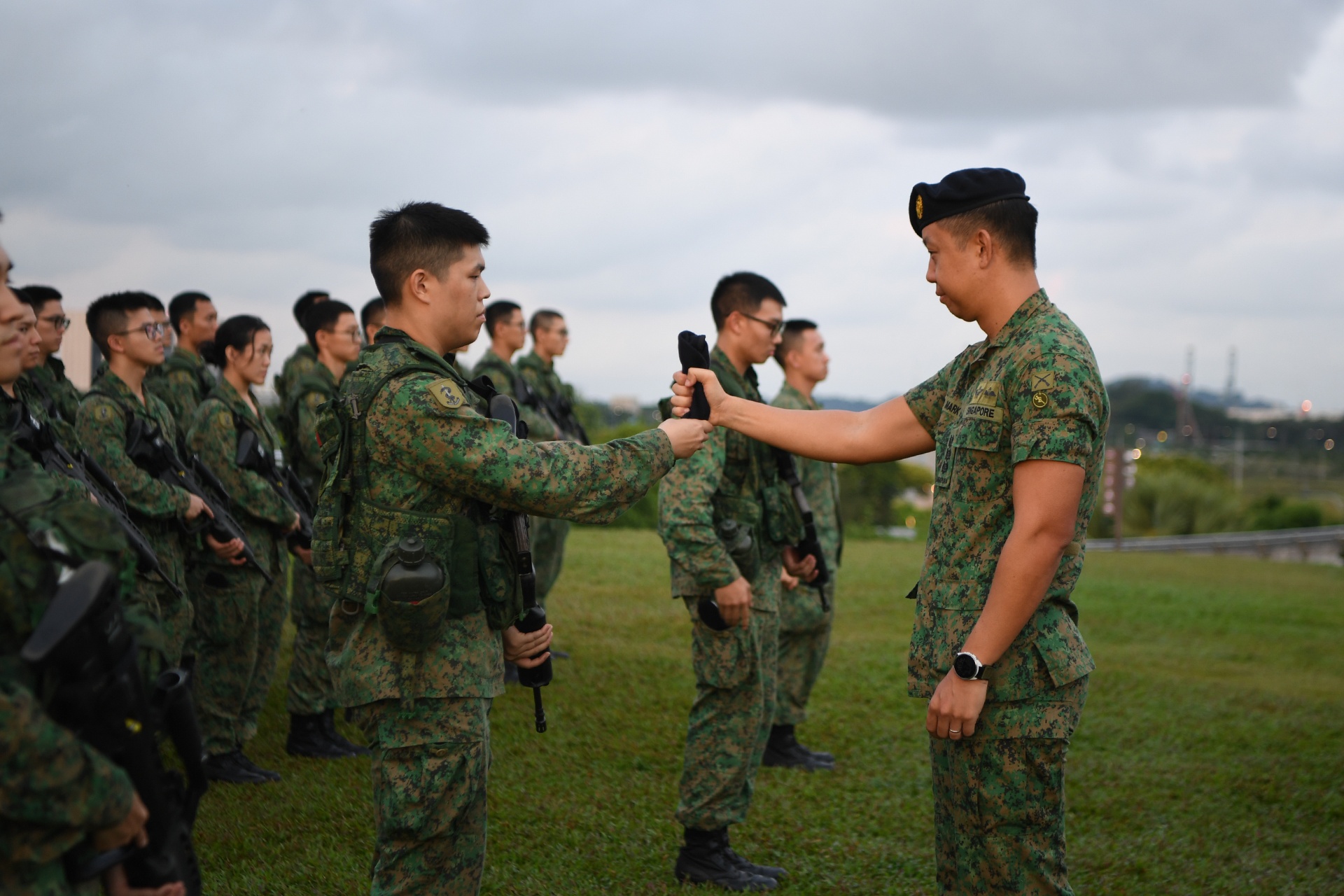
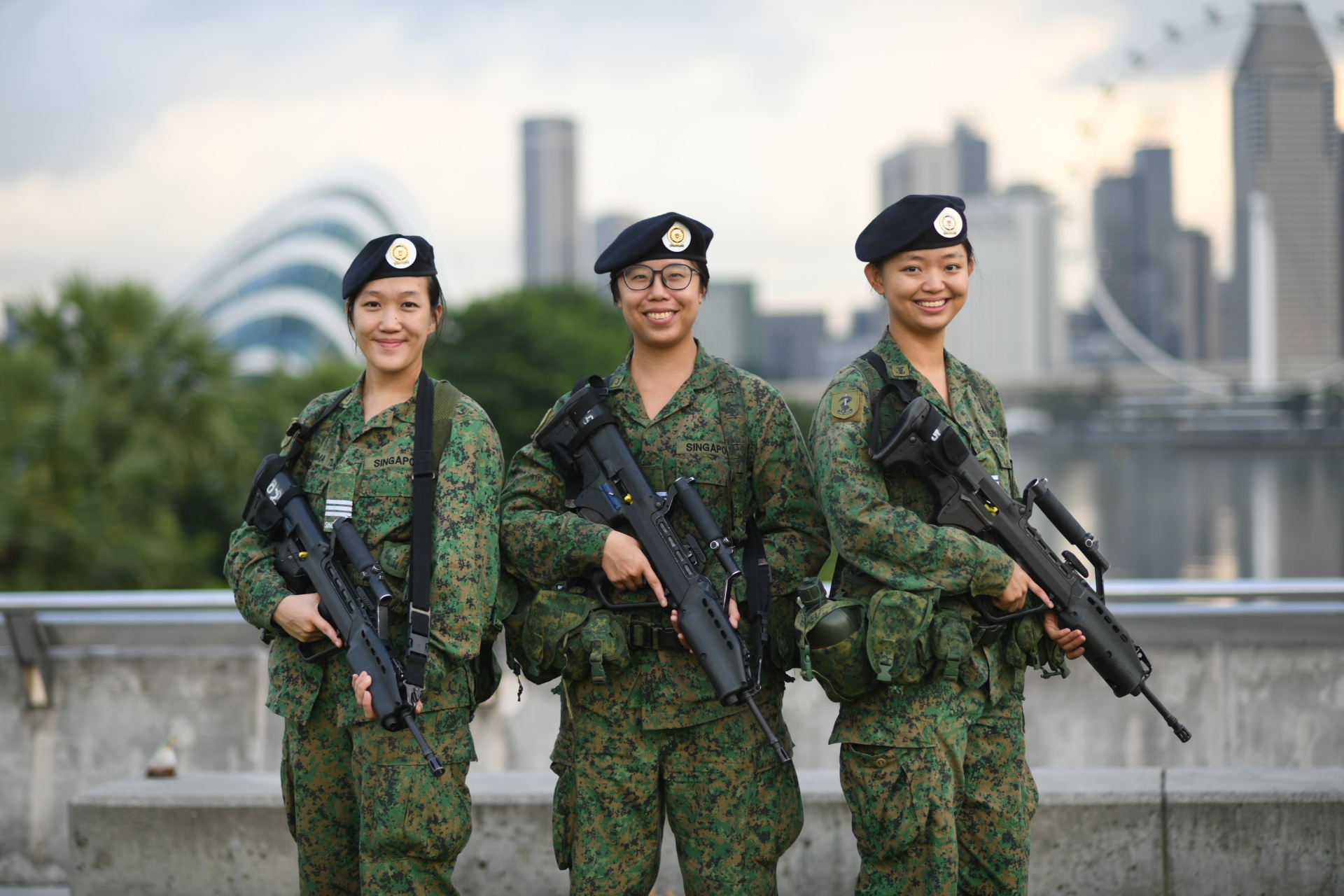
As the sun rises at Marina Barrage, each cadet receives a blue beret from Chief Army Medical Officer Colonel (Dr) Mark Tan (right), to mark the completion of their route march.
“I started off a little bit unsure of what’s to come, but now that we’ve completed the route march and are nearing the end of the course, I feel a lot more confident and I’m excited for future opportunities to see what military medicine can offer for me!” says OCT Jemima Teo, 25 (left). She is one of five female cadets in the 100th MOCC.
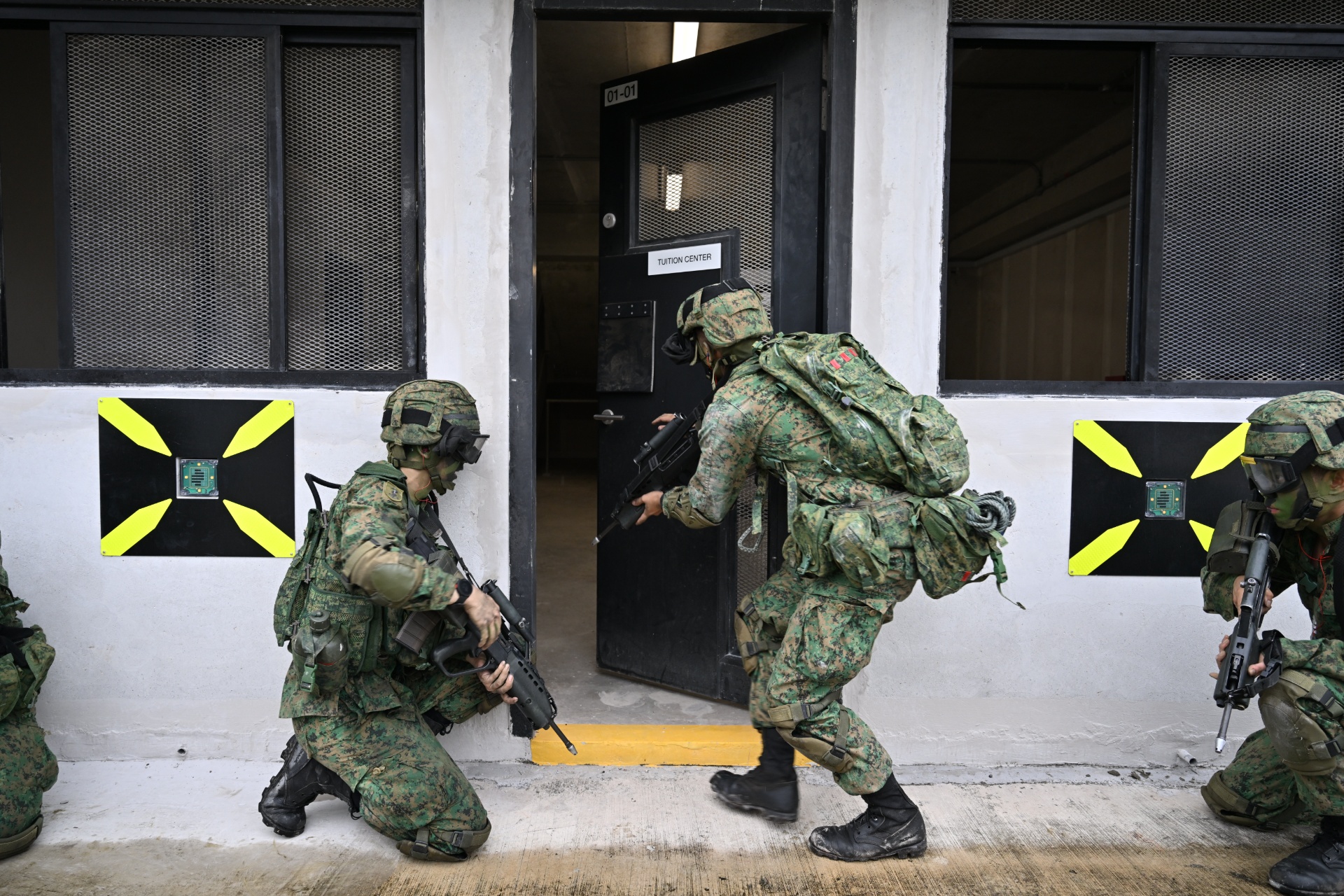
On 17 Sep, cadets begin their urban operations training at SAFTI City, skillfully making their way from the jungle terrain into an urban area.
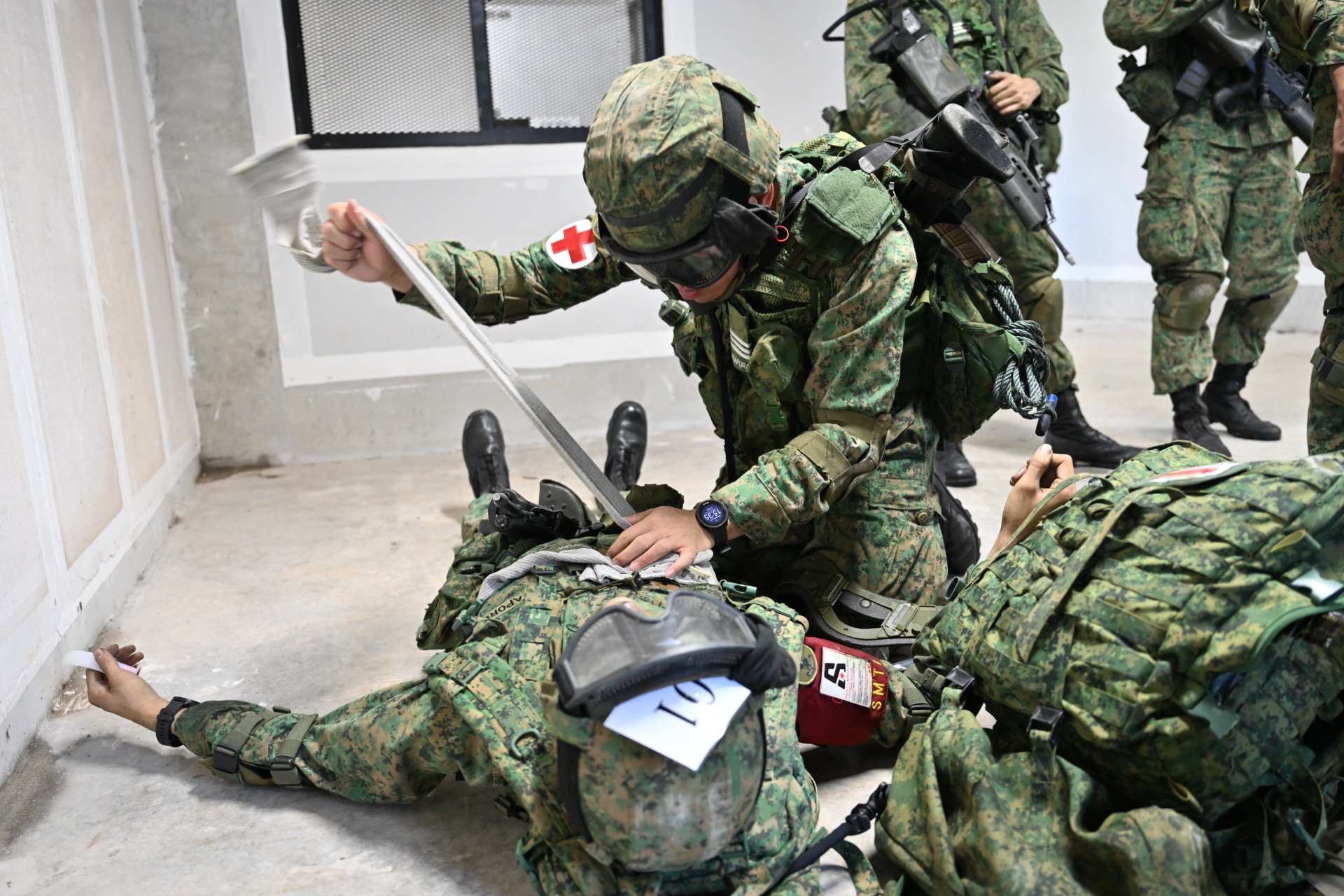
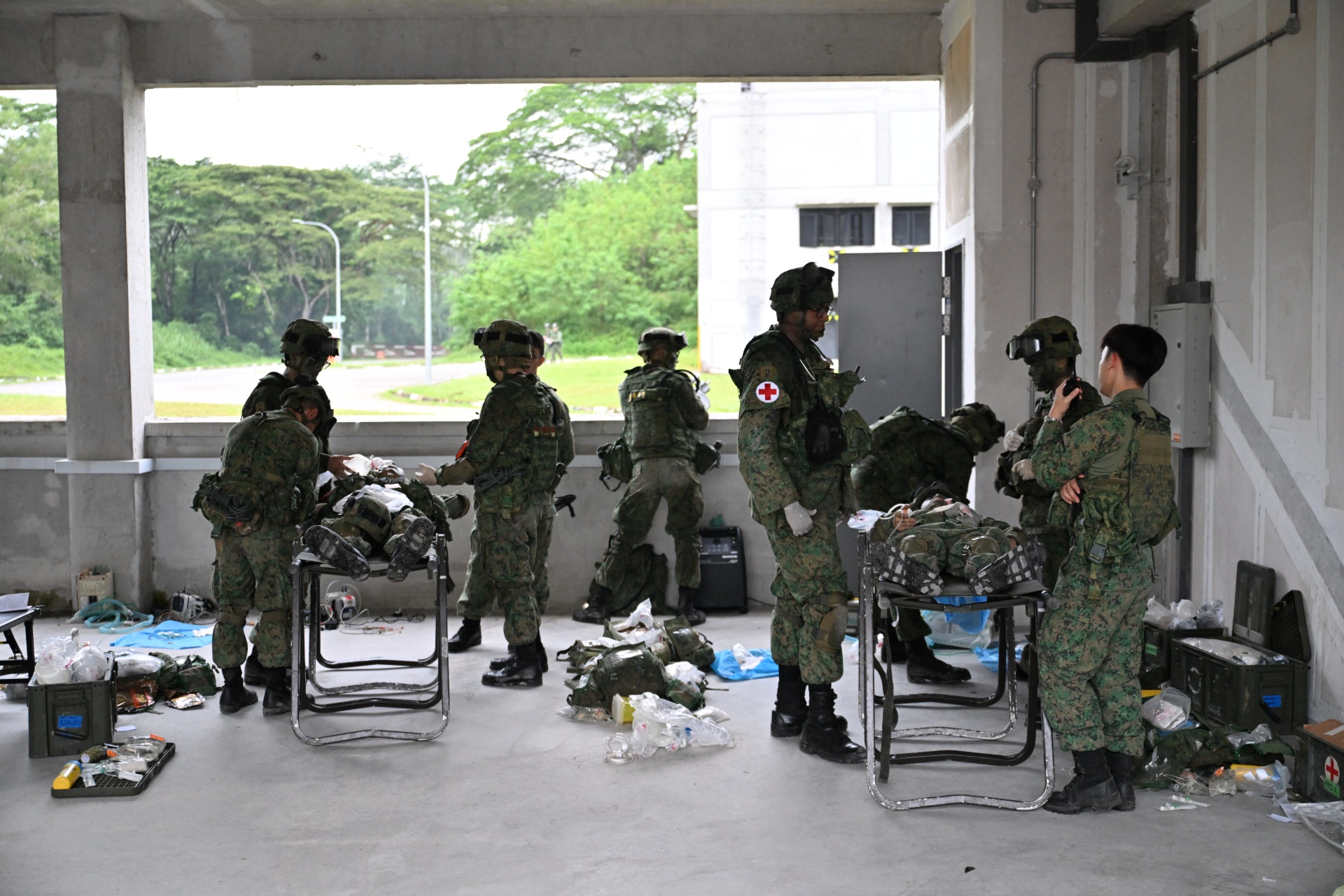
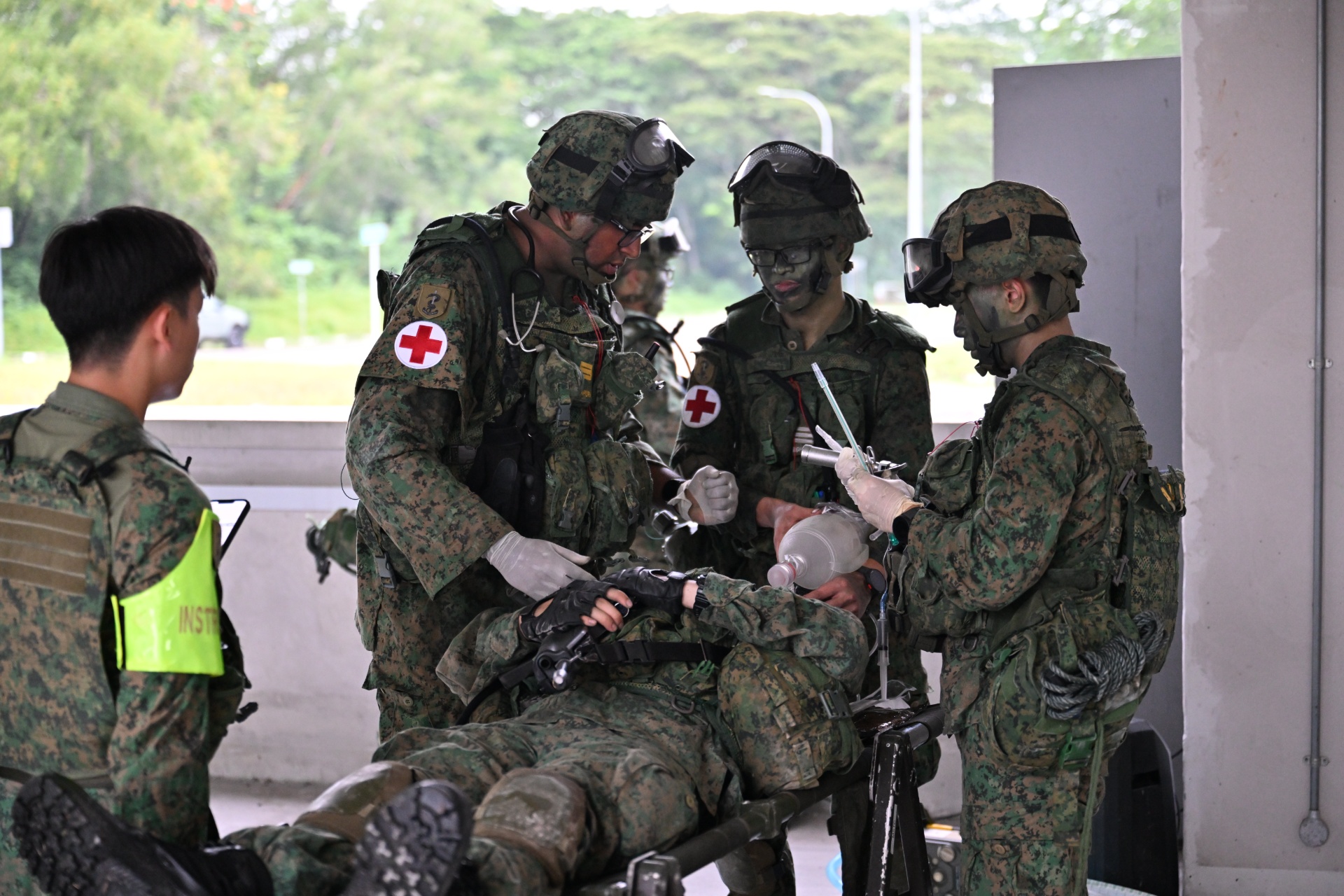
During their mission, cadets are also tasked to perform life-saving treatment on various simulated injuries that differ in type and severity.
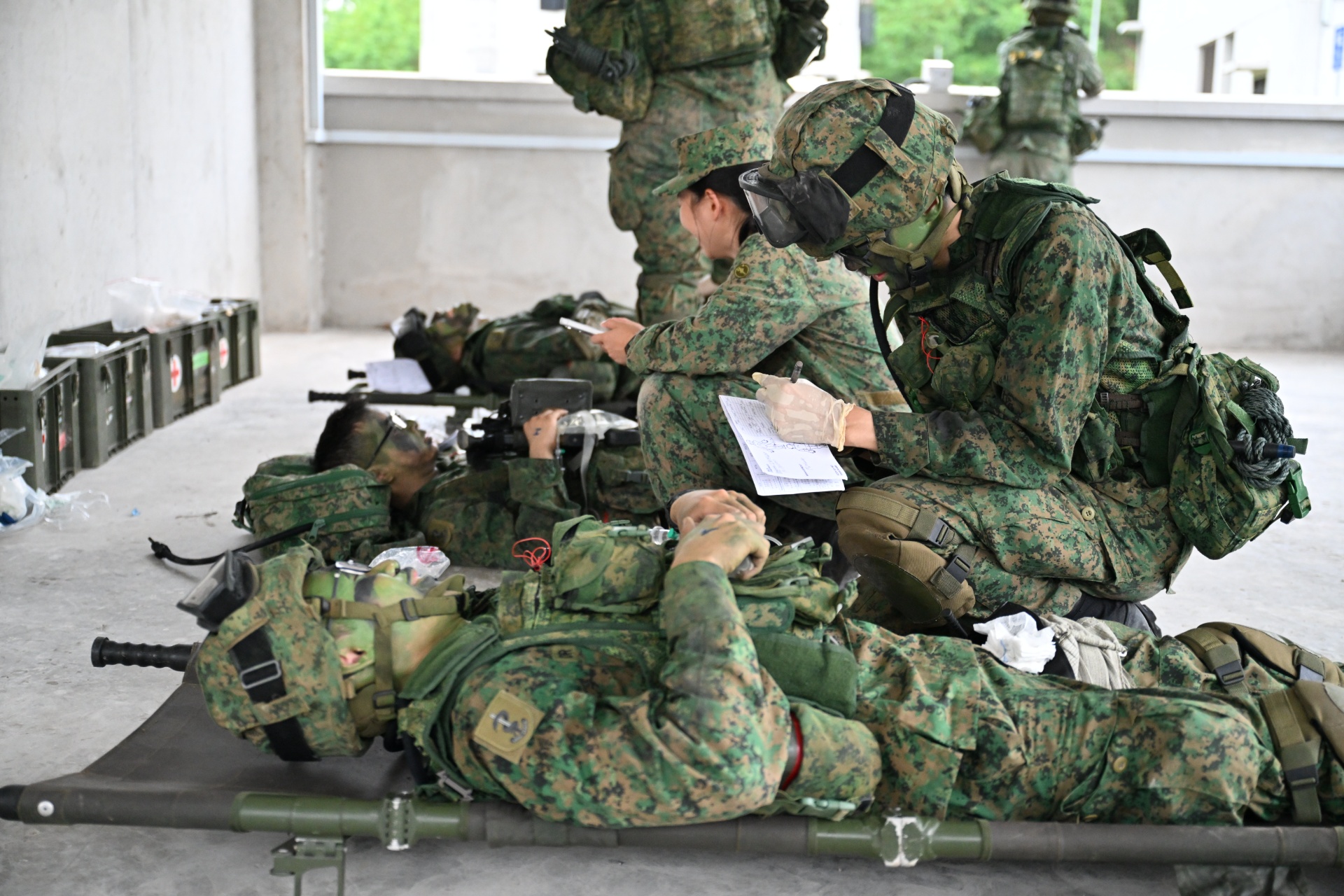
In the next scenario, cadets face a sudden surge of casualties. They must push themselves to make on-the-spot decisions, identifying and prioritising patients who need immediate medical attention in a process known as triage.
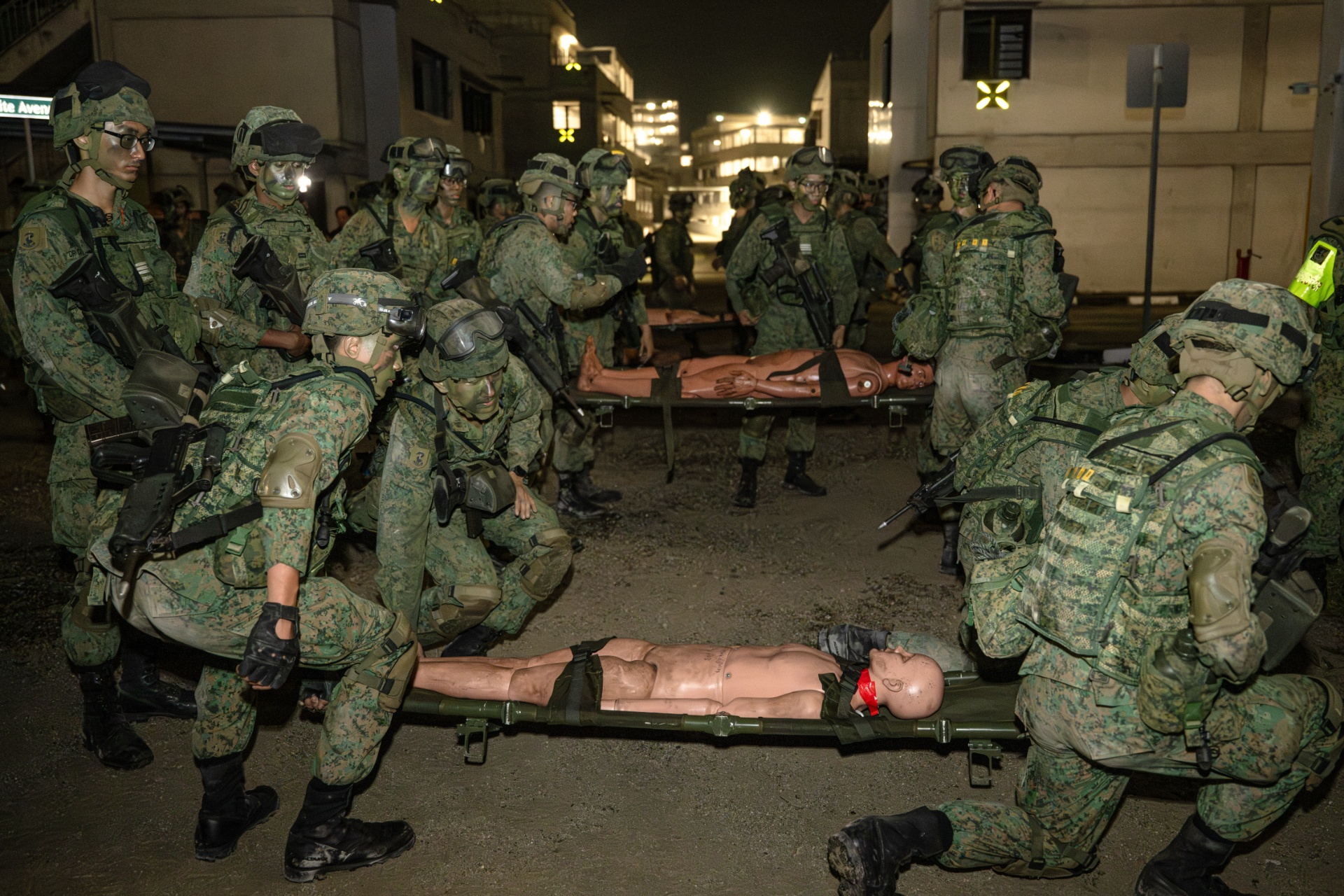
In SAFTI City, cadets learn to work within the space constraints and more complex layout of the urban environment.
While you were sleeping: Cadets performing casualty evacuation drills around SAFTI City at 4.30am on 18 Sep.
The MOCC serves as a crucial entry point and rite of passage into the family of the SAF Medical Corps, says LTC (Dr) Cheong.

Speaking on the introduction of urban operations in this MOCC, Lieutenant Colonel (LTC) (Dr) Cheong Wei Lun noted that recent conflicts around the world underscore the gradual transition of combat to an increasingly urbanised environment.

The 36-year-old Commanding Officer of the Singapore Armed Forces (SAF) Medical Leadership and Advanced School also elaborated that urban operations often result in higher casualty rates than conventional operations.

“(This means) our SAF Medical Officers must possess rapid and adaptable thinking, critical situational analysis and decisive decision-making.”
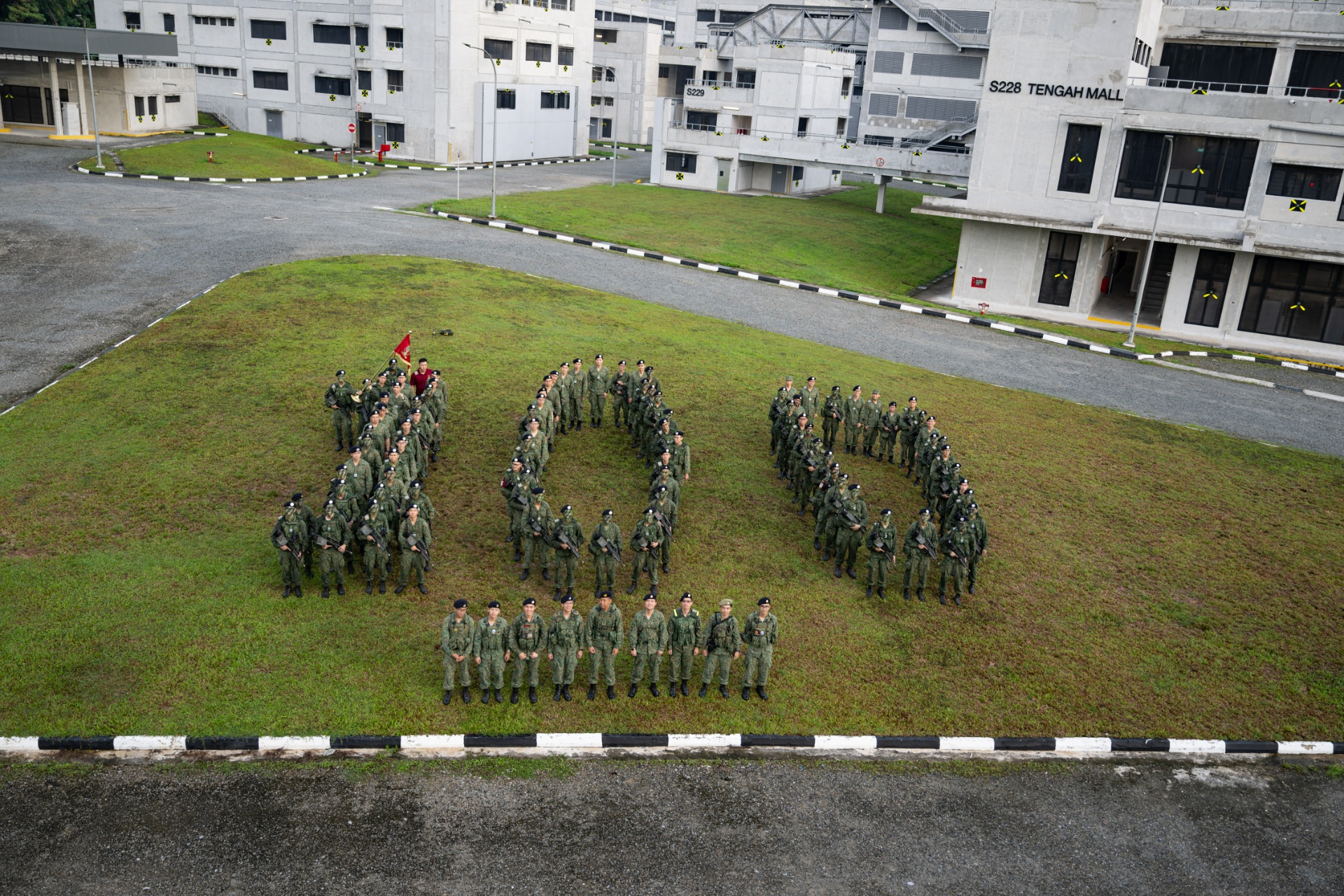
“Valour and compassion!” 92 cadets celebrating this special milestone of the 100th MOCC after completing their urban operations training and receiving their MOCC patch.

LTC (Dr) Cheong hopes that, beyond equipping cadets with the necessary skills, the MOCC will instill them with a fresh understanding of “a purpose greater than themselves – the vital need for commitment to our national defence”.

He added: “As we reach the milestone of 100th MOCC, it is also a celebration of the enduring legacy of professionalism and unwavering dedication of successive generations of SAF Medical Officers.”
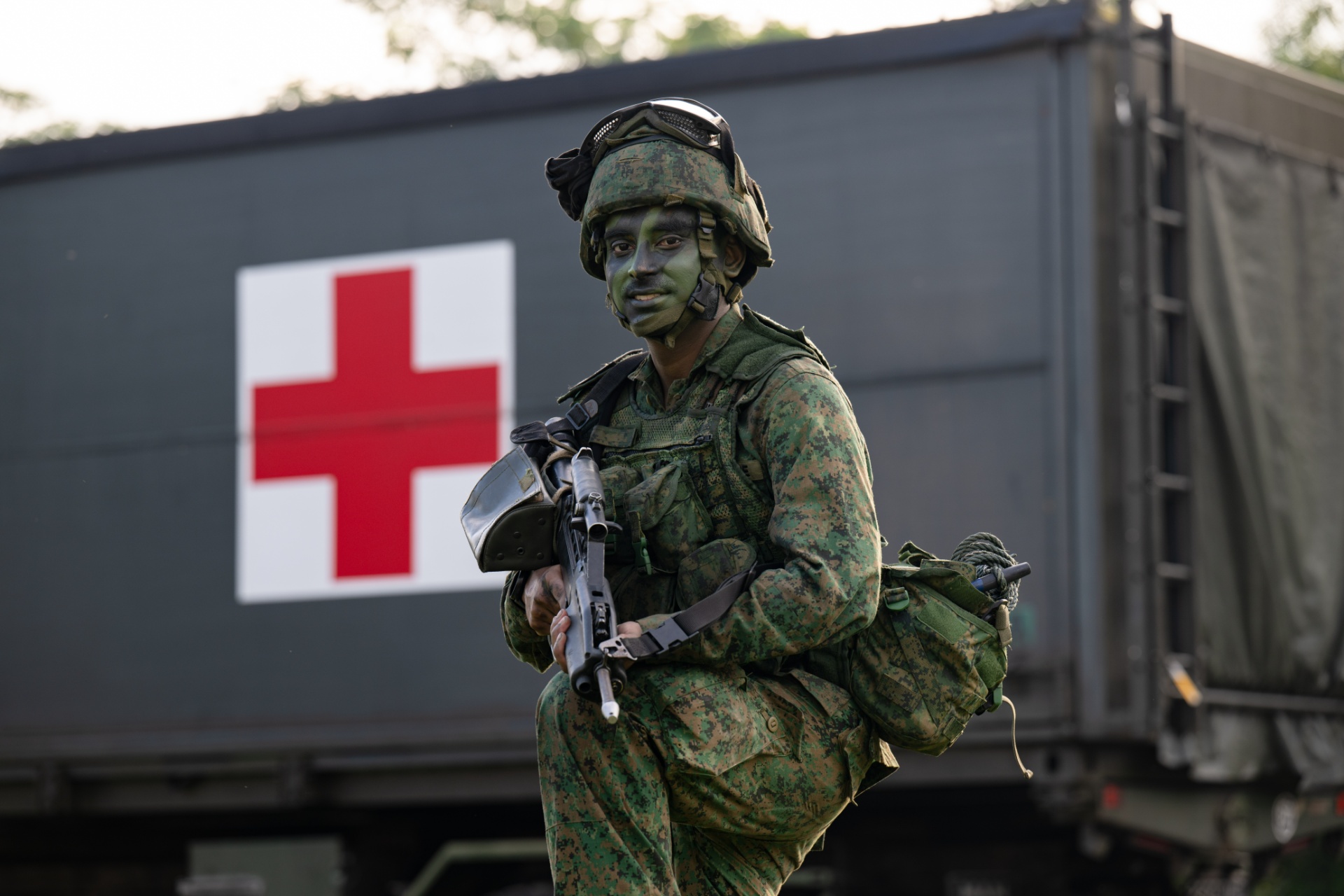
“We’re one of the first few MOCC batches that get to train at SAFTI City, which really shows how the SAF is keeping our medical roles updated within an urban environment,” says OCT Ashraf Roshan S/O Abdul Nasser, 26. “Coming to the end of the course is a bittersweet moment, but it’s heartwarming to go through this experience with my peers.”
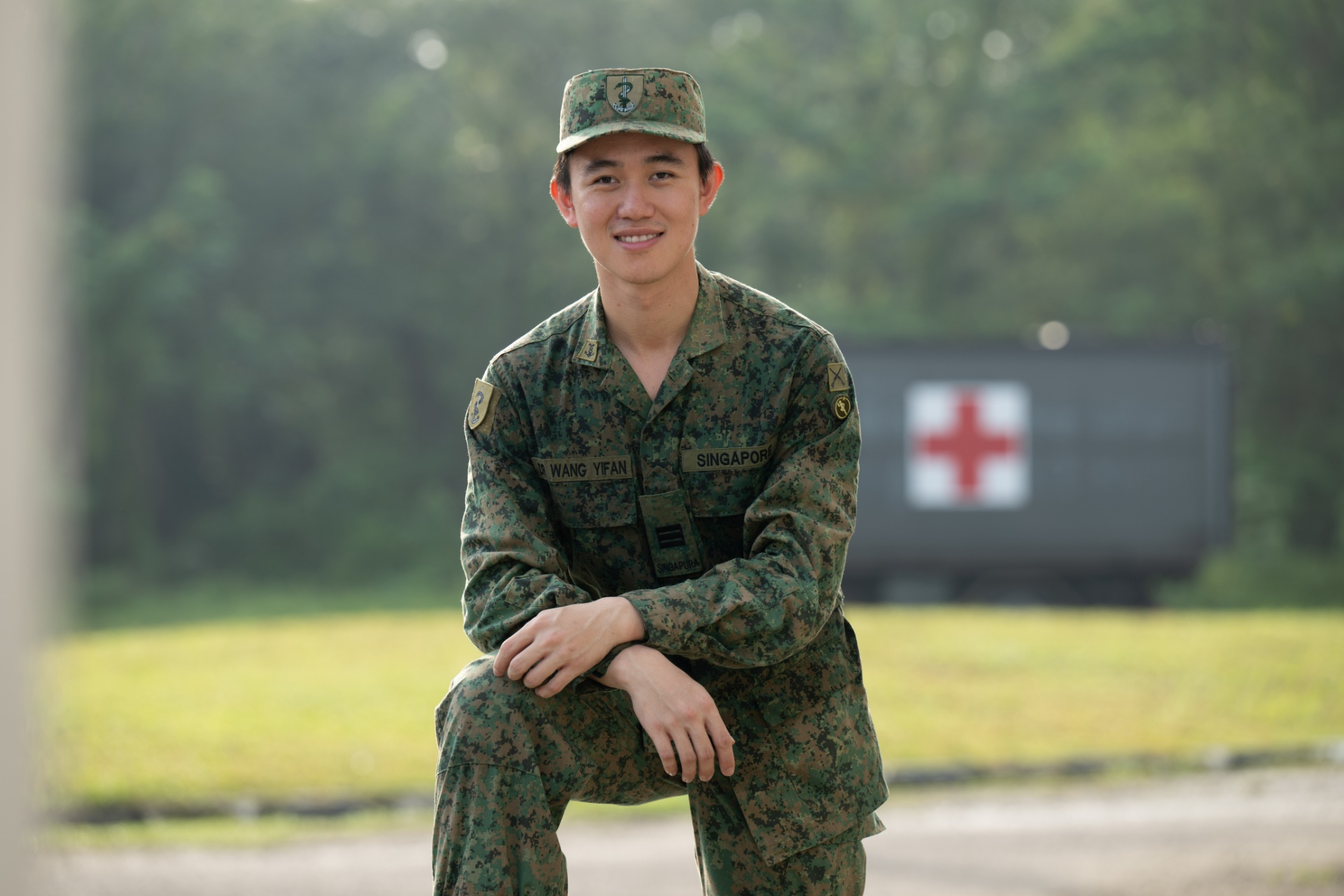
“We plan and conduct the training programme for the cadets. Besides hoping that they retain their training knowledge, I wish for them to remember the friendships and bonds formed during the course,” says 26-year-old Captain (Dr) Wang Yifan, Platoon Commander of the 100th MOCC.
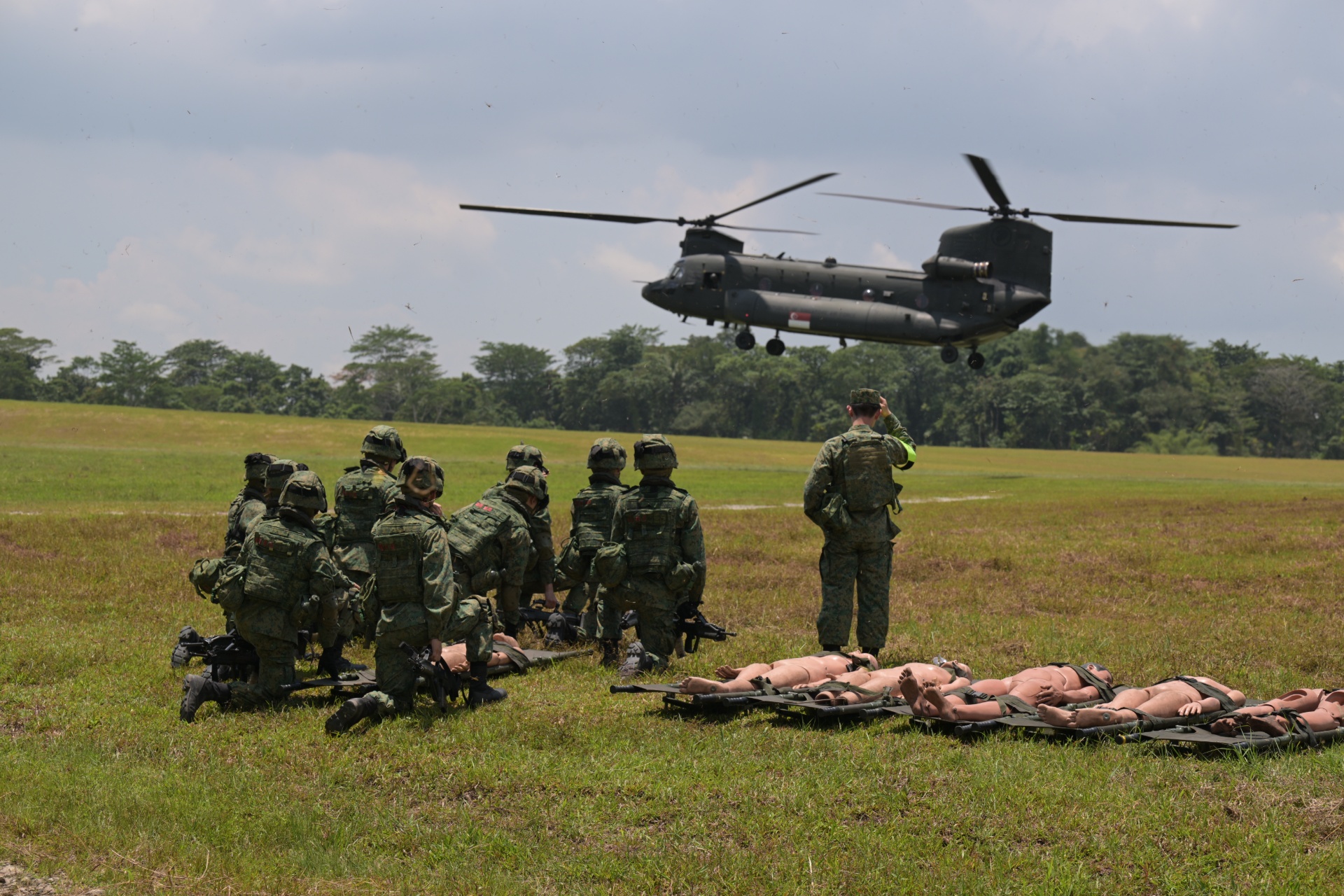
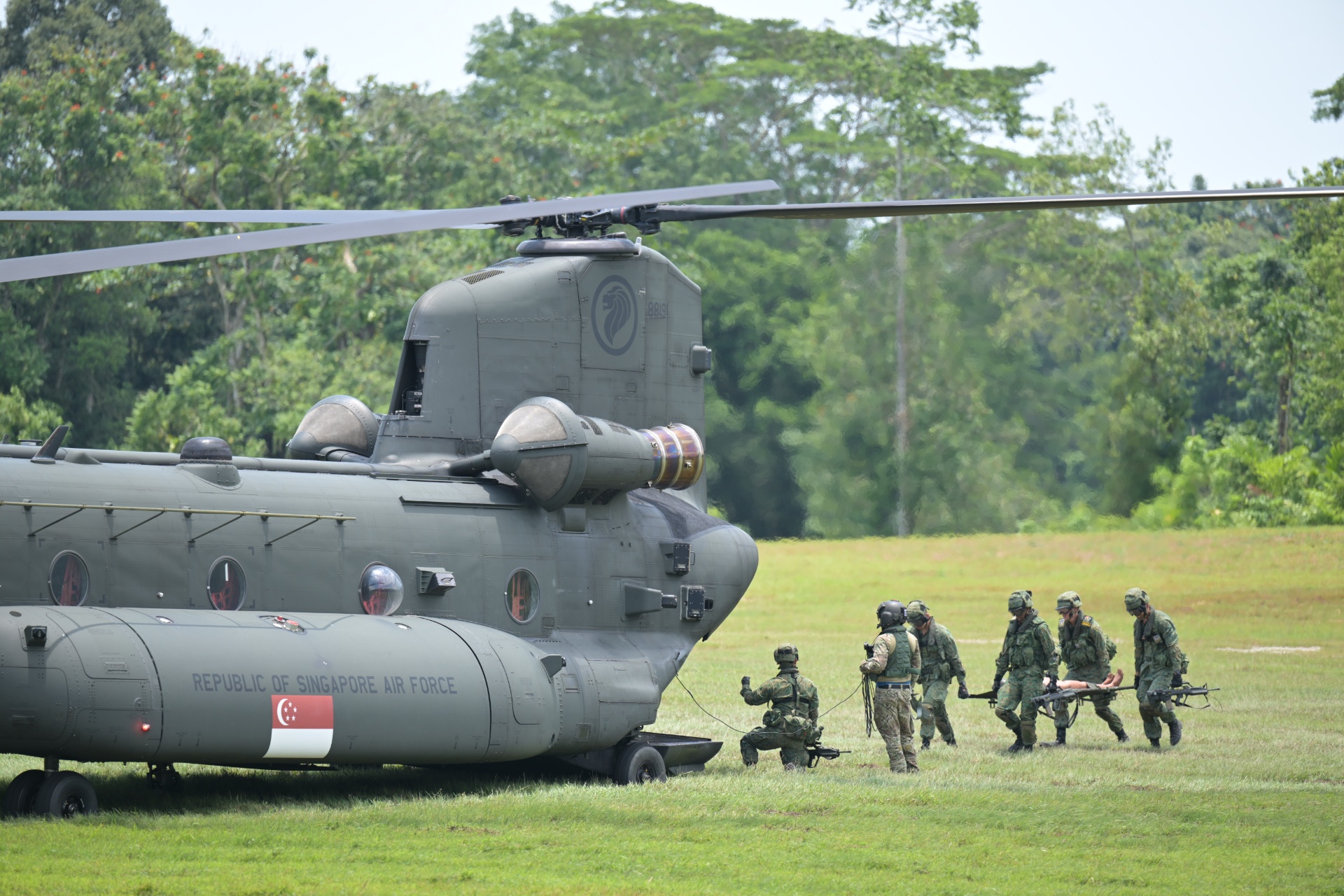
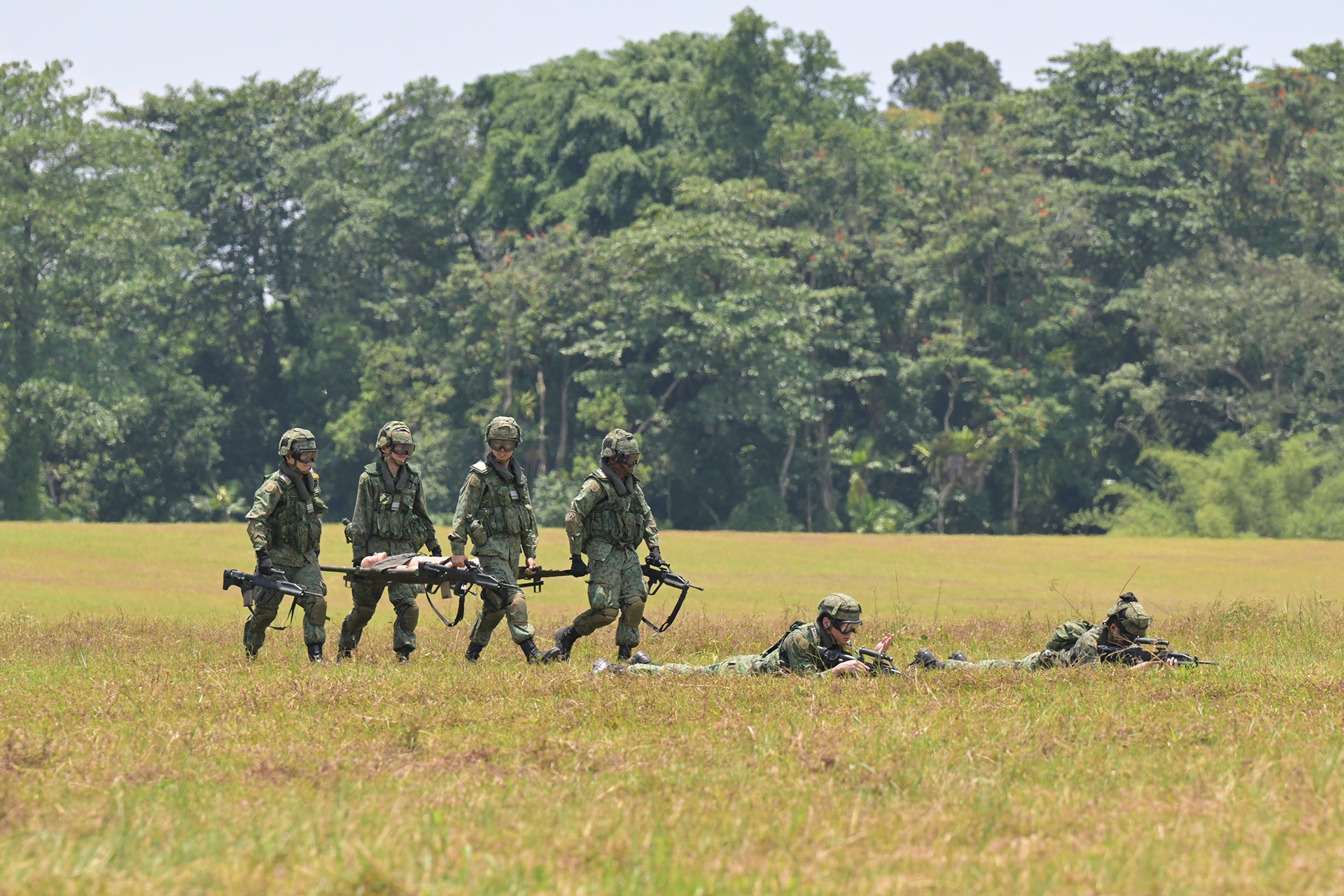
Cadets going through their helicopter casualty evacuation live training on 25 Sep at Jalan Bahtera, where they will board the Republic of Singapore Air Force’s CH-47SD Chinook helicopter.
Through this training, cadets gain a first-hand understanding of transporting and securing casualties for helicopter evacuation.
Space constraints, in-flight noise and vibrations, motion-sickness – these are challenges that the cadets have to deal with while up in the air!
After disembarking, the cadets bring down the simulated casualty and lie prone on the ground in a defensive formation while waiting for the helicopter to leave safely.
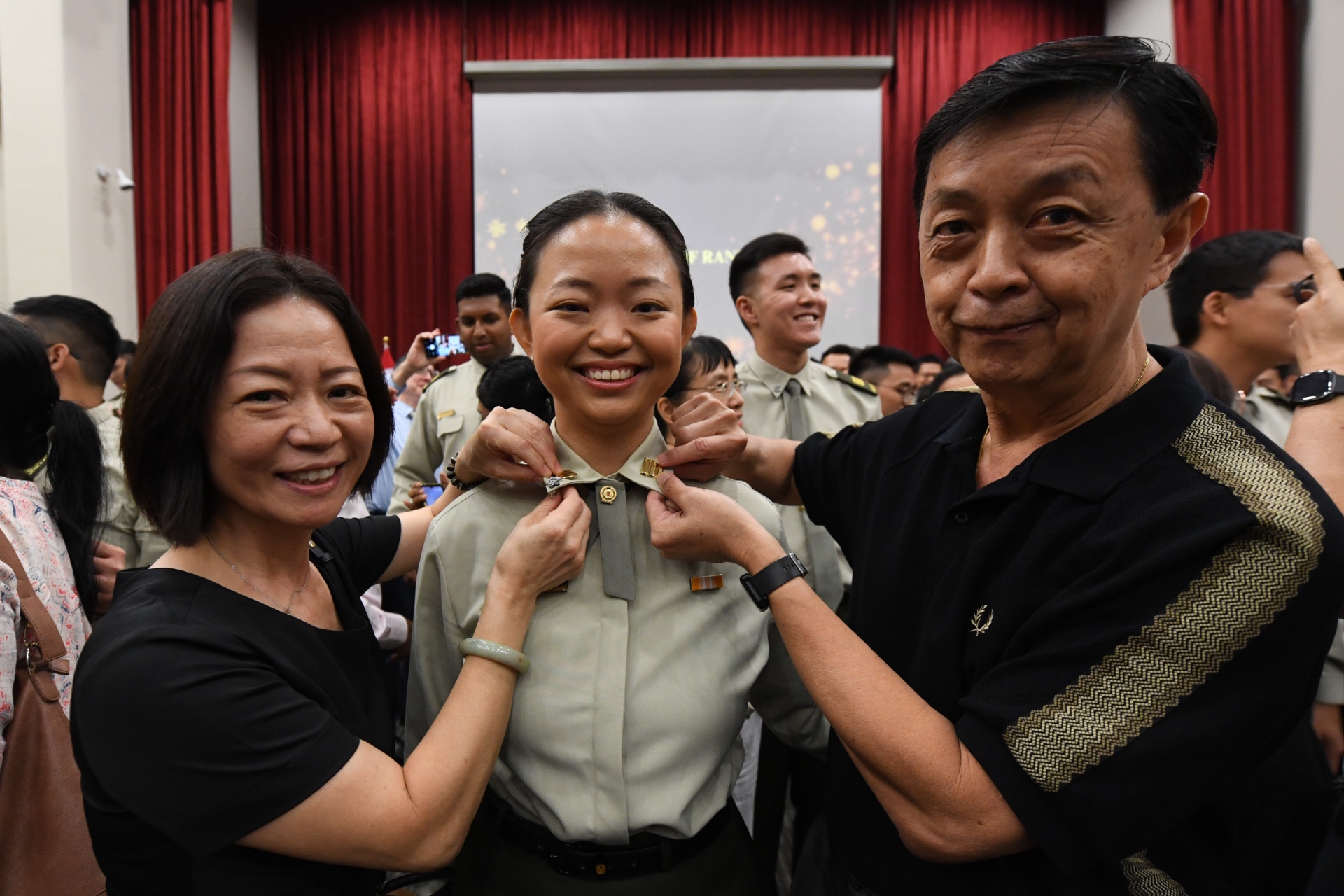
Making Mum and Dad proud: CPT (Dr) Koh Zhi Xuan (centre) receiving her new rank from her parents during the commissioning ceremony on 7 Oct at Nee Soon Camp.
Congratulations to the newest members of the SAF Medical Corps!
Share this story:

Got a great story to share?
Send it our way — we might feature it!

Share Your Story