
PEOPLE
MEDICAL AID FOR AFGHANISTAN
04 Mar 2009
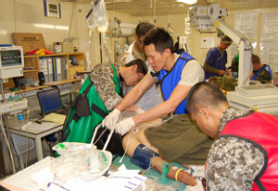
In the world we live in today, where complex global challenges can come from unexpected sources and directions, military forces are often being called upon to undertake operations other than war, such as peacekeeping and humanitarian assistance and disaster relief missions.
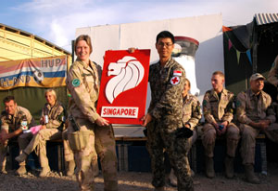
The Singapore Armed Forces (SAF) is no exception. Since 2007, four teams have been sent in aid of the multinational stabilisation and reconstruction efforts in Afghanistan. Last November, a team was deployed for the first time to the province of Oruzgan.
This latest deployment, a 20-man medical team comprising medical and nursing officers, provided primary health care and ward capabilities at a field hospital in the provincial capital of Tarin Kowt. A second 20-man team will replace them from February to May this year.
Medical care beyond our shores
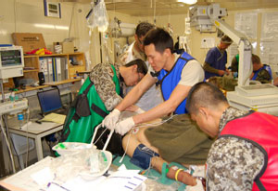
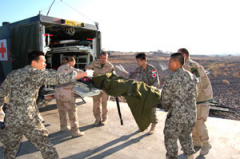
Working closely with their counterparts from the Netherlands Armed Forces (NAF) and Australian Defence Force (ADF), the SAF team is part of the Emergency Medical Team which tends to trauma and gunshot victims in the field hospital.
"As part of the hospital, we provide medical and surgical support to the combat troops deployed in Oruzgan. These include the International Security Assistance Forces (ISAF) and members of the Afghan national security forces," explained medical officer, Major (MAJ) (Dr) Adrian Tan.
"In ensuring the well-being, health and survival of these casualties, we contribute to the international communities' effort in the security and reconstruction of Afghanistan."
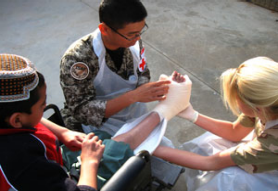
In addition to ISAF and Afghan troops, the SAF team also provided medical care to local Afghan civilians. Due to the volatile security situation in the region, projectile wounds, blast injuries and traumatic amputations resulting from Improvised Explosive Devices (IEDs) were part and parcel of the emergency conditions which the team had to face and manage.
Recalling one memorable instance, MAJ (Dr) Tan described how the team encountered their first critically wounded patient just a few days into their deployment.
"He was flown in on a helicopter, and I remember the rush of anticipation while waiting at the cold and windy helicopter landing site, not knowing exactly how seriously wounded the casualty might be," he told PIONEER. "I think all the training, practice runs and drills that we went through came together at that instant for the patient. The team performed well, stabilising the casualty and bringing him to the operating theatre for surgery."
Commented senior medic 2nd Warrant Officer (2WO) Mazlan bin Mohd Khalid: "It was a great sense of satisfaction, knowing that our actions were essential to his survival. If he had been left untreated, it was likely that the patient would have died within hours."
Expanding professional horizons
In any overseas deployment, quickly adapting to a new environment and a different operating culture is often imperative in ensuring mission success.
According to team leader Lieutenant-Colonel (LTC) Kevin Chin, who was on his first deployment to Afghanistan, a crucial component of their pre-deployment preparation was a three-week training stint in the Netherlands.
Not only did it allow the SAF personnel to familiarise themselves with the Dutch medical system, equipment and operating procedures, it also gave the teams from both countries a chance to build a strong working relationship. In fact, when the two teams met in Tarin Kowt, it was "almost like a meeting of old friends", according to 2WO Mazlan.
"Coming into this operation gives us great opportunities to learn from other forces, but our people also bring our fair share of experience and expertise to this mission," said LTC Chin.
He shared that during the integration training, some of the standard operating procedures used by the SAF medical fraternity - such as the four-man drill used by the ER (emergency room) team - were found to be very useful by the Dutch, and subsequently adopted for use in the mission.
"Besides gaining experience in an operational setting, this mission has also allowed us to interact with other armed forces and exchange ideas. Both sides were very open and willing to learn from each other... Through this deployment, we've validated the value of our training and showed that we have a lot to offer others," LTC Chin added.
Failure to prepare is preparing to fail
In addition to training with the NAF, the servicemen also underwent an extensive training programme to equip them with the necessary skills to mitigate risks and handle the challenging operating environment in Oruzgan. More importantly, the SAF team was able to hit the ground running and begin contributing to the operations from Day One.
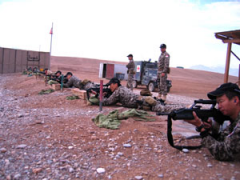
This training ranged from cultural briefs to help them understand the sensitivities involved in operating as part of a multinational coalition force, to sharpening their weapon proficiency and individual first-aid skills.
Personnel from the ADF also shared on lessons learnt from past and present operations in Middle Eastern countries, and how to recognise potential threats, such as identifying tell-tale signs of IEDs and mines.
Further preparatory training in Kuwait prior to the actual deployment enabled the team to become accustomed gradually to operating in similar climatic conditions at Tarin Kowt. Ever mindful of the possible dangers faced in Oruzgan, the SAF team remained vigilant and took the necessary precautions by carrying arms and wearing protective gear at all times.
"The training gave greater ease and confidence to each member of the team when performing his duties. We knew that if required, we were well-equipped to deal with any situation appropriately," said LTC Chin.
The call of duty
As soldiers, answering the call of duty and deploying for operations is a part of the profession. Seldom mentioned, however, is the sacrifice the soldiers and their families make in being away from each other.
To mitigate the difficulties, a strong support structure was put in place to help their families cope, giving servicemen the peace of mind to focus on the task at hand.
Family Liaison Officers, for example, were assigned to each family as an immediate point of contact to help address any concerns they might have. Frequent communication via the Internet and satellite phones also helped to bridge the distance, and reassure both sides that their loved ones were well taken care of.
On top of that, families were able to send welfare packages to the servicemen every month.
"This is a big boost to troop morale, especially when the packages included local goodies during festive periods like Christmas and Chinese New Year," said LTC Chin.
MAJ (Dr) Tan agreed, adding: "Many of us have made personal sacrifices to serve on this deployment, but the sacrifices are worth it, knowing that our actions here go a long way in making a difference to the lives of the wounded we treat."
Elated and honoured to be able to represent the nation in such a capacity, MAJ (Dr) Tan shared that the initial feelings of excitement were tempered by the realisation that he would have to leave behind his then nine-month-old son in Singapore.
"It was heart-rending, but I am blessed to have an understanding wife and family who support me fully in this deployment," he said.
"I am confident that my observations and experiences here will make fantastic stories that I can share with my son as he grows up. This way, he will grow up with a wider perspective of the world around him and better appreciate the peace and stability that we enjoy at home."


ALSO READ IN PEOPLE
A major step for military doctors
23 Oct 2026
From undergoing emergency medicine training to planning joint operations, MAJ (Dr) Ivan Low now makes history as the Top Graduate of the inaugural Command and Staff Course (Medical).
More than just a duty
19 Oct 2026
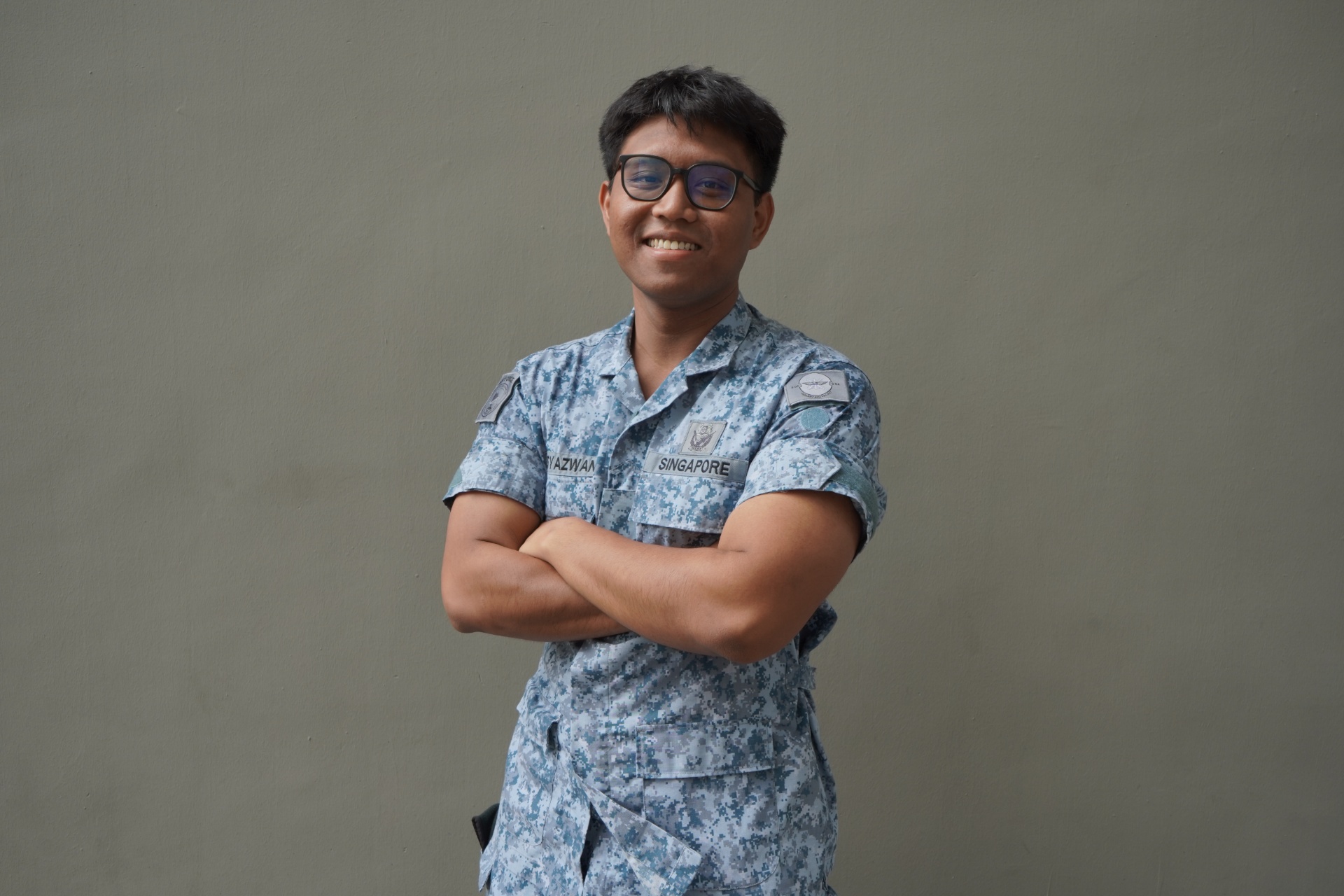
From tracking potential aerial threats to supporting NDP 2026, 3SG Muhammad Syazwan’s NS journey has taught him that every contribution matters.
A sisterhood of support
15 Oct 2026
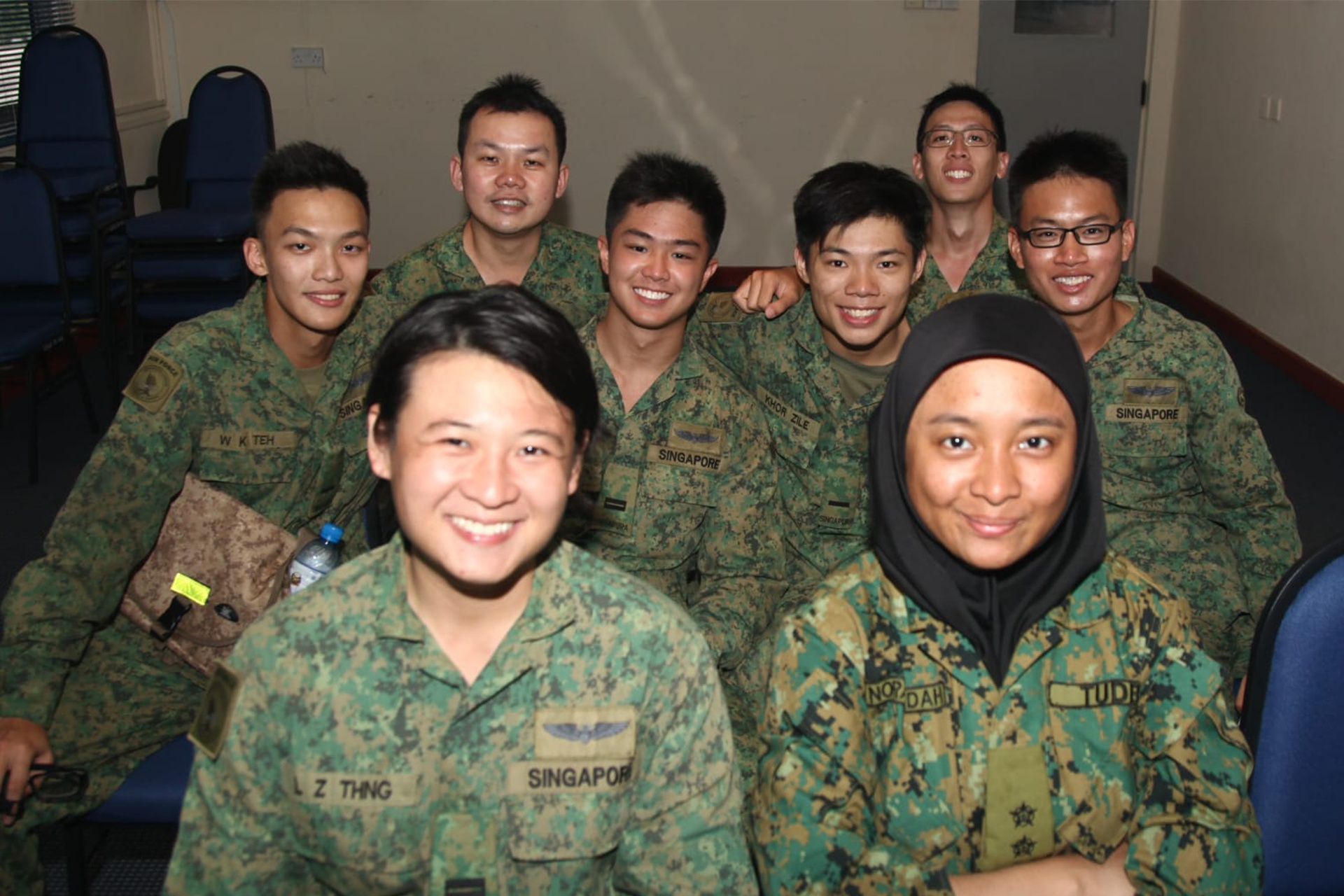
What began as a two-week exercise turned into a decade-long friendship between MAJ Thng Lizhen and MAJ (U) Noraqidah Efinddi, who are growing together as female commanders.