
TECHNOLOGY
ENTER THE LIGHTNING
01 Dec 2016
Built by a group of nine partner countries, the F-35 Lightning II is the next-generation of fighter aircraft designed to dominate the skies.
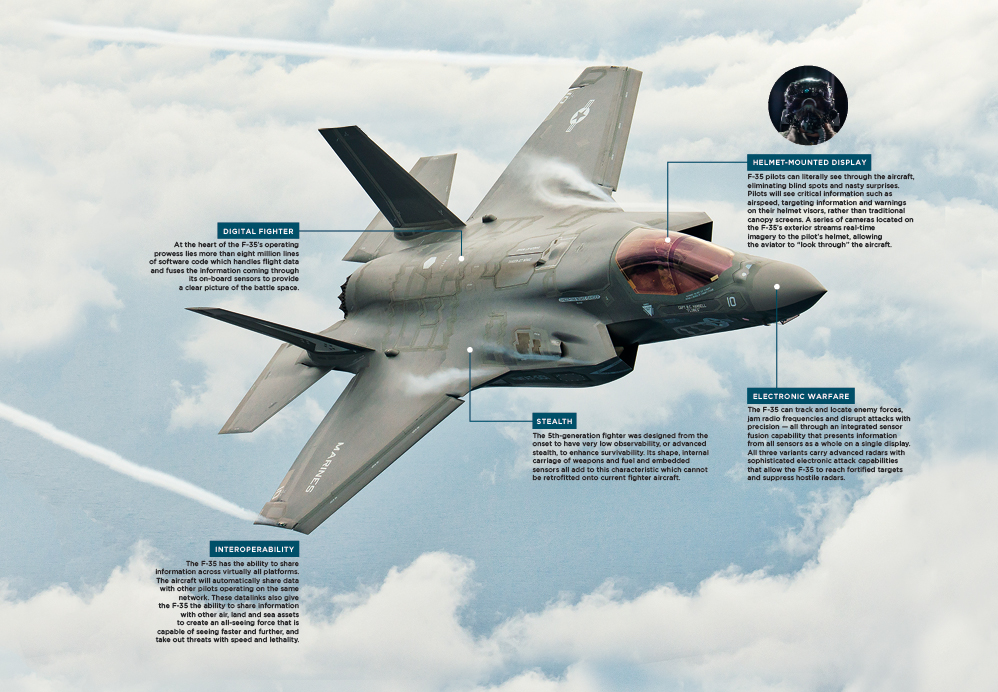
Built by a group of nine partner countries, the F-35 Lightning II is the next-generation of fighter aircraft designed to dominate the skies.
Developed from the X-35, which won the Joint Strike Fighter concept demonstration phase in October 2001, the first production F-35A rolled out in February 2006.
Later that year, the F-35 Joint Strike Fighter was named Lightning II in homage to two earlier modern fighters that shared the "Lightning" name.
Of the nine partner countries -- Australia, Canada, Denmark, Italy, the Netherlands, Norway, Turkey, the United Kingdom and the United States (US) -- six have received the first of their aircraft and eight are currently training pilots and maintenance crew.
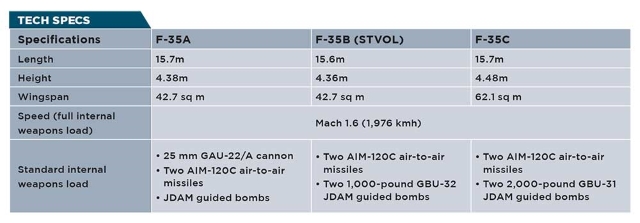
There are three variants of the F-35. The F-35A is designed to be operated from conventional runways and will form the bulk of aircraft eventually delivered.
The F-35B is designed to take off from shorter runways and is capable of vertical landings. It is also the first supersonic stealth Short Take-off/Vertical Landing (STVOL) fighter aircraft in the world.
The last variant F-35C is the carrier version. With larger wings and more robust landing gear, it is purpose-built for catapult launches and arrestment mechanisms aboard naval aircraft carriers.
The deal came just over eight months after the A$105 million (S$108 million) contract with Australia was signed in 2014 for the delivery of 89 such vehicles.

ALSO READ IN TECHNOLOGY
Locked & Loaded: SAF Shooting Contingent weapons
26 Nov 2025
AI joins the fight in national cyber defence exercise
12 Nov 2025
AI and closer collaboration among agencies and industry are taking centre stage in this year’s Critical Infrastructure Defence Exercise (CIDeX).
They built this city
01 Oct 2025
Turning vision to reality: the team behind SAFTI City clinches the Defence Technology Prize 2025 Team (Engineering) Award!