
TECHNOLOGY
Geared up against chemical threats
18 Aug 2025
How do our soldiers keep safe when rescuing casualties of chemical or biological weapons?
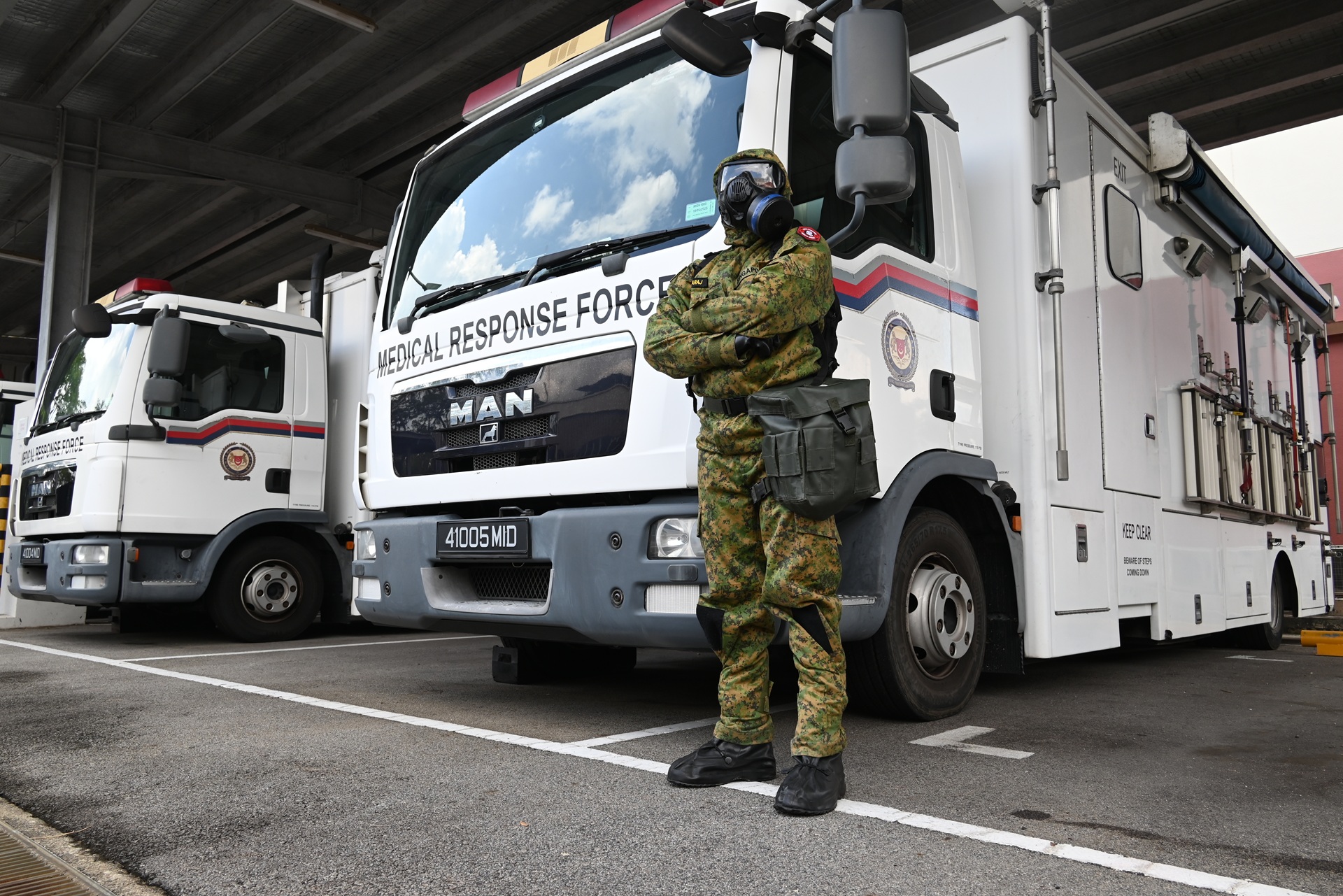
Meet the Medical Response Force (MRF) – an elite force of medical officers (MOs) and medics specially trained to manage Chemical, Biological and Radiological (CBR) attacks.
If a CBR fallout occurs, they must operate in a dangerous and volatile environment, handling highly toxic CBR agents that may spread easily
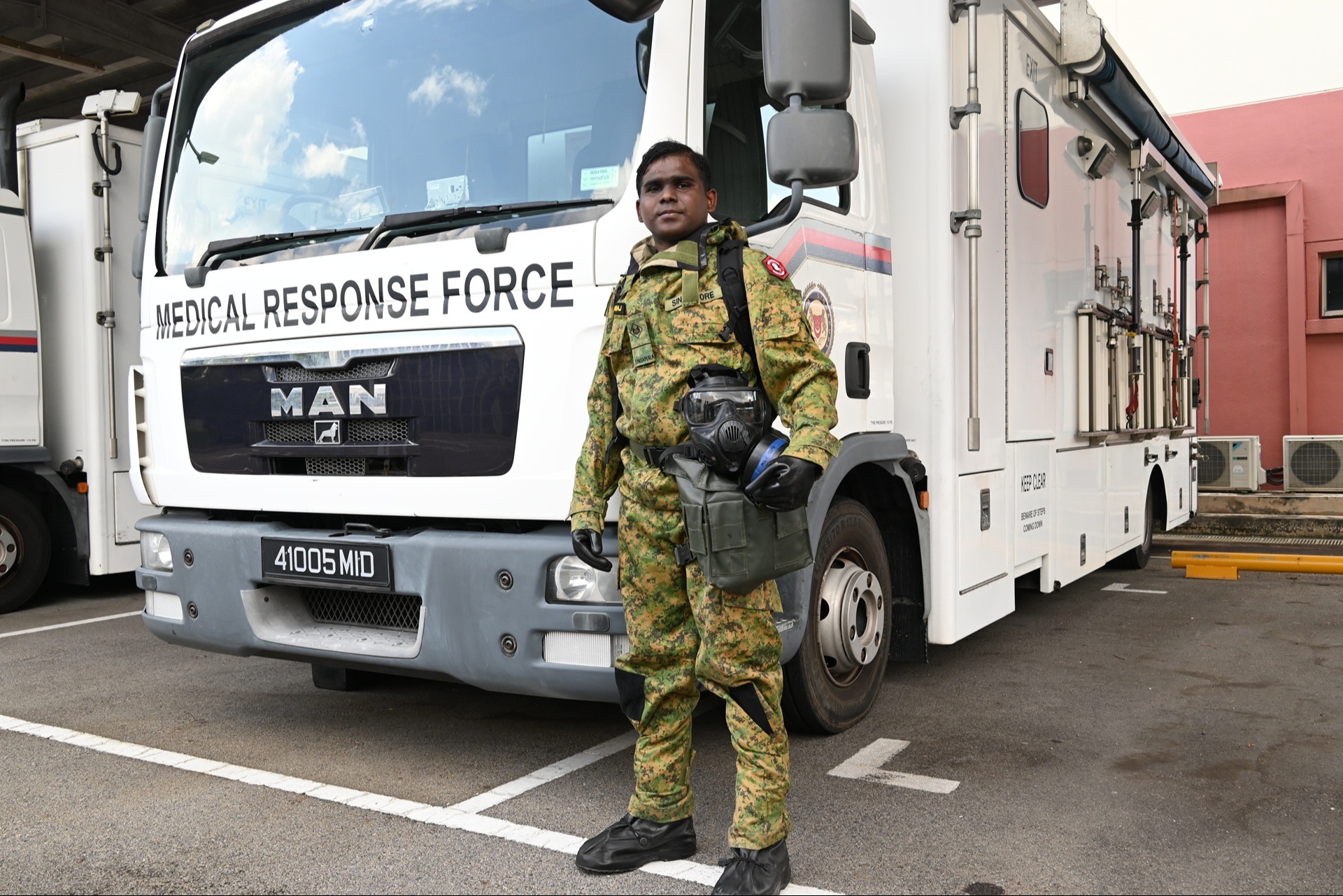
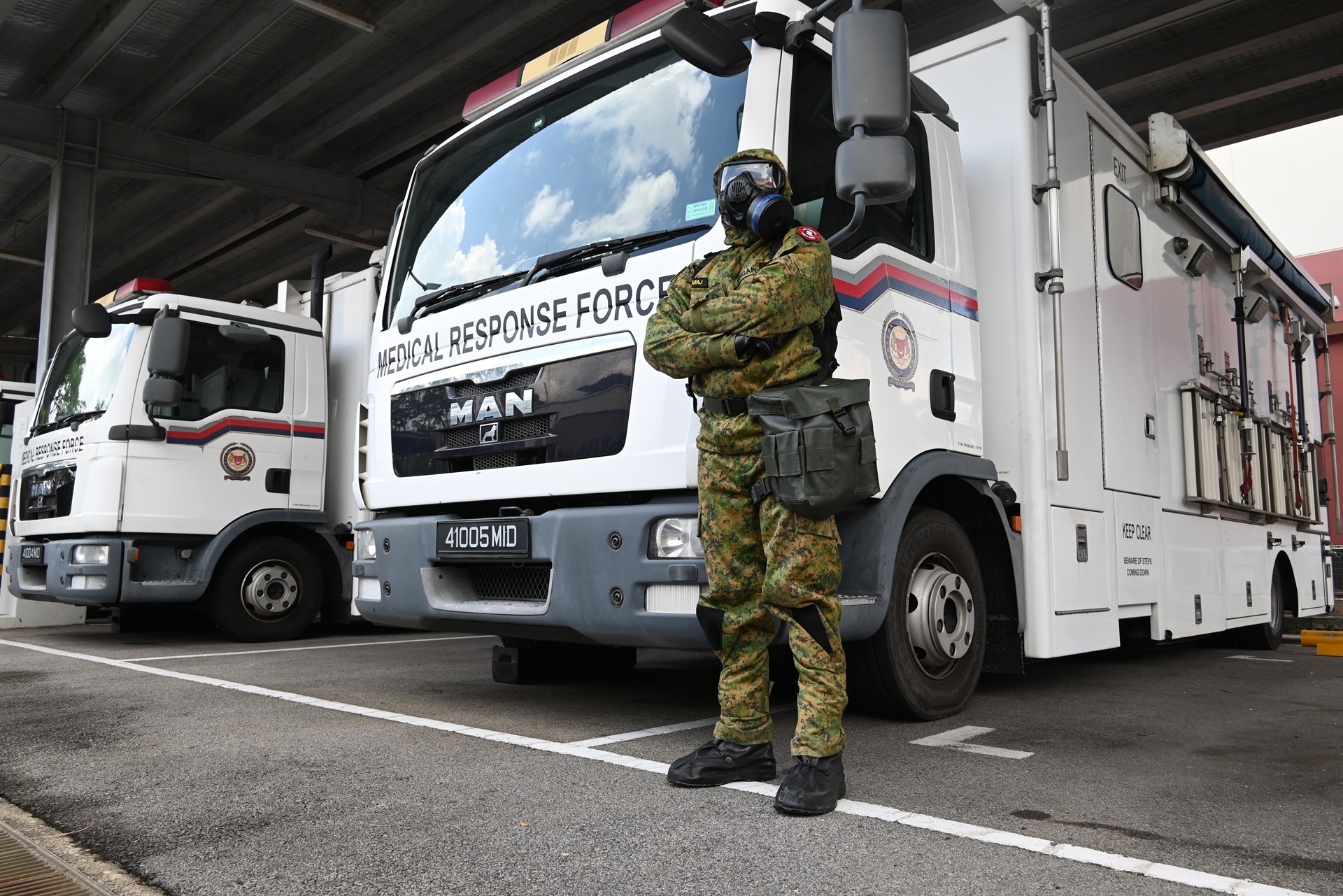
To reduce the risk of contamination, operators wear Mission-Oriented Protective Posture (MOPP) suits – which weigh 4kg when donned in full – during operations.
These carbon-lined individual protective outfits keep them safe while handling casualties who were exposed to hazardous agents.
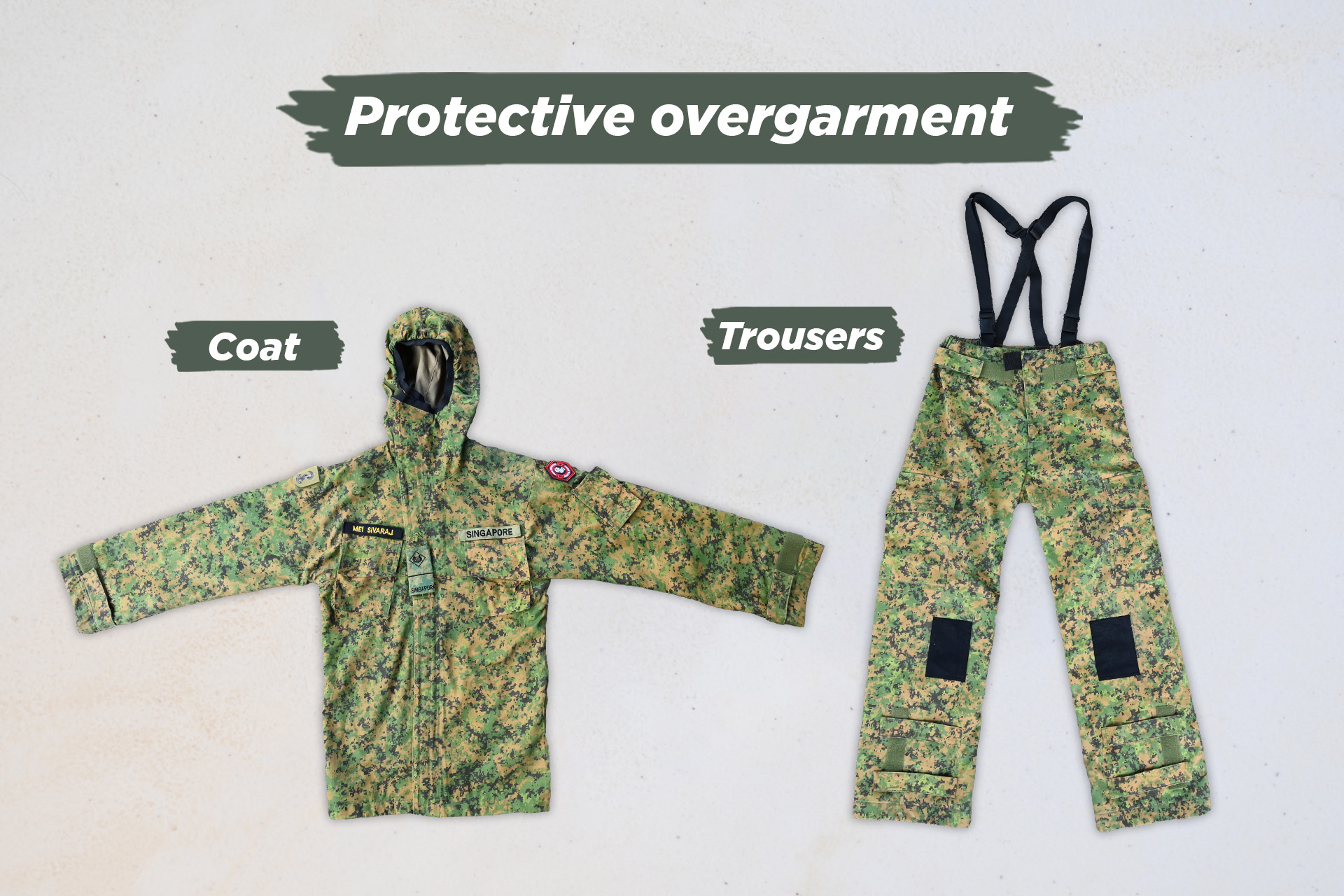
Protective overgarment
This two-piece cover comprises a coat and trousers with suspenders. Lightweight and water-resistant, it is carbon-lined to protect soldiers against chemical agents.
The pixelated print matches the Army No. 4 uniform, and operators can affix their ranks on the front of the coat.
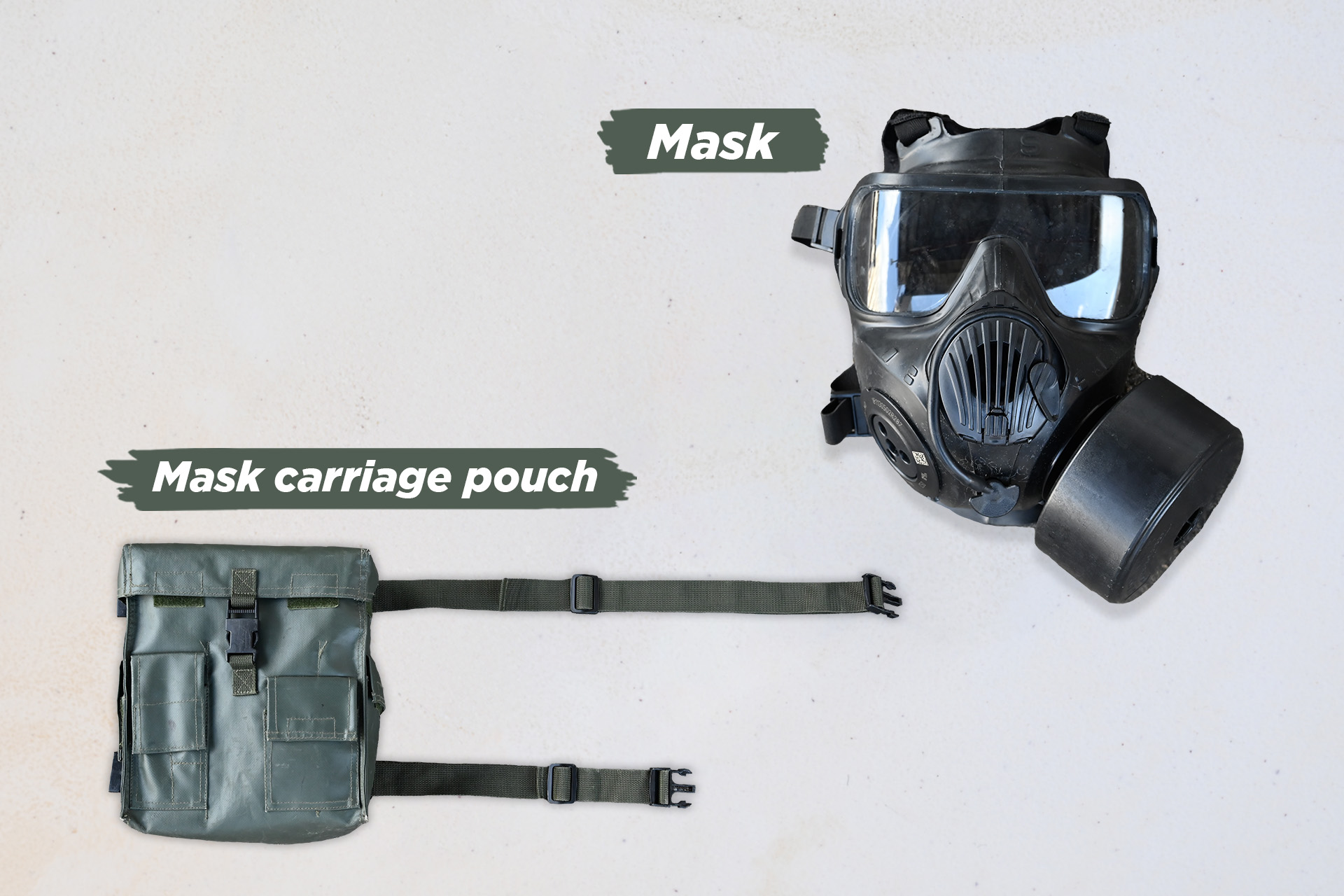
Protective mask & mask carriage pouch
Commonly known as a gas mask, this filters out harmful chemical and biological agents to allow soldiers to breathe safely.
The mask carriage pouch holds the mask and protects it from damage. This is strapped to the medic’s thigh. It also holds items such as:
- Gas mask filters used for CBR agents or toxic industrial chemicals
- Butyl gloves
- White inner gloves
- Individual survival kit with items such as medication, antidotes and decontamination equipment
- Personal plastic protective cape (also called a C cover) to protect against liquid agents
- Writing materials
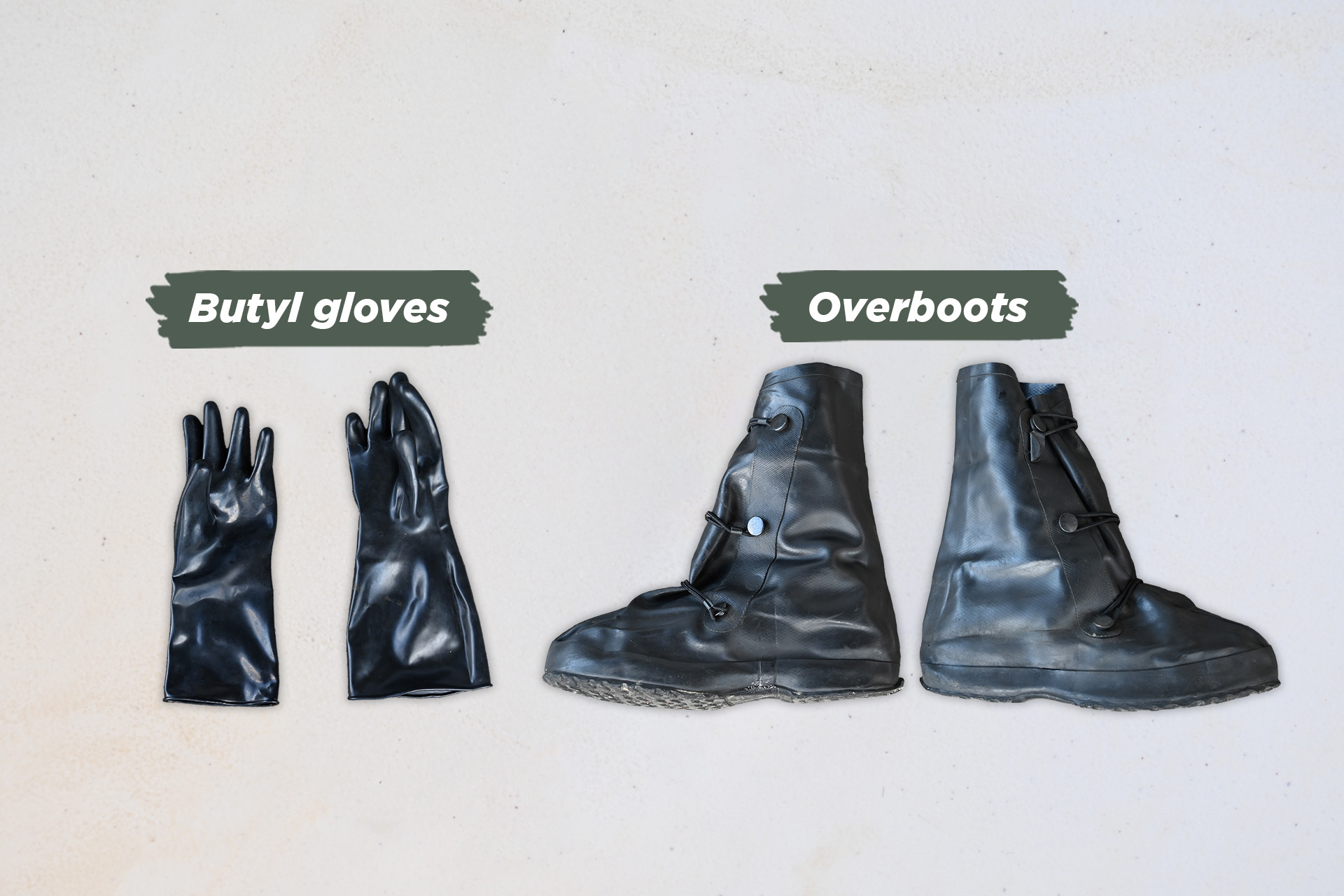
Butyl gloves & overboots
The gloves are made of butyl, a highly durable synthetic rubber that prevents the operator from coming into contact with harmful agents.
The overboots are worn over combat boots to protect footwear and feet. These overboots can be decontaminated and reused.
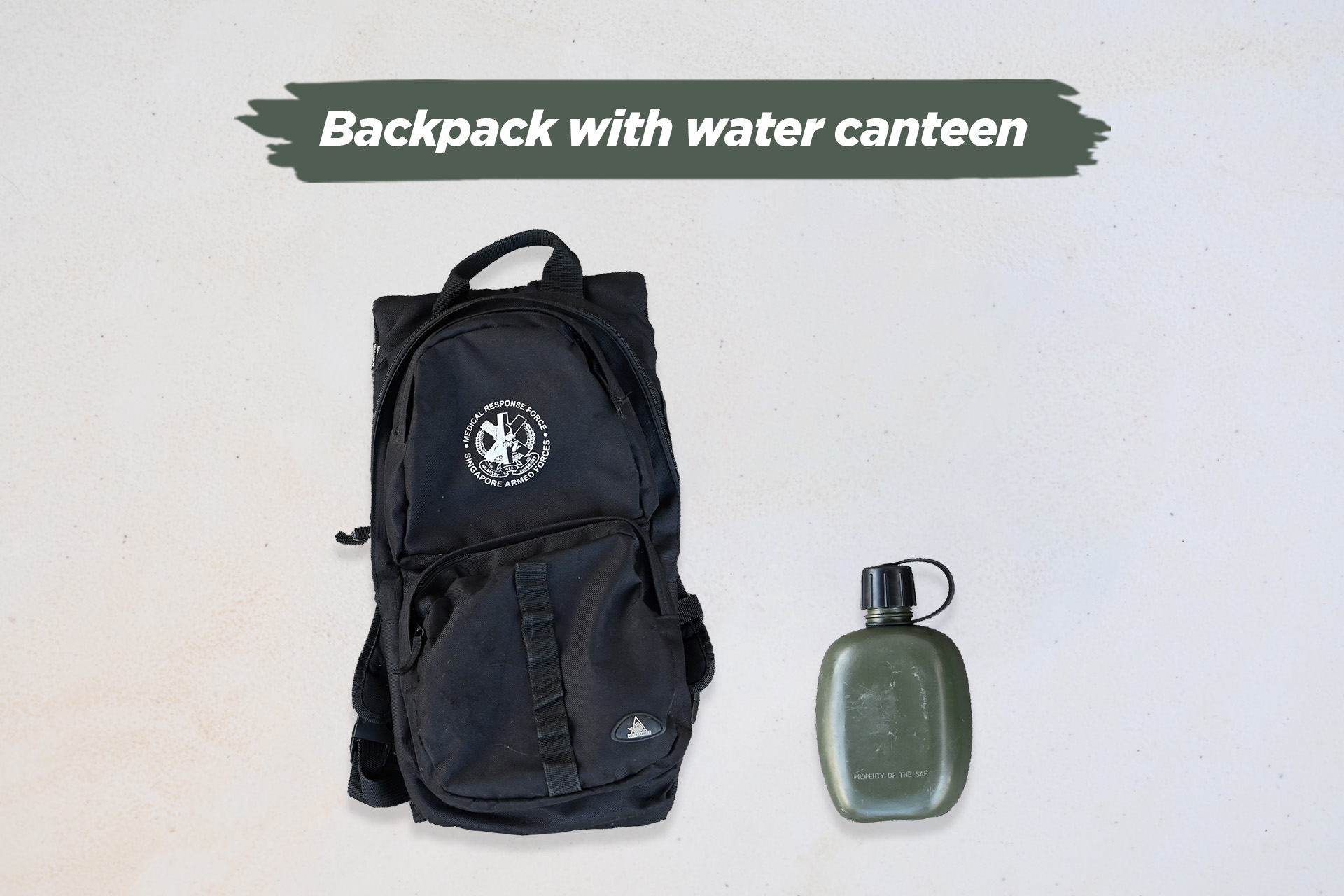
Backpack with water canteen
The pack can carry three canteens of drinking water for the operator’s consumption.
Because wearing the MOPP suit for long periods of time can lead to heavy sweating and dehydration, it is critical for soldiers to stay hydrated to avoid heat-related injuries.
ME1 Sivaraj shows us the different MOPP levels and when they are used!

ALSO READ IN TECHNOLOGY
Locked & Loaded: SAF Shooting Contingent weapons
26 Nov 2025
AI joins the fight in national cyber defence exercise
12 Nov 2025
AI and closer collaboration among agencies and industry are taking centre stage in this year’s Critical Infrastructure Defence Exercise (CIDeX).
They built this city
01 Oct 2025
Turning vision to reality: the team behind SAFTI City clinches the Defence Technology Prize 2025 Team (Engineering) Award!