
DIPLOMACY
ASIA-PACIFIC SECURITY AN EVOLVING WEB OF COOPERATION
04 Jun 2007
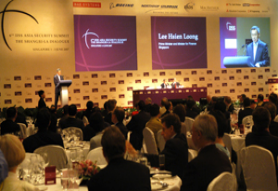
The Asia-Pacific region's network of overlapping partnerships gives a framework for cooperation between countries, which can adapt to changing needs as the strategic environment evolves.
Minister for Defence Teo Chee Hean said this at the Shangri-La Dialogue on 3 Jun, an annual gathering of defence and foreign ministers and security officials organised by the International Institute for Strategic Studies (IISS).
This year's edition drew the largest number of participants thus far, with representatives from Bangladesh, Germany and Sri Lanka attending for the first time.
Mr Teo was speaking at a plenary session on security cooperation in Asia, the last of five such sessions during the three-day event at the Shangri-La Hotel.
"This matrix of overlapping security networks is here to stay. But this matrix, like an organic being, is also transforming, reflecting the security landscape," said Mr Teo.
"Old alliances and partnerships continue to have utility, but they will have to evolve to take into account the new strategic landscape," he added.
"Newer fora whose potential has not been fully realised yet must recognise that being novel is not the same as being relevant or useful."
Mr Teo proposed three broad principles to "guide the evolution of the regional security architecture".
Regional security is a "collective responsibility", as the security and fortunes of all the countries are closely linked and "no single country has the resources to deal unilaterally with security issues".
The security architecture needs to be "inclusive", should not be limited by "traditional notions of geography" and should allow for "new opportunities for cooperation".
Cooperation should be "respectful of each country's sovereignty, conform with regional and international norms of behaviour, and sustain the international institutions and laws that underpin a stable world order".
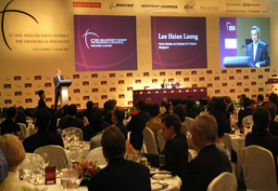
During the summit, Mr Teo met his counterparts from Cambodia, Indonesia, Japan, the Philippines and South Korea; as well as senior defence officials from China, Pakistan and the United States.
The IISS has convened this summit in Singapore since 2002. It signed an agreement with the Ministry of Defence to hold the forum in the city state until 2011.
The dialogue, noted Mr Teo, is "cocooned from the demands of political deliverables, and yet it is well-supported by security establishments from the region and beyond".
"It is a forum like no other in the Asia-Pacific," he said.
Minister for Defence Teo Chee Hean said this at the Shangri-La Dialogue on 3 Jun, an annual gathering of defence and foreign ministers and security officials organised by the International Institute for Strategic Studies (IISS).
This year's edition drew the largest number of participants thus far, with representatives from Bangladesh, Germany and Sri Lanka attending for the first time.
Mr Teo was speaking at a plenary session on security cooperation in Asia, the last of five such sessions during the three-day event at the Shangri-La Hotel.
"This matrix of overlapping security networks is here to stay. But this matrix, like an organic being, is also transforming, reflecting the security landscape," said Mr Teo.
"Old alliances and partnerships continue to have utility, but they will have to evolve to take into account the new strategic landscape," he added.
"Newer fora whose potential has not been fully realised yet must recognise that being novel is not the same as being relevant or useful."
Mr Teo proposed three broad principles to "guide the evolution of the regional security architecture".
Regional security is a "collective responsibility", as the security and fortunes of all the countries are closely linked and "no single country has the resources to deal unilaterally with security issues".
The security architecture needs to be "inclusive", should not be limited by "traditional notions of geography" and should allow for "new opportunities for cooperation".
Cooperation should be "respectful of each country's sovereignty, conform with regional and international norms of behaviour, and sustain the international institutions and laws that underpin a stable world order".
During the summit, Mr Teo met his counterparts from Cambodia, Indonesia, Japan, the Philippines and South Korea; as well as senior defence officials from China, Pakistan and the United States.
The IISS has convened this summit in Singapore since 2002. It signed an agreement with the Ministry of Defence to hold the forum in the city state until 2011.
The dialogue, noted Mr Teo, is "cocooned from the demands of political deliverables, and yet it is well-supported by security establishments from the region and beyond".
"It is a forum like no other in the Asia-Pacific," he said.

ALSO READ IN DIPLOMACY
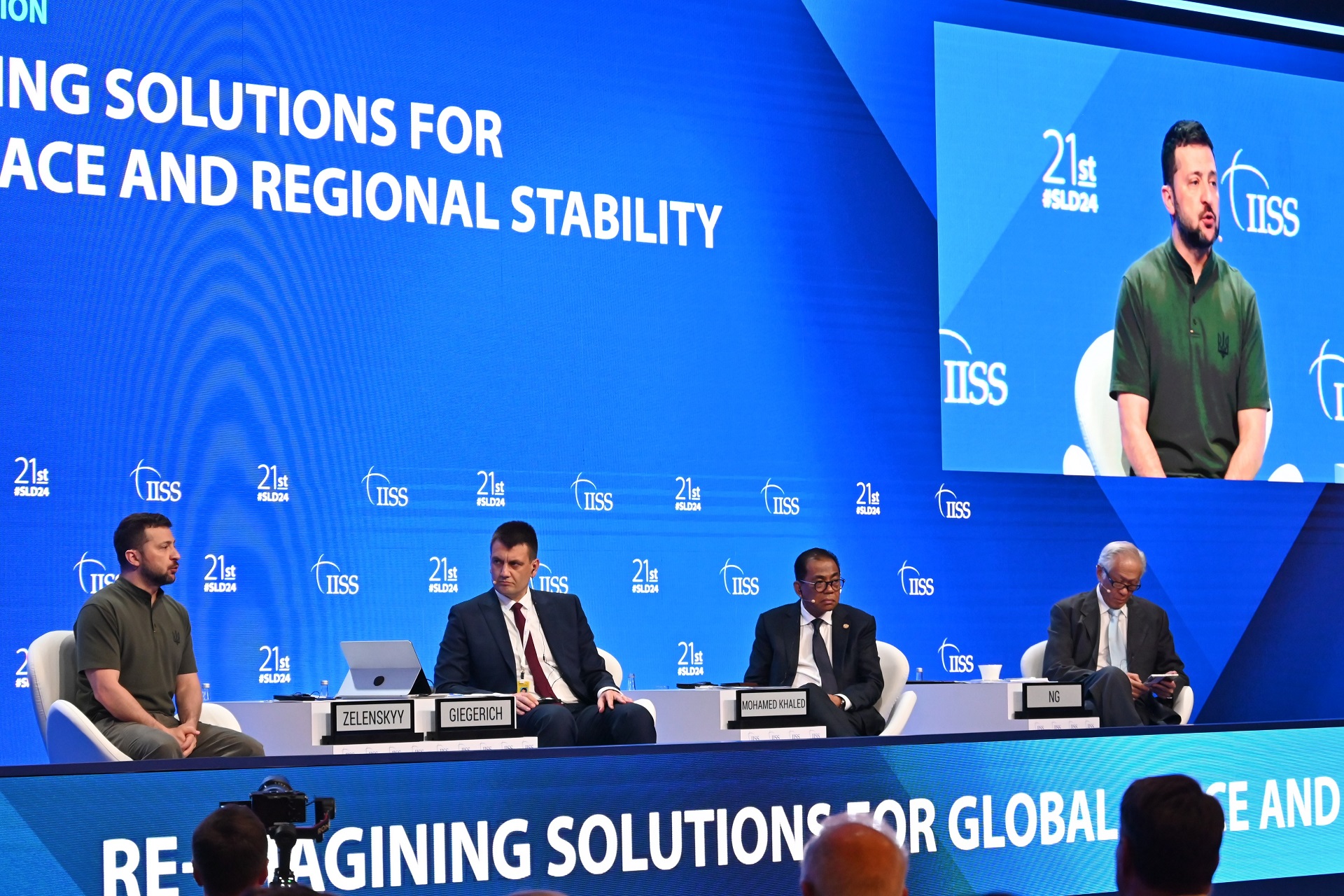
A call for peace at Shangri La Dialogue
02 Jun 2024
A repeated call for peace, especially in Asia. This was Minister for Defence Dr Ng Eng Hen's central message at the 21st Shangri La Dialogue (SLD), held from 31 May to 2 Jun.
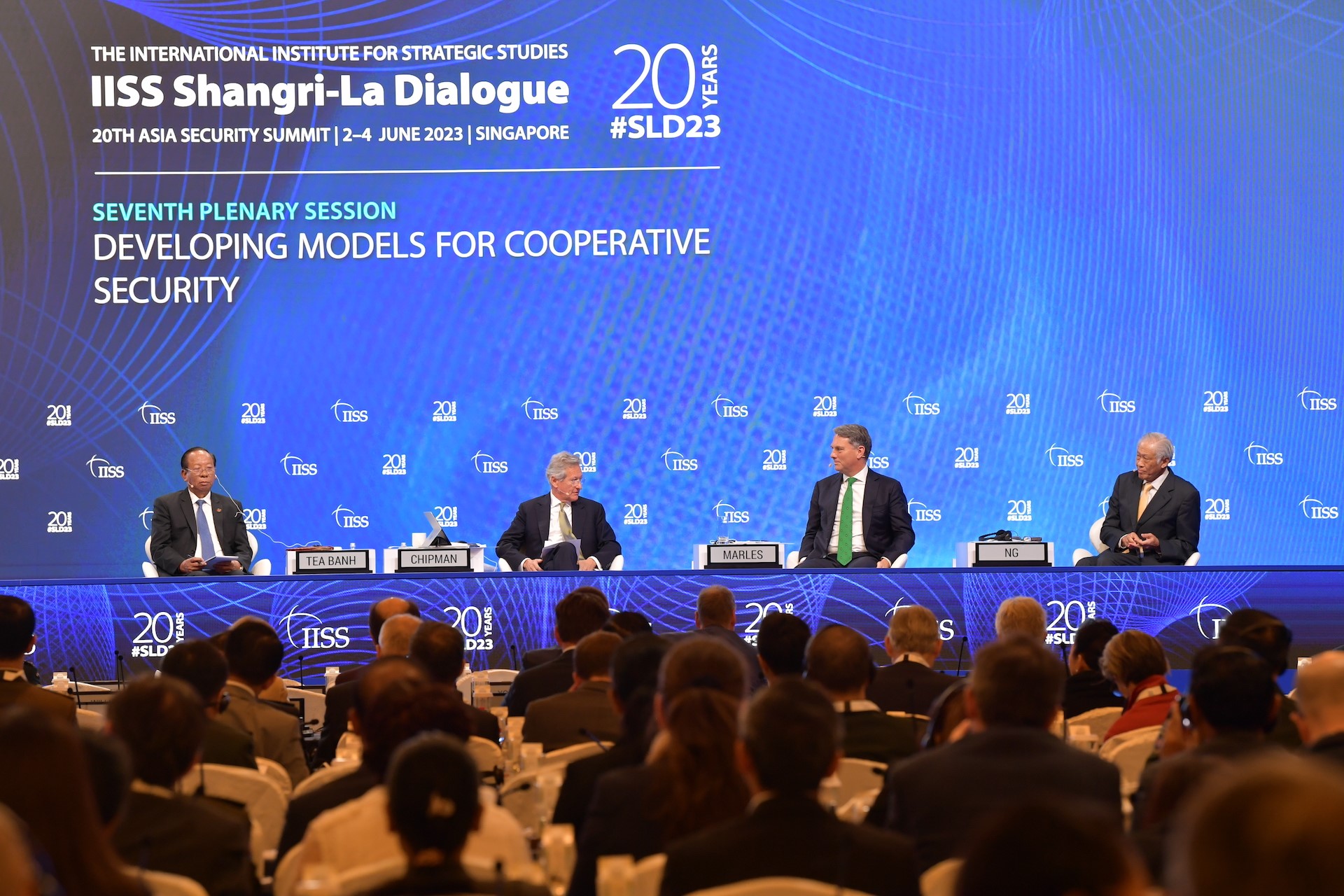
Shangri-La Dialogue sees frank discussion of security issues
04 Jun 2023
The 20th Shangri-La Dialogue, held from 2 to 4 Jun, saw ministers from around the world meet in Singapore to discuss key defence and security issues.
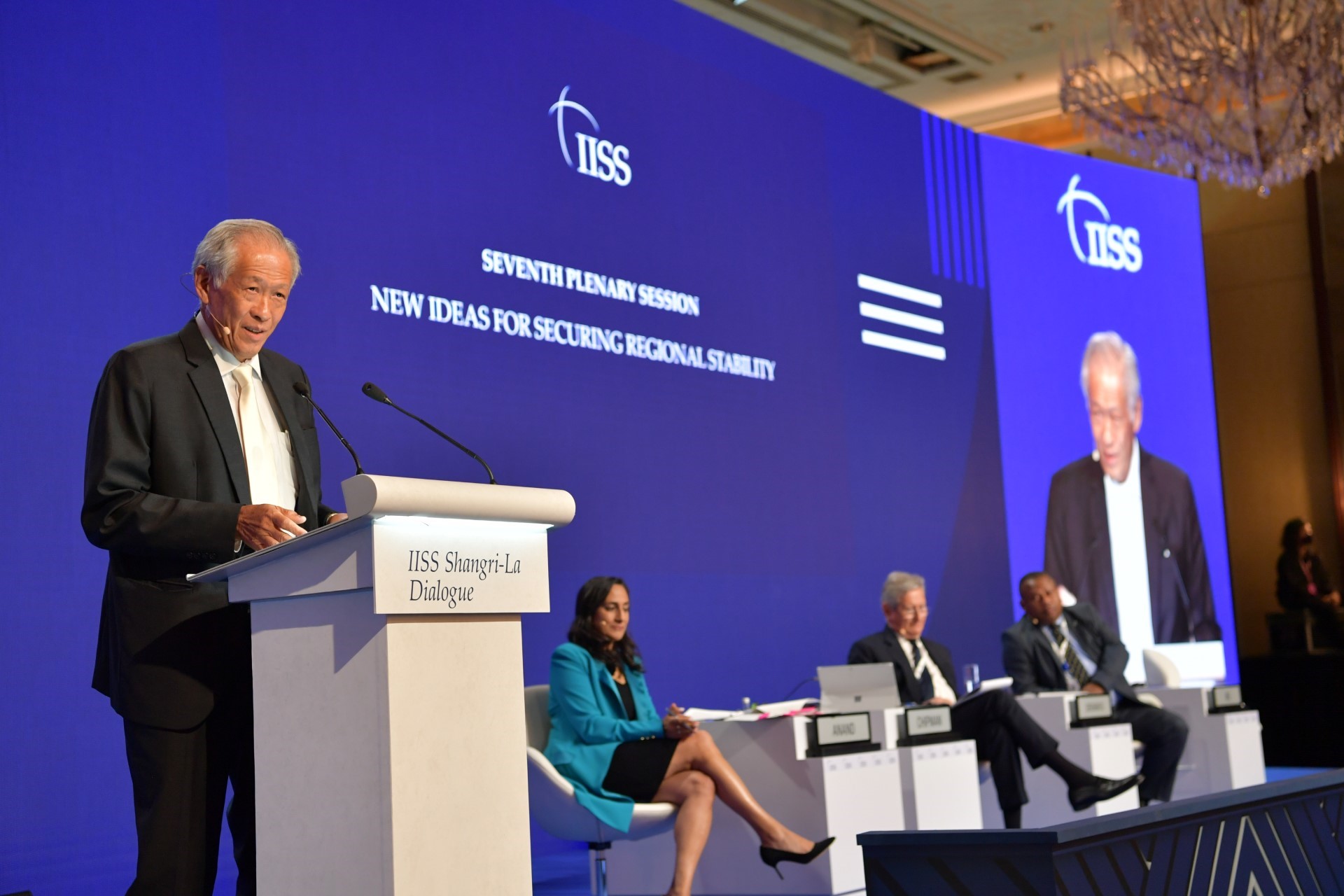
SLD remains valuable platform for crucial discussions: Dr Ng
12 Jun 2022
Minister for Defence Dr Ng Eng Hen spoke on the US-China relationship, the importance of a rules-based order and the role of ASEAN as a regional security platform at the 19th Shangri-La Dialogue (SLD).