
DIPLOMACY
WORKING TOGETHER TO COMBAT MARITIME THREATS
19 May 2011
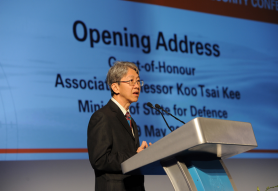
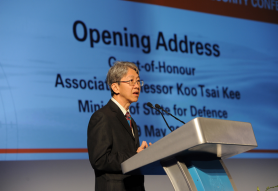
As threats continue to proliferate and evolve, the international community must work closely together to innovate and find more practical solutions to combat maritime terrorism and piracy.
Minister of State for Defence Associate Professor Koo Tsai Kee said this in his opening address at the 2nd International Maritime Security Conference (IMSC) on 19 May at Changi Exhibition Centre.
Themed "Safe and Secure Seas - For All, by All", this biennial event is being held in conjunction with the International Maritime Defence Exhibition (IMDEX) Asia 2011.
In his opening address, Assoc Prof Koo added that increasingly, countries are recognising that the security and safety of the seas can only be maintained through a cooperative network consisting of various stakeholders.
He cited the Malacca Strait Patrol initiative as an example of maritime cooperation that has seen a drop in the number of piracy and sea-robbery incidents in the Malacca Strait.
"With the involvement of all stakeholders, such as the shipping industry's adoption of Best Management Practices, our overall strategies for countering piracy on the international seas can be greatly strengthened," said Assoc Prof Koo.
Working closely to support the Malacca Strait Patrol and other regional maritime security and safety stakeholders is the Information Fusion Centre (IFC). The centre was established in 2009 to strengthen regional maritime security by enhancing information-sharing in the region.
According to Assoc Prof Koo, information-sharing is a key area that Singapore sees potential for building capacity and enhancing maritime security cooperation.
Housed at the Changi Command and Control Centre, the IFC currently facilitates regular information exchanges with 42 operation centres and agencies across 26 countries. At present, nine countries have deployed International Liaison Officers (ILOs) to the centre.
"Through their participation at the IFC, where the sea situation picture is fused, analysed and disseminated, we hope to further enhance maritime security in regional waterways by enabling the early detection of maritime threats and timely responses to them," said Assoc Prof Koo.
In his keynote address at the conference, Chief of Navy Rear Admiral (RADM) Ng Chee Peng also reiterated the importance of building capacity in information sharing: "As more of such info-sharing and ops coordination centres are set up, a multinational information and operations grid can progressively take shape at the regional level."
For example, at a gathering in 2010, several ASEAN navy chiefs discussed the development of a portal which could connect all the information and operation centres in the region to enhance information-sharing and sense making, said RADM Ng.
"Such an ASEAN information portal will enable all stakeholders, regardless of their location, to tap into the networked regional community to share information, best practices and experiences and to coordinate a whole-of-region response against maritime incidents if necessary," he said.
Besides enhancing its information-sharing capabilities, Assoc Prof Koo noted that Singapore, as a maritime nation, is committed to maintaining the freedom of navigation and the safety of international shipping.
Since 2009, the Singapore Armed Forces (SAF) has sent two task groups, comprising a Landing Ship Tank (LST) with two Super Puma helicopters embarked, to conduct counter-piracy operations under the Combined Task Force 151 (CTF 151) in the Gulf of Aden.
Currently, a command team from the SAF is leading the task force for the second time, while a Fokker-50 Maritime Patrol Aircraft is conducting maritime air surveillance operations in support of CTF 151.
A third SAF task group consisting of an LST will be deployed to operate as part of CTF 151 later this year.
Adding that "Singapore aims to develop a whole-of-government maritime security strategy centered on tight inter-agency cooperation between the military and key domestic civilian agencies," Assoc Prof Koo cited the restructuring of the Republic of Singapore Navy's (RSN's) Maritime Security Taskforce as an example.
This taskforce brings together the RSN and key national maritime agencies such as the Police Coast Guard and the Maritime and Port Authority of Singapore to form a comprehensive and coordinated maritime defence effort.
Stressing the need to encourage regular collaboration between all relevant stakeholders, Assoc Prof Koo said he was heartened by the strong participation at this year's IMSC.
Since the inaugural IMSC in 2009, the conference has become an important platform that brings together naval experts, the defence and security industries, as well as academia and the shipping industry. It provides in-depth and active discourse on pertinent and pressing contemporary maritime security and safety issues and developments facing the Asia-Pacific region.
A total of 450 maritime experts from navies and coast guards, defence and security industries, shipping companies, academia and think tanks attended this year s conference. It is jointly organized by the RSN, the S. Rajaratnam School of International Studies and Experia Events Pte Ltd.

ALSO READ IN DIPLOMACY
17 countries launch new framework for cooperation on critical underwater infrastructure
30 May 2026
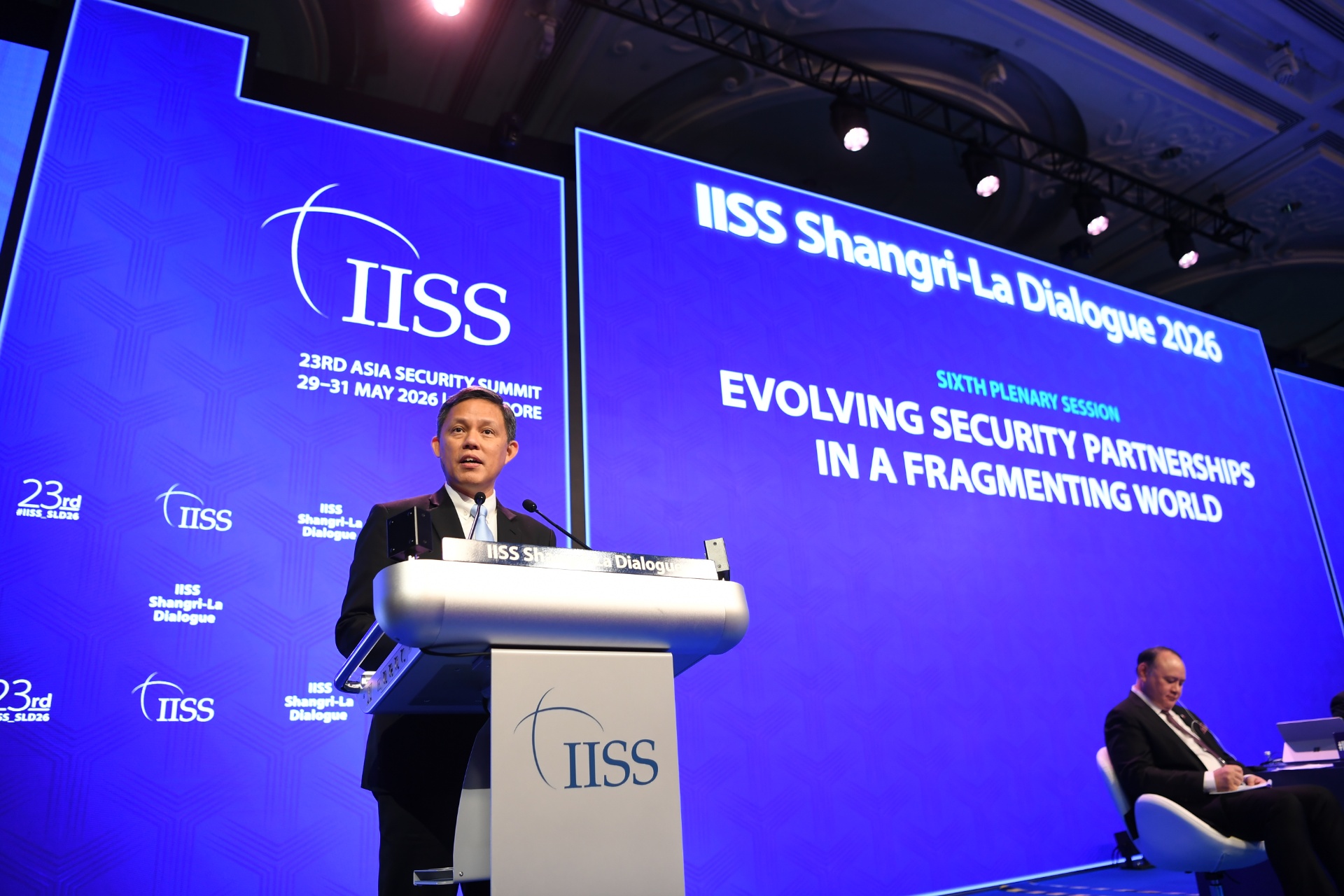
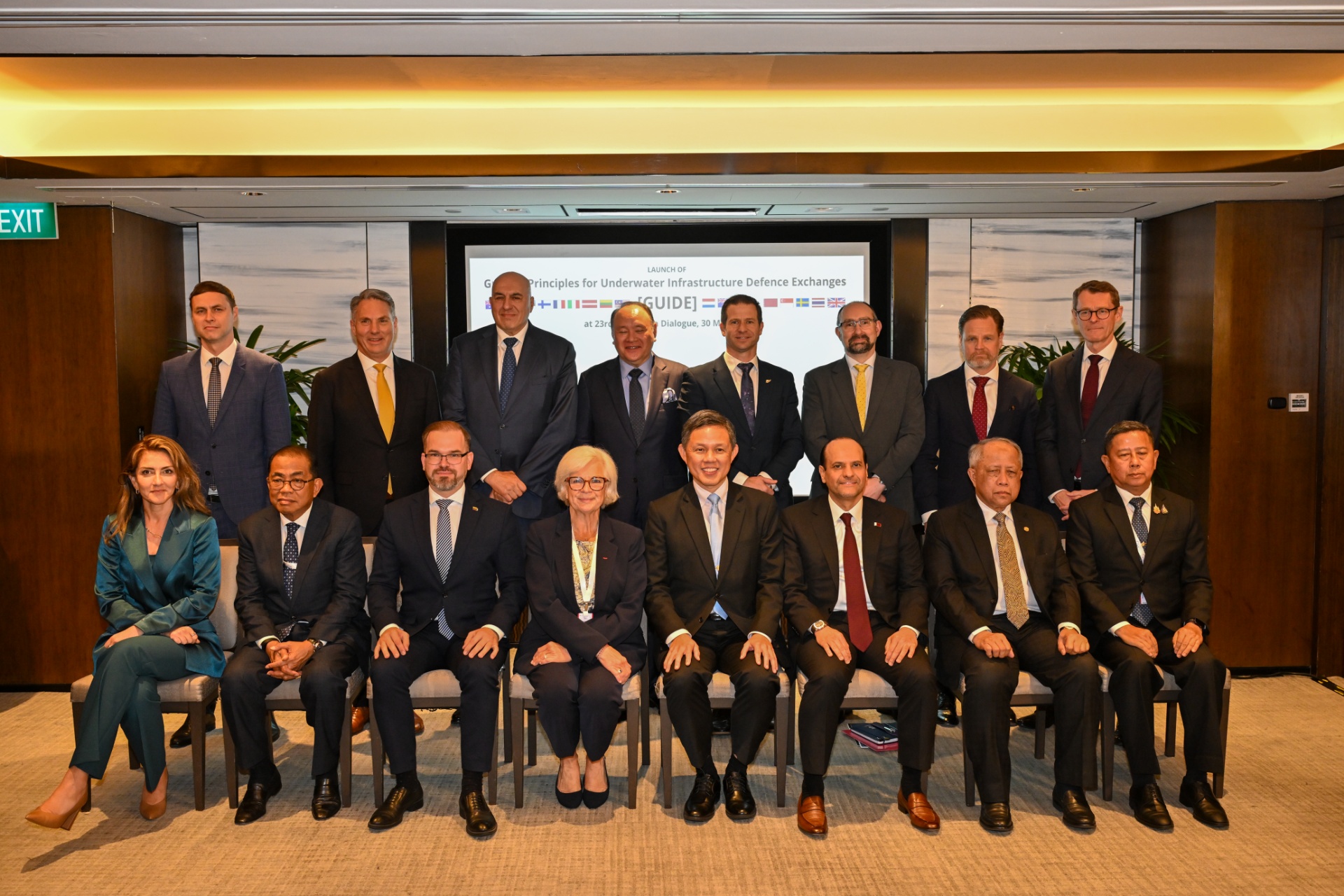
Launched on the sidelines of the 23rd Shangri-La Dialogue, GUIDE is a new framework that brings together countries for defence cooperation in enhancing the security of Critical Underwater Infrastructure.
Going alone is not the answer to insecurity – Mr Chan
01 Jun 2025
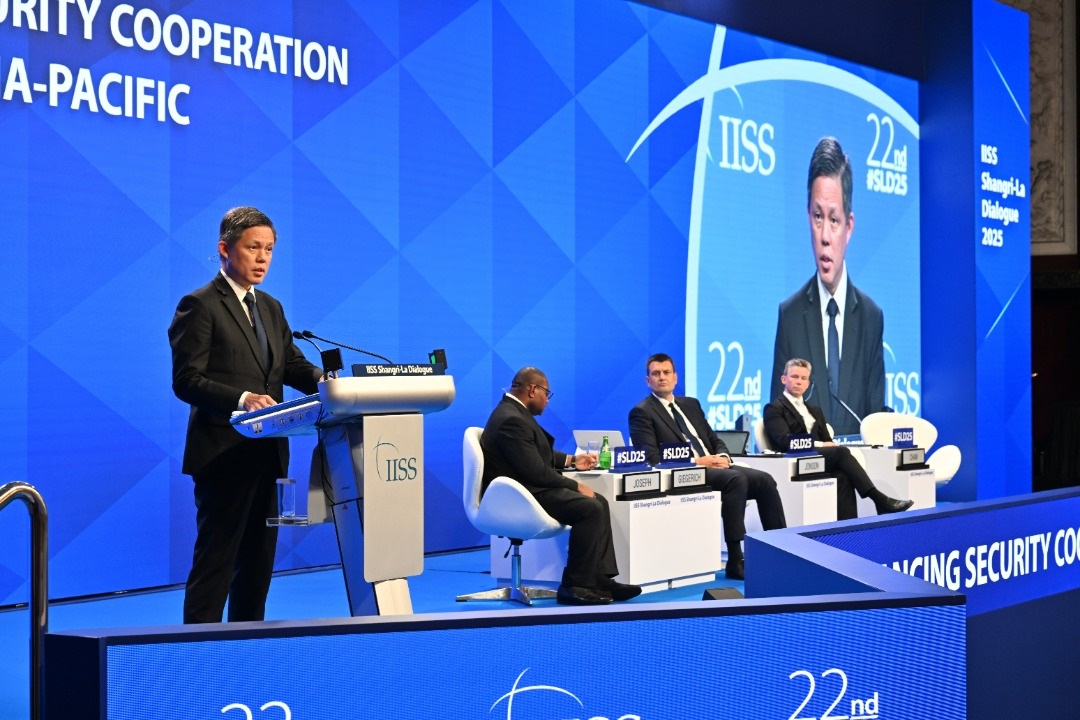
“Going alone is not the answer to insecurity”, emphasised Minister for Defence Mr Chan Chun Sing at the Shangri-La Dialogue (SLD), held from 30 May to 1 Jun. This was one of his main points at his speech at the sixth plenary session on 1 Jun.
A call for peace at Shangri La Dialogue
02 Jun 2024
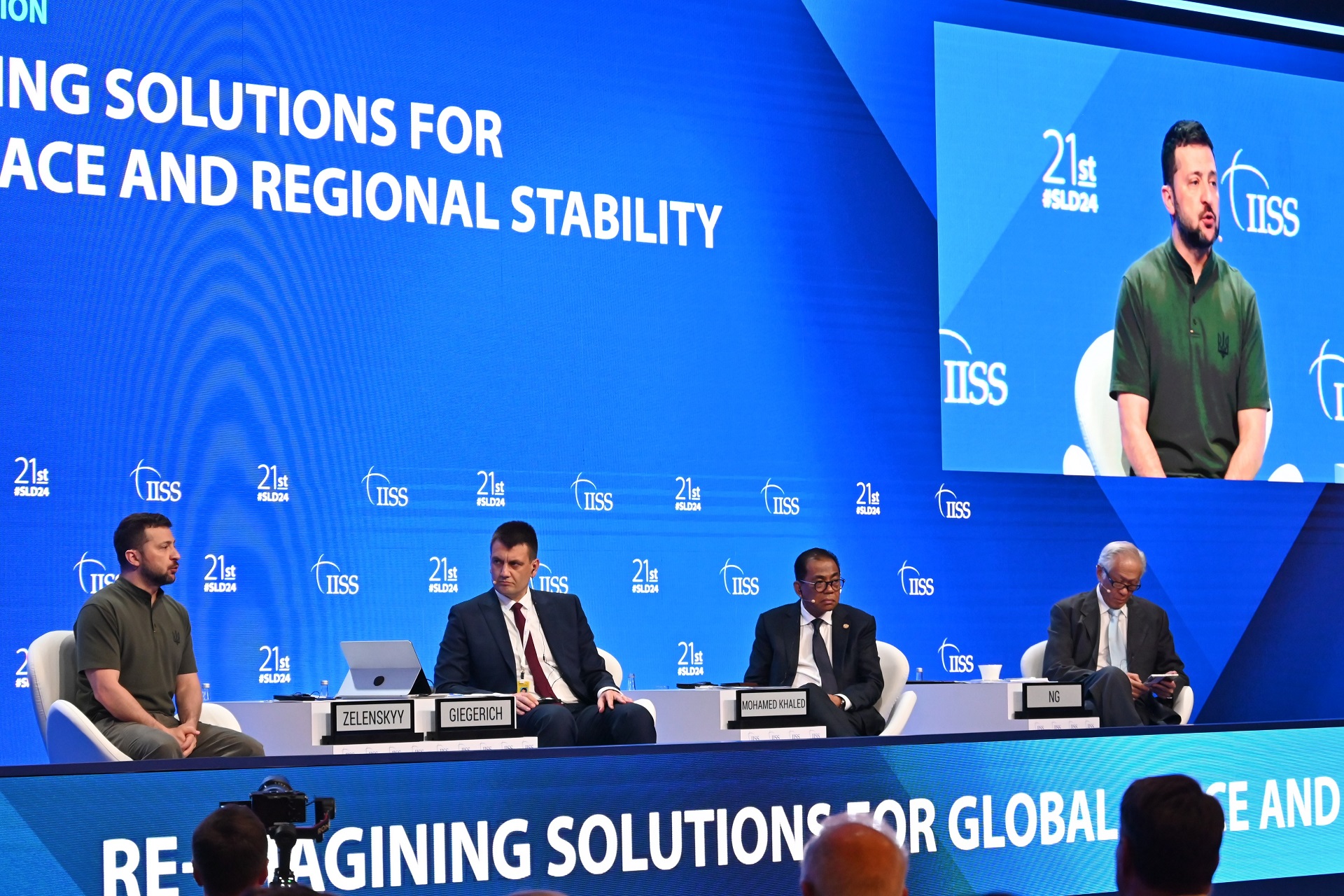
A repeated call for peace, especially in Asia. This was Minister for Defence Dr Ng Eng Hen's central message at the 21st Shangri La Dialogue (SLD), held from 31 May to 2 Jun.