
TECHNOLOGY
SAF STEPS UP COUNTER-TERRORISM EFFORTS: DR NG
07 Apr 2016
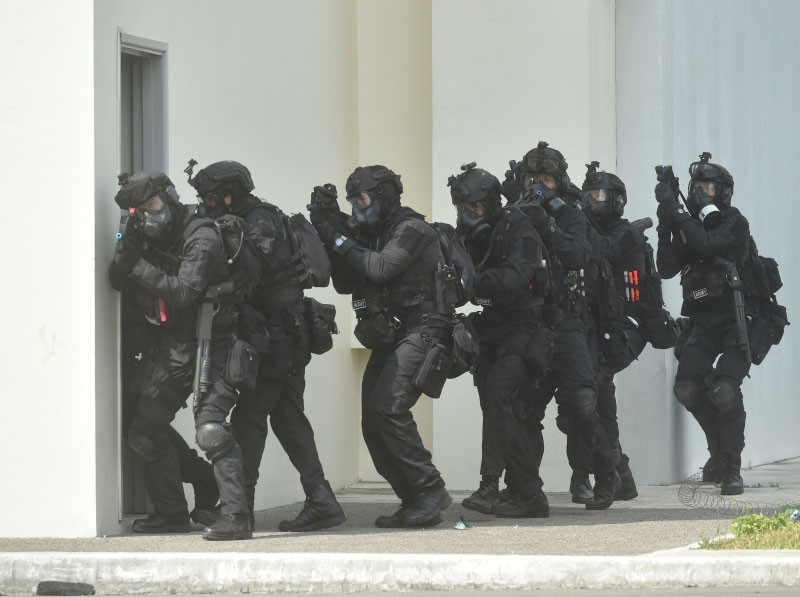
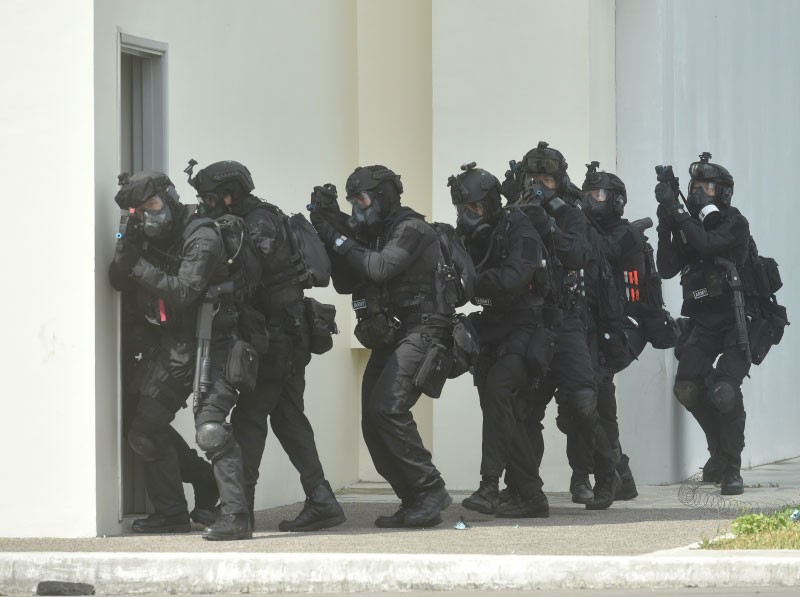
Over the next few months, the Singapore Armed Forces (SAF) will redouble its efforts to gear up for heightened terror threat, said Minister for Defence Dr Ng Eng Hen.
Speaking at the Committee of Supply or Budget Debate on 7 Apr, Dr Ng told Parliament that although there was no specific intelligence of any imminent plot against Singapore, intelligence agencies had indicated that almost all cities, including Singapore, were targets.
Terrorism was a challenge that the Ministry of Defence and the Singapore Armed Forces (SAF) had identified a decade ago. The SAF had begun to transform into a 3rd Generation armed forces to deal with a wider spectrum of threats. After the September 11 attacks in 2001, the SAF formed high readiness task forces - the Special Operations Task Force (SOTF), Island Defence Task Force, Air Defence Task Force, and Maritime Security Task Force - to respond quickly to terror threats from air, land and sea.
But as today s threats continue to evolve, so too must the SAF adapt, said Dr Ng. "Studying what happened in Paris, Jakarta, and Brussels, the SAF will enhance its incident response."
In the Paris attacks last year, gunmen and suicide bombers hit a concert, hall, stadium, restaurants and bars almost simultaneously.
Dr Ng noted that the SOTF - the SAF's first responders against terror attacks - must be able to respond even faster when activated, and have the means to take out armed terrorists and rescue hostages.
The SOTF comprises elite teams from the Commandos and Naval Diving Unit, and are equipped with assets from the Army, Navy and Air Force.
Dr Ng said that the SAF is working with defence engineers to equip them with new technologies that will give the SAF an edge in the fight against terror. These include tools like micro-Unmanned Aerial Vehicles (UAVs). Suitable for operations in dense urban areas, these tactical sensors are small enough to fit in a person s palm.
Added patrols, new training facility
Dr Ng also announced that more SAF units will be trained to conduct patrols, even in populous areas. These units will be equipped with the Peacekeeper Protected Response Vehicle which provides greater mobility and protection, and more precise firepower.
"We must be able to deal with orchestrated attacks, like those which occurred in Paris and Brussels, where airports, MRT stations, shopping malls and town centres are targeted simultaneously," he explained.
To provide realistic training for such missions, the SAF will build a new urban training facility that comes with high-rise buildings, complex road networks, and mock-up transport nodes. The facility will be equipped with modern targetry systems for live-firing training. This will help to hone a soldier's judgement and instinct
Better inter-agency coordination
To harness the full strength of Singapore's security capabilities, it is crucial for the SAF to work with the Home Team closely and seamlessly, added Dr Ng.
He said that the SAF and Home Team are working together to share intelligence and develop joint operational commands. Both agencies are also conducting more joint exercises such as Exercise High Crest.
During the last edition of the exercise in 2015, the SAF worked with various security agencies to intercept a terrorist speed boat, storm a hijacked merchant vessel, and deal with the aftermath.
Global fight against terror
To help tackle the threat of ISIS at the source, the SAF has extended its deployment of an Imagery Analysis Team (IAT) in the Middle-East, Dr Ng announced.
Last year, the SAF deployed a KC-135R tanker to support air-to-air refuelling operations, and an IAT as part of the multi-national coalition effort to combat ISIS.
The IAT was tasked to monitor suspected terrorist facilities and activities to help the coalition in disrupting supply chains that feed networks in the region.
Dr Ng noted that coalition commanders had commended the IAT's efforts, and asked the SAF to continue their deployment.
The SAF is also stepping up intelligence-sharing with Malaysia, Indonesia, the United States, and Australia. This will provide early warning for Singapore, allowing authorities to apprehend terrorist suspects that intend to do the country harm.
To strengthen practical cooperation, Singapore will co-organise the ASEAN Defence Ministers Meeting-Plus Maritime Security and Counter-Terrorism Exercise with Brunei, Australia and New Zealand in May this year.
Staying united
Dr Ng also raised a key concern: whether a terrorist attack would weaken the social cohesion of Singaporeans.
With the increased likelihood of a terrorist strike in Singapore, the concept of Total Defence becomes more relevant than ever, he said.
Started in 1984, Total Defence refers to a comprehensive strategy consisting of military, civil, economic, social and psychological defence.
In his address in Parliament, Senior Minister of State for Defence Dr Mohamad Maliki Bin Osman said that Singaporeans must remain united if Singapore is rocked by a terrorist strike.
In recent years, ISIS has been using social media to spread radical ideology based on false religious teachings with great success.
Dr Maliki highlighted how a friend of a self-radicalised youth noticed the changes in him, and alerted the authorities. The youth was arrested last year before he could carry plans to attack Singapore.
"The battle today and in the future is not one waged by tanks and planes. It is a battle that needs to be won in our hearts and minds as we guard against influences that threaten our social cohesion," he said.
Long-term challenges
Besides dealing with the terror threat, the SAF has to keep an eye on various long-term challenges, and retain its deterrence edge against conventional threats, said Dr Ng.
To address the shrinking manpower pool, the SAF will continue maximising the potential of current soldiers, and leverage on technology to do more, he added.
To free up manpower resources, the SAF will deploy more unmanned platforms, beyond unmanned aerial vehicles. Unmanned vessels may be used by the Navy for patrol and underwater mine clearing operations. Similarly, the Army may deploy Unmanned Ground Vehicles for security patrols.
This year, the SAF will introduce a new SAF Engineering Scholarship to attract young talents to join the SAF as military engineers. This will help to develop the next generation of engineering leaders to ensure that Singapore maintains an edge in defence technology.
Dr Ng also noted that an open economy like Singapore is particularly vulnerable to hybrid threats which include cyber-attacks against critical sectors. Last December, unidentified hackers crippled Ukraine's power supply for hours.
To guard against cyber-attacks, the SAF will double the number of cyber defence personnel in the Cyber Defence Operations Hub by 2020, he announced.
These cyber defence personnel will use more artificial intelligence and big data analytics to better detect and respond to cyber threats. The SAF will also shore up the security of its network and hardware, and build greater security design into software design.
The SAF will work with the national Cyber Security Agency to strengthen Singapore's defences on this front.
The SAF will also shore up the security of its network and hardware, and build greater security design into software design.
Enhancing hardware
The SAF will also continue to refresh and upgrade SAF platforms at a sustainable pace, Dr Ng said.
He announced that the Army will launch a new Protected Combat Support Vehicle this year. The vehicle will provide better protection and greater mobility for combat support troops.
For seaward defence, the Republic of Singapore Navy (RSN) is acquiring eight Littoral Mission Vessels (LMVs) to replace its ageing Patrol Vessels. The first LMV is expected to be operational by early 2017.
The two new Type 218SG submarines, which will replace the ageing Challenger-class submarines, are expected to be commissioned in 2020.
The Republic of Singapore Air Force (RSAF) is upgrading its F-16 fighter planes with more advanced radars and air-to-ground weapons.
Also in the pipeline are new helicopters to replace the old fleets of Super Puma and some of the CH-47D Chinook helicopters.
Recognising contributions
To deal with the increasingly complex security threats, the SAF needs not only advanced weaponry but, more importantly, the continued contribution and commitment of every serviceman.
Senior Minister of State for Defence Ong Ye Kung made this point in his address.
Notable examples are the Operationally Ready National Servicemen (NSmen) and Full-time National Servicemen (NSFs) from the Island Defence Task Force. They conduct regular patrols at key installations such as Changi Airport and Jurong Island to deter terrorists.
Mr Ong said that the SAF will do more to develop its people, and recognise the contributions of national servicemen, as well as families, friends and organisations that support them.
For instance, starting from this April, the Family Recognition Voucher scheme will be enhanced and renamed the NS Excellence Award.
The number of NSmen who are awarded vouchers in recognition of their good performance during In-Camp Training will increase from the top 10 percent to top 30 percent. The top 10 percent will receive $200 while the next 20 percent will receive $100 worth of vouchers.
The SAF will also introduce Celebratory Gifts for NSmen. They will receive $100 worth of vouchers when they get married, or welcome a new child into their families.
Later this year, national servicemen will be provided with $150,000 of basic life and personal accident insurance coverage. This will cover incidents occurred during NS training.
But ultimately the best reward and recognition for national servicemen is that together, all of us, we live in a peaceful Singapore, and our families are safe, he said.
A decisive SAF
Concluding his speech, Dr Ng said that the SAF would train hard, prepare well, and continually adapt to protect Singapore.
"With Singaporeans strongly behind and with us, the SAF will respond decisively to all those who seek to do us harm and protect this precious island we call home."

ALSO READ IN TECHNOLOGY
AI joins the fight in national cyber defence exercise
12 Nov 2025
AI and closer collaboration among agencies and industry are taking centre stage in this year’s Critical Infrastructure Defence Exercise (CIDeX).
They built this city
01 Oct 2025
Turning vision to reality: the team behind SAFTI City clinches the Defence Technology Prize 2025 Team (Engineering) Award!
Operating over skies & seas
22 Aug 2025
This gear is designed to help a Sensor Supervisor survive emergencies in the air and at sea.