
DIPLOMACY
SAF COMMANDER SHARES INSIGHTS INTO DISASTER RELIEF EFFORTS
20 Aug 2015
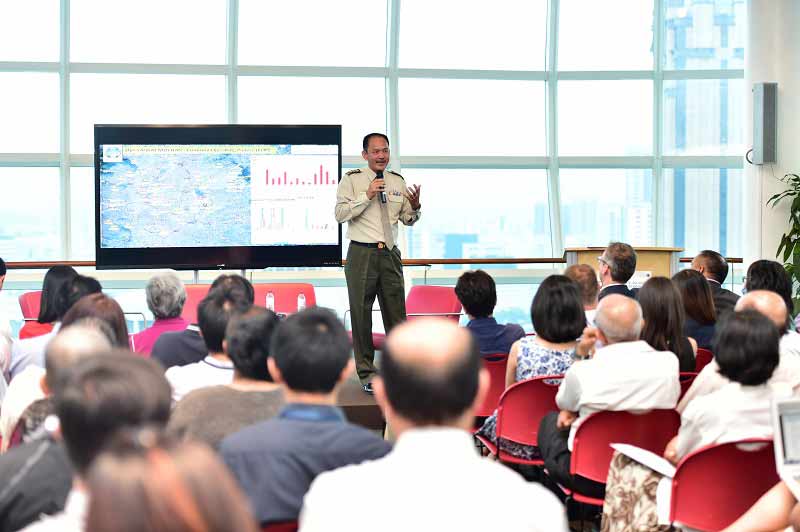
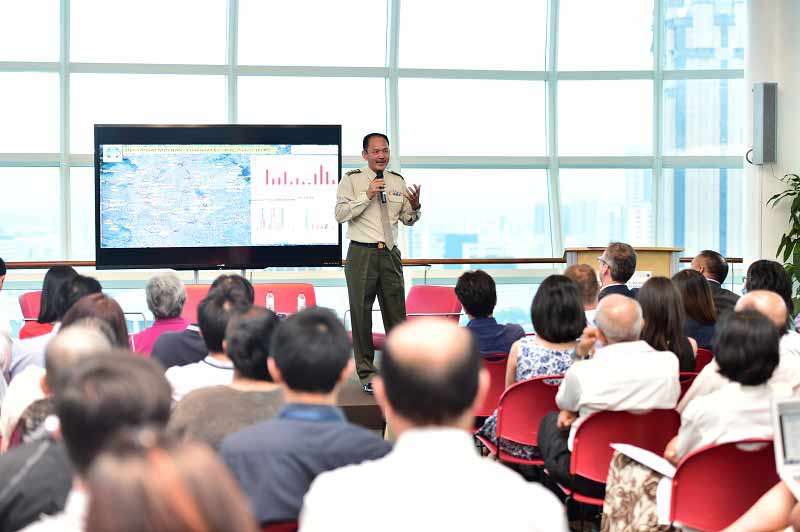
Understanding the needs of disaster victims whom you are helping; a strong military-to-military relationship; good information-sharing among countries offering assistance - they are all crucial to effective relief efforts.
These were some of the lessons that Colonel (COL) Lim Kwang Tang took away as the Singapore Contingent Commander of the Nepal disaster relief operations in April this year.
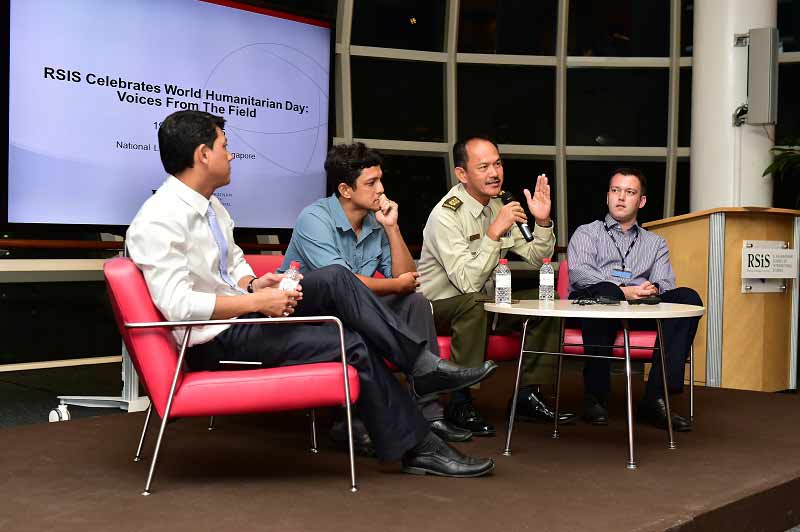
COL Lim, who is Director of Changi Regional Humanitarian Assistance and Disaster Relief (HADR) Coordination Centre (RHCC), was one of three speakers invited to share his experience at an event organised by the S. Rajaratnam School of International Studies, called "RSIS Celebrates World Humanitarian Day: Voices From The Field", held at the National Library on 19 Aug.
The other two speakers were Mr Johann Annuar, Founder and Trainer of Humanity Assist, and Mr Hassan Ahmad, Technical Adviser of the Corporate Citizen Foundation.
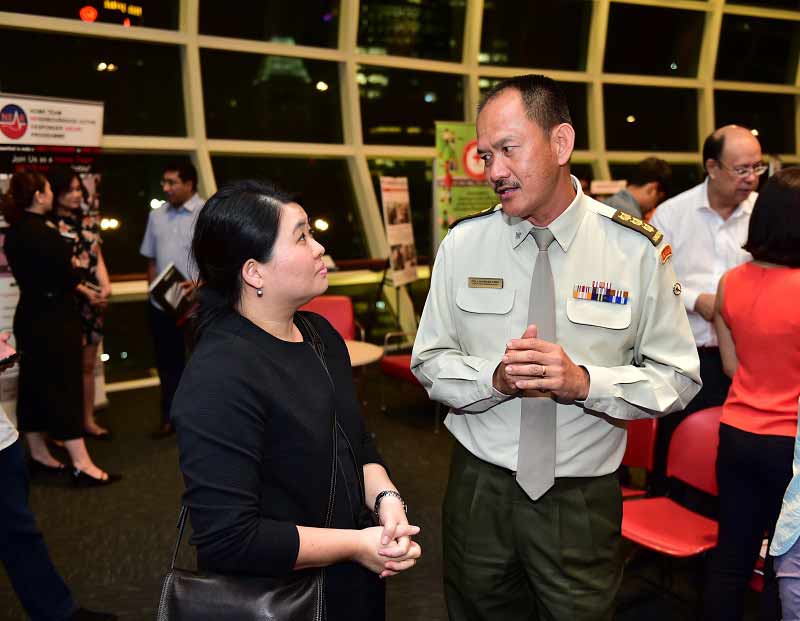
Attending the talk were more than 100 students and representatives from agencies which had participated in HADR efforts in the region.
The Singapore Armed Forces (SAF) had sent a 38-man team, with 22 personnel from the medical team and 16 from Changi RHCC to help in HADR efforts after the Nepalese earthquake.
During the 12-day deployment, the SAF medical team treated more than 3,000 patients, working alongside their counterparts from Singapore's Ministry of Health as well as the Royal Brunei Armed Forces. In addition, the Republic of Singapore Air Force's C-130 aircraft evacuated 95 Singaporeans and foreigners, and made a total of 11 flights into Nepal to bring personnel, equipment and relief supplies.
During the question-and-answer session, COL Lim reiterated that one of the key challenges in an HADR operation was information sharing, and that a strong military-to military-relationship was important for an effective disaster relief effort.
He said: "In our region, the military plays a significant role. We have to establish linkages within this region as well as with other players such as the US, Australia and India."
COL Lim added that the RHCC also had to establish a strong international liaison officers' network, so that they could practise peacetime disaster preparedness.
"We are sharing information and monitoring situations day to day. In the event of an impending (disaster such as a) typhoon, we will have early warning and share the information so that our military partners will be prepared and on standby, and if necessary, we go in together."
In response to a question on when the military should step in to help and when it should pull out of the disaster-hit area, COL Lim explained that the military will typically stay up to 14 days, and that was exactly what the Nepalese Army had requested.
"The military will go in during the emergency relief phase. The first three days are the most critical, followed by the combined search-and-rescue phase the next four days. After a week, the chances of survival are reduced drastically, so we will go into the stabilisation phase, where we start to treat people and stabilise their emotions. After that, we will pull out."
He added that, for other militaries to go in, the local military and government had to invest resources to provide transport and liaison, to sustain the foreign militaries in their relief operations. Staying too long might hinder the local military in getting back to their own duties.
COL Lim revealed that the RHCC hosted the United Nations World Humanitarian Forum in Singapore earlier this year, which provided the opportunity for international networks to share information among practitioners from different countries.
In closing, he reiterated the importance of a strong information-sharing network, and urged for such practices to continue so that it would be easier for foreign and local militaries to work together on the ground.

ALSO READ IN DIPLOMACY
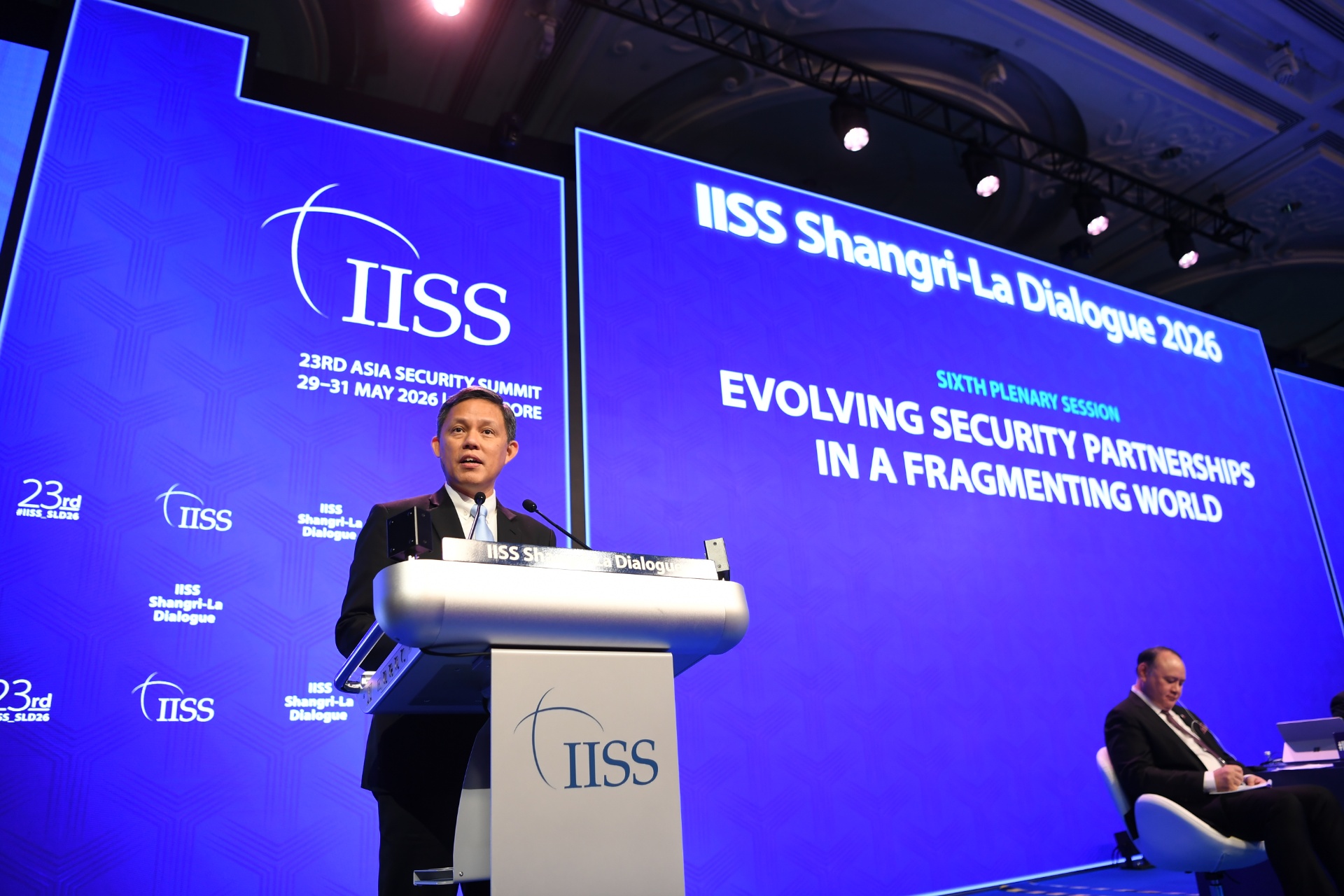
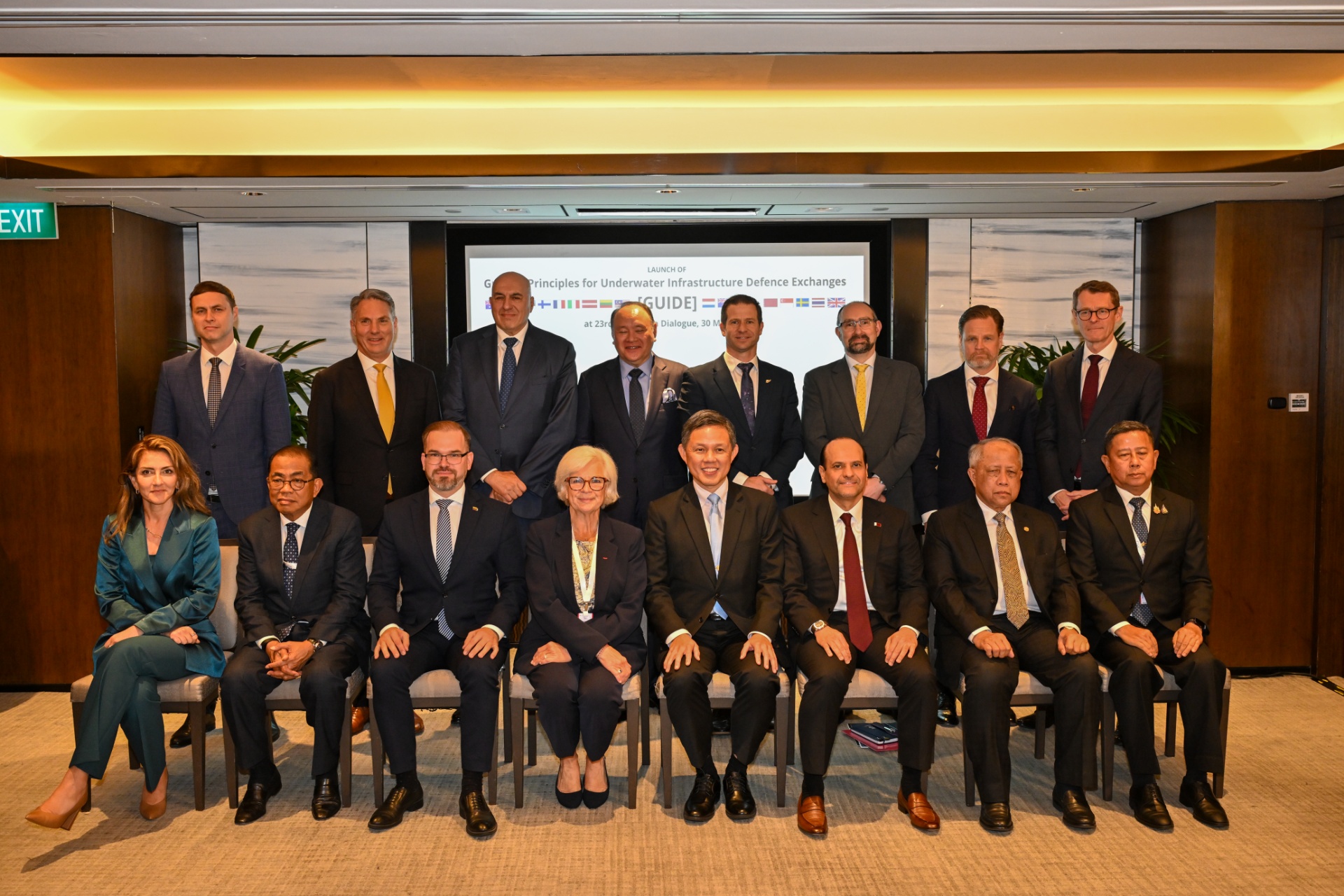
17 countries launch new framework for cooperation on critical underwater infrastructure
30 May 2026
Launched on the sidelines of the 23rd Shangri-La Dialogue, GUIDE is a new framework that brings together countries for defence cooperation in enhancing the security of Critical Underwater Infrastructure.
Going alone is not the answer to insecurity – Mr Chan
01 Jun 2025
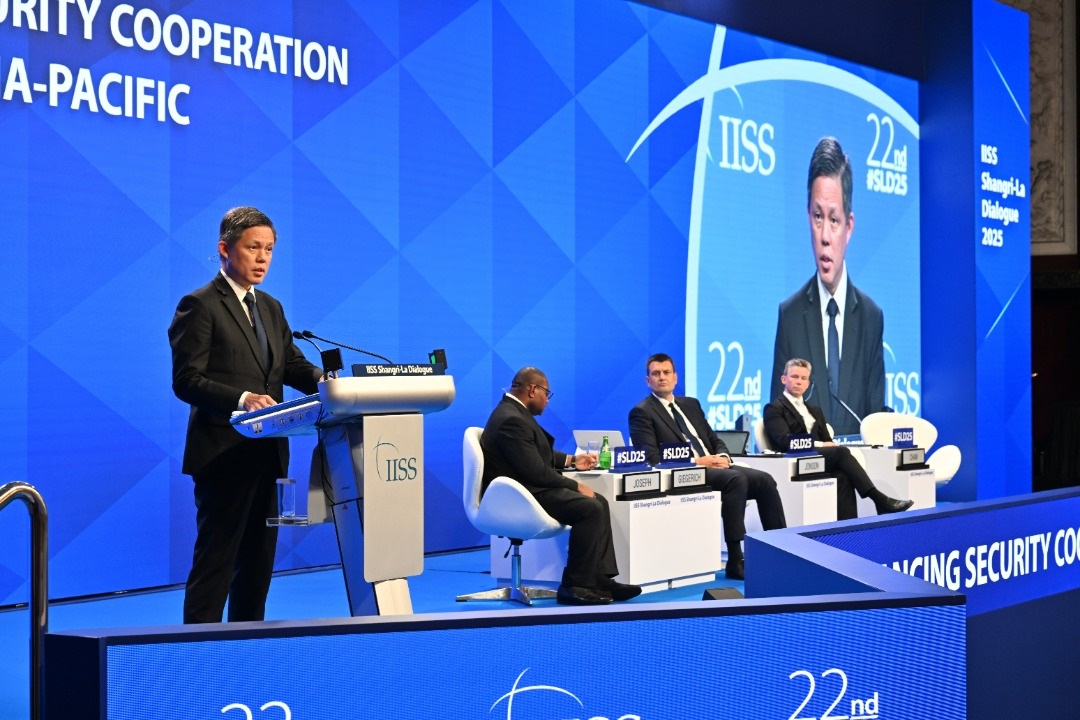
“Going alone is not the answer to insecurity”, emphasised Minister for Defence Mr Chan Chun Sing at the Shangri-La Dialogue (SLD), held from 30 May to 1 Jun. This was one of his main points at his speech at the sixth plenary session on 1 Jun.
A call for peace at Shangri La Dialogue
02 Jun 2024
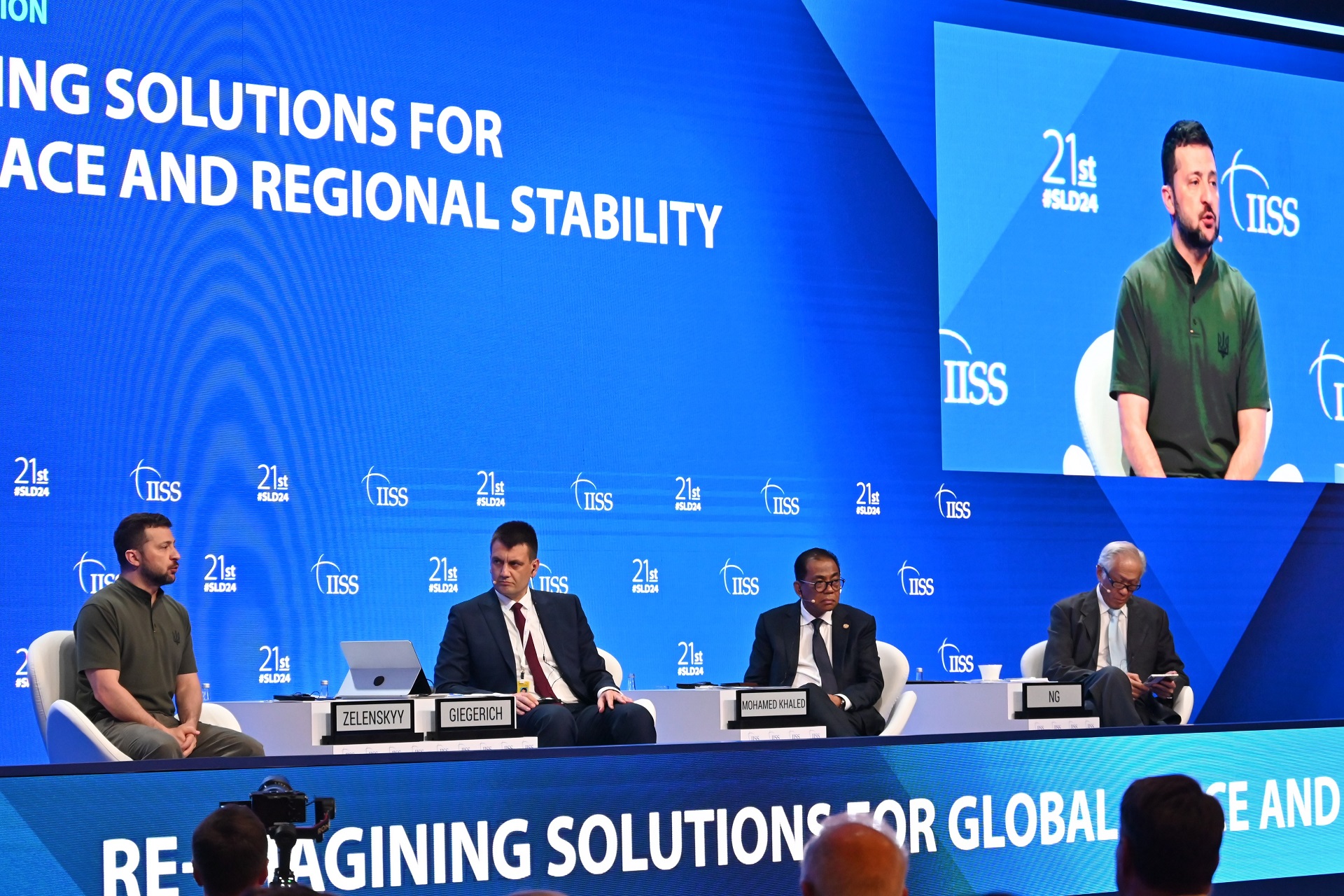
A repeated call for peace, especially in Asia. This was Minister for Defence Dr Ng Eng Hen's central message at the 21st Shangri La Dialogue (SLD), held from 31 May to 2 Jun.