
TECHNOLOGY
ITALIAN INNOVATION: THE M346 TRAINER
01 Feb 2008
The Italians have a long and distinguished history in designing military aircraft, especially trainers like the SF-260 turboprop or the MB339 jet trainers, which are used in many air forces around the world. However, with the new generation of highly advanced and powerful fighter jets like Gripen, Typhoon and Rafale coming on line, the existing trainers are clearly showing their age. Aware of this vacuum, Aermacchi has created the M346 advanced and lead-in fighter trainer.

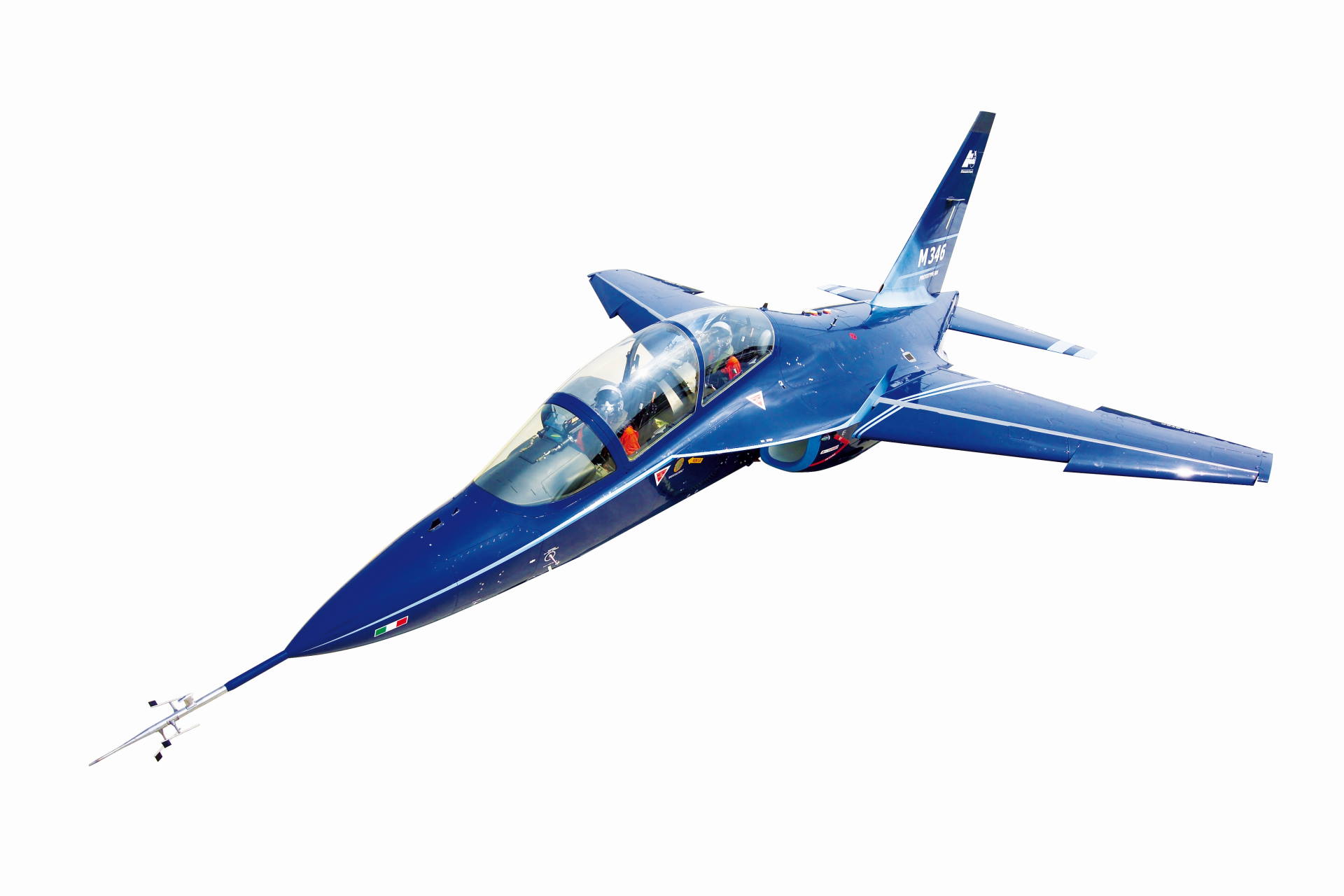
Originally, Aermacchi teamed up with the Russian Yakolev Design Bureau to develop the YAK/AEM-130 trainer, which combined Russian and western expertise and technology. This led to the production of a demonstrator aircraft in 1996. Unfortunately, this collaboration collapsed in 2000 due to disagreements over technical details and the requirements of the western market. Moreover, the Italians were unsure of the Russian government's ability to finance the project.
Aermacchi decided to go solo and create the M346. There was an extensive redesign of the original joint concept baseline. This led to changes to the airframe which led to a smaller design, lower weights, better reliability and improved capabilities as only 'western' equipment were used. This quality assurance and certification standards. The prototype soared to the skies in 2004. Due to its success, production was expected to begin in late 2007.
Rugged and reliable
The M346 is constructed largely of aluminum alloys, with a selective use of carbon fibre and other composite materials. These materials are expected to confer a service life of at least 10,000 flying hours.
The aircraft is fitted with two Honeywell/ITEC F124-GA-200 turbofan engines, which give the aircraft one-to-one thrust-to-weight ratio. While they are more expensive than the original Russian engines, the payoff comes in improvements in safety. During test flights, the engines were deliberately shut down and re-alighted, proving their reliability. In a clean configuration and with three external fuel tanks, the aircraft has a range of 1,500 nautical miles. To extend the range, a non-retractable refuelling probe can be added to the right forward fuelsage.
Mimicking modern fighters
The M346 can simulate the actual performance of the next generation of jet fighters where it can attain the speed of Mach 1.2. It can also achieve a 42-degree angle of attack, which is superior to many fighters. Moreover, it has a very good thrust-to-weight ratio of 0.97. With tanks half-full, it can make excellent turn-rates of up to 14 degrees per second. In addition, it can achieve a climb rate of over 9,000 metres within two minutes.
These amazing capabilities are due to the vortex lift aerodynamic design of the aircraft, coupled with the modern fly-by-wire control system. The latter system can be configured to simulate the handling of different operational aircraft, and the level of difficulty to be increased throughout the training. In addition, redundancy is built into the system, allowing the M346 to continue its mission even if one system fails. Instructors can deliberately degrade the flight controls in flight to teach student pilots how to handle their aircraft during emergencies.
This high-performance ability is vital in preparing trainee pilots for the high demands and stresses of fighter combat. Should any accidents occur, the Mk 16 ejection seats will eject the pilot and instructor to safety.
High-tech cockpit
The pilot and instructor are seated in tandem, surrounded by a bubble canopy which gives them a good all-round view. The cockpit has been designed to resemble the latest generation of combat aircraft. This was based on the experience Aermacchi gained from the use of digital avionics in the MB339CD. It is equipped with a head-up display , a helmet-mounted display, full colour liquid crystal multifunction displays, night vision goggle-compatible instrumentation and hands-on throttle and stock (HOTAS) controls.
Shooting practice
Just honing one's flying skills is insufficient. Being able to deliver weapons accurately under enemy fire is equally crucial. The M346 has nine external store stations, six under-wing stations, two wing-tip stations and one under-fuelsage station. They can be used to carry a wide array of stores like the AIM9 Sidewinder air-to-air missiles, the Mk82 and Mk83 bombs, AGM65 Maverick air-to-ground missiles and the Marte Mk-2A anti-ship missiles. The statons can also carry fuel tanks and avionic pods. In total, the aircraft can carry up to 3.1 tons of external stores. At its full load, the aircraft can still achieve a 515 knot speed and a turning performance of 5.5G.
Taking the heat
During training, simulated threats can be presented on the multifunction displays, which helps sharpen the trainee pilots' responses. It can replicate multi-mode fire control and missile warning radar receivers and countermeasures systems. Both air and ground threat scenarios can be played out.
The aircraft is not fitted with a radar, but one can be installed in the nose section. For self-protection, the M346 is fitted with a radar warning receiver, chaff and flare dispensers and active electronic countermeasures.
Keeping a low profile
Efforts were also made to reduce the radar cross section of the M346. The air intakes have slight curved ducts to mask the engine's compress from radar. It can be covered with radar absorbing material. Such material can also be applied to the wing's leading edge, the wing fences and pylons. To reduce the infrared emission, efforts have been made to cut down the heat from the engines.
Interest but no firm orders
Though it has been unable to name any specific customers yet, Aermacchi expects sales over the next 30 years to be over 800. This is because it has estimated that outside of Europe, 70 per cent of the 3,000 advanced trainers are older than 25 years. Aermacchi estimates that there is a market for 1,650 units, of which it hopes to capture 35 per cent. Aermacchi also hopes tat it can clinch the Eurotrainer contract, which involve 12 European air forces and sales of 200 aircraft. However, the road to the 12 countries agreeing on a common trainer is fraught with difficulties. This is because air forces know that trainers are a necessity, but are often unwilling to pay the price for the best.
Technical specifications of the M346:
Length: 11.49m
Height: 4.98m
Maximum take off weight: 9,500kg

ALSO READ IN TECHNOLOGY
AI joins the fight in national cyber defence exercise
12 Nov 2025
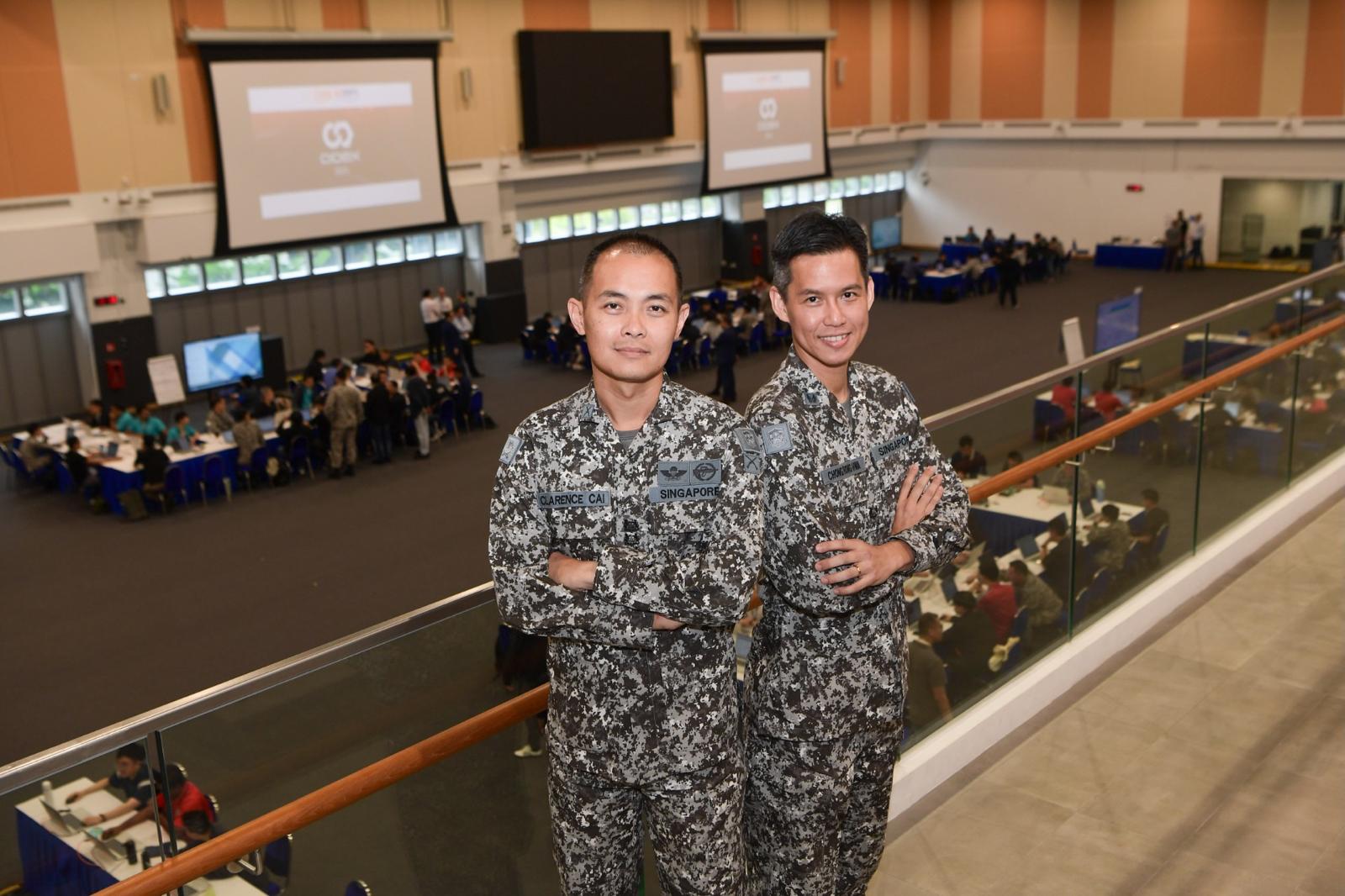
AI and closer collaboration among agencies and industry are taking centre stage in this year’s Critical Infrastructure Defence Exercise (CIDeX).
They built this city
01 Oct 2025
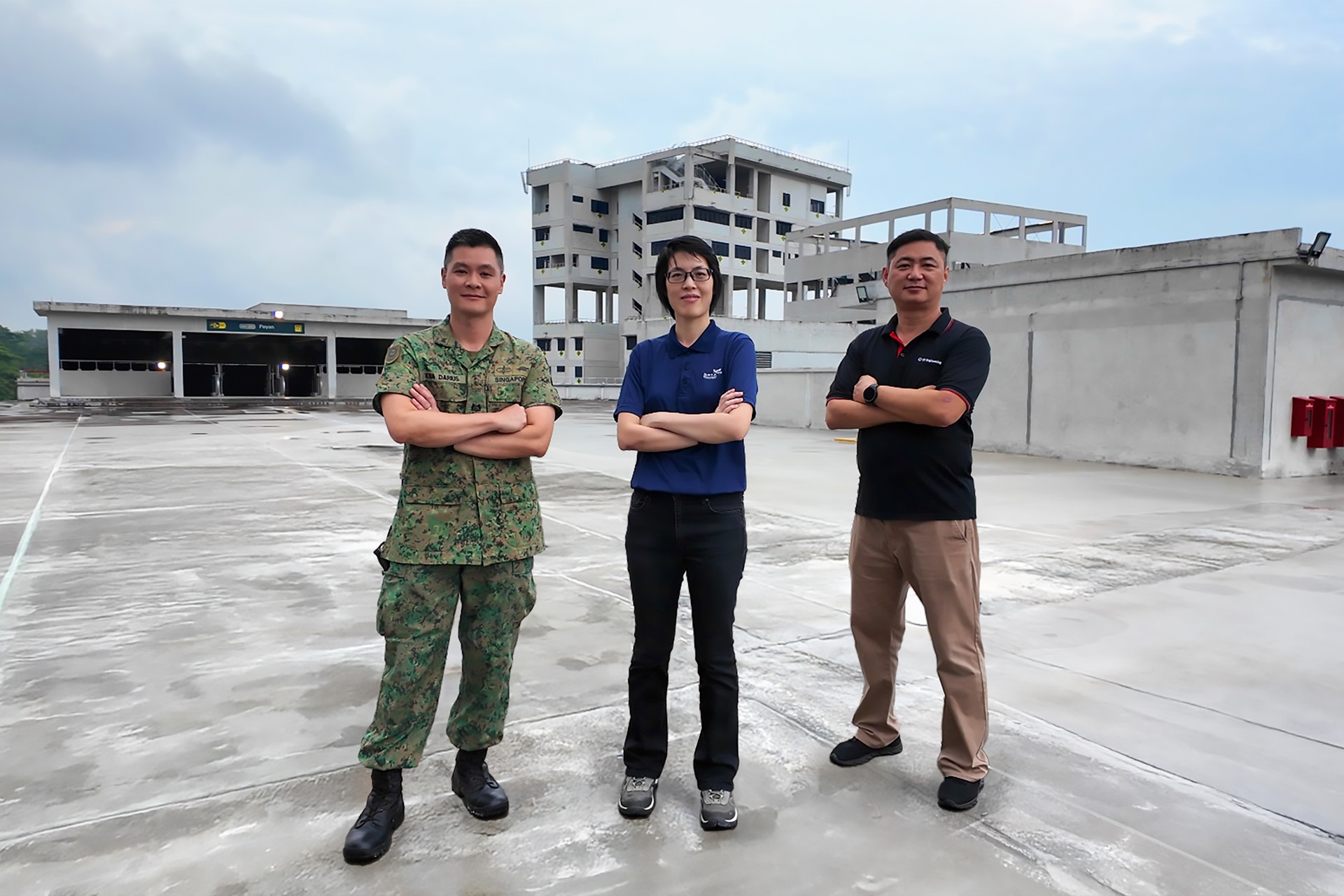
Turning vision to reality: the team behind SAFTI City clinches the Defence Technology Prize 2025 Team (Engineering) Award!
Operating over skies & seas
22 Aug 2025
This gear is designed to help a Sensor Supervisor survive emergencies in the air and at sea.