
MILESTONES
IMDEX ASIA 2011 OPENS
18 May 2011
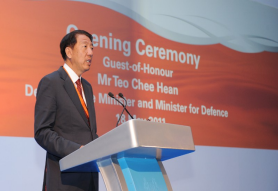
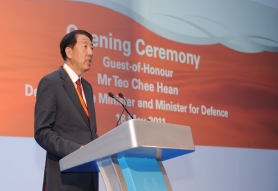
Piracy and other maritime threats such as terrorism and the proliferation of weapons of mass destruction underscore the unique and challenging nature of the maritime arena.
Deputy Prime Minister and Minister for Defence Teo Chee Hean said this in his keynote address at the opening ceremony of the eighth International Maritime Defence Exhibition & Conference (IMDEX) Asia on 18 May at the Changi Exhibition Centre.
He emphasised that because these maritime threats are often multi-faceted and transnational, responses need to cut across traditional inter-agency boundaries.
"It is for this reason that effective action in the maritime domain requires cooperation and unity of effort from a broad range of actors and stakeholders across several countries," said Mr Teo, citing the cooperation between various naval groups in patrolling the Gulf of Aden as an example.
He noted that "Singapore shares the concerns of the international community regarding the piracy situation there".
Since 2009, the Singapore Armed Forces (SAF) has sent two task groups,consisting of a Landing Ship Tank with two Super Puma helicopters embarked, to operate with the Combined Task Force 151 (CTF 151) to conduct sector patrols to deter pirate attacks. Currently, a command team from the SAF is leading the task force for the second time. A Fokker-50 Maritime Patrol Aircraft is also there to conduct maritime air surveillance operations in support of CTF 151.
However, Mr Teo reminded his audience it was clear that "there is much to be done to build expertise and capacity in maritime security in other key maritime areas of the world".
Highlighting two key areas of focus, he emphasised the need to have platforms for dialogue and the exchange of views on maritime-related issues to build mutual trust and understanding. The 2005 Shangri-La Dialogue, for instance, saw the littoral states of Indonesia, Malaysia and Singapore forging principles of maritime security cooperation for the Malacca Strait, which were used to develop arrangements like the Malacca Strait Patrols.
He also said it was important to continue to build on multilateral frameworks and groupings, as well as strengthen cooperative activities like the Western Pacific Naval Symposium (WPNS) and the ASEAN Defence Ministers Meeting-Plus.
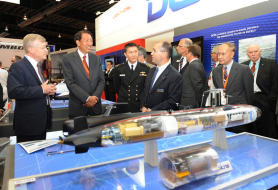
Another such platform is IMDEX Asia, a biennial show organised by Experia Events with the support of the Republic of Singapore Navy (RSN).
Since its inception in 1997, the event has provided an opportunity for professionals to come together, evaluate the latest developments in maritime defence equipment and to exchange views and experiences, said Mr Teo.
Now in its eighth edition, IMDEX Asia has grown in scale, with more than 45 navies and maritime agencies taking part in the event. The number of exhibitors has increased from 125 in 2009 to 164 this year. About 40 naval and coast guard chiefs and vice-chiefs are also participating in the event.
In conjunction with IMDEX Asia 2011, the RSN is hosting the third Maritime Information Sharing Exercise (MARISX) and the fourth Western Pacific Maritime Security Exercise (WMSX). Both exercises were launched at the Changi Command & Control (C2) Centre of Changi Naval Base on 18 May.
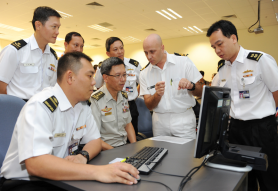
Held at the Information Fusion Centre (IFC) within Changi C2 Centre, MARISX is a scenario-driven and shore-based exercise which aims to validate linkages among participating operation centres and to practice the information-sharing processes among regional navies.
WMSX, on the other hand, is a series of maritime exercises involving participants from the WPNS.
Speaking at the opening ceremony of MARISX and WMSX, Chief of Defence Force Lieutenant-General (LG) Neo Kian Hong urged participants to identify any issues or challenges which may hinder effective multilateral cooperation.
"As current multilateral operations allow us to keep improving our processes and procedures to better handle future maritime security threats, the success of such multilateral cooperation among navies will ultimately depend on the commitment of professionals like yourselves," he said.
During MARISX, 54 International Liaison Officers (ILOs) and 34 operations centres across 27 countries will have to piece together seemingly unrelated information to uncover a pseudo-terrorist plot involving a series of attacks from the sea.
Lieutenant-Commander (LCDR) Jean Michel Kergoat, a planner for MARISX and an ILO with the IFC since it was opened in 2009, felt there has been tremendous improvement within the IFC.
Noting that the exercise provided a good opportunity to test the capabilities of the IFC and ILOs, he said: "Through MARISX, I learnt how to better manage and share information in an Asian country and it has been a very new experience for me."
At the WMSX, participants from the WPNS will take part in a Naval Tactical Trainer (NTT) exercise and Boarding exercise.
In the NTT exercise, command teams of participating ships have to respond to a range of maritime security operations in a simulated environment with realistic scenarios, while the Boarding Exercise will see participating nations perform compliant boarding.
They will be using a simulated boarding trainer as well as executing live boarding of a vessel out at sea.
The RSN is also hosting the IMDEX Asia 2011 Warships Display at Changi Naval Base, where 20 warships from 12 countries are berthed at its docks.
IMDEX Asia 2011 will run from 18 to 20 May.

ALSO READ IN MILESTONES
RSN launches 2nd Multi-Role Combat Vessel
23 Jul 2026
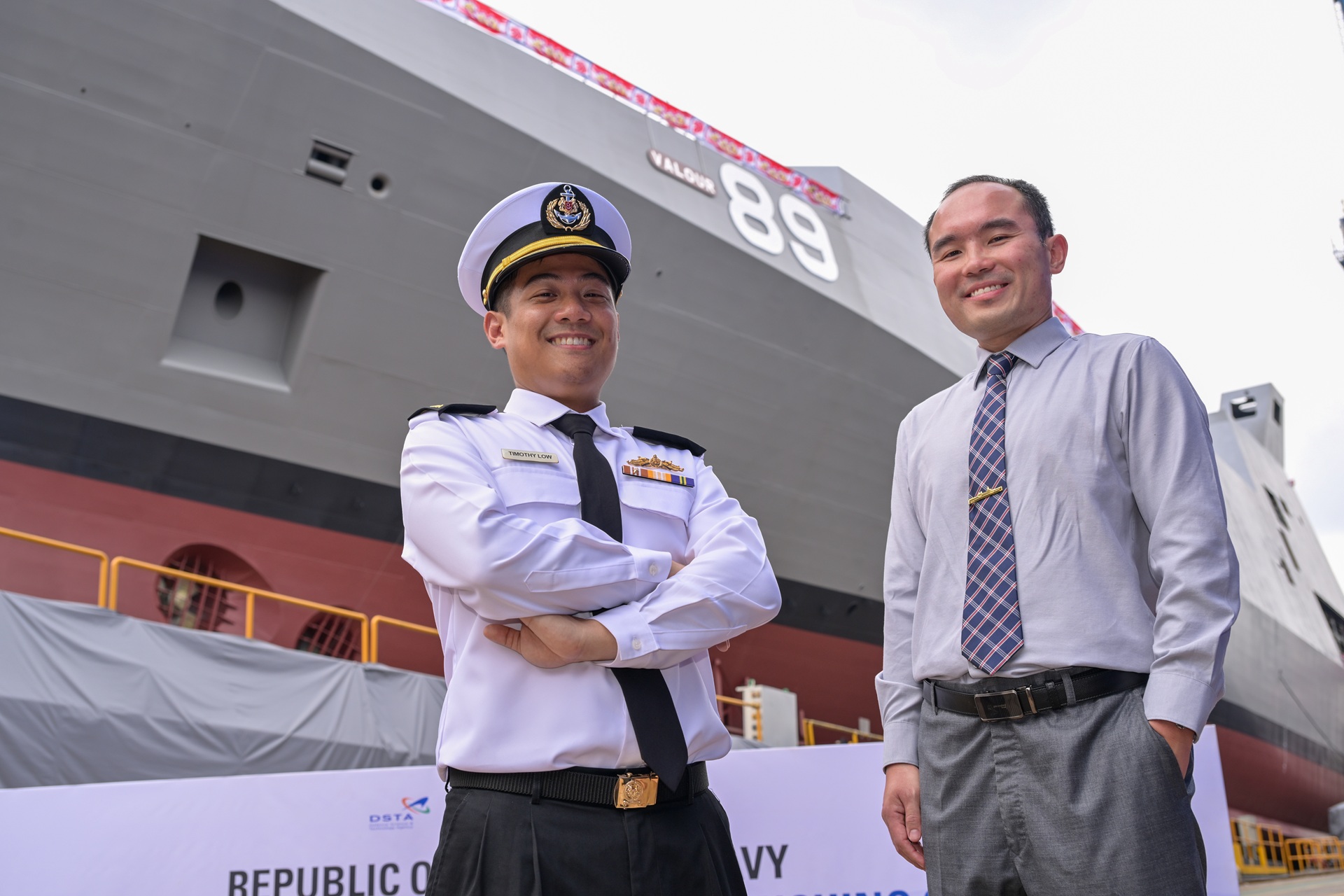
Just like the vessel and her namesake, Commanding Officer LTC Low is following in a strong family tradition of naval service.
Lifelong learners in the SAF
21 Jul 2026
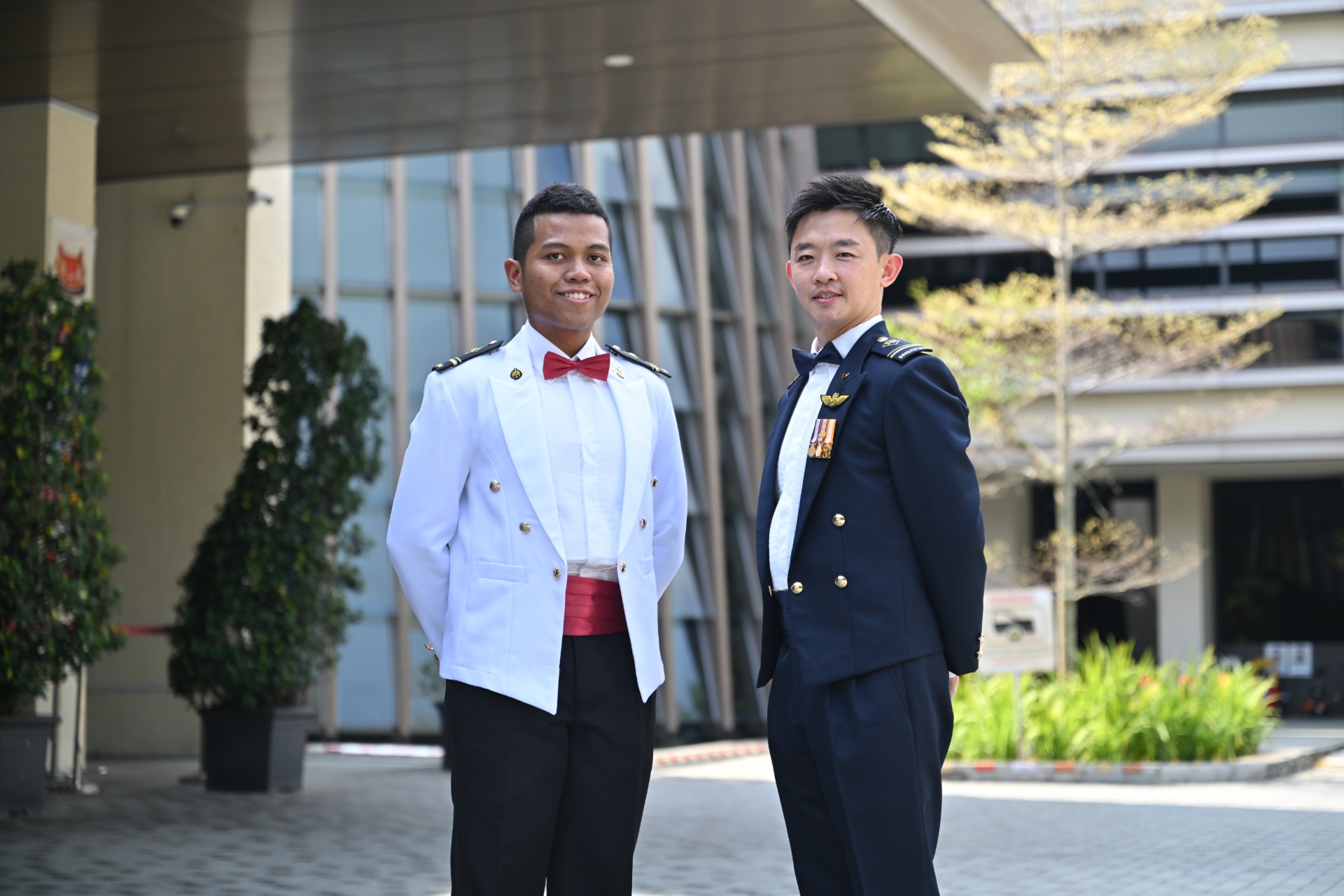
Meet Senior Military Experts ME4 Muhammad Fikri Bin Suhaimi and ME4 Bai Ruiliang who are proving that you’re never too old to learn something new and chase your dreams.
Booming in the Basin: Bringing the Presidential Gun Salute to Kallang for NDP 2026
19 Jul 2026
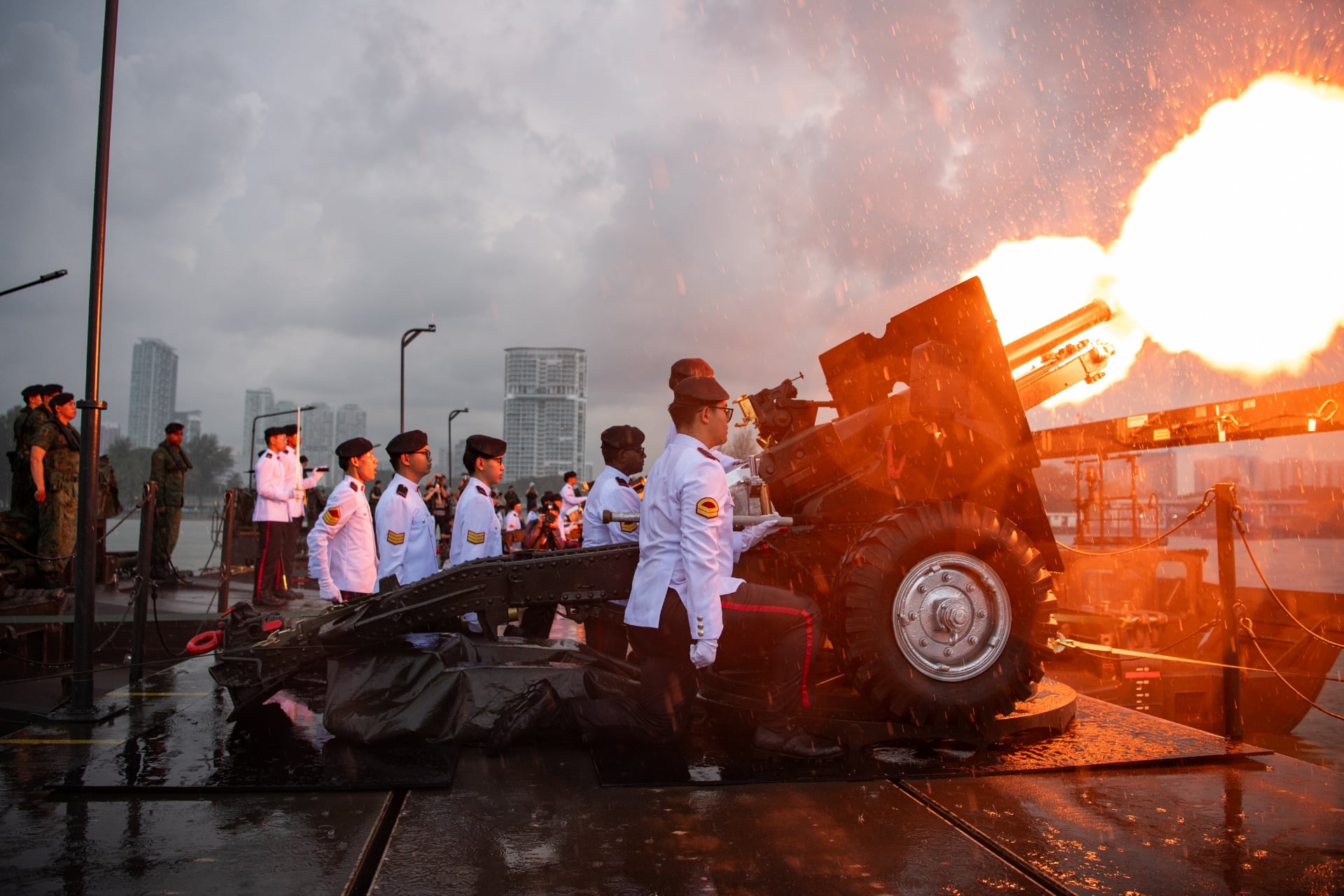
This year’s National Day Parade (NDP) brings the power and precision of the Presidential Gun Salute closer to spectators at the Kallang Basin.