
DIPLOMACY
FLEXIBLE, MULTI-DIMENSIONAL RESPONSES TO SECURITY CHALLENGES
15 Dec 2008
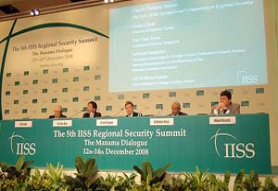
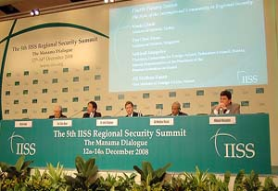
With the global community facing highly complex and trans-boundary challenges, it has become more critical than ever for countries to pool together their resources, ideas and expertise to resolve these problems.
Speaking for the first time at a plenary session during the Manama Dialogue on 14 Dec, Minister for Defence Teo Chee Hean noted that in the 21st century world, "problems can no longer by solved by a single major power or even a small group of powers acting in concert".
The evolving security landscape means that broad-based participation by a more inclusive international community is required to bring about progress and development. As such, security frameworks like the Shangri-La Dialogue and the Asia-Middle East Dialogue (AMED) serve as important platforms promoting mutual understanding and linkages among regional and international communities.
Another key strategy Mr Teo highlighted to combat complex security challenges was to seek comprehensive multi-dimensional solutions that not only tackle direct security concerns, but also the "underlying issues of economic development, cultural and historical realities, and governance".
Lastly, speed and flexibility are also vital in responding decisively to specific challenges such as curbing piracy.
Citing examples such as the Malacca Strait Sea Patrols and the Regional Cooperation Agreement on Combating Piracy and Armed Robbery (RECAAP), Mr Teo stressed that "flexibility in modes of response and international cooperation" are important facets of the approach in addressing regional piracy problems.
To that end, events such as the Manama Dialogue provides "an excellent venue for dialogue and involvement in pursuing regional security in the Middle East, and to network and share ideas with other regions of the world", he added.
Since its inception in 2004, the Manama Dialogue has functioned as a key security forum for the Gulf region, engaging the national security establishments of participating states from the region and beyond to exchange views on regional security challenges.
This year's dialogue saw representatives from the Gulf Cooperation Council members (Bahrain, Kuwait, Oman, Qatar, Saudi Arabia, the United Arab Emirates), Afghanistan, Egypt, Iraq, Jordan, Turkey and Yemen, as well as extra-regional countries such as Australia, China, France, Germany, India, Japan, Pakistan, Russia, Singapore, the United Kingdom and the United States.
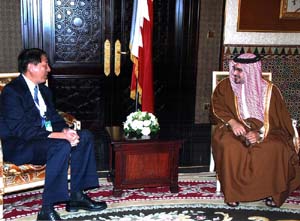
During his four-day visit to Bahrain for the Dialogue, Mr Teo called on Crown Prince and Deputy Supreme Commander of the Bahrain Defence Force Shaikh Salman bin Hamad Al-Khalifa and Prime Minister Shaikh Khalifa bin Salman Al-Khalifa.
He also held bilateral discussions with Minister of State for Defence Affairs Shaikh Dr Mohammad bin Abdullah Al-Khalifa and Minister of Cabinet Affairs Shaikh Ahmed bin Atiyatullah Al-Khalifa.
Mr Teo returned to Singapore on 15 Dec.

ALSO READ IN DIPLOMACY
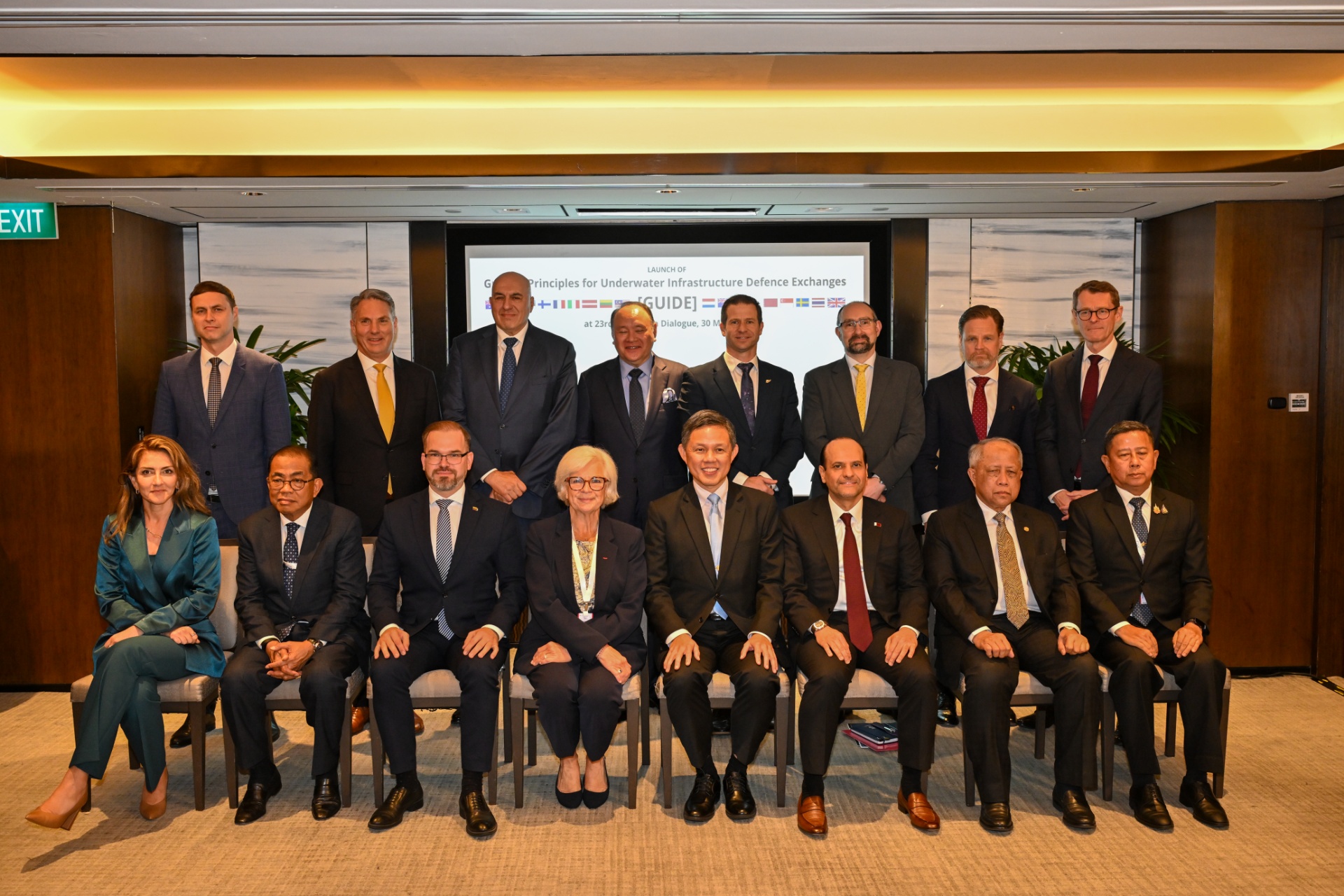
17 countries launch new framework for cooperation on critical underwater infrastructure
30 May 2026
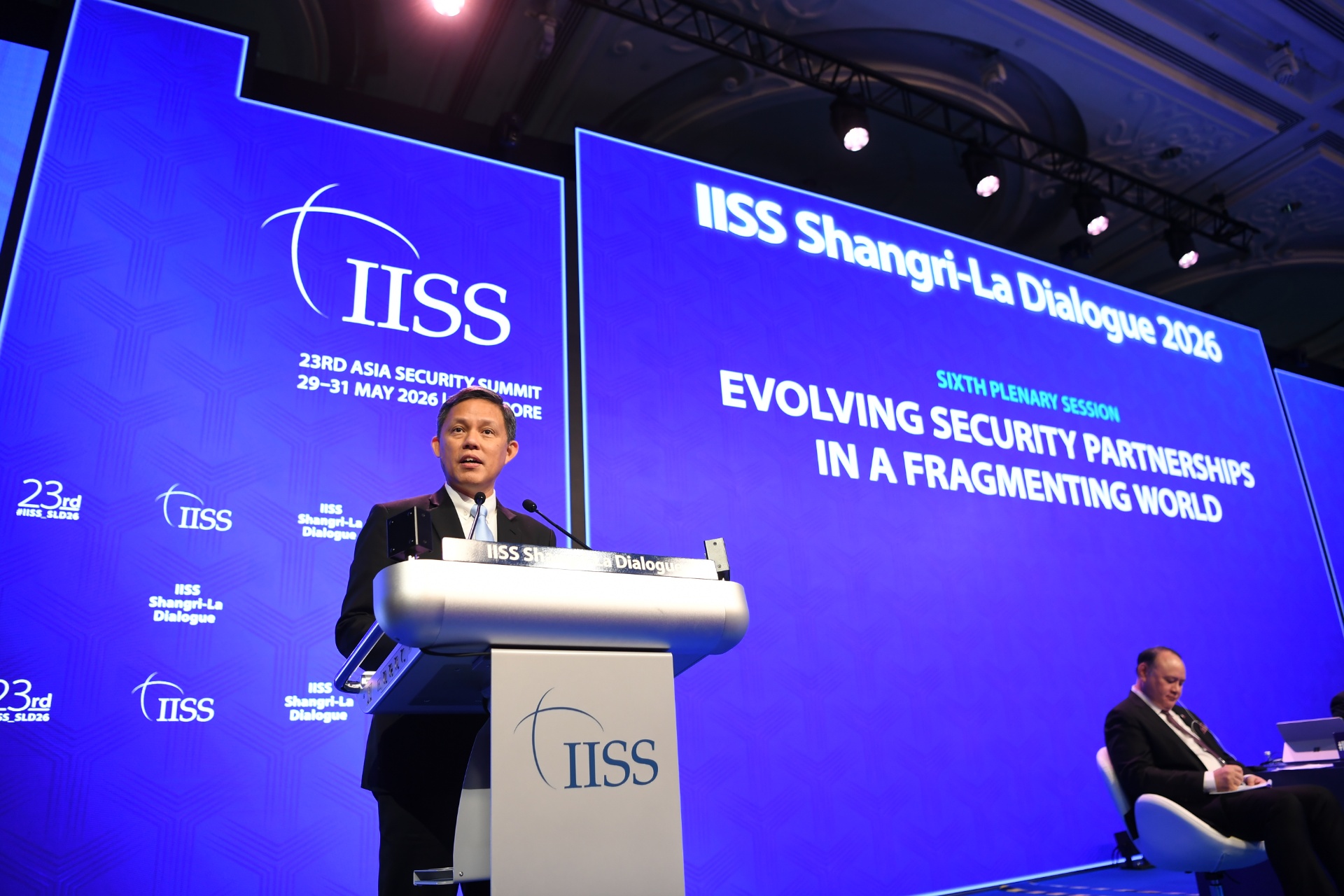
Launched on the sidelines of the 23rd Shangri-La Dialogue, GUIDE is a new framework that brings together countries for defence cooperation in enhancing the security of Critical Underwater Infrastructure.
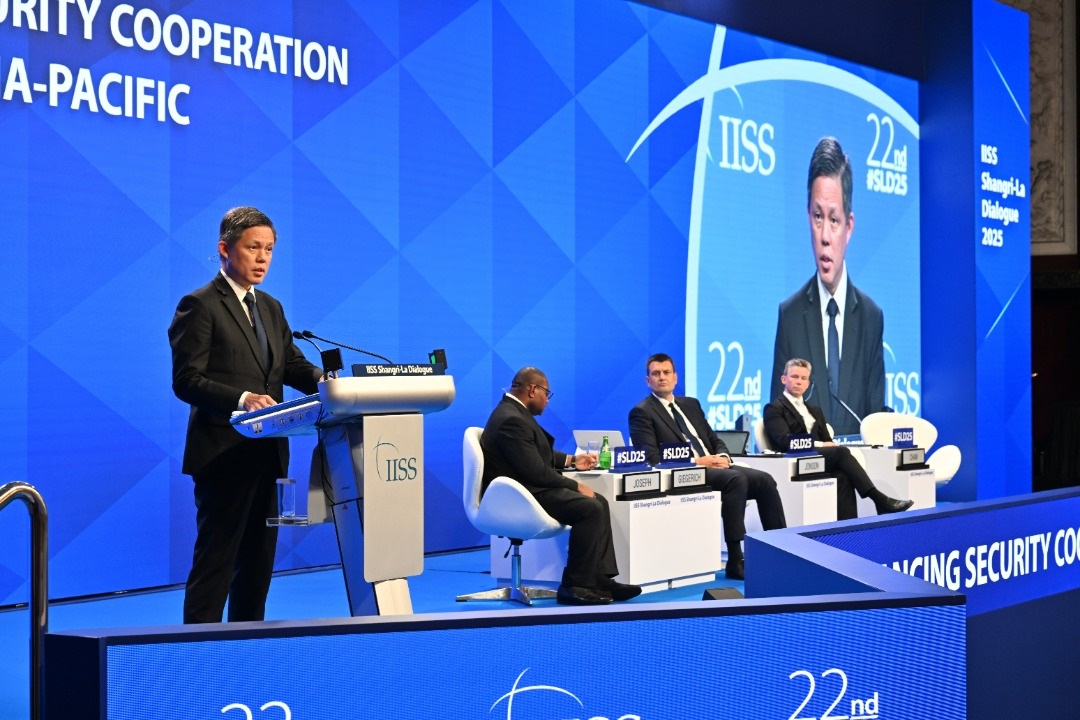
Going alone is not the answer to insecurity – Mr Chan
01 Jun 2025
“Going alone is not the answer to insecurity”, emphasised Minister for Defence Mr Chan Chun Sing at the Shangri-La Dialogue (SLD), held from 30 May to 1 Jun. This was one of his main points at his speech at the sixth plenary session on 1 Jun.
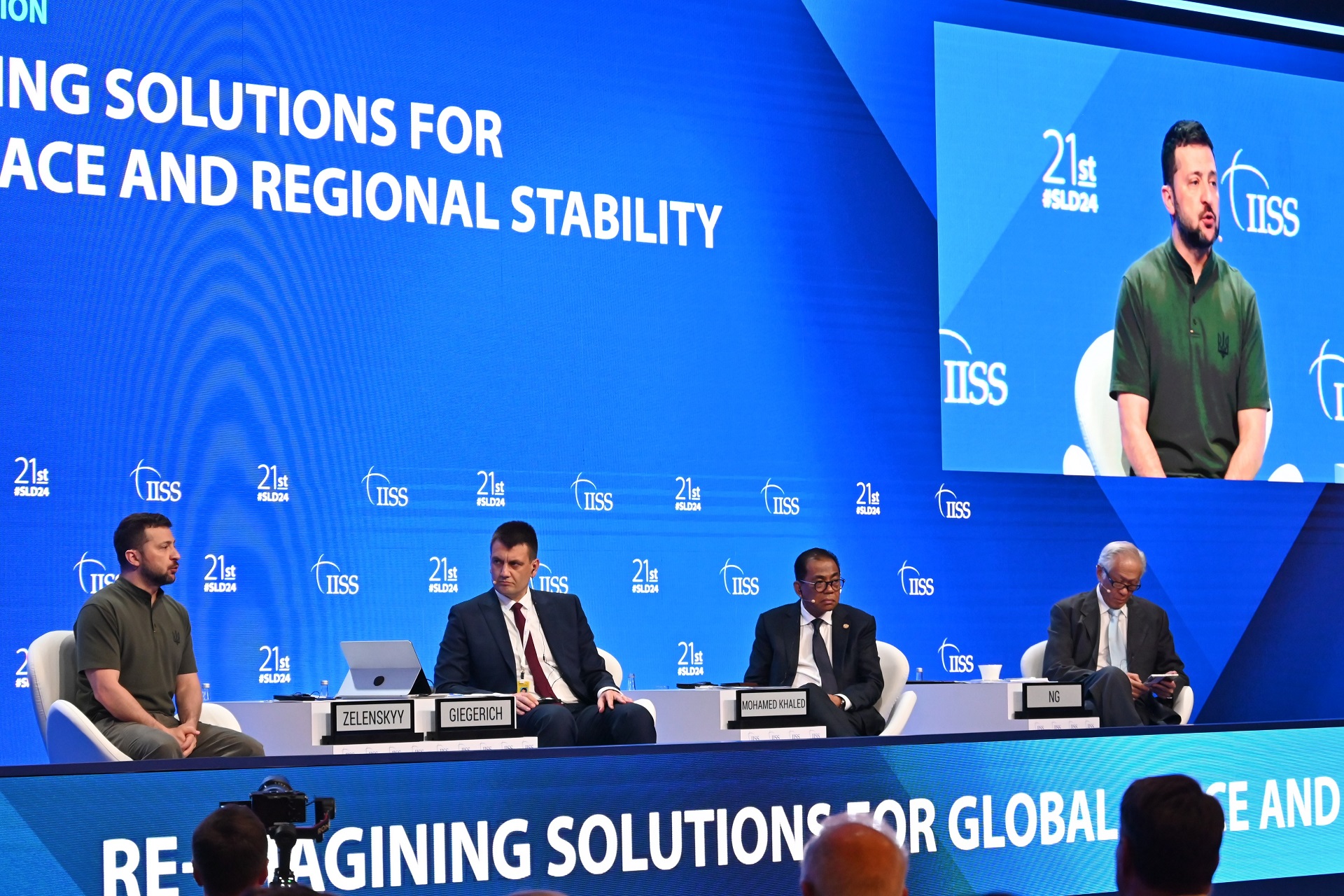
A call for peace at Shangri La Dialogue
02 Jun 2024
A repeated call for peace, especially in Asia. This was Minister for Defence Dr Ng Eng Hen's central message at the 21st Shangri La Dialogue (SLD), held from 31 May to 2 Jun.