
DIPLOMACY
EXTEND ECONOMIC, SOCIAL COOPERATION FOR REGIONAL STABILITY AND PEACE - DR NG
02 Jun 2013
Asia-Pacific states must work together to tackle issues in economic and social domains if the region wants to continue being prosperous and stable.
Minister for Defence Dr Ng Eng Hen said this at the last plenary session of the 12th Shangri-La Dialogue (SLD) on 2 Jun.
He said: "Our increasing interactions in security cannot be the centre or predominant focus of our cooperative efforts. I say this even as a Defence Minister. While we must have security cooperation, we need to premise our terms of engagement on areas of common interests in vital economic and social domains."
He said this was why Singapore was pushing the Regional Comprehensive Economic Partnership, or RCEP, which would comprise the 10 member states of the Association of Southeast Asian Nations (ASEAN) and its six Free Trade Agreement partners (Australia, China, India, Japan, Republic of Korea and New Zealand). When concluded, the RCEP would be the world's largest trade arrangement. Another significant economic partnership was the Trans-Pacific Partnership which would further liberalise trade between economies on both sides of the Pacific.
During his address, Dr Ng pointed out that while Asia held 'promise and great hope', areas which threatened to derail progress still remained. Tensions in the East and South China Seas were mentioned as potential flashpoints.
Tensions are running high in the Philippines and Taiwan after the recent shooting of a Taiwanese fisherman in the South China Sea. In response, Taipei has since slapped economic sanctions against the Philippines. Coupled with competing territorial claims by China and Japan over the Diaoyu/Senkaku Islands, these issues threaten to affect other areas of cooperation.
These issues also impede development, said Dr Ng. "It would be difficult for large reservoirs of much needed gas and oil to be found and extracted given the current tensions within the seas of Asia." He suggested three areas of focus to better tackle such issues.
First, states must step up practical cooperation to build understanding, if not trust. Citing the ASEAN Defence Ministers Meeting - Plus (ADMM-Plus) as an example, Dr Ng noted that the grouping will hold its first joint exercise later this month.
Over 2,000 personnel from the 18 ADMM-Plus military forces, seven ships, 18 helicopters and medical, search and rescue and civil engineering teams will be in Brunei for a large-scale Humanitarian Assistance and Disaster Relief/Military Medicine exercise. Two other ADMM-Plus exercises in maritime security and counter-terrorism will also be held this year.
"That the ADMM-Plus can move from dialogue to cooperation within a few short years is a significant achievement at the political, policy and operational levels," said Dr Ng.
Working together to combat common security threats was listed as the second area of focus by Dr Ng. These threats included the scourge of piracy, the potential spread of weapons of mass destruction and natural disasters.
Within Southeast Asia, Dr Ng noted the good work of the Malacca Strait Patrols where Malaysia, Indonesia, Thailand and Singapore collaborate to counter pirate activity. The ADMM-Plus also has five Expert Working Groups (EWG) looking into ways to build cooperation in five areas of common security interest. These are HADR, military medicine, maritime security, peacekeeping operations and counter-terrorism.
"We also recently agreed to set up an additional EWG, on humanitarian mine action, to promote cooperation in dealing with the painful remnants of war in the region." said Dr Ng.
On the third area of focus, Dr Ng said that countries needed to "quickly establish channels of communication and other mechanisms" among political leaders and military forces alike to prevent and help defuse escalating tensions.
This was discussed at the ADMM summit held in May, where the ASEAN Defence Ministers expressed their support for ASEAN to work closely with China to bring about an early conclusion of a Code of Conduct in the South China Sea.
Dr Ng added that Singapore supported the idea of a 'no first use of force' agreement among claimant states. This was first suggested by Vietnamese Defence Minister General Phung Quang Thanh.
The idea from Brunei of setting up 'hotlines' to calm tensions at sea was also welcomed by Dr Ng. He said: "We welcome these ideas, and encourage regional militaries to see what more can be done on this front - for instance, increased information-sharing, especially between regional navies, on their full Standard Operating Procedures in the event of incidents at sea."
The three-day International Institute for Strategic Studies 12th Asia Security Summit: The Shangri-La Dialogue closed on 2 Jun with a ministerial luncheon hosted by Dr Ng.
Earlier, on the sidelines of the SLD, Dr Ng met with Bruneian Deputy Minister of Defence Yang Mulia Dato Paduka Haji Mustappa bin Haji Sirat and Malaysian Minister of Defence Dato Seri Hishammuddin bin Tun Hussein.

ALSO READ IN DIPLOMACY
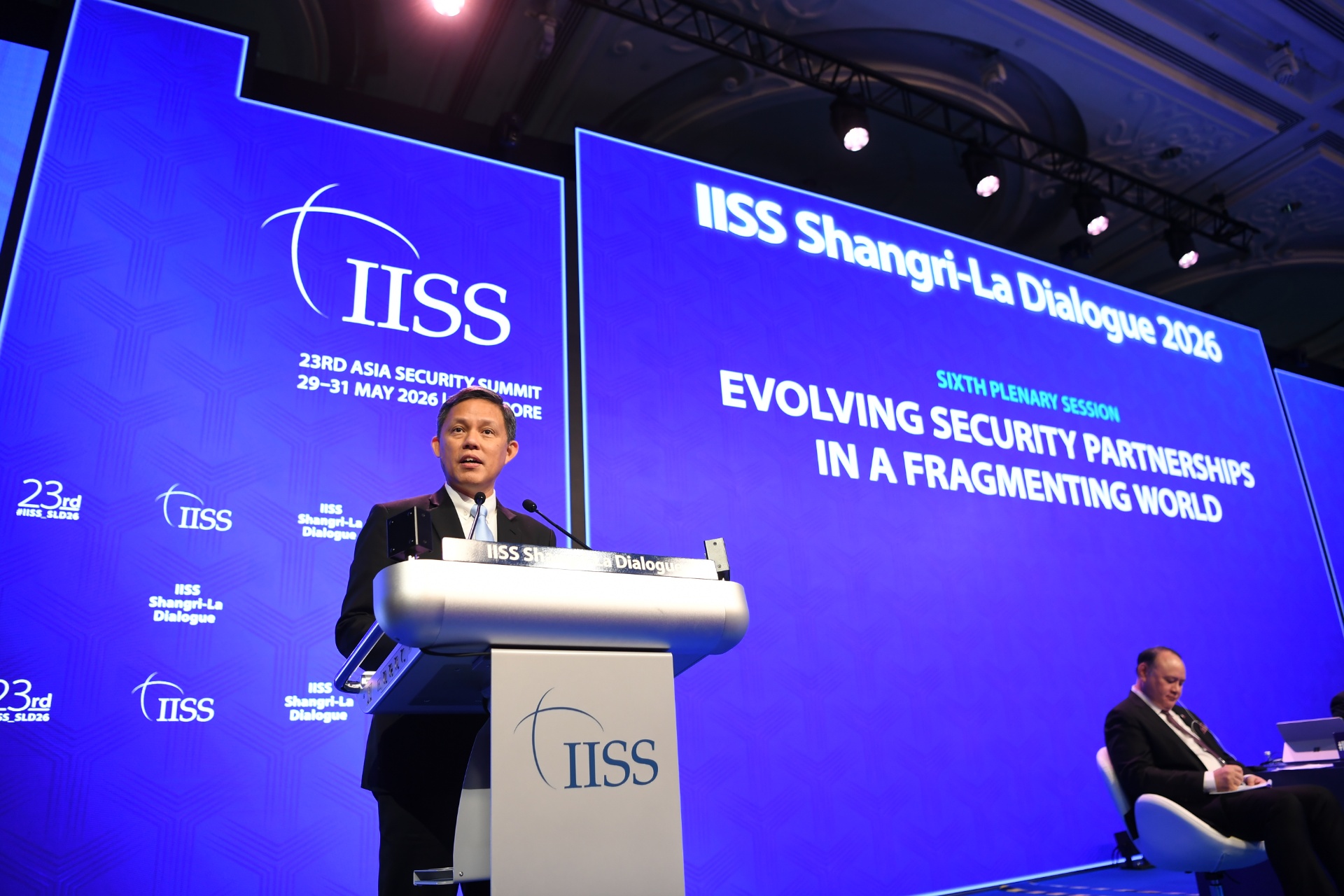
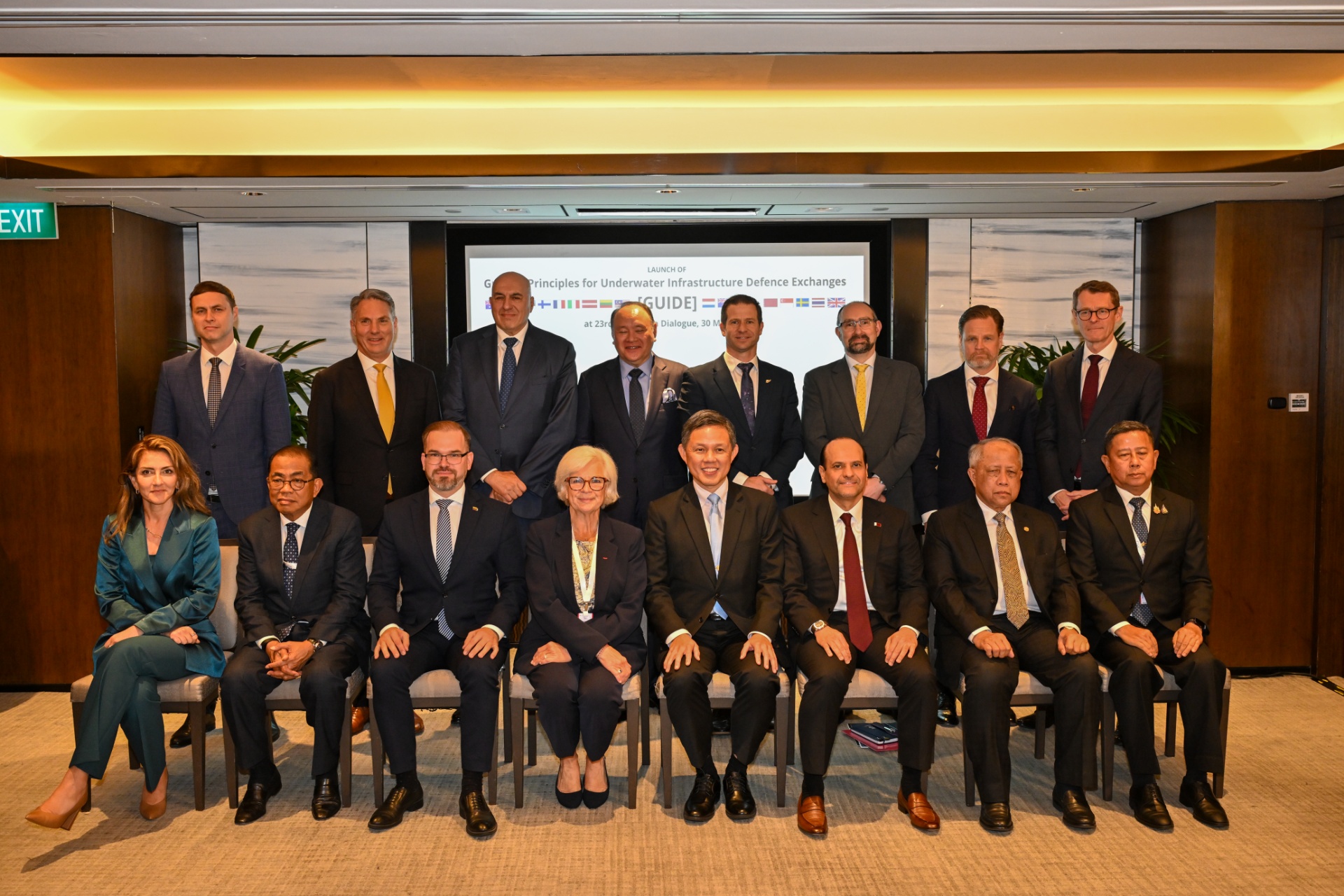
17 countries launch new framework for cooperation on critical underwater infrastructure
30 May 2026
Launched on the sidelines of the 23rd Shangri-La Dialogue, GUIDE is a new framework that brings together countries for defence cooperation in enhancing the security of Critical Underwater Infrastructure.
Going alone is not the answer to insecurity – Mr Chan
01 Jun 2025
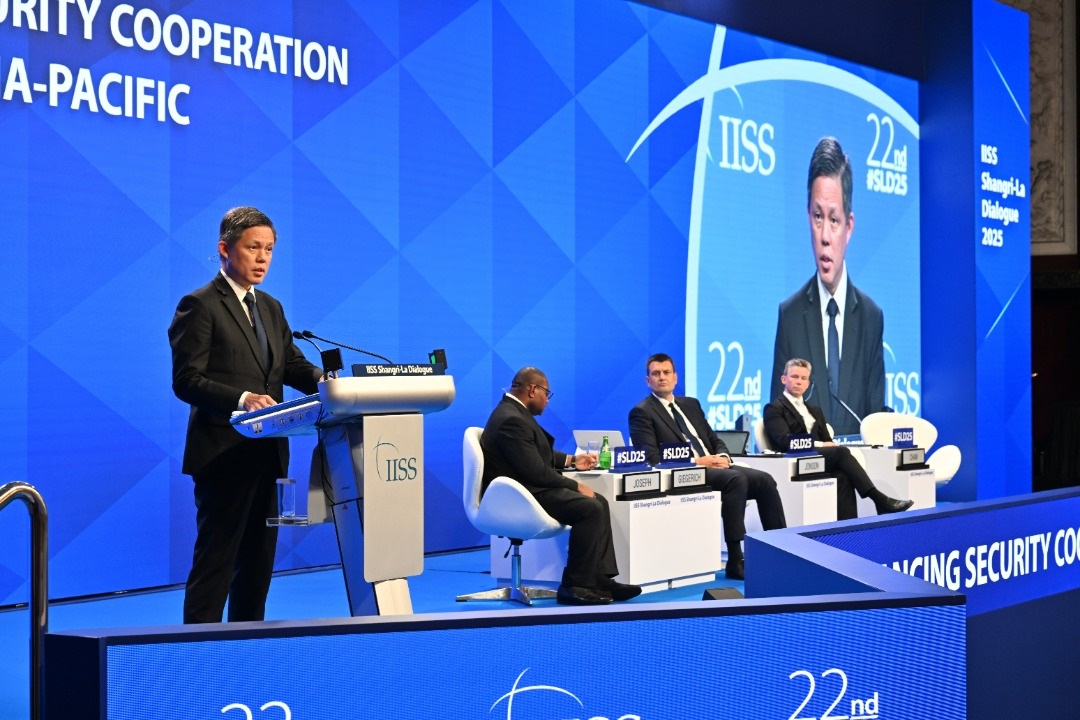
“Going alone is not the answer to insecurity”, emphasised Minister for Defence Mr Chan Chun Sing at the Shangri-La Dialogue (SLD), held from 30 May to 1 Jun. This was one of his main points at his speech at the sixth plenary session on 1 Jun.
A call for peace at Shangri La Dialogue
02 Jun 2024
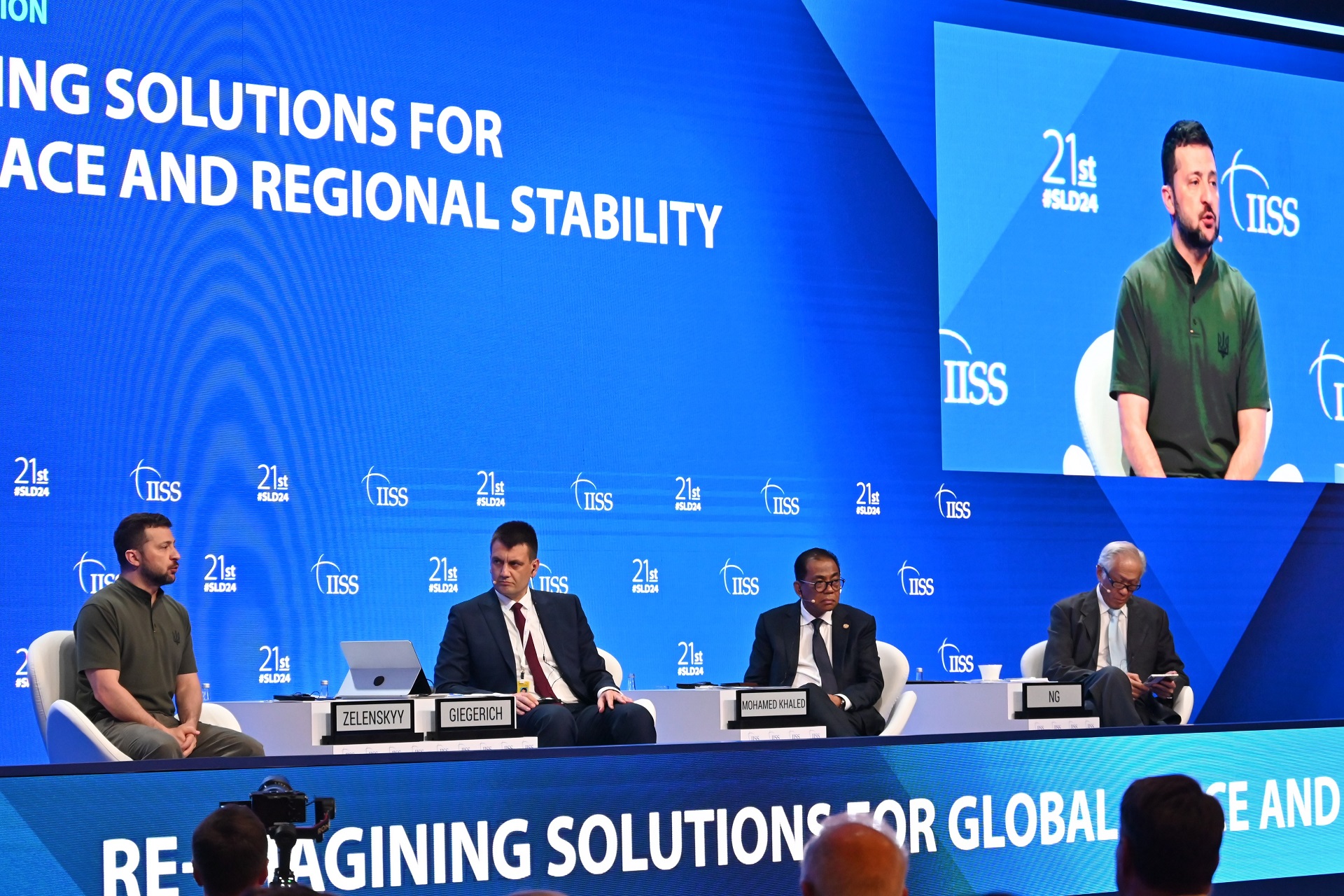
A repeated call for peace, especially in Asia. This was Minister for Defence Dr Ng Eng Hen's central message at the 21st Shangri La Dialogue (SLD), held from 31 May to 2 Jun.